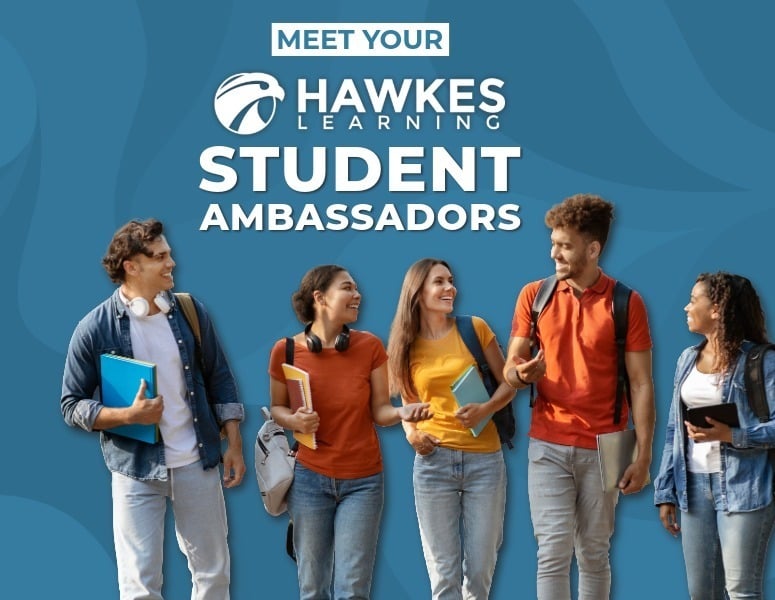
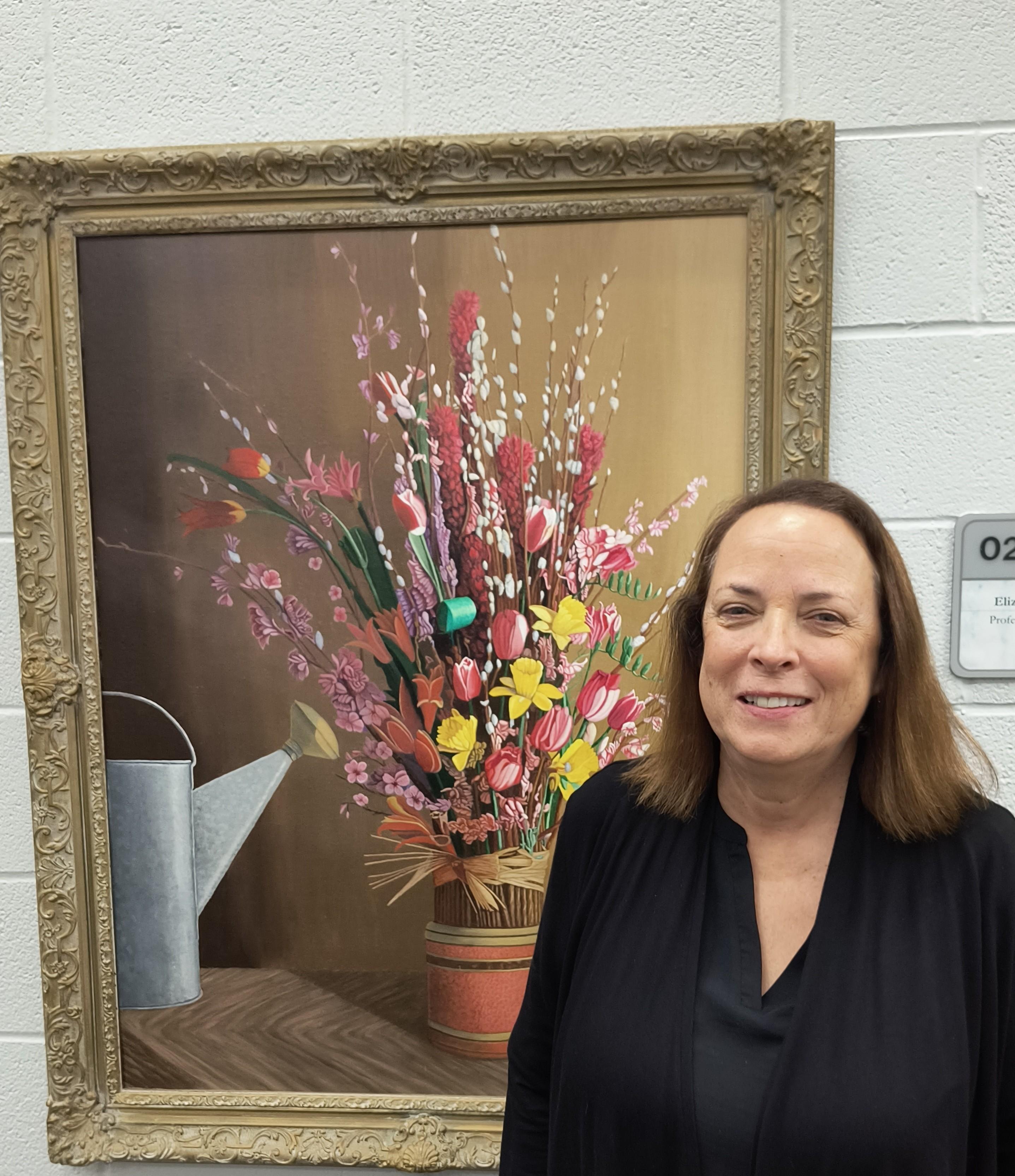
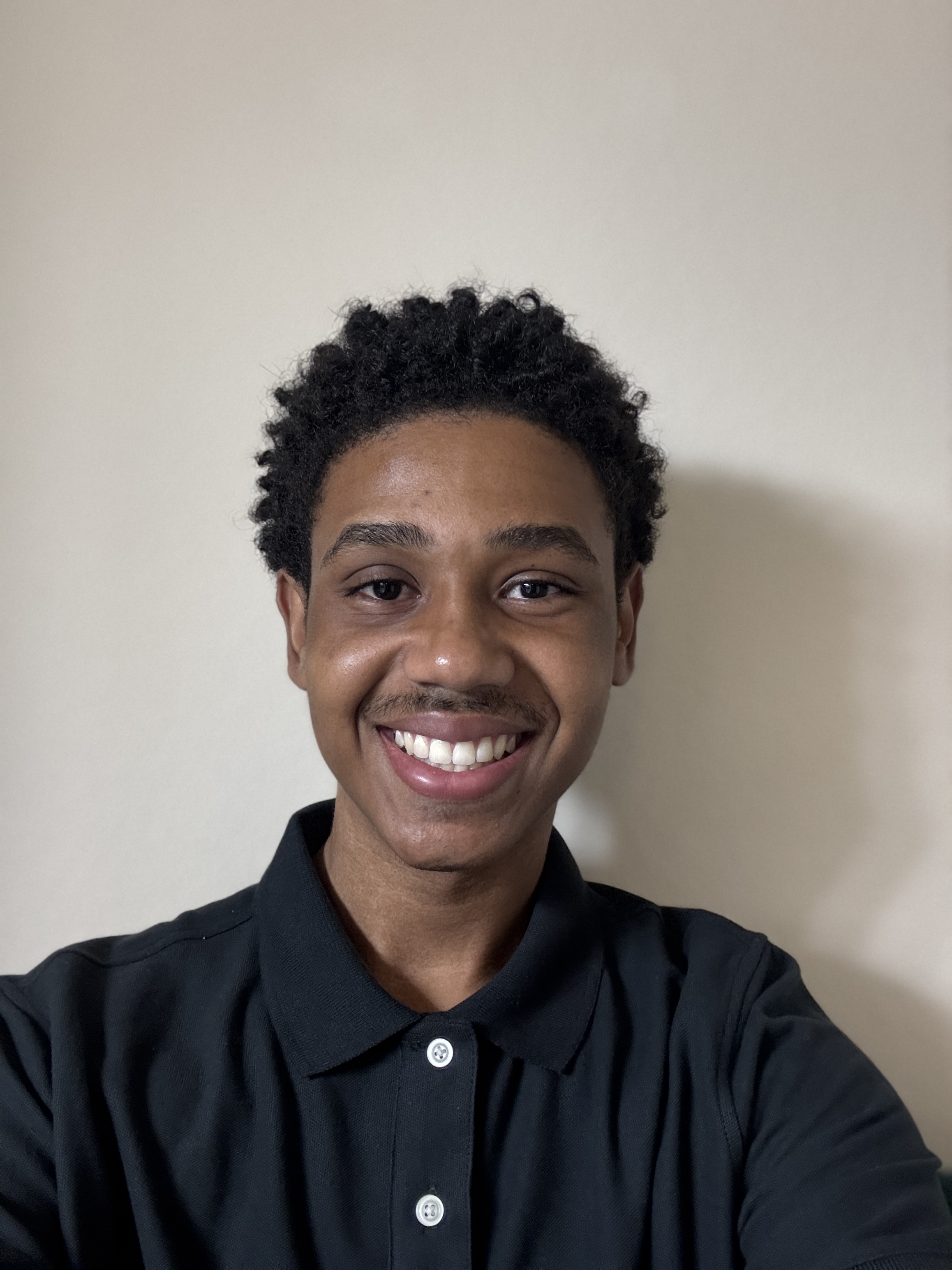
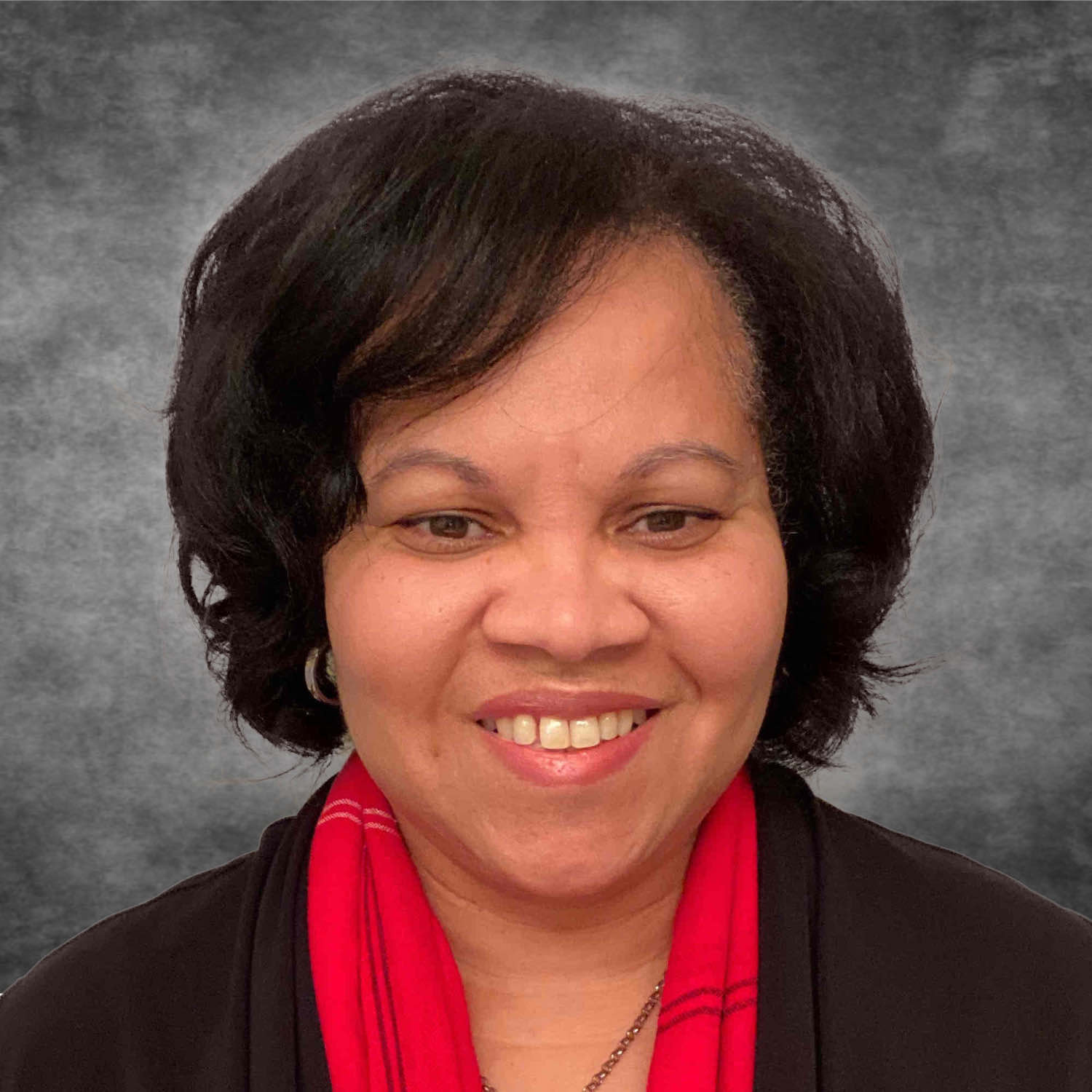
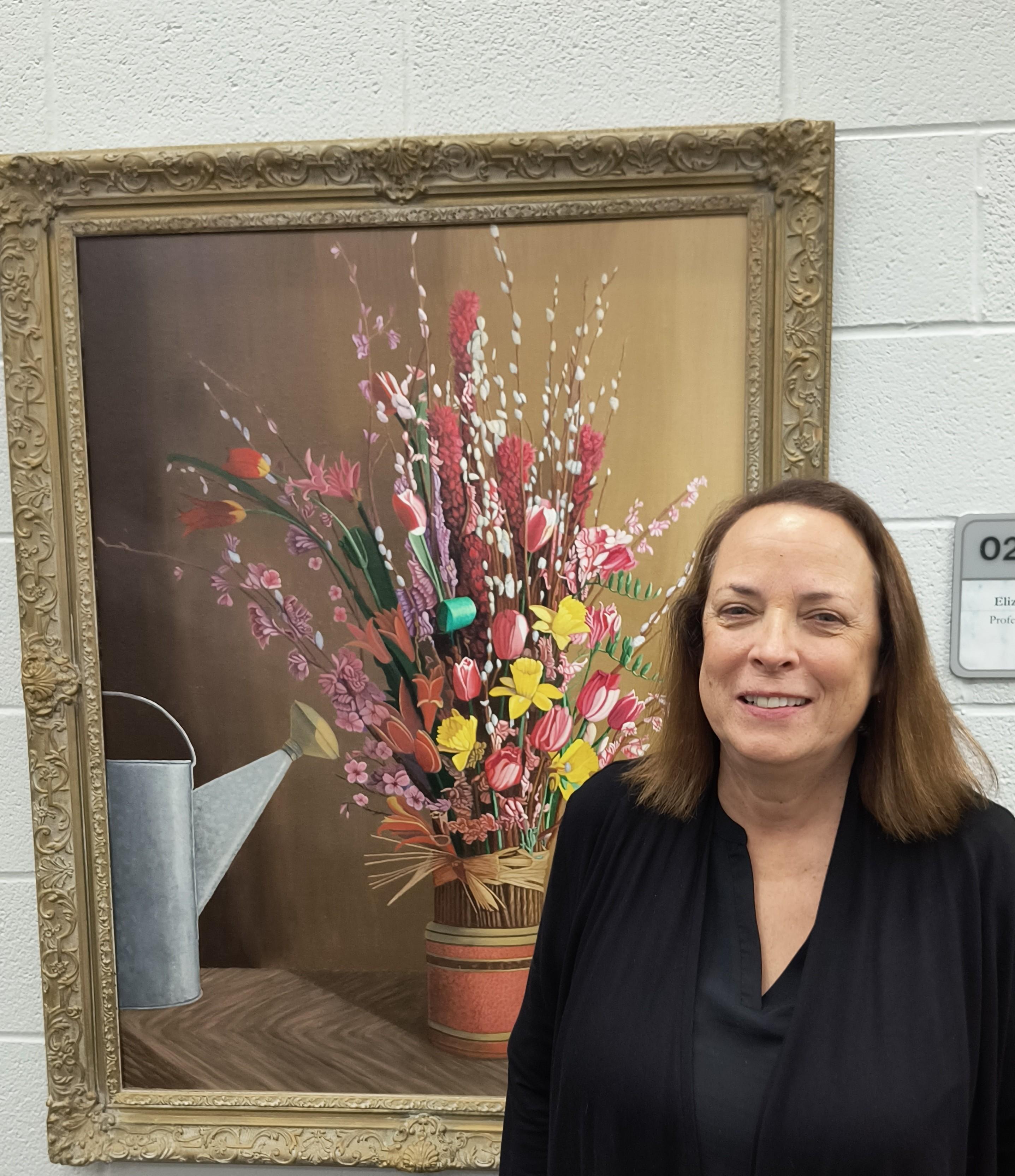
We are so excited to introduce our Fall 2026 Student Ambassadors! Each semester, Hawkes recruits student interns from across the United States to serve as Hawkes Student Ambassadors, helping new users navigate and succeed with our online courseware platform. Through one-on-one support, Student Ambassadors answer questions, demonstrate key platform features, and provide guidance on tools that can strengthen learning outcomes. Having completed at least one Hawkes course themselves, these students offer authentic, experience-based support and serve as trusted resources for their peers as they begin their Hawkes journey. We invite you to read below to meet our talented Hawkes Student Ambassadors from schools across the country. Milton Green Indiana State University – Terre Haute Milton Green is a senior studying Finance at Indiana State University. Milton enjoys philosophy and really enjoys helping other students learn. After he graduates, he plans to work in corporate finance. Milton started using Hawkes Learning back in the fall of 2023 for his first math course and began to love using the software. Outside of school, Milton likes to stay active by playing basketball, going bowling, and going on hikes. This is his first year as a Hawkes Student Ambassador. Ash Dean University of Charleston Ashton is a senior studying Biology and Data Analytics. He is also enrolled in an online Mathematic BS program through Indiana University. Ash holds an institutional GPA of 4.0 at both universities, with a cumulative GPA of over 3.9. After graduating, his goal is to pursue medical school and continue research. In his free time, Ash likes to go on walks, tend to his plants, and spend time with his cat Pythagoras. Ash is a returning Hawkes Student Ambassador. Darwin Munoz SUNY - Old Westbury Darwin Muñoz is a graduate of SUNY Old Westbury with a BS in Public Health. He is currently completing a post baccalaureate and hopes to attend medical school in the future. On campus, Darwin is involved in research and serves as president of MEDLIFE, a student organization focused on service and global health. In his free time, he enjoys boxing, working on his car, and spending time with friends and family. As a Hawkes Learning Student Ambassador, he looks forward to helping other students become more comfortable using the platform. Ty'Nia Hightower Arkansas State University Ty’Nia is a senior at Arkansas State University. She is a psychology major planning to further her education with the addition of a master’s degree in social work. Ty’Nia is enamored with anything Spiderman related, including the blue and red color combo. She enjoys traveling and journaling, and she recently started reading for leisure again. Interested in being a Student Ambassador? Click here to learn more and see when applications are open!
![]()
September 18, 2026
We are so excited to introduce our Fall 2026 Student Ambassadors! Each...
Read More
An independent, peer-reviewed study found that students using Hawkes Learning outperformed students using traditional paper-and-pencil homework — on quizzes, on final exams, and overall satisfaction. This study was conducted by James Quinlan, a mathematician at the University of Southern Maine. It was published in the Ohio Math Journal and was not funded, commissioned, or sponsored by Hawkes Learning in any way. The Question Every Math Instructor Has Asked Does online homework actually work, or does it just make grading easier? It is a fair question. Switching students from paper-and-pencil homework to an online platform is a real change, and instructors deserve more than a promise that it will improve student outcomes. They deserve evidence. James Quinlan designed a controlled study in a first-semester calculus course, comparing students using traditional homework to students using Hawkes Learning with no funding from Hawkes. Just a researcher who wanted an honest answer. This blog shines a light on what he found. How the Study Was Designed Quinlan ran his study across two sections of first-semester calculus at a small private college in New England. The setup was carefully controlled to ensure a fair comparison: Same course. Both groups covered identical material. Same instructor. Both sections were taught by the same person using the same teaching approach. Same assessments. Both groups took the same quizzes and the same final exam. The only difference was the homework format. The control group completed traditional paper-and-pencil homework — the same approach most math courses have used for decades. The experimental group completed their homework using Hawkes Learning, a mastery-based learning system that guides students to a deep and genuine understanding with personalized learning support along the way. At the end of the course, Quinlan also surveyed the Hawkes Learning group about their experience with the platform. What the Study Found Performance: Hawkes Learning students scored higher Students in the Hawkes Learning group outperformed the traditional homework group on both quizzes and the final exam. Assessment Traditional Homework Hawkes Learning Quiz Average 74 (SD 14.5) 83 (SD 9.7) Final Exam Average 72 (SD 19.3) 81 (SD 16.7) This was not a marginal difference. Across the course's two primary measures of student learning, the Hawkes Learning group came out ahead, and both gaps were statistically significant (quiz average: p = 0.0047; final exam: p = 0.0428). Notably, students using Hawkes Learning weren't just scoring higher on average — they were also more consistent. Their lower standard deviations on both assessments (9.7 vs. 14.5 on quizzes; 16.7 vs. 19.3 on the final) indicate scores clustered more tightly around the higher average, rather than the improvement being driven by a handful of standout performers. That consistency reflects how the platform is designed to work. Hawkes Learning tracks each student's performance at the problem level, identifies where individual students are struggling, and generates practice sequences calibrated to those specific gaps. Students who would typically fall behind in a traditional homework format get support targeted to what they personally need, not a uniform experience that works best for students who were already on track. Satisfaction: Students preferred the online experience When surveyed at the end of the semester, students using Hawkes Learning reported higher satisfaction with the homework format than the traditional group: 93% of students using Hawkes agreed they received prompt feedback on their homework — a 45 point gap from students in the traditional group. Students specifically highlighted instant feedback and access to worked example solutions as features that helped them learn. Hawkes Learning students were also significantly more likely to say they liked mathematics (81% vs. 61%, a 20-point gap). They reported spending less time on homework overall, with only 22% agreeing they spent too much time, compared to 43% of traditional students — a 21 point gap. The table below, from the original study, breaks down agreement rates on all six student survey items by group, along with the statistical significance of each difference. Student satisfaction is not just about comfort — it is connected to engagement. Students who feel supported by their course materials are more likely to complete assignments, stay in the course, and persist through difficulty. 4 Reasons Why Online Homework Works Quinlan's findings are consistent with what researchers have observed across college algebra, pre-calculus, and statistics courses: online homework platforms produce results at least equal to traditional homework, and often better. The reasons are not mysterious. 1. Feedback that arrives when it is still useful. With paper homework, a student who solves a problem incorrectly on Monday may not find out until Thursday, after already moving on. Hawkes Learning tells students immediately whether they got the question correct, and helps them understand why or why not. The feedback arrives at the exact moment when it can change how a student thinks about a problem. 2. Support for students who are stuck. When a student hits a wall on traditional homework, they either leave the problem blank or worse...they guess. Hawkes provides example solutions so students can see how a problem is approached and apply that reasoning to their own work. The result is less frustration and more time actually learning. 3. Data that helps instructors help students. Hawkes Learning tracks which topics students struggle with, how many attempts each problem takes, and how much time students spend on each lesson. Instructors do not have to wait for a poor quiz grade to find out a concept did not land; the platform tells them in advance. 4. Time back for instructors. Automated grading is more than just an added convenience. It recovers time that can go toward better course preparation, more focused student interaction, and the work that actually requires a human touch. What This Means for Your Course First-semester calculus is one of the highest-stakes courses in undergraduate education. Students who struggle often lose confidence, change majors, or leave STEM pathways entirely. Quinlan's study supports that the right homework platform can move the needle on the outcomes that matter most — the quiz grades, the final exam scores, and the student experience that determines whether someone stays engaged with mathematics. About the Researcher James Quinlan is a mathematician at the University of Southern Maine. His research focuses on mathematics education, including the effectiveness of technology-based learning tools in college mathematics courses. Published in: Ohio Math Journal Full study available at: https://ohiomathjournal.org/article/4182/galley/4423/view/ The author disclosed no financial or non-financial interests related to this research. This study was not funded, commissioned, or sponsored by Hawkes Learning. About Hawkes Learning Hawkes Learning's platform is built around mastery-based learning, immediate feedback, and data-driven instruction — the same principles that drove the results in Quinlan's study. Ready to see Hawkes Learning in your courses? Contact us to learn more and get started seeing results in your courses.
![]()
September 9, 2026
An independent, peer-reviewed study found that students using Hawkes Learning...
Read More
"Life might not always go on a straight path, but you will always make it to your destination." Those words come from Christian Barksdale — a published author, aspiring cardiologist, and recent UNC Chapel Hill medical program alumnus. But before he was any of those things, he was a Hawkes Learning Student Ambassador at Mississippi Valley State University: a young man who took a chance on an internship and, somewhere between the practice problems and professor conversations, started becoming the person who would one day write that line. *Quotes lightly edited from interview for content and clarity The Ambassador Years Christian Barksdale first heard about Hawkes Learning through his college algebra professor, Dr. Stevens. "She told me about the opportunity," he said. "She sent me an email about it after I did really well in her class. And I was okay, yeah, sure — I'll shoot my shot and apply for the internship." A few months later, he got the call. "I couldn't believe it. That was awesome." He served as a Hawkes Student Ambassador in Fall 2023 at Mississippi Valley State. To qualify, ambassadors must have completed at least one Hawkes course — and Christian Barksdale had done that with college algebra. What made him a natural fit for the role wasn't just his grades, though. It was his mindset. Coming into college, Christian Barksdale was already intentional. "My mom always told me, if you have a really great GPA, then you'll be able to choose," he said. "Whenever you want to pivot, you'll set yourself up really nicely. And so I really just came into college really focused. I was just like, if I'm going to do it, I'm going to put my best foot forward and really just try to make the GPA representative of what type of person I am." As an ambassador, Christian Barksdale connected with faculty who were using Hawkes and helped them get the most from the platform — building the kind of relationships he'd later call foundational. "My favorite thing about it was being able to connect with the professors that are actually using Hawkes and build those relationships," he said, "and getting competency on skill sets outside of the classroom — like learning how to help people manage it and help people learn how to utilize it to the best of their ability." He credited Hawkes itself for getting him there in the first place. "I feel like Hawkes is just the top program I've done," he said. "Not only with the awesome feedback, but just the amount of practice questions you could do... Everything just felt so hands on." The step-by-step error feedback, in particular, stood out: "I really just love being able to actually read through, go step by step, compare it to what I've written down, what I thought was right, and just see okay, where I made a mistake and how they explained it. The way Hawkes breaks everything down makes it so simple — and in fact, that's the reason I was so successful, especially in that course." The Bridge Christian Barksdale graduated from Mississippi Valley State in December 2025. What came next was not a straight line. "The summer before I actually wrote the book was really tough for me," he said. "I was trying to navigate the pre-medical journey, and I was kind of just getting overwhelmed. At the time I was really struggling to land an internship. I was really struggling to get a job as well. So it was just kind of a lot of things accumulating at once." He paused on the weight of that season. "I kind of felt like I was disappointing myself and all the other people that poured into me…so it just wasn't really a great space for me at the time." Then came the moment that changed everything. "I was just sitting outside one time, just reading my Bible, just looking for something," he said. His older brother — who, by Christian Barksdale's own description, doesn't really talk much — came home from work and stopped. "He was just like, 'Stay motivated.' He just gave me some really great encouragement. And it made me think about the people who might not have a great brother like I do — the people who might still be fighting these battles but no one else knows it." So he decided to do something about it. The Book Hearts and White Coats was published in March 2026. To write it, Christian Barksdale interviewed more than 45 doctors from more than 20 countries — asking each of them what kept them going, what kept them motivated, why they chose medicine. He found most of them the same way he'd found the internship that started it all: by reaching out. "I used LinkedIn a lot," he said. "I would read about them and then I would add them on LinkedIn and message them. If they didn't reply, I would email them. I would just reach out to a lot of ones that I found interesting and that I felt could really inspire other people. So it was just a lot of messages being sent." Two stories in particular stayed with him. "I'll start first with Doctor Madhere," he said. "He said something really profound that really stuck with me. It was like, 'Once you see what's possible, you can't unsee it.' So it's like, once you know that you can achieve this goal, once you know that it's possible for you to do this and you know how to get there, you won't stop seeing it. You'll be even more determined. You can't just ignore that part of you that wants to achieve that." Then there was Dr. McFadden — a doctor from Mississippi, from a small town, who took the MCAT four times before getting the score she needed. "No matter what, she just kept going," Christian Barksdale said. "If she didn't get the score she wanted this time, right back to studying. Just the perseverance was really inspiring. And just seeing how she was able to be so successful." For Christian Barksdale, the book is ultimately the message he wishes someone had handed him during that hard summer. "I just want people to know that your life might not always go on a straight path, but you will always make it to your destination," he said. "Life has its highs, it has its lows, but you have to be able to take both and really just appreciate life, appreciate the journey — not just the destination. And that you're bigger than your biggest problem. Your failure, or whatever setback you may experience, does not define you. You're worth it. You're awesome how you are. And whatever you're going through, you will get through it." Full Circle When Christian Barksdale looks back at his time as a Hawkes Ambassador, he sees threads connecting it directly to the person he's become. "I feel like Hawkes is what got me a lot more comfortable talking to professors," he said. "Just being able to have a conversation with the people over the course. I feel like that really helped me get out of my shell. It could be kind of intimidating. But once you actually start engaging in those conversations, you can just see that they're humans too." Those conversations mattered more than he realized at the time. "These are some of the professors that ended up writing my letters of recommendation," he said. "So I really feel like Hawkes set me up in that matter." The networking skills he built as an ambassador also translated directly to writing the book, then to reaching out to strangers across the world and asking them to share their most hard-won stories. After graduating, he kept pushing. This past summer, Christian Barksdale completed a medical school simulator internship at UNC Chapel Hill — nine weeks of medical school coursework and practical lab experience. His cohort came from across the country: mostly North Carolina, but Texas and beyond. "I feel like I've gotten fifty-five times richer just being with everybody," he said. "I feel like I've learned at least one thing from every single person I've met there." More than the curriculum, what he took away from UNC was something harder to quantify. "I feel like I proved to myself that I can handle the curriculum," he said. "I was kind of always nervous, like, okay, maybe I can't handle it. Maybe once I get there, I won't be able to keep up. Just being able to prove that to myself that I can get there, pass, and be successful. That was monumental to me." He's leaning toward cardiology. "The heart is really fascinating to me," he said. "And that got reinforced during my internship. We had a short cardiovascular block and just seeing how the heart works and everything — it's really fascinating. So that's what I'm leaning to right now." Back home in Cleveland, Mississippi — about 45 minutes from Mississippi Valley State — Christian Barksdale is preparing for the MCAT, gathering clinical hours, and working to put his book into as many hands as possible. He wants to do more book signings, more mentorship, more presentations. "I really try to touch the youth in my community as well," he said. His advice to students who might be right where he was — uncertain, stretched thin, questioning the path — sounds a lot like the way he described his first instinct about the Hawkes internship: I'll shoot my shot. "I'm just very happy to have done it," he said. "I'm blessed to have the opportunity." Find the Book Hearts and White Coats by Christian Barksdale is available now on Amazon. Read Mississippi Valley State University's feature on Christian Barksdale here.
![]()
August 26, 2026
"Life might not always go on a straight path, but you will always make it to...
Read More
How does the student experience connect to economics course content? Students encounter economics daily through grocery prices, job wages, streaming subscriptions, and financial decisions. Effective courses bridge these lived experiences to foundational concepts like supply, demand, and market equilibrium. The key is helping students recognize they're already living economics—and giving them the tools to analyze it. Why Do Students Struggle to Connect Economics to Real Life? Students consume economic news constantly—headlines about inflation, tariffs, and grocery costs—yet fail to connect these stories to the models in their textbooks. The challenge isn't generating interest; it's building explicit bridges between real-world events and economic principles. The updated Principles of Economics, Microeconomics, and Macroeconomics, 2nd Editions, solve this problem by connecting the news students consume to the economic principles you teach. Student experiences map directly to economics concepts: Grocery shopping price elasticity and inflation Part-time job wages labor markets Student loans interest rates and opportunity cost Streaming subscriptions marginal utility Gas prices supply shocks Rent costs housing market equilibrium Buying concert tickets secondary markets and price discrimination How Does Mastery Learning Strengthen Economics Foundations? Mastery learning requires students to demonstrate competency on foundational concepts before advancing to dependent topics, reducing compounding misunderstandings. Hawkes Learning's 3-step mastery-based approach uses this structured learning path and scaffolded practice to close the quantitative skills gap and help students develop the ability to analyze price changes using supply-demand models. Students don't struggle with inflation because inflation is difficult; they struggle because they never fully mastered supply, demand, incentives, and market equilibrium. Mastery learning strengthens those foundational concepts, making every topic that follows more accessible. For example, students examining how inflation affects wages can apply their understanding of supply, demand, and market equilibrium to analyze why wages may rise over time yet still fail to keep pace with rising prices. What Role Does Immediate Feedback Play? Immediate feedback corrects misconceptions before they become habits. Economics is cumulative. If a student misunderstands supply and demand in week two, they'll likely struggle with market equilibrium, price controls, and international trade later in the semester. Timely feedback helps you as an instructor catch those misunderstandings early, when they're easiest to address. When your students receive foundational feedback during independent practice, you can spend more class time analyzing current events, debating policy, and applying economic frameworks to interpret current policy debates, rather than reviewing basic misconceptions. How Do Real-World Examples Enhance Engagement? We all encounter economics every day, from changing prices at the grocery store to decisions about careers, housing, and technology. The challenge is helping students recognize those connections. Relevant examples and real-world applications transform abstract concepts into meaningful learning experiences that help students apply economic frameworks to everyday decisions. The intuitive platform helps students focus on learning rather than navigating technology, with AI Tutor’s 24/7 support keeping students engaged and empowered to take control of their progress. Flexible Tools for Your Teaching Approach Teach economics your way with flexible tools and customizable learning experiences that allow you to meet students where they are while maintaining the consistency and support needed to help every learner progress and succeed. Curriculum Comparison Hawkes Learning Title Focus Key Differentiators Principles of Economics 2nd Edition Core economic concepts within a global framework Chapter projects, group activities, reflection questions Principles of Microeconomics 2nd Edition Economic theories with critical thinking emphasis Active learning approach, application-focused exercises Principles of Macroeconomics 2nd Edition Comprehensive understanding with real-world application Individual and collaborative projects, reflection questions These titles help instructors connect student experiences to economics content through mastery learning, real-world examples, and immediate feedback. The result is students who can analyze economic events they encounter daily using the foundational models they've truly mastered.
![]()
August 21, 2026
How does the student experience connect to economics course content? Students...
Read More
Course: Math2228 — Elementary Statistical Methods I Hawkes Learning Product Used: Beginning Statistics, 3rd Edition Highlights: 86.67% final grade average — across three Spring 2026 sections of Math2228 using Hawkes Learning, students averaged a final course grade of 86.67%. 93.12% homework grade average — using Hawkes Learning, students engaged consistently with the homework with a 93.12% average homework score across all three sections. Greater confidence and independence — students reported feeling less anxious, more capable, and better prepared for exams compared to previous sections using ALEKS. Overview: Across three sections of Professor Jeffery Mobley’s statistics course at East Carolina University, students who demonstrated strong mastery through Hawkes Learning homework also performed strong on tests and the final exam. The pattern was consistent across assessment types: students earning A and B averages on tests maintained homework averages above 98%, while students earning A and B grades on the final exam maintained homework averages above 97%. For Professor Mobley, the results point to something important: student success in Hawkes homework aligned with their ability to demonstrate that learning again in tests and final exams. The Data: Homework Grades by Course Outcome Final Overall Grade Students who earned an A in the course averaged a homework grade of 99.57%. Students who earned a B averaged 95.31% on homework. For students who failed the course, the average homework grade was 47%. Final Grade Average Homework Grade A 99.57% B 95.31% F 47% Test Average (40% of Course Grade) The pattern holds for tests, which account for 40% of the course grade. Test Average Grade Average Homework Grade A 99.39% B 97.54% Final Exam (20% of Course Grade) Even on the final exam — a single, high-stakes assessment — homework completion predicted performance. Final Exam Grade Average Homework Grade A 98.34% B 96.62% What the Numbers Tell Us Students earning the highest marks consistently completed nearly all their Hawkes homework, with this pattern appearing at every assessment level, suggesting that the mastery-based homework is helping students build genuine understanding that carries beyond homework and into higher-stakes testing. Students who failed the course averaged just 47% on Hawkes homework, reinforcing the connection between engaging with the mastery-based work and overall success. “The educational roadblocks that Hawkes Learning courseware solved for my classes were helping students to understand their mistakes, time spent on learning the material, and the confidence level of students with the subject matter.” What Hawkes Solved Professor Mobley identified three specific educational challenges that Hawkes Learning addressed: Helping students understand their mistakes — The AI Tutor and tutoring aids in Learn and Practice mode guide students through errors in real time rather than leaving gaps unaddressed. Time spent on learning the material — The structured model keeps students engaged with the content meaningfully, not just clicking through. Student confidence with the subject matter — By requiring demonstrated mastery before progressing, Hawkes builds the kind of confidence that shows up on exam day. Professor Mobley's Statistics students offered candid feedback on their experience with Hawkes Learning: "I really enjoy Hawkes Learning. My favorite subject has always been math, but I have to say this is the easiest math I've ever had because of Hawkes Learning." "Before starting this class, I was really nervous and knew I was going to struggle. Hawkes Learning has helped me succeed a lot and feel better about my math skills." "I really love the way that it has a feature to help in every aspect. It really helps me understand the material and solve problems on my own." "I like Hawkes Learning, and it is easier to learn from than other math platforms like ALEKS." "It is the best learning platform I have used in my academic career. It is easy to use and explains the lessons well." Key Takeaway At East Carolina University, strong Hawkes Learning homework performance carried through to strong results on tests, the final exam, and in the course overall. The data tells only part of the story. Students also reported feeling more confident, less anxious, and better able to understand mistakes and solve problems independently. Photo Courtesy of ECU University Communications
![]()
August 19, 2026
Course: Math2228 — Elementary Statistical Methods I Hawkes Learning Product...
Read More
Below, you’ll see how Hawkes Learning works, how to complete and submit assignments, and where to go when you need support. Bookmark this page, refer back to it throughout the term, and use the FAQ section to quickly troubleshoot common questions on your own. Watch this recording of a live Student Training Webinar with Student Ambassador, Ash Dean. How Hawkes Learning Works Hawkes is built around a three-step mastery learning process. Every assignment follows the same structure, so once you understand it, navigating the platform becomes second nature. Instead of rushing through assignments or relying on guesswork, you'll work through a proven mastery-based learning process that helps you build confidence, strengthen understanding, and demonstrate what you've learned. Step 1: Learn Work through the lesson content before you attempt problems. Learn includes instructional videos, animated concept builders, and interactive skill checks that walk you through the material at your own pace. Step 2: Practice Apply what you learned by working through algorithmically generated problems. Every problem comes with step-by-step tutorials and error-specific feedback, so when you make a mistake, you find out exactly what went wrong and why. This is an ungraded, penalty-free learning environment where you’re rewarded for persistence, not perfection. Step 3: Certify Demonstrate that you have mastered the material. Certify requires you to reach a defined proficiency level without access to tutoring aids. This is the graded portion of the platform where you’re able to showcase what you’ve learned and that you’re ready to move on to what’s next. Pro Tip: This sequence exists because it works! Each term, data shows that students who dedicate time working through Learn and Practice before attempting Certify build a stronger foundation than those who skip ahead. ★ ★ ★ ★ ★ "I really enjoy learning from Hawkes. I really like how you can get a step-by-step explanation on a wrong answer and the videos also help me a lot." Cindy, Genesee Community College ★ ★ ★ ★ ★ "This is such an easy way to do my work and easy to learn and navigate through. I though it would be hard but it's so easy once it was explained." Shatonda, Dallas College ★ ★ ★ ★ ★ "The last time I used any form of online learning it was so complicated..." "This system works so harmoniously and so easy to navigate, it has been a blessing to me!" Amie, Palo Verde College Study Tools Built Into the Platform Your Hawkes account includes several study tools designed to support you as you work through assignments. AI Tutor Provides guided, personalized support while you practice. Unlike a generative AI tool, AI Tutor works solely within Hawkes-approved content, so the guidance it provides is directly tied to your coursework and supports your learning path. Explain Error Shows you exactly where your reasoning broke down when you answer a problem incorrectly. Use it to understand your mistakes, learn from them, and correct them before moving on. Step-by-Step, Hint, and Solution Breaks complex problems into smaller, manageable steps. When you're unsure where to begin, these tools guide you through the logic and reasoning needed to solve the problem without simply giving you the answer. Practice WebTests Allows you to create ungraded, self-directed assessments for additional practice. Choose the lessons and number of questions, set a time limit, and take the test whenever you want. Practice WebTests are one of the most effective ways to prepare for graded exams and quizzes. See the FAQ below for step-by-step instructions on creating one. HawkesTV Provides instructional videos organized by topic for additional review. Use these videos whenever you need a second explanation or want to explore a concept from a different perspective. Companion Sites Offer supplemental learning resources for select disciplines that can be accessed directly in your course. Frequently Asked Questions How do I complete assignments? Assignments are completed through the Learn, Practice, and Certify steps. Your instructor controls which assignments are required, their due dates, and how much each one counts toward your grade. Check your personalized to-do list or ask your instructor if you are unsure what is required. What is mastery learning? Mastery learning is an instructional approach that requires students to demonstrate understanding of a topic before moving to the next one. Rather than advancing based on time spent, you advance based on what you’ve actually learned. What is AI Tutor and is it safe to use? AI Tutor is a built-in learning tool that provides guided support while you work through Practice problems. It is designed to help you think through problems rather than hand you answers. Because it operates within Hawkes-approved content, it supports academic integrity, aligns with your existing course materials, and is safe to use. How do I create a Practice WebTest? Practice WebTests are ungraded, self-directed assessments that allow you to focus on the topics you want to review. They are a great way to prepare for quizzes and exams, identify areas that need additional study, and measure your progress throughout the course. To create one: Sign in and select View Course. Open the WebTests tab and select Practice WebTests. Select Create Practice WebTest. Give your test a name. Use the chapter drop-down to browse content. Select Add for each lesson you want to include. Enter the number of questions and choose a time limit from the Set Time drop-down. Select Start to generate and begin your test.
![]()
August 17, 2026
Below, you’ll see how Hawkes Learning works, how to complete and submit...
Read More
You’ve shared your feedback and we are listening! This platform update contains thoughtful enhancements to make your course easier to manage, strengthen the quality and flexibility of assessments, and support better outcomes for you and your students. Instructor Experience Directly Edit Lesson Scores You now have more control and flexibility. Adjust a student's lesson score directly on Detailed Student Grades or from the All Student Scores Report. Multiple student scores can be changed in bulk from the All Student Scores Report: see how. LMS Ease-of-Use Improvements We've refined the LMS integration with clear instructions for a more intuitive experience. Less friction, fewer clicks, more time for teaching! Deep Link UI Warning The right information at the right moment! You now see clear guidance within the deep linking tool with a reminder to return to the sync tool and complete assignment linking after creating deep links. Sync Tool Modal: Deep Link Setup Reminder You will now see a modal reminding you to create deep links before mapping assignments, with clear guidance. A “Don’t show this again” checkbox allows returning instructors to avoid the reminder in the future. Final Grade Tab Feature Flag To avoid confusion, the Final Grade tab option is now hidden inside a collapsed Advanced Settings accordion on the LMS Sync setup page. This is off by default for new instructors. Instructors who need the feature flag can expand Advanced Settings and enable it—no support call required. For Your Students New AI Literacy Lesson Equip your students with understanding and responsible use of Artificial Intelligence. Found in the Instructor Resources of every Hawkes Learning course, the AI Literacy for College Students: Thinking Critically, Ethically, and Creatively with AI lesson is highly relevant, student-centered information to help you prepare your students with tools and knowledge to boost their readiness for facing challenges in today’s academic and professional landscape. Student Onboarding Tutorial Quiz Help your students start off on the right foot with a short onboarding tutorial quiz that walks them through the platform before diving into coursework—reducing early confusion, saving you time, and setting students up for success from day one. Reach out to your Customer Success Representative to have this assignable video quiz added directly to your course! As always, if you have any questions or need assistance, please don’t hesitate to reach out to our Customer Success Team anytime at instructorsupport@hawkeslearning.com
![]()
July 23, 2026
You’ve shared your feedback and we are listening! This platform update contains...
Read More
As a new term approaches, the excitement of crafting an engaging learning environment is often paired with the challenge of course preparation. To ease this stress, our Customer Success team has created a series of course prep videos to make your life easier and your teaching smoother. Proper planning and preparation go a long way, so we’ve designed these guides to walk you through each setup task step-by-step, helping you lay the groundwork for a fantastic semester of improved learning outcomes and student success. By taking care of these essentials now, you’ll free up more time to focus on what you do best – inspiring your students! Jerome Lewis, Bellevue University “Hawkes Learning makes the tasks related to coordinating course sections simple, straightforward, and swift.” Your Hawkes Course Prep Playlist: Section Setup for Instructors This video is a must-watch for those new to Hawkes. It provides a comprehensive guide on setting up your sections correctly. New Instructors — video | pdf For those who have already used Hawkes and just need a quick refresher, this video covers the basics of setting up your sections. Returning Instructors — video | pdf Customize Lessons Tailoring your curriculum to meet specific course needs can make a huge difference. This video tutorial guides you through our curriculum builder and the course customization options available within it. Creating & Assigning Tests Tests are a crucial part of the learning process. The videos and documents below show you how to create and assign both online and pencil-and-paper tests that accurately assess student understanding using our integrated WebTests tool. Creating WebTest Assignments — video | pdf Assigning & Managing WebTest Settings — video | pdf Grading & Reporting Understanding student performance is vital. These videos and documents below provide an overview of the robust reporting tools available in the Hawkes Instructor Platform, including All Student Scores, Detailed Student Grades, and Assignment Reviewer. Grades: All Student Scores — video | pdf Grades: Detailed Student Grades — video | pdf Reports: Assignment Reviewer — video | pdf Integrating Hawkes with Your LMS Integrating Hawkes with your Learning Management System (LMS) is an easy way to streamline your workflow and save time. We’ve put together two helpful blog posts with video walkthroughs to guide you through the integration process whether you’re using LTI 1.1 or LTI Advantage (LTI 1.3). Preparation is everything, and when you pair thoughtful planning with the right tools and resources, you can build a learning environment that’s both engaging and truly effective for your students. From streamlining lessons to encouraging participation and supporting different learning styles, the right setup makes a real difference. Here’s to a productive, positive, and successful semester ahead! Still have questions? We’re here to help! Head to hawkeslearning.com/instructors/training-request to schedule a one-on-one training session.
![]()
July 14, 2026
As a new term approaches, the excitement of crafting an engaging learning...
Read More
Key Takeaways Student anxiety often stems from pacing pressure, not lack of ability. Mastery learning allows students to build understanding before moving forward. Reassessment and immediate feedback turn mistakes into learning opportunities. A focus on understanding over performance builds confidence and long-term success. For many students, anxiety in the classroom doesn’t come from a lack of ability... It comes from pressure to keep up, perform on a timeline, and move forward before they’re ready. Over time, that pressure creates a cycle. Students fall behind, miss foundational concepts, and feel increasing anxiety about their ability to catch up or succeed in subsequent courses. How Mastery Learning Addresses the Root Cause of Student Anxiety? Traditional learning formats can contribute to student anxiety through rigid pacing, high-stakes grading, and limited opportunities to revisit material. Students are expected to keep moving forward, even when understanding is incomplete, leaving them with lasting gaps in skills and knowledge. Mastery learning takes a different approach. Instead of assuming a common starting point for an entire class, mastery-based learning acknowledges that all students begin with different levels of prerequisite knowledge. From there, it provides a clear, supported path forward based on individual student needs, allowing them to build knowledge step-by-step. These 4 key elements of a mastery-based approach directly reduce anxiety: Learning without penalty for pace: Students can take the time they need to fully understand a concept before moving on; no more accepting a 50% and carrying knowledge gaps along to the next chapter. Reassessment as part of the process: Opportunities to try again reinforce learning instead of punishing early mistakes by docking points. Immediate, guided support: Students receive actionable feedback in the moment, helping them correct misunderstandings before they grow. Focus on understanding, not performance: The goal shifts from “passing” to truly mastering the material in a deep and meaningful way. Together, these elements create a learning environment that inherently adapts and supports each and every student, handing them the keys to unlock their own academic success. Why does this matter? Simple! When students know they have the opportunity to revisit concepts, learn from mistakes, and try again, the experience changes. What once felt high-stakes becomes manageable, and what once caused stress becomes just part of the learning process. When students are rewarded for persistence, they begin to see that effort leads to improvement. Over time, they build trust in their ability to learn, developing something slightly less tangible than a passing grade but just as (if not more) important: a sense of capability. Students aren’t just passing a test and moving on. This doesn’t mean expectations are lower. In fact, they’re clearer and more consistent. Students are still accountable for learning the material, but they are supported in getting there. They’re understanding the material, applying their knowledge, and recognizing that the power to succeed isn't tied to how well they can pass the test on the first try, but to their own efforts and dedication. Mastery Made Simple with Hawkes Learning At Hawkes Learning, we believe in a mastery-based approach because we've seen the difference it can make in student success. Our learning system is designed to give instructors the power to implement mastery at-scale, prioritizing effectiveness, engagement, and efficiency. Want to learn more about our approach? Get free trial access to explore Hawkes Learning from the student perspective. Navigate the 3-mode learning path (Learn, Practice, Certify), try out AI Tutor, and see how the platform can make a difference for your students.
![]()
April 24, 2026
Key Takeaways Student anxiety often stems from pacing pressure, not lack of...
Read More
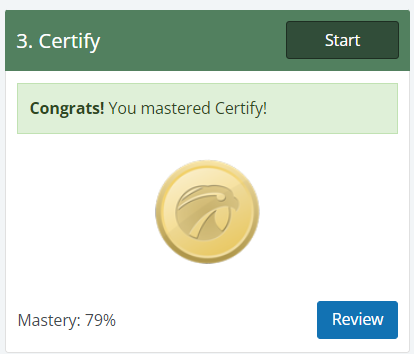
Hawkes Learning’s homework lessons are broken into a 3-step learning mode: Learn, Practice and Certify. Certify is designed to ensure students truly know the material. Built on the principles of Mastery Learning, Certify challenges students to demonstrate a defined level of proficiency before moving forward. During each Certify attempt, tutoring aids are removed, encouraging independent problem-solving and reinforcing genuine understanding. This intentional structure promotes confidence, accountability, and long-term retention, helping students build a strong foundation they can rely on both inside and outside the classroom. This mastery-based approach mirrors the conditions students face on proctored exams, making Certify a powerful preparation tool. By requiring students to work independently—without access to tutoring aids—Certify helps them practice recalling concepts, applying problem-solving strategies, and managing confidence under pressure. Because students must reach a defined level of proficiency before progressing, gaps in understanding are identified and corrected early, not discovered on exam day. The result is deeper retention, reduced test anxiety, and exam performance that reflects true understanding rather than short-term memorization. Learn more about how Hawkes helps students prepare for exams from our Hawkes Student Ambassadors Ash from University of Charleston Certify has helped me feel more ready for exams by giving me practice, but also by bridging the gap between Practice mode and the exam. Certify offers lower stakes than an exam, allowing for multiple retries and allowing you to miss a few problems and still complete it (due to the mastery approach). This can help improve my confidence before an exam and reduce my test anxiety. Certify also holds you accountable to completing practice questions without learning aids which you won't have on an exam. Ty'Nia from University of Arkansas Certify has helped me feel more ready for exams, because once you Certify, that means you've learned to the point of mastery. Hannah from Prairie View A&M University Going through Certify has helped me know the processes and have the understanding needed to complete the problems on the Exams. In my Calculus 1 course, some of the exam problems were similar to those in Certify and having completed them in Certify allowed me to be successful in completing them on my exam. Calliope from Guilford College It [Certify] allowed me to assess my weak spots even if I had shown mastery, and this was very helpful when reviewing for tests. Certify built confidence in my literacy of a subject and that translated well to my confidence on exams when I saw similar problems. Redoing Certifications later also allowed me to prep in a test-like setting. Rishi from University of North Carolina-Charlotte Certify gives me a way to use my own knowledge to complete problems. When I do Certify, I try to do all the problems without getting one wrong. If I get one wrong, I start over so I can be more motivated to take my time and do the problems. Trenton from Prairie View A&M University It [Certify] has made me feel like I was taking a quiz. Since I had to actually learn it to even get a grade for the assignment, it helped me prepare for the questions I would see in the exam environment. Sabrina from SUNY - Old Westbury Certify has helped me feel more ready for exams because the mastery approach pushes me to fully understand the material rather than just complete assignments. Since I have to consistently demonstrate accuracy, it encourages me to review concepts, fix mistakes, and truly learn the content before moving on. For example, when preparing for exams, I noticed that Certify helped me identify weak areas that I might have overlooked. If I struggled to reach mastery on certain topics, I would go back to Practice, use Explain Error, and repeat problems until I felt confident. This process made my studying more focused and effective instead of reviewing everything equally.
![]()
April 6, 2026
Hawkes Learning’s homework lessons are broken into a 3-step learning mode:...
Read More
Update (April 2026): After this post was published, the compliance deadline was extended to April 26, 2027—but our timeline hasn't changed. At Hawkes Learning we already conform to WCAG 2.1 AA guidelines, not because of a deadline, but because our students deserve an equitable experience now and always. We’ll continue to stay ahead and keep improving the experience for you and your students. To the Higher Education Community, The Hawkes Learning team has worked diligently to ensure accessibility compliance and our products have been improved on two fronts simultaneously: Broad platform enhancements that benefit all products A product-by-product review to ensure each title meets WCAG 2.1 AA standards This Isn’t New for Us Accessibility has been a priority at Hawkes Learning long before current compliance requirements. We design our products with students in mind, helping make your institution’s work easier every step of the way. What You Can Count on From Us The Hawkes Learning platform is on track to meet WCAG 2.1 AA conformance by April 24, 2026. Below are some specifics: Our core learning components (Learn screens, question banks, and PowerPoints) have each been individually addressed for accessibility within our Learn-Practice-Certify framework. Our company was founded by educators, and you can be confident we will continue working to provide the most equitable user experience possible. Hawkes is about making sure every student can engage with the material and learn without barriers. If your institution needs documentation for its own compliance review, we will provide a Voluntary Product Accessibility Template (VPAT). Our dedicated accessibility team is happy to answer questions about specific products. Please email accessibility@hawkeslearning.com. The Bigger Picture Accessibility compliance can feel like a lot to manage, especially when you’re juggling vendor conversations, internal reviews, and deadlines. Our goal is to be one less thing on that list. While April 24, 2026, is a milestone for the industry, it’s not a departure from how we’ve designed our products. As always, the Hawkes team is here to support you. Please reach out with any questions. Warm regards, Marcel Prevuznak VP, Research and Development FAQ What is WCAG 2.1 AA? Web Content Accessibility Guidelines, version 2.1, Level AA (WCAG 2.1 AA) is the internationally recognized standard for digital accessibility, developed by the World Wide Web Consortium (W3C). It defines how websites, software, and digital content should be designed so they are accessible to people with disabilities, including those with visual, auditory, motor, or cognitive impairments. Level AA is considered the practical benchmark for compliance and is the standard referenced in most legal and regulatory accessibility requirements — including those relevant to higher education institutions under the ADA and Section 508. Which Hawkes Learning products and components are being addressed? Short answer? All of them! Each of our core learning components are being individually reviewed and updated, including Learn screens, question banks, and PowerPoints within the Learn, Practice, Certify framework. Can my institution get documentation for its own compliance review? Absolutely. Hawkes Learning is happy to provide a Voluntary Product Accessibility Template (VPAT) upon request. For documentation or product-specific questions, contact the dedicated accessibility team at accessibility@hawkeslearning.com. What should I do if I have questions about a specific product's accessibility status? Reach out directly to the Hawkes Learning accessibility team at accessibility@hawkeslearning.com. They can answer questions about individual titles, provide VPATs, and support your institution's internal compliance review process.
![]()
March 30, 2026
Update (April 2026): After this post was published, the compliance deadline was...
Read More
In the landscape of Higher Education, the days of relying solely on a syllabus and office hours are behind us. Today’s student body is diverse, digital-first, and often overwhelmed by information overload. Whether it’s a Dual Credit student navigating their first college course, an international student facing language barriers, or a senior managing a capstone project, effective communication is the linchpin of student retention and success. To bridge the gap between faculty, administration, students, and their support systems, institutions are turning to a blend of community platforms and personal productivity tools. Here is how modern tools are reshaping educational dialogue. Instructor’s Top Pick: Direct Course Connection If there is one tool that belongs in every professor’s toolkit, it is Hawkes Learning's Reminders feature. While many platforms try to do everything, "Reminders" excels at the one thing that matters most: getting the message read. The Reminders feature is my personal favorite for every course I teach. It bridges the gap between the formal LMS and the student’s daily life. Unlike email, which students may check sporadically, "Reminders" sends texts or push notifications that get immediate attention. It allows for two-way messaging without ever sharing your personal phone number, protecting your privacy while remaining accessible. It’s perfect for those "don't forget" nudges about papers, last-minute room changes, or sending a quick morale boost before finals. Building the Village: Engagement & Support Platforms While many communication apps trace their roots to K-12, Higher Education is increasingly adopting them for specific niches: Dual Enrollment programs, ESL/International departments, and Family Engagement offices. Keeping the student’s support system involved is a proven strategy for persistence. ClassDojo: (Free for teachers) While famous in primary education, ClassDojo is finding a unique home in developmental education and community building. It serves as a robust alternative for classroom communication, offering a friendly interface for messaging that feels less formal—and less intimidating—than official university email. TalkingPoints: (Free for individual teachers) As universities seek to globalize, language barriers become a major hurdle for international students and their families. As noted by BookWidgets and Rooted Linguistics, TalkingPoints focuses specifically on breaking down these barriers by translating messages between instructors and families. This is a game-changer for keeping international parents informed about their student's transition to university life. Bloomz: (Free for teachers & parents) For collegiate coaches and student activity directors, Bloomz is an excellent resource. It allows faculty and staff to communicate updates about activities and reports to students and, where appropriate (such as under-18 dual credit students), their parents. Ashland Source highlights its utility in keeping everyone on the same page regarding extracurricular logistics. The Executive Function Gap: Task Management & Reminders A major reason students fall behind isn't a lack of intelligence; it's a lack of organization. Implementing and encouraging the use of digital task managers is a form of communication that helps students communicate with themselves. Microsoft To Do: (Free) For institutions already in the Microsoft ecosystem, this is a powerhouse. As noted by Saner.AI, this cloud-based app syncs tasks across multiple devices and operating systems. It allows students to move seamlessly from a library desktop to their smartphone without losing track of assignment deadlines. Google Keep: (Free) Visual learners thrive here. YouTube reviews frequently highlight its seamless integration with Google Calendar. It is perfect for creating quick reminders, checklists, and collaborative notes that sync across all devices—ideal for student study groups. Any.do: (Free basic version; Premium subscription available) For the busy student balancing work and school, Fruitask notes that Any.do offers high-level features like voice entry, smart date parsing, and location-based reminders (e.g., reminding a student to turn in a paper the moment they step onto campus). Organizing Student Life Finally, the student experience happens largely outside the classroom in clubs, Greek life, and student government. BAND: (Free) When student organizations outgrow the chaos of a massive group text, they turn to BAND. The BAND Blog notes that it is a popular alternative for groups that have exceeded the free limits of other services. It organizes group communication, calendars, and file sharing, ensuring that student leadership can communicate effectively without administrative oversight. The Takeaway Effective communication in Higher Education isn't just about sending an email; it's about meeting students where they are. By leveraging tools that bridge language gaps, involve support systems, and aid in personal organization, institutions can create a safety net that encourages student success from orientation to graduation. Interested in becoming a Hawkes Nest guest blogger? Check out our "Get Involved" opportunities HERE. © 2026 Hawkes Learning
![]()
March 11, 2026
In the landscape of Higher Education, the days of relying solely on a syllabus...
Read More
For any instructor adopting a new courseware platform, there is always an adjustment period. New interfaces, new workflows, new questions. Ahmed Rashed, a statistics instructor at Dallas College, knew this going in. What he did not expect was that the support he had only heard about in stories would be tested in the most stressful way possible, just three days before the semester started. A Last-Minute Assignment It was Spring 2025, and Ahmed was finishing the setup for his MATH 1342 (Statistics) course. As a first-time Hawkes Learning user, he had been working closely with Joshua Rowan, a Hawkes Customer Success Specialist, to make sure everything was in place before classes began. Then, with only three days to go, Ahmed was assigned an additional Co-requisite Statistics course. He had almost no time, limited experience with the platform, and the only window he had to work on it was the day before the semester started. That day also happened to be a holiday. That is when he noticed an email from Josh. Ahmed picked up the phone. "I called the number in the email, and he answered. On a holiday. I explained the situation, and without hesitation, Josh sent me a Zoom link. We had a virtual meeting where I shared my screen, and within an hour, my new course was fully set up and ready for students." Within a single hour, on a holiday, the crisis was resolved. But the support did not stop there. The next day, Ahmed ran into another obstacle: navigating the all-inclusive "IncludED" courseware setup for his students. Julia, his Hawkes Courseware Representative, stepped in to work through it with him, ensuring students had access to everything they needed from day one. And throughout the semester, both Josh and Julia continued to check in regularly, following up to make sure classes were running smoothly and answering any questions along the way. What Sets Hawkes Apart For Ahmed, this experience clarified something important. The platform's mastery-based learning structure and 3-Mode Learning approach matter. But what turned a stressful situation into a successful semester was the people behind it. "Hawkes' service, support, and responsiveness to customer needs is what sets them apart from the rest." As a first-time user, Ahmed had heard good things about Hawkes' customer support before he ever officially adopted the course materials. Those were just stories then. Now they were his own. "That's customer service at its best." A Foundation Built on More Than Software The Hawkes Learning model is built on the idea that student success depends on more than content delivery. The same is true for instructor success. When an educator is supported, prepared, and confident in the tools they are using, that confidence carries into the classroom. Ahmed's experience at Dallas College is a reminder that the right platform partner shows up, not just at onboarding, but when it counts most, including on a holiday, one hour before you think it might be too late.
![]()
March 10, 2026
For any instructor adopting a new courseware platform, there is always an...
Read More
When it comes to strengthening student confidence in Grammar Foundations, nothing speaks louder than the perspective of an instructor who has lived the challenges and found a solution that genuinely works. In this testimonial, we spotlight Professor Lisa Arter's firsthand journey implementing Hawkes Learning’s Grammar Foundations courseware in her ENGL 1410 course at Southern Utah University. Professor Arter's story offers an honest, practical look at how Hawkes transforms the way grammar is taught and learned. "The curriculum is beautifully scaffolded and supported with excellent examples. The online platform is amazing!" Explore the Curriculum Students enter college with little or no grammar knowledge - even as English majors. Creating a grammar class that was at a beginning level but didn't "teach down" to tertiary students was vital. Additionally, I didn't want to spend the class just lecturing and having them think they understood and then do poorly once they left. Using a modified flipped classroom for Grammar Foundations has worked very well. The curriculum is beautifully scaffolded and supported with excellent examples. The online platform is amazing! I love that I can set a proficiency level and the software analyzes a student's trouble spots and gives them more questions to work through in those areas. I also like that the certification quizzes quit once a student can't reach the proficiency score and automatically takes the student to needed review areas. This lessens frustration from students "failing" repeatedly. What Does Implementation Look Like? First, I have my students do the paper textbook, utilizing it as a workbook. They bring the book to class each day and my "lectures" are based on a brief review of the homework and answering the questions students have. This way, the Q&A is targeted. I then have them work on more examples while I move through the class and mark off their work from the homework. I don't grade it - just participation for percentage completed mixed with their Q&A participation. They then know what areas to practice more through the software and take the certification quiz at home. Chapter tests are done in class. Starting with section 2, I introduce sentence diagramming. We work problems in class as this serves as a constant reminder of the parts of speech in section 1 and supports the learned syntax in section 2. Sections 3 and 4 are organized the same way: homework before class, Q&A to work through any questions from that, check it off, diagram some days and then proofread short texts to review and support. Finally, I add an etymology TED Talk and paper. Students research the etymology of their name and a chosen word. They submit a paper, utilizing all they've learned in the class (this is heavily graded on mechanics, style, organization) and give a 5-minute TED Talk on what they've found out about themselves and their chosen word. Students truly enjoy this and end the course with an engaging project. "Scores are up! Students are engaged with the material and feel the success because of this scaffolding. They don't forget early material as they see it repeatedly and in increasingly real-world contexts. I love teaching this class!"
![Image of Professor Lisa Arter]()
February 26, 2026
When it comes to strengthening student confidence in Grammar Foundations,...
Read More
"Hawkes Learning turned a traditionally lecture‑heavy math class into an interactive, data‑driven environment where every student receives instant, personalized feedback, making learning faster, more engaging, and far less stressful for both the instructor and the learners. Working with Hawkes Learning has fundamentally reshaped how I approach mathematics instruction." Professor Olcay Akman has used Hawkes Learning in his statistics courses since fall 1998. He uses Hawkes Learning's Beginning Statistics courseware in his MAT150 and MAT252 courses at Illinois State University. Before adopting Hawkes Learning, I struggled with keeping lessons engaging for diverse learners and providing timely, personalized feedback. My students often felt overwhelmed by abstract concepts, lacked confidence in problem‑solving, and received delayed guidance, which slowed their progress and reduced motivation. Hawkes Learning helped me turn those obstacles into strengths in three key areas: 1. Adaptive, Interactive Lessons Their digital curriculum automatically adjusts the difficulty of each problem based on a student’s real‑time responses. This kept advanced learners challenged while giving struggling students the extra scaffolding they needed, eliminating the “one‑size‑fits‑all” issue I faced with static worksheets. 2. Instant, Targeted Feedback As soon as a student submits an answer, Hawkes provides step‑by‑step explanations and hints. This eliminated the lag between a mistake and corrective instruction, allowing students to self‑correct on the spot and freeing me to focus on higher‑order discussions rather than grading. 3. Data-Driven Insights The platform’s dashboards highlight patterns such as concepts where an individual—or the whole class—frequently errs. With these analytics I could quickly identify misconceptions, re‑teach specific topics, and personalize interventions, turning vague “students are struggling” feelings into concrete, actionable plans. Overall, Hawkes Learning transformed the classroom from a reactive environment into a data‑driven, student‑centered space where learning accelerated, effort was focused where it mattered most, and both teachers and learners experienced greater satisfaction. My classroom polls indicated a boost in “enjoyment of math” scores, and the students’ homework submission rates greatly improved. I reclaimed more time in my weekly schedule which I had previously spent on manual grading and worksheet creation. The Hawkes dashboard alerts flagged at‑risk concepts within minutes, which helped me structure my review with students. This subsequently led to reduced repeat errors among the students' performances. I found that both advanced and struggling students progressed simultaneously, narrowing the achievement gap between top‑ and bottom‑quartile performers. The platform’s adaptive engine continuously gauges each student’s mastery level, allowing me to spend less time crafting differentiated worksheets and more time facilitating deep, conceptual discussions. Instant, step‑by‑step feedback not only empowers students to correct mistakes on the spot but also cultivates a growth mindset—they begin to view errors as learning opportunities rather than setbacks. The rich analytics dashboard gives me a clear, real‑time picture of class‑wide trends, so I can intervene before misconceptions become entrenched, and it also provides concrete evidence of progress that I can share with parents and administrators. Perhaps most importantly, the seamless integration of Hawkes into my existing LMS meant there was virtually no learning curve for me or my students; the transition was smooth, and the immediate improvements in engagement, confidence, and achievement reinforced that technology, when thoughtfully applied, can elevate—not replace—the human element of teaching. Learn more about Hawkes Learning's Statistics Resources
![]()
We are so excited to introduce our Spring 2026 Student Ambassadors! Each semester, Hawkes teams up with students across the United States for an internship focused on supporting those who are new to our online courseware platform. Our Hawkes Ambassadors meet with their peers to provide one-on-one guidance and answer questions they may have regarding Hawkes, such as where to go to complete their homework, how to create a practice test, as well as helpful Hawkes tools to boost their academic performance. Our Hawkes Ambassadors have successfully completed at least one Hawkes course themselves, so they can speak from first-hand experience on how Hawkes makes a positive difference in learning. We invite you to read below to meet our talented Hawkes Ambassadors from schools across the country. Rishi Bindela University of North Carolina - Charlotte Rishi Bindela is a Freshman at the University of North Carolina pursuing a dual degree in Accounting and Finance. After graduation, he plans to get his CPA and work in an accounting firm. Born and raised in Concord, NC, he enjoys math and is passionate about teaching as well. In his free time, he likes playing video games, swimming, and watching tv shows. He started using Hawkes in the Fall of 2025 for their Business Calculus class and has taken a liking to the learning site as a result. This is his first semester as a Hawkes Student Learning Ambassador. Ty'Nia Hightower Arkansas State University Ty’Nia is a junior at Arkansas State University. She is a psychology major planning to further her education with the addition of a master’s degree in social work. Ty’Nia is enamored with anything Spiderman related, including the blue and red color combo. She enjoys traveling and journaling, and she recently started reading for leisure again. Calliope Kamitses-Schrider Guilford College Calliope is pursuing a degree in Environmental Studies with dreams of going into conservation and inspiring others to fall in love with nature. Outside of school, Cal indulges in her hobbies of drawing and painting, writing poetry and music, reading books, white water canoeing and backpacking, and playing sports. She is currently learning how to play rugby! Cal loves cute coffee shops and sweet treats, spending quality time with friends and family, cuddling her cats, traveling to new places, and being out in nature. Hannah Shelby Prairie View A&M University Hannah is a Mathematics major graduating this semester and is currently earning her Alternative Teaching Certification with plans to teach high school mathematics. After graduating, Hannah wants to become a teacher and pursue higher education, hoping to earn a Master's and a Doctorate in Mathematics Education. In her free time, if she’s not working, Hannah enjoys watching TV, creating content, and spending time with friends and family. Trenton Jeffers Prairie View A&M University Trenton is a senior studying mathematics and hopes to get his teacher certification so that he can teach future students in various math classes. He loves to tutor students who need help with many forms of math. He loves to play video games and watch football and basketball in his free time. He also loves to create content for YouTube and TikTok. He is also a sneakerhead and has a large collection of Nikes and Jordans. This is his fifth semester as a Hawkes Learning Student Ambassador. Ash Dean University of Charleston Ashton is a junior studying Biology and Data Analytics. He is also enrolled in an online Mathematic B.S. program through Indiana University. Ash holds an institutional GPA of 4.0 at both universities, with a cumulative GPA of over 3.9. After graduating, his goal is to pursue medical school and continue research. In his free time, Ash likes to go on walks, tend to his plants, and spend time with his cat Pythagoras. Ash is a returning Hawkes Student Ambassador. Sabrina Johnson SUNY Old Westbury Sabrina is a first-year student at SUNY Old Westbury. Her major is Biochemistry and she is enrolled in her institution’s B.S./D.O. Program. Her dream is to be a doctor. She first used Hawkes in her Biology I course and loved it. Now she hopes to help other students navigate the platform. When she is not studying, she is enjoying music and literature. She is looking forward to a productive semester. Clair Sassano Purdue University Global Clair is enrolled at Purdue University Global, working to achieve her bachelors in ABA (applied behavior analysis) Psychology. After her bachelor’s, Clair hopes to achieve her master’s degree in ABA to reach her goal of becoming a BCBA (board-certified behavior analyst). Clair’s life is surrounded by kids, as she is the children’s director at her church, works with children in ABA therapy and is a proud foster parent. In her spare time, Clair enjoys making handmade soaps, body butters and body scrubs. Interested in being a Student Ambassador? Click here to learn more and see when applications are open!
![]()
February 16, 2026
We are so excited to introduce our Spring 2026 Student Ambassadors! Each...
Read More
Planning a course takes time, finding high-quality instructional materials shouldn’t. The Instructor Resource Library brings together free, ready-to-use teaching resources organized by course and accessible directly from your Hawkes Learning Teach account. Everything is designed to support your instruction, reinforce mastery-based learning, and save you valuable prep time. Whether you’re building a lecture, planning an activity, or looking for ways to strengthen student engagement, these resources are already aligned to your course and ready when you need them. What You’ll Find in the Instructor Resource Library Each resource is created to be flexible, practical, and easy to integrate into your existing course, no extra setup required. Lecture PowerPoints Editable slide decks aligned to Hawkes course content help you structure lectures quickly and confidently. Use them as-is or customize to match your teaching style, pacing, and classroom priorities. Downloadable Projects Real-world, application-based projects give students opportunities to practice concepts beyond routine problem sets. These assignments are designed to encourage deeper understanding, collaboration, and transferable skills. Group Activities Low-stakes, interactive activities support peer learning and discussion whether in class or online. These resources help students talk through concepts, learn from one another, and stay actively engaged. Critical Thinking & Reflection Questions Thought-provoking prompts help students connect course material to practical scenarios, explain their reasoning, and reflect on their learning process supporting both mastery and metacognition. Why Instructors Use the Instructor Resource Library Saves time by reducing prep and content creation Supports mastery-based learning with aligned materials Fits naturally into your course—nothing extra to manage Free and included with your Hawkes course access The goal is simple: help you teach with confidence, using resources that feel like they already belong in your classroom. How to Access Instructor Resources Getting started takes just a few clicks: Log into your Hawkes Learning Teach account Select your course from the Courses Overview page Open the Help dropdown in the left-hand menu Choose Instructor Resources That’s it! No additional setup. No extra cost. Frequently Asked Questions Are Instructor Resources free? Yes. All Instructor Resources are included at no additional cost with Hawkes course access. Do I need to integrate anything new into my LMS? No. Resources are accessed directly through your Teach account and designed to fit seamlessly into your existing course structure. Can I edit or customize the materials? Yes. Many resources, including PowerPoints and projects, are fully editable so you can adapt them to your teaching style. Additional Free Teaching Tools: Companion Websites In addition to the Instructor Resource Library, Hawkes also offers Companion Websites. These convenient, course‑specific resource hubs support both instructors and students with ancillaries like: Free technology guides and data sets Student-facing Chapter Project downloads Helpful links and supplemental materials Verified Quizlet sets aligned to your Hawkes content Companion Websites are currently available for: Viewing Life Mathematically Calculus Economics Psychology Statistics Sociology Biology English
![]()
February 9, 2026
Planning a course takes time, finding high-quality instructional materials...
Read More
Managing multiple instructors and student sections can be challenging, but Hawkes Learning makes it easier with Course Administrator access. As a Course Administrator, you have full control and access to: All instructor section settings All student settings and grade data The ability to update grades manually for any student The ability to add new instructors to Hawkes With these permissions, administrators can ensure courses are properly set up, assignments are aligned, and instructors have what they need to succeed. Here’s a closer look at the features that make course management smoother with step-by-step instructions on key processes. Adding New Instructors → Watch the Video Tutorial: Adding New Instructor, Permissions Explained, & Sending Course Invitation As a Course Administrator, navigate to Tools > Manage Instructors. Select Add Instructor. Enter the new instructor’s first name, last name, email address, select their role, and click Save. Once added to the course, the instructor will receive a course invitation email with steps to create their Hawkes Teach account and add the course to their Dashboard. If a newly added instructor cannot locate the invitation email, the Course Administrator can resend it by selecting the instructor, clicking Actions, and choosing Send Invitation Email. Creating & Configuring Sections for Instructors from a Templated Section → Watch the Video Tutorial: Using a Templated Section to Push Out for Instructors If you have an existing, templated section with assignments and settings already assigned and would like to use it to copy out to other instructors, follow these steps. Navigate to Tools > Manage Sections. Click on Add Section and use the dropdown to select the instructor for whom you’re creating the section for. Enter the request details: section name, section start date, section end date, meeting times (optional) and section visibility. Click Save or Save and Add Another if needing to repeat for another instructor. Once the section is created for the instructor, you can configure the settings to copy assignments and settings from the templated section. Configuring Section Settings Select the new sections by clicking the box next to the instructor(s) name and section(s). Click Actions and Configure Section. Select the templated section you want to copy settings from using the “Apply From” dropdown. Click Apply Settings to push out the configuration. Making a Templated Section Available for Instructors to Copy & Create Their Own → Watch the Video Tutorial: Making a Templated Section Available for Instructors to Copy Create the Templated Section. Navigate to Tools > Manage Sections. Select the Templated Section, Actions, and Manage Facilitators Share the Templated Section. Select "All Facilitators" to include all instructors, or choose specific individuals. Click Submit to push the section to each selected instructor's Teach accounts. Mark the templated section as "Inactive" using the "Visibility" column. October 2025 Update: Course Admins now experience an updated "Manage Sections" Simply toggle on "Manage Section Templates" as highlighted in the screenshot below to see all templates tied to a section in one place. From here, updates can be made directly, allowing you to ensure accuracy and save time. Self-Help PDFs Explore printable directions and more guidance with Course Admin permissions below. Course Administrator – Creating Sections for Instructors from Templated Section.pdf Course Coordinator – How to Add a New Instructor.pdf Course Coordinator- Making Templated Section Available for Instructors to Copy.pdf Platform Roles and Permissions.pdf
![]()
February 6, 2026
Managing multiple instructors and student sections can be challenging, but...
Read More
We're excited to announce the launch of the 7th Edition of Introductory Algebra by D. Franklin Wright! Designed to help students build a strong foundation in algebraic concepts, the 7th edition expands its focus on real-world applications, expanded practice opportunities, and updated content, while maintaining a streamlined structure ideal for a single-semester Introductory Algebra course. With newly developed exercises, application-based chapter projects, and enhanced courseware, this edition supports a seamless transition from prealgebra to algebra. What’s New in the Introductory Algebra 7th Edition The 7th edition introduces new content and a streamlined table of contents to improve organization and pacing, while continuing to support the foundational topics instructors expect in a single-semester Introductory Algebra course. New in this Edition: New Chapter: Strategies for Academic Success New Chapter: Geometry and Statistics New Lesson: Least Common Multiple of Polynomials These additions complement core algebra topics such as solving linear equations and inequalities, exponents and polynomials, rational expressions, and quadratic equations, ensuring comprehensive coverage with added flexibility and relevance. Explore the Full Table of Contents Expanded Practice & Assessment Questions To support diverse learning preferences and create more opportunities for skill development, Courseware exercises have been significantly expanded. What's New in the Courseware Question Bank: 1,500+ new questions added 300 application-based questions (a 149% increase from the previous edition) 84 specific to the Strategies for Academic Success chapter With these additions, the 7th edition now includes over 3,300 courseware questions—a 92% increase from the previous edition! New Features More Ways to Connect Algebra to Everyday Life and Work Building on prior real-world applications, the 7th edition places a stronger emphasis on relevance—introducing brand new chapter projects and expanding opportunities for students to apply algebra to everyday situations, careers, and collaborative problem-solving. Real-World Connections & Collaborative Projects 22 ready-to-assign chapter projects (two per chapter) promote collaboration and connect mathematics to hands-on, real-world scenarios. “Connections” chapter openers link key concepts to everyday experiences, helping students answer the question, "Why do I need to know this math?" An expanded emphasis on applications helps develop real-world problem-solving skills. Learning Support for Immediate Practice and Confidence New Completion Examples guide students through concepts with partial solutions in the Courseware, reinforcing understanding and allowing students to quickly check their work. This approach reinforces learning and helps students build confidence as they progress. Improved Organization & New Instructional Content Updates in the 7th edition reflect feedback from instructors and students, with a focus on relevance, flexibility, and student success. A streamlined table of contents improves content flow, progression, and the overall student experience. New chapter: Strategies for Academic Success Covers time management, test-taking strategies, note-taking, and stress reduction to help students thrive in any math course New chapter: Geometry and Statistics Offers additional topics to give instructors more flexibility in their instruction and provide topics for deeper learning and skill-building New lesson: Least Common Multiple of Polynomials Updated examples and lesson content for modern relevance and improved clarity New and updated calculator instructions and formula tables Designed for Single-Semester Introductory Algebra Courses With a refined scope and sequence, the 7th edition further supports single-semester Introductory Algebra courses, helping instructors plan, pace, and assign content efficiently while preparing students for subsequent math topics. Want a Closer Look? Get Trial Access
![]()
January 26, 2026
We're excited to announce the launch of the 7th Edition of Introductory Algebra...
Read More
Creating a corequisite course can feel overwhelming, but with the right tools, you can build a learning experience that’s both structured and customizable, giving each learner the support they need without adding to your workload or taking away from valuable class time. That’s where Hawkes Learning shines. Built on a mastery-based framework, we combine diagnostics, personalized practice, and robust reporting to help instructors deliver equitable, effective learning experiences to each student. Hawkes uses data-driven diagnostics to individualize learning paths and provide targeted support to make learning more efficient. Here’s how: A Focus on Integrated Review & Prerequisite Skills Hawkes’ Integrated Review products organize prerequisite skill-building into structured review chapters that precede core Math and English content, giving students just-in-time access to foundational concepts before moving into the primary curriculum. With just-in-time remediation built directly into the learning experience, instructors can support skill development without adding extra materials, redesigning their syllabus, or slowing the pace of the course. Smarter Diagnostics for a Stronger Start “The diagnostic abilities of Hawkes are a game changer.” – Carrye Wilkins, Associate Director of the REACH Learning Center at the University of Louisville Every student brings a different level of foundational knowledge to class. Hawkes’ diagnostics help you identify and then bridge skill gaps by individualizing instruction. Make Remediation more Efficient With diagnostics, students can quickly place out of topics they already have mastered, allowing them to focus on the topics that need extra attention, making every study session more effective. Pre-created and Customizable Ready-to-use diagnostic tests give you a quick, accurate read on student readiness with the ability to edit, remove, or add questions to fit your unique course goals or standards. Insights at Multiple Levels Diagnostics are available at the course, chapter, and lesson levels, so you can gauge understanding across broad concepts or drill into specific skills. Shining a Spotlight on Efficiency One of the key pillars of Hawkes’ mastery approach is efficiency, helping students make the most of every learning moment. Instead of practicing without purpose or having to “re-prove” their understanding, these flexible pathways allow them to focus their time on intentional learning and meaningful progress. This quick video shows how the Diagnostic Tests in Hawkes’ platform customize lesson plans from the students’ perspective. Data That Drives Instruction So, you’ve individualized each student’s to-do list with the diagnostics tool—now what? Hawkes’ real-time reporting and analytics transform diagnostic results, time-on-task data, and performance trends into actionable insights, helping students stay on track, build confidence, and progress at their own pace. With Hawkes, you can: Monitor trends – Track individual and course-wide performance over time to spot early warning signs. Filter and customize reports – Apply built-in filters to focus on specific groups, objectives, or activities. Export results – Download data in formats that work for your department, institution, or personal tracking. Guide instruction efficiently – Use insights to prioritize teaching, intervene early, and support each student effectively. Additional Tools to Support Your Corequisite Success While Diagnostics and Reporting are the foundation, Hawkes offers a full suite of tools to make course setup, instruction, and student engagement easier, no matter your course model. Course Customization Custom Learn Screens: Integrate your own course materials, notes, hyperlinks, images, or YouTube videos. Flexible Assignment Grouping: Mix review and non-review assignments, exclude assignments from grades, adjust weights, and more. Course Management Roles, Permissions, and Manage Facilitators: Share responsibilities and streamline support by giving TAs, tutors, or co-instructors appropriate access levels. Export to Word: Download WebTests and Certify assignments to view offline, edit, create multiple versions, and print for in-person exams. Student Learning Support Academic Learning Aids: Students get immediate feedback and clarity from tools like AI Tutor right when they need it most without ever leaving the courseware. Designed for Equity, Built for Efficiency Corequisite teaching is all about giving students multiple paths to success, and Hawkes’ tools are designed to make that mission attainable. From just-in-time review and AI-powered tutoring to interactive lessons and unlimited mastery attempts, Hawkes ensures every learner gets the support they need succeed. Ready to see how Hawkes simplifies corequisite teaching? Explore Integrated Review Solutions
![]()
January 15, 2026
Creating a corequisite course can feel overwhelming, but with the right tools,...
Read More
At Hawkes, instructor feedback is critical to guiding product enhancements. We actively seek input from educators and use those insights to guide updates that make a real difference in teaching and learning. In response to recent instructor feedback, we’ve added 283 new questions across 14 lessons in our Calculus courses—expanding both the quantity and quality of practice available to students. These new questions include: More lower-difficulty questions to help students build confidence Textbook-aligned exercises that integrate smoothly into existing courses Conceptual questions that emphasize reasoning, interpretation, and understanding For instructors, these additions offer more flexibility in homework and assessments while helping students engage more deeply with core calculus concepts. New Questions at a Glance Want to see what’s new and where these questions appear? Access the quick reference guide for your Calculus title below: Single Variable Calculus with Early Transcendentals, 2nd Edition See What's New → Calculus with Early Transcendentals, 2nd Edition See What's New → Calculus with Early Transcendentals Plus Integrated Review, 2nd Edition See What's New → Tips & Instructions for Incorporating These New Questions Which titles received the new questions? Single Variable Calculus with Early Transcendentals, 2nd Edition Calculus with Early Transcendentals, 2nd Edition Calculus with Early Transcendentals Plus Integrated Review, 2nd Edition Are serial numbers available for Hawkes instructors? Yes! Check out these quick reference guides for a breakdown of the latest questions in each title including what changed, corresponding lessons, and serial numbers. Are new questions automatically added to my assignments? New questions are not automatically added to the Hawkes Default Curriculum. You’ll need to take a few simple steps to incorporate them into your assignments or Custom Curriculum using the steps in the dropdown questions below. If you have any questions about this question bank expansion project or need help assigning them to your courses, our Customer Success Team is always available to help! Contact them any time at instructorsupport@hawkeslearning.com. How do I add these new questions to an existing assignment? In your instructor dashboard, select Assignments > Manage > WebTest. Select Manage in the top-right corner, then select the test name and Copy button. Select the Edit icon to the left of the copied test. Select “Default Curriculum” if you have not assigned the questions in a Custom Curriculum yet. Otherwise, select your Custom Curriculum. Select a Chapter, then Lesson from the left column. New questions will be labeled “New” and displayed towards the bottom of the left column as highlighted in the screenshot below. Select the +Add button to include the questions in your assessment. Be sure to Save your changes. How do I add these new questions to a custom curriculum? In your instructor dashboard, select Assignments > Manage > Curriculum. Select any course which has the Curriculum you would like to update assigned. Select a Lesson Name in the left column. New questions will be labeled “New” and displayed towards the bottom of the left column as highlighted in the screenshot below. Select the +Add button to include the questions in your Custom Curriculum. Be sure to Save your changes. We know that every new question is another opportunity for students to practice, build confidence, and make progress toward mastery. These updates reflect your feedback and our shared focus on student success. More enhancements are always on the roadmap, and we look forward to continuing to build alongside instructors like you!
![]()
January 14, 2026
At Hawkes, instructor feedback is critical to guiding product enhancements. We...
Read More
Courses: Quantitative Reasoning, Elementary Statistics, Functions and Modeling, and Precalculus for ENG-PHYS-CS Course Type: Corequisite Math Pathways Quick Stats: The percentage of students completing college-level math in a single semester rose from 29% to an average of 73% per term, showing steady, lasting improvement. When surveyed, 100% of students enrolled in a lab (corequisite) course said it helped them succeed in their math class. Background & Overview Seminole State College (SSC) math faculty sought to redesign their math sequence to help students graduate on time and place them into math pathways most relevant to their fields of study. In fall 2017, the Mathematics Department launched corequisite math pathways in Quantitative Reasoning, Statistics, and STEM tracks. Within just a few semesters, SSC transitioned to a 100% corequisite model across all math courses. Placement & Course Structure Students are placed in a pathway based on their major, so they can learn the most applicable mathematics for their future careers. Placement into a corequisite course is determined by ACT math scores, QAS Accuplacer results, and a Multiple Measures Rubric to ensure students receive the level of support they need. * STEM includes Precalculus for ENG-PHYS-CS and Functions & Modeling Each pathway pairs with a credit-bearing course immediately followed by a lab (corequisite) course that provides targeted lesson content and individualized support. With this model, students receive one-on-one help immediately after learning new material, reinforcing mastery and confidence. Corequisite remediation is also offered online, where intentional communication and targeted math review are integrated directly into the course design. Results & Student Impact With this new model, more students are passing their credit-bearing math courses within their first year, increasing overall retention and graduation rates. “The lab class (corequisite) helped me so much. I was able to get one-on-one help on questions I needed help with. The extra class was the reason I was able to pass with an A.” -Isaac H., Seminole State College student “Special Topics (corequisite course directly following the credit-bearing math course) really helped me grow as a student! Being able to head to Special Topics after learning a new objective was very helpful because I was able to receive one-on-one help from the professor. It was a class that definitely gave me the confidence to succeed in college! “ -Bryce F., Seminole State College student
![]()
November 11, 2025
Courses: Quantitative Reasoning, Elementary Statistics, Functions and Modeling,...
Read More
Highlights Improved grades and retention: The average grade in the General Psychology course significantly improved by approximately 23.08%, rising from a low “B” average to a mid-“A” average. Improved pass rate: The pass rate increased by approximately 25.64%, and drop rates nearly disappeared by fall 2024. Decreased test anxiety: Excluding the years 2019-2020 due to the influence of COVID-19 on test anxiety, we observe a 40% drop in the first year Hawkes was implemented, based on the 2018-2019 report of 10 students, followed by an 80% decrease and eventually a 100% elimination of students reporting test anxiety at the Center for Testing Support. This case study demonstrates the value of making thoughtful, research-informed changes to course design, particularly when addressing both academic performance and student mental health. Background and Context In the 2019-2020 school year, the psychology faculty at Neosho County Community College (NCCC) were concerned about the pass rate and overall grades achieved in their introductory-level General Psychology course. Some of the concerns were that on average, 6-9% of the students starting the course dropped and that 14-18% received “Ds or Fs” as their final grades. The faculty felt these were not acceptable scores for a 100-level class. (These results were for the cumulative in-person and online courses offered.) On average, the college hosts 250-300 students in the General Psychology class each semester. A secondary issue occurred in the in-person classes on the main campus in Chanute, Kansas. This issue was that each semester 6-11 students were reporting mental health issues about taking the class as well as often voicing concern over their entire class load. Mr. Mark Johnston, a professor on the main campus, runs a test anxiety clinic for all students on the campus. He noted that many students reporting test anxiety or generalized anxiety were concerned about the work required and the assessments in their General Psychology courses. The psychology department saw a need for changes in the course and the course materials used. They also hoped to adjust teaching methods to address these issues. The psychology department reviewed several different textbooks and support materials, seeking a better tool to address the problems and make the course more enjoyable and meaningful overall. “Hawkes is a learning system, not just a textbook or software. Students are immersed in their learning from the moment they start to the very end of the course. The system has so many intuitive elements that even students who are not very computer literate find working in it easy and fulfilling.” – Professor Mark Johnston Implementation In the spring of 2020, the department decided to adopt Hawkes Learning’s Introduction to Psychology. This decision was reached due to a few reasons, one of which was that the courseware was mastery-based, something the faculty agreed was needed. They also valued the support Hawkes was offering to implement the change. The faculty also reviewed other schools’ use of the Hawkes system and felt that Hawkes’ supporting software would fulfill their needs. Over the remainder of the 2019-2020 school year, the faculty worked out a plan to present a uniform class with the same materials and the same teaching methods. Their goal was to provide all students taking the General Psychology class with a similar teaching and learning environment. This included standardizing the associated PowerPoint slides, lecture highlights, and, where appropriate, recorded lectures for online students. Similarly, weekly quizzes, exams, and papers were all standardized to present every student with the same materials and assessment procedures. Beginning in the 2020-2021 school year, the faculty implemented the Hawkes system. To their delight, the results exceeded their expectations. Outcomes within the course all exceeded state standards, and drop rates were almost nonexistent. Similarly, the overall grade averages rose from a low “B” average to a mid-A average. A similar unexpected outcome was noted in the text-anxiety clinic. Likewise, student self-reports on the course were all very positive for the Hawkes system and the mastery-based approach that the psychology faculty implemented. Over the ensuing school years, grades and satisfaction with the Hawkes Learning system have remained high. Similarly, the number of students coming in for test anxiety has less than or equal to 1 for four consecutive semesters. This suggested that the new system not only addressed academic struggles but also alleviated psychological barriers to success. At the start of the Fall 2024 semester, the department implemented the second edition of the textbook and learning tools. This included Hawkes’ AI Tutor feature to support students during their homework sessions. Grades across all General Psychology courses have remained high, as have student reports of the Hawkes system. At first, the AI Tutor tool was not often utilized, as students were afraid that using AI to help them might result in academic dishonesty charges. Once it was made clear that AI Tutor only supports learning and not actual testing, usage improved. Conclusion The integration of the Hawkes Learning System at Neosho County Community College has significantly transformed the General Psychology course, leading to remarkable improvements in both academic performance and student well-being. By embracing a mastery-based learning approach and standardizing course materials and assessments, faculty at NCCC effectively addressed persistent challenges such as low pass rates, high drop-out rates, and mental health concerns, particularly test anxiety. The results have exceeded expectations, with student grades improving, engagement rising, and anxiety-related issues sharply decreasing. These results demonstrate that students flourish in a supportive, engaging, and mentally healthy environment, further establishing Hawkes as a model of effective, student-centered education. Learn more about Hawkes Learning’s Psychology curriculum and mastery-based offerings here.
![]()
November 4, 2025
Highlights Improved grades and retention:
Read More
Hawkes Learning, a leading provider of educational technology solutions, announces the launch of a new bilingual feature in AI Tutor, the secure, AI-driven tool designed to empower students by providing immediate, individualized support with contextualized responses, enhancing mastery and building confidence. With the addition of Spanish support in the tool, we are better able to reach more students by removing a language barrier and allowing students to focus on learning. Meeting More Students Where They Are The newly bilingual AI Tutor represents Hawkes Learning’s continued commitment to educational equity and its founding belief that with the right tools, every student can learn and succeed. This enhancement addresses a growing need in higher education by ensuring Spanish-speaking students have equitable access to personalized learning support, a population that represents: More than 41 million Americans who speak Spanish as their first language Nearly 18 percent of the total undergraduate population A demographic whose enrollment at colleges and universities has more than doubled in the past two decades, according to Pew Research Center Equitable, Empathetic, and Easy Students simply begin typing their question in Spanish and AI Tutor will automatically respond in the student’s language of choice. Built in a secure environment, AI Tutor provides peace of mind for instructors with guardrails around Hawkes’ trusted content, protection of user data, and prevention of shared answers. The tool understands the student experience and provides a supportive, personalized learning journey, guiding students toward mastery. “I liked how it provided the same resources as AI tutor in English, making it very inclusive for all learners! AI Tutor made me feel less alone in the stress in that there’s an outlet to help.” —Sharon Kariyev, Student at SUNY College at Old Westbury Supports More Students Hawkes Learning invites educators and students to explore how AI Tutor can transform the learning experience and drive student success. Since its original launch one year ago, AI Tutor has served more than 81,000 students and had more than 460,000 conversations. On average, 40 percent of students utilized the tutor multiple times, proving ongoing assistance. This innovative tool represents the future of education, providing a secure, inclusive, and student-centered approach to mastering course material in a technology-forward landscape. “At Hawkes Learning, we don’t just say that learning is for everyone; we are doing something about it,” said Scott Virkler, CEO of Hawkes Learning. “I’m thrilled to announce this bilingual feature to make learning much easier for such a large group of students. We truly believe all students deserve support, wherever they are in their learning journey.” For more information about this newly bilingual AI-powered learning tool and how it can enhance the learning experience, please visit www.hawkeslearning.com/aitutor.
![]()
October 27, 2025
Hawkes Learning, a leading provider of educational technology solutions,...
Read More
Mastery learning is transforming the way students engage with challenging material, and Hawkes Learning is at the forefront of this shift. By emphasizing understanding over memorization, Hawkes empowers students to take control of their learning journey, building confidence through personalized, self-paced practice. In this blog, we're highlighting firsthand experiences from students who have thrived using Hawkes Learning’s mastery-based approach—discovering not only improved grades but also a renewed sense of motivation and achievement in their academic lives. Let’s hear directly from the students who’ve experienced the power of mastery learning. Ella from Guilford College “Hawkes’ mastery approach has made a difference in my educational experience because it makes it feel more personal. I know I can learn at my own pace and always go back to practice to understand the content before being tested on it. This makes me feel more at ease when learning something because I know I don’t have the pressure of a time constraint and I don’t have to get it right the first time.” Trenton from Prairie View A&M University “I love the Hawkes mastery approach because it forces you to learn to do the work (in a good way). It makes you go to the practice first and study as much as you can and work on a bunch of practice problems. Then, you are able to move on to similar questions in the Certify mode (using the mastery approach). It helps you genuinely learn instead of just doing homework.” Ash from University of Charleston “The mastery approach allows me to go through my Certify lessons and complete a majority of the lessons that I am confident in, while still getting a few problems wrong that I might be struggling with a little bit. This creates a more stress-free environment, where I can get one or two questions wrong and then go back and focus on them later, which ultimately reduces the number of errors I make from just being stressed about getting everything right.” Stephanie from Walla Walla University “Before I started using Hawkes, I would just hope for the best, but with Hawkes, it would make me understand before we moved forward… When I made a mistake, it didn’t just mark me wrong; it showed me how I was wrong and what I could do to fix it. The Certify part is my favorite because it makes me make sure that I understand the lesson before moving on and be more patient and consistent with my studying. Overall, the mastery approach has made me feel more confident in my studies.” Jay from San Diego City College “I absolutely loved Hawkes’ mastery approach. I loved how the structure is clear and concise, and the varied problem-solving really serves as a great stepping stone toward mastering just about any subject. I loved how I was always able to have a clear goal in mind, and that really made it feel easier and a lot more accessible while I was learning.”
![]()
October 22, 2025
Mastery learning is transforming the way students engage with challenging...
Read More
“I would recommend Hawkes wholeheartedly to anyone seeking to integrate an online textbook experience with their students.” Lucy Horton is an associate professor at College of Coastal Georgia and teaches dual enrollment courses at a local high school. She has been teaching dual enrollment courses for three semesters with Hawkes Learning and recently shared her experience. Title Used: Precalculus, 3rd Edition “The amazing folks at Hawkes Learning understand the challenges that educators face each semester and provide unprecedented, personal one-on-one help every time. What I am in awe about most recently is the fact that Hawkes set up three Sundays in a row that corresponded with the start times of various colleges around the country. It was on Sunday afternoon when I realized something was awry with my grade book. I was able to call in on Sunday and talk with a live agent, and they set up a Zoom call with me, shared my screen, and walked me through all the necessary fixes. It is absolutely amazing that a company would provide this amazing service—right in time—for educators trying to be fully prepared and ready for the new semester! Way to go, Hawkes; you guys get it and provide amazing support when it is most needed. I am so grateful! My students appreciate the Hawkes platform for its videos, practice, AI tutor, and opportunities to improve their math skills. The platform provides students with what they need and educators with seamless integration with various college learning platforms. I would recommend Hawkes wholeheartedly to anyone seeking to integrate an online textbook experience with their students. Their educator support is unparalleled in the marketplace. The integration between it and the various college learning platforms makes it effortless for educators trying to assign and grade student work. Thank you, Hawkes Support; you make my job much easier!” “Thank you, Hawkes Support; you make my job much easier!”
![College of Coastal Georgia]()
October 6, 2025
“I would recommend Hawkes wholeheartedly to anyone seeking to integrate an...
Read More
We’re delighted to offer an exciting internship program to students from colleges and universities across the country. This fall, we have an excellent group of student interns joining us for our Hawkes Learning Student Ambassadors program! Each semester, our Student Ambassadors offer guidance and one-on-one assistance with all things Hawkes to fellow students on campus, helping them to find homework assignments, create practice tests, learn best practices for using Hawkes’ courseware, and more. Read below to get acquainted with this semester’s team of talented Student Ambassadors. Ella from Guilford College Ella is a senior at Guilford College, pursuing a degree in Environmental Studies with a minor in Religious Studies. After graduation, she hopes to keep learning about natural processes and do meaningful work with plants and animals. With her free time, she enjoys walks in the Guilford Woods, looking at birds, and honing her arts and crafts skills through woodburning and watercolor. Margaret from Purdue Global Margaret is completing her degree in Project Management at Purdue Global at the age of 40, taking on her second journey in higher education with dedication and determination. She is from Indiana and is a proud mother of four, including one child currently in nursing school. In her free time, she enjoys attending concerts and spending quality time with her family and friends. Jay from San Diego City College Jay is a future linguist stationed at their local City College in sunny San Diego, California. With a passion for language, Jay is currently studying Humanities and Language Arts with the goal of transferring to complete a Bachelor’s degree in Linguistics next year. The first time they used Hawkes was during the Spring 2025 semester in their Elementary Statistics course. Outside of San Diego City College, Jay enjoys reading, video games, art, and working at the San Diego Museum of Art. Joe from SUNY Old Westbury Joe is a Biology major at SUNY Old Westbury. His dream is to perform noteworthy research and make an impact on the world through science. Joe is interested in wildlife and marine biology, as well as cytology and teaching. He is passionate about nature and animals, among many other things. When he is not learning about science, he can be found teaching guitar and bass, practicing martial arts, exercising, hiking, and traveling. Ash from the University of Charleston Ashton is a junior at the University of Charleston, studying Biology and Data Analytics. He is also enrolled in an online Mathematic B.S. program through Indiana University. Ash holds an institutional GPA of 4.0 at both universities, with a cumulative GPA of over 3.9. After graduating, his goal is to pursue medical school and continue research. In his free time, Ash likes to go on walks, tend to his plants, and spend time with his cat Pythagoras. Stephanie from Walla Walla University Stephanie, now a sophomore, attends a small town college in Walla Walla, known as Walla Walla University, in Washington. When she is not studying for an exam or drinking caffeine to stay awake to study, you will find her hanging out with friends, watching movies, or listening to music. She is recently trying to get back into playing chess again and to read more books. Trenton from Prairie View A&M University Trenton is a senior at Prairie View A&M University. He is studying mathematics and hopes to get his teacher certification so that he can teach future students in various math classes. He loves to tutor students who need help with many forms of math. He loves to play video games and watch football and basketball in his free time. He also loves to create content for YouTube and TikTok. He is also a sneakerhead and has a large collection of Nikes and Jordans. This is his fourth semester as a Hawkes Learning Student Ambassador. Nicholas from Piedmont University Nicholas attends Piedmont University and is a sophomore majoring in biology. He is looking to go into the medicine field, as he has always felt he has a calling and a purpose to help people. Although medicine is his passion, he is devoted to helping others in a general sense. One of his favorite quotes is “learning how to learn,” which reflects his position as a Hawkes Ambassador this semester as he helps students “learn how to learn” through Hawkes. He is looking forward to having a great semester and a great learning experience through Hawkes’ various programs. Are you interested in becoming a Hawkes Student Ambassador? Learn more about this exciting internship opportunity and submit your application here!
![]()
September 24, 2025
We’re delighted to offer an exciting internship program to students from...
Read More
We’re excited to introduce Calculus with Early Transcendentals Plus Integrated Review courseware and eBook: a complete calculus course solution that supports student success without the need for separate remediation or additional materials. Flexibly designed for both corequisite and traditional courses, this title combines the full rigor of the calculus curriculum with strategically placed review chapters and powerful learning aids to meet each student where they are. Take a quick tour of the new Calculus with Early Transcendentals Plus Integrated Review with Calculus Product Lead, Claudia Vance! Highlights Include: Premade Diagnostics Assessments 2,800+ Total Courseware Questions 1,150+ Precalculus Courseware Questions 38 Precalculus Review Lessons & Videos New Chapter: Strategies for Academic Success Explore the Full Table of Contents Let’s Take a Closer Look at What’s Inside Premade Diagnostics Quickly assess student preparedness for curriculum-level content with pre-built diagnostic tests for each review chapter, plus a comprehensive test covering all review chapters. These assessment tools make it easy to identify gaps early and adjust instruction efficiently. 2,800+ Courseware Questions Support mastery through meaningful and plentiful practice. With more than 2,800 questions across difficulty levels—including over 1,150 dedicated to precalculus review—students can reinforce both foundational skills and core calculus concepts with immediate, guided feedback through Explain Error and AI Tutor. Precalculus Review Lessons & Videos Provide targeted, just-in-time review content right when it’s needed. These 38 short, focused lessons reinforce essential precalculus concepts with engaging lesson and example-level videos provide clear explanations and appeal to diverse student learning preferences. New Chapter: Strategies for Academic Success Give students the tools to thrive with a chapter dedicated to effective study skills, problem-solving strategies, and habits for lasting academic success. Chapter 0: Strategies for Academic Success 0.1 Understanding and Reducing Stress 0.2 Staying Organized 0.3 Managing Your Time Effectively 0.4 Reading a Textbook and Note-Taking 0.5 Using Effective Study Strategies 0.6 Reducing Test Anxiety
![]()
September 18, 2025
We’re excited to introduce Calculus with Early Transcendentals Plus Integrated...
Read More
Hello, my name is Hillary VanSpronsen and I am a faculty member at Maine Maritime Academy in Castine, Maine. I have been using Hawkes software for almost 10 years in various math classes, including Precalculus and Calculus. If you are like me, you may be onboarding several new instructors or you yourself may be new to using Hawkes software. Here are some tips for supporting student success with Hawkes. Support Starts on Day 1 At the beginning of each term, I spend about 5 minutes having students log in to the Hawkes platform; I’ve found that students who log onto Hawkes early are far more likely to complete their first homework on time because they have the chance to familiarize themselves with the platform before any work is due. During this time I highlight features students will see and follow up on any questions they have, and any pointers from faculty for a successful start. Tip from Hawkes: Have students watch Dashboard and Beyond for a quick intro to the platform! Before the first assignment, remind students often of the best ways to use Hawkes. Let them know that they should start in Practice mode, preferably doing the entire assignment, and move to Certify only after they feel confident with the material. Even after they have certified, they should complete the remainder of the questions to make sure they’ve seen everything. When issues arise and students have questions, remind them that Practice mode is a good place to revisit. Responding to Student Concerns "In the past 20 years, I have used most major competitors for online mathematics software. I have found Hawkes to be the most intuitive, the most user friendly from both student and faculty perspective, and overall, the best value. This message is one we reinforce consistently to students throughout the term, making it clear that we, as faculty, value what Hawkes brings to them." In my experience, most student complaints about the software actually stem from real problem-solving mistakes or misconceptions that would also have also given them trouble on a paper assignment—with Hawkes however, they have the opportunity to correct those mistakes and learn from them in real time. If we are gentle but consistent about having students correct their own mistakes, while also having a positive attitude about the platform, students will have a more positive outlook on the value Hawkes offers as well. Learning at Their Own Pace Hawkes makes it seamless for students to work at their own pace because they can start an assignment, pause, and resume later. You can choose to allow unlimited pauses to the Certify attempts as well. It can be beneficial for students to be able to walk away, think, tend to personal business, attend another class, or anything they might have going in their world. Save Yourself Time & Effort From the instructor’s standpoint, one tool I recommend to help students stay on track is setting auto reminders from Hawkes. I prefer to set a reminder to send to students if they have not completed the assignment by 24 hours prior to their due date, and again if they are more than five days late. The best feature of these reminders is that I can push those notifications to myself as well, helping me see at a glance who has not completed an assignment. This saves a lot of time and effort. Most importantly, as an instructor using Hawkes, it’s helpful if we complete the homework ourselves in student mode. It provides insight for tips that we can pass to students! I hope that you find these tips helpful and I wish you a successful semester using Hawkes!
![]()
We’re excited to announce the release of the 3rd Edition of Introductory & Intermediate Algebra, a high-quality combination title designed to support both corequisite models and two-course developmental algebra sequences. This new edition helps students build algebra skills for future math courses through active learning, practical examples, and real-world applications. Introductory & Intermediate Algebra, 3rd Edition Topics include: Real numbers Linear equations and inequalities Exponents and polynomials Quadratic equations Complex numbers Conic sections Sequences and series Students build conceptual understanding while engaging with skill-based and application-driven content. Explore the Full Table of Contents Let’s Take A Look At What’s New Expanded Practice & Assessment Questions To meet a wide range of learning styles and provide more opportunities for skill development, we’ve expanded both the courseware and textbook practice materials. In the Courseware: 1,400+ new questions 360 application-based 3,500+ total questions In the Textbook: 1,892 new exercises 909 new Concept Checks (Total: 925) 369 new Practice Exercises (Total: 5,468) 574 new Application Exercises (Total: 1,092) 38 new Writing & Thinking Exercises (Total: 195) 2 new Collaborative Learning Exercises (Total: 5) 7,685 total textbook exercises Completion Examples & Margin Exercises: Completion examples in the content guide students with partial solutions and an answer key at the end, while corresponding margin exercises for each example reinforce understanding through immediate practice. New & Updated Instructional Content This edition reflects feedback from instructors and students, with updates that promote academic success and more seamless instruction. Streamlined table of contents and a redesigned textbook with a modern layout improve content flow, readability, and the overall student experience. New chapter: Strategies for Academic Success Covers time management, test-taking strategies, note-taking, and stress reduction to help students thrive in any math course. New lesson: Least Common Multiple of Polynomials Updated examples and lesson content for modern relevance and improved clarity New and updated calculator instructions Real-World Connections & Application-Based Learning We’ve added new projects, exercises, and contextual content to help students see how algebra connects to everyday life. 26 ready-to-assign chapter projects (two per chapter) promote collaboration and connect math to hands-on, real-world scenarios. “Connections” chapter openers link key concepts to everyday experiences, building engagement from the start. Application-based exercises in both courseware and textbook create a cohesive learning experience that helps develop real-world problem-solving skills. Want a Closer Look? Request demo access to explore the student experience firsthand or get a free review copy of the 3rd edition textbook today!
![]()
September 9, 2025
We’re excited to announce the release of the 3rd Edition of Introductory &...
Read More
Great news Hawkes instructors…you can now see exactly how much time your students are spending with AI Tutor, directly in the Assignment Reviewer report! Within Assignment Reviewer, select a lesson to open the Assignment Results page. You’ll now see a new column showing how much time each student spent using AI Tutor for that assignment. This update makes it easier than ever to: Identify which students are actively engaging with the tool Spot students who might benefit from additional support Provide more targeted intervention strategies Connect AI Tutor usage patterns with student progress AI Tutor: Designed to Support Genuine Learning We know generative AI has a mixed reputation among educators; that’s why we intentionally designed AI Tutor to be different. AI Tutor doesn’t just give students the answer. It engages students in a conversational way, prompting them to think critically, work through problems independently, and build lasting skills by answering questions like: “Can you define reactant for me?” “Can you give me some background info on this?” “Can you walk me through each step of this problem?” “Can you explain this in a different way?” “I’m a nursing student. How does this help me with my job?” “How do I solve this using a TI-84?” For more practical examples and insights, check out “How AI Tutor Transforms Learning with Real-Time, Personalized Support”. Why Students and Instructors Love AI Tutor “[AI Tutor] was like having a 24/7 tutor who knew exactly where I was struggling and could guide me back on track. Instead of drowning in complicated terminology, it broke things down in a way that felt approachable.” – Inam O., Student at the University of Virginia’s College at Wise AI Tutor continues to provide just-in-time, step-by-step support that adapts to each student’s unique needs. Whether students are stuck on a specific question or reviewing foundational concepts, AI Tutor helps them move forward with confidence by: Offering real-time help—no waiting for office hours Promoting s independent problem-solving Providing personalized responses tailored to student input Being available 24/7 for anytime learning support Want to Explore More? This new engagement tracking feature is just one way we’re helping you better support your students’ learning journey. To discover additional AI Tutor features, access student tips, or learn more about maximizing this tool’s potential in your classroom, Need a refresher on AI Tutor features or student tips? Click here to explore more.
![]()
July 24, 2025
Great news Hawkes instructors…you can now see exactly how much time your...
Read More
Courses: Prealgebra, Introductory Algebra, Intermediate Algebra, Precalculus, Prestatistics “With a Master’s degree in Instructional Technology, I always say Hawkes Learning has excellent products, but their service elevates them far beyond any of the other software products that I have experienced over the past 30 years.” Professor Zehr has been teaching mathematics for over 30 years and spent the last 12 years teaching developmental and applied mathematics at North Iowa Area Community College in Mason City, Iowa. Over the course of his teaching career, a significant portion has been spent working with at-risk or developmental students. In each of his courses, Professor Zehr uses Hawkes Learning’s student software and has seen an increase in students’ career-readiness and technical preparedness for future courses including those in the Arts and Sciences areas. “The courseware is designed to build confidence in the students who struggle, as well as, challenge the students, who need a good review and preparation for a college-level course. Students build their confidence as they improve their math skills, and they find comfort in the structure and repetition of the problem sets.” Hawkes’ 3-step mastery approach has helped his students with targeted practice and given them the ability to test out of sections that they’ve already demonstrated mastery. “The structure of the Learn, Practice, and Certify format provides students with a predictable framework while being able to use this structure to be able to practice, improve, and master the necessary skills to transition to the college-level courses needed to pursue their desired career.” A few stand-out features of the courseware include: Practice Test: Provides a quick review of the concepts, serving as a helpful tool for exam preparation. Best Score: Encourages students to retake tests and strive for a higher standard of success without fear of doing worse and lowering their grade. “Combine [these] features with “exceptional” service, and you have a courseware product that will prepare students at any level of ability for a promising future.”
![Rodney Zehr]()
July 21, 2025
Courses: Prealgebra, Introductory Algebra, Intermediate Algebra, Precalculus,...
Read More
Can courseware really make a difference? For one determined student and mom, the answer is yes. Meet Jessica Skinner, a full-time mom, full-time student, and aspiring mechanical engineer at the University of Arkansas – Fort Smith. While juggling parenting and college life, Jessica found that Hawkes Learning didn’t just help her stay on track, it transformed how she learned. With built-in instructional videos, step-by-step problem guidance, and a mastery-based approach, Hawkes gave Jessica the structure and flexibility she needed to succeed. But the impact went beyond the classroom. Her children often watched her work, celebrating every mastery check and learning the value of persistence by example—especially her seven-year-old, who began putting more effort into his own schoolwork. Read the full story to see how Hawkes is helping students like Jessica achieve their goals—while inspiring the next generation along the way. *Interview responses have been slightly edited for content and clarity. Hawkes has played a significant role in my strategies for success, both academically and personally. My children often watch me work on my assignments, and they celebrate with me whenever I achieve mastery. This visible demonstration of progress and perseverance has had a positive impact, especially on my seven-year-old, who has started to put more effort into his own schoolwork. I believe this is directly influenced by seeing me actively engage in my studies and strive for success. Unlike other courses I attend on campus, Hawkes provides a clear, visual representation of progress, which not only motivates me but also serves as a source of inspiration for my children to value hard work and determination. Hawkes Learning offers several features that support my engagement and promote a positive attitude toward learning. One of the most helpful aspects is the inclusion of instructional videos, which visually explain the lessons and make complex topics easier to understand. Additionally, the platform’s step-by-step guidance allows students to work through problems without simply giving away the answers. This approach encourages independent problem-solving and helps reinforce the learning process in a way that supports long-term understanding and success. I am a visual learner, and when I have somebody working out the problems and showing me how to work them out, it is a game changer. The biggest way that Hawkes Learning’s platform has assisted me in overcoming my challenges would be the Step-By-Step part of the Practice section. It helps me understand and work out the problems myself while teaching me how to solve them. I appreciate Hawkes’ mastery-based approach to learning. It functions like a quiz at the end of each lesson, ensuring that I fully understand the material before moving on. This method promotes deeper learning and helps reinforce key concepts. I also find the unlimited practice opportunities especially helpful, as they allow me to learn from my mistakes without added pressure. Overall, this approach reduces frustration and supports long-term academic success by focusing on comprehension rather than speed. In my experience, I would utilize all of the tools they offer you. Be sure to watch all of the videos along with doing the reading. While the professor is working out the problems and explaining them to you, I suggest working them out as well. If you don’t understand how to work a problem, the Step-By-Step option in Practice will help you work the problem out while letting you answer it yourself. Hawkes Learning has so many tools to help you succeed; all you have to do is utilize them. "Hawkes Learning has so many tools to help you succeed; all you have to do is utilize them."
![]()
Dr. Korey Kilburn teaches mathematics and leads the Aeronautical Sciences program at PennWest University–Edinboro. He stays very busy outside of the classroom as he also teaches jiujitsu, is a pilot, serves as a Hawkes Faculty Consultant, and is a former college wrestling athlete. Recently, Hawkes had the opportunity to learn more about Dr. Kilburn’s journey as an instructor and is delighted to shine a spotlight on his passion for mathematics. Read along to learn more about Dr. Kilburn’s experience as a Hawkes instructor! Dr. Kilburn teaches the following courses with Hawkes Learning’s materials: Calculus I, II, and III — Calculus with Early Transcendentals, 2nd Edition College Algebra — College Algebra, 3rd Edition Essentials of Calculus — Essential Calculus with Applications, 3rd Edition Precalculus — Precalculus, 3rd Edition Elements of Statistics — Beginning Statistics, 3rd Edition Statistics and Data Analysis — Discovering Statistics and Data, 3rd Edition While Dr. Kilburn originally attended PennWest University–Edinboro as an undergraduate wrestling athlete, he then pursued three advanced degrees, including his Ph.D. in Mechanical Engineering and Applied Math. He attributes his pursuit of higher education in math to his mentors, Mrs. Judy Scaletta and Dr. Anne Quinn. He shared that Mrs. Scaletta, his 12th grade math teacher, helped him realize he had a knack for the subject. Dr. Anne Quinn taught him in his undergraduate math courses at PennWest University–Edinboro and helped him realize all the opportunities available to him in pursuing a graduate degree in mathematics; they are now colleagues at PennWest–Edinboro. As a first-generation college student, Dr. Kilburn said that he truly appreciated Dr. Quinn’s guidance in exploring the opportunities a future in mathematics could provide for him. Dr. Kilburn’s experience as a former college athlete is applied in his classroom as he reminds his students to continue to show up and work hard in their pursuit of educational success. He reminds them that education is about the big picture, explaining, “It’s not a sprint, it’s a marathon.” Dr. Kilburn teaches a wide array of mathematics courses, ranging from College Algebra to Statistics and Data Analysis to Differential Equations. Dr. Kilburn explained, “Each semester, I look at my schedule, and if there is a corresponding Hawkes textbook I can use for my courses that semester, I will use Hawkes each chance I get.” He was initially introduced to Hawkes during an initiative to bridge the gap for incoming students who had weaker backgrounds in algebra. He enjoyed using Hawkes because of the friendly, timely support he and his students received, Hawkes’ mastery approach, and the HawkesTV video library provided to students. “I think Hawkes and I just get along well; I can implement it into my classes very easily and seamlessly, and the students are happier. I’ve noticed a lot of improvements just since I started using Hawkes,” he explained. Dr. Kilburn uses the Hawkes Sync Tool to link his Hawkes courses with his learning management system, Brightspace. He also utilizes an inclusive access model to distribute his course materials to his students so that they can have access to the Hawkes student platform on the first day of class. When asked his top reasons for returning to Hawkes each academic year, he replied, “The customer service, in general, is through-the-roof amazing. One thing I like about Hawkes is how quickly they help. Not only do they help, but they also really walk you through it. They’ll do everything to make sure you understand.” He continued, “I feel a lot of support there. I don’t feel like I’m just some number,” as he described Hawkes’ Support Team as a friend who genuinely wants to help you. When asked what advice he’d give to an instructor considering adopting Hawkes’ materials, he replied, “First, I would highly recommend it. Secondly, I would say not to be afraid to reach out and ask questions.” He has observed that his students really appreciate the straightforward structure that the Hawkes “Learn, Practice, Certify” sequence provides to them. He also enjoys how easy Hawkes makes it to customize, grade, and manage his courses within the instructor platform. Dr. Kilburn has noticed positive trends since switching to Hawkes in his courses. He explained that when he made the switch to Hawkes in his courses, he did not change his final exams, nor did he change his approach. He said that he noticed both grades and student morale improved, and he believes that is due to the Hawkes approach, which leads to true mathematical understanding. Dr. Kilburn is gifted with the ability to see mathematical applications all around him, from his car tires’ coefficient of friction to an airplane’s rates of ascent and descent. He hopes to help his students see the same applications and relevance of mathematical subjects. This is especially considered when it comes to his calculus sequence courses. He teaches Calculus I through Calculus III with Hawkes’ Calculus with Early Transcendentals. Calculus can be intimidating, so Dr. Kilburn tries to remind his students that mathematics builds upon itself and that the heart of calculus is actually algebra. He appreciates that Hawkes provides students with not only thorough content within the textbook and courseware but also comprehensive free instructional videos to bring the concepts to life. Dr. Kilburn believes that helping students make the connection of mathematics at work around them can be a motivating factor, expressing, “It’s really all around us. We have to just be aware of it.”
![]()
May 27, 2025
Dr. Korey Kilburn teaches mathematics and leads the Aeronautical Sciences...
Read More
The demands of teaching, mentoring, and academic service can take a toll on even the most seasoned educators. That’s why instructors from a variety of institutions came together to share practical strategies that help them maintain their mental well-being throughout the academic year. This list is meant to offer encouragement, normalize the challenges of the profession, and remind us all that we are not alone. Even small adjustments can have a lasting impact. We hope these tips from fellow educators provide a sense of support, solidarity, and actionable ways to care for yourself. Check your email over coffee in the morning then when you get to campus, just go to class and teach. Then, check again after. Move your body each morning and drink water on the way to work. Have a running checklist of things to do. It’s nice to have a visual of things that are checked off. Set specific “shutdown” rituals at the end of your workday such as closing your laptop, walking your dog, or writing a short “to-do list,” consistent routines help mentally transition out of work mode. Let critical conversations sit for 24 hrs then schedule a time to meet once everyone has collected their thoughts. Create clear boundaries for office hours—and stick to them, helping students respect your time and gives you space for work or personal breaks. Go for walks in the sunshine. Listen to whatever mood music suites you—rap, piano, etc. Have fun / Take breaks / Get Rest / Eat a Balanced Meal Use anonymous mid-semester feedback surveys that give you a chance to learn about and address issues while there’s still time. Let students do their coursework where and when they want to. This reduces several stressors that can help reduce anxiety and even depression. Use course templates or previous semester materials to reduce prep time. Put out little notes that remind you to ANT: Avoid Negative Thoughts. It’s a reminder to slow down and realize things like a dirty kitchen means we spent our time with our kids. Keep personal and work emails separate and disable notifications. Build “no meeting” blocks into your calendar for uninterrupted time to plan, reflect, or decompress. Take a walk and observe different plants. Make it a habit to quickly respond to any emails that require no other input or work outside of writing the response itself. If I address those shorter emails, it helps me feel less overwhelmed. For those that require more work, send a response of receipt and articulate the plan and timeline for further response. Forcing time for yourself. I like reading, so I make sure to take at least 5 minutes to read a novel every day. Automated email reminders for my students and myself. It means that things I promise at the beginning of the semester don’t drop off as I get busy. Remember that you can’t pour from an empty cup. We all want to give our students the best, but we cannot give constantly. We have to take time to recharge and that might mean not implementing every idea you have.
![positive-mental-health-illustration]()
May 24, 2025
The demands of teaching, mentoring, and academic service can take a toll on...
Read More
Professor Christos Noutsos teaches his Biology I courses at SUNY–Old Westbury with Hawkes Learning’s Biology courseware. As a valued Hawkes Faculty Consultant, we were eager to learn more about his journey as a professor. We invite you to read along to learn more about Professor Noutsos’ experience as a Hawkes instructor below! Professor Christos Noutsos has been teaching since 2017 and has been using Hawkes Learning’s Biology courseware in his courses for three semesters. When asked about what inspired a career in teaching, Professor Noutsos reflected on his childhood. He grew up in Vrisochori (Βρυσοχώρι), Greece. It was in “Gymnasio” (what could be compared to “middle school” in Greece) that he was drawn to learning more about plants and their biology. He considers this time period of his life as what sparked a desire to teach others about biology and what led him to pursue the goal of being a part of an institution that would allow him to both teach and conduct research. He expressed that his current institution gives him this opportunity now. Professor Noutsos also shared a memory of when he had the opportunity to participate in a field trip where his uncle led a lesson in how to cultivate plants. This example sparked creativity, leading to his teaching style today that surrounds helping students become hands-on with their learning. The village of Vrisochori (Βρυσοχώρι), located at the broader region of Zagorochoria Ioannina (Ζαγοροχώρια, Ιωάννινα) in Greece. We asked Professor Noutsos what he would consider to be the most valuable lesson he has learned as a teacher. He replied, “The most important thing I’ve realized is that we are dealing with humans… so I think the most important thing is patience; it’s the best approach to reach the students.” He has certainly applied patience in his teaching, as he described exploring different classroom styles throughout his career. He has found that lectures on their own are not as effective, so he employs a combination of lecture with hands-on learning experiences. He has also used the flipped classroom approach, having students choose a topic and present in class on their topic. Through these adaptations, he has found that the broader umbrella of active learning is what is working best for today’s students. He believes that the students’ biggest challenge is to balance all their responsibilities, so it is important to provide strong structure for them when possible. Challenges and Solutions for the Modern Classroom When asked what he believes to be instructors’ greatest challenge today, Professor Noutsos explained that it can be challenging to engage students properly with the material. He emphasized that discovering what best supports each student requires compassion, active outreach, dedication, and patience. Professor Noutsos explained that his courses have smaller class sizes. This aids in promoting hands-on learning and student engagement within the classroom, as it allows him to get to know his students rather quickly. As he gets to know his students, he learns how to guide them in making meaningful connections between the lecture material and their corresponding lab work. He also has taken an alternative approach to his office hours. In the past, he held traditional office hours within his office on campus. Recently, he has started hosting office hours at the campus café and campus library. By being in a more casual environment, he feels that the students are more comfortable asking their questions. How Hawes Supports Students & Instructors like Prof. Noutsos Affordability and thorough coverage of topics are what have kept Professor Noutsos coming back each semester. He appreciates that students can use the same Biology courseware in both the Biology I and II courses. He also loves that the students have lifetime access to the courseware for continued learning. “The students also love the depth of the book and the style that the platform uses… They like the fact that they can Certify themselves,” Professor Noutsos shared. He went on to say that the Hawkes Support Team has made a difference to him as an instructor, expressing that the 24/7 Live Chat has been extra helpful during late-night questions and on weekends. Professor Noutsos expressed that having a Hawkes Student Ambassador on campus has also provided significant additional support to the students. He has found that one-to-one training meetings with his Hawkes Customer Success Specialist have been beneficial, as they help him set up his entire semester in a single meeting, helping lift a large burden for him in semester preparations. He has especially enjoyed the “Assignment Reminder” feature, which allows instructors to set up automatic assignment reminder emails to be sent to the students throughout the term. “The flexibility is huge – I can choose what I want for my course. I can do that in a very straightforward and easy way. I don’t have to spend hours… I can go exactly where I need to go.” When asked what advice he’d give to new Hawkes instructors, Professor Noutsos said, “Take advantage of the one-to-one sessions. It will save a lot of time throughout the semester. Take the time to explore the platform, because there is so much you can get out of it to help you evaluate your students.”
![]()
May 20, 2025
Professor Christos Noutsos teaches his Biology I courses at SUNY–Old Westbury...
Read More
To our customers, team members, and everyone following the Hawkes journey. At Hawkes Learning, our commitment to a diverse workforce is a key tenet of our organization. We believe in a diverse workforce made up of the best employees possible that is not only a reflection of our core values – collaborative, service-oriented, adaptable, and innovative – but also a vital part of our continued success. We know true progress stems from the richness of different backgrounds, experiences, and perspectives. That is why we are dedicated to fostering a culture where everyone — regardless of race, ethnicity, gender, age, religion, sexual orientation, disability, socioeconomic background, or any identity—is welcomed, supported, and empowered to help make Hawkes Learning better. But this commitment is more than just words. We are actively taking action to ensure our company mirrors the diverse communities we serve and that everyone — from our employees to our customers — feels valued and respected. We believe that embracing diversity at every level helps us to understand and serve the needs of today’s evolving student population. We are continually evaluating our practices to promote equal opportunity and will continue working to create an environment where all can thrive. Thank you for being part of this journey. We are proud to have you with us. Sincerely, Scott Virkler Chief Executive Officer Hawkes Learning
![]()
May 1, 2025
To our customers, team members, and everyone following the Hawkes journey.
Read More
Andrea Vinci, Ed.D. Andrea Vinci, Ed.D. is an Associate Professor and Division Coordinator at Rowan College of South Jersey. She teaches multiple courses at the college, including ENG 101, in which she uses Hawkes Learning’s English Composition, 2nd Edition courseware. I first started using Hawkes for my online courses in 2019. I thought it was useful and engaging for students in distance-learning courses to master the materials that I usually taught in my in-person lectures. Fast-forward to 2020…the pandemic hit and EVERY class went online. I was uploading lectures, but without the hands-on, in-class activities to gauge student mastery of the different topics, I knew I needed to make a change. That’s when I made the switch to using Hawkes in all of my courses. I still taught each topic through a video to students and used my own essay assignments, but I was able to use the Hawkes Learn/Practice/Certify tools to make sure they truly understood the different modes of writing, how to find, implement, and cite sources, and proper grammar. It gave my students the ability to master these topics and then apply them to their writing. Even after returning to the classroom, I decided to still use Hawkes in this way. We focus on hands-on learning in class, and then they complete the Hawkes assignments at home, at their own pace, to truly master the material. The results have been really great. Not only does Hawkes allow for extra time and materials to master the core content of ENG 101, it also serves as a great resource for when a student is absent or misses a class for any reason (which we all know is very common post-Covid!). Students can still learn all the materials we covered while they were out. I also like that it allows each student to learn at their own pace for each topic. If they understand something well, students can easily certify their mastery. If they need a little more help with a certain topic, they can practice, learn, and attempt mastery as many times as needed to fully learn and master the topic. “Overall, Hawkes has been a truly useful learning resource in both my online, hybrid, and traditional in-person courses. Students find it to be a helpful learning tool, and I think it’s a great teaching tool. The technical support is also readily available and helpful at all times.”
![]()
April 24, 2025
That’s when I made the switch to using Hawkes in all of my courses. I still...
Read More
As you gear up for final exams, you may wonder what tools are available to set you up for success. Hawkes Learning offers students innovative, engaging learning tools to assist them with their homework and test prep. Take it from the pros – our Hawkes Student Ambassadors are shining a spotlight on their favorite Hawkes features for studying for finals. Step-By-Step “Step-By-Step is designed for people like me, allowing students to view the problem in a broken-down format and solve it in increments. In this way, it clearly lays out the path towards a solution, guiding you along so that you can not only review the process but also pinpoint where exactly you may have gone wrong as well.” – Ada from Guilford College → Dive deeper with Hawkes’ Step-By-Step feature HERE. AI Tutor “If there was one feature I used the most, it was the AI Learning Tutor. It was like having a 24/7 tutor who knew exactly where I was struggling and could guide me back on track. Instead of drowning in complicated terminology, it broke things down in a way that felt approachable.” – Inam from University of Virginia’s College at Wise “The AI Tutor helps students understand confusing concepts. It simplifies complicated information into step-by-step instructions, which allows learners to understand challenging concepts. It develops confidence by allowing a better understanding of confusing subject problems… resulting in students having greater academic success.” – Vatsal from University of North Carolina – Charlotte “Whenever I struggle to get through a problem, I ask the AI tutor questions about it. I can get specific answers and feedback from the tutor who can guide me through the questions.” – Trenton from Prairie View A&M University “With the new AI Tutor feature in Hawkes, you can trust the fact that the information you are getting is accurate and pulled directly from Hawkes itself. This feature gives students a unique, safe way of being able to ask questions that will help lead them in the correct direction.” – Piper from Ball State University Explain Error “The instant feedback on assignments has helped me personally. Instead of waiting for my teacher to give me my grades back, I can easily get feedback quicker along with explanations of what I did wrong. Hawkes Learning is an accessible platform and easy to navigate.” – Lillian from Oklahoma City Community College “This feature helps students use their critical thinking skills to figure out where they are going wrong and what they need to correct in the future!” – Piper from Ball State University Solution “Keep in mind that, while other programs may simply give you the answer, Hawkes provides the process as well so that you can compare your own method and figure out where you got stuck. I found this particularly helpful when dealing with highly nuanced problems that required close attention to detail.” – Ada from Guilford College Practice Tests “Being able to create my own test or quiz is another helpful tool. It is helpful because it allows me to put myself in a testing environment before my actual test. It allows you to put whatever questions you want to test yourself over. There is even a timing function to limit yourself to a certain time while testing to simulate a real testing environment.” – Trenton from Prairie View A&M University “I am a huge fan of the Hawkes Practice Test feature, which allows you to take mock exams customized to your individual needs. You can select the desired units, lessons, time limit, and number of questions, then save the test and take it whenever you want. This allows you to study under exam conditions with no learning aids so that you get a feel for your preparedness, and Hawkes generates a breakdown upon completion. From there, you have the option to review areas of difficulty and try some additional practice questions before attempting a retake. Practice tests are a wonderful way to build knowledge and boost confidence, and I highly recommend utilizing them.” – Ada from Guilford College → Learn more about how to create your own Hawkes Practice Test HERE.
![]()
April 24, 2025
As you gear up for final exams, you may wonder what tools are available to set...
Read More
Dr. Lisa Brewer is an associate professor of English at New River Community and Technical College, where she teaches composition, research, and literature. She uses Hawkes Learning’s Foundations of English, Second Edition courseware for her Developmental English course. We first adopted Hawkes in our Developmental English course because many of our students were not able to score high enough on our placement tests to enroll in English 101. The major issues started at the basic sentence level. The areas of weakness ranged from needing to learn the parts of speech to what sentence boundaries are. Before we could work on thesis statements and paragraphs, I found that we needed to share a vocabulary for talking about sentences, and our wide variety of students in age and experience meant they had different skill levels and competencies. Some needed a refresher in certain areas, while others needed much more instruction and practice. The first thing Hawkes helped with was their diagnostic tests in reading and grammar that are tied to lesson mastery. The diagnostic tests give the student and me a look into what areas need attention and what the student has already learned. I can see how many students need to work on comma splices or apostrophes and how many students performed well with subject and verb agreement and do not need to repeat that lesson. A student’s mastery of a skill will show up in the lessons assigned so that one does not have to do lessons already mastered. This helps a great deal in preventing boredom from the traditional method of covering a particular skill with the entire class and then moving on, knowing some have already mastered it, but others are still struggling. The lessons and mastery of skills are then individualized to each student’s strengths and weakness. The initial scores also indicate which students are almost ready for English 101 and which ones have a larger gap in skills to make up. This insight helps me plan and know where to spend my time and attention. Because students are more conscious of what they are doing well and what they need to work on, they can articulate their accomplishments and become more confident about their writing skills. The Lesson, Practice, Certify method gives them concrete evidence, which I can reinforce when I see the improvement in their essay writing assignments. At mid-term and at the end of the semester, I give them a survey/writing reflection to find out how they are feeling about their writing at this point as compared to when the class started, and I receive specific feedback about what they are happy to have improved, how they had no confidence in the beginning but now they are more comfortable writing, and at mid-term, they let me know what they want to work on in upcoming classes, such as figuring out a good hook, revising introductions, and addressing their audience. They start asking the kinds of questions that I love to hear because they are not as anxious about the mechanics of writing, and their attitudes may have changed from a former negative high school experience. I was skeptical about using Hawkes at first because I thought that this would be another program in which students do grammar exercises in isolation of their own writing and that effort would not translate into improvements in essay writing. I have been pleasantly surprised because a student can not move on from a lesson until he or she has demonstrated competency and learns why an answer is correct or incorrect, so grammar isn’t just busywork. I am also getting detailed feedback, so I know when to offer additional one-on-one help or practice something as a group, and I can let them know when they are succeeding in applying a particular skill in their essays. Confidence about small victories like the elimination of comma splices is something we celebrate. Students often enter their first college English class with dread and anxiety, especially if they have not done well in it in the past. For many, the fundamentals of grammar and reading can be very dry and boring, so it’s not something they want to hear a lecture about or practice on their own. The Hawkes interactive lessons are more engaging because students know they are working on individual areas that need improvement, and they can see tangible evidence of their achievements in both the mastery of a skill and the positive feedback I can give them on their essays. Some students even work ahead and do lessons I have marked as bonus lessons because they see themselves getting better and want to cover additional topics for extra points.
![]()
April 11, 2025
Dr. Lisa Brewer is an associate professor of English at New River Community and...
Read More
“I’ve been really pleased with Hawkes, and their service is the best I’ve ever experienced.” With over 20 years of experience in higher education, Professor Hamid Nahavandi knows that teaching mathematics comes with unique challenges, but complicated courseware shouldn’t be one of them. Titles & Courses: College Algebra, 3rd Edition – College Algebra Precalculus, 3rd Edition – Trigonometry Calculus with Early Transcendentals, 2nd Edition – Calculus When I first adopted the Hawkes Learning platform about four years ago, I was unsure of what to expect. Prior to making the switch to Hawkes, I had been using WebAssign for about a year, but I often found it difficult to navigate, and it lacked sufficient tech support. I’d often have to rely on my colleagues for help, which was frustrating. Once I transitioned to Hawkes, I noticed the difference in Hawkes’ immediately available and excellent Support Team. My designated Customer Success Specialist, Marissa, has been wonderful and always within reach when I have any questions. I can also easily connect with Hawkes Learning’s Support Team’s 24/7 live chat. Over time, I became much more comfortable using the platform, and I continue to learn more. Recently, Joshua from the Customer Success Team came to my office and patiently walked through my Hawkes questions. I also encourage my students not to hesitate in reaching out to Hawkes’ Support Team. I remind them that Hawkes can help them through phone calls and through their live chat on the website. Our campus also has a Hawkes Student Ambassador intern. Having that extra support through the Student Ambassador program has been great for the students, as they may feel more comfortable asking a peer questions outside of our class time and my office hours. When it comes to my favorite features of Hawkes, I always think of the “Learn, Practice, Certify” sequence that Hawkes presents in their homework lessons. I often direct my students to the “Learn, Practice, Certify” features, especially when they miss class. The videos within the Learn segment have been wonderful. These tools have been great for students to catch up on lessons at their own pace, and they really help reinforce the material. The mastery-based approach used in Hawkes has had a positive effect on students’ learning. From an instructor’s perspective, I’ve found the tools within Hawkes to be very complementary to my teaching. The Curriculum feature within Hawkes Teach (the instructor side of the platform) is directly aligned with my classroom lessons, which saves me time and ensures that the material is consistently covered. The step-by-step explanations for each concept are also incredibly helpful, especially when a student needs further clarification. Another feature I really appreciate is Hawkes’ AI Tutor, which provides additional academic support to students outside of class. In conclusion, I’ve been really pleased with Hawkes, and their service is the best I’ve ever experienced.
![]()
April 1, 2025
“I’ve been really pleased with Hawkes, and their service is the best I’ve ever...
Read More
As a Hawkes Learning Student Ambassador, these are my top three favorite features within the Hawkes platform: 1. Explain Error Encourages the use of critical thinking skills Tells you what to do instead of just telling you it is incorrect Provides hints needed to solve a problem Sometimes we just need a quick reminder of what we need to do to be able to work through a problem. That is exactly what the Explain Error feature is there for! I used Hawkes for a math class, which is obviously a subject that needs specific steps in order to complete problems correctly. The small hints provided by the Explain Error feature gave me the small push I needed to get to the final answer without completely giving away the solution. This feature helps students use their critical thinking skills to figure out where they are going wrong and what they need to correct in the future! 2. Step by Step Gives you the confidence you need to do problems by yourself in the future Makes you provide the correct answer before moving on Will act as an instructor if you cannot reach yours When the hints provided in the Explain Error feature are not enough, Hawkes provides the opportunity to walk through the problem in a step-by-step manner. To move on to the next step, the “Step By Step” feature requires you to provide the correct answer for the step that is currently being displayed. By using this feature, it allows the students to see exactly how to find the correct answer without skipping any steps. In the long run, this helps the students when it comes to tests and real-life application because they have the exact knowledge they need to do it by themselves! 3. AI Tutor Offers immediate assistance within the courseware Provides a safe way to use modern technology Will answer any questions you have about the problem AI has become a huge part of the world we live in, but it can be hard to trust it because we do not know where the information is coming from. With the new AI Tutor feature in Hawkes, you can trust the fact that the information you are getting is accurate and pulled directly from Hawkes itself. This feature gives students a unique, safe way of being able to ask questions that will help lead them in the correct direction. The students are able to ask this tutor anything they need that is even remotely related to the problem and get an instantaneous answer. Meet the Author Piper Kinder is a freshman at Ball State University in Indiana who is currently studying Radiography. Next year, she will be at the IU Health Methodist Hospital in Indianapolis to complete her clinicals. After her graduation in August of 2026, she plans to work as a medical imaging professional in X-ray, CT, and MRI. When she is not busy with school, Piper enjoys spending her time with family and friends and working out! Student Ambassador Internship
![]()
March 28, 2025
As a Hawkes Learning Student Ambassador, these are my top three favorite...
Read More
With rising academic pressure and student stress at an all-time high, many students are tempted to seek shortcuts for completing assignments, with apps like Mathway and Photomath offering quick solutions. However, as many students have discovered, these tools may help solve their homework problems, but don’t foster long-term understanding. In contrast, Hawkes Learning has garnered praise for its mastery-based approach, which not only helps students solve problems but also encourages a deeper understanding of the underlying concepts. Through step-by-step guidance and personalized learning features, Hawkes helps students build real confidence and skills, preparing them for exams and future success. It’s this emphasis on genuine learning, rather than quick fixes, that truly sets Hawkes apart. Hear directly from our Student Ambassadors on how Hawkes has enhanced their own learning experiences leading to lasting success. Terrell B. from Mississippi Valley State University: “Hawkes Learning has truly helped me build a strong understanding of math by guiding me through each concept step by step rather than just giving me the answer. Unlike instant-solve apps like Photo Math, which only provide quick solutions, Hawkes ensures I learn the material through its mastery-based approach. One of the biggest advantages is that it identifies the areas where I struggle and gives me personalized questions to strengthen my understanding, making it feel like I have a tutor built into the program. This has greatly impacted my confidence and performance because I no longer memorize answers; I understand how to solve problems on my own. Thanks to Hawkes’ interactive tools and customized learning features, I’ve seen real improvements in my test scores and overall comprehension, and I know these skills will help me succeed far beyond the classroom.” Ada B. from Guilford College: “They [Hawkes Learning] want to see you succeed, and every aspect of the software works towards that goal. I say this having taken a Hawkes Statistics course in my first semester of college. With Hawkes, I easily secured an “A.” I was able to do so because everything is right there: Explain Error, Step-By-Step, lessons, 24/7 tutors. I never wanted for assistance, and was thus able to secure a passing grade, not without some difficulty, but without giving up. And even more than that, I came through with an understanding of—and even an interest in—the course. With Hawkes, you can rest assured that the help you receive comes directly from the software itself rather than some sketchy website deep within the bowels of the internet, and it is tailored to your individual needs. Learning isn’t a “one size fits all” endeavor. It, like any other art, requires a degree of personalization and adjustment. Hawkes recognizes this and sees it as an advantage rather than an obstacle.“ John S. from the University of Mississippi: “I would personally like to say how much Hawkes has helped me master my math lessons. I feel confident going into the lab to take my exam because I know that I can solve anything that is going to be asked on that test. Instant solving websites only give you an answer, that is not even always correct, instead of helping you work through the problem and explain why you got it wrong. This is where Hawkes differs because it provides the step by step solution and an AI tutor to help you understand the concept that the question is based around. In all, the instant solution websites are only momentarily helpful, while Hawkes sets students up for long-term success.“ Vatsal B. from the University of North Carolina—Charlotte: “Relying on cheating apps might save you time in the short term, but it will hurt in more challenging classes in the future. Hawkes leads to long-term success by teaching you to actually learn the concepts and formulas.” Inam O. from the University of Virginia’s College at Wise: “Hawkes actually helps you learn instead of just giving you the answer like apps such as MathWay, Studocu, or GauthMath. Those apps might seem like a quick fix, but they don’t really teach you anything. They just spit out solutions. That might get you through homework, but when it’s time for a test, you’re stuck… With Hawkes, you have to actually work through problems step-by-step, so you understand why the answer is what it is. The way it is set up forces you to practice until you really get it, which makes a huge difference when it comes to exams or using math later. Even if you’re not in a math class right now, the same idea applies to other subjects. Real learning takes effort, and shortcuts don’t lead to long-term success.“ Are you interested in becoming a Hawkes Student Ambassador? Learn more about this exciting internship opportunity and submit your application here!
![]()
March 26, 2025
With rising academic pressure and student stress at an all-time high, many...
Read More
Imagine your students having access to a personal tutor whenever they need it, to guide them through challenging concepts with both patience and precision. That’s exactly what AI Tutor offers: real-time, personalized support through responsible generative AI. C Check out this student panel from the Spring 2025 Innovative Educators Summit to hear the benefits of AI Tutor directly from students using it! More Than Just Answers We know generative AI has a mixed reputation among educators; that’s why we intentionally designed AI Tutor to be different. Instead of simply handing out answers, it acts in a conversational manner, fostering critical thinking by asking guiding questions and prompting deeper engagement with the material. This approach helps students develop problem-solving skills, build confidence, and become independent learners—benefits that extend far beyond the classroom. With AI Tutor, students get a responsible, AI-driven support system that enhances learning in multiple ways. Below are just some examples of how AI Tutor supports genuine learning, along with examples of questions that it can handle. Remediation Opportunities Build background knowledge, define unfamiliar words, and get problem-solving guidance. Ex. Can you define reactant for me? Ex. Can you give me some background information on this? Simplified Explanations AI Tutor breaks down material with easy-to-understand explanations and provides step-by-step instructions, enhancing mastery and building confidence. Ex. Can you break this down into simpler terms? Ex. Can you walk me through each step of this problem? Ex. Can you explain this in a different way? Ex. Can you provide additional examples? Enrichment Opportunities AI Tutor can explain how a concept applies to the real world, helping to bridge the gap between theory and application. It can also explain how it is relevant to a current or future career path. Ex. Can you offer a real-world example of this? Ex. Can you connect this to my future career field in [X]? Ex. I am a nursing student. How does this help me with my job? Calculator Instructions Step-by-step instructions guide students through the calculator process, helping them solve problems faster and more effectively. Ex. How do I solve this with a TI-84 calculator? Customer Support Redirect (Available May 2025) Students will be redirected to Customer Support when asking a technology-specific question unique to Hawkes Learning. Ex. How do I reset my password? Ex. How do I access my eBook?
![]()
March 20, 2025
Imagine your students having access to a personal tutor whenever they need it,...
Read More
We live in an age of instant, accessible information. I won’t deny it, nor will I pretend it is without its benefits. With a quick dance across the keyboard, we have the ability to glean knowledge like never before, from history and current events to science and art. That said, the corresponding convenience is tantalizing and has its pitfalls. Access can quickly sour and become abuse, and we find ourselves not so much learning as avoiding. I don’t have to join the legions of broken records enumerating the moral objections to cheating. I don’t have to add to the volumes of cautionary tales warning against dishonest academics. We know that cheating is wrong. But it’s also tempting. I understand it—I really do. Life happens. Things pile up. You get flustered, frustrated, and sometimes it’s easier to feed a few commands to a generator and receive a solution than to toil away for hours at something you just can’t seem to understand. But that’s why we have Hawkes Learning. The software is specially designed so that you don’t have to resort to cheating in order to pass. It’s likely you’ll encounter professors who take pride in their low pass rate—who enjoy being designated as “the difficult class”—but, fortunately for all of us, Hawkes isn’t like that. They want to see you succeed, and every aspect of the software works towards that goal. I say this having taken a Hawkes Statistics course in my first semester of college. If it tells you anything about my relationship with math, I am a Creative Writing major. Suffice it to say that I struggle (sorry to all my language arts folks for perpetuating the stereotype, but it’s true in my case). With Hawkes, I easily secured an “A.” I was able to do so because everything is right there: Explain Error, Step-By-Step, lessons, 24/7 tutors. I never wanted for assistance, and was thus able to secure a passing grade, not without some difficulty, but without giving up. And even more than that, I came through with an understanding of—and even an interest in—the course. With Hawkes, you can rest assured that the help you receive comes directly from the software itself rather than some sketchy website deep within the bowels of the internet, and it is tailored to your individual needs. Learning isn’t a “one size fits all” endeavor. It, like any other art, requires a degree of personalization and adjustment. Hawkes recognizes this and sees it as an advantage rather than an obstacle. You’ve heard it before, and you’ll hear it again, but cheating won’t help you in the long run. Even if you don’t care about a subject in and of itself, if you want a decent grade, you’ll have to learn the material sometime or other. Artificial intelligence is useless on an exam, but a firm grasp of the coursework isn’t. Take advantage of the resources at your fingertips, and if you’re unsure about anything, get in touch with your school’s Hawkes Student Ambassador. We’re happy to help. It’s what we’re here for. Meet the Author Ada Boroughs is a first-year student at Guilford College in Greensboro, North Carolina. She is double-majoring in Creative Writing and Environmental Studies, and hopes to someday work in conservation in addition to becoming a published author. Outside of school, Ada enjoys reading, writing, drawing, listening to music, and dancing, the latter of which she pursues with Greensboro Ballet. She is a huge fan of J.R.R. Tolkien, The Arcadian Wild, hot chocolate, and petting every dog she meets, and if you visit her Pinterest board, you will find dragons, roses, vintage maps, and a collection of delightfully cheesy Lord of the Rings memes. Learn More: Student Ambassador Internship
![]()
March 18, 2025
We live in an age of instant, accessible information. I won’t deny it, nor will...
Read More
The integration of artificial intelligence into education is transforming how students receive support, making learning more personalized and accessible. AI Tutor, an innovative tool from Hawkes Learning, is at the forefront of this change. Designed to cater to individual student needs, the AI Tutor provides instant, tailored assistance that empowers students to learn independently and with greater confidence. Through direct feedback and on-demand guidance, students are experiencing firsthand how AI can enhance their educational journey. This blog curates real student feedback, shedding light on how Hawkes Learning’s AI Tutor tool is reshaping student support and fostering a more engaging learning experience. *Students’ interview questions and responses have been slightly edited for content and clarity. “The most helpful aspect of the AI Tool is its ability to provide instant, step-by-step explanations tailored to each student’s learning needs. By offering real-time feedback and breaking down complex concepts into simpler terms, it makes learning more accessible and efficient. I believe it will help students by presenting different approaches to problem-solving, which may differ from what they’ve been traditionally taught. Additionally, it can handle redundant questions, allowing students to reinforce their understanding without frustration. It helped by breaking down steps further and not assuming I would automatically understand everything right away. This made it easier to follow along and grasp difficult concepts at my own pace.” Terrell B. from Mississippi Valley State University “AI Tutor supports students by providing instant help and explanations. If you do not understand a certain part, you can ask AI Tutor to explain more until you understand. It will allow students to grasp the concepts, making it simpler to understand complex topics.” Lilian S. from Oklahoma City Community College “I believe the best feature of the Hawkes AI is the suggested questions section. When a person is lost in a problem and may not know what or how to ask a question, the suggested questions tab is there to help. I believe that it made learning more engaging because it gave me direct feedback on questions I had on [math] problems. It helped clarify questions by showing me the steps to solve them.” Trenton J. from Prairie View A&M University “Hawkes’ AI Tutor is fairly unique in that it allows students to receive personalized step-by-step help based on specific questions they articulate themselves. I also appreciate that it draws strictly from content found within Hawkes Learning rather than presenting potentially faulty information from the wider internet. It encourages students to engage with the learning process, ensuring that they understand the material. Whereas many supplemental resources take a generalized approach to instruction, the Hawkes AI tool is designed to adjust according to each student’s needs so that they receive the most effective help for their learning style. It also provides an alternative to other AI platforms whose use of the internet often leads to inaccuracies.” Ada B. from Guilford College “Overall, it’s easy to use and very helpful. It makes studying faster and less confusing. It helps students understand tricky topics right away. It makes learning more interesting by giving quick feedback. Fast answers keep students focused and motivated.” Vatsal B. from University of North Carolina – Charlotte “I feel the most helpful aspect of the AI tool is the fact that I can type in any question that I have, or I can use the ‘suggested questions’ options that are available. I would describe my overall experience as beneficial in helping me learn why problems are solved the way they are instead of just mindlessly trying to find the answer. It also helped clarify difficult concepts by putting these problems into simple wording that anyone can understand and apply to their work. I would say it made [learning] more engaging because, with just a click of a button, I can get an in-depth answer to any question I may have.” John S. from University of Mississippi “I was surprised at how clear and helpful the explanations were. Instead of searching online for a long time, I could just ask a question and get a direct, simple answer. It saves time, makes learning easier, and helps when I get stuck on something. It’s like having a tutor available 24/7. It makes learning more interactive. Instead of just reading from a textbook, I can ask questions, get examples, and see different explanations until I fully understand a topic.” Inam O. from University of Virginia’s College at Wise To hear more about students’ experience with AI Tutor, check out our AI Tutor student panel hosted at Hawkes Learning’s Innovative Educators Summit: Learn how Hawkes Learning’s AI Tutor can enhance your students’ learning experience and see a demonstration: AI Tutor
![]()
March 11, 2025
The integration of artificial intelligence into education is transforming how...
Read More
“Hawkes has earned its place as my top choice for educational support.” Professor Niki Stovall at Prairie View A&M University is committed to helping students succeed in mathematics. Like many instructors, she’s seen firsthand how challenges like lack of motivation, poor study habits, and gaps in foundational knowledge can hinder student progress. Titles & Courses: College Algebra, 3rd Edition Plus Integrated Review – Comprehensive Math Skills for College Algebra College Algebra, 3rd Edition – College Algebra Beginning Statistics, 3rd Edition – Elementary Statistics Precalculus, 3rd Edition – College Algebra and Trigonometry Read on to hear firsthand how Professor Stovall has seen Hawkes make a lasting impact, helping students stay engaged, develop stronger study habits, and build the confidence they need to succeed. Many students struggle with motivation, which makes it challenging for them to study consistently, attend class regularly, and seek extra help when needed. Additionally, a significant number of students enter college-level courses without the necessary background knowledge or foundational skills, particularly in areas like reading comprehension and organization. This lack of preparedness can hinder their success in higher education. Thankfully, Hawkes has been an incredible resource, offering valuable support to both students and instructors in multiple ways. Here are just a few of the ways Hawkes has made a difference: Useful Study Resources One of the key aspects of Hawkes’ success is the high-quality study resources they provide. The Hawkes team created a formula sheet for MATH 1314 that is well-designed—concise, easy to read, and highly effective for exams. This tool has proven to be incredibly helpful for students, offering a clear and effective way to prepare for exams. Student Training Hawkes also provides top-notch support and training, which has been invaluable for students navigating the platform. The Hawkes Student Ambassador and Customer Success teams have been essential in helping students develop effective learning strategies. Joshua from Hawkes’ Customer Success Team, in particular, has been a great asset, leading training sessions, answering questions, and providing in-class support. His presence in the classroom has significantly boosted student confidence and comprehension. Students have recognized that Hawkes Support is always available, fostering trust that they will receive the help they need when they reach out. “Students have recognized that Hawkes Support is always available, fostering trust that they will receive the help they need when they reach out.” Encouraging Study Habits Hawkes has also fostered positive study habits and created a more engaging and supportive learning environment. We had a great turnout of students who attended our Final Exam Review at the conclusion of the Fall 2024 term. This event showed how Hawkes’ thoughtful initiatives contribute to a more collaborative and supportive atmosphere, making students feel more prepared and encouraged to succeed. The Tutor button housed in Hawkes’ Practice mode has been especially beneficial to the students’ study time. It walks students through step-by-step solutions and explains errors, helping them learn from mistakes and improve problem-solving skills. Positive Impact on Final Exam Results We had a great turnout for the final exam review session, and overall, final exam results for my classes were pretty good. Having a member of Hawkes Learning’s Customer Success Team come to my class to train students was especially helpful. His presence reinforced that students could rely on Hawkes for support. Exceptional Customer Support One of the standout aspects of Hawkes is their exceptional customer support. I can always count on Hawkes for anything—student support, instructor assistance, and more. Their customer service is outstanding, available 24/7, ensuring we receive help immediately, even after midnight and on weekends. The Hawkes support team is well-trained, helpful, and polite, making every interaction a positive one. Customer support is crucial in any educational platform, and Hawkes truly excels in this area. When students face technical issues, many other publishers are slow to respond—or don’t respond at all—leaving faculty to troubleshoot, which can be time-consuming. Hawkes stands out by providing timely, reliable support. Their tech support team is understanding, proactive, and quick to diagnose and resolve issues, even when instructors aren’t sure what’s wrong. Personalized Support from Marissa Maffei Another huge benefit of Hawkes is the personalized attention we receive from our dedicated Customer Success Specialist, Marissa Maffei. Marissa’s support has been invaluable to both instructors and students. At the start of each term, she conducts in-person meetings to assist with course setup and consistently checks in throughout the semester to ensure we have everything we need. Her eagerness to help and commitment to top-notch support provide a sense of ease, knowing assistance is always available. Marissa makes connecting effortless by offering a direct scheduling link, allowing us to book meetings at our convenience. Thanks to her support, we feel confident using Hawkes every step of the way. Peace of Mind for Faculty and Students Overall, Hawkes has made a positive impact by providing academic, financial, and student support, making learning more accessible and effective. The level of support Hawkes provides has made a significant impact on both faculty and student success. With Hawkes’ dedication to student success and their exceptional customer service, I know that we will always have the resources and assistance we need to thrive in the classroom. Hawkes has earned its place as my top choice for educational support. “The level of support Hawkes provides helps both faculty and students succeed and gives me peace of mind knowing that support is always available.”
![]()
February 28, 2025
“Hawkes has earned its place as my top choice for educational support.”...
Read More
Sheri Stewart, a lecturer at Prairie View A&M University, has found Hawkes Learning to be an invaluable resource across the various courses she teaches. Read along to learn more about the impact Hawkes has made in Professor Stewart’s math classes! Titles & Courses: Mathematics with Applications in Business and Social Sciences – Finite Math Viewing Life Mathematically, Second Edition – Contemporary College Algebra Precalculus, Third Edition –Trigonometry College Algebra, Third Edition – College Algebra “I first started using Hawkes for my Contemporary College Algebra class, and it was a better fit in comparison to what we were using before,” Professor Stewart shares. She appreciated that the platform aligned with her teaching needs, offering engaging content that meets the demands of both face-to-face and online classes. After the math faculty saw Hawkes’ positive impact, they chose to expand its use to other courses, including College Algebra, Trigonometry, and Finite Math. Professor Stewart says that one of the standout features of Hawkes is the Learn-Practice-Certify model. “If students miss class or do not understand something during class, they have Learn to review the material again. Practice gives them all the tools they need if they’re not getting it,” Professor Stewart explains. For online and face-to-face students alike, Hawkes provides the necessary tools for mastering difficult concepts, particularly with its step-by-step guidance and AI-powered feature, AI Tutor. “The AI Tutor is great, and the tool answers the students’ questions in a way that we as professors would do. The other Tutor resources in Practice provide students step-by-step guidance and new iterations of problems to practice,” she says. Professor Stewart appreciates how the Certify feature incentivizes students to work through challenges and reach mastery in each homework lesson. “Who doesn’t like the opportunity to prove you’ve mastered at least 70% of the material and earn a 100% for your grade? This gives the students the incentive to really try,” Professor Stewart expresses. She loves that her students can revisit content until they truly understand it, without pressure. She has noticed that many students enjoy the ability to revisit material until they grasp it fully, without feeling overwhelmed. Additionally, she expressed that her students enjoyed using Hawkes enough to apply to intern for the company! Per her recommendation, her student, Trenton Jeffers, applied for the Hawkes Student Ambassador internship program, which has provided extra Hawkes support to the students on campus. Hawkes Learning’s customer support has been a key positive in Professor Stewart’s experience. “Whenever I’ve had a question or encountered an issue, I’ve been able to speak directly with a knowledgeable person who resolves my problem quickly,” Professor Stewart expresses. She says she’s utilized both Hawkes’ phone and chat service, finding that the Support Team’s response has always been prompt and effective. “Whenever I’ve had a question or encountered an issue, I’ve been able to speak directly with a knowledgeable person who resolves my problem quickly.” She also values the long-term access that Hawkes provides to students. “One thing I especially appreciate is the access that students have to Hawkes materials beyond the current semester,” she notes. For students progressing through a math sequence, such as from College Algebra to Trigonometry, Professor Stewart is happy the students can still access previous course materials online. “This kind of long-term access is not something I’ve seen with other platforms,” she says. Professor Stewart encourages her students to use the “Create Your Own Practice WebTest” feature to help them focus on areas of difficulty. She values this test-prep option Hawkes provides as it allows her students to select sections they’re struggling with and quiz themselves with customized practice tests. Overall, Professor Stewart highly recommends Hawkes Learning for its comprehensive platform, customizable learning tools, and strong support. “It can give you everything that you look for,” she concludes. Ready to learn more about Hawkes Learning? Explore Hawkes’ materials here!
![]()
February 27, 2025
Sheri Stewart, a lecturer at Prairie View A&M University, has found Hawkes...
Read More
We’re thrilled to once again team up with students from colleges and universities nationwide for our exciting internship program, the Hawkes Learning Student Ambassadors! Each semester, these selected students provide guidance and personalized support to their peers on campus, helping them navigate homework assignments, create practice tests, master best practices for using Hawkes’ courseware, and much more. Continue reading to meet this semester’s exceptional and talented group of Student Ambassadors. Piper from Ball State University Piper Kinder is a freshman at Ball State University in Indiana who is currently studying Radiography. Next year, she will be at the IU Health Methodist Hospital in Indianapolis to complete her clinicals. After her graduation in August of 2026, she plans to work as a medical imaging professional in X-Ray, CT, and MRI. When she is not busy with school, Piper enjoys spending her time with family and friends and working out! Terrell from Mississippi Valley State University Terrell Booker is a sophomore at Mississippi Valley State University pursuing a bachelor’s degree in computer science with a focus on cybersecurity; he currently holds a 3.00+ CGPA on a 4.00 scale. His ultimate goal is to become a cybersecurity professional, and he plans to earn industry certifications such as the CompTIA Security+ to advance his career. Terrell was born and raised in Memphis, TN. He loves collaborating with his peers on technical challenges, and in his free time, he enjoys programming and following the NFL season. Inam from University of Virginia’s College at Wise Inam Osmani is an aspiring data scientist with a passion for coding, statistics, and leveraging data-driven solutions for social issues. He enjoys reading, playing guitar, and working out in his free time. With an analytical mindset, he aims to apply his skills in coding and statistical analysis to create meaningful impact in his field. John from University of Mississippi John Stubbs is from Mobile, Alabama, and is a Freshman at the University of Mississippi. He is in the Patterson School of Accountancy and is a member of the Mississippi Gamma chapter of SAE. John has striven to maintain a high academic standing, as shown by his inclusion in the National Honor Society and continuous appearances on the honor roll in high school and college. John is the oldest of four and a big role model for his younger brother and younger twin sisters. John enjoys spending most of his free time with friends, on the golf course, or in the woods. John was on a two-time state championship-winning golf team in high school, as well as a member of the football team. John loves to spend time with family at their hunting camp in Catherine, Alabama, by hunting the big fields or just sitting by the fire and relaxing. Sonja from SUNY Old Westbury Sonja Jerome is a Biological Science major at SUNY Old Westbury. Her dream is to teach biology and do meaningful research. When she’s not studying for her next exam, she loves to spend time with family and friends. She likes the beach, reading, writing, running, skating, visiting new places, and weight training. Her goal for this year is to learn how to swim. Trenton from Prairie View A&M University Trenton Jeffers is a Junior at Prairie View A&M University. He is studying mathematics and hopes to get his teacher certification so that he can teach future students in various math classes. He loves to play video games and watch football and basketball in his free time. This is his third semester as a Hawkes Learning Student Ambassador. Vatsal from University of North Carolina – Charlotte Vatsal Bhakar is into finance and stock markets, learning more about investments and following economic trends. He is a hardcore Chicago Bears fan, and he enjoys watching the NFL. Having a taste for adventure in and above water, he has gone scuba diving in Florida. Vatsal is also an Eagle Scout, reflecting leadership and commitment to community service. Ada from Guilford College Ada Boroughs is a first-year student at Guilford College in Greensboro, North Carolina. She is double-majoring in Creative Writing and Environmental Studies, and hopes to someday work in conservation in addition to becoming a published author. Outside of school, Ada enjoys reading, writing, drawing, listening to music, and dancing, the latter of which she pursues with Greensboro Ballet. She is a huge fan of J.R.R. Tolkien, The Arcadian Wild, hot chocolate, and petting every dog she meets, and if you visit her Pinterest board, you will find dragons, roses, vintage maps, and a collection of delightfully cheesy Lord of the Rings memes. Are you interested in becoming a Hawkes Student Ambassador? Learn more about this exciting internship opportunity and submit your application here!
![]()
February 21, 2025
We’re thrilled to once again team up with students from colleges and...
Read More
Professor Kathie Lennertz teaches her Math 250 courses at Fort Hays State University with Hawkes Learning’s Discovering Statistics and Data, 3rd Edition materials. Before Hawkes, my students would not do enough homework to be able to master the material. They would just make a quick pass at the assignment and move on even though many would have a section score like “2 out of 14 correct.” This contributed to a poor homework score, which frequently led to a poor exam score and a poor course grade. Something had to be done to compel students to spend more time, effort, and attention to actually being able to learn concepts deeply enough to correctly solve a wide range of problems. Also, my students need course materials and technical support that take into account the needs of fully online students, most of whom are working adults. "The mastery-based assignment certification is a game-changer." I set mine to 80%, which requires a strong performance from the student without the burden of perfection. Having the relevant section materials right there in Learn gives them easy access to the book while they are working on problems. In addition, the Practice section has an amazingly large set of problems. This is especially good for difficult concepts like the Central Limit Theorem. Practice makes better, and the students need to practice. Most of the concepts are strange and new to them, so having lots of directed practice with concept-based feedback and the new AI-generated tutor is necessary. This puts the student in charge of his or her own learning, which will be a huge help to each of them later in life. They also benefit greatly from an excellent book written by a statistician like Dr. Hawkes. Statistics is a separate subject from mathematics with its own nomenclature. The book includes a large number of real-world examples from many different areas of human life. Since my students come from many different programs of major study, it gives each of them examples and problems of the sort they might find in their profession. The students demonstrate FAR greater engagement in the course. They dig into the concepts, and most are able to apply the material to their own lives. Most seem more satisfied with their course experience. I also get a lot fewer complaints about the course and some more compliments. The grades in my classes are higher too. Thus, fewer students have to repeat the course. My department likes that, the students like that, and I like that. Everybody wins. The Hawkes system helps my students learn better and have greater success in the course. They go through less “agony” during the semester. The system and I have become partners in helping students learn. The awesome customer service is a real benefit to me and my students. We know that the reps and tech staff are there for us.
![]()
February 18, 2025
Professor Kathie Lennertz teaches her Math 250 courses at Fort Hays State...
Read More
We’re thrilled to announce the release of the 4th Edition of Discovering Statistics and Data! This latest edition represents a significant evolution in statistical education, carefully crafted based on valuable feedback from instructors across the field. Explore the Full Table of Contents Discovering Statistics and Data is intended for an introductory statistics course and is written in a relaxed, conversational style, with occasional remarks that are intended to both engage and bring a smile to the reader. The fourth edition of Discovering Statistics and Data by James Hawkes presents important concepts and techniques in a straightforward, step-by-step manner and is suitable for both STEM and non-STEM majors. A Deep Dive into What’s New Enhanced Core Content The 4th edition introduces strategically rewritten and new content that strengthens the connection between empirical thinking and statistics. Notable additions include comprehensive lessons on Inference about Two Population Variances and ANOVA Post-Hoc Multiple Comparison Procedures, providing students with essential tools for advanced statistical analysis. Real-World Applications Statistical concepts transform into practical understanding through application; that’s why this edition includes: 50 real-world data sets (a 67% increase from the 3rd edition!) carefully integrated throughout the textbook and readily available for download Fresh case studies and vignettes that demonstrate statistical concepts in action More than 100 new and updated examples in the instructional content with detailed solutions that reinforce statistical thinking and problem-solving skills Expanded Learning Resources To further support diverse learning preferences and provide comprehensive practice opportunities, we’ve added: 300+ new and updated exercises designed to develop advanced problem-solving capabilities and multivariable thinking 350+ new software questions have been added, expanding our question bank to over 1,600 unique, pre-written questions for homework and assessments Enhanced solution guides that walk students through complex problem-solving processes Each update in the new edition was carefully chosen to support both instructors and students in their statistical journey. This comprehensive update reflects our commitment to providing the most effective tools for statistical education. By integrating empirical thinking with practical applications, we’re helping students develop not just statistical knowledge but the critical thinking skills needed for real-world data analysis. Ready to Explore? Experience these enhancements firsthand! Contact us to request demo access to the student experience of the 4th edition today.
![]()
February 12, 2025
We’re thrilled to announce the release of the 4th Edition of Discovering...
Read More
“Combining the narrative mode with a purposeful assignment and incorporating some AI might be an answer to writers who lack confidence, instructors who are suspicious of the value of narrative writing, and educators who distrust the use of AI for writing essays.” Professor Elizabeth Cobb If we want our teaching to take hold, to matter to our students, we all know our lessons must point to the real world. To accomplish this from the starting line, I have relied on beginning each semester with narrative writing. Over the years, I have listened to colleagues’ criticisms of this mode of writing. Many of them argue that it is not academic enough. With the advent of AI usage in our composition classes, though, I have observed this attitude come full circle. Whenever a big change in education occurs, we find ourselves reassessing our objectives, our goals, and our assignments, and this is why I think more writing teachers are willing to take a second look at narrative writing as a bona fide and worthwhile endeavor. Indeed, partly to discourage the heavy AI copy-and-paste strategy of many reluctant writers, I decided to reimagine my narrative essay assignment in my developmental reading and writing course. But I also wanted my students’ stories to contain a real-world application, so I put a new spin on their first essay which spawned my “narrative business letter” assignment. The prompt for the assignment is: “You will be writing about yourself but for the specific purpose of introducing yourself and ‘selling yourself’ for admission into an academic program OR for applying for a specific job. Essay writing can take different forms, but that isn’t always obvious to students. I wanted you to have a real-world experience with writing on this essay with a specific audience in mind and a specific purpose for telling your story.” I jumpstart the assignment with some pre-writing activities as taught in Hawkes’ Foundations of English, Chapter 7.3 “Choosing Topic and Scope for a Longer Text.” I jumpstart the assignment with some pre-writing activities as taught in Hawkes’ Foundations of English, Chapter 7.3 “Choosing Topic and Scope for a Longer Text. In particular, students can use “free-writing,” writing non-stop on their essay ideas for a set length of time (I suggest five minutes) to generate initial thoughts. Then, they can use “grouping” as taught in the chapter to begin organizing what they wrote. This strategy could even take a graphic form such as a mind map or cluster wherein the writer groups ideas from their free-write into categories for their narrative business letter. Their groups might consist of “personal anecdote,” “experience,” “practical skills,” and “soft skills.” After the idea-generation phase, students can begin to form a working “purpose statement” as taught in Chapter 7.4: “Writing a Thesis or Purpose Statement.” For the narrative business letter piece, they will need to express what they are applying for and how they are qualified for the endeavor. Completing this step will allow students to move on to organize their main ideas into an outline form which is covered in Chapter 7.5, “Organizing and Outlining a Longer Paper.” The “Working Outlines” section of this chapter does a particularly good job of explaining how the pre-writing activities of free-writing, grouping, and thesis development can naturally lead to outlining their essay. On my assignment sheet I offer guidance on what should be included in each paragraph as can be seen below: Introductory Paragraph “In a friendly, professional manner, introduce briefly who you are and why you are writing. Try to do this in a creative, attention-getting way.” What a student wrote: “Understanding. Time consuming. Perspective changing. Motivating. Leadership. Relationship building. Change. Flexibility … I know that if I were accepted into the Elementary Education program at FGC, I would be an example of what patience looks like and how to use it in everyday classrooms. With multiple experiences, I feel I am qualified to be a part of this program not just to learn more, but to be an example.” Body Paragraph #1 “Lead into a condensed biography of yourself to give your reader an idea of who you are and a bit about your background. Choose your details wisely to fit the purpose of your letter.” What a student wrote: I grew up in Iloilo, a small city in the Philippines, and I was surrounded by people with gentle hands, people who love and care for each other all the time. As a child, I was a dreamer… when I was in third grade, my teacher asked us what we wanted to be when we grew up. I confidently raised my right hand and answered, ‘I want to be a nurse when I grow up.’ I heard, “ohhhs” from my classmates and it made me feel like a celebrity, which then inspired me further to pursue that dream.” The student goes on to trace the development of her interest in the nursing field. Body Paragraph #2 “Transition from your more general biography to sharing one anecdote [brief story] of something important that happened in your life that would somehow be related to your chosen academic program or job. If, for example, you plan to apply to the EMT program at FGC, you might choose to share the time you witnessed your neighbor’s fire and assisted the EMS team in ensuring all the people got out of their house. Obviously, this experience could influence a person’s decision to become a firefighter or a paramedic.” What a student wrote: “Interestingly, I noticed that I have a unique bond with children as I can make them stop crying, or I can make them laugh easily. One time, my one-year-old cousin was throwing tantrums and wouldn’t stop crying. It was around ten minutes of non-stop wailing to the point that she was turning blue. I saw how her mother panicked…” [The writer finished the story and explained how she has developed some nursing skills naturally.] Body Paragraph #3 “From the story you shared in the previous paragraph, segue into an explanation of the knowledge and skills you can bring to the program or job in which you are interested.” What a student wrote: “Although I am only in the beginning of my teaching career and still have so much to learn, I believe I would be a great attribute to the Elementary Education program at FGC.” [the student goes on to discuss several soft skills she has developed.] Conclusion “Without sounding too repetitious, wrap up your letter by reminding your readers of what it is about you that sets you apart, and that will show them what you can and desire to contribute to their program/organization. You can refer to something in your bio or your anecdote as well. This is your last chance to make your mark.” What a student wrote: “Being dedicated, hardworking, flexible, willing, and patient will only help me succeed in the Elementary Education program and future. I will always have a desire to learn more and improve myself in any way possible. I hope you have felt my passion and love for teaching and will accept me to be a part of this program.” To support my teaching of this specific organization pattern, I find that Chapter 7.8 “Using Paragraphs Effectively” closely matches the composition skills I am trying to foster in my students: hooking the readers’ interest in the introduction followed by a clearly articulated thesis; using anecdotes, descriptions, examples, and reflections in the body paragraphs; and sharing the writer’s overall takeaway on the subject in the conclusion with a call for the reader [the employer or college administrator] to take action in considering their application. A couple of other important aspects of the project’s process are the peer review element and the review of a business letter format. Students submit their rough drafts to a peer review assignment in Canvas. This feature in Canvas allows me to set up anonymous peer reviews, which are assigned by Canvas. This gives them a chance to see how another student handled the assignment, and when they provide feedback, I think the assignment encourages critical thinking about the task at hand. Additionally, I provide a simple lesson on how to set up a business letter, and there are plenty of resources available from a quick Google search as well. Making assignments meaningful is a step in the right direction in demonstrating to students that writing can be useful and purposeful. An assignment such as this could provide them with a positive experience and help them gain confidence in writing, which might discourage copying and pasting from AI. However, there are places in the process where I could introduce responsible use of AI technologies, such as the idea generation phase, perhaps in researching what kinds of soft skills a person can possess or soliciting some ideas on what employers look for in an application letter. It would also be helpful to look up letter formats using AI. I will move toward integrating some of these strategies in the future. Combining the narrative mode with a purposeful assignment and incorporating some AI might be an answer to writers who lack confidence, instructors who are suspicious of the value of narrative writing, and educators who distrust the use of AI for writing essays. References: Foundations of English. Hawkes Learning, 2023. To learn more about Hawkes’ Foundations of English textbook and request a preview, please click here. Meet the Author Professor Cobb holds a master’s degree in English and boasts an impressive 25-year career in teaching across various educational settings, including high schools, universities, and community colleges. Currently, she dedicates her expertise to a small, rural community college in Northeast Florida, where she has been an integral part of the academic community for 15 years. In her current role, Professor Cobb passionately teaches developmental reading and writing, freshman composition, and a survey course in literature. The diversity of her student population in this beautiful, wooded part of the country brings her immense joy and fulfillment.
![]()
February 11, 2025
“Combining the narrative mode with a purposeful assignment and incorporating...
Read More
A Hawkes Instructor Spotlight: Dr. Hillary VanSpronsen of Maine Maritime Academy We are delighted to spotlight Dr. Hillary VanSpronsen, a dedicated and passionate educator who teaches at Maine Maritime Academy. Dr. VanSpronsen, who primarily teaches precalculus and calculus courses, has been using the Hawkes Learning platform since 2019 to help foster student success. One of our Hawkes Student Ambassadors, Orion Tevanian, interviewed Dr. VanSpronsen to discuss her teaching philosophy, how she incorporates Hawkes into her courses, and her thoughts on the platform’s mastery-based approach. Read along to learn more about Dr. VanSpronsen’s Hawkes experience. A Diverse Approach to Teaching Dr. VanSpronsen teaches several versions of precalculus, including classes with varying speeds and content, such as business math and trigonometry. This semester, she is also using Hawkes’ Single Variable Calculus with Early Transcendentals for her Calculus II course. Having worked with different textbooks and learning tools over the years, Dr. VanSpronsen has found that Hawkes offers the flexibility and support her students need. “I’ve been using Hawkes since 2019 at a previous institution, and I’ve used it in various forms, mostly for precalculus,” she said. “It’s been a great experience.” The Best Part of Teaching: Student Connection When asked about her favorite aspect of teaching, Dr. VanSpronsen highlighted the connection she builds with her students. “My students are absolutely the favorite part of my day. Going into teaching is not a drain; it fills my cup,” she shared. She enjoys engaging with her students both inside and outside the classroom. “I love talking with them, joking with them, and teaching them,” she added. “There is nothing that they could tell me that would delight me more than to say at the end of the semester that they liked my class and they potentially have a different view of math.” Why the Mastery-Based Approach Works Dr. VanSpronsen told us that she has used nearly every online homework system available over the last 20 years. One of the standout features of Hawkes that Dr. VanSpronsen appreciates is the platform’s mastery-based approach. Unlike traditional methods that focus purely on right or wrong answers, Hawkes’ Learn, Practice, Certify model encourages students to truly master the material, helping them build a solid foundation for future learning. She appreciates that Hawkes allows her the flexibility to adjust the mastery threshold for her classes. The Importance of Practice and Tools Dr. VanSpronsen’s teaching philosophy centers on the importance of practice and using all available resources to succeed. She encourages her students to take advantage of the tools provided in Hawkes, including video explanations, the textbook, and built-in help features. By giving students the opportunity to practice, review, and learn at their own pace, Dr. VanSpronsen helps them gain the confidence they need to succeed in math. Dr. VanSpronsen’s approach to teaching, combined with the support of Hawkes, empowers students to not only excel in her courses but also to build confidence in their mathematical abilities for years to come. At the heart of Dr. VanSpronsen’s teaching philosophy is a belief in her students’ ability to succeed. She strives to create a classroom environment that fosters both academic growth and personal development. “I believe all students are capable of doing math,” she said. “They just need the right coaching, the right materials, and the right mindset.”
![]()
Today’s educators face unprecedented challenges: growing class sizes that limit individual attention, increasingly diverse student needs, and limited office hours that can’t accommodate everyone. Imagine having a dedicated team of teaching assistants and tutors available 24/7 for every student. Not just any tutors, but ones that never tire, never judge, and always offer consistent, accurate assistance aligned with your course materials. This isn’t just a hypothetical scenario, it’s happening now with Hawkes Learning’s cutting-edge learning duo: Explain Error and AI Tutor. Meet Hawkes’ Personal Tutors Explain Error “I’ve used many of these types of online courses. This is the only one I actually like, because it explains WHY your answers are wrong and how to get the right one.” – Tera K., Student at Morehead State University Explain Error goes beyond merely identifying incorrect answers; it intelligently guides students through their mistakes, helping them understand how to reach the correct solutions. This first-of-its-kind feature offers: Immediate, error-specific feedback when students make mistakes. Personalized guidance that mimics the support typically available only during office hours. Insights into not just what went wrong, but why, fostering a deeper understanding. Preventative remediation that addresses misconceptions at their source, helping to correct errors before students commit them to memory and avoid common pitfalls in the future. AI Tutor “My favorite part of the new AI feature is that it never gives the students the answer. Instead, it forces the students to work through their confusion, mistakes, and misconceptions, and helps them to arrive at the right answer on their own. “ – Rebecca Snider, Instructor at Savannah Technical College Working alongside Explain Error and taking personalized learning to the next level, AI Tutor engages students in thoughtful, student-led conversations within a responsible and secure environment. Here, students can freely ask questions related to course material without the fear of judgment or encountering unhelpful information. Unlike other generative AI tools, this proprietary system: Draws exclusively from vetted Hawkes instructional content Delivers real-time, contextualized support Encourages critical thinking through guided conversations Creates a safe, contained learning environment that not only prevents academic dishonesty but also safeguards personal data The Future of Educational Support As education continues to evolve, tools like Explain Error and AI Tutor represent the future of learning support. They don’t replace educators – they enhance their ability to provide quality education at scale. By handling routine explanations and providing personalized support, these tools allow instructors to focus on what they do best: inspiring students and facilitating deeper learning experiences. Want to see these revolutionary tools in action? Hawkes Learning offers free demo accounts for educators to experience firsthand how these tools can transform their teaching. Step into your students’ shoes and discover the power of personalized, AI-enhanced learning support.
![]()
January 28, 2025
Today’s educators face unprecedented challenges: growing class sizes that limit...
Read More
Our Hawkes Student Ambassador Raegan Fisher interviewed Professor Jacob Kaltenbach, PhD, a multidisciplinary and professional studies professor at Purdue University Global. Professor Kaltenbach currently teaches composition courses in the English and Rhetoric Department at Purdue Global. He has also previously taught in the Humanities Department, including various critical thinking, literature, and philosophy courses. In the future, he hopes to teach the new doctoral-level writing course for Purdue Global graduate students. Professor Kaltenbach has been teaching for more than 30 years at universities across the country and around the world, including more than 20 years in the online format for Purdue Global. In this interview, Professor Kaltenbach shares his experiences using Hawkes and how it has supported student learning outcomes in their courses. *Interview questions and responses have been slightly edited for content and clarity. What do you find is your favorite thing about teaching? I really take pleasure in helping our students better represent themselves using the written word to better express themselves and to integrate their critical thinking skills into their professional communication. At the same time, I learn so much from our students myself. I get the chance to teach students from all different disciplines. Our assignments encourage students to cover recent trends and changes in their fields, as well as their hobbies, communities, and careers. For example, our students write on community proposals for change in CM220. I get exposed to all these different, exciting ideas from these types of assignments—from human services, from the health fields, from industrial psychology, from entrepreneurship—which is almost like having a subscription to a wonderful magazine. I get exposed to so many new trends in different fields, and that keeps me interested in my work, in figuring out the best ways to help students leverage their existing professional communication skills for their career advancement. I have the opportunity to hear perspectives from all different regions of the country, as well as many people overseas. How long have you been using Hawkes in your classroom? I’ve been teaching with Hawkes in our English courses for about five years at this point. I participated in the early trials of Hawkes being integrated into our classes. We’ve seen some real benefits for our students and had the chance to really customize support for our students. Hawkes is one of our most essential tools to help target those different skill levels and different learning needs. What would you say is your favorite thing about Hawkes and using it? I defer to the students, and students tell me it challenges them. The same students will tell me they enjoy the content, the mode of delivery, the chance to build skills, and seeing their efforts validated through the Certification mode. That’s the kind of review we want to see from our students, right? I mean, you don’t want to hear, “This was easy, and I liked it,” and you don’t want to hear, “This was too hard, and I hated it.” They are saying, “This is really tough, but I enjoyed it.” I think that’s the sweet spot we want to see as educators. Did you find that the students appreciated the opportunity to use the Practice mode as much as they personally needed to? As a learner of other languages, if I’m learning Spanish or French, Russian or Chinese, and I am in a region or country where the language is spoken, I can go out on the street the next day and use a new skill I learned in the classroom. The moment I use it, it activates it, and it becomes real. There’s a real disconnect if you were just learning it theoretically and not applying it. I think Hawkes’ model does that in a way because you’re relearning these skills that you touched on or learned by osmosis in grade school, but you’re putting them to work in your papers right away. Hawkes helps students reflect on what they’ll need to go back and redo. Students can connect areas they did not 100% internalize, and I think Hawkes helps them actually internalize the material. Do you believe Hawkes stands out as a helpful resource among other resources that might be available to students? Yeah, absolutely—our students are very busy. Many of our students are full-time working adults and often parents as well. I think, on the one hand, they don’t have time to look for many other tools. It’s really nice that Hawkes is integrated into our courses. Hawkes is also where the students get the sense that they’re receiving some extra help, and they’re getting it from an outside voice. What goes alongside that is our own Writing Center, and I think they work together quite nicely. Because our faculty has been involved in customizing our application of Hawkes, we’ve ensured continuity and correspondence between our resources and the Writing Center resources. The Writing Center resources stand out too, so I think that they’re a perfect complement. I wouldn’t want to see one without the other. Have you found Hawkes to be helpful in building the students’ self-checking skills? That’s what makes a good editor. I tell students who already have these really advanced professional writing skills, there’s always a place to learn from. I think you learn from what you do, and what many of our students can also learn to do is to become a better editor of their own work, which requires self-checking. I think Hawkes models that a little bit in its Certification method. Have you noticed a difference with your students’ learning and grades since using Hawkes? Absolutely—just the ability to refer our students to both Hawkes and the Writing Center—that helps diminish the frustration. We can cut down on the kind of deferred questions and issues that are going to affect student retention and success. Additionally, many students defer their questions. This is like deferred maintenance on your house; it’s going to catch up with you eventually. That’s often why a paper fails. This can be a simple question such as, “Do I need another source here?” or “Do I need a better transition here?” I think students are sometimes afraid to ask those questions of the instructor, who will also be involved in their assessment and grading process. I try to encourage students that there are no stupid questions. I’m not going to review your whole paper and give you a grade in advance of grading, but if you ask me, “Is my tone and voice consistent?” I’m going to look at it and give you an answer. I think Hawkes helps students build that self-check skill, and I think it helps cover some of the questions that they might have and may not ask me. They get the answers for themselves through Hawkes, and if it doesn’t answer their question, it spurs them to communicate with me because it gives them a vocabulary. Students are afraid to ask a question because they don’t have the terminology. Hawkes gives you that terminology. The student can then realize, “OK, I’m having a problem with passive voice, so I’ll ask Professor Kaltenbach.” The students are empowered and given that terminology to come back with some measure of expertise to the classroom space. I think that builds confidence. I’m pretty sure we’ve seen an increase in our retention and success rates in CM107 over the last five years, and I don’t think we can ignore Hawkes as a contributor to that increase. Do you have anything else you want to add or any information you would like to share for other students using Hawkes? I think that Hawkes’ approach definitely improves our students’ basic skills, and it improves their eventual writing assignment grades. We don’t offer test scores, so I can’t say it boosts our students’ test scores in this way, but it boosts your final assignment grades. These skills need continuous revisiting. They need continuous improvement, and the approach that Hawkes offers to adult learning is very effective, as is its platform design. I can’t imagine our current course without Hawkes as part of its learning environment. I really appreciate the opportunities that Hawkes has offered many of our students to succeed in the CM107 class and outside the courses. Meet the Author Raegan Fisher is a student at Purdue University Global pursuing an advanced degree in Health Care Administration. She is a health care professional with over 25 years of experience in the industry and plans to use her degree to further her goals of becoming a health care administrator. In her personal life, she is a wife and mother of two teenage daughters. She enjoys spending time with family, pets, cooking, reading, and attending her girls sporting and other extracurricular activities.
![]()
We believe technology should enhance learning, not replace the human element of education. By combining cutting-edge AI with a deep understanding of student needs, AI Tutor empowers learners through a personalized, responsible approach that puts student success at the center of their learning experience. What happens when student insights meet innovation? Read on to discover how AI Tutor is changing the game in personalized learning support. The Student Perspective: Real Voices, Real Impact When I first experienced the AI Tutor, I was intrigued by its potential to provide personalized learning assistance. It felt innovative and promising, especially in how it could cater to individual student needs. Students can ask questions at any point in their learning process, and the AI provides instant, detailed responses, which is a huge advantage in self-paced learning environments. – Emaline from Piedmont University My initial thoughts were how helpful the AI Tutor was with small detail questions. The AI tool really helped fill knowledge gaps. – Kristin from Navarro College I must say, Hawkes Learning has outdone themselves! The AI tool is accessible in that it understands what you were trying to write or ask; you can even ask it to relate your question to a real-life example! Eliminating the need for Google and cellphones will help students stay focused on that task at hand, keeping them from getting distracted by ads or other sites found on the internet. I also think the AI tool provides straightforward responses to the questions you ask it, so there is no need to run to Google or Siri to ask it to define what ethos, pathos, and logos are for example. – Spencer from Piedmont University I believe the most helpful aspect of the AI Tutor tool is its ability to provide immediate, personalized feedback to complex inquiries. The AI Tutor tool will significantly enhance students’ learning experiences in their Hawkes Learning classes by offering individualized support. This kind of interaction promotes independent learning, helping students to build their confidence and deepen their understanding of the content of the course. – Lauren from Nassau Community College I think the most helpful thing is the location of the AI tool. When going through the practice, the AI tool is perfectly visible, allowing students to easily access the helpful tool. Another helpful thing is that it keeps the student on track. If asked about a question outside of the topic at hand, it will guide the student to ask questions about the material they are learning. – Trenton from Prairie View A&M University My initial thoughts when I experienced the AI Tool were that it seemed very simple to understand and use. I think the most helpful aspect is that it ensures that you understand the material. – Rachel from College of Coastal Georgia Discover the power of AI Tutor at hawkeslearning.com/aitutor
![]()
Hawkes Student Ambassador Trenton Jeffers recently interviewed Dr. Dandrielle Lewis to gain insights into her experience with Hawkes Learning at Prairie View A&M University. Dr. Lewis leads the mathematics program at Prairie View as Department Chair. Read how she integrates innovative tools like Hawkes Learning to enhance student success. How long have you been teaching? I’ve been teaching since 2011. I spent eight years at the University of Wisconsin-Eau Claire, 4 years at High Point University in North Carolina, and then I came here to Prairie View in August 2023. What is your favorite thing about teaching? Oh gosh, the light bulbs going off for students! Seeing them learn something for the first time or seeing them finally understand after struggling—it’s a beautiful moment for everybody. I love when the students learn. It can happen in the classroom, in study sessions, and when they come to office hours. You can tell when somebody’s been looking at a problem for a long time, but whenever it clicks for them, you see them smile or get excited. They’re usually like, “Yeah, let’s do another one!” and have found their confidence to tackle another problem. How long have you been using Hawkes, and which classes have you used Hawkes in? Since Fall 2023. I’ve used Pearson before with My Math Lab and some other platforms, but I had never used Hawkes until I came to Prairie View A&M using Hawkes’ College Algebra for our Math 1314 course. What is your favorite thing about Hawkes? I would have to say my favorite thing about Hawkes is that the representatives are incredible! They know the software inside and out. They’re always available, and I think that’s beneficial for us as faculty and also beneficial for students. Sometimes students run into issues at different times late at night. Faculty work mostly during the day, but students are up all the time, so Hawkes’ Support is still there for them even when we can’t be. I love the accessibility for the students in terms of the homework. It’s not difficult for them to actually go in and figure out which mathematical characters or symbols to input. I’ve heard very good things from students using Hawkes Learning, so I’m excited about that. Additionally, I think the ability for students to go in and create their own practice exams is phenomenal. Overall, Hawkes’ student-friendly setup is very nice. Have you noticed a difference because of using Hawkes? Yes! In courses where we’re using Hawkes, I see the students going through the assignments and paying attention to how the questions are phrased in the homework. Then, when they come into the classroom, it opens the door for the students to be prepared for discussion with their instructor, and we are able to have real-world discussions about how to apply the concepts they’ve learned, which has been a major difference. Meet the Author Trenton Jeffers is a junior at Prairie View A&M University. He is studying mathematics and hopes to get his teacher certification so that he can teach future students in various math classes. He loves to play video games and watch football and basketball in his free time. This is his second semester as a Hawkes Learning Ambassador.
![]()
January 13, 2025
Hawkes Student Ambassador Trenton Jeffers recently interviewed Dr. Dandrielle...
Read More
“The addition of AI Tutor in Hawkes Learning is an exciting step forward in building stronger supports for student learning!” – Professor Hunter Chandler, Bluegrass Community and Technical College Like Professor Chandler, I am extremely excited about Hawkes’ new learning tool, AI Tutor, and I want to share more information on how well the launch has gone. On October 1, 2024, Hawkes Learning proudly launched the AI Tutor—a groundbreaking tool designed to provide students with personalized, on-demand support 24/7. While we are still in the early days, it has already shown tremendous potential in establishing how students and instructors can leverage AI tools in a learning environment. Based on market feedback, we have the leading AI tool in use in higher education today. Built on Hawkes’ proven pedagogy and trusted content, AI Tutor meets students where they are, delivering real time assistance in a safe and supportive learning environment. Key Objectives AI Tutor was created with these core goals in mind: Support Where it’s Needed—When it’s Needed – Today’s students benefit from help exactly when they need it. AI Tutor is always available to supplement instructors and provide timely assistance. A Safe, Secure Learning Space – By combining Hawkes’ trusted content with advanced AI technology, AI Tutor delivers precise, reliable guidance in a safe, secure learning environment. Promoting Critical Thinking – Rather than providing quick answers, AI Tutor encourages students to engage deeply with their work by offering thoughtful, relevant hints and guiding them on where to begin. A Judgement-Free Space to Learn – Students can freely ask questions and explore concepts without fear of judgment, fostering confidence and curiosity in a supportive environment. AI Tutor converses empathetically, providing support even when learning becomes frustrating for the student. Designed with the Instructor in Mind – Instructor feedback played a crucial role in shaping AI Tutor, ensuring alignment with classroom teaching methods to seamlessly extend instructor reach. How We are Achieving This Hawkes Content: By integrating AI Tutor with our trusted, robust curriculum and legacy tutoring aids, students are given precise and actionable support. Hawkes Pedagogy: AI-powered support is designed to align with the proven teaching methods instructors rely on, ensuring a seamless and consistent classroom fit. Enhanced User Experience: We have prioritized simplicity and targeted prompts and focused responses to engage students and maximize learning outcomes. Early Results & Insights After nearly three months, we are thrilled with the results! While over 40% of our users have tried AI Tutor, daily usage stands at an impressive 15% of active users with steady engagement since launch. Feedback from both students and instructors has been overwhelmingly positive, highlighting AI Tutor’s ability to provide timely, accurate, and empathetic support while maintaining a non-judgmental, secure learning environment. “Hawkes’ new AI Tutor tool creates a safe space for me to ask questions I might hesitate to ask in a classroom setting for fear of being judged. It feels like I have a private tutor who allows me to explore the topics and learn at my own pace!” – Lauren Zafonte, student at Nassau Community College At the same time, we have identified valuable opportunities for growth. For example, some students prefer a more subtle approach for when AI Tutor steps in after periods of inactivity, and we’re eager to fine-tune this experience. Additionally, while the tool is performing well across disciplines, we are actively exploring ways to enhance mathematical explanations by incorporating alternative models and refining how the AI processes data. The Road Ahead We are just getting started—we can’t wait to expand on AI Tutor with innovative features like multilingual support, speech-to-text functionality, and self-diagnostic tools. These enhancements will enable us to reach even more students and provide an even richer learning experience. The early success of AI Tutor reinforces our belief in the transformative power of AI in education. By offering personalized, on-demand support in a safe and encouraging environment, we’re empowering students to unlock their full potential. Together, we are not just adapting to the future of learning—we are actively shaping it. Thank you for joining us on this journey!
![]()
January 8, 2025
“The addition of AI Tutor in Hawkes Learning is an exciting step forward in...
Read More
Our Nassau Community College Hawkes Learning Student Ambassador, Lauren Zafonte, had the pleasure of interviewing Dr. Murray Fullman and learning more about his devotion to teaching, especially as it relates to using Hawkes Learning. After 62 years of teaching, Dr. Fullman has seen it all – from teaching at the college level to junior high and high school. His passion for education and connecting with students has kept him going strong. Now, he’s found a valuable tool in Hawkes Learning for the past 6-7 years, which he uses for his Intro to Psychology courses. Dr. Fullman praises Hawkes’ concise, engaging content and the variety of learning modalities it offers students. He’s also been impressed by the exceptional support system from the Hawkes team. Truly an inspiring educator! *Interview responses have been lightly edited for content and clarity Can you start by telling me a bit about how long you’ve been teaching? I am probably going to shock you with this, but believe it or not, I’ve been teaching 62 years! I have been at Nassau Community College for 56 years. I actually started teaching when I had a graduate fellowship for my master’s degree. I’ve taught every level. I went from a graduate fellowship or teaching at the college I went to for my doctorate, where they never sent off my transcript, so I wound up teaching at a junior high school because I had to find a job. I ended up leaving the junior high because it was down in the South where I was only allowed to teach history up to 1865. Any memorable moments you’d like to share from your teaching experience? One of my students became a very famous singer. I was teaching at Hicksville High School, where he went at the time, and he played on Friday nights at the dances. I always say, if you find a job that you enjoy doing, you’ve worked the last day of your life. The interaction with students is my favorite part of teaching. I love being with people. When I get students like yourself, that to me is the most rewarding thing about teaching. You feel a sense of accomplishment, and I feel fortunate as to the number of people who are my colleagues now who really have gone into the field because of my influence. I was standing in line to board a plane during one of my many commutes between New York and Florida, because I taught in both states for 16 years, and suddenly a student walked up to me. He asked, “Are you Dr. Fullman?” He said he knew it was me because of my smile. He told me he is in the field now and actually has four offices. That to me, is the most rewarding thing. How long have you been teaching with Hawkes? When you first contacted me, I looked it up to see how long it had been. I was originally contacted by a fabulous representative. She came up to Nassau Community College and asked if she could demonstrate the courseware. She did such a fabulous job that I was totally enthralled by the program and what it had to offer. That was back in 2018, so I’ve been using Hawkes for quite a while. Which classes are you using Hawkes for? Intro to Psychology. Believe it or not, when I first came to Nassau, I did not like teaching Intro to Psychology. Before Hawkes, I only taught Abnormal Psychology for about 25 to 30 years. Then when I was introduced to Hawkes, I said to myself, maybe it is time for a change of pace. Since then, I do not even teach Abnormal Psychology. I love Hawkes so much that I will only teach Intro to Psychology. Would it be correct to say you’ve noticed a difference in the students since using Hawkes? Yes, I noticed the difference immediately with Hawkes. I’m the type of person that likes to be succinct and get to the point. I read Hawkes, and I find it really enjoyable. It’s short. It’s simple. I like the fact that you can get through reading the text without dragging yourself through it. I really think they are doing an excellent job. What is your favorite thing about Hawkes? Their resources are fabulous. The opportunity for the student to learn on multiple levels is incredible. We all have different learning modalities – some of us are visual learners and some of us are auditory learners. So, if you happen to be an auditory learner, you have the opportunity to listen to the material. I highly recommend Hawkes; I tout it off to other people when I’m talking about it. I think the support system is absolutely phenomenal! Meet the Author Lauren is a freshman Nursing major at Nassau County Community College, where she maintains a 3.9 GPA and a spot on the Dean’s List. She aspires to one day become a Psychiatric Nurse Practitioner specializing in mental health. Her favorite classes are psychology and English. She is proud to serve as Treasurer of the ASAP (Advancing Success in Associate Pathways) program at NCC. While she does occasionally enjoy a good Netflix binge, her true loves are reading, poetry, and audiobooks. Lauren has a three-year-old pitbull, Luna, who loves to play and run, which keeps her active.
![]()
December 20, 2024
Our Nassau Community College Hawkes Learning Student Ambassador, Lauren...
Read More
When I first experienced the AI Tutor tool, I was very impressed by its interactive design and ease of use. It felt like having access to my own personal tutor available 24/7 to help guide me through challenging concepts and questions. It gave me confidence to ask questions in order to get clarification on a specific topic. I was curious to see how well it would assist in providing feedback and explanations. It certainly did not fall short of my expectations. I believe the most helpful aspect of the AI Tutor tool is its ability to provide immediate, personalized feedback to complex inquiries. Instead of emailing a professor back and forth or waiting for a response, a student can receive guidance and clarification in real time. This will be especially beneficial when working on assignments or preparing for exams because it enables the student to understand the task at hand and move onto the next topic without remaining stuck. The AI Tutor tool will significantly enhance students’ learning experiences in their Hawkes Learning classes by offering individualized support. It can explain in detail complex material in simpler terms, provide breakdowns of step-by-step solutions, and challenge students to think critically about the course material. "This kind of interaction promotes independent learning, helping students to build their confidence and deepen their understanding of the content of the course." Meet the Author Lauren is a freshman Nursing major at Nassau Community College, where she maintains a 3.9 GPA and a spot on the Dean’s List. She aspires to one day become a Psychiatric Nurse Practitioner specializing in mental health. Her favorite classes are psychology and English. She is proud to serve as Treasurer of the ASAP (Advancing Success in Associate Pathways) program at NCC. While she does occasionally enjoy a good Netflix binge, her true loves are reading, poetry, and audiobooks. Lauren has a three-year-old pitbull, Luna, who loves to play and run, which keeps her active.
![]()
December 18, 2024
When I first experienced the AI Tutor tool, I was very impressed by its...
Read More
Hawkes Student Ambassador Kristin Jellison recently sat down with Associate Professor of Mathematics Paul Patison to learn more about his experience using Hawkes Learning at Navarro College. Professor Patison, a Navy veteran, embarked on a teaching career after completing a program sponsored by Texas A&M University-Commerce. He later earned a Master’s degree and found his passion for teaching at the college level. In this interview, Professor Patison shares insights into his Hawkes journey – from first adopting the platform in his classes to the impacts he’s observed on his students’ learning outcomes. Learn more about Professor Patison’s experiences below. Please describe your academic journey and what made you fond of the academic system. I graduated high school at 18 and I didn’t go straight into a college or a preparatory program. I was in the Navy from 18 to 22, and then when I left the Navy, I already had a family. That said, I had to work to support my family and therefore was only able to attend school part-time. As I approached 30, I found an educator preparation program at Texas A&M University-Commerce that was on the Navarro College campus and started taking the classes. Paul (front row, second from the left) receiving a Navy unit commendation award in 1990. I thought, “You know what? This might be my calling.” After I got my certification, I taught in the ISDs for 15 years from elementary to junior high and even high school with some dual credit classes. I had already worked to achieve my Master’s degree. I started teaching at Navarro for 7 years and have loved every minute. When you teach, do you take inspiration from anywhere or anyone? I had an instructor when I was working on my teaching degree at Texas A&M University-Commerce who inspired me. She challenged me on the very first night of class when I had to take a competency exam. When she was passing out the test, she stopped right in front of me, looked at me, and said, “I bet you $10 that you can’t pass this.” I would say that pushed me to seek and learn. So, I would say that instructor definitely inspired me to always continue to be better. As we reflect on your academic journey, is there a specific moment you recall working with a student where you were reminded of why you love teaching? I’ll just put this in a general sense, wrapping up more than one story or one person into one. Students will come to you for tutoring, but they’re reluctant. They’re like, “I don’t know why I’m not getting it, but if this is going to help me, then I’m going to come to you.” As they build that relationship with you, they start to trust you. Then they’re like, “You know what? I am gaining a little bit of confidence here. Yes, I can do this!” I think that is key, even at the college level. They can show their work to a professor and ask, “Am I doing this right?” and when they get the confirmation that yes, they are getting it, it just boosts that confidence to do it on their own, especially through the Hawkes program. How have you seen the Hawkes program support students? Hawkes supports the students simply because if they are not ready to demonstrate mastery of the lesson, they can get into the practice section and work on it. What I like about Practice is that students can skip lessons they have a firm grasp on already. For example, if there are five objectives in a lesson, and they are confident in two out of the five, they can just work on the three objectives. They don’t have to keep working over and over again on concepts they already mastered; instead they can simply focus on the three objectives that they’re struggling with. Also, the step-by-step solutions – I mean, you couldn’t ask for anything better! Really it’s a guided solution that the students can work through. How do you incorporate Hawkes into your teaching style and how you approach math? Typically, the problems are presented in Hawkes mirror how I teach. I’ve tried other products, but the problems are just not structured the way I teach. I use the Webtest tool to help my students, so students can mimic the testing environment and help ease their test anxiety. What classes do you teach? I teach College Algebra 1314, and NCBM 0314, which is the support class for College Algebra. I teach 1324 which is Elementary Statistics, Business Math I, and Business Math II. Business Math II is sometimes referred to as Business Calculus. You mentioned that you like how Hawkes allows Practice before doing the Mastery; therefore, students can get comfortable with the subject before moving on. Would you say that the Practice feature in Hawkes is your favorite? Yes, Practice is my favorite because of the tools that are built-in to help students. I hear from students that working in Practice is very encouraging, instead of jumping straight into Certify. There are so many students that come to us with math anxiety, and I think Hawkes does help relieve a little bit of anxiety with mathematics. Ultimately, it takes away the pressure of getting a grade. Meet the Writer Kristin Jellison is a Hawkes Student Ambassador for the Fall 2024 semester. Kristin is a sophomore at Navarro College where she is majoring in chemistry and plans to transfer to a 4-year university for forensic chemistry. Her academic interests include math and sciences, but outside her studies she enjoys reading and writing. After graduation, her career goal is to work in a forensic chemistry lab.
![]()
November 11, 2024
Hawkes Student Ambassador Kristin Jellison recently sat down with Associate...
Read More
My students no longer saw the course as a struggle between the professor and the students, but as a team effort… It changed an ‘I-win-you-lose environment’ into a ‘win-win environment.' Dr. Lawrence (Larry) Marsh has used Hawkes since the 1980s. When he initially adopted Hawkes Learning’s materials for his courses, he adopted Dr. James Hawkes’ Adventures in Statistics. Throughout the years, Dr. Marsh has watched Hawkes grow into what it is today. Dr. Marsh enthusiastically tells other instructors about the excellent resources Hawkes provides, and as of recently, he has spread this excitement around the globe! Over the summer 2024 semester, Dr. Marsh implemented Hawkes’ Discovering Business Statistics in his regression analysis course. This course was unique in that it was taught in the Tunis City of Sciences, a major educational and cultural institution located in the capital city of Tunisia, under the sponsorship of Carthage University, Avila University and the United States Embassy. The Tunis City of Sciences (Cité des Sciences à Tunis)1 The course was taught in a lecture format with the assistance of two Tunisian professors who showed the students how to use MINITAB and EVIEWS to run the regressions for the Hawkes Learning exercises. In the afternoons, Dr. Marsh would provide additional opportunities to support the students in their homework. meet with the students in a conference room to help them with their Hawkes homework. He could quickly see the students were eager to learn and participate in the course. After his summer course, Dr. Marsh shared the following comments: Hopefully, the students learned an important lesson. Under colonial rule and/or a dictatorship, it is more about who you know, and not so much about what you know. I was allowed to recommend one student for a full scholarship to attend Avila University. I recommended a student who had successfully completed all of the Hawkes’ homework well before the others. I hardly noticed him, but he did the work and got the full scholarship recommendation. The students could see that under freedom and democracy, it is what you know that counts. The students learned about regression analysis and the Hawkes Learning System, but they also learned that it is hard work and accomplishment that really matter in a land of freedom and equal opportunity. My Tunisian experience shows, once again, that the Hawkes Learning System is spreading around the world to, hopefully, be available to benefit all students everywhere. In addition to the Hawkes homework lessons, the students were required to carry out a statistical study as a research project and give a presentation to the class. Dr. Marsh says that he chooses Hawkes time and time again due to the great framework it provides to instructors. He has found that it helps him keep track of his teaching materials while also providing further support resources to him such as activities and exercises for his homework and tests. He also appreciates how Hawkes provides a supportive learning environment for students outside of the classroom. He says, “My students needed a place to learn and gain a better understanding of the course material during times when I was not there to help them. The Hawkes ‘Practice’ exercises are excellent and give my students a very solid understanding of the material.” Dr. Marsh values how Hawkes allows instructors to pinpoint where students spend the most time on their homework. This insight helps him tailor his lectures more effectively, enabling him to emphasize key concepts in class. As a result, students can complete their assignments more easily and use their time more efficiently. “A gamechanger for the professor-student relationship.” Dr. Marsh describes Hawkes as “a gamechanger for the professor-student relationship.” He says, “by using the Hawkes software, my students no longer saw the course as a struggle between the professor and the students but as a team effort with the professor helping the students be successful in achieving certification. It changed an ‘I-win-you-lose environment’ into a ‘win-win environment.'” The professor was no longer seen as the barrier to student success but as providing great encouragement and assistance to the students in gaining a more complete understanding of the material needed to certify in the Hawkes software homework exercises, quizzes and exams.” Dr. Marsh says that his student course evaluations have improved significantly by using Hawkes Learning. He says, “The Hawkes system got me better organized and gave my students excellent instruction to supplement my classroom lectures to give my students a more complete understanding of the material.” Nasreddine Nas’h, CC BY-SA 4.0 https://creativecommons.org/licenses/by-sa/4.0, via Wikimedia Commons ↩︎
![]()
Leaders in educational technology, VitalSource® and Hawkes Learning, are excited to announce a strategic partnership to deliver high-quality, cost-effective learning materials to all students, everywhere, via StudyText. Utilizing VitalSource’s leading ereader, Bookshelf®, Hawkes Learning is offering its content to students with greater flexibility and on-the-go learning capabilities. These low-cost, interactive etexts are available through both the VitalSource and Hawkes Learning eCommerce stores reinforcing their shared commitment to widely accessible and high-quality materials in higher education. VitalSource has been at the forefront of accessibility efforts for over three decades, consistently working to break down barriers and ensure that educational content is available to everyone, regardless of their circumstances; this partnership is a testament to that dedication. "Our mission at VitalSource is to power the learning delivery network that transforms education. This partnership with Hawkes Learning exemplifies our commitment to ensuring every student has access to the tools they need to succeed." — Irene McGuinness, Chief Commercial Officer at VitalSource Hawkes Learning is launching five StudyText titles this fall, marking an exciting milestone toward creating a more affordable and inclusive future in education. By combining advanced technology, student-driven innovation, and expertise in accessible learning materials, these two educational leaders are taking a significant step toward creating educational materials that empower all learners to succeed. “This strategic partnership with VitalSource combines their world-class digital reader with our market-leading content, creating an unparalleled, active learning experience for students. StudyText syncs across devices offering students access whenever and however it is most convenient,” said Scott Virkler, CEO of Hawkes Learning. “We’re thrilled to launch this innovative offering, which not only enhances our value to customers but is also fueling our growth in the rapidly evolving education technology landscape.” For more information about StudyText and to request a sample copy, visit hawkeslearning.com/StudyText.
![]()
October 8, 2024
Leaders in educational technology, VitalSource® and Hawkes Learning, are...
Read More
Each fall and spring semester Hawkes recruits students to participate in the Hawkes Student Ambassador Internship Program. Hawkes Student Ambassadors serve their college or university by hosting weekly office hours, leading Hawkes trainings, and showing students best practices of maximizing Hawkes’ student tools for success. The Student Ambassadors also work with Hawkes in special projects such as writing for the Hawkes Blog, creating social media content, and more. If you’re interested in learning more about this internship opportunity and would like to apply for the spring 2025 semester, please visit this link: https://www.hawkeslearning.com/student-ambassador-internship Emaline from Piedmont University Emaline is a Sophomore at Piedmont University in Demorest, GA, and she majors in Communication Sciences and Disorders. She plays basketball for the university, along with being a SAIL navigator and an English peer tutor. After graduation, Emaline plans on working as Speech and language Pathologist. Outside of school, Emaline enjoys hiking and travel! Trenton from Prairie View A&M University Trenton Jeffers is a Junior at Prairie View A&M University. He is studying mathematics and hopes to get his teacher certification so that he can teach future students in various math classes. He loves to play video games and watch football and basketball in his free time. This is his second semester as a Hawkes Learning Ambassador. Kristin from Navarro College Kristin is a sophomore at Navarro College where she is majoring in chemistry and plans to transfer to a 4-year university for forensic chemistry. Her academic interests include math and sciences, but outside her studies she enjoys reading and writing. After graduation, her career goal is to work in a forensic chemistry lab. Lauren from College of Coastal Georgia Lauren Jones is a junior at the College of Coastal Georgia and plans to graduate in the Spring of 2026 with her bachelor’s degree in Middle Grades Education. With content area concentrations in Language Arts and Math, Lauren’s dream is to ignite students’ passion for reading and writing in the middle school setting. During her free time, Lauren can be found at the beach with her son and a good book. Rachel from College of Coastal Georgia Rachel is a sophomore at the College of Coastal Georgia, where she is majoring in Data Science. She hopes to use this degree to work for the FBI where she can use data to find criminals or at a major tech company like Microsoft. In her free time she likes to listen to music, play video games, and hang out with her youngest sister. Her favorite class is AI and Business Innovation where she learns about Artificial Intelligence and she hopes to use this knowledge to make an impact in society. Raegan from Purdue Global Raegan is the Senior Manager of Volunteers – North Puget Sound for Providence Swedish. As a busy professional she has found the time to go back to school and pursue a degree in Health Care Administration at Purdue University Global. She hopes to use this degree to further her career in the field of health care management. She is enjoying being back in the classroom even if it is a virtual one and currently holds a 4.00 GPA. In her free time Raegan enjoys spending time with her family and attending her kids’ sporting and musical events. She loves going to the local farmers markets and taking long bike rides through the beautiful trails of the Pacific Northwest. Spencer from Piedmont University This student accomplishes everything she puts her mind to. Spencer Davis is from Suwanee, Georgia. Before becoming a Hawkes Ambassador at Piedmont University, she began her studies at Brenau University in Gainesville, Georgia, where she was an honor student and member of the Omicron Chapter of Zeta Tau Alpha. Since transferring to Piedmont, she has done film work for the university’s Women’s Lacrosse Team, became a member or crochet club, and sister circle; a group created for young Black women to help them positively impact their community. Now that she is in her sophomore year at Piedmont and hopes to do more things with her free time and focus on her passions: reading, napping, sweet treats, volunteering at animal shelters, and writing letters to family. Lauren from Nassau County Community College Lauren is a freshman Nursing major at Nassau County Community College, where she maintains a 3.9 CGPA and a spot on the Dean’s List. She aspires to one day become a Psychiatric Nurse Practitioner specializing in mental health. Her favorite classes are psychology and English. She is proud to serve as Treasurer of the ASAP (Advancing Success in Associate Pathways) program at NCC. While she does occasionally enjoy a good Netflix binge, her true loves are reading, poetry, and audiobooks. Lauren has a three-year-old pitbull, Luna, who loves to play and run, which keeps her active. Nick from the University of North Carolina at Charlotte Nick Stevens is a sophomore at the University of North Carolina at Charlotte holding a 3.8 GPA. He is working toward a degree in marketing which he plans on using to get a job in the growing city of uptown Charlotte. He enjoys going to the gym as well as socializing with his friends at fraternity events and learning how to make new foods. Orion from Maine Maritime Academy Orion is the founding president of Maine Maritime Academy’s (MWA) Fencing Club. He is an older student who came back to school to finish a dual major program in Oceanography and Small vessel operations. Orion wants to work as a meteorologist with NOAA or NASA but likes the idea of being a boat captain as a backup plan.
![]()
September 19, 2024
Each fall and spring semester Hawkes recruits students to participate in the...
Read More
In recent years, Artificial Intelligence (AI) has become an invaluable tool for students. But how can you ensure your students are using it to its full potential? And most importantly, using it safely and responsibly? 5 Quick Tips for Students Using AI in Academia Fact-Check for Accuracy – Encourage students not to rely solely on AI. Remind them to verify its output using credible academic sources. Context Matters – AI-generated information should fit their area of study. They can adjust prompts as needed to get the best results. AI is a Tool, Not a Replacement – Help students understand that AI is meant to enhance their work, not replace their own ideas and critical thinking. Craft Better Prompts – Guide students to fine-tune AI prompts for deeper insights and more thoughtful responses. Balance AI with Traditional Learning – Combining AI with classic study methods can give students a more comprehensive understanding of the material. These tips are just the beginning! Share our free, comprehensive “Smart and Responsible AI Use: A Student’s Guide” with your class for best practices, effective use cases, and more insights into leveraging AI for academic success. Encourage your students to explore all 10 best practices in our free guide! Help your students not just survive in an AI-enhanced future, but thrive in it. Share this free guide with them today and empower them to transform their academic journey!
![]()
September 9, 2024
In recent years, Artificial Intelligence (AI) has become an invaluable tool for...
Read More
Today’s college students face a wide variety of challenges, both academically and personally, that can hinder their academic success. From struggling to grasp complex subject matter to general feelings of being overwhelmed by the demands of college life, many learners find themselves just scraping by, particularly in introductory-level courses, rather than truly thriving. To help address this need, a fresh pedagogical approach is necessary- one that puts the individualized needs of students at the center of instruction and provides the tools and support they need to take an active role in their own learning journeys. Diagnostics-Driven Instruction One major component of this student-centric model is the use of robust diagnostics. By assessing students’ strengths, weaknesses, and knowledge gaps, educators can develop personalized learning plans that target their specific areas of need. This data-driven approach ensures that instruction is tailored to each individual, rather than taking a one-size-fits-all approach. Maximizing Efficiency Diagnostic insights provided by innovative learning platforms can help optimize the educational experience for both students and faculty. By allowing students to identify and focus on their areas of weakness, diagnostic tools enable them to maximize the impact of their study time. Automated diagnostics and grading capabilities also streamline administrative tasks, freeing up valuable time for true instruction and engagement. “The diagnostic abilities of Hawkes are a game changer.” For UofL, this feature saved them from grading over 1,000 pen and paper assessments each term, allowing them to devote more resources towards direct instruction and support. Read more about how the REACH program uses Hawkes in their award-winning Learning Center. Carrye Wilkins Associate Director of the REACH Learning Center at the University of Louisville Fostering Deep Understanding Rather than simply pushing students through the material, this pedagogical approach of basing instruction on diagnostic insights focuses on cultivating a deep, lasting understanding of the subject matter. By encouraging active engagement, critical thinking, and problem-solving, students develop the skills and knowledge they need to succeed, not just in the short term, but throughout their academic and professional careers. Embracing Innovation As the landscape of higher education continues to evolve, so too must the methods used to educate and support students. By embracing cutting-edge technologies, adaptive learning platforms, and data-driven insights, implementing a student-centric pedagogical approach with diagnostics and individualized instruction ensures that you can stay at the forefront of innovation, constantly evolving to meet the changing needs of today’s learners. Empowering Students to Succeed with Hawkes By placing individualized student needs at the center of the learning experience, this pedagogical model empowers learners to take charge of their educational journeys and position themselves for long-term success. Hawkes Learning has embraced this student-centric approach, seamlessly integrating robust diagnostic tools into their courseware. These tools help students identify and address their knowledge gaps in real-time, creating personalized learning paths right in their student dashboards. With this data-driven insight, learners can maximize the efficiency of their study time and gain true mastery of the material by clearing the clutter and allowing them to focus on the concepts they need to develop further. To see how Hawkes’ diagnostic capabilities and other student-centered features can help drive student success, submit this short contact form to connect and chat with a Hawkes expert.
![]()
August 27, 2024
Today’s college students face a wide variety of challenges, both academically...
Read More
As a student, I am often enrolled in online curriculum to complete assignments and take tests. I’ve used multiple online services for classes, but out of all of them, I’ve enjoyed Hawkes Learning the best for several reasons. My Four Favorite Features: Three-step process for each lesson Clear and helpful dashboard Easy simple functions Tutor options for incorrect problems Three-Step Process for Each Lesson Before using Hawkes Learning, I would stress over every word our professor said in class, painstakingly read every word of the book, and still get confused on homework. I would get problems wrong, and never learn why. With Hawkes, the three-step process of Learn, Practice, and Certify gave me the tools I needed and confidence I lacked. In each Hawkes lesson, students start by learning the content with options of reading the eBook or watching HawkesTV videos. Next, students can practice the concepts stress-free before working on the graded homework. In the Practice mode, I love using the “Tutor” feature to learn why I was getting problems wrong, to work through them step-by-step, and read an explanation. Finally, students complete Certify, the graded portion of the homework. By the time I reach Certify, I am super confident in the concepts, and I finish it easily. I am proud that I understand everything. With Hawkes Learning, this three-step process – when done as intended – can practically guarantee understanding and confidence in classes. Clear and Helpful Dashboard Knowing what to do, and when, is imperative to a successful semester. Struggling to find due dates was always one of my problems because I could never find which of the colorful tabs would be able to display what I needed to do and by when in an organized fashion. This is probably what I appreciate the most about Hawkes – the simple organization of information. Hawkes knows what students need. When I access an online curriculum, I’m looking for specific information, and with Hawkes, I can find it the moment I’m logged in. Easy Simple Functions When I am working on homework, I get easily distracted by all the excessive buttons, extra headers, extra colors, and all the links meant to be helpful for students. So by the time I read through half of the problem, I’ve already been exploring all the buttons, procrastinating on the work, and wasting my time losing focus. What I love about the functions on Hawkes is that there are not too many buttons. There are simple colors, and I can focus on the problems. The buttons that are available with Hawkes are actually helpful and useful – links to resources that I actually use. Tutor Options for Incorrect Problems Expanding more on the Tutor option in Practice, Hawkes has been the first online curriculum I’ve found that explains to the user why a problem was wrong, shows you how to do it correctly, and allows you to try it step-by-step. This feature has increased my learning confidence tremendously – especially when having to remember the many steps in math problems. Demonstration of the Tutor feature in Practice Thanks to Hawkes Learning, I was able to navigate the semester easily. By seeing clear due dates, I could work on prioritizing tasks properly. This helped me focus on the problems, troubleshoot when I misunderstood the content, and complete assignments confidently. Thank you, Hawkes Learning! Meet the Author: Jamie Stiver is a Hawkes Learning Student Ambassador and senior studying Business at the University of Olivet. She runs on the Cross-Country team and is involved in C3 (Christian Comets Connect) on campus. Her favorite class is currently Financial Management, and she is also part of the President’s Leadership Institute. In her free time, Jamie enjoys playing piano, reading, and spending time with family and friends.
![]()
August 22, 2024
As a student, I am often enrolled in online curriculum to complete assignments...
Read More
Starting the semester with new classes can be overwhelming; however, Hawkes provides students with many features that can make your courses more manageable and less stressful. As a student using Hawkes in my course, I found my personal favorite features. The following helped me succeed in my classes, and I hope they will do the same for you! Practice Mode Although it can feel more time-efficient to go straight to Certify, the Practice mode is a great place to start if you have all your notes ready. Personally, Practice helped me understand sections I was struggling with and simply reinforced what I already knew. Some benefits of the Practice module are: You can practice as many times as you’d like, even if you already finished Certify. The difficulty is customizable. You get immediate error-specific feedback if your answer is wrong. Tutor Feature in Practice Module I highly encourage my peers to work on the Practice module before Certify. It is not just because it helps you become more familiar with the content, but because of the Tutor feature. This option is located at the bottom left of any assignment you are doing in Practice. (Hint: It’s a red button!) What I love about the Tutor is it gives you a step-by-step process to reach the final answer. While in that Tutor, there are explanations on how and why you need each step. It surely is a unique way of studying and is great for note taking! Practice Tests We all experience some anxiety before a midterm or a final, especially if you are not so sure where to begin to study. Luckily, Hawkes has my favorite feature ever: Practice Tests. These are customizable tests that Hawkes creates for you based on the content you choose. For example, maybe you did a great job in Lesson 2.1 but need to reinforce Lesson 2.2, you can create a test just for that section! How to create a practice test: 1. Access your course from your dashboard, then find the “WEBTESTS” tab. Once you click on it, select “Practice WebTests.” 2. This is the part where you can customize your test based on what you need! Make sure to name your test. Then, you can select the sections you want to have on it from the drop-down menu. Don’t forget to type how many questions you want and how much time you will have to finish it. When you have all that information, it’s time to go! Designing a Practice WebTest 3. Once you click, “Start,” you are ready to start answering your test! Remember, don’t stress! This does not count for your grade. It is only for your practice. This layout will be the same one for your real tests, this also helps you to get familiar with the platform. When you finish your test, you can submit your final answers and see how many were correct and incorrect. It is a great way to see where you are standing and what areas might need more support. You can make as many practice tests as you want or retake previous practice tests. Overall, Hawkes has amazing tools that can smooth your journey through a course. Make the most of them! You can gain great studying and learning skills that will positively impact your future classes. Meet the Author Stephanie Mora is a sophomore at San Diego City College majoring in Philosophy. She works as an English Tutor in her college and is part of the supplemental instruction program. After finishing her Philosophy degree, she plans to attend Law school and help immigrants and their families around the country. Stephanie is a passionate music and film lover, she enjoys art, concerts and is an avid reader of fantasy books. She also loves to spend time with her two dogs Benny and Nube.
![]()
August 17, 2024
Starting the semester with new classes can be overwhelming; however, Hawkes...
Read More
Dear Colleagues, Partners, and Friends, As we wind down the current academic year and prepare for the next, I find myself reflecting on my experiences this past year in the exciting world of EdTech, my first year as CEO at Hawkes Learning and the ever-evolving landscape of higher education. Join me in this open letter exploring the internal and external pressures significantly impacting both Hawkes Learning and the greater educational community. What a Year The world of higher education is arguably moving faster than ever before. Instructors are being asked to do more with less, while students are arriving less prepared and with shorter attention spans. New technology offers many opportunities, which come along with adjacent challenges. Remote learning is prevalent and here to stay, and while Artificial Intelligence holds promise for new learning methods, it also presents additional challenges in maintaining academic integrity. Schools are under pressure to lower costs and demonstrate their value amidst a politically charged environment. As a partner in higher education, it’s crucial that we fully understand these impacts and ensure we are positioned to help. Hawkes Learning is growing as we approach our 45th anniversary next month and our Mastery Learning approach becomes more widely understood and embraced. In an industry where success is often defined by maintaining the status quo year over year, we are growing by nearly 10% annually; I am immensely proud of our team and their efforts to make this happen. We continue to be a leading innovator in the field and remain focused on providing world-class service to our customers, easing the challenges faced by instructors in every way we can. Challenges in Higher Education Value of Higher Education The pressure on higher education to demonstrate its value in preparing students for a modern workforce has intensified, leading to the unfortunate closure of several smaller liberal arts colleges. This environment challenges us to continuously prove our worth and elevate our contributions to student success and career-focused skill-building. The good news on this front is enrollments for this past Spring were up 4.7% YOY for community colleges1. COVID-19 Impact We continue to see the adverse effects of the pandemic on learning for students entering college, particularly in foundational subjects. Hawkes’ courseware, with its powerful learning aids and mastery-based design, stands ready to address these gaps. However, college instructors face immense pressure to either bridge these gaps themselves or advance students prematurely, a practice that is ultimately unsustainable and detrimental to long-term student and societal success. At Hawkes Learning, our dedicated success team provides instructors with expert course implementation support and guidance that empowers them to create more supportive and efficient learning environments, ultimately enhancing student success and reducing stress for both educators and students. Increased Student Stress and Anxiety According to a 2023 Campus Pulse2 survey by Inside Higher Ed, 3 out of 4 students report that stress negatively impacts their academic focus and performance, and 76% of faculty feel that supporting students’ mental health is a job expectation. In a survey Hawkes conducted with faculty this past May, 87% of instructors surveyed felt under-equipped to navigate conversations with students needing support on topics outside of academic content. Additionally, 58% of instructors reported having insufficient mental health resources available at their institution. To help support this need, Hawkes Learning partnered with a group of passionate instructors during Mental Health Awareness Month to offer a free webinar series, aimed at equipping educators with the knowledge and strategies necessary to nurture wellness in the higher education classroom. This well-received series continues to prove valuable, with many people watching the recorded event to gain insights. Cost Initiatives and Financial Pressures Universities are striving to reduce the cost of course materials amidst rising operational expenses. While Inclusive Access programs adopted by many institutions and publishers, including Hawkes Learning, have been a lifeline for bookstore operators, they often do not translate into savings for students. Hawkes Learning is committed to providing truly affordable learning solutions beyond just Inclusive Access and is actively taking steps to lower our course creation costs, passing those savings on to students. For example, in some courses we leverage OER content as a starting point for new materials, then edit, supplement, and enhance it with robust digital learning tools, keeping student prices much lower. Additionally, to enhance our non-math offerings, we’ve launched StudyText, a cost-effective eReader priced at $36 or less for students. This new eReader is expected to significantly boost accessibility and student engagement, promoting both financial and educational sustainability. AI in Education While AI is clearly at the top of the hype cycle, the reality is the growth of AI use by students presents both challenges and opportunities. We see AI as another learning tool for us to collectively use, much like we did as one of the first innovators using adaptive technology and automated just-in-time tutoring. We are committed to leveraging AI to enhance learning while upholding high standards of academic integrity. Internal Developments at Hawkes Learning Team Growth We have welcomed five new veteran industry executives to our team over the past year and hired 20 new employees in total. We are focused on bringing in good people who are committed to working in education. We also believe in the importance of individual growth within our team, so we are providing opportunities for them to develop both professionally and personally. Innovative Educators Summit (IES) We believe that when instructors connect and collaborate, everyone benefits—especially students. That’s why we’ve made it our mission to foster a vibrant network of educators. For over ten years, the Innovative Educators Summit (IES) hosted by Hawkes Learning has been bringing instructors together to share insights, ignite ideas, and build a community of passionate educators. This spring, we had over 2,400 instructors attend the virtual Innovative Educators Summit; following up on that success, we’re excited to host a Fall IES, happening October 10th and 11th! While we will have several themes at this IES, one of major interest will focus on AI in the classroom. Mark your calendars, as this upcoming Summit will be our best yet. AI-Enhanced Tutoring Inside Higher Ed reports that student use of AI is outpacing its use by instructors3. We are piloting the use of AI to expand on our existing just-in-time tutoring help for students, ensuring they receive the support they need to succeed, exactly when they need it. We have been testing AI tools for content creation and assessment generation, but they are not up to our standard at this point. For example, while simply creating assessments is easy, validating them is an entirely different and complex process that requires a human touch. As AI continues to advance, we are committed to finding innovative ways for instructors to leverage its capabilities to enhance engagement and drive student success. Improved Instructor User Interface Over the next year, we will be rolling out a new User Interface for the instructor platform. We are excited about improving the user experience by incorporating valuable feedback from our customers and implementing ways to make course setup and management more streamlined and effective. Customer Support and Service Our focus on providing world-class customer support and service remains unwavering. All companies tout their service and support, but we live it. Our four-ring policy underscores our dedication to live support. While others continue to reduce support staff and hours to cut costs, we maintain 24/7 Live Chat for both students and instructors, achieving a 99.5% chat satisfaction rating by the end of the academic year in June! A Bright Future in Education It is an exciting time to be part of the education ecosystem. Rapid changes create opportunities for companies like Hawkes Learning to innovate and excel. We are ready to rise to these challenges and will continue to make a meaningful impact on education. My team and I are committed to providing the best learning experience possible for both students and instructors. While we can’t solve all the challenges facing educators, we can ensure we are doing our best in the areas we can impact. This means providing a cost-effective, reliable, and secure platform with easy course setup and management capabilities. Moving forward, we will continue to leverage the latest technologies, like AI and robust LMS integrations, and offer penalty-free online learning approaches to reduce student stress and anxiety. Your students can get immediate help and chat with a real person 24/7. And lastly, if you need help, just call us—we will answer the phone. We are devoted to working with the best instructors and institutions in the world to help students thrive on their learning journey. Thank you for your continued support and partnership. Sincerely, G. Scott Virkler CEO, Hawkes Learning https://nscresearchcenter.org/current-term-enrollment-estimates/#:~:text=Current%20Term%20Enrollment%20Estimates%3A%20Spring%202024&text=Gains%20occurred%20across%20all%20major,4.7%25%20over%20spring%20202 ↩︎ https://www.insidehighered.com/news/student-success/health-wellness/2023/05/23/survey-stress-hurting-college-students ↩︎ https://www.insidehighered.com/news/tech-innovation/artificial-intelligence/2023/10/31/most-students-outrunning-faculty-ai-use ↩︎
![]()
August 14, 2024
Dear Colleagues, Partners, and Friends,
Read More
A guest blog by Student Ambassador, Lakshmi Nikhitha Tellakula, from the University of North Texas Greetings, fellow students! I’m excited to share with you my recent experience completing a difficult business analytics course as a committed Hawkes Student Ambassador. I firmly believe that the Hawkes’ Mastery Approach played a pivotal role in shaping my academic journey, and I am excited to delve into the details with you. Embracing Complexity with Support I must admit that I was a little intimidated by the subject matter when I first stepped foot into the advanced field of business analytics. Hawkes’ Mastery Approach proved to be a trustworthy mentor, providing organized assistance that enabled me to confidently work through these challenging concepts. In the realm of education, it is all too easy to fall into the trap of superficial learning, focusing solely on achieving high grades without truly grasping the underlying concepts. Hawkes encouraged a more in-depth and significant interaction with the material. The Mastery Approach prioritized comprehension and mastery over memory, fostering a true knowledge of the material. A Transformative Learning Philosophy For me, this change in learning methodology was quite transformative. I started to value education as an ongoing process of exploration and discovery rather than as a race to complete assignments. With a newfound sense of confidence, this viewpoint enabled me to approach my studies with a fresh sense of enthusiasm and dedication, which ultimately helped me excel in the course. The Mastery Approach in Action: Certify Mode One aspect of Hawkes’ Mastery Approach that impressed me greatly was its implementation in the “Certify mode.” Far from being a mundane series of exercises, this mode felt like a meticulously designed learning pathway tailored to facilitate mastery. Each step was thoughtfully crafted to reinforce learning, ensuring a comprehensive understanding of the course material. Expressing Gratitude to Hawkes In conclusion, I would like to extend my sincere gratitude to Hawkes for providing such an enriching and empowering learning experience. The Mastery Approach has equipped me with not only the knowledge and skills required to succeed but also a deeper understanding and appreciation of the learning process itself. Meet the Author: Lakshmi Nikhitha Tellakula, an MBA student at the University of North Texas specializing in Business Analytics, is recognized for her unique blend of analytical prowess and business acumen. With a focus on enhancing student experiences through data-driven insights, she aspires to become a senior business analyst post-graduation. Actively engaged in campus activities such as the Asian Student Association, and Public Relations Club, and serving as a Volunteer Social Media Coordinator, she demonstrates dedication to both academic and extracurricular excellence. In her leisure time, she finds enjoyment in playing chess and badminton, reflecting her varied interests.
![]()
August 2, 2024
A guest blog by Student Ambassador, Lakshmi Nikhitha Tellakula, from the...
Read More
Hawkes Learning, a pioneering educational technology provider, is pleased to announce the appointment of Kuljit Dharni as its new Chief Technology Officer (CTO), effective July 23, 2024. This strategic appointment reinforces Hawkes Learning’s position as a market leader in adaptive courseware and signals the company’s commitment to accelerating growth and innovation in the competitive EdTech landscape. With over 25 years of technology and leadership experience, Dharni has a proven track record of driving data-informed innovation and digital transformation across the education sector, spanning both EdTech companies and higher education institutions. Dharni has significant experience with major industry players, including leadership roles at Ellucian and McGraw Hill Education. Throughout his career, Dharni has held technology leadership roles, spearheading digital change at Harvard University and most recently as the CTO at Babson College. “Hawkes was founded on the key pillars of service, innovation, and pushing the boundaries of what is possible in EdTech. Kuljit’s extensive experience and future-focused approach align seamlessly with this continued vision, ensuring we remain at the forefront of educational innovation. We are growing rapidly in a space filled with old, tired print publishers who are struggling to remain relevant. Adding a digital leader like Kuljit to our team sets us up for even faster growth.” – Scott Virkler, CEO of Hawkes Learning Dharni’s appointment comes at a pivotal moment for Hawkes Learning and the educational technology sector, which is experiencing rapid advancements in personalized learning, AI-driven analytics, and cloud-based solutions. The global education technology market, estimated at USD 142.37 billion in 2023, is projected to grow at a compound annual growth rate (CAGR) of 13.4% from 2024 to 2030 (Source: Grand View Research, 2023). In this expanding landscape, Dharni’s expertise will play a crucial role in accelerating growth at Hawkes Learning. “I’m excited to build on the existing infrastructure at Hawkes to harness the transformative power of technology. I thrive on being able to directly improve learning solutions and being close to the customer.” – Kuljit Dharni As Hawkes Learning continues to advance its mastery-based software and integrates AI into the learning process, Dharni’s leadership will be instrumental in optimizing learning support and improving course outcomes for hundreds of thousands of higher education students annually. His strategic vision, coupled with the company’s commitment to remaining at the forefront of educational innovation, positions Hawkes Learning to deliver cutting-edge solutions in an ever-evolving digital landscape. About Hawkes Learning Partnering with the higher education community since 1979, Hawkes Learning has harnessed the transformative potential of technology to provide reliable course materials and exemplary service in the shared pursuit of student success. By combining student-centered innovation with AI-based tutoring and a proven, mastery learning approach, Hawkes cultivates an effective learning experience for students while simultaneously supporting educators. For more information, please visit www.hawkeslearning.com.
![]()
July 30, 2024
Hawkes Learning, a pioneering educational technology provider, is pleased to...
Read More
In the world of education, clarity is key. Whether you’re an educator crafting course materials or a student navigating through assignments, clear instructions can make all the difference. One often overlooked aspect of this clarity is specifying the number of correct answers expected for each question. Why is this so important? While these key benefits may seem small, implementing this practice across all your course materials can significantly enhance the learning process and improve outcomes. It’s a simple change that can yield substantial benefits for both educators and students. Providing Clarity: Clear instructions allow students to focus their efforts on addressing the content of the question. By eliminating ambiguity about the format or requirements, students can more confidently engage with the subject matter rather than second-guessing what’s expected of them. Minimizing Frustration: Ambiguous instructions can lead to unnecessary stress and wasted time. When students struggle to decipher expectations, they may become discouraged or disengage from the learning process. By clearly stating the number of correct answers required, educators can eliminate this source of frustration and create a smoother, more engaging learning experience. Optimizing Efficiency: With clear expectations and instructions, students can direct their energy toward understanding and answering the questions effectively, ensuring that they make the most out of their study time and engage meaningfully with the course material. For students, if you encounter a multiple-choice question that doesn’t specify the number of correct answers, or the instructions provided seem unclear, don’t hesitate to seek clarification. Understanding the expectations is the first step towards successfully demonstrating your knowledge. For educators developing course materials, consider reviewing your question banks and ensuring that each question clearly states what is expected in the student’s response including how many correct answers are required. By implementing this practice, we can create a more streamlined, less frustrating, and ultimately more productive educational environment for all. Hawkes has taken the initiative to implement this practice across our own question banks. Watch this quick video to learn more. Interested in implementing the student-friendly courseware in your own courses? Request a software demo to learn more about how Hawkes intelligently adapts to students needs while simultaneously simplifying course management for instructors.
![]()
July 25, 2024
In the world of education, clarity is key. Whether you’re an educator crafting...
Read More
As Professor Neal Chambliss began his second year as an instructor at Calhoun Community College, as well as his second year using the Hawkes Learning online learning platform and textbook, he reflected on the experience he’s had so far. Mainly due to the support he has received from the Hawkes Customer Success Specialists, he describes his experience as being overwhelmingly positive. “I have encountered one thing that they have completely undersold, however: how easy it is to update due dates for a new term. This is my first opportunity to work with a class that I am teaching that I have already had set up. Everything that I did last year was building something new, and the Hawkes rep was ever so helpful and responsive in getting that going. This Fall I have the same class as last year and will be using the same assignments and basically everything that I already had set up." From previous experiences, when it was time to update the same course for the next semester, Professor Chambliss had allotted a fair amount of time to make those changes to have everything ready for his students. That’s when he realized that the amount of time he had set aside wasn’t necessary, and the Hawkes Learning platform made it as easy as 1, 2, 3. In his own words, Professor Chambliss stated, “I seriously think it was three clicks. If it was not exactly three, it was not many more. I was able to just take the previous due dates and move them ALL forward by the same amount of days, which just makes so much sense, of course, but I would not have thought of it ahead of time. This one thing alone should be a big selling point for the software – in big flashing letters on the website somewhere.” Needless to say, Professor Chambliss is a fan of the user-friendly features of the Hawkes Learning platform. “Bottom line: I really appreciate Hawkes’ awesome customer service in general, and this feature in particular."
![]()
July 24, 2024
As Professor Neal Chambliss began his second year as an instructor at Calhoun...
Read More
A guest blog by Student Ambassador Molly Linck, University of Mississippi When I started my first college math course, I was a little nervous about how well I would learn in such a big classroom without any one-on-one time with my professor. But when I first started using Hawkes to do my homework, I instantly realized I had more access to learning materials than ever before. As a Hawkes Ambassador at the University of Mississippi, I want to tell you about some ways you can utilize Hawkes to make the most out of your study time. Practice Makes Perfect The Hawkes Practice Mode is a great way to solidify your understanding of the material before moving on to Certify. Practice features a Tutor mode which can either give you an example problem with a hint, or even a full step-by-step answer to the solution if needed. Utilizing the Practice mode can ensure you fully understand the material and how to complete the problems step-by-step before going into Certify mode. Watch the Videos In Learn mode, Hawkes offers lessons on the topic you’re studying along with an instructional video on how to do the problems. These videos can be very helpful for those times where you don’t remember some parts of your professor’s lesson or you just need a little refresher. Sometimes it’s easiest to watch a video explaining the topic, and this is when the instructional videos are perfect. Take a Practice Test The Practice Test feature, found under the WebTest section, can help you test your knowledge before an upcoming test. By creating a Practice Test, choose which topics you would like to practice, and Hawkes will do the rest in creating the test. Taking Practice Tests until you’ve mastered them can help ensure you know all of the materials and are ready to go on test day! About the Writer Molly Linck is a Hawkes Learning Student Ambassador from the University of Mississippi. Learn more about Hawkes’ Student Ambassador Program here.
![]()
July 22, 2024
A guest blog by Student Ambassador Molly Linck, University of Mississippi When...
Read More
Highlights & Overview: Of students who passed the course, 100% scored 70% or more on the homework. Of students who passed the course, 91% scored 80% or more on the homework. For students who received less than a C, their average homework score was 55.56%. Of students who failed the course, the average homework score was 31%. For students who earned a final grade of 90 or better, their average homework score was 99%. This case study explores the link between time invested in homework and overall course success. By analyzing the homework scores and final grades, we can identify significant patterns that underline the importance of consistent homework performance. Background & Context This study analyzes Dr. Herb Baum’s use of Hawkes Learning’s course materials at Guilford College during the Spring 2024 term. Dr. Baum uses Hawkes’ Beginning Statistics in his Math112 Elementary Statistics course which is facilitated in a lecture format. He has been using Hawkes’ materials since 2018 to administer his homework lessons, midterms, and final exams. He also utilizes Hawkes’ Canvas synchronization option, providing an easy grade transfer portal while also streamlining the student sign-in process. When asked about his favorite Hawkes features, Dr. Baum reports Hawkes’ renowned Customer Support Team and the intuitive Practice mode in the student platform. Dr. Baum also shares that Hawkes’ grading system in the Instructor Platform has been very beneficial. This study was conducted with the assumption that students must have a C or above to “pass” the course and move on to the next course. At Guilford College, a “C” is equal to or greater than a final grade of 72. A final score of 55 or below indicates a failing grade in the course. With Dr. Baum’s custom course settings, students receive 100% for submitting their Certify assignments on time, 75% if it is up to two weeks late, and 0 thereafter. Data Highlights MATH112 Hawkes Product Used: 3rd Edition Beginning Statistics This scatter plot demonstrates a strong positive correlation (R² = 0.7975) between students’ homework scores and their final grades. The upward trend indicates that higher homework performance is generally associated with better course outcomes, especially with higher homework scores. Additional data analysis beyond this graph further illustrates a clear relationship between homework completion and overall success in the course, providing more detailed insights into performance thresholds and grade distributions. Homework Performance and Passing the Course 100% of students who passed the course scored 70% or more on their homework. 91% of students who passed the course scored 80% or more on their homework. Homework Performance and Lower Grades Students who received less than a C had an average homework score of 55.56%. Students who failed the course had an average homework score of 31%. Homework Performance and High Achievement Students who earned a final grade of 90 or better had an average homework score of 99%. Analysis While correlation does not necessarily equate to causation, the data demonstrates a strong trend between performance in Hawkes’ homework lessons and overall course success. Students who passed the course consistently achieved higher homework scores. The fact that every student who passed the course scored at least 70% on their homework highlights the critical threshold necessary for passing. High achievers (those earning 90 or better as a final grade) nearly perfected their homework, with an average score of 99%, indicating that top students not only complete their homework but excel in it. This is a clear reflection of Hawkes’ mastery learning approach at work. When completing a Hawkes homework lesson, the student has the opportunity to truly master the learning objectives, leading them to become test-ready. Conversely, students who received less than a C or failed the course had significantly lower homework scores, averaging from 31% to 55.56%, respectively. This suggests a clear link between poor homework performance and overall academic achievement. Conclusion The evidence presented strongly supports the notion that dedicating time and effort to homework is a key factor in academic success. Ensuring students understand the importance of homework and providing innovative interactive homework opportunities could significantly improve their overall performance in the course. The more time that students interacted with Hawkes Learning’s mastery pedagogy, their overall grade was positively impacted.
![]()
As an instructor at the University of Mississippi, I’ve integrated Hawkes into my courses, and the impact has been transformative. The intuitive interface and exceptional support from their team have streamlined my course preparation process. With just a few clicks, I can effortlessly update course curriculum, due dates, etc., which has saved me valuable time each semester. Mastery Learning: A Student-Friendly Approach Unlike other textbooks and resources I’ve used before, Hawkes offers a dynamic learning environment that engages students. Through interactive modules and real-world applications, my students develop a deeper understanding of complex concepts. The immediate feedback feature allows students to correct mistakes in real time, enhancing their learning experience. Additionally, the structured Learn, Practice, and Certify approach has significantly boosted my students’ confidence and readiness for higher-level coursework. It provides a predictable framework that supports both struggling students and those seeking to excel. Course Management Made Simple In my courses, I use the Question Builder tool extensively. This allows me to customize questions into a format that I want. It is great for building in partial credit for tests, while still requiring students to get answers completely correct on homework. Further, the review-by-question feature saves me a lot of time in my large courses. It is not uncommon for me to have 500 students each semester. With the review by question feature, I don’t need to look at answers that are already correct and I can be more consistent in my partial credit policy. Our tests are administered in a computer lab, and the questions are in a random order for each student. However, when grading, the questions can be sorted into assignment order. We can grade all of the “question number one” (referring to the assignment order) for all students, and then all of “question number two” for all students, etc. I would estimate that this feature saves me somewhere between 50 to 75% of the time I would previously spend grading each individual student’s test for partial credit. Hawkes has not only enriched my teaching experience but also enabled my students to achieve higher levels of engagement and success in their courses. It’s truly a game-changer in fostering a supportive and effective learning environment. Robert Hunt, Senior Lecturer of Mathematics and Mathematics Lab Administrator at the University of Mississippi Robert has taught with Hawkes Learning’s materials in his classroom for many years. Throughout the years, Professor Hunt has taught with Mathematics with Applications for Business and Social Sciences, Essential Calculus, College Algebra, and Beginning Statistics. Robert is married and has two kids; as a family, they enjoy traveling and attending sporting events together. Robert serves as a Hawkes Faculty Consultant, providing his expertise to new and returning Hawkes instructors. To learn more about Robert, check out his Instructor Spotlight!
![]()
July 17, 2024
As an instructor at the University of Mississippi, I’ve integrated Hawkes into...
Read More
Being a mathematics major at Prairie View A&M University, I have had my fair share in the use of Hawkes. I have used the website for five different classes for the past two years. Many of the features in Hawkes are extremely helpful, but some features especially stand out and push me to be successful. Tutor While completing a problem in the Practice tab, there is a section at the bottom left that says “Tutor.” This leads to three different options: Step-by-Step, Learn, and the overall solution. The Step-by-Step guides you through the question as you answer it. Each step has directions that assist you through the question. The next tab refers the student to the interactive eBook format called the Learn mode. This helps students who need to return and be refreshed with the book’s terminology and examples. There are also videos within this section that guide the students through the lessons’ examples. The last tab is labeled “Solution.” This provides students with a big-picture solution view before the students try it themselves. This is also handy when a student gets an answer wrong and needs to compare their work to the work that is shown on Hawkes. Create Your Own Practice Test Another tool that Hawkes provides is the ability to create your own Practice Test. This function allows the students to create quizzes for themselves using specific chapters to cater to their needs. This is an amazing tool to use when preparing for exams. Students can use it while studying to test their ability to solve problems they struggle with. My Personal Experience I typically use the solution tab within the practice section throughout my classes. I learn best when I see the question worked out in front of me. I feel as though Hawkes has helped me understand these different subjects better than any teacher has explained to me. As a tutor myself, this tab also gives me a quick reminder of the steps to help me teach different math subjects to others. Sometimes, I forget how to solve a step in a problem, so Hawkes being one button click away is amazing. Exploring and using some of these features would significantly help your learning experience. Finding these features mixed with everyday learning habits could boost your productivity and learning ability. Don’t miss out on these helpful features available in your Hawkes student dashboard! Meet the Author: Trenton Jeffers is a sophomore at Prairie View A&M University, where he majors in Mathematics. He hopes to graduate with a teacher certification to begin teaching his favorite subject, Algebra. In his spare time, he tutors his peers in different math subjects. He also enjoys playing video games and basketball with his friends.
![]()
July 12, 2024
Being a mathematics major at Prairie View A&M University, I have had my fair...
Read More
As a first-generation college student, I never had someone in my family to equip me with the habits I would need to be successful in college; I had to create my own. Hawkes made learning these habits so much easier for me. I remember sitting in my freshman business calculus class thinking, “How in the world am I going to understand this?” The answer? Hawkes. Studying was something I never really learned to do in high school, so it was a huge learning curve for me once I got to college. Hawkes takes the dread out of my study sessions for me. Here are some features I have grown to love because of my hassle-free study sessions: Practice Mode Practice mode is great because it allows me to skip the questions I already know and practice the ones I am unsure of. In the event I get an answer incorrect, it gives an explanation as to why it was incorrect with the Tutor feature. Because my major in accounting deals with ample amounts of math, I have learned that the only way to truly LEARN math is to practice it. The more repetitive the process, the better. Practice mode is the best place to do that! Tutor Feature As aforementioned, Practice mode offers a Tutor button in the event I answer a question incorrectly. I love this feature because it walks me step-by-step through the problem to pinpoint exactly where I went wrong. Again, lots of math oftentimes means lots of room for error. The Tutor feature is my favorite way to get out of a sticky situation without having to send my professor an email (the response time is also immediate, which is a plus!)! Certify Mode The Certify mode helps me to know when I have mastered a concept. Although Certify does not offer the Tutor feature, it can be paused and resumed. This is particularly great when I come across a question I might have skipped on the Practice mode that I really shouldn’t have. Certify mode truly concretes my knowledge and makes me feel the most prepared for my next test or quiz! The Encouraging Messages Although this might sound like a minute detail of the Hawkes platform, I find it to be one feature that I could not leave out of my post. There have been times when I have spent way longer than I intended on a Certify problem just to get it incorrect; however, I reattempt the problem just to get an encouraging, “Way to go, Madelyn!” or “Nice Work!” message next to my continue button. It might not seem like much, but a little encouragement goes a long way on those long nights spent before a calculus test! Meet the Author Madelyn Harris is a Hawkes Student Ambassador and sophomore at the University of Mississippi. Madelyn is majoring in accounting and minoring in intelligence and security studies. She is a member of the Sally McDonnell Barksdale Honors College and boasts a 4.0 GPA. Her favorite classes are those for her minor; she plans to apply for an internship with the National Security Agency to fulfill her dreams of becoming a forensic accountant after graduation. Outside of school, Madelyn is co-owner of a nutrition business with her mom, and she loves to serve the people of her community every chance she gets. Student Ambassador Program
![Student Ambassador, Madelyn Harris]()
July 8, 2024
As a first-generation college student, I never had someone in my family to...
Read More
Courses: Introductory Algebra, Intermediate Algebra, & College Algebra Course Type: Supplement to lecture Quick Stats: 30% Increase in Students Earning a C of Better Before using Hawkes, only 58% of students earned a C or better in the course, compared to 88% with the use of Hawkes. 20% Increase in Completion Rate The completion rate in College Algebra increased from 60% to 80% with the implementation of Hawkes. 23% Average Decrease in DFW Rate Introductory algebra DFW rate decreased 24%. Intermediate algebra DFW rate decreased 18%. College algebra DFW rate decreased 26%. At Arkansas State University, 39.6% of all first-time students are unprepared for college-level mathematics. Due to the large influx of students with developmental math needs, the math department redesigned developmental courses in order to increase success rates and standardize instruction. Teaching and learning took place in a lab setting. All lectures were available for students to review. Students were required to complete Hawkes certifications in order to take each exam.
![]()
July 1, 2024
Courses: Introductory Algebra, Intermediate Algebra, & College Algebra
Read More
Embarking on my educational journey with Hawkes has been a game-changer, and I’m excited to share my observations about the features of this courseware that have been crucial to my success in the classroom. As a committed user of the platform and Hawkes Student Ambassador, I’ve had the honor of delving into several platform features that have improved my educational experience. The Practice Test feature has been a game-changer in my exam preparation. I was able to recreate actual exam settings and identify my areas of weakness by customizing practice exams. This feature helped me feel less nervous about the test and gave me significant guidance about what to focus on during my study sessions. The Learn mode and Practice mode are two more intriguing features that have helped me to solidify my grasp of the course material. Practice mode provided limitless application possibilities, while Learn mode allowed for in-depth topic reviews. I was able to review difficult ideas at my own pace because of the flexible and encouraging learning environment that was created by the inclusion of options like Skip and Tutor in Practice. I believe in staying organized and that is the key to academic success, and the notification feature on Hawkes proved to be a reliable companion. Because it highlighted important tasks according to their due dates, it helped me stay on track. This function helped me organize my time so that I never missed a deadline and continued to be proactive with my academics. Hawkes provides more than study materials. The Practice Tests provide personalized performance overview charts, displaying an all-encompassing assessment of my progress. Additionally, after each Certify session, a Certify Review would provide a visual picture of my performance and opportunity to review my question attempts. By examining these resources, I was able to spot patterns and concentrate on the areas that need more care, which enabled me to make improvements over time. These particular aspects of the platform have been crucial to my academic success, and my experience with Hawkes has been transforming. My overall learning experience has been enhanced by the platform’s dedication to customization and flexibility, while also providing me with the resources I need to succeed. Looking back on my academic journey, I can see that Hawkes has been a dependable teacher who has helped me achieve academic success. I am excited to share my success with fellow students and encourage them to leverage these features for their academic wins. "Hawkes has been a dependable teacher who has helped me achieve academic success." Meet the Author: Lakshmi Nikhitha Tellakula, an MBA student at the University of North Texas specializing in Business Analytics, is recognized for her unique blend of analytical prowess and business acumen. With a focus on enhancing student experiences through data-driven insights, she aspires to become a senior business analyst post-graduation. Actively engaged in campus activities such as the Asian Student Association, and Public Relations Club, and serving as a Volunteer Social Media Coordinator, she demonstrates dedication to both academic and extracurricular excellence. In her leisure time, she finds enjoyment in playing chess and badminton, reflecting her varied interests. Lakshmi served as a Hawkes Student Ambassador throughout the spring 2024 semester. If you’re interested in learning more about Hawkes Learning’s Student Ambassador Internship Program, please click below: Hawkes Student Ambassador Internship
![]()
June 28, 2024
Embarking on my educational journey with Hawkes has been a game-changer, and...
Read More
Professor Andrew Borne, Minnesota Virtual Academy When Andrew Borne was asked to launch a new college-level, dual-credit statistics course for Minnesota Virtual Academy, he had no idea where to begin. But he knew one thing for sure: the course needed to be rigorous, accessible, and (above all) ready fast. Title & Course: Beginning Statistics, 3rd Edition – College Statistics Initially, Andrew was worried that adopting a new platform would create more problems than solutions. As an online school, his students already faced enough digital hurdles. “I was very concerned that it would be difficult to learn and manage. I was concerned it would be yet another technology hurdle my students would need to endure rather than being focused on the course content.” To his relief, Andrew Borne found that Hawkes was built with instructor needs in mind. The course setup took less than an hour, and the tools provided—including account access, an online textbook, and printed materials—made the process seamless. “I needed a high-quality college course up and running quick. That’s what I got. The students had NO difficulties.” One feature that stood out to Professor Borne was the ability to view the course as a student, offering full transparency into the learning experience. “I can actually see for myself how the pacing works—and verify the practice and assessments are fair.” Beyond the platform itself, Andrew emphasizes the exceptional customer support that came with it. “During business hours, I can phone in for a question, and I reach a human that is smart and knows how to answer my questions or fix my issue.” "The Customer Service was uncommonly awesome." For instructors looking for a flexible, well-supported, and easy-to-implement course solution—especially under tight timelines—Andrew says it best: “Quizzes, tests, extra content… all there and with flexibility to teach it how I wanted to teach it with the appropriate rigor.”
![]()
June 19, 2024
Title & Course: Beginning Statistics, 3rd Edition – College Statistics
Read More
Course: General Psychology Quick Stats: Since adopting Hawkes’ Introduction to Psychology, pass rates for General Psychology now average 96% per semester, which reflects a 29.73% improvement from the previous format and materials. The campus test anxiety clinic saw the rate of students seeking help for anxiety over psychology courses drop from 18% to 6%, an almost 67% decrease. “Hawkes is a learning system, not just a textbook or software. Students are immersed in their learning from the moment they start to the very end of the course. The system has so many intuitive elements that even students who are not very computer literate find working in it easy and fulfilling.” Professor Mark Johnston teaches General Psychology with Hawkes Learning’s Introduction to Psychology materials at Neosho County Community College. When initially considering adopting Hawkes’ materials, Professor Johnston described specific challenges the psychology department hoped to improve. The first of these was the students’ pass rates when taking General Psychology. Before implementing Hawkes’ materials, Professor Johnston reported that his course’s average pass rate was at 74%, averaging a high “C.” The biggest concern was that students taking the course were not psychology majors, which often led to struggling to master the concepts and terminology associated with the field. To improve his own course pass rates as well as the others, the department decided to find out the “why” behind students’ performance, hoping to identify common factors that may be causing students to retake the course. They discovered that a significant factor affecting students’ pass rates was the anxiety associated with class assessments. Students expressed feeling overwhelmed due to their unfamiliarity with the material and lack of prior exposure to psychology in high school. This combination of factors intensified the pressure they felt when trying to succeed in the course. Upon expanding their investigation to also include students who passed the course, Professor Johnston reports that anxiety related to assessments and course material was common, even among those who performed well. As the coordinator of a campus test anxiety clinic, Johnston observed that prior to implementing Hawkes, 18% of clinic visitors specifically reported anxiety about psychology courses, with General Psychology being the most frequently mentioned. This highlighted a broader challenge: to boost pass rates, it was crucial to enhance the overall learning experience and students’ perception of the course. Professor Johnston has since investigated the stress levels of all students taking the course since now only a small minority need to retake the class. Evaluations have indicated that stress associated with the course and assessments is now quite low. Additionally, many students who had early reservations about taking General Psychology reported that by the end of the semester, it was one of their most liked classes! Students attributed this positive shift in sentiment largely to the mastery-based approach which helped alleviate their initial anxieties and encouraged them to persist through challenges. This improvement is also reflected in the campus test anxiety clinic’s data. Now, less than 6% of the students seeking help report anxiety specifically related to psychology classes; that’s 2/3 of the original number of cases since implementing Hawkes. The vast majority of visitors to the clinic now come for generalized test anxiety rather than concerns tied specifically to psychology courses. Overall, since moving to Hawkes, the department has found that students’ reports of stress related to psychology classes are almost non-existent. Student feedback at the end of the course often cites mastery-based learning as both fun and freeing. Additionally, many students, even those not majoring in psychology, report that the course is one of their favorites compared to all their other classes. The department ensures thorough course reviews at the end of each semester and as a result, General Psychology now ranks as one of the top classes for learning and student satisfaction at Neosho County Community College! “The students also report great satisfaction with the support they receive from the Hawkes team. This is especially helpful early in the semester, as students are just starting. With Hawkes Learning’s 24-hour support, they can get answers in minutes even if they’re doing their work at 2:00 AM.” Webinar: Reducing Stress & Anxiety in the Classroom As part of our Mental Health Webinar Series in May 2024, Professor Johnston addressed the critical issue of mental health in education with an emphasis on post-pandemic challenges. His insightful presentation explored methods for identifying stress and anxiety in students, and more importantly, strategies for designing coursework to alleviate these pressures. Watch the recording to gain valuable insights from Johnston’s firsthand experience in reducing classroom stress and anxiety, supporting students’ mental well-being, and empowering them to succeed academically. Watch the Recording
![]()
June 19, 2024
Course: General Psychology Quick Stats: Since adopting Hawkes’ Introduction to...
Read More
Hawkes Learning celebrates the privilege of working with so many fantastic professors across the country who use Hawkes in their classrooms. Recently Hawkes’ Student Ambassador, Molly Linck, had the opportunity to interview Professor Kelvin Holmes from the University of Mississippi. Learn more about Professor Holmes’ Hawkes journey below! Professor Holmes has taught since 2013 and currently teaches at The University of Mississippi in Oxford, Mississippi. When asked what his favorite part of teaching at the university level is, Professor Holmes replied, “seeing students progress, actually learn the material, apply the material, and be able to use it as a stepping stone to the next class.” Professor Holmes began teaching with Hawkes Learning’s mathematics materials in 2016. While the Math Department uses Hawkes’ materials in multiple classes at Ole Miss, such as Business Math and Business Calculus, Professor Holmes has taught College Algebra and Statistics courses with Hawkes. We asked Professor Holmes what he loves about Hawkes, and he shared the following: "My favorite thing is that Hawkes gives students so many resources when they learn and practice." Hawkes gives students some options in the book, while the software’s Practice mode takes it a step further, giving them different options to figure out where they went wrong. “I like for my students to use the Practice mode, and I like the fact that it offers so many resources for the students. The students like Hawkes and when they compare it to other software, they tend to like Hawkes more.“ Meet the Interviewer Molly is a Hawkes Student Ambassador and a freshman at the University of Mississippi where she is a double major in marketing and finance. Molly is from St. Louis, Missouri but grew up in Nashville, Tennessee. Molly’s hobbies include going to the gym, attending cycling classes, watching sports, and playing soccer. After graduating, Molly hopes to become a financial analyst. Student Ambassador Internship
![]()
June 17, 2024
Hawkes Learning celebrates the privilege of working with so many fantastic...
Read More
To begin with, creating a comfortable and supportive learning environment is crucial in helping students feel more at ease with assessments. This involves establishing a classroom culture that emphasizes respect, inclusivity, and the value of every student’s perspective. I believe in fostering a positive classroom culture where students feel safe to express their thoughts and ideas, regardless of whether they are right or wrong. This sense of psychological safety is essential, as it allows students to take risks in their learning and not fear making mistakes. This encourages open communication and reduces the fear of judgment, which can contribute to test anxiety. When students know they can share their ideas freely and receive constructive feedback, it alleviates the pressure to perform perfectly. Among the strategies discussed in the article, the concept of “low stakes assessments” particularly appeals to me. The idea of frequent, low stakes assessments can help students become more familiar with the testing process, reducing the pressure of high-stakes testing. By breaking down the testing experience into smaller, more manageable parts, low stakes assessments demystify the process and make it feel less intimidating. This approach also allows for immediate feedback, which can help students identify and rectify their mistakes in real-time. In turn, this continuous learning cycle promotes mastery and confidence in the subject matter. However, implementing this strategy requires careful consideration. While it may be effective in reducing test anxiety, it also raises questions about the validity and reliability of the assessments. We must balance the benefits of reduced stress with the importance of maintaining the integrity of the educational outcomes. If the stakes are low, students might not be as motivated to prepare thoroughly for the assessments. Therefore, it is essential to strike a balance between maintaining the integrity of the assessments and creating a low-pressure environment for students. This might involve setting clear expectations, providing meaningful feedback, and emphasizing the formative nature of the assessments. In terms of what I am willing to try with my students, I am open to the idea of incorporating more formative assessments into my teaching practice. These assessments, which provide ongoing feedback and allow for continuous learning, can help students overcome test anxiety by breaking down the testing process into manageable parts. By focusing on the learning process rather than just the end result, formative assessments shift the mindset from fear to growth. Moreover, I believe in the power of mindfulness and relaxation techniques in managing test anxiety. Techniques such as deep breathing exercises, progressive muscle relaxation, and guided imagery can help students stay calm and focused during assessments. These practices cultivate a state of mindful awareness, allowing students to engage with the material in a clear and focused way rather than being distracted by anxious thoughts. In conclusion, while test anxiety is a significant issue in education, it is not insurmountable. By adopting a combination of supportive learning environments, low stakes assessments, and mindfulness techniques, we can help our students feel more confident and less anxious about assessments. It’s about creating an educational landscape where growth, resilience, and lifelong learning are the priorities, rather than just focusing on high-stakes outcomes. About the Writer Professor Chambliss received his undergraduate degree from Huntingdon College and obtained his masters degree from Alabama A&M. Neal has taught high school since 2008, and has been teaching as an adjunct since 2015. He began adjunct teaching first at Kennesaw State University’s Paulding campus and then began teaching at Calhoun Community College in 2022.
![]()
May 30, 2024
To begin with, creating a comfortable and supportive learning environment is...
Read More
“Congratulations!” I say, “You’ve decided to attend college. Truly, it might be one of the best decisions you’ll ever make. After all, college can be a ‘gateway’ to a better life.” My fingers make the “air quote” sign at just the right moment. I work at Florida Gateway College, so my pun usually gets a reaction. A few students offer a good-natured groan or roll their eyes with exaggeration, but others smile or chuckle. (According to several former students, my sense of humor leans strongly toward “dad jokes.”) It’s the first day of class and we’ve been going over the syllabus, so everyone seems to appreciate the attempt at humor. But now we’ve reached my favorite section of the syllabus. I call it “My Expectations.” And while they assume I will talk about my class, they don’t yet know that I’m also going to talk about life. You see, college really can be one of the best decisions our students will ever make. We live in a rural area, and a nursing degree (for example) will lead to a much higher salary than the jobs available at one of the local restaurants or retail stores. So, my tone takes a turn to the serious: “But going to college is not a one-time decision,” I say. “It’s a daily decision. You have to choose to come to every class you possibly can. You have to choose to be attentive in class, to take notes, to participate in class discussions and activities, and to submit quality work on time. “Who has heard the phrase, ‘You have to go to college to get a good job’?” Quite a few hands go up. It’s a phrase that has been popular since at least the ‘80s when I was in public school. “In many ways, that’s true,” I say. “Unfortunately, that means a lot of students see a college degree as just a hurdle to getting the job they want. It’s an obstacle, something to be obtained with as little effort as possible.” Here comes my favorite moment: my “shock and awe” tactic. “Well, I might be the only college professor to ever tell you this, but a college degree is basically worthless.” I pause for effect; I also enjoy seeing the looks of surprise and confusion. Then, I continue… “It’s a piece of paper.” I hold up a piece of paper. “Think of it this way. If I had the authority to grant you a Ph.D. in Chinese Language and Literature, could you suddenly speak Chinese? Could you understand it? Could you read or write Chinese?” Students shake their head, and understanding starts to dawn in their eyes. “Now, a college degree might help you get a job, but it won’t help you keep a job. If you don’t have the skills, knowledge, discipline, and sense of personal responsibility that this piece of paper suggests you have, then your new employer will quickly realize that and fire you. They’ll hire someone who does have those things, who can do the things the employer needs done. “The real value of college is the education one receives – the skills, knowledge, discipline, and sense of personal responsibility mentioned earlier – not the degree itself. “So, I want you to consider these questions: Why are you going to college? What do you want to do in life? Where do you want to be in twenty-five years? Or maybe in ten years, if you’re an older student? “And most importantly, what are you doing today that will help you achieve those goals?” I then tell students, “There will be days you’ll wake up and think, ‘It’s a mighty fine day. I think I’ll go on a picnic instead of going to class.’ But will going on a picnic today help you accomplish your long-term goals? Will it get you where you want to be?” (In The Willpower Instinct, Kelly McGonigal describes several studies that indicate getting people to think about the future can strengthen their willpower in the present moment. So, I like to get students to think about their future as often as possible.) After another brief pause, I tell students the departmental pass rate for whatever class they are in, and I point out – statistically speaking – what percentage of them will either withdraw or fail by the end of the semester. “In my experience,” I say, “there are three main reasons students do not succeed in my classes. First, some students just don’t come to class. At least not regularly. Maybe once in a while, but sooner or later they simply disappear. Second, even if they come to class, some students don’t submit the assignments. I’ve had students with perfect attendance who never submitted a single assignment that was to be completed outside of class. “Third, even if they come to class and submit the assignments, some students don’t follow the assignment’s instructions. If I ask for four pages, they give me two pages – that’s only 50% of the assignment. What grade is 50%?” Students reply, “F.” “Or, if I ask them to analyze something, they merely summarize it. That’s a lower cognitive skill. I can’t give them full credit for that. “Now, although I don’t hand out passing grades for minimal effort, it’s not overly difficult to pass my class. In fact, if you come to class, do your work, and follow the instructions, you’ll be well on your way to passing my class – and succeeding in life. “After all, consider this: what happens if you don’t show up for work? If you do what’s referred to as a ‘no call, no show’ several times?” Students reply, “You get fired.” “Well, what if you come to work, but you don’t actually do anything? You’re taking sixty smoke breaks a day, you stand around chatting with people, and stuff like that?” Students reply, “You get fired.” “Okay, what if you come to work and you even do some work, but you always do it wrong? They tell you to do something one way, but you always do it another way?” Students reply, “You get fired.” By now they’ve caught on. Just showing up, doing their job, and doing it the way they’re supposed to do it will go a long way toward helping them succeed – both in college and at work. At some point in the past, the American school system, from kindergarten through higher ed, seems to have lost sight of the fact that the goal isn’t a degree but educated individuals. Degrees became a convenient credential required for many jobs, and so they became the goal. But we need to remind students that their future success is not dependent on their degree, which is merely a piece of paper. That piece of paper won’t help them perform on the job. Their future success relies on what they can do, on what they know, and on how reliable they are. A degree is just a symbol of those things – and it only matters if it is an accurate symbol. About the Writer Dr. Michael M. Baker earned his Ph.D. at The Ohio State University in 2013. Since then, he has taught English (and some Humanities) courses at Florida Gateway College. He co-founded FGC’s Study Abroad program in 2017 and has led programs to the U.K. in 2019, 2023, and 2024 (forthcoming). Since 2020, Dr. Baker has taught courses in FGC’s Second Chance Pell program inside a local prison. One of his Second Chance students won a national writing prize and another had an essay published in a composition textbook.
![]()
May 16, 2024
“Congratulations!” I say, “You’ve decided to attend college. Truly, it might be...
Read More
As part of my journey in securing internships, I had the privilege of completing a virtual internship with Hawkes, an experience that provided invaluable insights and professional growth opportunities. Despite the absence of a traditional office setting, the virtual internship at Hawkes offered a dynamic and enriching environment where I could apply my skills, collaborate with team members, and contribute to meaningful projects. One of the highlights of my virtual internship was the opportunity to work on different projects that covered various departments. From content creation to writing blogs, each project presented unique challenges and learning opportunities. Through these experiences, I gained hands-on experience in areas such as persuasive writing, which further enhanced my skill set and understanding of the platform. One particularly rewarding aspect of my internship at Hawkes was the emphasis on remote collaboration and communication. Despite being geographically far; the Hawkes team adopted a supportive and complete culture that facilitated seamless collaboration. Project check-ins, and communication channels ensured that team members remained connected and engaged. “The skills, knowledge, and connections gained during my internship have absolutely shaped my professional development and prepared me for future careers in the field.” Moreover, the flexibility afforded by the virtual internship format allowed me to balance my internship responsibilities with other commitments, such as coursework and personal projects. This flexibility not only enhanced my productivity and efficiency but also underscored the importance of adaptability and time management in a remote work environment. Reflecting on my virtual internship experience at Hawkes, I am immensely grateful for the opportunity to contribute to a dynamic and advanced organization. The skills, knowledge, and connections gained during my internship have absolutely shaped my professional development and prepared me for future careers in the field. What is a Hawkes Learning Student Ambassador? Each semester, Hawkes offers a paid internship opportunity to students across the country who have passed a course using Hawkes, with over a 90%, maintained at least a 3.0 GPA, and are excited about gaining real-world experience in public speaking and serving as a mentor for fellow students. Student Ambassadors offer guidance and one-on-one assistance with all things Hawkes to fellow students on campus, helping them to find homework assignments, create practice tests, learn best practices for using Hawkes’ courseware, and more. Meet the author: Junior Che, originally from Belize and currently residing in Yakima, Washington, is a dedicated individual pursuing a Bachelor of Science in Information Technology – Software Development using Python at Purdue University Global. With a profound passion for technology, Junior thrives on absorbing knowledge from the ever-evolving tech world. Known for his innovative spirit, Junior loves experimenting in his home lab that he built purely for the enjoyment of the process. Looking ahead, Junior aspires to combine his interests by opening his own business, seamlessly integrating the technology and automotive industries. His journey is a testament to his unwavering commitment to both his academic and personal pursuits.
![]()
May 14, 2024
As part of my journey in securing internships, I had the privilege of...
Read More
Course: Intermediate Algebra Quick Stats: 86% of students surveyed prefer Hawkes to alternative learning programs. Professor Marjorie Johnson is an instructor at Midway University and uses Hawkes’ Intermediate Algebra software in her Math135 course. Professor Johnson has described Hawkes as easy to use among for diverse groups of of learners. She was glad that the system was easy to learn, allowing her to quickly assist her students with learning how to navigate the platform. She and her students appreciate how Hawkes provides multiple resources on the same webpage through the homework’s Learn, Practice, Certify sequence. Through Hawkes’ straightforward layout, she has found that the students can jump straight into learning the content versus learning a complicated homework system, avoiding frustration and increasing motivation. Professor Johnson also reported that the instructor platform is equally easy to use, resulting in less time building her courses and more time focusing on students’ needs like creating tailored assessments and lessons. “Hawkes Learning has made the online learning experience streamlined and easy for both instructors and students.” Professor Johnson surveyed some of her students who had used learning programs other than Hawkes Learning. 86% of students surveyed prefer Hawkes to alternative learning programs. From this survey, students reported experiencing: Fewer technical issues Increased accessibility by offering student-friendly pricing Better instructional videos in the software A more intuitive, easy-to-navigate platform “My experience has been excellent for Hawkes Learning. I even requested that if I teach a course that does not use Hawkes Learning, I can switch to Hawkes Learning. The customer service is better than any I have experienced. I have a dedicated Customer Service Specialist, Marissa Maffei, who responds quickly when I have a question. She has never let me down!" Professor Marjorie Johnson
![]()
May 9, 2024
Course: Intermediate Algebra Quick Stats: 86% of students surveyed prefer...
Read More
As we look forward to the summertime, we must dig deep to finish the semester strong! We asked our Spring 2024 Student Ambassadors for tips on closing the spring term with excellence. Check out what they shared below! Trenton from Prairie View A&M University: It is essential to stay organized, review syllabi, and remain ahead of assignments so that the deadline is always met. To make these suggestions more effective, I recommend using a planner to keep track of everything that needs to be done before the semester ends. Having a clear and accurate overview of your responsibilities will allow you to prioritize your tasks to ensure that nothing falls out of place. Lakshmi from the University of North Texas: Staying motivated is crucial for success. Setting attainable goals, praising progress, and envisioning victory helps me stay motivated and focused while I pursue my academic ambitions. Molly from the University of Mississippi: Throughout all of the business of finals week it can be hard to remember to get an adequate amount of sleep, but it is so important! Quality sleep will help recharge your body and your mind to be ready for studying and exams, so try to make sleep a priority. Lean from College of Southern Maryland – Eastern Shore: Because the weather is getting nicer, I recommend studying or working outdoors. It is a nice change of scenery and environment and often is much more relaxing than studying inside a building. To study for finals, I suggest doing so with friends or classmates, as this allows you to study without sacrificing social time. It also makes the study session more enjoyable. Puja from the University of North Texas: Implement stress management techniques that work for you, whether it’s meditation, yoga, exercise, or listening to music. Recognizing when you are stressed and addressing it can prevent feelings from becoming overwhelming. Stress management not only helps maintain your mental health but can also improve your cognitive function. Madelyn from the University of Mississippi: Although it might sound cliche or cheesy, encouragement is essential to finishing strong! Remind yourself that your best is the best YOU can do, and that’s okay! Keep your inner circle close and encourage each other. It makes a difference when you are reminded that your purpose is greater than the grades you receive; it takes more grades than one to get a degree! Interested in being a Student Ambassador? Click here to learn more and apply for our Fall 2024 Internship!
![]()
May 9, 2024
As we look forward to the summertime, we must dig deep to finish the semester...
Read More
Finals are right around the corner; what a scary thought! Studying for finals does not have to be scary though. Studying with Hawkes is a hassle free experience that will leave you feeling prepared to ace your exams! In four simple steps, you can trade your stress for serenity: B- Be Confident! The first step to achieving your goals is to begin. By utilizing the Hawkes platform, students have access to their courseware textbook, an amazing Practice Mode, and practice tests. Working through the problems in the textbook or practicing them before test day can boost students’ confidence greatly! E- Endless Attempts Hawkes’ Practice Mode is my favorite place to go to build my confidence because it gives me endless attempts at the same problem in different formats. The “Try Similar” button in practice mode gives endless variations of the same type of problem, so I go into my exams feeling confident that I have seen any problem that might be on the test! S- Speak Out I truly owe everything I have learned through Hawkes, including my participation in the Ambassador Program, to my wonderful professors. If you don’t know where to begin studying, reach out to your professor! I have always felt like a priority to my Hawkes professors and Hawkes Ambassadors; they are here to help you succeed! T- Timing is Everything! Only you can know how prepared you are for your exam! Timing your studies is of the utmost importance. Lacking confidence in your ability to study might require a few more hours during the week preparing, but putting everything off until the night before the test is never a good idea! Taking time to do a handful of practice problems on Hawkes each day is better than cramming in a last minute study session before the exam! Madelyn Harris is a Hawkes Student Ambassador and sophomore at the University of Mississippi. Madelyn is majoring in accounting and minoring in intelligence and security studies. She is a member of the Sally McDonnell Barksdale Honors College and boasts a 4.0 GPA. Her favorite classes are those for her minor; she plans to apply for an internship with the National Security Agency to fulfill her dreams of becoming a forensic accountant after graduation. Outside of school, Madelyn is co-owner of a nutrition business with her mom, and she loves to serve the people of her community every chance she gets. Learn more about the Hawkes Student Ambassador Program here!
![]()
May 7, 2024
Finals are right around the corner; what a scary thought! Studying for finals...
Read More
Faculty often have many roles at their university. We serve on committees, maintain office hours, perform volunteer work, attend graduations, conduct research, do a hundred other unnamed things, and sometimes we teach. Given the plethora of roles that we have at our universities, many of us doggedly seek out anything that can remove some of the administrivia from our calling. As a full-time professor and part-time course coordinator for Introduction to Psychology at my university, I am responsible for setting up and overseeing multiple sections of a course that is taught by a legion of invaluable instructors. Hawkes Learning makes the tasks related to coordinating these course sections simple, straightforward, and swift. Getting a course up and running in Hawkes is simple. You set up the class on the Hawkes Learning website and then link it to your learning management system via a few straightforward steps. First, you choose your eTextbook. Second, you create your Master Shell for the course. Third, you add the specific details for that term such as due dates, assignments, and values. Once your Master Shell is the way you like it, you can add instructors with a few clicks and assign them to duplicate sections of your Master Shell; this is especially convenient when you are asked to set up a new section 48 hours before the term starts. Finally, if you are using Blackboard like me, you can go into each instructor’s Blackboard page and connect their section to their Hawkes Learning course for them. This is exceptionally useful if you want to ensure all the instructors have their Hawkes Learning materials linked with their Blackboard course pages on day one. Whereas the first-time setup can be done swiftly, my favorite part about the Hawkes Learning platform is how easy it is to clone a course. The simplicity of the cloning process keeps you from having to reinvent the wheel (or in this case, Master Shell) each term. It is as simple as making a copy of the Master Shell from a previous term and shifting the dates. Bellevue University is on a trimester system, which means I am making duplicates of my Master Shell multiple times each year. Having used many other platforms for managing Introduction to Psychology classes, I have stuck with Hawkes Learning in part because this platform is by far the most straightforward and simplest to use. Case and point, it takes me less than half an hour to set up seven or eight sections each term. “My favorite part about the Hawkes Learning platform is how easy it is to clone a course.” I believe using the Hawkes Learning platform to coordinate multiple sections of a course is simple, straightforward, and swift. However, I would be remiss if I did not emphatically state that Hawkes Learning has an exceptional support team that is readily available, should you run into technical difficulties. With regular workshops, first-time setup camps, and lightning-fast support, troubleshooting assistance is a simple phone call or email away. The Introduction to Psychology textbook landscape is an embarrassment of riches. Nevertheless, Hawkes Learning is peerless in terms of technical and student support. Both in my personal experience and in the feedback I receive from my instructors and students, Hawkes Learning’s support team consistently comes through. So, if you are like many other faculty and course coordinators who are trying to find a way to make just one of your roles more manageable, consider Hawkes Learning for your next eTextbook. Hawkes Learning has the platform and the support you have been looking for. Having used many other platforms for managing Introduction to Psychology classes, I have stuck with Hawkes Learning in part because this platform is by far the most straightforward and simplest to use. Case and point, it takes me less than half an hour to set up seven or eight sections each term. Dr. Jerome Lewis About the Writer Dr. Jerome Lewis is an Associate Professor in Psychology at Bellevue University. His research focuses on the victim role and the psychology of morality. Dr. Lewis has a keen interest in service and the teaching of psychology. In 2022, he received BU’s Excellence in Service Award.
![]()
April 12, 2024
Faculty often have many roles at their university. We serve on committees,...
Read More
In the ever-evolving world of education, it is crucial for educators to continually seek out innovative and effective tools to enhance the learning experience of their students. As an instructor in a community college setting, I have had the privilege of exploring a variety of educational platforms and resources. Among these, Hawkes Learning has proven to be a game-changer in my business statistics class. Hawkes Learning is a state-of-the-art adaptive learning platform designed to provide personalized learning paths for students. Its user-friendly interface and student-centric approach set it apart from traditional learning methods. The platform is not just a tool; it’s a comprehensive learning ecosystem that caters to the diverse needs of our student population. The user-friendly design of Hawkes Learning is one of its most appealing features. The platform is intuitive and easy to navigate, making it accessible to students of all skill levels. This feature is particularly beneficial in a subject like business statistics, which can be challenging for many students due to its abstract concepts and complex calculations. With Hawkes Learning, students can explore the course materials at their own pace, reducing the anxiety often associated with learning new subjects. One of the standout features of Hawkes Learning is its adaptive learning capability. The platform adjusts to each student’s learning pace and style, providing customized content and resources based on their performance. This feature is particularly beneficial in a subject like business statistics, where understanding concepts often requires practice and repetition. With Hawkes Learning, students can revisit topics until they grasp the material, ensuring a comprehensive understanding of the subject. Absolutely one of the best things about the company is that Hawkes Learning offers exceptional customer service. Their team is always ready to assist with any technical issues or concerns, ensuring that our class can run smoothly. This level of support is invaluable in an educational setting, as it allows us to focus on teaching and learning without unnecessary interruptions. I have dealt with them on multiple occasions when I or a student had a question, and received a response very rapidly. I have not yet had a question come up that could not be answered. Another important aspect of Hawkes Learning is its flexibility. The platform can be accessed from anywhere, at any time, making it an ideal tool for both in-classroom and remote learning scenarios. This flexibility has been particularly beneficial during the recent shift to online learning due to the COVID-19 pandemic. In conclusion, the integration of Hawkes Learning into my business statistics class has been a transformative experience. The platform’s user-friendly interface, adaptive learning features, excellent customer service, and flexibility have greatly enhanced the learning experience for my students. It has not only made my job as an educator easier but has also empowered my students to take control of their own learning journey. As educators, it is our responsibility to continually seek out and implement tools that can enhance our students’ learning experience. With Hawkes Learning, we’ve found a tool that not only meets but exceeds our expectations. It is a testament to the power of adaptive learning and the potential it holds for the future of education. About the Writer I received my undergraduate degree from Huntingdon College, and I obtained my masters degree from Alabama A&M. I have taught high school since 2008, and have been teaching as an adjunct since 2015, first at Kennesaw State University’s Paulding campus, and I started at Calhoun in 2022.
![]()
April 9, 2024
In the ever-evolving world of education, it is crucial for educators to...
Read More
There are many aspects of Hawkes Learning that I could label as my favorite. Philosophically, I dig the mastery-based approach to math education. Practically, my students overwhelmingly report loving the preparation that creating a Practice Test allows them. But lately, I have been exploring student choice and rubric-based grading when utilizing the section and chapter projects that are embedded in the Hawkes Learning math curriculum. Our institution offers four math pathways to satisfy the general education math requirement of various degree programs: Quantitative Reasoning, Elementary Statistics, Functions and Modeling, and Precalculus for Engineering/Computer Science. Since navigating to this structure approximately five years ago, our focus has been to provide relevant and practical mathematical scenarios for students in each pathway as related to their degree program and ultimately their career. Subsequently, I have integrated problem-based learning into my instruction and have appreciated the discourse that is an organic byproduct of this practice. Student engagement is apparent both online as students use a discussion board to reflect and give feedback on their problem-solving processes/solutions and also in the traditional face-to-face courses as classroom conversations abound, reflecting on the project scenarios. With the recently adopted new edition of Viewing Life Mathematically, the addition of projects for each section got my instructional wheels turning. While I utilize some of these brief problem-solving scenarios to activate prior knowledge during instruction or a summative activity after teaching a particular section’s concepts, I started exploring student choice as I presented several varying projects for students to utilize at the end of each chapter to assess their understanding. I would draw from the Viewing Life Mathematically section and chapter projects but also from other Hawkes texts, and even created a few of my own! The results of a quick and painless instructional shift were quite astounding. The completion rate of projects in both my online and face-to-face courses increased drastically as students were more engaged in the activity, given they had a chance to choose an assignment that more closely aligned with their interest or degree/career goals. Since this outcome was my intent, I was encouraged but not surprised by the result of integrating student choice into an instructional practice in place. What did come as an astonishment was the connection between peers that I witnessed as students began to share with their classmates regarding their prior knowledge on the topic and/or how they planned to use these skills later in their education or career. These discussions happened face-to-face in the classroom conversations and online on discussion boards. I am still unsure if this increase in meaningful dialogue was a byproduct of the students’ overall engagement in the activity or because they felt more autonomy in the coursework given they had a choice in which how to provide evidence of their knowledge of the chapters’ concepts. Either way, I was sold! Student choice in projects/performance assessments is the way to go! Student choice in projects and performance assessments is the way to go! The biggest challenge with these types of assignments, quite arguably though, would be the grading. It takes time, especially when you are differing the assignment, and can be difficult to grade objectively given there are sometimes multiple ways to approach the project. With the integration of student choice into this instructional practice, I decided that a rubric grading system was the most systematic way to evaluate students’ projects and provide constructive commentary. Although the practice itself varied by course modality, the use of a rubric grading system enabled me to efficiently provide meaningful feedback to students while objectively formulating a grade for their project. Photo by Tirachard Kumtanom on Pexels.com I introduced this practice in my face-to-face class by allowing students to self-assess their first project using the rubric I had created. Ironically, they were more critical than I probably would have been with their evaluation, but I did encourage students to revise their project and then regrade considering their own feedback they had provided on the rubric. This activity not only increased students’ ownership in the product but also in our overall classroom procedure. I was able to gather valuable feedback from students on the rubric and made some revisions before utilizing it for the next project based on their observations. In my online course, I garnered the courage to finally try out the rubric tool in our LMS. Several instructors in our Language Arts Division had been bragging about the tool’s capabilities, but I had not determined how to put it to use in my course yet. With a quick YouTube tutorial and about an hour’s worth of work manipulating the point scale, it was all set up! Although I had been giving students broad commentary on their overall project to this point, now I was able to give students specific feedback on the various aspects of the product they had uploaded. It was a much more efficient and purposeful way to grade the assignment once I had the rubric created. Since I can track if and when feedback is read, I was excited to see more students reading the feedback on their assignment, and many even reached out to me to answer the follow-up questions I had provided as a part of the feedback. Now, students were also making more connections with me as the instructor through the grading process after further engaging with their peers during the project itself. As a part of our institution’s math pathways philosophy, our focus is to provide relevant situations that help students utilize the concepts they are being taught experientially. Through the implementation of problem-based scenarios and a structured, specific critique, students should walk away from their general education math courses with increased confidence in the math concepts acquired/refined but also in the fundamental life skills acquired as well. Meet the Author Professor Emily Carpenter has been an educator for over 15 years with experience ranging from early childhood education to higher education. Most recently, she has had the privilege of teaching various math courses at Seminole State College (SSC) in rural Oklahoma where she also serves as the Transitional Math Coordinator. With a master’s degree from Oklahoma State University in special education, she is passionate about the exciting transition to corequisite classes as SSC continues to strive to provide rigor yet equity in their mathematics courses. Professor Carpenter serves as a helpful resource to new Hawkes instructors as a Hawkes Faculty Consultant. Learn more about Professor Carpenter here in her Hawkes Instructor Spotlight.
![]()
April 3, 2024
There are many aspects of Hawkes Learning that I could label as my favorite....
Read More
For many years in my 1101-1102 first-year writing courses, I have assigned the Hawkes Learning courseware to remediate grammar and mechanics and to complement manuscript and research content. In 2015, I met with a group of unusually weak writers; although nice people with a sketchy familiarity with the essay format, none brought basic editing skills to the class, not to mention any general awareness of grammar or mechanics. They wrote on autopilot; well, everything they did seemed conducted in a haphazard, inattentive manner. Their failure to meet deadlines or work independently also suggested a lack of personal responsibility and an inability to listen to or follow instructions. And yet they showed up regularly for class. After a panicky review of all the support available through the publishers, I chose Hawkes to supplement my course at first because I liked The Reading and Writing Handbook, a well-selected collection of focused information presented in a simple, direct, well-designed format. As I reviewed the Hawkes courseware and the accompanying books, I particularly liked the editors’ recognition that proficient writing reflects reading skills, and reading skills inform the quality of skillful writing. It seemed to me that the approach in both Foundations of English and English Composition would be accessible at every skill level, but also to at-risk students. Best of all, I could quickly integrate the materials with no changes to my existing syllabus. From my first attempts to implement the materials, I enjoyed excellent support from Hawkes representatives, making the set up and the first attempt in a class painless. To my surprise, these first-year students were amenable to the lessons and quizzes probably because Hawkes’ homework formatting was more familiar than with the more speculative kinds of writing prompts that they were preparing for class. From the first weeks, the format worked very well, and positive results were at once evident in their work. I have made very few changes since that first attempt. Along with a reader, I require 1101-1102 students to buy the Hawkes software bundled with the Handbook. For a more in-depth look at the materials the students have access to, the eBook for English Composition that goes with the “Compositions” lessons is included in the software. To motivate the students and encourage self-motivation, I set the Hawkes average as 25% of the final course grade. The general format is simple: each week I assign 5-6 lessons from a selection of chapters and topics and a quiz, about 45 minutes or less to completion. I have never needed to set late penalties for the lessons. With an email request, I make all quizzes available until the student is satisfied with the grade. I realized assigning a little at a time and spreading out the topics, I could keep their attention on general and specific editing details without much comment in class. For example, a week’s lessons from English Composition involve only five questions for each of the six topics doled out week by week as the paper process develops. While getting the paper started, the week’s six lessons could be drawn from Chapter 3.1, 2 “Writing Process” [pre-writing, drafting, etc.], Chapter 4.2, 3 “Parts of the Essay” [introduction, thesis], Chapter 5.4 “Reading & Rhetoric” [understanding purpose], and Chapter 9.2 “Basics of Grammar & Mechanics” [characteristics of a sentence]. For me, planning involves only a weekly setup. I usually post on Fridays for the following week’s Monday to Sunday night due dates. The entire process of setting up the curriculum, the due dates, and the weekly quiz takes me about 20 minutes. For me, there has been no downside. Each semester I have seen positive results and enjoyed collaborating with my colleagues at Hawkes! Dr. Stephen Whited Assignments vary according to my syllabus for content expectations and class discussions, developing in complexity as we move through the semester. By the conclusion of the course, they have moved through all chapters and nearly all topics. Hawkes’ excellent range of diagnostic reporting and analytics makes monitoring for “Outcomes” amazingly easy. I usually assign a low-stakes diagnostic quiz in the first week of class, and I add a post-course quiz to the final exam as a warm-up for the final writing sample, which I compare with the in-class midterm. In every class, I can point to data that suggests improvement for most students. About the Writer Dr. Stephen Whited has taught at Piedmont University in Demorest, Georgia, for 30 years. He studied at Georgia State University, where he earned his bachelor’s and master’s degrees, and he earned his doctorate at the University of Kentucky. Stephen’s dedication to teaching leaves a lasting impact on his students, reflecting his ultimate goal of nurturing young minds and creating lasting impressions. Stephen also serves as a resource to other instructors as a Hawkes Faculty Consultant. Outside of the classroom, Stephen enjoys poetry, art, music, theology, philosophy, and history. Stephen and his wife, Jo, have two children. Learn more about Stephen in his Hawkes Instructor Spotlight here.
![]()
March 27, 2024
For many years in my 1101-1102 first-year writing courses, I have assigned the...
Read More
We recently received valuable feedback from Doris Bennett, a respected member of the educational community at Jacksonville State University. Doris has had a profound experience with Hawkes Learning and our Mastery approach, prompting us to showcase her insights on our blog and social media platforms. With her gracious permission, we’re excited to provide a glimpse into her educational journey with us. Mastery-Based Learning: A Pragmatic Approach Doris emphasized the significance of Mastery-based learning in the realm of economics. According to her, “almost everything students learn is important for understanding later in studying economics.” She values the Hawkes system’s allowance for multiple attempts in the Practice and Certify phases, enabling students to refine their skills until they achieve proficiency. This approach empowers students to earn the grades they aspire to, contingent upon their commitment to mastering the subject matter. Student Perspective: Fostering Comprehensive Understanding From a student’s standpoint, Mastery-based learning ensures a thorough grasp of topics before moving forward. Doris underscores the essential nature of a solid foundation in subjects like economics, emphasizing its role in comprehending subsequent topics and applying newly acquired concepts to diverse situations. Learn Mode: A Holistic Learning Environment Doris shed light on the Learn mode, an invaluable resource for both online and in-person courses. This feature significantly aids students in successfully navigating Practice modes and, ultimately, the Certify mode, shaping their lesson grades. To enhance the learning experience, Doris encourages students to utilize interactive elements such as ‘On Your Own’ and ‘Reflection Questions’, ‘Work it Out’, and ‘Quizlet’. She also recommends exploring ‘Further Resources’ for additional lesson information. Mastery Approach: Meeting Student Needs Doris addresses potential student resistance to the Mastery approach with a positive response. She joyfully shares unsolicited positive comments from her students, highlighting their appreciation for the ability to fully grasp crucial concepts before moving forward. This approach makes a substantial difference in their educational journey, particularly in the field of economics. We extend our sincere gratitude to Doris for sharing her experience with our Mastery approach at Hawkes Learning. It’s truly gratifying to know that our educational tools play a significant role in enhancing the lives of educators and students alike. When I started in 1974 classes were all lectures in the classroom on chalkboards. A university had one computer, the size of a large classroom. We wrote programs on punch cards to solve statistics problems. Now we each have our own laptop with adaptive learning courseware. What a long, wonderful trip it’s been. —Professor Doris Bennett
![]()
March 20, 2024
We recently received valuable feedback from Doris Bennett, a respected member...
Read More
Introducing Olcay Akman, a dedicated educator with over 25 years of partnering with Hawkes Learning. Dr. Akman is a professor teaching introductory statistics and beginning calculus courses, where he has seamlessly integrated Hawkes’ resources to enhance student learning. With a passion for teaching and a commitment to student success, he emphasizes flexibility and compassion, ensuring each student has the opportunity to thrive. Our Customer Experience Coordinator Victoria Kelly was excited to get the chance to interview Dr. Akman to explore the roots of his educational passion and the valuable lessons he’s acquired along the way. *Interview responses have been lightly edited for content and clarity. What courses do you teach with Hawkes Learning? I teach an introductory statistics course. My wife is also a professor; I introduced Hawkes to her when she taught Calculus and she agreed to use Hawkes for her calculus class, so basically, I teach both Stat and Beginning Calculus using Hawkes’ Beginning Statistics and Essential Calculus titles. Our offices are next to each other, she’s Dr. Akman too. Today when I told her that I was going to meet with you, she asked me to tell you how happy she was that I got her into Hawkes for Calculus. I’ve shared Hawkes with every institution I went to. I joined Illinois State in 2004 and introduced Hawkes which is still used in our Math 150 course, Fundamentals of Statistical Reasoning. I designed the whole course based on my experience with Hawkes prior to when I had joined ISU. I actually taught at the College of Charleston for a while, and so after I introduced Hawks to ISU, several instructors started using it as well. Overall, how long have you been teaching? I received my doctorate in 1994, so 2024 will be my thirtieth year teaching as a Ph. D. Altogether, I’ve been teaching since 1983 in some capacity so, I would say, in total, I have been teaching for almost 40 years. Throughout the 40 years, do you have a secret to teaching that you rely on? Early in my career, I had an epiphany that students are human, too, and they are somebody’s kids. We should not treat them with an “us against them” mentality, but rather as individuals, and we should not be punitive for life getting in their way. I think that when I woke up to this fact, I felt like I became a better teacher. It sounds like that would probably be one of the most valuable lessons you’ve learned as a teacher throughout the years… Are there any other really valuable lessons and takeaways that you’ve gained throughout the years? Another valuable lesson I learned was actually from witnessing my own son in an undergraduate program. When he was an undergraduate student, I observed some of his instructors. During his struggle with some health issues, some of his professors were not accommodating. For instance, one semester he had a very severe cold that infected his lungs, and he couldn’t make one of his assignment deadlines. He requested an incomplete in the course, but the professor was very dismissive. When I observed that I took it to heart, and I adopted this philosophy that I would be as accommodating as possible to my own students. If a student calls me to say they’re sick and cannot make the exam, I am going to meet them where they are so we can form a plan together to make up the exam. It’s apparent that your compassion just flows through your teaching. That is awesome – I’m sure that your students really appreciate that. What are some of the biggest challenges that students are facing? So there are two answers to this question: you have pre-COVID and post-COVID answers. Let’s talk about pre-COVID first. I am one of the first instructors in Hawkes’ history who started using the Hawkes software as a stand-alone course. When I started in 1998, Hawkes was designed to be a supplemental resource to an existing course. When Hawkes began to position their offerings as a complete homework system, I was one of the first ones who started using it as a standalone course. Back then, this was such an original idea to Hawkes, that programming was still in the infancy stage. I was able to work closely with some of the lead developers with Hawkes to provide my feedback, and they worked very hard to accommodate my requests. When I first used Hawkes as a standalone course, the first big challenge I had was getting students to actually study. How would I get them to Certify the material themselves and attempt to learn the material without someone holding their hands? We approached this by providing lecture notes, video clips, and additional learning resources. I would regularly look at their classroom activities to see how long they had spent on the Learn module or the Practice module. Using this information, I could guide the students in how they should invest their time. Monitoring time spent and providing a few additional supportive resources seemed to work…until COVID. I think now, the generation we have in our classes is the generation that came from the COVID shutdown. They seem to have trouble independently solving problems, which requires a different approach than “Please watch this clip and then come to my office hour, and I’ll help you.” Quite honestly, I don’t think I have found the solution to this problem yet. I am interested in research that studies this phenomenon – education articles that study the long-term impact of COVID on education. And as a side note, since I was the very first one who started using Hawkes as an online standalone course, I went to local mathematics meetings, JSS meetings and other educational meetings to share with our Math and Statistics community how Hawkes is so effective. I used to go to many conferences on Hawkes’ behalf to introduce the idea of the Hawkes Learning experience, but I think now the idea caught up! I am an organizer of a conference that is in biomathematics and ecology, education, and research (the BEER Conference). This is the second biggest biomathematics conference in the United States since the biomathematics community is an interface of biology and mathematics. All of the Covid research, cancer research, global warming research – all of these are actually biomathematics. It’s a great conference! As a social activity, we even organize a soccer match between biologists and mathematicians. That’s awesome! How has Hawkes’ unique mastery approach made a difference in your courses? When I first started using Hawkes in 1998, I was at Coastal Carolina University in Conway, South Carolina. I was kind of ahead of my peers in terms of using technology. When I found out about Hawkes’ mastery approach, it was like a light bulb sparked in my head, and I am still such a proponent of that idea. Inspired by Hawkes, I use the mastery approach in most of my courses, even in my graduate courses. I am a proponent of using homework, not as a punitive tool, but rather as a learning platform. A few years ago, I had a student who couldn’t certify all the lessons by the time the exam was due, and therefore got 0 on the test. After this incident, I received an angry email from a parent regarding the situation. This allowed me to explain the concept of Certify and why I use the mastery approach, explaining that her son was not being penalized, but rather he was being held accountable for truly learning the material before proceeding with the examination. I reminded her that an exam was a test to see how much her son had truly learned, and certifications were the method to prepare him for that examination. His mother actually thanked me, and I was glad she could understand my approach to the homework process. How have your thoughts about technology in the classroom evolved over time? I know you’ve seen Hawkes go through a lot of changes! When I started with Hawkes, you had to get a physical disk from the school bookstore and install it on individual computers. Then one year, we got a server to use in our computer lab so that we could use computer software more effectively. As an early Hawkes user, I gave feedback directly to the Hawkes engineers and developers. A specific example of how they used my feedback is found in the Hawkes Grade Book chat option feature. Back then, we didn’t have Google Meet or Zoom, so we needed a chat option to quickly communicate with our students. Awesome. I think that a great testament of how we really try to listen to our customers. Right – Hawkes values customer feedback; that’s a selling point to all of my colleagues. I always tell my colleagues and my students I have never seen a better, more responsive, more prompt, more caring tech support or customer support system than Hawkes offers. Do you have a favorite breakthrough moment that you’ve experienced with the student? I had a struggling student in my class, and one day he came to my office to talk with me. He said, “You know what? I finally understood when I was certifying these assignments. I finally understood how to study and how to learn the material— I practice problems!” I checked his activities on the Hawkes report dashboard. He was really studying the material and practicing problems, and thus he would generally only need one attempt to Certify. Keep in mind that he was really struggling; now, he’s one of the most prominent computer scientists! He worked at IBM for years, and now he has his own company. He hires our students as interns. That’s my breakthrough. If I saved one student from falling through the cracks, I think I did alright. Oh, I love that story! To see how he took what he learned in his experience to be able to turn around and invest that in the next students. That’s fantastic. Thank you for sharing that! What is something that your students do not know about you? I am a college NCAA soccer referee. I am also an avid camper and an avid hiker. During the COVID shutdown, I taught some of my classes from a van that I converted into a camper on the Appalachian Trail; that’s one of the best memories of my teaching career. You mentioned earlier that you help lead the BEER conference, what are some other professional activities that you’re involved in? Yes, I am the main organizer of The International Symposium on Biomathematics and Ecology Education and Research (BEER). I also organize an undergraduate research experience workshop called The Cross Institutional Undergraduate Research Experience (CURE). I also work with the NSF REU Program. We work with undergraduate students to train them in how to conduct research from simple programming to scientific writing, to lab work if necessary. By the time these students are finished with their undergraduate degree, they are published authors which greatly improves their chances of continuing to pursue higher degrees in education. That is a project I started in 2014 that I am very proud of. Additionally, I’m the Chief Editor of Spora, the only internationally refereed student-oriented resource journal in biomathematics. Spora is very student-friendly and provides students with constructive feedback on how to improve their journal submissions, allowing students to become student authors and provide experience. I hope that the Spora journal, the undergraduate research workshop, and the BEER Conference will remain my legacy. Those are all amazing. It sounds like you stay very busy, but busy doing really fantastic things. What is your favorite thing about your campus in Normal, Illinois? Normal is a twin city to Bloomington, Illinois. Bloomington has all the best features and advantages of big cities without the cons that often come with a big city. It’s a nice Midwest town where it’s easy to raise a family. I am a big classical music buff. In a town of our size, generally, you wouldn’t find a symphony orchestra, large bookstores, a cultural concert, a ballet, etc. However, we have all of those! I would say that my favorite part of my campus is the fact that ISU is the biggest small-town university. What are you currently researching yourself, or what are you currently reading? Since 2020 I’ve been exclusively working on COVID modeling and COVID predictions. I have published extensively on this topic to the degree that some of our models in 2020 performed better than CDC’s own models. In May 2020, when the COVID-19 pandemic was still new to the US, we published a paper on COVID modeling. A newspaper interviewed me, and asked about models and I predicted August COVID mortality rates would be 170,000. On August 15, 2020, the actual COVID mortality report was 170,456. Since then, I’ve continued studying COVID-19’s impact. Initially, there wasn’t much focus on poverty and COVID-19. I became interested in researching people who live in poverty, people who don’t have access to healthcare, and people who live in states with expanded Medicare versus no Medicare. That’s a bit of what I’ve been working on during the last three and a half years. Articles by Dr. Akman: https://pantagraph.com/news/local/education/covid-forecast-models-vary-but-an-illinois-state-university-prof-who-develops-them-is-urging/article_90f182c2-abc3-5ece-8645-b57a5fbde66b.html https://pantagraph.com/news/local/education/watch-now-illinois-state-university-professor-accurately-forecast-covid-19-deaths-by-august/article_c1fdcfac-45ad-5965-a90e-2da9c5285ddc.html https://www.wglt.org/news/2020-05-18/isu-professors-models-point-to-higher-death-toll-as-lockdowns-are-eased https://www.wglt.org/show/wglts-sound-ideas/2020-08-26/isu-professor-herd-immunity-wont-happen-on-its-own https://will.illinois.edu/21stshow/story/math-show-the-pandemic-is-far-from-over https://pantagraph.com/news/local/education/watch-now-illinois-state-university-researchers-team-recommends-n95-masks-for-air-travel/article_99b5420c-2ef8-55d2-978e-f1b6ce02c5f4.html https://pantagraph.com/news/local/education/273-illinois-state-university-cases-have-been-confirmed-since-classes-started/article_84616cae-839b-5e4a-bb61-10bf1792a747.html https://www.wglt.org/local-news/2022-01-13/an-illinois-state-university-professor-with-a-history-of-successful-covid-predictions-reflects-on-a-new-study-that-takes-into-account-human-behavior https://www.myjournalcourier.com/news/article/Illinois-man-created-coronavirus-forecast-models-15323812.php https://pantagraph.com/news/local/watch-now-illinois-state-university-biomathematics-professor-discusses-covid-19/video_bb8d84c8-3ad4-5f40-8927-d6eae21d970b.html https://pantagraph.com/news/local/watch-now-methodology-behind-isu-n95-mask-research/video_83eda0ce-7e34-5052-ad45-517a24b510a7.html
![]()
March 14, 2024
Introducing Olcay Akman, a dedicated educator with over 25 years of partnering...
Read More
Recognizing the uniqueness of every student, the latest edition of Introduction to Psychology prioritizes diversity and inclusivity, aiming to ensure that all learners feel represented in the content they engage with. We firmly believe that when students see themselves reflected in the material, their engagement, understanding, and retention are greatly enhanced. At the core of many updates in the new edition lies a commitment to ensuring every student feels seen, heard, and valued, with a concerted effort made to create a more comprehensive representation of today’s global population. Here are some of the key features that distinguish the new edition. Inclusive Language: We’ve made lessons, content, and applications more inclusive and welcoming to all students. This includes the use of gender-neutral pronouns alongside “he” and “she”. Broadened Representation: We’ve diversified the names and scenarios throughout the textbook content and student software examples, making it more reflective of today’s multicultural and multi-ethnic society, helping students make meaningful connections with the course material. Accessibility Improvements: In line with WCAG 2.1 AA guidelines, we’ve carefully reviewed and revised instances of exclusive language regarding ability, replacing terms like “see,” “look,” and “click” with more inclusive alternatives. Fully ADA-Compliant Lesson Videos: Designed with the diverse learning needs of students in mind, these videos offer a concise overview of each lesson’s key points. With closed captions and audio descriptions, these videos ensure full engagement for all students, regardless of learning styles or needs. Explore all 86 psychology lesson videos on our open resource site, HawkesTV. By emphasizing diversity and representation in the content, we aim to help students see themselves in the material, which significantly enhances absorption and retention. Explore the new edition with a free copy of the 2nd edition here.
![]()
March 13, 2024
Recognizing the uniqueness of every student, the latest edition of Introduction...
Read More
Written by Student Ambassador, Junior Che of Purdue Global University As a former user of Hawkes Learning’s English Composition, I can attest to the significant impact it had on my writing journey. Hawkes provided a structured and interactive platform that not only enhanced my writing skills but also introduced confidence in expressing my thoughts effectively. One of the most beneficial aspects of Hawkes was its integration into lab sequences, a feature utilized by Purdue Global. This method of learning allowed me to engage with the material at my own pace while receiving timely feedback and guidance. The structured nature of the lab sequences provided a roadmap for improving my writing, starting from fundamental concepts, and slowly advancing to more complex skills. Each lesson was carefully designed to build upon the previous one, ensuring a comprehensive understanding of various writing elements such as grammar, syntax, and organization. This approach not only facilitated learning but also boosted my confidence as I witnessed real progress in my writing abilities. One of the standout features of Hawkes was its selection of tools and content to address specific writing challenges. From interactive exercises that reinforced grammar rules to comprehensive writing assignments that encouraged critical thinking, Hawkes offered a wide range of resources to cater to different learning styles. In conclusion, my experience with Hawkes’ English Composition helped shape me into a proficient writer. Through its integrated lab sequences, diverse tools, and personalized feedback mechanism, Hawkes equipped me with the necessary skills and confidence to excel in academic writing and beyond. The journey with Hawkes was not just about mastering the mechanics of writing but also about fostering a deeper appreciation for the art of effective communication. As I continue to apply the lessons learned from Hawkes in my academic and professional pursuits, I am grateful for the invaluable role it has played in my writing journey. What is a Hawkes Learning Student Ambassador? Each semester, Hawkes offers a paid internship opportunity to students across the country who have passed a course using Hawkes, with over a 90%, maintained at least a 3.0 GPA, and are excited about gaining real-world experience in public speaking and serving as a mentor for fellow students. Student Ambassadors offer guidance and one-on-one assistance with all things Hawkes to fellow students on campus, helping them to find homework assignments, create practice tests, learn best practices for using Hawkes’ courseware, and more. Meet Student Ambassador, Junior Che Junior Che, originally from Belize and currently residing in Yakima, Washington, is a dedicated individual pursuing a Bachelor of Science in Information Technology – Software Development using Python at Purdue University Global. With a profound passion for technology, Junior thrives on absorbing knowledge from the ever-evolving tech world. Known for his innovative spirit, Junior loves experimenting in his home lab that he built purely for the enjoyment of the process. Looking ahead, Junior aspires to combine his interests by opening his own business, seamlessly integrating the technology and automotive industries. His journey is a testament to his unwavering commitment to both his academic and personal pursuits.
![]()
March 11, 2024
Written by Student Ambassador, Junior Che of Purdue Global University As a...
Read More
Grammar Foundations brings an accessible approach to language learning, emphasizing practical instruction and real-world examples to navigate the nuances of grammar, punctuation, spelling, and style. Presented in a contemporary format with clear, modern language, Grammar Foundations introduces foundational concepts while embracing the evolving nature of language and the importance of linguistic inclusivity with adaptive courseware and comprehensive yet concise instruction. Get a Free Review Copy Practice and Application Opportunities Clear, straightforward lessons include abundant examples and opportunities for students to engage with the content and test their comprehension. Then, they can put what they’ve learned into practice in the online homework and have confidence that they’ve truly mastered key grammatical concepts. Every lesson provides multiple opportunities for students to practice and apply what they’re learning in real time. These “On Your Own” activities prompt students to complete sentences and phrases, identify keywords, practice their proofreading, and more. Additionally, the Chapter Exercises help students test their knowledge on a cumulative scale, and Chapter Projects encourage creative thinking while reinforcing important concepts. Relevant and Up-to-Date Grammar instruction is brought into the current landscape, acknowledging the evolving nature of language and the importance of linguistic inclusivity with up-to-date guidelines, modern examples, and connections to students’ real lives, from inclusive pronouns to social media posts to artificial intelligence. Reflection Questions and Further Resources encourage students to think critically and dive more deeply. Approachable Language The text teaches foundational concepts in simple and conversational language while avoiding unnecessary and confusing jargon. Helpful Hints and To Learn More prompts provide useful insights and point students to additional information. A Full Mastery-Based Courseware Going beyond traditional learning methods, this product offers a complete mastery-based courseware experience with immediate, error-specific feedback, fostering a supportive, penalty-free learning environment to create an inclusive space for learners to engage with language learning authentically. This adaptive title is comprehensive enough to be used as a standalone curriculum or supplemental resource for any English or composition course!
![]()
March 6, 2024
Grammar Foundations brings an accessible approach to language learning,...
Read More
I am taking away several techniques that I will be implementing in my future classes! This rarely happens; they are often entertaining but rarely useful. This conference was one of the best I’ve ever gone to!!!!!!!!! —Professor April Spears, Hazard Community & Technical College We’re excited to share that the 2024 virtual event was a resounding success, thanks to the insights of over 60 diverse speakers and experts who shared their experiences. This year’s summit was particularly special, boasting the highest registration ever, with 2,649 educators joining from nearly all 50 states and internationally from the UK, Quebec, Barbados, Guam, and Nova Scotia! This global participation underscores the importance of unity and togetherness in education as educators from diverse corners of the nation came together, they demonstrated the power of collaboration in driving innovation and fostering mutual growth. One of the highlights of the summit was the diverse range of sessions offered, covering topics ranging from cutting-edge research to innovative teaching methods and emerging trends in education. Attendees had the opportunity to explore a variety of subjects and delve into workshops tailored to their interests and professional development needs. As one participant noted, “Love how the Hawkes Learning virtual summit provides opportunities for faculty to learn about new research, teaching methods, & trends in their field.” This sentiment was echoed by many others who appreciated the chance to engage with a wealth of information and resources that will undoubtedly enhance their teaching practices. Another attendee praised the event’s versatility, stating, “Great variety of topics! I appreciate the opportunity to attend workshops regarding different topics.” This diversity ensured that there was something valuable for educators across various disciplines and areas of expertise. Perhaps most gratifying were the comments from participants who found the sessions to be not just informative but also inspiring. It’s incredibly rewarding to know that the summit has equipped educators with practical tools and strategies they can immediately apply in their classrooms. “All presentations that I attended were AWESOME…I gained valuable modern-day instructional strategies that I can start implementing this semester.” For those who couldn’t attend the live sessions, fear not! All the 2024 session recordings are now available on-demand on the conference website. Whether you want to revisit a favorite session or catch up on ones you missed, you now have the flexibility to watch, rewatch, and share these valuable resources with your colleagues. The 2024 Innovative Educators Summit was a testament to the power of collaboration and shared learning. We extend our heartfelt thanks to all the educators, speakers, and sponsors who made this event possible. Together, we’ve taken another step forward in advancing excellence in education, and we look forward to continuing this journey with you in the years to come. ACCESS THE RECORDINGS
![]()
March 5, 2024
I am taking away several techniques that I will be implementing in my future...
Read More
We’re excited to once again partner with students from colleges and universities across the country for an exciting internship program we call our Hawkes Learning Student Ambassadors! Each semester, selected students offer guidance and one-on-one assistance with all things Hawkes to fellow students on campus, helping them to find homework assignments, create practice tests, learn best practices for using Hawkes’ courseware, and more. Read below to get acquainted with this semester’s team of bright and talented ambassadors. Madelyn Harris, University of Mississippi Madelyn Harris is a sophomore at the University of Mississippi, where she is majoring in accounting and minoring in intelligence and security studies. Madelyn is a member of the Sally McDonnell Barksdale Honors College and boasts a 4.0 GPA. Her favorite classes are those for her minor; she plans to apply for an internship with the National Security Agency to fulfill her dreams of becoming a forensic accountant after graduation. Outside of school, Madelyn is co-owner of a nutrition business with her mom, and she loves to serve the people of her community every chance she gets. Molly Linck, University of Mississippi Molly is a freshman at the University of Mississippi, where she is double majoring in marketing and finance. Molly is from St. Louis, Missouri but grew up in Nashville, Tennessee. Molly’s hobbies include going to the gym, attending cycling class, watching sports, and playing soccer. After graduating, Molly hopes to become a financial analyst. James Davis, Prairie View A&M University James is a freshman at Prairie View A&M University, where he’s majoring in Mathematics and minoring in Computer Science. He’s also trying to become a math tutor for College Algebra and Trigonometry. In his free time, he likes to watch YouTube, play games, learn coding, and enjoy relaxing. One day, James dreams of working in the field of Data Analytics. Stephanie Mora, San Diego City College Stephanie is a sophomore at San Diego City College majoring in Philosophy. She works as an English Tutor in her college and is part of the supplemental instruction program. After finishing her Philosophy degree, she plans to attend Law school and help immigrants and their families around the country. Stephanie is a passionate music and film lover, she enjoys art, concerts and is an avid reader of fantasy books. She also loves to spend time with her two dogs Benny and Nube. Samuel Brumley, Ball State University Samuel Brumley, a Computer and Information Technology sophomore at Ball State University, originally hails from Tampa, Florida, and launched his educational journey at Yorktown High School in Indiana. His academic focus is on IT and systems administration, where his exceptional coursework performance reflects his genuine passion. However, it’s his role as a Student Ambassador for Hawkes Learning that truly distinguishes him. Samuel’s commitment to fellow students is unwavering, offering invaluable support, motivation, and insights to nurture a vibrant learning community. This dedication mirrors his deeply rooted values. In addition to his ambassadorship, Samuel serves as a Computer Service Technician for Ball State University’s Housing and Residence Life department, where he plays a pivotal role in maintaining the seamless operation of computer systems, further enriching his practical IT experience. Beyond academics and work, he actively participates in various activities, ensuring a well-rounded life that fuels his personal and professional growth. As Samuel continues to navigate the IT landscape, his bright aspirations drive him toward a future where he can make a profound and lasting impact in the field while inspiring others on their educational journeys. Junior Che, Purdue Global Junior Che, originally from Belize and currently residing in Yakima, Washington, is a dedicated individual pursuing a Bachelor of Science in Information Technology – Software Development using Python at Purdue University Global. With a profound passion for technology, Junior thrives on absorbing knowledge from the ever-evolving tech world. Apart from academics, Junior is a passionate soccer enthusiast and finds joy in being a mechanic, as well as repairing various electronics and many other things. Known for his innovative spirit, Junior loves experimenting in his home lab that he built purely for the enjoyment of the process. Looking ahead, Junior aspires to combine his interests by opening his own business, seamlessly integrating the technology and automotive industries. His journey is a testament to his unwavering commitment to both his academic and personal pursuits. Puja Madhav, University of North Texas Puja Madhav is currently in the pursuit of a Master of Science degree in Business Analytics at the University of North Texas. Alongside her academic endeavors, Puja proudly serves as an ambassador for Hawkes Learning, actively engaging with the students and professors to promote innovative learning solutions. Beyond her academic and ambassador roles, Puja enjoys dancing and expressing herself through the art of painting. Her diverse interests and commitments to academic excellence showcase a well-rounded individual ready to make meaningful contributions in both the analytics field and her creative pursuits. Jamie Stiver, University of Olivet Jamie Stiver is a junior studying Business at the University of Olivet. She runs on the Cross-Country team and is involved in C3 (Christian Comets Connect) on campus. Her favorite class is currently Financial Management, and she is also part of the President’s Leadership Institute. In her free time, Jamie enjoys playing piano, reading, and spending time with family and friends. Trenton Jeffers, Prairie View A&M University Trenton Jeffers is a sophomore at Prairie View A&M University, where he majors in Mathematics. He hopes to graduate with a teacher certification to begin teaching his favorite subject, Algebra. In his spare time, he tutors his peers in different math subjects. He also enjoys playing video games and basketball with his friends. Ammy Mwasambu, West Virginia State University Ammy Mwasambu is currently a junior at West Virginia State University, where she is majoring in applied mathematics. Originally from the coastal region of Kenya, Ammy plans to pursue a career in mathematical modeling for epidemiology after graduation. Known by the nickname “SpeedyMuscles,” Ammy enjoys soccer, board games, and finding inspiration in her favorite Bible verse, Psalm 23. Ammy is very passionate about mathematics as she refers to it as the simple art of playing with numbers. As she works toward becoming an epidemiological modeler, Ammy draws on her mathematical talents and coastal Kenyan culture to help guide her bright future. Lakshmi Nikhitha Tellakula, University of North Texas Lakshmi Nikhitha Tellakula, an MBA student at the University of North Texas specializing in Business Analytics, is recognized for her unique blend of analytical prowess and business acumen. With a focus on enhancing student experiences through data-driven insights, she aspires to become a senior business analyst post-graduation. Actively engaged in campus activities such as the Asian Student Association, and Public Relations Club, and serving as a Volunteer Social Media Coordinator, she demonstrates dedication to both academic and extracurricular excellence. In her leisure time, she finds enjoyment in playing chess and badminton, reflecting her varied interests. Matthew McAra, Marietta College Matthew McAra is a freshman at Marietta College where he is majoring in Computer Science with a minor in History. He is a member of Delta Tau Delta Fraternity on campus and is Director of Communications for his chapter. In his free time, he enjoys hanging out with friends, playing video games, and reading. After graduation Matthew hopes to work in software development or cybersecurity in the tech field. His dream job is to work for a large technology company like Apple or Microsoft. Savannah Townsend, College of Southern Maryland Savannah is a student at the College of Southern Maryland. She majors in business administration. She also works full-time as a Business Assistant at a local dentist’s office, along with being a member of the Phi Theta Kappa Honor Society. After graduation, Savannah plans on transferring to a four-year university to complete her bachelor’s in business administration and to one day work towards becoming a Wedding Planner. Outside of school, Savannah enjoys crafting, hanging out with friends/family, and going to the gym. Lean Madarang, University of Maryland Eastern Shore Lean is currently a sophomore student at the University of Maryland Eastern Shore. Having been born in the Philippines, the flights between there and the United States sparked his interest in aviation. This led him to pursue a degree in Aviation Science with the ultimate goal of becoming an airline pilot upon graduation. Before attending UMES, he took dual enrollment courses at Prince George’s Community College and graduated with an associate degree. In his free time, he enjoys listening to music, studying geography, and, even outside of the classroom, learning more about aviation. Interested in being a Student Ambassador? Click here to learn more and see when applications are open!
![]()
February 19, 2024
We’re excited to once again partner with students from colleges and...
Read More
Hawkes Learning has almost 40 years of experience in educational courseware; in fact, Hawkes Learning forged the first educational courseware that used precursor models of artificial intelligence joined with research-based pedagogical approaches in mastery-based learning. In Hawkes Learning, you get trustworthiness from years of experience, unparalleled care from customer support, and exceptional courseware that considers the student before the dollar. My time with Hawkes spans only 10 years of their student-centered history, but my experience is unique with them. I experienced Hawkes Learning as a tutor, adjunct faculty, and full-time tenure track faculty. For many years, I was a part of the Hawkes family, but I had to leave in 2021 when I joined a new college. For the last 3 years, I used other educational platforms, and I want to tell you why I have finally returned to the Hawkes Nest... I’ll never forget my first experience with Hawkes Learning. I was a freshman at Morehead State University in Morehead, KY studying mathematics, and I began tutoring students who used Hawkes in College Algebra and Precalculus. I was amazed at the modernized look of the system even back in 2014. As a tutor, I was able to assist students through Learn and Practice. With Practice, there were so many questions that I could work with a student on before they went to Certify. I also worked with faculty who used an emporium-style classroom with Hawkes; the instructor helped students, I helped students, and students helped students! The flexibility of Hawkes Learning provides autonomy to an instructor’s dream of their perfect classroom. The courseware never held you back on the possibilities of elevating the student success in your courses. When I transitioned from tutor to adjunct faculty, I was certainly worried that there were a lot of complicated processes behind the scenes that my instructors weren’t showing. Well… I was wrong. As an adjunct, I found the Hawkes Learning Teach accounts to be easily navigable and also offered insightful reports on student progress. These reports were essential to reporting student progress in our Early Alert System. Coordinator/Administrator templates made for an easy start where I was able to focus on course design, activities, and more! Each semester, Hawkes Learning hosted a Getting Starting Session for all faculty using Hawkes on campus. Additionally, if I had a question while working late into the night (which was/is common), Hawkes Learning was there. The 24/7 chat was available for both students and me. My last time using Hawkes was Spring 2020, and I believe we can all remember what happened in March. Since Hawkes already has dedicated Learn and Practice modules, the quick transition to online did not seem as abrupt as some of my other colleagues who did not use Hawkes. Now, I hope we never experience another pandemic, but there are other personal challenges that can cause us to shift our classrooms. Consistency is important during these times, and Hawkes provides exactly that with Learn, Practice, and Certify. When interviewing for my current role, one of my first questions was, “Do you all use Hawkes Learning as your educational courseware?” The answer was an unfortunate “no,” and I started in January 2021 with brand new, never-seen-before, courseware which was a huge challenge to get acclimated to platforms very different from Hawkes in my first year. I have been with my current college for three years, and I have now been promoted to Assistant Professor from Instructor. After talking several times with the Educational Courseware Representative for my region at conferences over the years, it was finally time to return to Hawkes Learning! Also, shoutout to Debra for being the most supportive and energetic rep out there; a great part about Hawkes Learning is that every person who works there believes in the company’s mission and puts student success first. For Spring 2024, my college is piloting Hawkes Learning, and a colleague and I are the pilot instructors for College Algebra. Although I am “piloting,” it is clear I have a long history with Hawkes Learning, and I plan to use Hawkes Learning for my mathematics courses from now on. So, why did I return? I certainly got comfortable with the other platforms; my students were doing fine; my division continued to use them; Why return to Hawkes? My teaching philosophy considers failures and mistakes a part of the learning process, but I felt that I was not creating an environment where students could recover and learn from failure without Hawkes. With the mastery-based learning approach, students may not pass their first or second attempt at Certify, and that is okay because the system will adapt to them. When students do not pass Certify, they are redirected to Practice where problems are adapted to their most immediate needs from the Certify. Students are spending more time on topics they have not mastered and gaining confidence in preparation for their next Certify attempt, Quiz, or WebTest. Parenthetically, there are curricular advantages that really impact student learning and understanding of more rigorous mathematical concepts. I have noticed that the chapters in College Algebra by Paul Sisson appropriately develop a student’s mathematical maturity. Recently, I have been covering Functions and Relations which includes the difference quotient. In the past, the difference quotient was a common challenge for my College Algebra students because the algebraic manipulation and skillset was not well defined early enough for them to attempt some of these problems. With Hawkes this semester, my students seem to take on challenging mathematics with a higher level of confidence. This is a great development in student learning because I can create projects, problems, or activities that require deeper critical thinking and algebraic skills that would have previously taken up too much cognitive load for the students. These curricular advantages are continuously unfolding as the semester progresses. Without a doubt, Hawkes Learning has the best customer support in the EdTech community. The time, dedication, and commitment to instructor and student success are huge factors of why I returned. I was tired of getting the chatbots, the hour-on-hold phone calls, or the email exchanges that don’t help immediate issues. With the 24/7 chat feature, 3 rings or fewer phone calls, and the customer support team, you are in the best hands to get your semester started. I cannot wait to work with the Customer Love team which will help me design my course to better fit the needs of my classes. For Spring 2024, my pilot colleague and I were guided every step of the way to set-up. The ease of setting up your courses is excellent for any faculty member, whether part-time or full-time. Since the last time I used Hawkes, there have been many changes that highlight Hawkes’ ability to adapt to evolving student and instructor needs. Finally, with my return to Hawkes Learning this Spring 2024 semester, how’s it going? My students are engaged in the content, working productively through the Certifys, and developing mathematical skills faster than anticipated. I can change the format of my class from mini-lectures and worksheets to projects to an emporium-style workday in Hawkes. Sure, students still get frustrated when they don’t pass a Certify, but they aren’t getting stuck as much. Features like Tutor, Explain Error, and Solution assist students in a variety of ways that meet them where they are. Misconceptions in mathematics lead to common errors, and Hawkes Learning can guide a student out of those misconceptions and into mastery of the content. I am so happy I have returned to the Hawkes Nest, and I look forward to exploring the variety of ways my teaching will evolve while using Hawkes Learning. About the Writer Hunter Chandler is an Assistant Professor of Mathematics at Bluegrass Community & Technical College. Chandler is a Ph.D. student at the University of Kentucky in STEM Education, and he holds master’s degrees in Mathematics from Central Methodist University and Adult & Higher Education from Morehead State University. He has been teaching mathematics since 2017 and has many years of experience using Hawkes Learning. His research interests include undergraduate and technical mathematics education using project-based learning and other active learning techniques for college and adult learners.
![]()
February 8, 2024
Hawkes Learning has almost 40 years of experience in educational courseware; in...
Read More
In math education, there’s a paradigm shift happening—one that is centered around understanding and engaging students in a way that makes sense to them rather than assuming a one-size-fits-all approach. Traditional materials can often feel like a foreign language, filled with complex symbols and abstract ideas. But what if course materials were designed to be more than just a manual of theories and formulas? The latest editions of Developmental Mathematics, Preparation for College Mathematics, and Algebra for College Students are designed to enhance the way mathematics is both taught and learned. From practical application-based projects to user-friendly layouts, these titles focus on creating a learning environment where math becomes a subject students can comprehend and, dare we say, even enjoy. Real-World Application-Based Projects: Move beyond theoretical concepts by incorporating real-world application-based projects that ground mathematical ideas in practical scenarios and provide an engaging and enriched learning experience. Click here to access 36 of these math projects, completely free! User-Friendly Layout: Simplify teaching and enhance learning with the eBook’s user-friendly layout integrated seamlessly into the software’s Learn mode. The platform’s intuitive interface is created with WCAG accessibility in mind, ensuring an enriched instructional experience for increased engagement and comprehension for all students. Extensive Exercise Sets and Custom Question Builder: Extensive exercise sets in the book, supplemented by a robust question bank in the software, offer a plethora of practice. Each lesson features diverse exercise types such as Fill-in-the-blank Concept Checks, True/False Question Concept Checks, Practice Questions, Applications, and Writing & Thinking, to enhance your teaching while simultaneously catering practice to individual learning styles. Beyond that, our custom Question Builder tool in the courseware empowers instructors to provide personalized assessments tailored to the unique needs of their class and assess knowledge in a more specific, targeted way. Watch this 15-minute webinar with Professor Nathaniel Raak of Mitchell Technical Institute to hear about his experience with using Hawkes’ content authoring tool in his courses. Approachable Language: Written in an approachable tone and presented in more digestible chunks, the textbooks break down algebraic concepts into easily understandable segments. This student-centric approach promotes a more accessible and enjoyable learning experience, fostering increased comprehension and retention. Updated Content with Real-World Relevance: These new editions (published 2023) include recent content and examples with real-world relevance, ensuring that students not only grasp mathematical concepts but also make meaningful connections to the world around them. Keeping the content current and relatable enhances students’ ability to apply their knowledge beyond the classroom. At the end of the day, the hope is that students leave their developmental-level math courses with a level of mastery to support their further educational goals and essential mathematical skills. We’re not promising a magic solution, but rather a shift in perspective—a move towards making mathematics more accessible, more relatable, and perhaps a little more enjoyable for both educators and students alike. Get A Free Textbook
![]()
February 5, 2024
In math education, there’s a paradigm shift happening—one that is centered...
Read More
Interested in exploring cutting-edge teaching methodologies, technologies, and approaches that can elevate the overall learning experience for your students? The Innovative Educators Summit (IES) was created to provide higher education professionals like you the opportunity to do just that through 50+ sessions, keynotes, and more. IES is more than just a virtual conference; it’s a transformative professional development experience for educators to exchange ideas and learn from each other’s real classroom experiences and research. Click the video above to explore replays of 2023’s sessions. 4 Key Benefits of Attending Professional Development and Networking: Forge valuable connections and grow your professional network while engaging in insightful sessions covering the latest trends in topics like AI, student engagement, technology, and best practices for the higher ed classroom. Innovative Teaching Insights: At Hawkes, we recognize the pivotal role of innovation in effective education. Gain cutting-edge insights into implementable teaching methodologies, state-of-the-art tools, and dynamic approaches to redefine your instruction and enhance the overall learning environment. Discover how your colleagues leverage these innovations in inventive ways to optimize both teaching and learning experiences. Student Engagement Strategies: Addressing a key challenge faced by educators, especially in this age of increased online learning, the summit offers dedicated sessions that spotlight tools and proven methods designed to elevate student engagement. Move beyond traditional approaches and learn new ways to create an interactive and participatory learning environment. Inspiration and Motivation: Reignite your passion for education through inspiring sessions and keynotes led by seasoned professionals and thought leaders. The summit serves as a platform for energizing your teaching journey by fostering a renewed commitment to providing exceptional learning experiences for your students. “Such practical suggestions in many sessions that gave me ideas I can implement right away with little or no cost. Thanks so much for offering this event!” Professor Brenda Bindschatel, Green River College “Great, informative presenters and a wealth of information for me to use pushing forward!” Professor Christine Yaklich, La Roche University “I like that this particular conference was very inclusive of different critical topics in higher education. The presenters were very knowledgeable and up-to-date on topics and how it affects certain sectors of our jobs.” Professor Jorden Melton, University of Louisiana at Lafayette Don’t miss out on this invaluable opportunity to transform your teaching, gain insights, and reignite your passion for education! Register now for the free event and join a community of forward-thinking educators dedicated to enhancing the higher education experience.
![]()
February 2, 2024
Interested in exploring cutting-edge teaching methodologies, technologies, and...
Read More
This whitepaper can help! Navigating the digital courseware landscape can feel like a maze of details where you may feel unsure of where to even begin. To help you identify some essential factors for consideration when reviewing new materials, we’re excited to share this strategic (and free!) whitepaper authored by Michael Feldstein, Chief Accountability Officer of e-Literate, “The Common Sense Guide to Courseware Selection.” This whitepaper isn’t just another opinion piece; it distills the complexities of materials selection into a strategic guide, spotlighting what’s truly important when choosing not just a product, but a partner in education. 6 Key Considerations: Thinking Big Picture Alignment with Your Own Approach Evaluating Your Invisible Workload Flexibility Is King Supplemental Features vs. Needs Support When It Counts Check out the whitepaper here and get the free EdTech Evaluation Scoring Guide to help you make a data-driven decision for your courseware. Get the Free Whitepaper Get the Scoring Guide PDF & Excel Tool About the Author Michael Feldstein Chief Accountability Officer, e-Literate Michael Feldstein is a lifelong educator who has spent much of his career as an ambassador between educators and educational technologists. Best known for his eclectic writing on the e-Literate weblog, Michael’s equally eclectic career has taken him wherever he could find interesting problems to solve at the intersection of education and technology. He has been an administrator at the SUNY system serving the 64 campuses, product manager for Cengage MindTap in its early days, and product manager for Oracle designing better roster and grade integration between the Oracle’s Student Information System and LMSs. He also co-founded a start-up for courseware based on technology from Carnegie Mellon University. Most of his career, Michael has been a consultant to both universities and EdTech vendors, working with both to help educators and students get the most support they can out of their technology. Michael has also served in a variety of volunteer positions over the years, such as Advisory Board member for the University System of Maryland’s Kirwan Center and Board of Directors member for the Sakai Foundation.
![]()
January 30, 2024
This whitepaper can help! Navigating the digital courseware landscape can feel...
Read More
Teaching an online class can present a whole series of unique challenges different from teaching a class to students in person. Some of these challenges include student engagement with the materials, keeping them motivated remotely, and ensuring that their learning is similar to in-person classes. Both first-time and seasoned professors face these challenges and a few other surprises in the online environment. When you add mastery-based teaching to this, things can get even more complicated without the right textbooks and learning management system (LMS). The Hawkes Learning system’s unique tools for all classes can help improve all of these issues. We’ve all had students postpone their coursework until the last minute. I often hear that I knew the material and just needed to knock out the assignment. Usually, these students fail to do well as they rush to their work and put in too little study time. While in the classroom, we can prompt students to finish their work. This is harder in the online environment, where we’re limited to posting assignments and emailing the students. The Hawkes system helps with this in several ways. First, using the mastery-based learning Hawkes is built around, students must get a passing grade to complete the assignment. I’ll be honest. In the first week or two of classes online, a few students still wait until the last minute and then don’t do well. Something I do is let them fail the first time or two, then have a quick Zoom meeting to discuss how to improve their scores. Almost universally, students respond well to this and find the success-based mastery idea appealing. Sometimes, the natural consequences of failure can be used as a strong motivator. Another feature of the Hawkes system is the assignment reminder system for students. At least at my college, students sometimes tell me they get too many emails from the college and choose only to read some of them. With the email coming from the Hawkes system, students know this is coursework-related, and reading responses are much higher. A word of caution here– change your message from time to time as students start just to ignore the same one over and over again. Some of what I discussed above about the reminder system, from the Hawkes system to assignment-related elements, applies to keeping students motivated. I find engagement drops mid-semester most often. This is a time to change things up a bit to catch students’ attention. Rather than email students their instructions in text form, I record short video segments and send these to students. I also include a meme or other humorous element to catch their attention. When I started this, students often commented that they checked the email to see what humorous element I included. In a two-year review, the number of non-completed assignments dropped from 18% mid-semester to 3% after making these changes. It could be argued to do this all semester, but changing things occasionally promotes better overall engagement. Another element I occasionally use is a point or two of extra credit for finding an error in my emails. This encourages me to check my work and allows students to see their professors as human and fallible. Scared of that last part? Don’t be. Let your students see you’re not perfect. It helps everyone. The last major hurdle I find in online courses is making the learning similar in the online arena to the classroom. There are a few things that can be done to help here. One that I’ve had mixed success with is open Zoom hours for students to get online with me and fellow students. Finding a time to do this can be tricky. At least for me, many of my online students have families and jobs. Finding a time that works for all students is challenging. I find that one-on-one Zoom meetings for students can be a better fit. Where possible, I schedule three or four students at the same time. A second feature I use that I doubt is revolutionary is recorded video lectures that students can watch when and where it fits their schedule. Hawkes provides great PowerPoint slides for the entire book (at least for psychology). I show the slides as I narrate the material for my online students. Student reviews often cite this as a favorite way to learn the material. I also include relevant personal stories or examples to highlight the slides’ points further. There are always other surprises when teaching online students. I practice patience and understanding for all but the most obvious attempts at getting out of work. What I do find works is good early and frequent communication with online students. This sets the tone for the semester. I also encourage students to ask questions as they go through the material. One example is if they have questions while reading their book or reviewing the PowerPoint slides. I give lots of praise for asking questions and often share the responses with the whole class so that even if a different student doesn’t want to ask, they still get the new information. On this last point, ask your students if they like to be named for asking the question that you share with the class. Some are fine with it, others not so much. Another element I use online is having students do corrections for their exams. In a mastery-based system, students get used to not making errors and can sometimes feel bad when they don’t do as well on an exam as they do their weekly chapter reviews. I make the corrections procedure somewhat punitive and time-consuming. I learned this element when I noticed students not putting as much effort into the exams. A common response was, “I miss the extra chances” that the chapter reviews provide. They responded much better by giving students room to make a mistake or two but not risk their grades. Undoubtedly, teaching an online class is different from teaching a live, in-person class. I encourage you to consider as many ways as possible to increase student engagement and persistence in the online world. Hawkes has several features that help you accomplish this. By adding the mastery-based learning Hawkes is known for, students do better in online classes and feel better about the learning they achieve. – Professor Mark Johnston About the Writer Mark is an Associate Professor of Psychology at Neosho County Community College in Chanute, Kansas. Mark has served in this role for five years. His teaching experience extends another six years at Labette Community College Parsons, Kansas. Prior to beginning teaching, Mark held executive leadership positions in several healthcare roles. This included both hospital-based roles and long-term care settings. Mark is married and has two adult children and seven grandchildren. Mark resides in Parsons, Kansas, and commutes to Chanute to teach his classes. Outside of teaching, Mark enjoys cooking, fishing, and playing strategy board games with a group of other professors at other area colleges. Mark has master’s degrees in Psychology from Pittsburg State University and Human Development from the University of Kansas. Mark’s professional affiliations include being a member of the American Psychological Association and the Kansas Psychological Association and a negotiator for NCCC’s Professional Educators Association.
![]()
January 29, 2024
Teaching an online class can present a whole series of unique challenges...
Read More
Transform your biology course from a mere presentation of facts into an engaging journey for students by implementing these 10 resources designed to cater to different learning styles. This adaptive approach ensures that each student can interact with the content in a meaningful way, increasing engagement and knowledge retention. 1. Quizlet Biology has an extensive vocabulary that can be intimidating for students to memorize with traditional study methods. By using Quizlet as a study tool, students engage with vocabulary and key terms through dynamic study sets and interactive games, forging a deeper understanding and greater retention of concepts. As students actively participate in their learning, memorization becomes a more natural and enjoyable endeavor. 2. Chapter Projects Designed to stimulate active learning, Chapter Projects immerse students in biology by linking valuable course content with their everyday experiences. This approach promotes active learning and encourages students to apply their knowledge in creative ways, whether through individual research, collaborative group work, or as a lab supplement. Click here to get 5 free projects to implement in your class! 3. On Your Owns With On Your Own prompts, students are immediately challenged to apply lesson concepts, keeping them constantly involved, turning passive reading into an interactive dialogue with the content, and enhancing their analytical skills as they work. This dynamic approach to learning keeps students on their toes, replacing traditional reading with an ongoing, interactive dialogue with the material at hand. 4. Further Resources Students thrive when they connect classroom learning with the world outside. Further Resources like TedTalks, Youtube videos, and articles cater to diverse learning preferences, making the content easier to digest and more accessible. By incorporating these additional materials into their studies, students are able to gain a deeper understanding of the subject matter and apply it to their everyday lives, leading to a more holistic educational journey. Explore 10 handpicked Further Resources to help students learn the science behind micelles, neutrophils, sickle cell anemia, and more. 5. Science & You Discovering personal relevance in academic content is key to student engagement. Science & You starts with captivating facts and weaves these into substantive biological discussions, fostering connections that make the subject matter resonate on a personal level. Through interactive activities and hands-on experiments, Science & You empowers students to explore and discover the wonders of the world around them, sparking their curiosity and igniting a lifelong love for science. 6. Helpful Hints Keeping engagement high and stress low, Helpful Hints transform daunting material into a digestible format, ensuring students stay connected with the content and build a solid understanding. By breaking down complicated ideas and focusing on foundational knowledge, students are equipped with strategies to master difficult topics building confidence and increasing knowledge retention. 7. Evolution Connections Through Evolution Connections, students encounter stories of adaptation and survival that spark curiosity and propel them to explore the intricacies of the natural world. These narratives enrich the learning landscape and foster a sense of wonder that keeps students invested in the subject. By expanding their knowledge and appreciation of evolution, students will develop a greater appreciation for the complexity and beauty of the world around them. 8. Group Activities Transform your classroom into a hub of collaboration with Group Activities. These interactive activities encourage students to engage on a deeper level with course content through teamwork. By cultivating a space for open dialogue and diverse viewpoints, Group Activities not only support peer learning but also empower students with essential social and critical thinking skills. 9. Reflection Questions By encouraging students to reflect on the repercussions of science in their lives and society, Reflection Questions foster a profound comprehension of biology, while simultaneously nurturing introspection, critical thinking, and awareness. Make learning a dynamic, introspective journey where every lesson. 10. Simulations Simulations are dynamic, immersive tools that allow students to step into the role of a biologist, manipulating biological processes in virtual environments. This direct interaction turns abstract concepts into tangible experiences, greatly enhancing student engagement and comprehension. Take this rabbit simulation for example, that allows students to add mutations and environmental factors to explore the concept of logistic growth in populations and community ecology. With the help of these 10 dynamic resources, biology becomes not only accessible but also more relevant to students’ daily lives. By introducing interactive activities, thought-provoking discussions, and hands-on experiments, this approach fosters active participation among students and ignites their natural curiosity to explore the world around them. As a result, students are not simply passive recipients of information, but instead, they become active learners who take charge of their own education. These 10 resources are seamlessly integrated throughout all 47 chapters of Biology to encourage student engagement and true comprehension of concepts. Want an exam copy? Request one here!
![]()
January 23, 2024
Transform your biology course from a mere presentation of facts into an...
Read More
Where do we go from here? It’s a question that pops up in the car as I travel west 30 miles to work every day. It surfaces after recent grading sessions of my students’ argument papers. And in the hallways of the building where I work, it comes up when my colleagues and I ask it of each other almost daily. As writing instructors, where can we go now that AI has landed in our field? Along about October 2023 I started to notice this phrase in several of my online students’ essays—"In this paper we will discuss the three ways”…- phrasing that I had decidedly taught them not to use! My first thought was that this was a line they were taught to use in the recipe writing they had adopted for standardized writing tests. However, I had not seen it crop up regularly at all until now, and I was reading it in maybe five out of 20 essays. It didn’t take me long to realize the connection: AI had made its landing in our very rural service area in North Florida. Other red flags included a very well-written introduction and conclusion but underdeveloped body paragraphs. I caught on, and tested out my theory by plugging in a topic to ChatGPT. For example, a popular argument essay topic my students use is “high schools should prepare their students better for living on their own.” I would type in the “prompt” to ChatGPT and read a decent opener followed by points listed in outline format but not developed [suggestions for the body of the essay], and a fairly well-written closing. The students using AI, more often than not, did very little to develop the reasons for their argument, and despite the personal experience requirement for all essays I assign, in these AI-generated essays, I would see no trace of an anecdote or specific example. It should also be noted that the instances of copied AI-generated essays occurred exclusively in my online classes and not in my in-person classes. At first, I felt personally affronted by the incidences of AI use. Students were not following my teaching. They were not writing in a meaningful manner, and I didn’t feel they were really learning how to write. I never directly accused my students of “cheating” or “plagiarizing” though I was not happy with the copied submissions. Instead, I recorded a “0” on these papers, and I required that they contact me via phone or office visit to explain their process for writing the essay. Unfortunately, more often than not, these students did not contact me, and they accepted the “0” on a key assignment. If a student submitted another plagiarized essay, I would contact them and request a meeting with me and my department head. At that point, we have a process in place at my institution wherein we record the incident and keep a file on the student. I did not have repeated instances of plagiarism by any one student. Meanwhile, in the course of the semester, I attended several webinars on AI which seemed to concentrate on how we could potentially use it as a tool. I was at first resistant to this because I didn’t see how it would promote critical thinking and learning. Slowly, though, I have had to acknowledge that ChatGPT has a lot of potential for providing information, and it is here to stay. I’m not at the point where I am going to teach students how to use it per se. For instance, I don’t plan to locate an essay from ChatGPT for them and show them why/how the essay would not fit my assignment though I know this could be a valuable lesson. I also recognize that in the future I could do a lesson wherein I compare and AI-generated essay to a well-written, original student essay. However, I will, in lectures, discuss how it should not be used as a crutch to write partial or complete responses to written assignments but more as a way to generate initial ideas. For the essays I assign, for example, students can use it as they would a Google or Wikipedia search. Looking around “out in the world” can help them understand how others are talking about and approaching a topic. They can glean general ideas and get assistance with their brainstorming process on any one topic. However, in the end, they need to understand when to draw the line in using AI-generated material just as they would learn how to use the words of an academic in a peer-reviewed article. In the era of high technology, this has always been the most difficult aspect of teaching research writing. If a piece of writing is easily accessible and read, then why should ideas from it be cited? Once something is read, many students take ownership of the information and see no reason to cite it. This is an area of my teaching I can devote more time to and incorporate more examples of common knowledge and how to cite ideas and direct quotations. Back to my question: where do I go from here? I have decided to focus on creating meaningful assignments that would ideally discourage writers from copying from outside sources. For example, currently, I am working on a revision of my argument essay assignment in my developmental and in my freshman composition classes. I have ditched the standard list of argument topics and have introduced the focus of arguing for a change in students’ specific communities. They will be asked to describe their community to give their essay context, define the problem, and argue for a solution. A community could be the rural North Florida city in which they live, our college campus, dual-enrolled students’ high school campuses, or even a group to which they belong. The assignment requires a personal interview with an adult who is involved in some way in their chosen community issue and two citations from that primary source in the paper. I will also require that they submit a photo that somehow represents the problem/issue they are discussing. The personal experience element will naturally encourage more investment on their part. This type of writing requires more critical thinking, and it makes it very difficult for students to rely on outside sources. Most importantly, writing on topics that matter to the students will produce higher quality work. I am in a sobered, but hopeful mood about teaching composition. Like my students, I have to learn about AI and I have to remain open about what it can offer. As educators, it would behoove us to take hold of the challenge and be the leaders in this new phase of our profession. Meet the Author Professor Cobb holds a master’s degree in English and boasts an impressive 25-year career in teaching across various educational settings, including high schools, universities, and community colleges. Currently, she dedicates her expertise to a small, rural community college in Northeast Florida, where she has been an integral part of the academic community for 15 years. In her current role, Professor Cobb passionately teaches developmental reading and writing, freshman composition, and a survey course in literature. The diversity of her student population in this beautiful, wooded part of the country brings her immense joy and fulfillment.
![]()
January 9, 2024
Where do we go from here? It’s a question that pops up in the car as I travel...
Read More
Highlights & Overview: MAT2501 showed a 20% increase in the number of students that passed the course YoY, MAT1100 exhibited a 21% increase YoY, and MAT1000 maintained a consistent 83% pass rate. Students who passed MAT1100 and MAT2501 spent an average of 2,097 minutes in Learn, Practice, and Certify – an average of 210 minutes per week, or 30 minutes per day, across the 10-week semester. Students who passed MAT1000 spent an average of 962 minutes in Learn, Practice, and Certify – an average of 192 minutes per week, or 27 minutes per day, across the 5-week course. This study analyzes South College professor Chris Garner’s experience using Hawkes Learning’s course materials. It specifically examines Professor Garner’s course data across three courses– Mathematical Concepts and Applications (MAT1000), College Algebra (MAT1100), and Statistics (MAT2501)–emphasizing pass/fail and the relationship between these grades and students’ time invested in Hawkes Learning’s student software. Background South College initiated a pilot program for courseware in Spring 2021, with Hawkes Learning’s Beginning Statistics. This successful pilot, marked by steady growth and consistent passing rates in Beginning Statistics courses, led to the adoption of three Hawkes titles across the math department at South College in Fall 2021: Beginning Statistics, Introductory & Intermediate Algebra, and Preparation for College Mathematics. In the context of this study, students earning letter grades of A, B, or C are considered to have passed, whereas those receiving a grade of D or F are classified as failed. A, B, C Rate Comparison Statistics (MAT2501) Hawkes Product Used: 3rd Edition Beginning Statistics As illustrated in the chart above, Garner’s MAT2501 section exhibited a remarkable 20% rise in the number of students passing year over year (YoY) (21-22 vs 22-23 academic years) following the adoption of Hawkes. This increase not only reflects a continuous upward trend in the number of passing students but also demonstrates consistent growth among his students. College Algebra (MAT1100) Hawkes Product Used: Introductory & Intermediate Algebra Likewise, we observed consistent success and growth in the total number of students passing Garner’s MAT1100 course with the integration of Hawkes courseware. From the academic year 21-22 to 22-23, there was a 21% increase in the number of students passing YoY. Mathematical Concepts and Applications (MAT1000) Hawkes Product Used: 2nd Edition, Preparation for College Mathematics This course’s analysis involves a considerably smaller enrollment size compared to Garner’s higher-level courses, featuring only 87 and 40 students in each respective academic year. Evaluating this data from a holistic perspective from adoption through the Fall 2023 term indicates a consistent 83% pass rate among all students in this developmental-level course. Investigating Time Spent When investigating trends in student performance as it relates to *time spent in the courseware, the data reveals a direct relationship between the time spent in the Learn and Practice modes and pass rates. Notably, students who received failing grades (D or F) generally invested significantly less time in the software compared to their successful counterparts, underscoring the proven pedagogical design of our 3-step approach to mastery; when ample time is dedicated to genuine engagement and practice with the course material, students generally exhibit increased understanding and retention of course content, and subsequently, higher final grades, as demonstrated in the chart below. South College’s partnership with Hawkes Learning has resulted in sustained success and improved passing rates. The strategic adoption of Beginning Statistics, Introductory and Intermediate Algebra, and Preparation for College Mathematics, coupled with an emphasis on students spending more time in Learn and Practice, has proven to be a successful formula for student success as determined by their final grades. This study suggests that Hawkes’ mastery-based courseware, focusing on student engagement and time investment, can yield significant improvements in academic outcomes. *“Time spent” is measured by the duration a particular page in Learn or Practice remains on the screen, which may not precisely reflect the actual time spent interacting with the content. This variable is presumed to account for outliers in the chart, where some students exhibit high recorded ‘time spent’ without achieving the expected rate of success.
![]()
January 2, 2024
Highlights & Overview: MAT2501 showed a 20% increase in the number of students...
Read More
You and your students are our top priority. We’re committed to providing you with a positive experience with Hawkes, starting from the moment you begin exploring our materials to the time you’re submitting final grades for the term! No-Wait Support We take pride in our family-style service provided by knowledgeable Hawkes employees. Nobody likes waiting on hold or going through five-minute long automated prompts to speak with someone on the phone, so at Hawkes we take a different approach. Instead, both you and your students receive one number—1-800-426-9538—so you can reach us directly. When you call us between 8 a.m. and 9 p.m. Monday–Friday, you chat with our friendly technical support team within just a few rings and a single-question menu. Robert Bennett, a professor at Oklahoma State University Institute of Technology, claimed, “Hawkes customer service is the best I have used… Students can get immediate help when needed.” We respect your time. You shouldn’t have to spend hours trying to figure out how to set up your online grading system without any help, and you shouldn’t have to worry that no one is within reach if technical questions arise in the middle of class. Jane Kessler, a former instructor at Quinnipiac University, shared, “I am of the generation where my grandkids know more about the computer than me, so I need a system that will be supportive of me. I have that Support in Hawkes.” Giving you peace of mind when it comes to working with technology is worth a lot to us. Working on the weekend or at midnight during the week? We still have you covered with 24/7 live chat. Students and instructors can instantly start a live chat support session to get the help they need right away. Customer Success Specialists We believe in driving student success through service and innovation. When you join the Hawkes family, your school is assigned a dedicated Customer Success Specialist who works with you before, during, and after each term to learn about your course goals and help you use the Hawkes system to achieve them. Your direct point of contact at Hawkes helps you with setting up your online instructor materials and exploring the student courseware, providing free and unlimited training when you need it. Whether you’re a first-time user or a Hawkes expert looking for some new tips, your Customer Success Specialist is happy to share their knowledge. Seminole State College professor, Emily Carpenter, affirmed, “I appreciate how the professional development [training] they provide for instructors seems to be very timely. It’s like Hawkes has the pulse of education and knows what instructors need.” We aim to deliver the best experience you’ve had working with a publisher – or anyone! Instructors inform us we succeed in this endeavor, like our friend Stephen Whited at Piedmont University who said, “Hawkes’ Support is excellent… Hawkes Support consistently shows courtesy and friendliness.” We won’t rest on our laurels, though; we’ll keep striving for perfection.
![]()
December 19, 2023
You and your students are our top priority. We’re committed to providing you...
Read More
As a seasoned student or dedicated tutor, you understand the importance of effective study habits. These habits can be the key to academic success and personal growth. Whether you’re a freshman eager to start your college journey or someone looking to enhance their study skills, the following best practices can help you make the most of every study session. Set Clear Goals Before you begin studying, establish clear objectives for the session. Knowing what you want to accomplish will keep you focused and motivated. By incorporating Hawkes’ Learn feature, you can let the goals set themselves by focusing less on what you already know and devoting most of your time to topics and ideas you have yet to master. Create a Dedicated Study Space Find a quiet, well-lit space where you can concentrate without distractions. A consistent study environment helps signal to your brain that it’s time to work. I love to utilize the library at my university! Prioritize and Plan Organize your study time by creating a schedule or to-do list. Prioritize tasks based on deadlines and complexity, tackling the most important subjects first. Active Learning Techniques Engage with and use your Hawkes study material actively. Utilize the Hawkes Quizlet flashcards, create custom practice tests, and message your instructors as needed. These methods reinforce your understanding and are always available for you to use! Minimize Distractions Turn off your phone, limit social media use, and create a study playlist with soothing music if that helps. Minimizing distractions will help you stay on track. Don’t forget to take breaks when needed! Regular Review Avoid cramming by scheduling regular review sessions. Spacing out your studies over time enhances long-term retention. Hawkes’ Learn, Practice & Certify modes are designed to help you space out your mastery. Healthy Lifestyle Maintain a balanced diet, get enough sleep, and exercise regularly. A healthy body and mind are essential for effective studying! Seek Help When Needed Don’t hesitate to ask for assistance when you encounter challenging topics. Professors, tutors, and academic ambassadors are there to support your learning journey, and Hawkes makes it easy to get in touch with them. Stay Positive A positive attitude can go a long way. Believe in your abilities, stay motivated, and remember that learning is a continuous process. By incorporating these best practices into your study routine, you can significantly improve your study sessions. Each session becomes a building block in your academic success. Whether you’re starting college as a freshman or continuing your educational journey, these habits will help you study effectively and achieve your academic goals. Author: Samuel Brumley, Ball State University
![]()
Discover the inspiring journey of Robert Hunt, a seasoned professor at the University of Mississippi, as we spotlight educators who are truly impacting their students’ lives at Hawkes Learning. Join us for an insightful interview where Robert reflects on his teaching experiences, navigates through challenges, and unveils the transformative role of technology in reshaping the modern classroom. *Interview responses have been lightly edited for content and clarity. How long have you been teaching, and how long have you been teaching with Hawkes? I started teaching as a grad student in the fall of 2002, and did that for a year. I was an adjunct professor in 2003, then full-time in 2004, and I’ve been here at Ole Miss ever since. I’m from Louisiana originally, but I came here and I really liked the lifestyle. Luckily, three positions became open after my adjunct year, and I managed to get one. As far as Hawkes goes, we were just using Statistics way back then. That was when you had the physical codes on the computer and it was offline! Eventually, we migrated to Hawkes with other classes, so I’ve probably been using it for 18 years. What is your favorite thing about the University of Mississippi? It’s a big school, but it still feels small. We have a smaller campus compared to some of the other southeastern universities, but here it’s compact. Even though you’ve got so many students, you’re close to everything. I don’t have to jump on a bus if I want to go to the physics building. It’s an easy walk. We’re always getting ranked as one of the most beautiful campuses in the country and there are tons of programs for young kids growing up. It’s been a great place for me! I’ll always be here. Do you have a secret to teaching? Or a most valuable lesson that you’ve learned in your teaching career? What I’ve learned is that different classes and different courses require different teaching styles. For example, when I’m teaching quantitative reasoning or even linear programming, I’m more hands-on. We do stuff in groups, and I walk around the room talking with people; I’m not just lecturing the whole time. Then, if I’m in a Business Calculus class, I find lecturing works well for that. So, it depends on what you’re teaching and the kind of students you have. What other structures and classroom setups have you tried? What have you found does work well and didn’t work out? You did touch on that already, but is there anything else you’d like to share? I’ve had traditional lectures and it’s okay, but most of my classes are what I’d call a hybrid. Normally, the classes meet for 150 minutes a week, but our classes meet for 100 minutes a week and then have another 50-minute component for homework and quizzes. We used to make them come to the lab but we don’t have enough space anymore, so we let them work from home on this section, so, it’s like a hybrid structure, and we get everything we need covered. And the students like it so – works for me! What would you say is the biggest challenge that students are facing today? Well, during COVID when the high schools were online, I don’t think a lot of them were taught very well. Of course, it was hard then, right? But now, we’re having a lot that come in, and they can’t factor. They can’t deal with fractions. There’s always been a little problem with that in the past, but since COVID, it’s a bigger problem! Hopefully, in a year or two, things will be a little bit back to normal, but that’s the biggest thing right now. What would you say is the biggest challenge that teachers are facing today? With inflation and everything – the tuition going up and the price of books going up – we seem to have more students who are having a hard time buying the materials for the course. Obviously, if they can’t buy the materials for the course that affects the teacher, too. We want to help them. At the same time, I can’t buy materials for everybody who can’t afford it. Hawkes is cheaper than basically every other company. Really, the only way we could make it cheaper is to do freeware or something and those are usually not very good. How do you engage and motivate underperforming students? Constant communication – every week. Also, one thing that’s different about my classes versus most is that we do flex mastery in Hawkes. However, I require 100% mastery so I don’t allow strikes. With 100% mastery, it forces them to look at all the questions and at least get it right once. I think that’s part of the reason our test grades are so good. I also use Hawkes’ Reporting tools when reviewing my sections. I really rely on the WebTest Summary Report and the Search by Criteria Report. I appreciate how I can choose certain parameters to quickly search through my sections in the Search by Criteria Report. I can look at assignment groups or specific assignments and see who’s completing it, who’s not, who’s logging in, and who’s not. I also use the certification status report. I check on that a good bit to see who’s doing the work. Can you tell me about a favorite breakthrough moment that you’ve experienced with a student? 10 years ago there was a student in my class who was not a math person, and he would tell you that. This was in my Quantitative Reasoning course which gives students basic overviews of different things in math that could help with everyday life. I saw him in the Walmart parking lot 3 or 4 years ago. He just thanked me so much for that class, because it was practical. I’m not saying we don’t need Algebra and Calculus, but for a lot of people, they just need the practical side of math – something that they will use. You know, the K-12 teachers always complain about students saying, how am I going to use this in real life? When a student comes back and says, “This really helped,” it feels good! I know that you’ve been teaching with Hawkes for a long time, and you’ve seen Hawkes evolve throughout the years. Can you tell me how your outlook toward technology in the classroom has evolved over time? I used to be against technology in the classroom. However, if you think about 15 years ago, there really wasn’t internet like we use it today! I’ve learned how technology can be useful to bring people together. For example, I can have my students use Hawkes or Desmos to graph certain things to visualize what we are learning versus me trying to draw a rough sketch on the board. There’s more interaction and movement. I used to have a hard time when we would do the limit definition of derivatives, trying to demonstrate the overall concept. Now they have these apps where you can show moving those points together and how the tangent line changes. So teaching is a lot more visual now; I’m all for using technology in a classroom. I Zoom every class, and I didn’t do that until COVID, but I liked it. So, even though I’m teaching in person, I’m still using Zoom. I can walk around the classroom now with a little tablet in my hand, and I can talk to students while showing them my tablet. I think technology’s done a lot more good than it’s done harm for teaching and for education. It’s also more helpful with the data review piece. As you can imagine, we were strictly relying on Excel spreadsheets before. Now, we have all these other tools we did not formerly have. We used to have to report to the Accreditation board – that used to all be on scantron machines! It’s a lot easier to go on Hawkes and pull up the item analysis right there. What led you to Hawkes and what keeps you back? Carolyn Warren was the first one to use Hawkes at Ole Miss. She wrote a Statistics book with Hawkes, and it just grew. We’re a Hawkes school, probably more than a lot of schools. When we were reviewing for the course, it was between Hawkes, Pearson, and another company for the Stats classes. We found that students who used Hawkes got much better on the final exam than all the other ones, so we kept using it, and then we started using Algebra and Business Calculus titles. Hawkes’ Customer Support is so far ahead of all these other education companies. It’s not even up for discussion. To me, it’s the support more than more than anything. That’s why I’m going to use Hawkes if it’s my choice. I’ve used a lot of Pearson in the past, too, and I’m not going to disparage them, but I like the setup of Hawkes. If I need something, or if I need your team to create a feature for me, I can ask you! Hawkes will actually think about it, and you do create a lot of them! Even if you don’t do it, at least you consider my suggestions. Nobody else is going to put the time into creating instructor-requested features. Do you have anything else to share about how the Hawkes mastery approach has really made a difference in your courses, and any other areas in the platform that have really helped your students the most? With Hawkes’ mastery, there is an expectation to master a certain percentage of the homework. With other companies, the students are graded with a raw score and they aren’t challenged to attempt the tougher questions of the lesson. With mastery-based learning, the students are forced to be exposed to all the question types in the lesson. My grades are great, so it seems that with this approach, there come higher expectations and more accountability. Students share in their evaluations that going through Hawkes’ Practice mode with step-by-step guidance really helps them. What are some of your interests outside of campus and in teaching? I’m married and have two kids, ages 10 and 12. I really value my family time! I enjoy sports, and I go to all the football games, plus a lot of baseball games. I go to as many basketball games as I can here on campus, too. My family and I really like traveling. We just went to Virginia and North Carolina over the summer. We took the kids to Williamsburg so they could explore some history. I love music and am big into classic rock but I like other genres, like the blues and old country, too. If you had a colleague, either at Ole Miss or at another school, who is considering using Hawkes in their courses, what advice would you share with them? I would sit them down and log in, and I show them everything. My old officemate at the University of Montevallo in Alabama has been using Hawkes now for about 4 or 5 years. He had a choice between Hawkes and Pearson and at his university. I told him, “Hawkes is going to have everything correct. It’s going to recognize student’s answers during the online answer entry process. Their tech support is great. It’s going be easy for the students to follow along.” Then I logged in, and I showed him the instructor side and the student side. If someone is considering Hawkes, I’ll sit down and show it to them! What would you like your students to take from their learning experience with you? Even if what we’re doing in class is something that you’re not going to be doing every day forever, there is a place for it. It is useful. It is needed. I tell my business students, “You might not ever take a derivative again, but you’re going to have to go talk to an analyst one day and you need to know what they’re talking about.” I always want them to realize that everything we do in math has a purpose, even if they don’t necessarily see that purpose yet. There’s a reason we’re giving it to you. We would like to thank Robert Hunt for sharing insights and experiences with Hawkes Learning. If you’re interested in sharing your own experiences with Hawkes Learning or if you have any questions, please don’t hesitate to reach out to us. We’d love to hear from you!
![Robert Hunt]()
December 6, 2023
Discover the inspiring journey of Robert Hunt, a seasoned professor at the...
Read More
At Hawkes Learning, we love shining a spotlight on dedicated educators who are making a difference in their students’ lives. We’re excited to introduce you to Melinda Clardy, an experienced math instructor at South Louisiana Community College (SLCC) who has been using Hawkes since 2016. In this interview, Melinda shares her teaching experiences, challenges, and insights into how technology has transformed her classroom. *Interview responses have been lightly edited for content and clarity. To get started, which courses do you teach with Hawkes? I have been teaching Math 83 (Remedial Math), our co-requisite model with College Algebra, College Algebra as a standalone course, Trigonometry, and Statistics, all using Hawkes. We also use Hawkes as a course shell for our online Trigonometry and Statistics courses–it’s great to use just one software across these courses and it’s much easier for the bookstore, our students, and myself. I’m a big fan of the Hawkes experience! Could you tell me how long you’ve been teaching and if you have a secret to teaching? I’ve been teaching at SLCC for about seven years now, but in a way, I’ve been teaching my whole life. I was part of a really big class in a really small school, and whenever I finished my work my teachers always said, “go help someone else,” and I did! I think the secret to teaching is to stay in practice. I often tell my students, there’s really no reason that I’m better at math, except that I practice it all the time. What is the most valuable lesson you’ve learned as a teacher? The most valuable thing I’ve learned is to be aware of “expectation drift”– the more you do something, the more it becomes second nature. You stop remembering what it was like to struggle with it. The analogy I use often is tying your shoes; as a child, it was the hardest thing and you probably thought about giving up a couple of different times. Now you do it without giving it a second thought. The same thing applies to algebra when you’re the one teaching the content every year, so I try to be mindful of that. Regarding your classroom structure, what setups and styles have you tried and what have you found has worked and maybe has not worked? Most of the classes that we were teaching pre-pandemic were traditional lectures. I was using Hawkes as a supplement to do the homework, to do the tests and keep everything more uniform that way. Other than the traditional lecture, the most important kind of separation from that would have been the co-requisite. So initially, any teacher could teach the co-requisite. It’s not necessarily the teacher doing the 1105, and we found that didn’t really work. We tried to use it as a separate OER thing, which is fine. However, adding the layer with Hawkes here has really made that a little bit more cohesive. They get a chance to actually see the items in sequence. This is the prerequisite skill and here’s what we’re doing, side-by-side, all presented in the same way, because how you ask a question can make a big difference in how people answer it. The more consistent that we could be, the better off it was. What would you say is the biggest challenge that students are facing today? For our students, everyone has their own life behind the scenes. Finding that balance between their personal life and struggles in school is different for everybody. I think there’s this supposition that you’re the only one having trouble. You think everyone else has it figured out because we all fake it ’til we make it. It’s easy to think, I must be the only one who doesn’t get it. That lack of faith in their own ability, or overestimation of their peers, or the combination of the two is probably what is the hardest thing for a student to get past and learn how to communicate that effectively. What would you say is the greatest challenge that teachers are facing today? Being interesting in a TikTok society is really hard to keep up with. Because most expect instant gratification, the attention span that some people have these days can make people unaware of their expectation drift as well. How engaging should something be before it’s actually important to you, if that makes sense? There’s also that feeling that any information you want is immediately available. So why should I bother to remember something? In a classroom setting that obviously doesn’t work well because exams really do test that underlying comprehension and memorization. It can be a real struggle to try to get everybody on the same page with that. Between that and academic integrity, I think those are the biggest things facing teachers right now. With academic integrity, what are you referring to? Academic integrity is a big concern in the digital age where students have access to various resources. It’s essential to ensure that students are genuinely learning and not taking shortcuts. I want to circle back to when you’re talking about trying to remain interesting with TikTok culture, what are some ways that you’re trying to combat that personally? And what are some methods that you’re employing in the classroom to be relevant? One of the things that I try to do is also something I’ve talked about on your blog before. It’s the idea of being willing to be a little bit silly if it makes an idea stick. One of my most memorable student moments is of my trig teacher in college. She was such a huge inspiration to me going forward. At that moment, she was just some weird little hippie lady, and she was trying to explain the unit circle. It was a little bit incomprehensible to me at the time because we didn’t do trig with the circles as much in high school, but I digress. It was the unit circle she was trying to explain, and she was just up there doing a free-flowing movement with her skirt. And she’s said to imagine that the unit circle is like a spool of thread. I don’t know why, but that one little thing made so much sense. That’s what I try to do. Do you have any other tips or strategies for instructors to maintain student engagement in the classroom? The other thing is embracing and understanding that you can’t please everyone. You do the best that you can, and you hope that it gets through to as many students as possible. Really embrace the idea that you’re not going to get everybody on the same page, and that’s okay. How has Hawkes helped you in your classroom, especially with online learning? It’s given me a lot of tools to be able to identify the things that I need to do. More than anything, it’s given me more freedom to do some of those higher-order thinking things and be aware of the things that they’re really getting hung up on, and what I need to focus on. It’s been a lot more than just giving them a homework tool. Do you have any memorable success stories with students who have used Hawkes in your courses? One student who stands out was actually my favorite high school student because she was a female in a math class, which was relatively rare. She went on to work in a math-related field, and I was really proud of her for it. She just used the extra practice, and she knew that she needed to. She was like, “well, I didn’t get it the first time, so I did it again.” And that’s just it – you’re not just going to get something because you looked at it once. I think that’s something that a lot of people come to college expecting, but that’s really not the case. That’s what we’re here for. Finally, what advice would you give to instructors who are new to using Hawkes Learning or similar technology in their classrooms? One of the things I think is the most valuable is to really have a reason for what you’re doing. I think in a lot of situations, I don’t use the software the way that it’s intended to be used and I’m okay with that because it’s about making my class work for my students. There’s not really a “right” or “wrong” way to use any learning tools; it’s about what’s best for your students. Having a reason for what you’re doing and knowing what you want to get out of it, and not just doing it for the sake of doing it is important. We would like to thank Melinda Clardy for sharing her insights and experiences with us. Her dedication to teaching and innovative approach to using technology in the classroom are inspiring examples for educators everywhere. If you’re interested in sharing your own experiences with Hawkes Learning or if you have any questions, please don’t hesitate to reach out to us. We’d love to hear from you!
![]()
December 5, 2023
At Hawkes Learning, we love shining a spotlight on dedicated educators who are...
Read More
Keys to Success When It Comes to Studying for Exams Studying for an exam can be difficult for students; there’s only a certain amount of time each day, plus other activities, organizations, and classes! I have taken a variety of tests throughout the years as a student, and I have created an effective study plan that helps produce successful results on exams. Time Management A key factor when it comes to studying is proper preparation. I like to begin studying for an exam about a week and a half before the test date. This gives me time to spread out the content and feel most prepared once the test day arrives. It also gives my head time to process the information that I have been reviewing. Trying to cram a whole unit’s worth of information in a day before a test does not work out well for most students. Starting to study early helps students learn in a timely manner without worrying about losing study time because of other activities that arise during testing week. Repetition Another effective study tactic is repetition. Going over a concept multiple times helps embed information into your head, which makes tests run smoothly. Sometimes, lots of repetition and practice are needed to gain a proper understanding of a concept. I like to use the Practice and Learn modes of Hawkes’ software. Hawkes does a great job of taking a concept and explaining it to you, and it corrects your mistakes and takes you step-by-step through them. Repeating these useful steps on Hawkes has helped me exponentially. Relax It is just as important to relax as it is to manage your time and work hard to understand the material for an exam. Take time off in between study sessions. Let your brain have a break. Study hard early on so that the day or two before the exam, you do not need to put so much stress on yourself. Strategies such as time management, repetition, and relaxation are great ways to prepare and be successful on exam day! Author: Dylan Dietz, University of Mississippi
![]()
November 28, 2023
Keys to Success When It Comes to Studying for Exams
Read More
As a student using Hawkes, you have access to a robust set of tools and features designed to improve your educational experience. We’ll examine some helpful hints and techniques in this blog article to maximize your study sessions and get the most out of Hawkes. We’ve got you covered on everything from utilizing Practice mode to coping with test anxiety! Mastering Practice Mode and the Explain Error Feature | Take advantage of Hawkes’ Practice mode to rehearse and solidify your comprehension of the course material. Use the Explain Error function, which offers thorough justifications for incorrect responses. This function facilitates a deeper comprehension of the concepts by assisting you in identifying and addressing areas of weakness. Designing Successful Study Sessions | Consider the following best strategies to have a productive study session. Establish precise objectives. This will help you stay motivated and focused during each study session. Simplify: Separate your reading material into manageable portions. Information is easier to absorb and retain using this method. Practice self-evaluation: Utilize Hawkes’ feature that allows you to design your own practice exams. You can assess your knowledge and find areas that require more study by creating and taking practice exams. Effective Approaches to Note-Taking for Exam Preparation | The act of taking comprehensive notes is of utmost importance in the context of preparing for examinations. Please take into account the following recommendations: Foster Active Engagement: Demonstrate active listening skills during lectures or when engaging with course materials. It is advisable to engage in the practice of note-taking, wherein one records essential elements such as key concepts, illustrative instances, and clarifying explanations. Note Organization: Utilize headings, bullet points, and highlighting techniques to establish a structured and prioritized format for your notes. This arrangement will facilitate subsequent review and study. Review and Integrate: Consistently engage in the process of reviewing your notes and integrating them with other study materials, such as condensed summaries from textbooks or internet resources. Utilizing the Instructional Videos at the Lesson Level in Learn Mode | These videos offer further explanations and insights pertaining to the subject matter of the course, hence augmenting one’s comprehension and ability to retain the information. Integrate them into your study regimen to enhance the consolidation of knowledge. By implementing these tactics and utilizing the functionalities provided by Hawkes, one can enhance their study sessions and get exceptional results in their academic pursuits. Hawkes offers a holistic learning experience using several strategies such as utilizing Practice mode, employing appropriate note-taking techniques, reducing test anxiety, and utilizing 24/7 chat support. Utilizing these strategies will make the most of Hawkes’ resources in order to attain your academic objectives. Wishing you a productive and enjoyable study session! Author: Jay Jain, University of North Carolina Charlotte
![]()
November 17, 2023
As a student using Hawkes, you have access to a robust set of tools and...
Read More
Support Team Member, Victoria Kelly, sat down via Zoom with Professor Jane Kessler as part of our Instructor Spotlight series. Jane Kessler taught at Quinnipiac University in Hamden, CT and tutors students in her community. We are grateful for this opportunity to celebrate the dedication Professor Kessler demonstrates to the world of education in this Instructor Spotlight. Prior to her retirement, Professor Kessler used the Hawkes Learning platform and materials during her eight years at Quinnipiac University in Hamden, CT. Please note, this interview took place during her time at the university. *Interview responses have been lightly edited for content and clarity. What courses do you teach with Hawkes Learning? I teach Introductory Algebra and have been teaching this course for a number of years. I believe I’ve been teaching it for about 7 to 8 years. That’s great! How long have you been teaching in your career? Fifty-two years! I started teaching Junior High in the mid-1960s. In those days, you had to leave your teaching job if you were pregnant. I was married and expecting, and was encouraged to leave. Once I gave birth to my child, I began doing homebound instruction for the public schools. I also gave birth to a second child! I eventually went back to teach high school math, and eventually, I became an Assistant Principal. I moved on to become a Principal at a middle school in a different town, and I retired from public school education in 2000. I started teaching at Quinnipiac University in 1999, and that’s where I still am. Along the way, I started a private tutoring service, and I still do tutoring. I’d say I’ve been tutoring the longest, and I’m skilled in helping students prep for the ACT and the SAT. Over the years, the tests have changed and I’ve adapted. I use the motto “My business is to put myself out of business.” I want students to truly understand the material so they don’t feel they have to continue coming to tutoring. I like tutoring for these tests specifically since the students know it’s a short-time commitment. We have a few weeks where we meet to prep for the test, and that’s it! Do any of your tutoring students come back to share their scores with you? Yes! Not only do they show me their scores, but they bring back their children years later. I have taught students’ children and grandchildren throughout my tutoring years. I’m fortunate that my husband owns his own business as a C.P.A., so we’ve never really moved away from this area. We’ve been able to make those long-lasting connections with families in the community. Considering your classroom approach, do you have a favorite classroom model you gravitate toward? I do a few things that are a bit different. Many students today have special-education accommodations such as time and a half on assignments. I always tell my students, “I want to know what you know.” I give all my students that extra time. The truth is, if you don’t know the material, it doesn’t matter in the end if you have extra time, so I give everyone the same amount of time to demonstrate what they know. Sometimes I’ll interrupt the class to briefly share a colorful picture to encourage them. They’re pictures I’ve made on the computer and printed out full of encouraging words and smiley characters! Another approach I use in my class is having the students teach me. I ask them to teach me what they know and understand from the materials we have covered together. I do not give partial credit in my class, since it is so subjective. Instead, we discuss the problem together. I’ll show them the correct method of completing the problem, and then I show a common error that students make. After I demonstrate these examples, I ask the students what type of partial credit they’d give to the wrong method. I ask them to write down on their paper the points of partial credit they’d give to that individual’s incorrect work. We discuss the different values as a class. I use this opportunity to help students realize how difficult and subjective assigning partial credit can be. This practical example shows the students that they don’t even agree on what values should be assigned as partial credit! I like to show them the reasoning behind my methods. Once the pandemic began, we had a very different classroom experience. It was challenging since we were online. The university does not require that the students’ webcam be turned on, so it was difficult to know who truly was present in class or who had turned on the class meeting and walked away from their computer. At the beginning of my courses, I would leave time at the end of our lecture for the students to introduce themselves to the class. When we were in the physical classroom, I would break the students up into pairs. I know you can use breakout rooms online, but I chose not to. I would have their partner introduce the other person to the class. This exercise would cause the students to truly listen to one another’s introduction. The course I teach at the university is not a math requirement. It is important that students successfully complete my course to proceed in their math courses. I often will address the common question “When are we ever going to use this?” I share common examples of math in action through our everyday lives. I give the example of going to the supermarket and paying attention to how the product totals are added up at the register. We talk about decimals in practical terms such as an anesthesiologist measuring the anesthesia for the patient and how important their decimal placement is at that moment. As I reflect on the classroom during the pandemic, it’s just not the same. I’m concerned about our students at all levels. I saw that my class size tripled, and it was because many students were not getting the foundation they needed during the pandemic. “I appreciate how my representative, Joanna Grabert, has been proactive in helping me adjust. Your team is great about getting me what I need! I am happy that the students have a Support Team ready to help them in getting their accounts set up in Hawkes. I love that the students can all get started at the beginning of the term using the free temporary access Hawkes offers. This allows me to get started teaching on day one of class.“ I have a friend who is a computer genius in my opinion. Whenever I was considering online materials, I told her I needed a company that would be patient with older individuals. My whole reason for using Hawkes was due to the fact that my friend said Hawkes would be supportive of my needs. I feel that Joanna anticipates my needs. When we meet via Zoom to take care of my questions, she’s efficient and so helpful. I am of the generation where my grandkids know more about the computer than me, so I need a system that will be supportive of me. I have that Support in Hawkes. I’ve appreciated learning more about your teaching background and classroom environment. I would like to ask you a few fun questions as we close our time together today. What is your campus, Quinnipiac University, like? What are your favorite things about campus? Of course, we are known for our Quinnipiac University Poll, but we also have so many wonderful programs preparing the students for anything they need. We have law programs, medicine, business, and liberal arts. It’s a beautiful campus and sits on the edge of the Sleeping Giant State Park. Over the years, the school has completely transformed in its growth. I believe the students receive a great overall experience at Quinnipiac. Do you host your tutoring services from your home? Yes, I do! Before the pandemic, students and their parents would come to my home for 1-to-1 instruction. Since the pandemic began, we have met entirely online via Zoom. I work completely from word of mouth. I don’t advertise my services, but many local schools refer students to me. I typically spend an hour with the student, which is a good amount of time to address their questions! We typically customize the session based on what the student wants to cover. This can range from strictly one subject, a blend of subjects, or test-taking tips. I particularly enjoy helping students prep for ACT and SAT. I was recently a chairperson of the ACT Council-Connecticut Chapter. Since Connecticut is an SAT state, I typically work with SAT prep, however, I do work with ACT prep as well. I know a lot about taking multiple-choice tests, and I believe it’s about giving students reassurance. Reflecting on the various students you’ve worked with over the years, is there a favorite memorable moment you’ve had with your students? I recall a student I taught at Quinnipiac in two different math courses. I didn’t really hear from her after her classes until years later. She had been an education major and was entering her senior year at school. She was considering the different job opportunities she had been offered and wanted to know what my thoughts were. It meant a lot to me that she came to seek my advice. We sat down to discuss her options, and she shared that she knew I was someone she could come to and receive an honest answer. That’s a wonderful story! To finish up our time today, I would like to ask one more question: what are some of your hobbies? I enjoy cooking, swimming at the beach, walking, and arranging social functions and parties. During the pandemic, I missed hosting get-togethers! I do meet with friends on Zoom for a Lunch and Learn session where we talk about contemporary issues together. Before the pandemic we would host Lunch and Learn in person with coffee and cake, so it’s just not the same nowadays. I also really enjoy Sudoku puzzles every day!
![]()
November 14, 2023
Support Team Member, Victoria Kelly, sat down via Zoom with Professor Jane...
Read More
In the ever-evolving landscape of educational materials, the latest editions of Developmental Mathematics, Preparation for College Mathematics, and Algebra for College Students have been improved to support today’s learners with expanded exercise sets, additional context, example- and lesson-level videos, and more. Let’s dive into the key enhancements that make these editions a valuable asset for both students and instructors. Developmental Mathematics, 3rd Edition & Preparation for College Mathematics, 3rd Edition Developmental Mathematics and Preparation for College Mathematics cover a wide breadth of introductory material from prealgebra to conic sections. Designed for use in a 2- or 3-semester course, this holistic approach offers potential cost savings by eliminating the need for multiple textbooks. Emphasis on Real-World Applications: In the latest editions, 700+ application-based software questions and 1600+ application-based textbook exercises work in conjunction with two projects in each chapter to bridge the gap between theoretical knowledge and practical math skills. 260+ NEW questions in the student software offer better coverage of course content Every lesson and example has corresponding videos in the student software, providing a visual aid to enhance comprehension. Every textbook example has a corresponding margin exercise to immediately test students’ understanding of what was taught in the example. Robust Exercise Sets: Over 10,000 textbook exercises offer ample opportunities for students to practice and master newly acquired skills. 10,236 exercises in Developmental Mathematics 10,277 exercises in Preparation for College Mathematics 100+ new side bars offer an improved student learning experience with additional information such as math tips, historical context, and more. Strategies for Academic Success: This chapter has been updated and restructured to emphasize time and stress management methods for success in a developmental math course with 6 lessons and 25 new software questions. Not sure the difference between these two titles? While the content covered in each of these developmental-level titles is essentially identical, the key differentiator between the two titles lies in the order of topics covered. Do you introduce integers early in the semester or later? When do you introduce equations and how to solve them? Based on questions like these, our Hawkes experts can match you with the title that best suits your teaching methods and course structure. Chat with a rep here. Algebra for College Students, 7th Edition This seventh edition offers a seamless transition from prealgebra to advanced algebra, ensuring that students build a rock-solid foundation for success in credit-bearing courses. This title is designed to help students progress through their coursework at an accelerated pace while prioritizing a comprehensive understanding of key concepts. Students don’t just scratch the surface, but master algebraic concepts and skills thanks to the following features: Strategies for Academic Success: A new addition to the seventh edition, this dedicated chapter equips students with valuable study skills, time management, and more. Emphasis on Applications: 2 NEW application projects for every chapter, enhancing the practical relevance of algebraic concepts. These projects engage students in practical problem-solving, fostering a deeper understanding of the material. 260+ NEW application-focused questions in the software question bank, highlighting the importance of applying concepts to real-world scenarios Every lesson and example has corresponding videos in the student software, providing a visual aid to enhance comprehension. Every textbook example has a corresponding margin exercise to immediately test students’ understanding of what was taught in the example. Robust Exercise Sets: With, 6,800 textbook exercises and nearly 3,000 unique software questions, (approximately 1,300 of which are new to this edition) Algebra for College Students provides ample practice opportunities. Intermediate Algebra Topics: As the highest level offering of the developmental algebra titles, Algebra for College Students introduces several topics that are not found in Developmental Mathematics or Preparation for College Mathematics including: Sets Determinants Sequences Series The Binomial Theorem Permutations Combinations All three of these new editions prioritize the application of mathematical concepts in real-world scenarios. With robust exercise sets, multimedia resources, and additional content, these textbooks are powerful tools that help students build a solid mathematical foundation and develop essential problem-solving skills. Interested in learning more? Request free exam materials today!
![]()
November 13, 2023
In the ever-evolving landscape of educational materials, the latest editions of...
Read More
Ace Every Exam: My Top Study Tips for College Success Starting college is an exciting new chapter, but it can also be intimidating if you don’t know how to study effectively for challenging college courses. As a Hawkes Learning Student Ambassador at West Virginia State University, I want to share some of my best tips and tricks for how to use Hawkes’ courseware to master key concepts and ace every exam! ❖ Take Advantage of Practice Mode One of the best features of Hawkes Learning’s software is Practice mode. Instead of just passively reading notes, you can immediately test yourself on concepts through practice problems. Practice mode is a risk-free environment where you can work through as many questions as you need until you feel comfortable with the material. Make sure to use the Explain Error feature whenever you get stuck; this gives you targeted feedback on where you went wrong so you can learn from your mistakes. I also recommend creating custom practice tests on topics you really need to drill. The immediate feedback and explanation of Practice mode is a super effective study technique. ❖ Review, Don’t Just Reread When studying for a big exam, it’s important to actively review the material rather than just rereading your notes. Create study tools like flashcards, diagrams, and summaries that distill key information. Test yourself by trying to answer questions from memory. The more you can engage with the content, the better it will stick. I like to go through my Hawkes lesson videos again and redo the lesson quizzes I struggled with the first time to reinforce tough concepts. Then, I’ll go through the chapter tests and the practice problems using Explain Error. ❖ Make a Study Schedule Don’t leave all the studying until the night before! Cramming increases stress and rarely leads to long-term retention. Make a realistic schedule that splits your study sessions into manageable chunks. Study a little bit each day leading up to the exam. Use the Hawkes personalized Learning Path to focus your study plan on priority topics. I block out at least an hour a day for Hawkes coursework review based on my Learning Path recommendations. Staying on top of the material prevents pre-test panic. With the right preparation powered by Hawkes Learning’s tools, you can master challenging material and succeed on any exam. Author: Esther Diarmo, West Virginia State University
![]()
November 9, 2023
Ace Every Exam: My Top Study Tips for College Success
Read More
In the vibrant field of biology education, providing resources that engage students, make the subject matter relevant, and help them build meaningful connections is essential. Embedded directly into the instructional content of Biology are 1,013 “Further Resources” with links to outside sources including events, research, TED Talks, instructional videos, studies, and more that help bridge the gap between course content and students’ daily experiences. We’ve handpicked a collection of these Further Resources from the text that serve as powerful educational tools, enhancing student engagement and cultivating an increased comprehension of biological concepts along with a quick guide incorporating them into your classroom. Understanding Soap’s Magic (Micelles) In the Classroom: Use this animation to explain how soap cleans hands through micelles. It’s a tangible example that connects chemistry and everyday life, making the concept of micelles more relatable to students. Resource : YouTube—ScienceWorld (2021) Pyruvate Dehydrogenase Demystified In the Classroom: Introduce the concept of pyruvate dehydrogenase with this video. It’s a great way to illustrate complex metabolic processes, making it easier for students to grasp. Resource: HHMI BioInteractive (2021) Neutrophils in Action In the Classroom: Show students the incredible process of neutrophils in action. It’s a visual demonstration of immune system function, making immunology more accessible. Resource : YouTube—Ninja Nerd (2021) River Otter Adaptations In the Classroom: Explore the adaptations of river otters, connecting ecological principles to the real world. Resource : YouTube—Texas Parks and Wildlife Education (2021) COVID-19 Vaccine Insights In the Classroom: Explore the science behind the COVID-19 vaccine, helping students understand the importance of vaccination in a global context. Resource: YouTube—Vaccine Makers Project (2021) Watch the Video Sickle Cell Anemia Exploration In the Classroom: Discuss sickle cell anemia as a case study. It’s an opportunity to explore the genetics and health disparities related to this condition, fostering discussions about diversity in biology. Resource: American Society of Hematology (2022) Learn More Algae’s Brain Connection In the Classroom: Delve into the cutting-edge research on algae and brain health. It’s an excellent example of how biology is at the forefront of scientific innovation, engaging students with real-world applications. Resource: ScienceDaily (2021) Learn More Arthropods Unveiled In the Classroom: Use the interactive lesson on arthropods to encourage hands-on exploration. It’s a valuable resource for understanding biodiversity and ecological interactions. Resource: Berkeley University of California (2021) Learn More Elephant Development Unveiled In the Classroom: Dive into the unique biology of elephants, sparking curiosity about evolutionary adaptations and reproduction. Resource: BBC Earth (2021) Learn More Breastmilk’s Antibody Power In the Classroom: Discuss the role of breastmilk in transmitting antibodies. This study can be a starting point for exploring immunology and maternal-infant health. Resource: eClinicalMedicine (2022) Learn More These resources offer additional opportunities to make the subject matter come alive in your classroom. They help students see the relevance of biology in their daily lives, building meaningful connections and sparking a deeper appreciation for the natural world. Explore an application-driven approach to introductory-level biology with our NEW Biology textbook, e-book & student software! Click here to explore the Table of Contents.
![]()
November 8, 2023
In the vibrant field of biology education, providing resources that engage...
Read More
As we approach midterms, I often take this time to reflect on my study habits and create a plan as to how I can best prepare for my exams. Frequently I implement the same study tactics, but it can differ from class to class. As a general rule, I suggest focusing on three concepts: Practice with study questions. Review your mistakes and focus on the areas that feel less comfortable. If there is vocabulary, become as familiar as possible. Practice! First, practice using study questions. If there are practice tests made available by your professors, be sure to make use of them! Practicing with study questions can be productive as they simulate the test experience and can help you focus your studying. Professors may also create study guides that can contain questions that apply to the concepts learned in class. Professors craft both practice tests and/or study guides with the concepts that are expected to be understood for the test. After all, professors want to see you succeed! Luckily, classes using Hawkes Learning have access to Practice mode. This is a great tool to use when studying, in part due to the Explain Error feature. When questions are presented, Practice provides the Tutor button at the bottom left. If you are confused, Tutor can provide step-by-step instructions on how to complete that question or a hint. The Learn button can also refer you to the textbook to review the concept before answering. If you still aren’t sure, you can click on ‘Solution’ to see the answer and get an explanation; this can be a great feature for reviewing topics and relearning skills or concepts that you may have forgotten. Review Your Mistakes After completing a study guide or Practice mode, you may realize you are confident in one topic and struggling in another. In my experience, focusing on the areas where you struggle may be a better use of your time – especially as a busy college student. By going over your answers, you can see which lessons should be reviewed and revisited. Whether you review notes from lectures or watch videos to better understand the material, try to focus on these areas and then retry the questions once you feel more confident. With this in mind, another valuable tool offered by Hawkes Learning is the Practice Test feature. This can be found under the WebTest section. By pressing ‘Create Practice WebTest’, students can choose topics by the lesson that they want to include in their own practice test. These provide a number of practice questions to complete that are only based on the chosen topics. Once the test is done, Hawkes Learning presents a bar graph with the number of correct and incorrect answers per topic. This instant feedback can be valuable in helping to further focus your studying. Learn more in the video below. Learn the Vocabulary Sometimes, it can feel overwhelming trying to find a place to start studying. One way to begin is by finding key terms or concepts from lectures and creating a Quizlet. Quizlet is an online resource that hosts virtual flashcards/study sets and allows for reviewing terms in engaging ways. After creating a set, I usually use the “Learn” or “Test” feature to match terms with their definition. For every lesson within a chapter, Hawkes Learning has its own study set. Since these sets are verified, students can feel confident that they provide accurate definitions. It also saves time that would be used creating your own Quizlet and allows for studying right away. Overall, Hawkes Learning provides a number of resources to help me achieve my study goals. This saves time and effort in looking for or creating valid resources and provides instant feedback. By using Hawkes Learning to assist with studying, students can apply their knowledge and be prepared for potential concepts or questions that may appear on tests. Author: Matthew Albert, Long Island University – Post
![]()
November 1, 2023
As we approach midterms, I often take this time to reflect on my study habits...
Read More
Some educational principles never go out of style; at Hawkes, we understand and embrace the fundamental principles of learning and teaching. The intelligent evaluation engine in our mastery-based software maximizes student success by building a solid foundation of knowledge, supported by powerful learning aids that provide critical assistance when students need it most as they gain a deeper comprehension of course concepts. How does this mastery-based approach align with your teaching methods? Active Engagement The three-mode learning path – Learn, Practice, Certify, mirrors the innate processes of human learning. This intentional design fosters interactive, engaged learning, acknowledging that active participation is essential for true understanding. This approach immerses students in their learning experiences by becoming active contributors to their own education, cultivating critical thinking, problem-solving skills, and promoting a profound grasp of the subject matter. Practice & Repetition The understanding that mistakes are a natural part of the learning process is deeply ingrained in the platform’s philosophy; creating a penalty-free practice environment so that rather than fearing mistakes, users are encouraged to embrace them as valuable opportunities for growth and improvement. This emphasis on meaningful repetition ensures that users are actively engaged with the content, not just going through the motions. Error-Specific Feedback Explain-Error offers immediate feedback for incorrect answers, ensuring students can not only identify exactly where they went wrong, but also how to avoid making the same mistakes in the future. This detailed feedback mirrors the approach to learning employed by educators in the classroom, guiding students not only to correct answers but also through the essential steps and thought processes needed to reach those solutions. Mastery Learning Memorization alone is not enough to be successful in a career, and shouldn’t be the baseline of understanding in college-level courses either. The principle behind mastery learning is that students can not only ace a multiple-choice test, but can apply the same concepts to scenarios outside of the classroom. Through active learning, timely feedback, ongoing assessment, and individualized learning paths, Hawkes equips students at all levels of understanding with the tools they need to succeed in the classroom and beyond. Want to explore how Hawkes Learning’s mastery approach can both enhance and align with your teaching methods to support student success? Let us show you how!
![]()
October 27, 2023
Some educational principles never go out of style; at Hawkes, we understand and...
Read More
We’re excited to once again partner with students from colleges and universities across the country for an exciting internship program we call our Hawkes Learning Student Ambassadors! Each semester, selected students offer guidance and one-on-one assistance with all things Hawkes to fellow students on campus, helping them to find homework assignments, create practice tests, learn best practices for using Hawkes’ courseware, and more. Read below to get acquainted with this semester’s team of bright and talented ambassadors. Kandice Smith, Prairie View A&M University Kandice is currently a sophomore at Prairie View A&M University (PVAMU), where she is passionately pursuing a major in Nursing along with a minor in Health. PVAMU has a rich history of producing many STEM majors, and Kandice is thrilled to be a part of this legacy. She is actively involved in various organizations, including Women of H.E.R., Purple Jackets, the Honors Program, and PALS, all of which she believes will provide valuable insights into bedside manners, a skill she aspires to perfect on her journey to becoming a Pediatrician. Beyond her academic pursuits and extracurricular activities, Kandice enjoys meeting new people and trying new restaurants. Here’s to Kandice and her exciting journey ahead! Lillie Justice, University of North Carolina – Charlotte Lillie Justice is a Junior at UNC Charlotte where she is studying English and Secondary Education. In her free time, she channels her creativity by playing guitar, scrapbooking, reading, and baking. Alongside being a Hawkes Ambassador, Lillie is involved with Team Teach, a recruiting program within UNC Charlotte’s Cato College of Education. In her hometown, of Asheboro, North Carolina, Lillie generously volunteers with the Randolph County Public Library and Randolph Arts Guild where she helps organize events for families and children. Looking beyond graduation, she aspires to share her passion for English by becoming a high school teacher in the Charlotte-Mecklenburg school district or its neighboring areas post-graduation. Dylan Dietz, University of Mississippi Dylan is currently a devoted sophomore at the University of Mississippi where he maintains a remarkable 4.0 GPA while pursuing a degree in business. Before college, Dylan was an avid athlete in his hometown of Atlanta, Georgia, making his role as the Ole Miss football team’s equipment manager the perfect match. Looking to the future, he aspires to build a career within a professional sports team, leveraging his knowledge and experience in both business and athletics. Matthew Albert, Long Island University Matthew Albert is a sophomore at Long Island University – Post, majoring in psychology with plans to pursue a career as a guidance counselor. His lifelong passion for helping others is deeply rooted in the profound impact his own high school counselor had on his high school years. In high school, he proudly showcased his passion by giving back to his peers and community through organizations such as the Pay It Forward Club and the Buddy Program. Matthew is excited to continue supporting his fellow students in his role as the Hawkes Student Ambassador for LIU Post. In his free time, Matthew finds joy in watching basketball games, listening to music, and spending time with his family and friends. He also enjoys attending Broadway shows whenever possible. Margaret Weimer, College of Charleston Margaret Weimer is a senior Finance major at the College of Charleston. Originally from Buffalo, New York, Margaret was raised alongside her three brothers by her loving parents. Margaret is an active member of Chi Omega Fraternity on campus and in her free time she enjoys traveling, trying new restaurants, and spending time with friends and family. Upon graduation in spring 2024, Margaret aspires to secure a rewarding career in the financial sector. Jay Jain, University of North Carolina – Charlotte Jay Jain, born in Gujarat, India, brings a rich cultural background and global perspective to his endeavors. Growing up in Gujarat instilled in him a strong sense of community, resilience, and an appreciation for diverse cultures. Currently a junior at the University of North Carolina Charlotte, Jay is pursuing a major in Business Analytics. His roots in Gujarat, known for its entrepreneurial spirit, significantly influenced his passion for business and analytics. Jay’s multicultural background and exposure to different ways of thinking have shaped his perspective and drive for success. With his unique blend of cultural heritage and academic ambitions, Jay is well-prepared to make a meaningful impact in the field of business analytics. Aside from academics, Jay has a deep passion for cricket, a sport that holds a special place in his heart. As an avid player, he finds joy and excitement in the strategic and competitive nature of the game. Jalecia Claytor, Wilberforce University Jalecia, a sophomore at Wilberforce University, is pursuing a major in Political Science. She is from Cleveland, Ohio and proudly graduated as valedictorian of her high school class. Maintaining an impressive GPA of 3.9 at Wilberforce, she has set her sights on attending law school to pursue a career as an attorney. Among her peers, she is affectionately known as the “mom of the group”, always considering their well-being and nursing them back to health when they’re unwell. She is known for being very optimistic, outgoing, independent, and having strong interpersonal skills. Esther Dhiramo, West Virginia State University In addition to being a Hawkes Learning Student Ambassador, Esther is a senior at West Virginia State University majoring in computer science. Beyond her academic endeavors, Esther plays forward for the women’s soccer team and her contributions have helped her team win accolades such as 1st Team All-Conference. In her free time, Esther enjoys coding and watching movies. Esther’s commitment to both her studies and her role as a mentor exemplifies her outstanding leadership qualities and her unwavering commitment to the betterment of her university community. Sara Al-hachami, Wayne State University “Each person has their own definition of peace; therefore, life is a puzzle that you must solve to find your own peace.” Sara Al-hachami is a sophomore at Wayne State University where she is pursuing a major in Computer Science and a minor in Statistics. Sara is a very outgoing individual who hopes to one day work in the cybersecurity field. When she’s not at school or work, she spends her time doing a variety of hobbies such as writing music, singing, reading, working out, and more. Sara’s favorite subject is math and credits Hawkes’ mastery-based software with helping her persevere through tough Statistics courses. She takes pride in being a Hawkes Ambassador and feels honored to help her fellow students adapt to new methods of learning thanks to Hawkes. Ahsanur Rahman, West Virginia State University Ahsanur Rahman thrives on embracing fresh challenges and activities. His role as a Hawkes Learning Student Ambassador aligns perfectly with his enthusiasm for tackling new tasks, offering opportunities for personal growth and self-improvement. As a student of science, he understands the demands of balancing academic pressures with personal life. Because of this, he appreciates the Student Ambassador program because it lets him draw upon his own experiences to help other students achieve academic success. In Ahsanur’s free time, he enjoys watching movies, playing video games, and working on coding projects as these activities help him learn new things and gain real-life, practical experience. Cari Meeks, Lyon College “I enjoy helping others and spreading knowledge. If I’m able to be a helping hand for others, then I will always take the task.” Cari is a sophomore at Lyon College with an impressive 3.9 GPA. She is heavily involved at her college taking on the role of a Lyon College ambassador/tour guide, a math tutor, and an Apple mentor. Her involvement also extends to the gardening club, SPECTRA, her role as a TKE sweetheart, and membership in the Alpha Lambda Delta honor society. Although Cari’s major is not officially declared, she envisions pursuing a psychology degree and ultimately earning a doctorate. In her free time, she enjoys drawing, gardening, hiking, and spending time with her cat, Zeppelin. Samuel Brumley, Ball State University Samuel Brumley, a Computer and Information Technology sophomore at Ball State University, originally hails from Tampa, Florida, and launched his educational journey at Yorktown High School in Indiana. His academic focus is on IT and systems administration, where his exceptional coursework performance reflects his genuine passion. However, it’s his role as a Student Ambassador for Hawkes Learning that truly distinguishes him. Samuel’s commitment to fellow students is unwavering, offering invaluable support, motivation, and insights to nurture a vibrant learning community. This dedication mirrors his deeply rooted values. In addition to his ambassadorship, Samuel serves as a Computer Service Technician for Ball State University’s Housing and Residence Life department, where he plays a pivotal role in maintaining the seamless operation of computer systems, further enriching his practical IT experience. Beyond academics and work, he actively participates in various activities, ensuring a well-rounded life that fuels his personal and professional growth. As Samuel continues to navigate the IT landscape, his bright aspirations drive him toward a future where he can make a profound and lasting impact in the field while inspiring others on their educational journeys. Cassandra Berry, Guilford College Cassandra Berry is a junior at Guilford College, pursuing a double major in Biology and Health Sciences. She is currently working toward attending Pharmacy school, with plans of acquiring her PharmD. In the upcoming semester, she will also begin working as an intern in a local, small-town pharmacy in addition to her Student Ambassador internship. She enjoys playing soccer, reading, and being outside in nature whenever she has the chance. While she stays busy with school, Cassie makes it a priority to visit her dogs back home as often as possible. Aaliyah Whyte, Mississippi Valley State University Aaliyah Whyte, originally from Kingston, Jamaica, is currently a sophomore at Mississippi Valley State University. She is majoring in Accounting with a minor in Pre-Law. Aaliyah finds joy in dancing and cherishing moments with her family. Her future plans involve obtaining a law degree with a focus on corporate law post-graduation. In addition to her academic pursuits, Aaliyah is an active member of the track & field team at her university and is an active member of the Student Government Association. She is deeply honored to serve as a Hawkes Ambassador for the current semester. Christian Barksdale, Mississippi Valley State University Christian Barksdale is a sophomore at Mississippi Valley State University in Itta Bena, MS where he majors in Biology. Christian hopes to someday enter the nursing field and become a nurse practitioner. He is from a small city named Cleveland, Mississippi, where he grew up with both parents and three siblings. Christian is a member of the Mississippi Valley State University’s band where he is a part of the percussion section as he plays bass drum. He is also a part of the University Innovation Fellows team. He plans to continue his academic success and is very thankful for the opportunities he has been given. Interested in being a Student Ambassador? Click here to learn more and see when applications are open!
![]()
September 29, 2023
We’re excited to once again partner with students from colleges and...
Read More
From his suburban upbringing and first job stacking hay bales to his current position at Piedmont University, Dr. Stephen Whited’s journey to academia has been inspired by influential mentors and educators at Georgia State University [Drs. Victor Kramer, Thomas McHaney, William Sessions] and the University of Kentucky [Wendell Berry, James Baker Hall, and Guy Davenport], where he found his true calling in teaching. Dr. Whited’s commitment to his students is evident in his love for fostering a passion for reading through engaging discussions and the use of Hawkes Learning’s English and composition materials, providing students with a unique and effective learning experience. We sat down for an exclusive interview with Dr. Whited as he shared insights on successful teaching, classroom structures, and the challenges faced by instructors today. Keep reading to hear more about his journey from a book-loving, guitar-playing kid to a passionate English professor, dedicated to inspiring young minds. Unveiling the Art of Successful Teaching Throughout his esteemed career, Dr. Whited has embraced a profound love for literature, art, and critical inquiry. From Georgia State University to the University of Kentucky, his journey has been a tapestry of diverse experiences, shaping the inspiring educator he is today. What lies at the heart of being a successful teacher? According to Dr. Whited, “You have to love what you teach and have a passion for sharing ideas with people. Part of the fun is finding that little point of contact, even if they think they don’t like to read – but maybe whatever the topic they are still interested in it, or troubled by it, or irritated by it, or something? It’s a lot of fun when you see that moment of realization in their eyes.” When it comes to classroom structures and teaching styles, Dr. Whited is no stranger to experimentation. “I think I’ve tried everything at one time or another, and everything works at different times. The problem isn’t so much having the correct method as it is applying the right method at the right time and trying to read the room. It’s a fascinating challenge.” Through engaging lectures with copious whiteboard notes to interactive role-playing games and thought-provoking questions, he tailors his approach to meet the needs of each unique class. “I’m trying to encourage personal responsibility and to promote self-motivation; sometimes it works!” Similarly, regarding challenges faced by instructors in our “new normal” educational landscape, Dr. Whited emphasizes the importance of empowering students to think critically and independently as a means of breaking free from a memorization-driven, “teacher dependency” that does little to challenge the mind, and even less to create lasting knowledge. A key takeaway in all of Dr. Whited’s methods goes beyond teaching the literary content itself; it lies in nurturing the skill of attention, in encouraging students to slow down, connect contextual clues, and reach for valid conclusions. Reflecting on innovative teaching approaches, Dr. Whited shares a memory of his first semester using Hawkes Learning. “Scheduled to teach an ENGL 1101 first-year writing class that I hadn’t taught in years, I met a terrified first-semester freshman group with a lot of writing issues, and I thought, ‘What am I going to do, I don’t have time to teach all this grammar’? Well, Hawkes provided all the material they needed to work outside class time. Immediately, I saw significant improvement in their writing. I’ve required the Hawkes LMS in all my first-year courses ever since.” With a user-friendly interface and effective mastery-based approach, Dr. Whited continues to utilize Hawkes Learning to enhance his students’ writing skills and provide them with the valuable resources they need to succeed in his course and beyond. Dr. Stephen Whited displays an unmistakable passion, dedication, and true love for teaching that he hopes can be felt by all of his students. His academic journey and unwavering commitment to fostering young minds stand as irrefutable evidence of his ultimate goal– to create profound and lasting impacts that reach far beyond the confines of the classroom, leaving a lasting imprint on the hearts and minds of his students.
![]()
August 1, 2023
From his suburban upbringing and first job stacking hay bales to his current...
Read More
Over the years, Professor Saboori has employed a variety of textbooks in his statistics course. While these Open Educational Resources (OERs) like OpenStax and Introductory Statistics by Shafer and Zhang contained valuable content, he discovered that they were lacking in providing a genuinely active learning experience. This constraint hindered students’ capacity to independently explore concepts and apply them practically, consequently impeding their overall success in the course. Hawkes Learning’s Discovering Business Statistics textbook and mastery-based software effectively fulfilled this need, presenting a multitude of advantages that vastly outweighed the cost savings benefits of OERs. Interactive Learning Environment: Students are equipped with a dynamic, interactive platform where they can actively engage with the material, complete practice problems, simulations, and real-world applications, and develop a deeper understanding of statistical concepts. Self-Paced Learning: One key advantage is the ability for students to progress through the software’s Learn and Practice modes at their own pace, personalizing instruction and allowing each student to grasp the material fully before moving on to Certify and the next lesson. Immediate Feedback and Support: Hawkes Learning offers instant, error-specific feedback on assignments, empowering students to identify and correct mistakes in real-time. Additionally, the platform provides access to an array of resources such as instructional videos and step-by-step problem-solving tutorials to guide students. Engaging and Relevant Content: Discovering Business Statistics incorporates an “outstanding data set that applies real-world data as part of the student learning process,” making the subject matter both relatable and engaging. By bridging the gap between theory and practice, Hawkes fosters a deeper appreciation for the practical applications of business statistics across a span of disciplines and careers. “The textbook is well written, accurate, and reflects the most recent concepts and techniques in teaching statistics.” The interactive nature of the platform, combined with immediate feedback and support, sets the stage for enhanced comprehension and a heightened ability to apply statistical techniques in real-world scenarios. Students become more confident and enthusiastic about their coursework, resulting in higher levels of engagement and participation. By choosing Hawkes Learning over free resources like OpenStax, Professor Saboori has effectively transformed the educational experience for his students at Albright College, preparing them for success in their future courses by empowering students to become proficient problem solvers.
![]()
July 7, 2023
Over the years, Professor Saboori has employed a variety of textbooks in his...
Read More
Teaching a course for the very first time is a nerve-wracking experience for any instructor. The anticipation of how the semester will unfold and the responsibility of imparting knowledge effectively create a sense of uncertainty. However, with the right resources, instructors of all experience levels can help their students succeed. A great example of this success is Professor Brenda Long, who recently taught Math 119, Elementary Statistics at San Diego City College for the first time. Even though she was a bit nervous, Professor Long conquered the spring term prepared with Hawkes Learning’s Beginning Statistics eBook + student software and helpful resources like the provided PowerPoint slides and engaging lesson-level videos. With all these tools at her disposal, she was able to provide her students with an amazing learning experience. “I was a bit nervous at the beginning of the semester as I had not taught this class before,” Long shared. “However, with all the resources that were available to me, I was successful.” Hawkes Learning offers an engaging and mastery-based Learn, Practice, and Certify learning path for homework assignments. Long utilized this interactive resource to help her students learn and apply statistical techniques at their own pace with error-specific feedback to help solidify knowledge. Professor Long’s proactive integration of technology into the classroom created a vibrant learning atmosphere and encouraged students to actively participate in shaping their education. “One of the reasons I was so successful this semester was that I was able to take my students into a computer lab,” the instructor revealed. “With the Learn and Practice mode, I was able to assist them during a lab hour.” This hands-on approach to teaching statistics proved to be immensely beneficial, particularly for students who struggled to grasp the concepts independently. By providing personalized guidance during the lab sessions, Long addressed individual difficulties and improved students’ understanding of statistical principles. The outcome of the course surpassed Long’s expectations with every student who completed the course successfully passing the class! Undoubtedly, Long’s commitment to utilizing available resources and providing exceptional support to students has played a vital role in this achievement. Hawkes Learning takes great pride in collaborating with devoted educators like Professor Long, as they enhance the student experience and empower learners to reach, and exceed their goals.
![]()
June 15, 2023
Teaching a course for the very first time is a nerve-wracking experience for...
Read More
Courses: GEN 103: Special Topics in College Mathematics for Non-STEM Majors and GEN 104: Special Topics for STEM Majors Course Type: Emporium Quick Stats: In 2015, the average pass rate was 63% (excluding withdrawals) and 57% overall using a different software platform; after implementing Hawkes Learning in 2016 the pass rate reached 79% and continued to stay above 70% over the next four years. In fall ‘16, the pass rate increased by 18%, the fail rate decreased by 15% and the withdrawal rate decreased by 4% compared to the previous fall semester. Over 75% of students who passed University of Louisville’s GEN 103/104 in the summer or fall term of 2021 using Hawkes went on to earn a passing grade in their next credit-level math course. The University of Louisville (UofL) implemented intervention courses for students who were not college-ready in mathematics to give them the support and resources they needed without slowing down their paths to graduation. With this goal in mind, UofL replaced all traditional sections of Intermediate Algebra with two new emporium-style intervention courses in algebra. These courses are part of the Resources for Academic Achievement (REACH) program, the university’s centralized academic support unit for undergraduate students. Instead of whole-class lecturing, students meet in a computer lab setting and work through their lessons with the assistance of self-paced courseware, peer tutors, and a course instructor (who serves as a facilitator and guide). REACH is the recipient of the International College Learning Center Association’s (ICLCA) 2022 President’s Outstanding Learning Center Award for Specialized Populations and a Hawkes Learning customer since 2016. After piloting the materials in spring ’16, UofL adopted Hawkes Learning’s Introductory and Intermediate Algebra courseware and customized Guided Notebook starting in summer ’16 after receiving positive student feedback, seeing overall success rates and experiencing unmatched customer support. One of the key deciding factors in moving forward with Hawkes Learning was the ability to use diagnostic testing through the courseware at the start of the term. After switching to Hawkes Learning and making several other structural changes to the program (such as the development of a common final exam), the pass rate of GEN 103/104 students increased dramatically. "The diagnostic abilities of Hawkes are a game changer." As an intervention course, GEN 103/104 students enter the course at all points on the spectrum. Hawkes’ diagnostic testing with automatic grading allows students to demonstrate proficiency in prerequisite material. For the learning center, this feature saved them from grading over 1,000 pen and paper assessments each term, saving valuable time for instruction. Since adopting the Hawkes Learning mastery-based courseware and implementing other course changes, the REACH program at UofL has seen consistent success year over year: From fall ’13-’16 pass rates were averaging below 63%. After implementing HL, average pass rates from fall ’16 to spring ’22 increased to 71.8% (74.6% when excluding the 20-21 pandemic outlier) Table 1: Hawkes Learning was implemented as part of the UofL course curriculum at the start of the 2016-2017 academic year. From the start, the course pass rate in the fall of 2016 outperformed the fall of 2015 pass rate by 18% with fail rates and withdraw rates dropping by 14% and 4%, respectively. Table 2: Over time, the implemented Hawkes Learning products have seen successful trends with consistent pass, fail, and withdraw rates that all outperform past averages from competitor curriculum materials. As demonstrated by the charts above, this upward trend in pass rates was interrupted by the 2020 COVID-19 pandemic causing the 2020-2021 academic year to be an outlier. The impact of the pandemic is still evident, as pass rates have not yet returned to pre-pandemic levels. It may take several years for students to recover the learning losses caused by the COVID-19 pandemic.
![]()
June 8, 2023
Courses: GEN 103: Special Topics in College Mathematics for Non-STEM Majors and...
Read More
Have you found yourself sitting in your office during office hours wondering why students are not there for help? If so, you are not alone. Before the pandemic, I spent most of my office hours feeling frustrated because I wanted to help my students who needed help but were reluctant to seek the help they needed. Determined to mitigate this help-seeking dilemma, I enrolled in professional development courses on fostering belonging and effective teaching strategies, with a focus on remote learning. I also read a 2019 study from Dr. Ervin J. China on Academic Help-Seeking Behaviors. One of the most important things I learned is that students are more likely to seek help when their professors display what Dr. China described as “professorial concern” in his study. We as instructors can achieve this by expressing genuine concern for our students and creating a learning environment where students feel safe, supported, and valued. Other results from the study along with the tools I learned in the courses lead me to the strategies I share in this piece Here are five practical strategies that I use to create a sense of belonging and connection in my classes: Use The Syllabus To Set The Tone For Your Classroom Culture Our syllabus is more than just a list of rules and objectives. It is an opportunity to communicate our values and expectations to students. When crafting the syllabus, use personal and inclusive language. Be clear about our commitment to creating a supportive learning environment. I developed an equity-minded syllabus based on the Center for Urban Education’s Syllabus Review Guide. This syllabus includes information about both academic and non-academic support services, such as counseling, the food pantry, and finances. It also helps students to navigate the course and learn where and how to seek help when needed. Promote Help-Seeking Let our students know that we are there to help them succeed. Remind them that it is okay to ask for help in whatever way they are most comfortable, and that we will not judge them for not knowing something. To promote help-seeking, I first rebranded my office hours as “student support hours.” I then changed drop-in student support hours to appointments through a Calendly link. Having students schedule their support sessions encouraged them to be thoughtful and intentional about time management. This new, post-pandemic option for a virtual conference provides greater flexibility for those who are working, caring for children, or otherwise may have difficulty coming to the main campus I also created an online discussion forum where students were able to ask questions and get help from each other. Embrace Diversity and Inclusion Create a learning environment where all students feel welcome and respected. This means being mindful of our language and teaching practices and being open to hearing different perspectives. One way I achieve this is through the images I display in my instructional presentations. I intentionally highlight unique perspectives and experiences—from military veterans to members of the LGBTQ community, along with those of different races, ethnicities, and those with both visible and invisible disabilities. This is important because these perspectives are representative of the students that I teach. Representation is an essential component for creating a sense of belonging. Additionally, I begin each lesson with a different motivational quote from a wide range of voices, including humanitarians, scholars, civil rights leaders, poets, hip-hop artists, pop-culture icons, and sports figures. Communicate Regularly and Provide Timely Feedback Keep students informed and motivated by reaching out to them regularly. Regular contact and timely feedback for students, particularly in online courses, signifies our presence and concern for their success. I frequently share information with my students through email, announcements, and news posts in the course learning management system. I make a point of responding to student questions and concerns promptly and also provide detailed feedback on each student’s tests. To ensure the line of communication flows in both directions, I incorporated a weekly “check-in” requirement. On Sundays, students submit a check-in form where they share their progress for the week along with any questions or issues. On Mondays, I read those check-ins and respond appropriately, many times extending a direct invitation for students to meet with me for assistance. Specific and timely feedback is essential for student success. When students know where they are going wrong, they can make the necessary corrections and improve their performance. Give Students Voice and Agency Partnering with students and allowing them to have input into what happens in our classroom is another way to promote engagement and a sense of community. One way to give students voice and agency is to use a Start-Stop-Continue survey. This type of survey asks students to share what they like, do not like, and would like to see changed about our classes. I administer this survey after the first test and incorporate immediate changes based on the feedback. As a way to provide agency, students in my introductory statistics course were permitted to choose their own teammates for the group project along with their research topic. This autonomy led to group cohesiveness and genuine interest in the content they studied. Letting students have a say in what happens in the classroom helps them feel more invested in their learning. I have had an 800% increase in the number of students who met with me for assistance this academic year. Results: Improved Student Help-Seeking, Success Rates The results of these changes have been overwhelmingly positive. I have had an 800% increase in the number of students who met with me for assistance this academic year (54 appointments this year compared to 6 last year). Additionally, overall success rates in my online courses have also improved. These small but effective practices positively impacted student help-seeking and success rates, underscoring the importance of creating a supportive learning environment for students. By creating a sense of belonging and connection, we can encourage students to seek help when they need it, fostering greater academic success. About the Writer April Crenshaw is an Associate Professor of Mathematics entering her 17th year at Chattanooga State Community College. Professor Crenshaw serves as lead teacher for precalculus and is a Co-PI for the Tennessee Board of Regents OER grant for Introductory statistics. Additionally, she is a second-year doctoral student in Peabody College of Education and Human Development’s three-year Learning and Leadership in Organizations (LLO) program at Vanderbilt University. At home, April is a devoted wife and loving mother to her two intelligent, beautiful daughters.
![]()
June 7, 2023
Have you found yourself sitting in your office during office hours wondering...
Read More
One of our top priorities when writing a new edition is implementing feedback from current users, pilots, and prospects. After many conversations with instructors, we noticed a recurring theme: the importance of activity-based assessments in quantitative reasoning and literacy courses. Hands-on projects offer students the chance to apply their skills and concepts in real-world contexts, rather than irrelevant or abstract scenarios. Through these assignments, students achieve genuine mastery by analyzing information and engaging in critical thinking to arrive at a solution. This empowers them to implement problem-solving processes that closely resemble those utilized in professional settings, strengthening their ability to analyze, evaluate, and uncover fact-based solutions. With this information in mind, our team designed brand-new Section-Level Projects for almost every section in the second edition of Viewing Life Mathematically to deepen students’ understanding of key concepts by emphasizing real-world relevance, fostering critical thinking, and enhancing student engagement. These projects can be assigned individually or as a group with the primary goal of encouraging students to engage with the material in a meaningful way, helping them see the relevance and applicability of the content, or in other words…view life mathematically. By encouraging collaborative learning, these projects foster the development of communication skills and expose them to their peers’ varied perspectives and approaches, similar to the dynamic environments they are likely to encounter in their professional endeavors. “My students and I are really enjoying the relevant application and engagement with the concepts that the projects per section in Viewing Life Mathematically have brought to our time together. I hope that is a new trend with all the new editions here on out! Big fan!” – Emily Carpenter, Professor at Seminole State College and a Hawkes Learning Certified Instructor Check out our Instructor Spotlight with Professor Emily Carpenter on the blog! Barbara Miller, our dedicated Math Content Specialist, was asked about her favorite new section-level projects and she provided the following noteworthy picks: Chapter 3, Section 3: The Case of Descartes View/Download Free Project “This one is possibly my favorite project because the project uses math to analyze a math joke.” Chapter 5, Lesson 6: The Weightlessness of Parabolic Arcs View/Download Free Project “This is a project that I wrote. It was inspired by the OK Go music video for Upside Down & Inside Out, which required the use of a reduced-gravity aircraft. It’s a fun filming process that a lot of people aren’t aware of.” Want a complimentary examination copy? Complete this short shipping form and we’ll send one directly to your preferred address! Questions? Contact us.
![]()
May 30, 2023
One of our top priorities when writing a new edition is implementing feedback...
Read More
Emily Carpenter is a 6-year Hawkes Learning customer and a 20-year educator with beginnings in Early Childhood Special Education. Now in her seventh year at Seminole State College, depending on the semester, you can find her teaching General Education math using Hawkes’ co-requisite Beginning Statistics, Viewing Life Mathematically, College Algebra, or Precalculus course materials. Our Customer Experience Coordinator Victoria Kelly was excited to get the chance to interview Emily and learn more about where her passion for education began and what she has learned along the way. *Interview responses have been lightly edited for content and clarity. How long have you been teaching in general and how long have you been teaching with Hawkes materials? This is my twentieth year in education which is kind of crazy! I came on board at Seminole State about 7 years ago from K-12 where I taught a little bit of everything other than Middle School. When I came on board here at Seminole State we were using a pre-requisite model with Pearson’s MyMathLab, but within the first year we moved to four pathways all using Hawkes and all co-requisite models– so it’s been five to six years. Having taught in different classroom structures, what class models have you tried and found work the best for you? Starting in Early Childhood Special Education with my very first job out of college there was a big push for a full-inclusion mode. Ironically, fast forwarding to Higher Ed, when we started talking about the co-requisite model, I was like I get this, I understand how this works; so I would say probably the flipped classroom approach because it’s very student-centered. My job teaching co-requisites now is similar–I come in and help fill those knowledge gaps. The integrated review aspect of the co-requisite model is a big piece of that for us. We often work with adult learners, so we approach math as a set of skills and let them know that there’s no shame in saying “I can’t do that right now, but I can learn.” The flipped classroom approach gives students the freedom to identify their weaknesses and approach them from a growth mindset perspective; the integrated reviews help a lot because we can individualize instruction which really works well with my teaching philosophy in general. What would you say is the biggest challenge today’s students are facing? Particularly in math, we’re seeing huge deficits, so this semester we’re requiring some of those integrated reviews even for our students in credit-bearing courses. Many of these traditional students are also rolling out of tough algebra one and algebra two experiences in the heart of COVID so for topics that used to be pre-requisite skills we’re finding a complete lack of memory. How do you engage and motivate these underperforming students? It depends if it’s face-to-face versus online, but a common would be just communication and connection for students with myself and others in the classroom; that would probably be the biggest motivation because that’s going to be what keeps them coming back to class. We’re also doing more cooperative-based learning like the new Viewing Life Mathematically projects per section which have been amazing to have as just a little something for them to connect with each other. Creating that connection in an online course is more challenging, but we have discussion posts and some group projects where they have to get on Zoom and work with each other. For my online co-reqs, I have a weekly check-in to make contact with every student in some way shape or form. It’s hard to mimic the connection of face-to-face in an online class but we’re doing the best we can. Would you say you have had a favorite breakthrough moment with a student? Yes, one of my very first students here. She was a non-traditional student, actually a little bit older than me, and with the track she was on I wound up teaching her in one course or another every semester she was here, so I really got to walk with her on this whole journey; by the time she was in statistics, she could have been teaching the class. In fact, I think next year she is taking a middle school math position at a local school! This shaped me a lot from a compassion standpoint as well as a philosophical standpoint of what I needed to do in the classroom outside of teaching to help them understand that they are worthy of being here. I think that was probably my first understanding that at the community college level, math is the biggest hurdle that we see for students to persist. Have your students said anything about the Mastery approach and Hawkes support? They appreciate it eventually. We try to be very explicit about explaining what it is and why it’s there, so I would say that they do really start appreciating and understanding the benefits of it about mid-term. We get a lot of feedback like “this is the best math class I’ve ever had” and I don’t think it has anything to do with the instruction, I think it has more to do with the support like automatic feedback, integrated reviews, and the tutoring button. They really like the practice tests; a lot of them will say that they don’t know how to study for a math test but the practice tests really help them identify where their strengths and weaknesses are and then focus on them. So I would say they enjoy Hawkes and they eventually enjoy the mastery approach once they get a good grade! Check out this short student tutorial of Hawkes’ Practice Test feature! How has Hawkes’ training and support affected you as an instructor? I have quite a bit of experience with curriculum companies in K-12 all the way up and Hawkes’ customer support is literally the best I’ve ever worked with. If you’re thinking about the amount and time and effort we’re having to spend with students, this needs to be the easy part! I appreciate it now that I’m on the Administrative side even more, onboarding instructors is so much easier than any other publisher– it’s all so seamless. I also appreciate Hawkes’ professional development like the webinars and workshops they provide for instructors, it always seems so timely. What is something your students don’t know about you? I was homeschooled actually through 6th grade and so and then went to a big diverse high school, so my first day of teaching Elementary Education was actually my first day of being in a grade school setting! I know in some states there have some pretty large homeschool co-ops but that’s pretty unique in Oklahoma. What would you say you’re most favorite thing is about your college campus? I love that we are small. Sometimes it can be frustrating because we wear a lot of hats but it’s been easier to come in and find a place, I mean in seven years I’ve had the opportunity to have several leadership positions that at bigger institutions I wouldn’t have, so I do appreciate that. “Building relationships and supporting students is probably my most favorite thing about being at a community college because it feels worthwhile, and it goes beyond just the classroom” It’s also a cool job where sometimes you get to help students deal with some life things and with little kids it was helping them build social skills and those conversations are still there but now they’re big conversations and you feel like it’s so worthwhile to be able to be able to have those conversations and have that relationship with students.
![]()
May 8, 2023
Emily Carpenter is a 6-year Hawkes Learning customer and a 20-year educator...
Read More
After a semester full of learning it’s time to finish your courses strong by acing the final exams! Having healthy study habits is key to being able to retain and apply all the knowledge of the term not only to the test but to the next semester’s courses and beyond. So, we asked our helpful Hawkes Learning Student Ambassadors to share their best study practices– here are 3 of their top tips for academic success: 1. Practice, Practice, Practice! “When doing work, such as math, tools, and software are very useful for the student when it comes to practicing, which practice makes perfect.” Hawkes allows you to “review the lesson you are practicing and can even help you work through the equation step-by-step. In addition to that, you can use the practice feature as many times as you would like before moving on to certify. When I use the program, I complete the practice feature at least twice before certifying.” Logan, College of Coastal Georgia & Maggie, Belmont University “I have always been a big fan of both the practice tests and practice sections on Hawkes Learning.“ – Ben, Seminole State College 2. Set Goals & Reward Yourself Whether your goals are overarching or targeted per class, “setting goals is a key element to improving performance and developing good study habits.” Once you’ve determined what your goals are for a study session you can better strategize and “Rewarding yourself is a way of taking care of yourself after a long week or many exams. It refreshes you as a student and helps you recharge your energy to keep going. Rewards could be donuts, a drink from your favorite coffee shop, an episode from a TV Show, or getting your favorite meal. Other ways of taking care of yourself are getting enough sleep, eating well, exercising, going for a walk, and going out with friends.” Ashley, Butler Community College 3. Learn from Your Mistakes Rather than continuing to study the topics you’ve already mastered, you can create practice tests on only the sections that need more work. Error-specific feedback helps explain common mistakes and why your answer is incorrect while the step-by-step tutor walks students through the problem-solving process. With a program like Hawkes, when you get a problem wrong, it will show you a step-by-step on how to do the problem, which helps me understand what I did wrong and how to go back and fix it.” – Kerrigan, Seminole State College
![]()
April 5, 2023
After a semester full of learning it’s time to finish your courses strong by...
Read More
Victoria Kelly has worked at Hawkes Learning since 2018 and is the company’s go-to for all things customer experience. From working with student ambassadors to interviewing clients and developing creative customer relations initiatives, she has hands and expertise in a variety of areas of the company. As the Customer Experience Coordinator, it’s no surprise that she is well-versed in all things customer care but she is also an awesome ambassador and resource for potential customers and job-seekers interested in joining the Hawkes Learning team. As an ambassador, Victoria was recently invited to participate in a Business Ninjas podcast to chat more about Hawkes and the company’s direction in the near future! So, according to Victoria, what’s it like to work at Hawkes Learning? We’ve asked her a few questions to get her behind-the-scenes perspective and here’s what she had to say: What is the Company’s Industry and Niche: At the heart of everything we do, our mission is to support student success. We do this by serving instructors and students in the higher education community. Our mission is “Driving Student Success Through Service and Innovation” and we do so by implementing our values of unity, service and adaptability. What Problems Does Hawkes Solve? Student success is our passion and what drives everything we do. Dr. Hawkes is a statistician and taught at the College of Charleston for over 20 years. When Dr. Hawkes founded the company, he saw a need for students to have more interactive opportunities with their learning materials as well as a need to help them truly master their concepts not just simply check off their homework assignments for the day. He implemented the Mastery approach with our materials, and no matter which discipline a Hawkes instructor is teaching with, the materials will be presented in a way that is designed to help the student truly master the learning objectives. Another passion here is efficiency, whether it’s reviewing assignments or grading quizzes and tests, the instructor side of Hawkes strives to take a lot of load off the instructor’s shoulders in comparison to traditional pencil/paper graded homework. Lastly, we know that learning to use a new software can feel intimidating. We provide incredible support so that both students and instructors feel that they are supported every step of the way of their Hawkes journey. What Makes Hawkes Stand Out From the Competition: There are two major areas we stand out and shine in the ed-tech industry and those are our concierge-level customer service and our mastery approach! In my opinion, Hawkes is truly unmatched in this area! How Has Hawkes Learning Grown as a Company? We’ve actually been around for over 40 years specializing in the development and distribution of an online learning platform and published textbooks, but Hawkes has seen a lot of growth over the last several years as a result of the shift to a new market and because of the shift to online learning during the pandemic. While our roots are in mathematics with about 30 different courses specific to the math discipline, about ten years ago we branched into the humanities and social sciences realm, and we have our sights set on a number of new disciplines. In addition to our products, Hawkes is always expanding in professional development opportunities. Some of these opportunities include our annual Innovative Educators Virtual Summit and the Learning & Growing webinar series. Both are free for anyone to attend! What Does Hawkes’ Onboarding Process Look Like? It has been quite a while since I’ve been in that onboarding process myself as a new employee, but I must say that I was really impressed by the onboarding process because I felt consistently supported and encouraged; anytime I made a mistake it was met with complete support, encouragement, and made into a teachable moment. Something that really stood out to me as a new employee was that the company truly wanted to lean into a community-style atmosphere. When I started at Hawkes, it was my first job post-grad, and though I was this young 20-something new graduate, upon my arrival I was encouraged to meet with the VP’s and all the managers at Hawkes just to get to know them and hear their stories. This was incredible as a new employee, because not only did that make me feel welcomed and valued but it also allowed me to hear the stories of employees who’ve been with Hawkes for quite a while! Many of our employees are very invested within the company and that shows with their years of working with Hawkes. For example, our VP of Research and Development has been with us for 24 years and our VP of Sales and Marketing has been with us 15 years! We have some incredible people who work with the company– they’re just stellar and you can just see their passion come through their work. What is the Office Dynamic and Community Like? I love the teamwork and collaborative atmosphere that I’ve experienced at Hawkes. Something that has changed during my employment is that we’re hiring remote positions now. Once the pandemic started, we all started working remotely and since then our company has been able to evolve into regional territory sales representatives. This means that our sales reps service the region they live in, which certainly makes it easier for them to initiate new instructor relationships. Before we were pretty much all in Charleston but now, we’re all across the country! Being remote has been an adjustment because I really loved my team’s office environment and face-to-face collaboration. I’m an extrovert, so I love being around people, but thankfully, being remote I get to work with my dog Waffles in my home office! I love the trust that has been established and upheld with our team and our remote work. We utilize slack and zoom, so I feel connected with my teammates this way. As a company, we also plan fun virtual events like bingo, yoga classes, trivia, and holiday events. On a team level, we also have quarterly team builder fun activities that our management organizes-it’s always a fun time that I look forward to and is always very thoughtfully planned. While it is virtual, it’s still so great to connect with my team members in this way – it really reflects the company’s culture. Another thing I love is that Hawkes is that not only are we passionate people about what we do but almost everybody has some type of connection to education whether it’s a spouse who works in education or the employee themselves are former educators. I think that this insight just brings so much more to the table for what we do because at that point it becomes so much deeper than just a job because you personally know the impact that we are making. Another thing I would like to mention is that while our customers work one-on-one with the sales and training and support team members, of course, we couldn’t do what we do without all of the other teams at Hawkes. We are just presenting the product that’s coming to fruition from so many other teams within the company. Everything we produce truly is such a team effort and I love that we can connect with one another and collaborate across departments. Building Powerful EdTech Tools For Students’ Success | Business Ninjas: WriteForMe & Hawkes Learning Check out this awesome podcast with Victoria and the team at Business Ninjas to hear more about her career and role at Hawkes, more about the company, and where she sees the company headed in the coming years!
![]()
March 30, 2023
Victoria Kelly has worked at Hawkes Learning since 2018 and is the company’s...
Read More
Please view the presentations from each session of the Innovative Educators Summit below. Contact marketing@hawkeslearning.com if you have questions. Keynotes Capturing the Hearts and the Minds of Today’s Students | Recording | Presentation Slides —Tracy Imm, Leadership Coach & Communications Expert Rethinking Academic Rigor: Addressing Burnout and Quiet Quitting through Sustainable Approaches to Teaching and Learning | Recording —Gino Perrotte, M.A., Founder + Lead Educator, Coach and Mentor of Right Brain Journeys Biohacking For You & Your Classroom | Recording | Presentation Slides — Dr. Jacquie Leone N.M.D., Author, executive coach and award-winning public speaker Hawkes Sessions Psychology Software for Today’s Students | Recording —Kate Sharp, Hawkes Learning Sociology Software for Today’s Students | Recording —Debra Campbell, Hawkes Learning Mathematics Software in the Classroom | Recording —Austin Swack, Hawkes Learning English & Composition Software in the Classroom | Recording —Sydney Smith, Hawkes Learning Economics Software for Today’s Students | Recording —Austin Swack, Hawkes Learning Thursday Speakers Eliminating Barriers: Embracing Student Complexity | Recording — Kay Walter, University of Arkansas at Monticello & Kathryn Broyles, American Public University System Spicing up Online Discussion Boards in Mathematics | Recording | Presentation Slides — Angie Hodge-Zickerman, Northern Arizona University & Cindy York, Northern Illinois University Critical Thinking in the Classroom | Recording — Lori Daniels, PhD, Keiser University Promoting Mental & Physical Health in Any Discipline | Recording | Presentation Slides — Joab Corey, University of California, Riverside Sociological Perspectives on Education | Recording — Dr. Alaina Desjardin, Kean University Listening, Communication, and Compassion: Teachers As Intercessors for Historically Marginalized Students Emerging from the COVID-19 Pandemic | Recording — Jamie Parmese & Lisa Tucker, Raritan Valley Community College Using Online Meeting Tools in Your Traditional Classroom | Recording — Tony Baker, Three Rivers Community College Bookwalking Through a Flipped Classroom (and Other Return to Learning Challenges…) | Recording — Dr. Kymberli Barker, The Citadel, Johns Hopkins, Central Carolina Community College, The Technical College of the Lowcountry International Economics: Engaging Students with Real World Group Projects | Recording | Presentation Slides — Svitlana Maksymenko, University of Pittsburgh Creating Optimal Learning Environments for All Students: Promoting Diversity and Inclusivity in Online and Face-to-Face Sociology and Criminal Justice Courses | Recording — Dr. Monica Radu & Dr. Kristen Sobba, Southeast Missouri State University Using Bad Examples for Good Outcomes | Recording — Jennifer P. Gray & Stephanie B. Conner, College of Coastal Georgia Using Item Analysis Assessment to Improve Learning & Instruction | Recording | Presentation Slides — Dr. Jamie Foor, Lock Haven University Assignments Design for General Education Courses at Wesleyan College | Recording | Presentation Slides — Dr. Ying Zhen, Wesleyan College A Wolf in Sheets Clothing: Accessible Spreadsheets | Recording — Chrystal Trapani & Kristin White, Old Dominion University Equitable Assessment in the Community College Classroom | Recording | Presentation Slides — Dr. Gregory Ramirez, Madera Community College I Hate Math! How to Help Your Students Overcome Their Fear of Mathematics | Recording — Jennifer Johnke, Ed.D., South College Resiliency: It’s Easier Than We Thought | Recording — Maryellen Dance, Nazareth College Blend with Data | Recording — Burcu Karabina, University of Waterloo Setting Up the Stage for Black Students’ Success | Recording — Dr. Mica Stewart, Mt. San Antonio College Adding SLIs to SLOs: Why Student Learning Insights Matter | Recording — Dr. Shirley Kahlert, Merced College Improve Success and Retention: Integrate Math Study Skills into Courses, Co-requisites, and Labs | Recording — Dr. Paul Nolting, State College of Florida Increasing Student Engagement with Low-To-No-Prep Activities | Recording — Jennifer Merrill, Skyline College Evaluating Students through Self-Evaluation | Recording — Laura Driver & Kevin Moore, County College of Morris Building Connections – Remotely | Recording | Presentation Slides — Ilene Benz, Monroe Community College Friday Speakers Teaching Using Interactive TV| Recording — Maggie E. Habeeb, PennWest California Chapter Zero: What Students REALLY Need on Day One| Recording | Presentation Slides — Dan Van der Vieren, Aims Community College Our Economy: What Would You Do? | Recording — Dennis Avola, Northeastern University, Framingham State University and the University of New England The Pedagogy of Social Justice Using Critical Hydra Theory: DEI Expanded| Recording — Tom Arcaro & Kathleen Wirth, Elon University Equity and Inclusion Using an Emporium Model Approach | Recording | Presentation Slides — Kelly Coultas & Tyler Price, University of Louisville Journey to Find Self | Recording — Christine Floether, Ph.D., Centenary University Equity in the Classroom | Recording — Manjunath Burdekar, Concord University Incorporating Real Scenarios in a Statistics Discussion Board | Recording — Michael Heeren, Purdue University Global Teaching Statistics Using R | Recording — Ashok Singh & Mana Azizsoltani, University of Nevada, Las Vegas Intercultural Development at a Small, Private, Liberal Arts College| Recording — Simon Lucas & Angela Mitchell, Wilmington College Encouraging and Engaging Students on the Discussion Board | Recording — Dr. Laurie Slifka, Keiser University Grading Grammar is Racist: Current Pedagogical Practices to Promote Anti-Racism in the Writing Classroom| Recording — Professor Marie Taylor, M.A., Arcadia University Strengthen Test and Out-of-Class Assignments with MS Office | Recording | Presentation Slides — Melinda Clardy, South Louisiana Community College Lights, Camera, Classroom – Take your Content to the Center Stage! | Recording — Matt Anderson & Dennis Johnson, Fayetteville Technical Community College Engaging in Real-world Economic Development with Coffee Farmers in Honduras | Recording — Dr. Matthew Osborn, Culver-Stockton College
![]()
March 21, 2023
Please view the presentations from each session of the Innovative Educators...
Read More
We are so excited to introduce our Spring 2023 Student Ambassadors! Each semester, Hawkes Learning teams up with students across the country for an internship focused on assisting those who are new to our online software platform. Ambassadors meet with their peers to provide one-on-one guidance and answer any questions they may have about Hawkes, such as where to go to complete homework, how to create a practice test, and helpful Hawkes tools to boost those grades! Read below to meet some of our bright and talented ambassadors from schools across the country. Mikayla Woodward Butler Community College Mikayla is a junior at Butler Community College. She plays volleyball and recently transferred from Minot State University. Mikayla holds a 3.9 GPA in all 5 semesters of college and is a math tutor for her peers. Mikayla plans to graduate with a computer science degree and wishes to pursue a career in cybersecurity or software engineering and will be transferring to Western Colorado University in the fall. She enjoys spending time with her team and helping her peers succeed in their studies. Mikayla was born and raised in rural northern Saskatchewan, Canada, and came to the U.S. to pursue her volleyball career. Ben Parker Seminole State College Ben Parker and his twin sister were born in a small town of roughly 10,000 people in the panhandle of Oklahoma right at the turn of the 20th century. At a young age, Ben was always outside riding his bike or getting involved in something he probably shouldn’t have. When Ben and his twin were entering kindergarten, their family moved from the panhandle to central Oklahoma for his father’s work. Ben had the good fortune of graduating from the same school system he began kindergarten at. Shortly after graduating from high school, Ben began working in the public school system while taking some time off from his own schooling. Most of his time working in public schools has been spent working as a para-professional in various settings. The work Ben does is highly rewarding to him and has led him to pursue his ambitions of attending law school to stick up for the most vulnerable in our population. Maggie Woodward Belmont University Maggie Woodward is a sophomore at Belmont University majoring in theatre directing. Her skills include teamwork, a strong work ethic, and perseverance. Maggie is also a National Theatre Honor Society Alpha Psi Omega member. Maggie enjoys spending quality time with her friends and family, watching movies, and learning Korean. Upon graduation in 2025, Maggie hopes to put her feet on the ground running in the professional theatre world. Her dream is to become a professional stage manager. Nayla McClure Tougaloo College Nayla McClure is a freshman Political Science major Pre-Law Minor at the prestigious Tougaloo College. She is from the small town of Utica, Mississippi where she resides with her parents and two younger siblings. Nayla is an active member in school and in her community. At Tougaloo, Nayla serves as the Chief of Staff for the freshman magazine, the Chief of Staff for the freshman planning committee, the Treasurer for the American Association of College Women, and is a Reuben V. Anderson Pre-Law society member as well as a member of the Strada H.B.C.U Initiative. In her community, Nayla serves as a tutor at Noel Gladys Bates Elementary and she is a choir member at the Greater White Oak Missionary Baptist Church. In her free time, Nayla enjoys reading, trying out new restaurants in Jackson, and helping others. Nayla’s favorite quote: “If you don’t like something change it. If you can’t change it, change your attitude.” Maya Angelou Ashley Camacho Aranguren Butler Community College Ashley is a sophomore at Butler Community College where she is majoring in Accounting and works in Accounts Receivable. In her free time, she loves taking landscape or portrait pictures, drawing, and cooking. She eventually wants to work as a Certified Public Accountant, and her dream job is to become Public Accountant for a consulting firm in Kansas City. Ashley’s favorite classes are accounting, math, statistics and computing. She loves God, her family and enjoys helping people. Ashley is a Venezuelan girl, who is passionate about businesses, traveling and encouraging people. Logan Zimmerman College of Coastal Georgia Logan Zimmerman is a 2nd-semester freshman at the College of Coastal Georgia. He is majoring in Environmental Science, studying Chemistry and Geology. Logan participates in many extracurricular activities, such as being the President of the College’s Band and Environmental Club and a member of the Student Government Senate Board while juggling being a full-time student, taking on 20 credit hours, and still having time for himself. Logan loves tutoring College Algebra and is the Hawkes Ambassador for the entire college, helping students in need. Madhava Aditya Bharadwaj Pinapati University of North Carolina at Charlotte Aditya is a Mechanical Engineering major at the University of North Carolina at Charlotte. As a freshman, he has big plans for his future education, including earning a Master’s and Ph.D. Some of Aditya’s accomplishments are, winning a gold medal at the International Mathematical Olympiad (IMO), submitting a project to NASA, and completing a summer course with the Indian Space Research Organization (ISRO), Adding to this list is the Internship experience with Hawkes. Aditya aspires to work for esteemed automobile firms like Ferrari and Lamborghini, motorsports teams like Red Bull Racing, or a space research group like ISRO. In his leisure time, Aditya enjoys watching Formula One races, playing badminton, riding motorcycles, taking long drives, traveling, and spending time with his family. Kerrigan Vass Seminole State College I grew up in a very small town in Oklahoma– around four hundred and fifty people where everyone knows everyone. I have played sports my whole life, softball and basketball and have always loved being active and being outside. I knew since I was little that I wanted to play either softball or basketball at the collegiate level and am currently on the basketball team here at Seminole State College where I am working towards getting into the nursing program. Interested in being a Student Ambassador? Click here to learn more and see when applications are open!
![]()
February 23, 2023
We are so excited to introduce our Spring 2023 Student Ambassadors!
Read More
As a Certified Instructor, Professor Brandon Ford of Navarro College has used Hawkes Learning for years and is a big proponent of our Mastery-based learning pedagogy. All homework and testing platforms are not built the same– Hawkes’ mastery approach can be challenging for students to adopt when they’re accustomed to being able to “turn in an incomplete assignment, make a 50 and move on” says Professor Ford. He explains Mastery-based learning like this, “You cannot learn without doing. You do not become the Quarterback for the Cowboys by simply stepping onto the field for the first time with a football. You must practice the skill to learn it. Math is no different. When I was in school, I would get a limited number of problems to practice and would be expected to learn the material (much like running a play 10 times and expected to have learned the play). Mastery-based ensures that you can practice an infinite number of problems with NO PENALTY! You can make mistakes, learn from them, and not lose points. You are offered unlimited attempts – something I wish I had when I was in school. As long as you complete the assignment by the deadline, it is a 100. Further, if you do well on the first part of the Certification, you don’t even have to complete every homework problem assigned.” Wondering how to explain Hawkes’ 3-mode “Learn, Practice, Certify” learning path to your students who are new to our Mastery-based approach? Professor Ford explains it like this: 1. Learn This is for if you do not understand my lecture or miss class. This offers a different way of presenting the information. If you struggle to understand my teaching style (or even just a particular lesson), Learn is for you! You can see examples, read the book (if reading is your learning style), or watch videos to help you understand the topics. These videos are closed-captioned for students with auditory disabilities. 2. Practice “The only way to learn mathematics is to do mathematics.” -Paul Halmos Practice is a way to “practice” problems with absolutely no penalty. Unlimited attempts, unlimited strikes, unlimited help. Practice allows you to send your instructor a copy of the problem for personalized videos, offer hints (to guide you to the answer without giving you the answer), or even give you a step-by-step walk-through. Practice is the perfect way to feel comfortable with the material. It is designed to build your confidence before “flying solo” in Certification. 3. Certify Certify is your homework. It’s a little like “Super Mario Brothers” – unlimited continues, but you only have a certain number of “lives”. Make sure you know what you are doing before jumping into Certify to reduce frustration. Can you go into Certify without Practice and Learn? Sure – but you are risking getting frustrated quickly. How many “Continues” do you use before stopping in “Super Mario Brothers”? While you can always replay the level, you will find more enjoyment if you aren’t frustrated. Once you hit Mastery, you can continue to work (with Navarro’s settings), or you can stop. By practicing (see above), you can shorten your actual homework (which gives you something to strive for).
![]()
February 3, 2023
As a Certified Instructor, Professor Brandon Ford of Navarro College has used...
Read More
Brandon Ford is what you would call a “Jack of all trades.” In addition to being a dedicated math instructor to Navarro College’s students, he is a family man with two children, and he even has his own cattle farm. Professor Ford is a Hawkes Learning Certified Instructor– an instructor who has demonstrated considerable participation in Hawkes professional development opportunities and reflects their Hawkes Learning knowledge via a couple brief Hawkes certification quizzes. As a long-time Hawkes user, it was our pleasure to sit down for a few moments to ask him more about his teaching journey. Here is a peek into Professor Ford’s conversation with Support Specialist, Victoria Kelly: *This interview has been lightly edited for content and clarity. What courses do you teach? I teach the whole developmental sequence as well as the college algebra and statistics courses. We recently had our long-term calculus instructor retire. I am not sure if that means I’ll eventually teach calculus too. How long have you been teaching at Navarro College? I’ve been at Navarro since my senior year of high school in one facet or another. I started working in the information technology department in the summer of my senior year, then I attended as a student and never left! I was working full-time in Navarro’s information technology department as I was finishing my degree at Baylor University. In the early 2000s, I started teaching math at Navarro, and in 2012 I left the IT department to officially begin teaching in the mathematics department full-time. I’m coming up on my 10-year anniversary in the math department! That’s fantastic! What is your favorite thing about working at Navarro College? I would have to say my coworkers! Navarro has an awesome history that I really love too. Navarro started post-World War II for the soldiers coming back from the war. When I was moving over from IT to instruction, I was nervous, but I have worked with amazing professors! There is a strong comradery in our mathematics wing; we have all developed not only a good working relationship but also a strong friendship. That sounds like a wonderful atmosphere to work in! Given your background, it sounds like you were probably open to elements of online learning– Over the years, how has your perspective toward online learning changed? I’ve always liked the idea of online instruction. I will say, the pandemic has definitely changed so much about online learning. For example, before the pandemic, a student willingly signed up for online learning. They knew what they were signing up for when registering for online courses. When we had to transition from face-to-face to online learning mid-semester, it was not what a lot of the students signed up for. I always say “blessed are the flexible, for they will not get bent out of shape.” We had to be very flexible with the students in this adaption to sudden online learning.000 As you reflect on the courses you have taught throughout the years, what is your favorite course to teach? I think each course has pros and cons, so it’s hard to say which is my favorite course to teach. The state of Texas is getting rid of its traditional developmental course sequence, but I did love teaching the 0306 courses! It was the course right before college algebra. We are now moving towards the corequisite model, so I would say that my favorite classes to teach now are the college algebra corequisite and college algebra courses. Their content is very straightforward and foundational. The developmental sequence has always been a passion of mine. These courses offer the opportunity to really help the students understand the material and experience a “light bulb moment.” You get to hear those stories such as “I didn’t think I could do this, but I just made an A on my test!” Moments like these are very fulfilling. You get to hear those stories such as “I didn’t think I could do this, but I just made an A on my test!” Speaking of moments like that, do you have a particular favorite breakthrough moment? Yes, I have a few! I had a student who was a cosmetology student at the time. She was discouraged about her math classes and felt intimidated by them. She was able to successfully pass her class with me, and now she’s a cosmetology instructor at the school! I had another student who was in my college algebra course and was also enrolled in the corequisite course. I saw him at the car wash one day and started chatting with him. He was about to graduate, so we were talking about his plans. He shared that he was never interested in math before taking my class, but he enjoyed learning about numbers so much he changed his major to accounting! Those stories are very special to me as they remind me that I have made a difference. Can you tell me a little more about your classroom style and approach? I would say I mix it up quite a bit, and it depends on the course. Many of my corequisite classes are project-based. Professor Young and I do a lot of presentations to share our project-based approaches with other instructors. Our contemporary math and statistics classes are pretty hands-on but in our college algebra classes, I use the iPads to work with Desmos. This allows us to look at the trends of the functions together. I am a big fan of colorful presentations, so I try to include bright colors in my classroom. The college jokes that I’m the instructor who would sing you the quadratic formula. Whatever it takes to capture the attention of the students is worth it…even if they laugh! I also just had another child, so you could say that I’m growing in my “dad-joke” humor. That’s awesome! I’m a big fan of dad jokes! It sounds like you have a great relationship with the students and really try to engage with them in the classroom. Can you tell me what approaches you take to help reach an underperforming student? How do you pinpoint these students and coach them to succeed? I try to make my classroom and office a welcoming space. I keep candy on my desk as an incentive for the student to come and ask questions. I try to connect with the students after class and relate to them on a personal level; we aren’t really going to connect with them mathematically until we can establish that personal connection of trust. Students have many things going on in life. Sometimes a student’s struggle in math is related more to what is going on in their personal life versus the academic atmosphere or math content. I try to establish that personal connection before trying to find the root of the math issues they’re having. You mentioned that students have struggles outside of the classroom that can affect the progress of their studies. What would you say are some of the biggest challenges instructors are facing? I would say the biggest challenge is simply the fact that you have to be “everything.” For example, you can’t just choose one teaching modality and expect it to work. I would also say it’s the fact that you must have everything ready by a moment’s notice. With quarantine periods being the new norm, instructors are really challenged to be ready to move courses online quickly and smoothly. This presents the challenge of reaching students who did not initially sign up to be online learners. As a Hawkes Learning Certified Instructor, I’m curious about which tools you enjoy utilizing the most in the instructor Grade Book. Could you share some of your favorite Hawkes features? I use so many of the reporting tools! I’m always running reports. I also really love the Communications tool and I love the fact that the system can automatically send a reminder 3 days before an assignment is due. I love being able to see when students have logged in in the Time Per Student report; it helps me determine how I can approach a student who is falling behind. When a student begins to stop working, it is very easy for them to lose momentum, so this report can help me intervene. I also love being able to share the HawkesTV links with my students. I record my own lecture videos, but I am glad to have the Hawkes links to share as well. I just love that there are so many resources available to me and my students. You mentioned that during the summer you and your family will be traveling and enjoying your RV. That sounds so exciting! Over the summer months, do you have anything you’re reading or researching? I’m sorry to say that my reading has waned since my two-year-old little boy came along. He is all boy and needs constant supervision. However, my mom surprised me the other day with a new book from my favorite author! I am hoping to catch up on my Dean Koontz reading from a hammock with a cold drink in my hand. Do you enjoy any podcasts? Well, back in high school I was introduced to Douglas Adams and The Hitchhiker’s Guide to the Galaxy. They have turned the original radio show into a podcast, so I have been going back and revisiting those! I have to say that other than the Lord of the Rings, The Hitchhiker’s Guide to the Galaxy is my most favorite book ever written. I go back and read it from time to time, and it still makes me laugh every time. I actually use that book in my classes! I tell my students at the beginning of the term “don’t panic” when it comes to math, which is a nod to the book. Do you have any mentors in the field? I would definitely say my mentors are the faculty I work with. We have such an incredible staff; I work with them daily and get to see what they do, how they help their students, and how they evolve to meet the expectations of education. I am always amazed at how well they teach and how they interact with their students. I learn from them daily. That’s fantastic to hear. I noticed your email signature said that you are a Phi Theta Kappa advisor! How long have you been doing that? Yes! I am a Phi Theta Kappa alumni myself-class of 2001. Our chapter really went into a decline for a little while. Back in 2016, an email went out saying that they were losing their advisor and looking for a new volunteer. I jumped in and took the reins. I have made so many wonderful friendships over the years through this volunteer opportunity. I have enjoyed seeing the students succeed and earn scholarships, graduate, and receive accolades. One of my students even was accepted to Columbia University recently. I’m really excited for her! Thank you so much for sharing your story with us. It has been an honor to get to learn more about your teaching journey, and I’m so excited to share this with our Hawkes Family.
![]()
February 1, 2023
Brandon Ford is what you would call a “Jack of all trades.” In addition to...
Read More
The REACH program at the University of Louisville was recently selected for the International College Learning Center Association (ICLCA) 2022 President’s Outstanding Learning Center Award for Specialized Populations. Led by Associate Director Carrye Wilkins, the math center at UofL’s Learning Center has accomplished a truly meaningful mission: to close the opportunity/performance gap in undergraduate math students for four consecutive years, proven by no association between GEN 103/104 pass rates and ethnicity. University of Louisville, REACH 2021-2022 Annual Report Additionally, data shows that both minority and non-minority students enrolled in GEN 103/104 are passing at not only similar rates but also higher rates than before the implementation of Hawkes. Using the Certify Learning Path of Hawkes, students are given the flexibility and greater opportunity to succeed. With this flexibility, UofL saw overall pass rates for fall/spring semesters of ’20-21 increase by 38.7% in comparison to the previous academic year. This concerted effort to level the playing field in undergraduate math is possible through a culmination of dedication and fine-tuned efforts between instructors, tutors, and a mastery-based methodology bolstered by Hawkes Learning’s unique, adaptive platform. Carrye and her right-hand, Assistant Director Kelly Coultas, currently oversee over 1,900 students annually (including 1,000 students in FA2022) in the University’s GEN 103/104 foundational math course, which has utilized Hawkes Learning’s Introductory and Intermediate Algebra textbook, software and Guided Notebook with customized content for since 2016. While the team at the University of Louisville’s REACH program is honored to have received this award and proud of the success they’ve seen with their own students, they want other learning centers to know that they can see similar successes! “This is the fourth consecutive year we have demonstrated that our classes help close the opportunity/performance gap.” – 2021-2022 REACH Annual Report, University of Louisville Here are a few ways that UofL uses Hawkes in its award-winning Learning Center: Learn, Practice, Certify Learning Path The software is self-paced in nature and allows students to move through course content at their own speed, creating a more individualized experience versus a traditional “one size fits all” lecture. Additionally, Hawkes Learning’s mastery-based homework is inherently equitable for students regardless of their prerequisite knowledge. Unlimited, penalty-free attempts on homework assignments paired with remediation and tutoring built into Practice mode, allows students as much time and help to learn content as they need without being penalized. Advanced Learning Aids Rather than simply telling students when their answer is wrong, Hawkes’ error-specific feedback pinpoints where students went wrong and walk them through the steps to get the right solution. Similarly, REACH students find the “try similar” option helpful in Practice mode to ensure understanding of the problem-solving process. Attendance Features Students in GEN 103/104 are allowed 10 absences over the course of the semester. The built-in attendance features in Hawkes helps holds students accountable and lets instructors identify at-risk students who may be struggling with outside factors. Course coordinators utilize this information to schedule Plan of Action meetings with students who are “off-track” with their course progress. Diagnostic Testing As an intervention course, GEN 103/104 students enter the course at all points on the spectrum. Hawkes’ diagnostic testing with automatic grading allows students to demonstrate proficiency in prerequisite material. For the learning center, this feature saved them from grading over 1,000 pen and paper assessments each term, saving valuable time for instruction. “The diagnostic abilities of Hawkes are a game changer.” Proctoring Solutions Carrye Wilkins has online students take Hawkes Exams in conjunction with her school’s proctoring service. She credits this with aiding the transition to virtual learning during the pandemic and keeping students honest. Easy-to-Use Interface Both the student and instructor interface make organization simple with clearly-defined requirements, “copy and paste” grade books for each learning center instructor, and the self-accelerated nature of the 3-mode learning path. It’s no coincidence that over 75% of students who passed University of Louisville’s GEN 103/104 in the summer or fall term of 2021 went on to earn a passing grade in their next credit-level math course! With the Hawkes mastery mindset, students can access the resources they need to achieve the same level of success as their peers who may have entered the course with stronger foundational knowledge, thus leveling the playing field and supporting equal-opportunity education.
![]()
Final exams can be daunting; it’s time to put all the knowledge you’ve gained throughout the semester to the test…literally. Healthy study habits are essential for success in the final stretch of the semester. We asked our helpful Hawkes Learning Student Ambassadors to share their tried and true study practices– here are a few of their top tips for academic success: Don’t Wait Until the Last Minute Studying for a test is most effective when you have absorbed the material over the course of several days with at least 8 hours of rest in between days. Give yourself time to learn the material, understand it, and apply it! Cramming the material the night before/day of will not only overwhelm your brain, you’re less likely to retain much (if any) of the information you studied once the test is over. Alyssa, Radford University Use Campus Resources A lot of students do not take full advantage of the resources provided by their university. Many universities offer general tutors for certain subjects. Along with this go to office hours hosted by your teacher, this is a great opportunity to get to know them and ask questions that you may not feel comfortable asking in class. Harder subjects even offer supplemental instruction which is a great way to learn material that you need a deeper explanation on. Isabelle, University of Mississippi Teach Someone Else I found being able to teach someone else the content you are learning in class helps you understand the information better. It also makes your comprehension of the material longer-lasting; you become more of an expert on the information instead of just a recipient of it. Teaching someone else the content also allows you to see what you still need to work on and see what information you have already mastered. Sophia, University of North Carolina Charlotte Utilize Hawkes’ Practice Tests One of the most popular features of the student software among our Student Ambassadors is the ability to create their own Practice Tests! In the software, students can generate as many practice tests as they need to master content and can customize them with their desired number of questions, a time limit, and which topics they want to be included. Upon submitting the practice test, Hawkes’ intelligent software provides meaningful feedback and the ability to review missed questions, complete with the Tutor tool, solutions, and links to the Learn screens for immediate remediation. From Our Ambassadors “Hawkes Learning also has many resources that really help solidify material, such as the ability to make practice tests with unique problems to make sure you really know it!” “When you are unsure of a topic or get some answers wrong, the program provides different explanations to help you work through what you are struggling with. This was one of my favorite studying habits because it felt more dynamic and hands-on, giving you better practice with answering questions based on the course material.” The “learn” button within Practice mode explains step-by-step how to work through problems. And when I found I still did not understand how to work through it, it offers a solution that I can use to work backward from and see how the answer is found. Hawkes also allows you to create your own practice tests!” Watch this short video to learn more about creating and using Practice Tests in Hawkes Learning’s student software. Learn More About the Student Ambassador Internship
![]()
December 5, 2022
Final exams can be daunting; it’s time to put all the knowledge you’ve gained...
Read More
Explore an application-driven approach to core sociological concepts with the NEW Introduction to Sociology textbook, e-book & software! With straightforward, approachable language, this introductory-level course summarizes key topics and explores them through the lenses of major theoretical perspectives while fostering data literacy, critical thinking, and self-awareness. Students gain a balanced, thoughtful approach to understanding the impactful ways that individuals and society shape one another with this easy-to-follow curriculum. Foster Lasting Knowledge with Textbook Features Including: Real-World Applications Relevant examples and scenarios including social issues like racial justice, COVID-19, feminism, LGBTQ+ rights, climate change, and politics encourage students to use their sociological imaginations to find connections to their own experiences and the world around them. These applications are at the heart of the textbook. Further Resources Different students have different learning styles. The additional resource links are highlighted throughout each chapter to help students connect concepts to outside sources ranging from TED Talks to contemporary data & studies. Dig Deeper Sidebars in the textbook contextualize complex topics to deepen understanding through a further examination of related ideas and real-life scenarios. Interactive Exercises and Activities Reflection Questions, Chapter Projects, On Your Own Activities, & Group Activities prompt students to apply lessons in real-time. Through these interactive activities and open-ended exercises, they make connections and develop their sociological imagination. Want a complimentary examination copy? Request one today by emailing info@hawkeslearning.com! Questions? Contact us.
![]()
We are so excited to introduce our Fall 2022 Student Ambassadors! Each semester, Hawkes Learning teams up with students across the country for an internship focused on assisting those who are new to our online software platform. Ambassadors meet with their peers to provide one-on-one guidance and answer any questions they may have about Hawkes, such as how to register a license number, where to go to complete homework, how to create a practice test, and which tools are the most helpful in boosting those grades! Below are a few of the bright and talented students we work with. Payton – College of Coastal Georgia Payton is a sophomore at the College of Coastal Georgia majoring in hospitality and tourism management. After graduation Payton aims to work within the hotel industry. Some of their hobbies include reading and being active in on-campus clubs like Gender Sexuality Alliance and Student Government. Alyssa – Radford University Alyssa is a sophomore at Radford University. She initially was a criminal justice pre-major, but she is considering changing her major this year to either biology or psychology. This is Alyssa’s first year being a Resident Advisor on campus. Following college, she hopes to pursue some sort of further education. Although she is not sure what she wants to do as a career yet, Alyssa hopes to work in a job that will enable her to do something she loves while traveling the world! Victoria – University of Mississippi Victoria is a junior at the University of Mississippi, where she is pursuing a BA in psychology and a chemistry minor on the pre-medicinal track. She hopes to attend medical school in the fall of 2025 after graduation! Victoria spends her free time at the gym, as well as at home crocheting and cooking. In addition to being a Hawkes Ambassador, she also is a member of Oxford Helping Hands, a group that connects students in Oxford with tutors. Carley – Seminole State College Carley is a senior at Holdenville High School and currently attends Seminole State College in Seminole, Oklahoma. Carley is going to college to get her health science degree to help her eventually become an orthodontist. This has been her end goal for as long as she can remember and she has always loved being able to help others feel better. Some of Carley’s hobbies include make-up, fashion, doing nails, and photography; she has enjoyed these hobbies since she was a little girl. Jessie – Snow College Jessie is a sophomore at Snow College and is currently working toward a major in forensic science. Jessie enjoys the outdoors and being around her fellow peers. She thrives on learning new things and picking up new hobbies. A cool fun fact about Jessie is she is half Colombian, so she speaks the Spanish language and got a minor in Spanish from the University of Utah while she was in high school. She is a part of three clubs: Latinos in Action, Baile Latino club, and the book club. She loves to read, so book club helps her set time aside for herself to find new books and talk to other people about them who enjoy it the same way she does. She hopes that after graduation she will be able to start her career in forensics and can help those who need some form of comfort during the messy and hard times in their lives. Faith – Belmont University Faith is a junior at Belmont University, double majoring in music business and audio engineering technology. In her free time, she enjoys songwriting, writing poetry, and playing guitar. Her dream job is to be a Society of European Stage Authors and Composers country songwriter and independent artist. Isabelle – University of Mississippi Isabelle is a sophomore at The University of Mississippi pursuing a double major in accounting and Spanish. Her goal after graduation is to become a certified public accountant and work in an auditing firm. She is involved in Phi Mu where she serves as the alumnae chair and helps with philanthropy events. In her free time, Isabelle enjoys riding her horse, taking her dog for walks, learning how to cook, and playing intramural sports. Mia – Guilford College Mia is a junior at Guilford College and is double majoring in biology and health sciences. She is a member of the honors program and plans on attending PA school after she graduates. In Mia’s free time, she enjoys watching Modern Family, hanging out with her friends, and riding her bike. Mia is easy to talk to and enjoys meeting new people. Alexandria – San Juan College Alexandria is a sophomore at San Juan College, where she is majoring in health information technology. She is a mother to a five-year-old son and is also expecting a second son. In her family’s free time they enjoy attending Monster Jam events and going camping. She is working to obtain her associate’s and eventually plans to receive her bachelor’s degree. Alexandria’s favorite class so far is Legal and Ethical Issues in HIT. She is currently undecided on what specific field of work she will get into after she graduates but is leaning toward becoming a Medical Assistant. Sophia – University of North Carolina Charlotte Sophia is a sophomore at the University of North Carolina Charlotte, where she is on a pre-communication track with a concentration in mass media. She enjoys going to the gym, watching movies, and hanging out with her friends. She is also the secretary for the Orthodox Christian Fellowship chapter on campus. After graduation, Sophia hopes to pursue a career in the film industry and travel the world. She is excited to take on this role as a Hawkes Learning Ambassador. Devin – Texas Tech University Devin is a student at Texas Tech University majoring in Electrical Engineering. Devin was born and raised in Hobbs, New Mexico. He wishes to graduate in the top percentile of his class and hopes of working with a large company in a big city, or even a startup of his own! Devin also loves to play sports and hang out with his friends. He is enjoying meeting new friends since he just moved to a new city. Devin likes to encourage those around him to never stop following their dreams.
![]()
September 27, 2022
We are so excited to introduce our Fall 2022 Student Ambassadors!
Read More
Accessibility is the practice of ensuring that information, activities, and/or environments can be efficiently used by anyone, regardless of their visual, auditory, motor, or cognitive abilities. Visit our accessibility site to learn more about how Hawkes is dedicated to providing all students with an engaging online learning environment, access resources and explore best practices. In this guest blog, co-authors Chrystal Trapani and Kristin White explore what it means to create accessible content, why it’s important, and a few key elements that you can implement to accommodate your students’ needs. When most people hear the word disability, they think of an elderly individual in a wheelchair. However, the term encompasses far more than that. Over 25% of the world is disabled, and nearly everyone will experience some form of disability in their lives. When you start thinking about accessibility, it is not about disability at all. Accessibility is about ability and making things easier for everyone. The odds are you rely on things that are related to accessibility in your daily life. When you go to the grocery store, you walk through the automatic doors, and when you go to leave, you take your cart to the curb cut to go to your car. If you are watching a movie, and you do not want to wake someone in the next room, you might watch it with the subtitles on. If you are looking at an image on your phone that is too small, you probably zoom in to make the image clearer without giving it a second thought. You might dictate a text message to your phone. These items make the world more accessible for individuals who are disabled. Accessibility is the design and creation of products, devices, services, or environments that are usable by people with disabilities. Nearly everyone interacts with others in a digital environment, so any documents or files that you create must meet web accessibility guidelines. The internet helps break down barriers because it provides everyone access to materials; however, since it is designed to work for all people, it has to be accessible to people with a diverse range of abilities. The internet, effectively, has removed barriers to communication and interaction that many face in their daily lives. However, if a website, recording, or digital document is poorly designed, it can create a barrier that excludes people from digital materials. It is important to change your mindset from “I have to make these documents accessible” to “Making an accessible document is part of the process of making content.” This side-by-side comparison of our homepage as seen by someone with typical vision versus protanopia-type vision is one example of what someone with a visual disability (colorblindness) experiences. Note that while shades of blue aren’t greatly impacted, red and green buttons appear grey, which would be virtually impossible to distinguish against a light grey background. Unfortunately, some instructors incorrectly assume that if they do not have students with documented disabilities, they do not have to generate accessible course material. While this might be the case presently, they may easily have a student later who has accommodation paperwork. Additionally, there are many reasons why a student who needs accommodations does not have them. Getting accommodations is expensive, so odds are there are students who will benefit from accommodations, but access to them is impossible. A student or someone in their family might think that they do not “need” accommodations. A student who is color blind may think that they do not need or cannot get accommodations, but they are at a disadvantage if course content does not meet color contrast standards. While the student themselves may not need accommodations, someone in their family unit may benefit from accommodations. Often digital accessibility is presented in a way that is not always approachable, but that does not have to be the case. There are two easy adjustments that everyone can make that will positively impact their students: contrast and font selection. Contrast (Color Contrast) Have you ever struggled to match a pair of black and navy blue socks and needed better light to tell the difference? Imagine not being able to get “better light” to decide what color something is. Someone who experiences a form of color blindness may see the world differently from you. Additionally, a student who has low vision may override your document colors to view them in a color combination that works best for them. Background and foreground colors may be perceived differently by users with visual impairments, and those with cognitive differences may have difficulty reading text at certain contrast levels. When considering contrast, navigating the course content gets a lot more difficult if contrast standards are not met. While many colors may look fine to a typically-abled user, they may be impossible for someone who has color blindness. If you ask a student to identify a red bar on a chart, they may not be able to complete the task if they are colorblind. This is why color should never be the only indicator to identify something. Color contrast is the difference between the background color and foreground color. Your background color is the color that is on the page (e.g., a Google Doc or MS Word document starts with a white background). The foreground color is the color of the text or images that are being put on top of the background (e.g., Google Docs and MS Word start with black text in the foreground). Color contrast is often expressed as a contrast ratio that ranges from 1 to 21 and is written as 1:1 (white text on white background) and 21:1 (black text on white background). The first number in the ratio refers to the relative luminance of light colors the second number refers to the relative luminance of dark colors. There are two great tools that take the guesswork out of making accessible documents. WebAIM’s Contrast Checker allows users to put the color information from their documents into the fields and use the slider bars to locate a color that meets contrast. Inversely, if someone is just beginning a document, they can use Color Safe to generate an accessible color palette. Font Selection Many do not consider the font that they are using when accessibility is mentioned, but the fonts used in a document can have a big impact on your students. Unfortunately, there is debate in the disability community about what font is best. There is no clear consensus. Some believe that sans serifs are better for screen reading while others feel that serifs are better for print reading. Serifs are the decorative tails and strokes that stem from letters, if something is sans serif, it does not have the tails. You should aim for simplicity in your font for the most readability. Because there is no consensus, there are several things to consider: Ensure that documents use simple, familiar, parsed fonts that do not have complex characters (e.g., cursive script fonts) Use limited numbers of fonts; every time you swap fonts, the reader has to adjust their reading pattern (no more than three fonts is ideal) Avoid small-size fonts Avoid ambiguous characters such as a font where a letter o and zero are similar or a c that is nearly closed and looks similar to a letter o Consider spacing and weight; fonts that have little spacing between letters are hard to read (e.g., cool may look like cod if the letters are too close). Additionally, fonts that are very light are difficult to read. Conclusion Accessibility shouldn’t feel daunting; it is important to remember that it is a process, and we all need to start somewhere. Contrast and font selection are great first steps to begin your accessibility journey to positively impact your content’s digital accessibility! Changes take time and will not happen overnight, so give yourself grace and accept it is okay to make mistakes along the way — we all do. But learn from your mistakes and commit to continuing to make progress on your accessibility journey. Creating digitally accessible content is important, but it is also important to change your mindset from, “I have to make these documents accessible” to “Making an accessible document is part of the process of making content.” The more you put these concepts into practice, the easier it gets! Instead of taking additional time to remediate your content after it has been created, you can make your life easier and save time by building with accessibility in mind from the get-go. Now that you have learned a little more about accessible contrast and font selection, it is your time to shine and spread your Tiny Hawk wings! Meet the Authors Chrystal Trapani is an Instructional Technologist with the Center for Learning and Teaching, an adjunct instructor in the Department of English at Old Dominion University, a Google Certified Trainer, and Instructure’s Educator of the Year (2022). She is a doctoral graduate student at Old Dominion University in the Darden College of Education and Professional Studies in the Instructional Design and Technology program. Her research focuses on instructor attitudes towards digitally accessible course materials in basic writing courses. Chrystal blends her experience working with first-generation and non-traditional students, curriculum development, creating interactive and accessible online course content, digital accessibility, and training faculty in order to help them achieve positive student outcomes and success. In working with faculty, she helps her colleagues gain strong, working knowledge of how to make course content successful for students of all learning abilities. Kristin White is an Instructional Technologist with the Center for Learning and Teaching at Old Dominion University; she has been an integral part of ODU’s transition to remote teaching during COVID-19 and continues to develop and facilitate faculty support on topics including Zoom, Canvas, VoiceThread, Kaltura, and other instructional technologies via workshops, consultations, videos, and support documentation. While building online interactive activities for faculty, she has noticed the absence of basic accessibility knowledge and does her best to inform and educate others on how to make content accessible to all learners.
![]()
August 10, 2022
Accessibility is the practice of ensuring that information, activities, and/or...
Read More
Courses: Basic Mathematics & Introductory Algebra Course Type: Modular-Emporium Quick Stats: Overall, GCC saw a 32% Increase in students scoring between 80–100% on the final exam. Before using Hawkes, 33% of students in Basic Mathematics scored between 80-100% on the final exam, compared to 69% with the use of Hawkes. Before using Hawkes, 34% of students in Introductory Algebra scored between 80-100% on the final exam, compared to 63% with the use of Hawkes. Genesee Community College’s implementation of a Developmental Math Emporium for MAT 091 and MAT 092 was facilitated by a Changing the Equation grant through the National Center for Academic Transformation (NCAT). For the redesign, faculty chose Hawkes Learning, a mastery-based learning system used to engage students in the learning process with error-specific feedback. With customized assistance replacing the generic lecture, instructors began to notice an increase in student success. Instructors conducted a study to assess two major categories: achievement of student learning outcomes and course completion rates.
![]()
July 21, 2022
Courses: Basic Mathematics & Introductory Algebra Course Type: Modular-Emporium...
Read More
Is this the first time you’re using Hawkes for one of your courses? Congratulations! We’re happy you’re here with us! Check out the quick directions below for setting up your Hawkes account. If you have any questions, you can access our tech support at 1-800-426-9538 Monday through Friday, 8:00 a.m. to 9:00 p.m. ET, as well as 24/7 chat at chat.hawkeslearning.com. Getting Started Go to learn.hawkeslearning.com. Select Create an Account. Enter your name and an email address that you have access to, set your password, and answer security questions. Select ‘Submit.’ Check your email to activate your Hawkes account. Log in to your account. Select ‘Add Course’. Select your school, product, instructor, and section, then select ‘Continue’ Choose one of the following: Congratulations! You’ve just created your Hawkes Learning Account. Remember to log in with the same email and password to access any of the Hawkes Learning courseware. If you forget your password, select Forgot password? We’ll ask you the security question you set up or help you reset the password. Navigate your course Watch the Video Tour located under the profile menu to learn more. Dashboard provides course information and your To-Do List. To-Do List shows when homework and tests are due. Navigation Toolbar contains links to important tools such as your grades, eBooks, the notifications center, and messages. Complete your homework Each lesson involves three phases: Learn, Practice, and Certify. Use Learn and Practice to learn the concepts and work out practice problems. When you feel confident in the material, move to Certify to complete your homework. For additional help, go to https://www.hawkestv.com to watch videos on every lesson.
![]()
June 2, 2022
Is this the first time you’re using Hawkes for one of your courses?...
Read More
Submitted by: Brenna at Ball State University After being on the other side of the teacher’s desk for almost twenty years, I experienced a little bit of “study shock” when I re-entered the world of being a student in 2020. I had to quickly re-learn how to navigate my studying endeavors in a very different learning environment. Thankfully, having Hawkes courseware for my statistics class made the journey through these uncharted waters much easier. Normally, I recommend getting ready to study by collecting your textbook, course notes, handouts, and old homework, but I love how Hawkes collects everything you need in one place for you already! I highly recommend getting started by using the Practice WebTest feature in Hawkes to make a practice exam from all the sections you are studying. This puts all the content you need in one place. After you have the practice exam set up, I recommend using a study method that I call Cycle Studying. Cycle Studying Method It is easy to make the mistake of thinking you can study effectively just by looking over all the exam material once and calling it good. Or you can make the mistake of going through all the material over and over again even though you already have some of it down. I think the best method is to plan to study in progressive cycles. What do I mean by this? I break it down below. Step 1 – Take a Sounding First, you need to know where you stand. I recommend taking a Hawkes practice test that covers all the exam material. Then, look over the results of the practice test in the Practice Test Breakdown. Use the results of that breakdown to plan your second study cycle. You can click the Review button to see exactly how you did on each question. Set aside the topics you scored well on if these topics are ones you feel confident you can retain without further practice. Make a list of the topics that you scored poorly on or lack confidence in. Step 2 – Shore Things Up From the Practice Test Breakdown, you can click on the bar for each section where you missed problems and it will take you to the practice for that section. From here, I recommend clicking on the Tutor button to get a full explanation of how to do the problems. If one area is particularly tricky, go back to the Learn section to watch video examples and take notes. After reviewing the Tutor screens, try the practice questions yourself using your notes. Then put your notes aside and try to do them independently. Consider breaking down long problems into parts and doing one part independently, and then two, and so on until you can do the entire problem without aids. Repeat this process for every weak section of the practice test. Step 3 – Test the Waters Now that you have shored up the weak areas, I recommend retaking the practice test to see what you retain from your studying. If you do well on the practice test, great! If you still test below your desired level, go back to step 2, and begin another cycle of studying. Hopefully, you’ve at least been able to cross off a few items on your list of weak points and this cycle can be faster. Keep repeating these steps until your retesting meets your goals. Step 4 – Set Sail! Once you have tested, practiced, and confirmed your progress by retesting, you can venture out with confidence!
![]()
May 4, 2022
Submitted by: Brenna at Ball State University After being on the other side of...
Read More
Submitted by: Kayla at Butler Community College Between balancing school, a social life, work, family, clubs, and all our other daily activities, it can be easy for students to become overwhelmed. However, a great way to ease some of that stress is to focus on creating better study habits for yourself, that way you’re using up less of your energy worrying and more of it on your other responsibilities. Here I have listed some of the most useful study habits/tips that I use to get through the semester: Create a study space! This may or may not seem obvious, but creating a space specifically dedicated to studying is super important! You want to be sure that you make yourself an area solely dedicated to your studies and away from distractions. Preferably somewhere quiet with all your schoolwork in one place, that way you can compartmentalize it into its own nook in your life, and you don’t feel as if it may clutter other areas. When you walk into this area, you know it’s time to get to work, and when you leave, you can relax knowing you’re done! Take coherent notes! Too often when studying, I find myself in quite a pickle. I sit down, crack out my notebook, turn to the chapter I need and… I have no idea what I wrote down means. Sometimes they’re floating sentences, a phrase or two out of place, or maybe something my teacher said that was important that I have written on the sheet, all completely lacking context. To be able to study you must make sure you’re going to understand your notes, so if you can, take the few extra minutes in class to give your future self some context. Although you may remember it in class, you may thank yourself later by adding a few extra words! Take breaks! I don’t think I can say this one loud enough. Too often do I see fellow peers cramming last minute without any breaks because they’re trying to soak up as much information as they possibly can. Little do they realize how quickly that kind of studying can drain and exhaust you. Before you realize it, you’ll be staring at your notes reading, but not processing anything. Your brain needs to take a break every now and then – it can’t run at full capacity forever without drawbacks. I always try taking a break every 30 to 60 minutes of studying, each break lasting 5 to 10 minutes. These little breaks allow your brain to reset and bring you back ready to learn again! Utilize all your available resources! This tip speaks for itself. When you find yourself needing help, don’t be afraid to reach out to your instructors for guidance. Take advantage of tutoring opportunities available at your college/university and reach out to fellow classmates when you’re confused. Not to mention the thousands of opportunities for help available online for your use! Use the Hawkes Practice Mode! Branching off the last tip, the Hawkes Practice mode is a great way to test yourself into being sure you understand your course material. This mode is very user-friendly and if you ever have questions navigating it or need help you can always reach out to your school’s local Hawkes Ambassador or get ahold of the Hawkes support team to walk you through it! This study tool allows students to test themselves on their course material, so if you have an exam coming up, or you just want to feel more comfortable with the material, the Hawkes Practice tool is a great study tool to use!
![]()
April 27, 2022
Submitted by: Kayla at Butler Community College Between balancing school, a...
Read More
Courses: Precalculus Math 1103 Course Type: Lecture and online Quick Stats: Students who completed at least 80% on their homework in Hawkes scored on average 5 percentage points higher on the final exam and almost 20 percentage points higher in the overall course. The University of North Carolina Charlotte has used Hawkes’ Precalculus curriculum in all of their Math 1103 courses since Fall 2020. Course coordinator, Professor Anna Athanasopoulou, sees first-hand the impact that Hawkes Learning’s mastery-based approach has on her students and the strong correlation between the coursework they complete in Hawkes and their final exams and overall course grades. Recent data from her Fall 2021 courses show that students who completed at least 80% of their homework in Hawkes scored on average 5 percentage points higher on the final exam and almost 20 percentage points higher in the overall course, which takes all tests throughout the term into account. “Hawkes provides excellent support.” In addition to improved scores and excellent support, professor Athanasopoulou says that she finds the software convenient, especially when reviewing homework, stating, “I can see the questions the system provides to students as homework assignments.” Using Hawkes, instructors can review exact iterations of the questions each student was asked in their assignments.
![]()
April 21, 2022
Courses: Precalculus Math 1103 Course Type: Lecture and online Quick Stats:...
Read More
Courses: Elementary Statistical Methods MATH 1342 Course Type: Corequisite Lecture Quick Stats: 62% decrease in withdrawals 33% of students finished with an A 175% increase in passing rates After seeing increased student success in her curriculum-level statistics course at Dallas College, Professor Yolanda Manzano implemented Hawkes Learning’s Beginning Statistics courseware in her corequisite lecture course as well. Students that are deemed unprepared for curriculum-level statistics are placed in a corequisite course where they receive additional instruction on prerequisite skills outside of the traditional curriculum-level course with their peers. Because these classes are corequisites, they meet for three hours twice a week. By the end of fall 2021, 66% of students finished with a C or above compared to the 24% of students receiving a C or above using Carnegie Math Pathways (WestEd) in the fall of 2019. 43% more students passed the course using Hawkes compared to those using the competitor product. The fall 2021 class also saw a significant 62% decrease in the number of students who decided to withdraw from this course. When asked about students’ success using Hawkes, Professor Manzano highlighted the mastery learning pedagogy of the software, which encourages students to continue working through the material and “not settle for a low score”. She finds the software to be user-friendly and also noted the responsive and friendly tech support team that she and her students have experienced while working with Hawkes Learning. “…I like to use Chapter Projects as classroom activities… I love these because they reinforce concepts in a way that extends their knowledge by applying it in different scenarios. Making this connection is important to me because it helps them to retain information and use statistical concepts in their daily lives.” –Professor Yolanda Manzano
![]()
April 20, 2022
Courses: Elementary Statistical Methods MATH 1342 Course Type: Corequisite...
Read More
Please view the presentations from each session of the Innovative Educators Summit below. Contact marketing@hawkeslearning.com if you have questions. Keynotes Stress: How to actually manage the most powerful emotion | Recording —Maryellen Dance, Quantum Leap Therapy, Keynote Speaker Communication Skills for Positive Learning, Living and Work | Recording —Arjun Buxi, Culture of Speak Hawkes Sessions Elements of a Successful Course in the Digital Age | Recording —Laura Shevlin, Hawkes Learning Behind the Scenes: Discovering Business Statistics | Recording —Kelsey Wiest & Robin Hendrix, Hawkes Learning Economics Software Demonstration | Recording —Kathryn Schaefer, Hawkes Learning Mathematics Software Demonstration | Recording —Taylor Ireland, Hawkes Learning Sociology Software Demonstration | Recording —Laura Shevlin, Hawkes Learning English Software Demonstration | Recording —Laura Shevlin, Hawkes Learning Behind the Scenes – Viewing Life Mathematically 2nd Edition | Recording —Kelsey Weist & Barbara Miller, Hawkes Learning Customizing Hawkes Courses for any Environment| Recording —Taylor Ireland, Hawkes Learning Psychology Software Demonstration| Recording —Laura Shevlin, Hawkes Learning Speakers A Gold Medal in Math! Using Digital Badges to Boost Confidence | Recording —Tami Tacker & Kirsten Meymaris, Purdue University Global College Algebra: A Redesign Success Story | Recording —Dr. John Taylor, University of North Carolina – Charlotte Overcoming Compassion Fatigue in Higher Education | Recording —Rachel Gallardo, Blinn College Flex to Success! A retrospective on liberalizing the learning experience during a pandemic | Recording —Dr. David Chaplin, Northwest Nazarene University Interior Importance: Personalizing the College Composition Classroom | Recording —Julie T Quarles, Pepperdine University Quantitative Reasoning with Hawkes Learning | Recording —August Roberson, Ball State University Improving Self-efficacy in Students: Problem Solving Approaches | Recording —Lori Daniels, Ph.D., Keiser University How Covid Changed Us | Recording —Jennifer Johnke Ed.D., South College What is Reality? | Recording —Nick Brittin, Lake Michigan College Making Math More User-Friendly – Metaphors and Connections to Help Student Retention | Recording —Melinda Clardy, South Louisiana Community College So, here’s the thing…The Science and Process of Having Difficult Conversations | Recording —Rachel Gallardo, Blinn College Making Your Own Math Questions | Recording —Dr. Ira L. Robbin, Southern Connecticut State University Discussion Bored?! Ideas for Revamping Online Discussion Boards | Recording —Tami Tacker & Kirsten Meymaris, Purdue University Global Equity and Inclusion Using an Emporium Model Approach in Math Intervention Courses| Recording —Kelly Coultas & Tyler Price, University of Louisville Blended (Hybrid) Course Learning and Teaching In Action | Recording —Lisa P. Diehl, University of North Georgia Beyond the Boxes: Not just “Boys” and “Girls” | Recording —Dr. Trisha Prunty, Blackburn College Three Miniwebinars: Bestowing Virtual Awards, Office Hours Outside the Box, and DEIB at the Instructor Level | Recording —Lynda Mae, Ph.D. Arizona State University Implementing Hawkes Foundations of English into the Classroom | Recording —Mike Thompson, North Iowa Area Community College Hawkes Diagnostics and Mastery Learning Paths | Recording —Dr. Latrice Bowman, University of Alaska Fairbanks, Hawkes Learning Certified Instructor Flipped Classrooms: Two Sides of the Coin | Recording —Kymberli Barker, Ph.D., Central Carolina Community College The Local Impact of Teaching Voting Theory | Recording —Jon Anderson & Max Aeschbacher, Utah Valley University Trading Spaces: Designing a Virtual Learning Space | Recording —Becki Streett, University of Arkansas at Little Rock Transitioning Co-Requisite Math Course to an Online Environment | Recording — Amy Young, Navarro College and Brandon Ford, Navarro College, Hawkes Learning Certified Instructor The New way of relating to students in times of Covid | Recording —Hope Cate, Cape Fear Community College That’s a Great Idea! Acknowledging Faculty Creativity and Resourcefulness | Recording —Tami Tacker & Leslie Johnson, Purdue Global Why Are There No Presentations About Rainbows?: How to Create a Visually Interesting Yet Accessible Presentation | Recording —Kristin White & Chrystal Trapani, Old Dominion University The Five Ws of Math Corequisites | Recording —Emily Carpenter, Seminole State, Hawkes Learning Certified Instructor Neurotransmitters and Communication Between Neurons | Recording —Dr. Laurie Slifka Bakers, Keiser University Communication and Organization – Keys to Online Learning | Recording —Dr. Jason Caudill, King University Plagiarism in the Digital Era: Methods, Detection, & Prevention | Recording —Dr. Laurie Slifka Bakers, Keiser University Keeping Online Students Engaged | Recording —Dr. Jacqueline Jensen-Vallin, Lamar University How to Improve the Quality of Asynchronous Discussion | Recording —T.L. Brink, Crafton Hills College Inclusive & Equitable Learning Experience in Economics | Recording —Dr. Ying Zhen, Wesleyan College Turning Baggage Into Luggage | Recording —Nick Brittin, Lake Michigan College Ensure Integrity in Online Courses | Recording —Dr. Arunachalam (Chalam) Narayanan, University of North Texas Delivery Retention: Is Your Course Content Digestible? | Recording —Kristin White & Chrystal Trapani, Old Dominion University Innovative Media to Enliven Student Presentations| Recording —Amanda Hill, St. Mary’s University Circumventing the Hijacked Classroom: Effective Practices for Managing the Classroom Online| Recording —Nicole Wilson & Tayna Mclnnis, Bowie State University Rguroo: Introducing a Web-Based Statistical Software for Teaching Your Statistics Courses | Recording —Dr. Mori Jamshidian, California State University, Fullerton Quality evaluation and feedback using rubrics | Recording —Michael Heeren, Purdue University Global Integrating Math Study Skills and Student Collaboration into Virtual and in Person Courses | Recording —Paul Nolting, Ph.D., Author of Winning At Math
![]()
March 24, 2022
Please view the presentations from each session of the Innovative Educators...
Read More
Too many students find themselves unprepared for tests after using traditional study methods of memorization and regurgitation without a true understanding of the subject matter. Hawkes software proudly features adaptive learning components to foster content mastery. In fact, our mastery-based approach to learning is inherently adaptive in nature and utilizes artificial intelligence to adapt to students’ individual skills, learning paces and knowledge levels, allowing students to work as little or as much as they need on certain topics to ensure competency. Below are 5 adaptive software features in Hawkes that guide students to success: Custom Practice: Students who score below the minimum percentage required to pass Certify are automatically kicked back to Practice Mode, where they are given an individualized learning path and curated set of practice questions to help them achieve the level of mastery required to Certify. Explain Error: Students receive individualized feedback on incorrect answers. This just-in-time intervention catches students at the moment that an error is made, pinpointing exactly what went wrong and placing them back on the path to content mastery, preventing them from studying or memorizing incorrect information. Practice Test Breakdown: Upon completing practice tests, students are given a chart that breaks down their performance in each lesson. This allows students to see exactly where they need to focus their studies leading up to their assessment. With an end goal of subject matter comprehension and retention, this chart helps students be more thorough and efficient in their studying efforts. Step-By-Step Guidance: Software walks students through problems step-by-step, providing a detailed breakdown of how to approach each problem. Adaptive Practice: Instead of being penalized for incorrect answers, students are encouraged to take their understanding of concepts a step further with customized practice questions. These targeted questions allow students to focus study efforts on items that they have not demonstrated proficiency in rather than spending additional study time on material that is already mastered. Want to learn more about Hawkes Learning’s adaptive features? Contact us today!
![]()
March 18, 2022
Too many students find themselves unprepared for tests after using traditional...
Read More
Competency-based learning is a natural approach for in-person, online and hybrid classrooms, and it is the de facto choice for many higher education institutions. Competency-based learning, often called mastery-based learning, insists on subject mastery. It provides students with the opportunity to learn in a more personalized way and educators with the ability to ensure standards of achievement throughout the course. Students are not marched past failure. Alternatively, competency-based programs set goals for students that must be met, and in order to achieve this goal, these programs afford students the flexibility and resources to succeed. Here are 7 reasons to consider this approach for your online classes: Students are held accountable for their own learning outcomes. Instead of allowing students to accept a mediocre score and corresponding level of understanding, they are held accountable for achieving at a predefined level of mastery. Standards are typically set around 80% to require that students prove understanding at least at a B level to get credit for assignments. Learning is much more personalized. Tutoring is based on individual skill gaps. Each student’s specific knowledge deficits are highlighted during the learning process to give instructors or educational technology the opportunity to address those areas of weakness in real-time. Each student brings a unique level of prior knowledge of the content and will learn at different speeds. Some students may need to review more content, watch instructional videos again, or utilize more of the tutorials. This approach allows students to take advantage of those resources if initially unsuccessful and then try again. Emphasis on demonstrated learning over seat time. This doesn’t necessarily mean a self-paced schedule, but instead provides each student with unlimited opportunities to learn and reach the same level of achievement as their peers, regardless if it takes them a little bit more time to get there. Timing and due dates for assignments can still be fixed, but Competency-Based Education gives students more opportunities to prove proficiency before that time. Transparency empowers and motivates learners. Students know that they have an opportunity to achieve without penalty if they aren’t initially successful. Anxiety is reduced when penalty for initial failure is taken off the table. It is incredibly motivational to ensure students persist when they can see their progress toward achieving mastery goals and receiving full credit for assignment completion. Assessment is a continual part of the learning cycle. Assessment shouldn’t be a final judgment at a time when a student has no hope of changing the outcome. Incremental reporting of progress supports students toward achieving cumulative understanding and identifies the roadmap to get there. Educators can offer more timely support. An ongoing review of where students stand in relation to their goals for learning provides a more realistic picture to both students and educators. This understanding of where each student struggles in real-time allows educators to provide faster support on any part of the required material where students are struggling. Students develop life-long learning habits. Students learn how to persevere, demonstrate that they can transfer their knowledge to new contexts, and apply skills learned to new challenges. Mastering skills takes persistence and translates to long-term achievement orientation.
![]()
March 17, 2022
Competency-based learning is a natural approach for in-person, online and...
Read More
Learn how to use Hawkes’ instructor slides alongside your lesson content to create a more impactful, comprehensive learning experience. About the Presenter Dr. Herbert Baum has a Ph.D. in Population Dynamics from the Johns Hopkins School of Public Health. He has a 35 year career as a statistician/evaluator analyzing data from federal, state and local programs. Dr. Baum’s focus was on health and education data/programs. Since 2018, he has been teaching Elementary Statistics at Guilford College.
![]()
March 10, 2022
Learn how to use Hawkes’ instructor slides alongside your lesson content to...
Read More
As more courses migrate to online and hybrid deliveries, it is difficult to ascertain which elements could be useful in successful online delivery models. Having been both an online student and an online professor, Dr. Stephanie Schaefer has analyzed & researched which key components should be a part of every online design model to reduce cognitive overload and increase student engagement. About the Author: Dr. Stephanie Schaefer has over a decade of experience teaching in K-12 and community college settings. She is currently teaching in the capstone course in the Master’s of Online Education program at Southern New Hampshire, including courses in STEM education and guiding doctoral candidates at the American College of Education, and teaching students writing at SUNY Broome. She is particularly interested in how content is represented through multiple means of representation and how to help diverse student populations navigate online courseware more successfully.
![]()
February 9, 2022
As more courses migrate to online and hybrid deliveries, it is difficult to...
Read More
Presentation Resources Start your 2022 semester off right! In this webinar by instructor Becki Streett of the University of Arkansas at Little Rock, she will walk through an example of an interactive virtual classroom that can accommodate several scenarios such as hybrid classes, in-person classes that quickly need to go virtual, and individual students needing to go virtual. Professor Streett will share her virtual classroom template for you to use as a base for your own courses and share her resources & tips for creating your own space. About the Authors: Becki Streett is a Senior Mathematics Instructor and the Coordinator of Developmental Mathematics at University of Arkansas at Little Rock. With nearly 30 years of experience teaching mathematics, she advocates for approaching math courses “like a camp counselor,” connecting students through discussion and collaboration in a safe environment where everyone can be heard.
![]()
January 6, 2022
Presentation Resources Start your 2022 semester off right! In this webinar by...
Read More
We’ve gathered some helpful tips below to assist Course Administrators in setting up Hawkes courses for all faculty who will be teaching them. Read on to ensure that your master shell course is correctly set up and copied out to your faculty. Archive Grade Book (Tools Tab > Archive Grade Books) Archiving your Grade Book preserves a record of all student scores for your future reference. Course Administrators can archive for all instructors. Add New Instructors & Sections (Tools Tab > Manage Instructors/Sections) Select Add New Instructor to add anyone brand new to the course Follow the wizard to add in new faculty and their sections Follow the wizard to add in new faculty and their sections Create sections for faculty (Tools Tab > Manage Instructors/Sections) We recommend adding faculty and their sections before creating and copying your master shell settings so that you can copy to everyone in bulk Select an instructor’s name to add their sections Double check that all start and end date selections are marked according to course settings Update your master shell section (Tools Tab > Manage Instructors/Sections) You can reuse an old master shell or create a brand new one and copy from a previous shell by using the Course Copy Tool Add your new master shell section or rename your old master shell section If you created a new section, use the Course Copy Tool to copy everything from your previous master shell section to your new one All date specific information is copied over with the assignments, so if you had assignment due dates on your old master template, you will need to update your Lesson Due Dates and WebTest general settings. Ensure your Lessons are all assigned to the master shell section (Assignments Tab > Lesson Due Dates) If you reused an old master section or created a new one and copied from an old one, a Lesson Due Dates template will be assigned to the section. If you created a new master section from scratch, you will need to create a new master Lesson Due Date template to assign to it. Select the name of your section to open the master Lesson Due Date Template Use Shift Multiple Due Dates to shift all due dates to the new term, then make any individual adjustments necessary Ensure your WebTests are all assigned to the master shell section (Assignments Tab > WebTests) Select View by Section Check the box next to your new master shell section and then select General Settings Update the WebTest Open/Close dates and times and check the rest of the settings Mark all WebTests assigned to your master section as Shared by selecting the WebTest(s), selecting the Manage tab, and selecting Share Ensure all other templates you want shared are assigned to it Custom Curriculum (Assignments Tab > Curriculum) Late Penalty (Grade Settings Tab > Late Penalty) Assignment Reminders (Tools Tab > Communications > Assignment Reminders) Copy your master shell section to faculty teaching the course (Tools Tab > Manage Instructors/Sections) Select your master section to open it Select Apply Settings to Multiple Sections and then select the instructors and sections to which you will push out the settings and templates. Review Display Options for other master settings you wish to push out Transfer Settings Require .edu when creating a Hawkes account Questions? Contact your Training & Support Specialist any time at training@hawkeslearning.com.
![]()
December 23, 2021
We’ve gathered some helpful tips below to assist Course Administrators in...
Read More
The Hawkes Grade Book is a vast and wondrous space! Depending on your setup, you may have several instructors, administrators, and helpers needing access to this space. You don’t want others using your account, and you may not need to let others access certain reports and tools in the Grade Book. Fortunately, we have Grade Book Permissions, a feature that lets you designate which roles individuals have in the Grade Book for a more streamlined experience. User Roles Course Administrators can choose from five roles when adding a new user to the Grade Book. The five roles are the following: Course Administrator: Able to change all users’ settings. Instructor: Able to change section settings. Teaching Assistant: Able to view/edit grades and attendance. Update: TA’s can create and assign WebTests, too. View-Only: Able to view grades and attendance. Update: These users can directly access Assignment Reviewer from the All Student Grades and Detailed Student Grades reports. Attendance Taker: Able to view/edit attendance. The Teaching Assistant, View-Only, and Attendance Taker permissions can also be customized. New Users Add a new user by selecting the Tools tab and Manage Instructors/Sections. Choose Add New Instructor and enter the user’s information. When adding the user, select the role from the drop-down menu. Course Administrators and Instructors The Course Administrator and instructor roles have not changed. Course Administrators have access to all user accounts, while instructors have access to only their account. After selecting either of these roles, select Next and enter all information needed for the user’s section. With permissions, you now have the option to Share this section with other instructors. Selecting this option will add this section to a list to share with other users. After entering the section information, select Next and either Add Another Section for that user or select Finish. Teaching Assistants, View-Only, and Attendance Takers These three user roles have limited grade book privileges. Select the role from the drop-down menu and select Next. You will not be prompted to create a section, but rather choose which sections you want the user to have access to. Once you’ve selected the section(s) to which you want to grant access, select Next and Finish on the next screen. Share Sections Course Administrators can adjust which sections Instructors, Teaching Assistants, View-Only, and Attendance Takers can access. Select the Tools tab, Manage Instructors/Sections, and choose the name of the user. To grant access to sections, select Share Section(s) at the top of the page. A new menu will display to choose the section(s) to which you would like to grant access. Select the section(s) and select Finish. To stop sharing sections with a user, select the section(s) and select Unshare Section(s) at the top. This will remove the user’s ability to access those sections. If you would like to view the specific privileges for the Teaching Assistant, View-Only, or Attendance Taker roles, select the icon under the Permissions column on the Instructor List page. You can edit these three roles to completely remove access for any area in the Grade Book. Questions? Contact your Training & Support Specialist any time at training@hawkeslearning.com.
![]()
December 9, 2021
The Hawkes Grade Book is a vast and wondrous space! Depending on your setup,...
Read More
The All Student Scores Report, located on the Reports Tab, is one of the most comprehensive locations in the instructor platform to monitor your students’ progress through your course. Think of this as your grade book where you can not only view grade information for your assignments, but also use it as your hub to edit grades, review assignments, and check in on your students’ last login date. Check out 6 things you can do from the All Student Scores Report below. 1. Review Your Students’ Grades You have access to view your students’ overall grade, grade per assignment group, and grade per specific assignment. You can filter the report to pull just the information you’re looking for for specific assignments and students. Optionally filter the report by either Assignment Type, Students, or both and select Display Student Scores. Assignment Group columns are expandable to view individual assignment completion information. 2. Edit Student Grades or Assignment Due Dates All individual assignment due dates and grades are editable from this report with the click of a single button. When an assignment group is expanded, select either the icon or grade to open a drop-down menu for individual student updates. 3. Review Assignment Attempts From the same assignment-specific drop-down, you can launch our Assignment Reviewer tool, which allows you to view details of the specific questions a student is getting right and wrong on an assignment. You can also load the Assignment Builder tool from this page to see commonly missed question information. When an assignment group is expanded, select either the icon or grade to open a drop-down menu for individual student updates. 4. View Last Login Information If you’re interested in checking to ensure your students are regularly logging into the student platform, last login information can be made visible. Select Show View Settings then check the box next to Last Login to view. 5. View a Single Student’s Detailed Grade Report If after reviewing your section data you’re interested in taking a detailed look at a single student, you can launch our Detailed Student Grade report to access all of the same data and options for a single student. Click an individual student’s name to view their detailed grade profile. 6. View Final Grade Graphs & Statistics As you are reviewing your students’ final grades in your course, you have access to view Grade Statistics that display final grade data in graphical format. This option will give you both a visual and statistical overview of grade distribution within your course. Click on the graph icon next to Final Grade to view Grade Statistics. If you’re interested in taking a closer look at this report or any others, reach out to us at training@hawkeslearning.com .
![]()
November 17, 2021
The All Student Scores Report, located on the Reports Tab, is one of the most...
Read More
To summarize, mastery-based (or competency-based) courses measure progression based on a set of explicit learning outcomes, placing emphasis on knowledge demonstration rather than spending a set amount of time on each lesson. This approach lends itself to deeper understanding of course content since students are encouraged to actively participate in the learning process, leading to knowledge retention that lasts far beyond test time. Here are 7 ways your students can benefit from a mastery-based approach to learning, especially in light of the rise in online & hybrid course formats: Advancement Based on Demonstrated Proficiency When course advancement is based more heavily on a demonstrated proficiency level, students are held accountable for studying and taking the time to ensure that they truly understand lesson content. With Hawkes’ software, mastery is set at 80% and can be customized to your desired percentage. Upon demonstrating satisfactory understanding, students receive full credit. This approach incentivizes students to take the time to practice each concept since they are held to a higher standard of achievement. Learning is More Personalized Hawkes’ software utilizes adaptive features aimed at personalizing each student’s learning experience based on their areas of weakness. If they do not successfully reach mastery as defined in an assessment, the student is placed in Practice mode with problems tailored to concepts with which they demonstrated a lack of understanding. Intelligent tutoring & error-specific feedback help students understand where they are falling off and why, enabling them to correct any misunderstandings they may have about course content. Emphasis on Demonstrated Learning Rather Than Seat Time While not the same as a truly self-paced model, Hawkes’ mastery-based approach gives students unlimited opportunities to learn content & achieve the same level of understanding as their peers, even if it takes a bit more time for them to get there. After all, learning is not a one-size-fits-all process, and students cannot be expected to be on the same page solely based on how much time they spend sitting in class taking notes. Due dates in our software can be fixed, but this approach gives students more opportunities to prove understanding before these dates. Transparency Empowers and Motivates Learners With unlimited practice opportunities in Hawkes’ software, students can appreciate knowing that they can achieve without penalties if they struggle at first. Taking penalties off the table in a practice environment reduces anxiety and, alongside Tutor features like Explain Error, empowers students to persist. Additionally, they can see their progress towards mastery as they successfully complete assignments, providing a motivating visual of how far they have come. Assessment is a Continual Part of the Learning Cycle If a student takes an assessment only to discover, in this high-stakes environment, that they weren’t as prepared as they thought they were, it can feel too late to bother learning the material. That’s why our software includes unlimited Practice Tests to help students discover where they stand, alongside Tutor features aimed at helping them understand and correct their mistakes before test time. Instructors Can Offer More Timely Support An ongoing review of where students stand in relation to their learning goals and the class as a whole provides an invaluable picture for instructors. Hawkes’ Reports help you see where your students are struggling on an individual and class level to more quickly address at-risk students and intervene on larger-scale areas of weakness. Students Develop Lifelong Learning Habits A mastery-based approach to learning requires persistence on the student’s part, which naturally lends itself to an orientation towards long-term achievement. When a student learns how to persevere, demonstrate knowledge in new & varying contexts, and build on skills in subsequent courses, their potential is limitless. Learn More Explore Hawkes’ mastery-based text & software materials today. Request a free textbook copy for review. Request free software access. Questions? Contact us any time at info@hawkeslearning.com.
![]()
November 5, 2021
To summarize, mastery-based (or competency-based) courses measure progression...
Read More
We are so excited to introduce our Fall 2021 Student Ambassadors! Each semester, Hawkes Learning teams up with students across the country for an internship focused on assisting those who are new to our online software platform. Ambassadors meet with their peers to provide one-on-one guidance and answer any questions they may have about Hawkes, such as how to register a license number, where to go to complete homework, how to create a practice test, and which tools are the most helpful in boosting those grades! Below are a few of the bright and talented students we work with. Madeline-Appalachian State University Madeline is a management major at Appalachian State University, and she’s excited to be part of Hawkes’ Student Ambassador team this fall! She enjoys being involved in many on-campus organizations such as Walker Fellows, Women of Walker, and Enactus Appalachian. Outside of these activities, she also likes walking her dogs and playing tennis. Madeline is an open-minded, organized student boasting a 3.78 GPA. After graduation in Spring 2022, she hopes to pursue a human resources-related position within either educational technology, publishing or renewable energy industries. Cassandra-George Mason University Cassandra is a Virginia native attending George Mason University, where she majors in integrative studies. After graduation in Spring 2022, Cassandra hopes to channel her joyful and energetic personality into an elementary school teacher position, as well as coaching a girls’ soccer team. She stays busy with boating, coaching high school soccer, running, baking, and painting. Even with her busy schedule, she still boasts a 3.76 GPA! Sarah-University of Mount Olive Sarah is an elementary education major who anticipates graduating in December 2023. A dedicated, optimistic, and motivated student who loves her classes, she hopes to teach elementary school after graduation. Outside of school, she enjoys hiking, taking her dachshund to the park, and biking. Hafsia-Clover Park Technical College Hafsia is an interior design major at Clover Park Technical College and plans to graduate in Summer 2022. Upon graduation, she hopes to continue her studies at architecture school in Chicago. Hafsia is a determined, curious, and creative student boasting a 4.0 GPA and involvement in organizations such as The American Society of Interior Designers, The National Kitchen + Bath Association (NKBA), and The Northwest Society of Interior Designers. In her free time, she enjoys tutoring, music, reading, taking walks, film analysis, and dancing. Dylan-College of Coastal Georgia Dylan is a data science major at the College of Coastal Georgia who stays active on campus by being a part of the Mathematics Club and the Data Science Club. He is an understanding, patient individual and a bright student, boasting a 3.7 GPA! As a New York native, Dylan is a big fan of the Yankees, and he also enjoys hockey (go Lightening!) and bowling. Aside from sports, he finds history fascinating and hopes to one day travel Western Europe to visit famous historical monuments and admire European architecture. Kaleigh-Emmanuel College Kaleigh is a kinesiology and pre-physical therapy major at Emmanuel College who anticipates graduating in May 2024. She is a dependable, organized, & personable individual and a hard-working student who has earned a 4.0 GPA. After graduation, she plans to continue her education to become either a physician assistant or physical therapist. Her favorite class has been her first aid and safety class. Kaleigh is involved on campus as part of the college’s softball team, and she is also a member of the Student Leadership Academy. Outside of her studies, she enjoys hobbies such as kayaking, hiking, zip-lining, fishing, and riding ATVs. Avi-Guilford College Avi is an English major at Guilford College, and she’s very bright, having earned a 4.0 GPA! Her hobbies include knitting, reading, thrift shopping, puzzles, and poetry. She likes to stay involved in her community by being a features editor at the Guilford College Newspaper and tutoring English. Avi hopes to travel and work for a volunteer organization like the Peace Corps before going to graduate school. Zachary-University of Texas at El Paso Zachary is an accounting major at University of Texas at El Paso who expects to graduate in Spring 2024. He is a diligent and thoughtful student, boasting a 4.0 GPA, and his favorite class so far has been his macroeconomics class. Zachary looks forward to helping his peers learn about the Hawkes’ features that he enjoyed using as a Hawkes student himself! Alexis-Riverland Community College Alexis is a liberal arts and sciences major at Riverland Community College with plans to transfer to the College of St. Scholastica, where she will study psychology. She has a 3.61 GPA, and her favorite class so far has been her Discovering Statistics class. Alexis is excited to help Hawkes students learn how to maximize all that the platform has to offer! Georgia-New Mexico State University Georgia is earning her associate degree in applied science and creative media & design. She boasts a 4.0 GPA, and her favorite class so far has been her English class. She describes herself as a wife, a mom, and a believer in God. Her favorite things to do are spend time with her family and study her Bible.
![]()
September 21, 2021
We are so excited to introduce our Fall 2021 Student Ambassadors!
Read More
Navigating the new term can be a bit challenging—but fear not! We’ve compiled some of our best tips to help you get the most out of Hawkes and breeze through the semester ahead. Regularly Check Due Dates Pencil those due dates into your planner and hold yourself to them. After all, staying on-track is key! If you fall behind, put in the necessary time to catch up. 2. Follow the Learning Path: Learn-Practice-Certify Practice, practice, practice! Practicing before attempting Certify will significantly reduce the time you spend in Certify. Practice has the most influence on your success. Read the Explain Error feedback when you incorrectly answer a question. When possible, this feedback is specific to your mistake to help you get it right the next time! Stuck on a question? Use the Tutor feature for step-by-step help, or check your work with the Solution. Remember, you will see the same question types later in Certify, so take advantage of Tutor in Practice to prepare yourself. And remember: the Mastery approach in Certify is your friend! Answering about 80% of the questions in Certify correctly will result in a MASTERED lesson. You will receive a 100%! You are allowed to miss a certain number of questions and still receive full-credit for the assignment. There is no limit on the number of attempts on any assignment, meaning that you will NEVER be penalized for starting over. A perfect score is still within reach! And if you do not reach Mastery, we’ve got your back. The courseware will create a customized Practice session to help you work through the problem types you missed. You can learn from your mistakes and try Certify again when you’re ready. 3. Use Certify Reviewer to Efficiently Prepare for Exams You can easily review past attempted and completed Certify assignments. This is especially helpful when you’re preparing for a test, as these old assignments can help you identify questions you need to study in preparation. 4. Create Your Own Practice WebTests Practice tests allow you to create your own custom study plans for upcoming exams! You can create practice tests with the same parameters as the actual exam (ex: included lessons and test time limit) to ensure you’re studying the right content. Use the Click to Practice feature to practice all missed questions from the lessons you included on your test. This will help you to prioritize your study time more efficiently. Happy studying!
![]()
August 19, 2021
Navigating the new term can be a bit challenging—but fear not! We’ve compiled...
Read More
We are inspired by our Hawkes instructors and are eager to showcase their talent and compassion for their students. Recently, Victoria Kelly of the Customer Support Team chatted with Dr. Jackie Jensen-Vallin of Lamar University on her teaching style, thoughts on classroom technology, and a few fun activities she’s been involved in over the summer! *This interview has been lightly edited for content and clarity. What led you to a career in teaching? When I was in high school, I took AP Calculus. I really liked math, but my teacher said I shouldn’t major in it, saying that the only thing you can do with a math degree is teach. (He then proceeded to tell me I wouldn’t be a good teacher since I would take it personally if my student failed.) I completed my undergraduate program at the University of Connecticut. I tried to avoid being a math major, but I took a math course in my last semester and loved it, so I pursued a degree in math and psychology. Afterwards I wasn’t sure what to do, so I went to grad school where I began student teaching. Getting to witness the light bulb moment occur in students’ minds was super impactful for me. This was all at the University of Oregon. I completed both my masters and PhD at the University of Oregon. Some people really enjoy teaching upper-level subjects, but I have always been drawn to teaching first year students. These students really need us to help at those beginning levels and coach them through! I have spent a good bit of time in the lower-level courses. Some of the students move on to STEM majors, while some of them do not, but it’s exciting to meet them in the first-year classes. I feel these students deserve someone who is going to work hard to help them understand these fundamentals. Can you tell me more about your preferred style in the classroom? I would say my classroom style is course dependent. Some of my courses are adapted lectures. I let the students ask questions and let them direct the flow of the course. For our first-year courses, I would say this is the case. For courses like precalculus, I use a flipped classroom model. My courses are typically very student-driven. That’s great! It sounds like your classes are very engaging. Fingers crossed! We certainly try! What are some ways you help motivate underperforming students? I try to help them find the help they need. Sometimes students are more comfortable sharing a question or need in a one-on-one environment versus in front of the class, so I try to make myself available for questions outside of class. Hawkes makes it so easy to check in on students’ activity levels and quickly reach out to them when needed. When I use the Search by Criteria tool for my student outreach messaging, it blind copies the students on the same message to help me save time! The students usually reply quickly and thank me for the reminder. I appreciate the ability to give a personal touch to my student communication without the large time commitment to emails. I’m so glad to hear that you enjoy that particular tool! Can you share a few more of your favorite Hawkes features? Oh my goodness, it’s all of it! The outreach tools are amazing; the reporting tools give me the information I need efficiently; the course set up process is easy and beautiful. I love the combination of Practice and Certify—it gives them the feel of traditional homework while still holding them accountable for knowing the lesson objectives. My students love the Learn mode and examples, as well as working through Practice with Step-by-Step direction. Students tell me that they jot down the Step-by-Step guidance in Practice to help them better understand the material before going to Certify. I am glad they get to work in a program that helps them receive immediate feedback. I love how Hawkes recognizes when students are close in their answer attempts. It’s a very robust program in that way! Thank you for sharing! On the note of technology, how would you say that your thoughts surrounding technology in the classroom have evolved over time, especially given the shifts in the past year? Oh, I was such a purist when I started. I let my students have a calculator in class but did not really encourage it. I would never let them have their phones out in class, either. Nowadays, we have a class group on social media where we share notes with one another! We give online quizzes and tests with additional attempts available in case their computer gives them trouble. As a department, we have really embraced the idea of using whatever tools we can to better enhance the learning experience for the students. Our faculty appreciates your support staff so much! Our rep, Joanna, has been so helpful. Your team’s assistance during the pandemic has been so supportive, and I don’t know what I would have done without you all. Hawkes was able to help us transition to an online format right away once the pandemic hit. As we close our time today, I would love to ask you a few fun questions! What are you currently reading? Do you have a summer reading list? Yes! I am currently doing the PopSugar Summer Reading Challenge. Between this list and suggestions from my stepdaughter, I am reading a lot of newer books I wouldn’t have chosen before, such as sci-fi. What has been your favorite book so far? I would say The 7 ½ Deaths of Evelyn Hardcastle was my favorite last year and The Invisible Life of Addie LaRue this year. That’s great! Do you have anything you’re currently researching? Yes, I try to participate in online workshops as much as I can. I have especially been learning more about diversity & inclusion and ways that we can incorporate this into our online learning atmosphere. What is something that your students may not know about you? I love to knit! I have tried to crochet, but I don’t enjoy that as much. I knit whenever I am stressed or tired. It’s my way to relax. You said you all will be back on campus this fall! What is your favorite thing about your campus? We have a very beautiful quad. I would say it’s the prettiest spot on our campus. There are gorgeous old trees in this area. Our Math Shop looks out onto the quad, so it’s nice for students to have a view of the beautiful trees while getting their math tutoring. Thank you so much for your time today! It’s been a pleasure getting to meet you and learn more about your journey as an instructor. We appreciate you and all you contribute to your students’ success!
![]()
August 5, 2021
We are inspired by our Hawkes instructors and are eager to showcase their...
Read More
Please see the instructions below for assistance setting up your desired Hawkes-compatible online proctoring solution. If you are interested in integrating Hawkes with any of these online proctoring services, please connect with your Customer Success Specialist or email instructorsupport@hawkeslearning.com. Respondus Monitor With Blackboard With Canvas With Brightspace by D2L With Moodle *Please note that we do not provide direct integration with Respondus Monitor. The directions below walk through a workaround that allows Hawkes tests to be accessed within Respondus Monitor should you be required to use it for remote testing. Please ensure that you carefully follow all setup instructions in order for testing to function correctly within your LMS and Respondus Monitor. Students will also need to closely follow the directions that you include in the LMS quiz to successfully submit the assignment in both Hawkes and their LMS. Examity With Blackboard With Canvas With Brightspace by D2L With Moodle ProctorU Auto How to set up ProctorU Auto with Blackboard. HonorLock – Requires Google Chrome View a detailed walk-through. Proctorio-Requires Google Chrome Link your LMS gradebook to Hawkes Create a quiz within your LMS Add one question to the LMS quiz that contains a link to Hawkes courseware through Deep Linking or Single Sign-On. The linked question can be as simple as “TRUE or FALSE: I completed my Hawkes Exam” Make sure that the Hawkes courseware opens in a new tab. If there is a setting for this, ensure that it is enabled. NOTE: Some LMS platforms allow you to create a question that does not require an answer Proctoring is ready at this point, and everything will submit properly as long as the student submits the LMS test. Note: Proctorio requires your students to take the proctored exam using a Google Chrome browser ProctorFree Link your LMS gradebook to Hawkes Create a quiz within your LMS Add one question to the LMS quiz that contains a link to Hawkes courseware through Deep Linking or Single Sign-On. The linked question can be as simple as “TRUE or FALSE: I completed my Hawkes Exam” Make sure that the Hawkes courseware opens in a new tab. If there is a setting for this, ensure that it is enabled. NOTE: Some LMS platforms allow you to create a question that does not require an answer 4. Proctoring is ready at this point, and everything will submit properly as long as the student submits the LMS test. BioSig-ID/Bio-Sight-ID Create a WebTest in Hawkes Link your Hawkes section to your LMS and create SSO/direct assignment links Create a quiz within your LMS Add one question to the LMS quiz that contains a link to Hawkes courseware through Deep Linking or Single Sign-On. Enter the following as your question text: Access the test in Hawkes using the following link, then navigate to your To Do list to take the [Exam Name] test in Hawkes: Click here to access Hawkes [add SSO or direct assignment link to italicized portion] Complete and submit your test in Hawkes Close the Hawkes tab to return to the LMS tab Answer this question and submit to finish 5. Finish creating your LMS quiz and enable BioSig-ID, BioSight-ID, etc 6. Proctoring is ready at this point, and everything will submit properly as long as the student submits the LMS test. Zoom (Free!) Schedule a meeting in Zoom. Have students join the meeting via provided meeting link. Once the Zoom meeting is live, select the Share Screen option at the bottom of the meeting window. From the drop-down menu, select Multiple participants can share simultaneously. Ensure that under Advanced Options, all participants can share their screen at all times, not just the host. 5. Have all students share their screen and begin proctoring. Zoom + Respondus Lockdown Browser Hawkes can whitelist programs running in the background while the Respondus Lockdown Browser is open for testing. Contact us to learn more about this functionality.
![]()
August 2, 2021
Please see the instructions below for assistance setting up your desired...
Read More
Courses: General Math Problem Solving, Intermediate Algebra, College Algebra, Precalculus, and Calculus Course Type: Computer Lab, Self-Paced Overview: “I think using Hawkes Learning is a fantastic opportunity for all students to learn and achieve at their own pace. Teachers can add in their own activities and resources to continue to aid students in enhancing their math abilities. The friendliness of the Hawkes team is second to none. Patient, informative, and knowledgeable are all excellent qualities possessed by the Hawkes family.” —Kim Halsey Kim Halsey has been using Hawkes Learning’s courseware at Bath County High School since 2009. Her class is part of Morehead State University’s Dual Enrollment Program, which offers high school students college credit. From the first time she saw the courseware, Kim knew she wanted to “use it in every class possible.” Read more of Kim’s experience below! Testimonial: “When I first started using Hawkes, I switched off days between lecture and lab. This was harder to manage because every student worked at a different pace. All my classes now meet in a computer lab, and I may have up to six classes meeting at the same time. Each is self-paced, and I do one-on-one instruction to help students with any questions. I also encourage them to ask each other questions and talk about the math. I love the self-paced atmosphere Hawkes allows. The Learn and Practice sections offer instant feedback and flexibility and help students focus on their weak areas. The most beneficial part for students is that the Certify section is mastery-based. This is very important! It forces students to work hard to learn the material and not just memorize problem types. “As an instructor, I like the grade book and the ease of set up for the classes overall. It is very user-friendly, and I can tell at a quick glance what part of the Learning Path a student is on. I also love the friendly people at Hawkes. They are very knowledgeable and patient with phone calls. You can almost hear them smiling at you through the phone.”
![]()
July 21, 2021
Courses: General Math Problem Solving, Intermediate Algebra, College Algebra,...
Read More
Guided notebooks provide additional structure and practice opportunities for co-requisite & credit-level classes alike. These materials ask students to follow along with instructional content, apply key concepts & terms in exercises complementing those found within the software, and provide useful study tips to help learners better retain knowledge. This supplemental resource, available for a range of disciplines including statistics, mathematics, economics, English language & composition, and psychology, encourages: Application of content via interactive activities & exercises Accountability for reading material & active participation Building connections between lesson content & real-world scenarios to contextualize key topics Development of soft skills (note-taking, time management, study tips, etc.) Request a digital sample chapter In the English Language & Composition Classroom Activities on concepts including purpose, tone & rhetoric Supplemental grammar & mechanics practice to complement lessons Critical reading exercises Note-taking & annotating skill development Breakdown of the writing process Self-test comprehension checkpoints Graphic organizers In the Credit-Level & Co-Requisite Mathematics/Statistics Classroom Critical thinking prompts Connections to key mathematical concepts Watch and work exercises Self-test comprehension checkpoints Graphing templates Soft skill development including note-taking Explain in your own words Scenario-based application questions In the Economics Classroom Graphing practice – Start from scratch with axes labels and graphing Say It in a Sentence – Summarize key concepts in a single sentence Economics and You – Directly relate topics to personal experiences On Your Own – Test knowledge with application-based questions, fill-in-the-blanks, and more Test Yourself – Ensure key concepts are understood in a lesson review In the Psychology Classroom Say It in a Sentence – Summarize key concepts in a single sentence Psychology and You – Directly relate topics to personal experiences On Your Own – Test knowledge with application-based questions, fill-in-the-blanks, and more Test Yourself – Ensure key concepts are understood in a lesson review Make Connections & Build Confidence Co-requisite students can especially benefit from using guided notebooks alongside course content. The scaffolded learning approach present in these materials helps learners more readily connect concepts, building on knowledge gained in prior lessons & creating greater confidence in facing new concepts as the course progresses. The guided notebooks also present several study practices that students can integrate into their routine, setting them up for success throughout their academic careers. Request a Digital Sample Chapter | Request a Free Review Copy | Request demo access Questions? Contact us any time at info@hawkeslearning.com.
![]()
June 16, 2021
Guided notebooks provide additional structure and practice opportunities for...
Read More
Please view the presentations from each session of the Innovative Educators Summit below. Contact marketing@hawkeslearning.com if you have questions. Keynotes Addressing Faculty Anxiety, Stress, and Trauma: Recover, Renew, and Rewire | Website [No Recording] —Dr. Janet N. Zadina, President of Brain Research and Instruction, Co-Founder of The Butterfly Project, Keynote Speaker Nelson Lauver: Who Am I? | Keynote Recording | Q&A Recording —Nelson Lauver, Keynote Speaker Stress: How to actually manage the most powerful emotion | Recording —Maryellen Dance, Quantum Leap Therapy, Keynote Speaker Hawkes Sessions Customizing Hawkes Courses for Any Environment | Recording —Taylor Ireland, Hawkes Learning Digital Learning: A Constructive Approach to Reaching Today’s Psychology Student | Recording —Cory Eno, Hawkes Learning Discovering Statistics and Data | Recording —Taylor Ireland, Hawkes Learning Economics Software Demonstration | Recording —Sydney Smith, Hawkes Learning English Software Demonstration | Recording —Sydney Smith, Hawkes Learning Mathematics Software Demonstration | Recording —Kathryn Schaefer, Hawkes Learning Psychology Software Demonstration | Recording —Laura Shevlin, Hawkes Learning Strengthening Connections through Real-World Applications in English Composition | Recording —Sarah Quinn, Hawkes Learning Virtual Courses Require Mastery-Based Solutions | Recording —Laura Shevlin, Hawkes Learning Speakers A College Algebra Success Story | Recording —Dr. John Taylor, University of North Carolina – Charlotte Beyond the Boxes: Not just “Boys and Girls” | Recording —Dr. Trisha Prunty, Lindenwood University Bridging the Gap: Corequisite Mathematics at Navarro College | Recording — Amy Young, Navarro College and Brandon Ford, a Hawkes Learning Certified Instructor, Navarro College Building Confidence in the Economics Classroom during the Pandemic | Recording —Dr. Ying Zhen, Wesleyan College Communication and Organization – Keys to Online Learning | Recording —Dr. Jason Caudill, King University Corequisite and Traditional English Composition Courses in a “Live Online” Format | Recording —Emily Maddox, Rowan College Creating & Engaging GEEKS | Recording —Dr. Lane Boyte-Eckis, Troy University Delivery Retention: Is Your Course Content Digestible? | Recording —Kristin White & Chrystal Trapani, Old Dominion University Ensure Integrity in Online Courses | Recording | Slidedeck —Dr. Arunachalam (Chalam) Narayanan, University of North Texas Equitable & Enjoyable Online Instruction: tips, tricks & hacks | Recording —T.L. Brink, Crafton Hills College Experiments: Student Achievement, Engagement and Diversity in the Economics Classroom | Recording | Slidedeck —Dr. Tisha Emerson, Baylor University Flipped Classrooms: Two Sides of the Coin | Recording —Kymberli Barker, Ph.D., Central Carolina Community College Human Cannonballs and Evil Geniuses: Boosting Performance in Online Discussions | Recording —Tami Tacker M.S., Purdue Global; and Lea Rosenberry M.A. Ed., Penn State Innovative Media to Enliven Student Presentations| Recording —Amanda Hill, St. Mary’s University Integrating Math Study Skills and Leaning into Virtual Courses | Recording —Paul Nolting, Ph.D. Integrity in STEM Online Testing | Recording —Dr. Joy Beverly, University of Miami Is This a Game Show or My Online Class? | Recording —Tami Tacker M.S., Purdue Global; and Lea Rosenberry M.A. Ed., Penn State Keeping Online Students Engaged | Recording | Slidedeck —Dr. Jacqueline Jensen-Vallin, Lamar University Learning by Doing, Incentive Alignment, and Low-Stress Grading | Recording | Slidedeck —Dr. Stefani Milovanska-Farrington, University of Tampa Liberate to Educate! Creating a free-flowing, face-to-face learning experience during a pandemic | Recording —David Chaplin, Northwest Nazarene University Making Sure the Students Learn before They Take the Exam in Principles of Micro | Recording —Gabriel Xavier Martinez, Ave Maria University Neurotransmitters and Communication Between Neurons | Recording —Dr. Laurie Slifka Bakers, Keiser University Online Group Work for Math Students | Recording —Jon Anderson & Max Aeschbacher, Utah Valley University Power Reading and Writing | Recording —Mike Thompson, North Iowa Area Community College Rguroo: Introducing a Web-Based Statistical Software for Teaching Your Statistics Courses | Recording | Slidedeck —Dr. Mori Jamshidian, California State University, Fullerton Strategies for Orchestrating a Comprehensive Math Learning Center When Using Online and Hybrid Formats | Recording | Slidedeck —Kelly Coultas & Tyler Price, University of Louisville Stress Less: Addressing Burnout All While Handling the Paperload in an Online Setting | Recording —Nicole Wilson, Bowie State University Student Engagement in Remote Learning: Note taking for quant heavy classes | Recording —Anisha Nyatee, Endicott College Teaching HyFlex Math … Providing Students with more options | Recording —Dr. Latrice Bowman, University of Alaska Fairbanks, Hawkes Learning Certified Instructor The Five Ws of Math Corequisites | Recording —Emily Carpenter, Seminole State, Hawkes Learning Certified Instructor The Innovative Moment: How to Start Using Mindful Writing in the Classroom | Recording —Alexandria Peary, MFA, MFA, Ph.D., and New Hampshire Poet Laureate The Need for Speed: Understanding How and Why We Use Stereotypes | Recording —Lisa Diehl, University of North Georgia The Pedagogical Power of Podcasts: Leveraging Pre-Existing Podcasts and the Value of Student-Created Podcasts | Recording | Slidedeck —Garth Neufeld & Eric Landrum, PsychSessions Trading Spaces: Designing a Virtual Learning Space | Recording | Slidedeck —Becki Streett, University of Arkansas at Little Rock Turning Baggage Into Luggage | Recording | Slidedeck —Nick Brittin, Lake Michigan College Using Breakout Fun! to enhance your in person or virtual classes | Recording | Slidedeck —Daniel Holbrook, Emmanuel College
![]()
March 24, 2021
Please view the presentations from each session of the Innovative Educators...
Read More
Written by Dr. Chris Schroeder of Morehead State University, the third editions of the Precalculus Guided Notebook & College Algebra Guided Notebook provide tangible, pencil-to-paper resources to supplement in-person, hybrid, or online learning environments. View sample: Precalculus Guided Notebook View sample: College Algebra Guided Notebook These guided notebooks ensure accountability to course content, prompting students to actively follow along with the respective courseware’s instructional Learn mode and apply knowledge as they go. Additionally, use these resources as scaffolded learning tools to help students develop organizational and note-taking skills & build a solid foundation for future courses: Transcribe key definitions & concepts Additional problem-solving practice Build note-taking skills By the time students are ready to apply the concepts from Learn mode to answer questions, they have the major concepts of each section written down, as well as several worked-out problems to reference as they move through Certify. As test time approaches, these notes become a useful study aid covering key course material. Want a complimentary examination copy? Request one today by emailing info@hawkeslearning.com! Questions? Contact us.
![]()
March 11, 2021
Written by Dr. Chris Schroeder of Morehead State University, the third editions...
Read More
Hawkes Learning teams up with students across the country to help those who are new to using Hawkes. Through this internship, ambassadors meet with their peers to provide one-on-one guidance to answer many Hawkes questions, such as how to register a license number, where to go to complete homework, how to create a practice test, and what tools are the most helpful to get a good grade. Below are a few of the bright and talented students we work with! Hank—Belmont University: Hank is a freshman biology major at Belmont University. His favorite class is biology, and he currently holds a 3.97 GPA. Hank’s main goal after graduation is to attend medical school and become an orthopedic surgeon. Outside of class, he is a member of St. Jude Up ‘Til Dawn, as well as Best Buddies and UCAT. Some of Hank’s hobbies include road trips with friends, fishing, working out, and spending time with family. Rasha—Butler Community College: Rasha is a sophomore pre-nursing major at Butler Community College. Her favorite classes are anatomy and math. She currently holds a 4.0 GPA. After finishing her nursing program, she would like to complete a midwifery program. She ultimately seeks to one day help women in need get through pregnancy and childbirth without any complications. Outside of class, Rasha works with her father in his alteration shop. Some of her hobbies include reading, crochet, and sewing. Caitlyn—University of Mississippi: Caitlyn is a sophomore at the University of Mississippi, where she currently holds a 4.0 GPA. She is a double major in accounting & banking and finance, and her favorite class so far is Business Calculus 2. Caitlyn’s main goal after graduating is to start a full-time job at the Deloitte Accounting Firm. Outside of class, Caitlyn is a member of several clubs on campus like NABA and Black Student Union. Some of her hobbies include singing, painting, working out, and reading books. Alyssa—Delta State University: Alyssa is a junior mathematics major at Delta State University in Cleveland, Mississippi. Her favorite classes are college algebra and trigonometry. She currently holds a 3.7 GPA while balancing work and being a student athlete. Her main goal after college is to find a job that will help her travel more and connect with different cultures. Outside of the classroom, Alyssa enjoys traveling and spending time on the beach with family and friends. Some of her hobbies include reading, making/ learning TikToks, and swimming. Catherine—Nassau Community College: Catherine is in her final semester at Nassau Community College completing her liberal arts degree and has been able to maintain a 4.0 GPA up to this point. She is hoping to pursue an English major when she transfers to Colorado Christian University in the Fall of 2021 and is excited to be near the mountains! When she graduates, she will seek a job in editing and also work or volunteer part-time as an emergency medical technician, for which she is currently finishing her training; however, her ultimate goal is to leave the work force in order to be a full-time homemaker and pour her energy and talent into raising a family and homeschooling her future kids. In her free time (which is often few and far between!), Catherine loves to write, make pottery, rock-climb, and swing dance. Toi—Piedmont College: Toi is a mass communications major at Piedmont College. She most enjoys classes that inspire constructive conversation and creativity. Some of her hobbies include writing, teaching kids’ workshops, acting, traveling, and language. *Some of our Ambassador team members have a different role where they do not work directly with students, but rather contribute to the team by focusing on social media projects.
![]()
March 2, 2021
Hawkes Learning teams up with students across the country to help those who are...
Read More
Spread the love (of knowledge!) with these Valentine’s Day resources, from an article on how love affects the brain to statistics on projected spending for the holiday in 2021. Love in the Brain Amee Baird Ph.D., Psychology Today Learn about love’s effect on the brain, as well as how the brain can impact feelings of love. Read the article. Valentine’s Day Spending to Total $21.8 Billion Danielle Inman, National Retail Federation See how people plan to spend their share of the estimated $21.8 billion going toward this year’s Valentine’s Day celebrations. View the stats. Love Poems Poetry Foundation A mix of classic and contemporary poems to share with your English and composition students. Read the poems.
![]()
February 12, 2021
Spread the love (of knowledge!) with these Valentine’s Day resources, from an...
Read More
At the end of 2020, we asked members of the educational community to share their stories of inspiring colleagues, students, and support staff as they navigated the challenges of the past year. In response, we received a flood of nominations honoring people’s selflessness, creativity and dedication. Thank you to all who participated in this special event and supported each other during this difficult year. While this contest has come to a close, we know your commitment to education remains strong. Read about the winners’ stories below. Congratulations! Todd Bryda, Northwestern Connecticut Community College Nominated by Crystal Wiggins Professor Bryda raised over $1,000 in one week to ensure that a student who relied on campus housing for shelter would have a place to live with the campus’s closure in March. He also operates the campus food pantry, which closed along with the rest of campus in the spring. To ensure that students who relied on this service continued to have access to food, he gave out over $3,000 in grocery store gift cards to these students in need. Professor Bryda has since reopened the campus pantry with COVID-safe precautions put in place. David Weisbart, University of California-Riverside Nominated by Adam Yassine Professor Weisbart of UC Riverside led the transition to online instruction in the math department, and even before the necessity to go virtual, he was a proponent of fully synchronous online teaching. In the past year, he regularly trained TA’s on hosting online office hours and taught them how to run collaborative learning sessions in-person; graduated a doctoral student and mentored several undergraduates; taught large classes with high evaluations; and created a fully homegrown pre-calculus program, with free materials, for at-risk students who are historically underrepresented. Professor Weisbart has played a pivotal role in supporting graduate students as they obtain their post-docs, tenure track positions, and industry positions. Additionally, he took the time to redesign the professional development course for incoming math graduate students to ensure their success. Joe Heafner, Catawba Valley Community College Nominated by Laurie Keatts Professor Heafner teaches physics & astronomy courses at Catawba Valley Community College. He has always encouraged his students to be critical thinkers and provided ample support for them; this year, however, he went above and beyond in this support as classes shifted to a virtual environment. Professor Heafner began offering unique oral assessments to students in which they could talk through their knowledge of the material. In addition to this accommodation, he also worked with students navigating abrupt shifts in their schedules and allowed them to complete assignments and assessments when it was convenient for them, even if it was on an evening or weekend. Jenette Stark, Edison State Community College Nominated by Sacha Ramirez Ms. Stark joined Edison State Community College’s Tutoring Center shortly before the campus closed in Spring 2020. Even with this hurdle, she went on to become an embedded tutor in multiple developmental-level math and English sections. Ms. Stark exudes patience and understanding, making an intentional effort to connect with students who have learning disabilities; the students she tutors love working with her. In addition to her role with Edison, she works in the local community providing support to a K12 after-school tutoring program and hosting wellness events for adults who need mental health support. Dr. Shana Hunt-Martin, DeKalb School of the Arts Nominated by LeeAnn Roberts Dr. Hunt-Martin teaches creative writing at a performing arts magnet high school. At the time of the school’s Spring 2020 closure, she had already prepared lessons that required her students to be provided with advance copies of a book. With the copies already delivered to her classroom, she was intent on her students receiving their books so that they could fully engage in the unit of study. To make this happen, Dr. Hunt-Martin personally visited each students’ doorstep, or met them at another outdoor, distanced location, to deliver their books. In this instance and several others, she has worked hard to make learning relevant, reveal models of real-world artistic undertakings, champion her students’ creative endeavors, and inspire them to write their truths and aspire to academic excellence. Dr. Alina Romo, Allan Hancock College Nominated by Kristi Brickey Dr. Romo, an English instructor at Allan Hancock College, realized that several of her students were not in a financial position to purchase or rent the novels required for her class. In response to this need, she decided to buy a few sets of novels that her students could borrow and return at the end of the semester. Inside each book was a stamped message that read, “From the library of Dr. Alina Romo. Please read, enjoy and return.” Dr. Romo ensured that, despite the obstacles of the past year, each of her students had the tools necessary for success. Kristin White, Old Dominion University Nominated by Chrystal Trapani When COVID crippled the education system and shut down institutions nationwide, Ms. White trained herself in Zoom so that she could teach faculty and staff how to use the platform for online courses. She went from novice to expert in a short time period and patiently trained her colleagues on the program’s ins-and-outs. She was vital to the institution’s transition to virtual course delivery and continues to stay current on Zoom features as they arise, updating documentation accordingly. With her help, instructors have been able to maintain a quality education for nearly twenty-four thousand undergraduates. Megan Savage, Portland Community College Nominated by Bryan Hull & Jane Zunkel Professor Savage has been instrumental in supporting colleagues & students in the transition to online learning. She has connected instructors to resources and built a Covid-related teaching site within their institution’s LMS offering materials, support and guidance. Additionally, she holds weekly check-ins for faculty and colleagues in which they can ask questions and discuss their transition. Professor Savage has also been an active member of her discipline’s Race & Racism group for several years, helping to encourage diversity and acceptance throughout campus. Todd Ledford, Isothermal Community College Nominated by Saundra Clay Mr. Ledford has been Isothermal Community College’s Academic Development Instructional Assistant for several years and is currently managing the campus’ Tutoring Center. Throughout the past year, he has strictly followed COVID safety guidelines to ensure that students have a safe, effective tutoring environment, even creating a virtual tutoring center. He works hard to accommodate students with hectic schedules, and he is always seeking to broaden the subject matter with which he assists students, drawing on instructors in several disciplines to ensure the best possible outcomes for success. Tracy Dragoo, Greenville Technical College Nominated by Greg Hancox and Lynette Stucka Professor Dragoo of Greenville Technical College has worked tirelessly to ensure that students receive the best possible virtual education. She consistently ensures that materials meet ADA standards, are accurate, and helpful to learning; she also creates useful study tools, such as videos, to help break down complex topics. In the summer of last year, Professor Dragoo mastered the CORE class, using this knowledge to redesign courses for the upcoming virtual fall semester. She trained her department to ensure that they were all up to speed, and she always strives to make herself, and her positive attitude, available to colleagues in need of support. Congratulations to our winners! We are grateful to you and all members of the educational community for your sacrifices and dedication during this past year. From the bottom of our hearts: Thank you.
![]()
January 15, 2021
At the end of 2020, we asked members of the educational community to share...
Read More
We recently added a new Review By Question feature that allows instructors to review all student answers to a single online test question simultaneously. While the option to review entire tests by student is still available, this new functionality provides the option to toggle between all student responses for a specific question without needing to exit and reenter a review for each individual. When an instructor opens a review for a student, they will see a new student navigation option in the upper right-hand corner. Select Assignment Builder Order and use the arrows to move between students. Other filters, such as Hide Correct, still apply to review only incorrect responses. If there are multiple attempts from a student, the graded one will be displayed. For more information on how to use Review By Question, watch our video walkthrough or view step-by-step instructions below. Sign up for a brief one-on-one session with your Training & Support Specialist to learn more about this new feature or to request a refresher on how to create online tests. Review By Question Step-by-Step Instructions How to review an incorrect test question for one student, then view other students who answered the same question incorrectly: Under the Reports tab, select Assignment Reviewer. Select the WebTest tab, then select an assessment. 3. Select a student’s name, select Review Attempt, then select Next. 4. Select Assignment Builder Order and Hide Correct to enable the option to review incorrect answers from other students for this same question. 5. Use the arrow buttons at the top of the screen to navigate between students who answered the same question incorrectly. 6. To view additional incorrect questions by the same student, use the left or right panel to navigate to the next incorrect question of the student currently displayed. If you navigated away from the student review you originally opened and wish to view more incorrect questions by the same student, ensure that student’s name is displayed in the review box at the top of the page. How to review all correct and incorrect answers on test questions one question at a time: Select Assignment Builder Order and deselect Hide Correct. Use the drop down box in the top left corner to navigate to question one. Use the arrows at the top of the page to navigate through every student’s answer for the first question. Once you’ve finished reviewing all answers for a question, use the Next panel to navigate to the next question. Use the arrows at the top to navigate back through each student for the following question.
![]()
January 7, 2021
We recently added a new Review By Question feature that allows instructors to...
Read More
Did you know that you can add bonus questions to your online assessments? It’s as simple as checking the Bonus box and assigning a bonus point value! Points for designated Bonus questions count towards points earned, but not points possible. Questions are still randomly ordered by default unless otherwise specified. All tests must contain at least one question that is not a bonus. To create a bonus assignment, mark the entire test as Bonus in the General Settings. Need help creating your own tests through Hawkes? Follow along with Jen O’Brien to learn how to build online tests and assign them to your students. Webinar: Building and Administering Online Tests through Hawkes
![]()
December 16, 2020
Did you know that you can add bonus questions to your online assessments? It’s...
Read More
Hawkes’ Calculus software provides a full course solution for virtual learning environments with features including: Video examples for every textbook example that walk students through the problem solving process. Time-saving automated grading that gives detailed analytics on question-based performance, time one task and assignment completion. Unlimited practice problems through algorithmic question generation with tutoring and detailed solutions. The software also features several advanced learning aid functions to help students master concepts come test time: Step-by-step guides students through an interactive problem solving tutor for every question. Explain Error artificial intelligence pinpoints student errors and provides specific feedback on the mistake made. Annotated solutions with detailed explanations thoroughly break down problem solving processes. Learn more about these features and more with a free demo. Questions? Contact us any time at info@hawkeslearning.com
![]()
December 11, 2020
Hawkes’ Calculus software provides a full course solution for virtual learning...
Read More
We are inspired by our Hawkes instructors and are eager to showcase their talent and compassion for their students. Recently, Victoria Kelly of the Customer Support Team chatted with Professor Joan Smeltzer of Penn State University-York Campus. Victoria is Professor Smeltzer’s dedicated Training and Support Representative and thoroughly enjoys their working relationship! We are excited to shine a spotlight on this instructor and her care for her students. *This interview has been lightly edited for content and clarity. How long have you been teaching? This is my 25th year! I have been at Penn State-York Campus all these years, too! What is your secret to teaching? You have to evolve and update over time. You have to recognize the changes in the students you teach throughout the years. For example, when I first started teaching, my students were used to completing their homework on their own and not for a grade. Now, I recognize my students need the incentive of the homework being part of their overall grade. Of course, I want to be able to give them each individual feedback as I grade their homework. This is where online platforms like Hawkes Learning have really been so helpful! The students are able to receive immediate feedback and not have to wait on their grades or assignment reviews. It’s important for instructors to remain current as technology changes. It’s important to self-reflect and see how you can make the student’s experience better. What is the most valuable lesson you have learned in teaching? I think the most valuable lesson is learning that students change. There are benefits in recognizing where the students are—especially when they are in their very first semester as freshmen. When you have first semester students, you often feel you are reminding them and coaching a bit more than you usually would, but it’s so that they can learn responsibility as they adjust to college. I always try to step back and ask, “Where are they? What do they know? What do they need?” I try to step in and fill in the gaps where needed while still upholding and communicating my standards and expectations to the students. It’s a delicate balance and often a give and take scenario. What would you say is the biggest challenge for students today? I work with developmental students and college algebra students. Within my group of students, I think that resilience and accountability can be a struggle for some of them. What would you say is the biggest challenge for teachers today? On the college level, I would say work-life balance. We are a group of very high-achieving people! We are used to constantly pursing excellence; however, the past 6 (or so) months have been terribly difficult for faculty. You are used to having your pedagogy be the best it can be. During the pandemic, there has been so much shifting. It comes down to if your pedagogy is a good fit for right now, and that’s OK. So many of us have gotten into this trap of working 7 days a week to try to take care of the never-ending to-do list and make sure everything is the best it can be! I remember when students did not have emails, so they didn’t have 24/7 access to instructors. Nowadays students will email at all hours of the day. Instructors have had to make sure they communicate what hours they are available to students so that there is clear understanding. Regarding your classroom structure, what setups and styles have you tried? What have you found worked best and maybe didn’t work out? When I first started teaching, I was using the traditional lecture format with very little activity. I think I stuck with that model for a very long time. Eventually I adopted another publisher and tried to implement the emporium model for my classes. It didn’t really work well for us. My students were mainly commuter students, so many of them were very sensitive to making the best use of their time. They didn’t feel that coming into the classroom and working independently while I was available for questions was the best use of their time. They wanted me to stand at the chalkboard and teach. Now I mainly teach in a lecture format, but when time allows, I have the students break out into pairs to work on problems together. So, in a way, a combination of the two have worked best for me! What would you say is your favorite thing about your college campus? I was a student at my campus! I started my undergrad degree at Penn State. I spent my happiest years there! When I was pursuing my graduate degree in Math, all I wanted was to return to Penn State and teach. My instructors really inspired me. In particular, one of my teachers, Bruce Babcock, mentored me while I was in grad school. When I finished my graduate degree, he requested that I be given a course to teach. When I think about my first day as a scared undergrad and then realize that now I’m the Chair of our department, it’s a special feeling. I love the people here! What is something special and unique that your students don’t know about you? Not all of them know that my undergrad degree is in meteorology! I try to weave it into class as much as I can. For example, the other day we were discussing formulas, and I was excited to introduce Celsius and Fahrenheit during the lesson. Another thing they may not know is that when I came in as an undergrad, I had to complete developmental math classes. I did not place directly into the college level courses. They may not realize that math does not come naturally to me! I had to work as hard as they do for it, as well. Do you have a favorite breakthrough moment you’ve experienced with a student? There have been so many, but there is one student that comes to mind. There was an adult student who had a full-time job with many responsibilities. He was in my basic skills math course, so it was essentially an arithmetic course. The student was very involved in class. He asked questions, he would answer my questions in class, but when he submitted his test, it would look like complete gibberish. He came to every class and was doing everything correctly, but there was something not quite right. I pulled him aside and asked if he had ever been tested for a learning disability. He went home and told his mother, who informed him that he had a stroke when he was a baby. He never knew! He was able to receive proper testing, and he was given the help he needed. I think it’s important to always care about your students. I believe that the student was able to get the help he really needed due to the fact that I stepped in and showed empathy and concern.
![]()
November 10, 2020
We are inspired by our Hawkes instructors and are eager to showcase their...
Read More
Last updated: September 2026 About Hawkes Learning: Founded in 1979, Hawkes Learning has nearly 40 years of experience developing educational courseware with a focus on mastery-based learning for educators and students. Hawkes Learning is guided by a sense of support for you, our customers. That's why our company was founded, and that's why we created our Customer Love Team. Customer Love is Hawkes Learning's dedicated support philosophy and team that provides personalized, individualized service to educators through custom courseware development and responsive instructor feedback implementation. The Customer Love Team expands your reach in the classroom by delivering custom courseware modifications and implementing instructor-requested content changes directly into our products. Whether it's a request specifically designed for your courseware or a change that has been implemented across all resources, Customer Love is here to respond to your needs. Educators are the heart of our materials; as such, we have a responsibility to listen when you share. Customer Love Team Services and Accomplishments A few customer suggestions that our team has added to improve your Hawkes experience include: Automated testing & homework to streamline assessments The Question Builder tool that allows instructors to create class-specific content that may not be covered in our default materials More robust and expansive questions across math resources Additional questions added to products including Viewing Life Mathematically and Mathematics with Applications in Business and Social Sciences to deliver a more comprehensive learning experience Additional appendix lessons in Pathways to College Mathematics The Person Behind the Platform Sarah Ingram Customer Solutions Manager Sarah began her time at Hawkes as a Content Editor for developmental algebras. After attending AMATYC, she realized her passions lie within direct instructor communication. This prompted her to shift to the Customer Love Team, where she currently helps create custom products for instructors. Sarah holds a BS in Materials Science Engineering and a MAT in Math Education, and prior to Hawkes, she taught for 3 years. In her spare time, she enjoys cooking, reading, watching foreign Netflix series with English subtitles, and jiu-jitsu. It All Began with Billy Our founder, Dr. James Hawkes, grew up in rural West Virginia, surrounded on all sides by friends' and families' farms. A sense of mutual responsibility and honesty underscored the community, who stepped up for and supported their neighbors whenever they could. One such neighbor was Dr. Hawkes' cousin Billy, who carried the principles he learned at home into the working world. One day, as he and his coworker Pug stood outside a potential customer's office discussing their presentation, Pug posed an important question: "What are we going to tell these people? Everyone here today sells the same product as us." Billy replied, "Yes, but we're going to love them more." And that is a promise that Billy delivered, living his neighborly, honest and respectful small-town values in every single customer interaction. Dr. Hawkes was moved by this story, which Pug recounted to him years later during a chance encounter. It left such an impression on him that when he founded Hawkes Learning in 1979, it was the guiding principle at the heart of the company's 5 core commitments. Since its inception, Hawkes Learning has strived to show Customer Love through exceptional service, accountability and an earnest drive to consider customers' evolving needs. In a way, you could say that Hawkes Learning all began with Cousin Billy. Key Takeaways Customer Love is Hawkes Learning's dedicated support philosophy and team focused on personalized educator service The Customer Love Team creates custom courseware and implements instructor-requested content changes Key accomplishments include automated testing features, the Question Builder tool, expanded math question banks, and additional appendix lessons The philosophy originated from founder Dr. James Hawkes' commitment to honest, neighborly service Educators can request custom modifications to better serve their classroom needs Frequently Asked Questions What is Hawkes Learning's Customer Love Team? Customer Love is Hawkes Learning's dedicated support team that provides personalized, individualized service to educators through custom courseware development and responsive implementation of instructor feedback. What services does the Customer Love Team provide? The team creates custom courseware modifications, implements instructor-requested content changes, develops new assessment questions, and adds features like automated testing and the Question Builder tool based on educator needs. How can instructors request custom courseware? Instructors can contact the Customer Love Team directly through Hawkes Learning to discuss their specific classroom needs and request customized content or courseware modifications.
![]()
October 27, 2020
Last updated: September 2026
Read More
As many courses continue operating in virtual and hybrid settings, online testing security has become a major concern for educators. How do you ensure that students are held to the same standards of integrity, showing that they have truly mastered the content? Below, we outline a few key security measures to consider when creating online tests: Password Protection Consider setting different passwords for each student that they must enter to access the exam. In a lab setting, proctors may choose to even enter the password for the student, creating an additional layer of protection. Lockdown Browser Lockdown browsers prevent students from printing, copying, or accessing other websites and applications while taking the assessment. Hawkes recommends utilizing Respondus LockDown Browser. Proctoring Service Especially when used in conjunction with a lockdown browser, proctoring services can drastically increase security. These services allow instructors to monitor students’ screens, ensuring that they remain on-task and don’t access forbidden resources during the test. Several proctoring solutions can be utilized in conjunction with Hawkes WebTests. Learn more about them, and how to set them up, here. Test Time Limit Hawkes offers the ability to limit the time frame in which online assessments may be accessed, which prevents early exposure to test material. This setting can be changed on a per-student basis. Question Variety By default, questions in Hawkes WebTests are presented in a unique order, with unique values, to each student. Further, each question type has up to 50 iterations, minimizing the chance that multiple students receive the same question. Mastery-based learning requires certain security standards to ensure individual achievement. Try implementing some of these measures in your online exams to help students demonstrate their personal understanding of course content.
![]()
October 22, 2020
As many courses continue operating in virtual and hybrid settings, online...
Read More
We are inspired by our Hawkes instructors and are eager to showcase their talent and compassion for their students. Today, we are excited to share our interview with Professor Cindy Bond of Butler Community College. Professor Bond has been teaching for over 25 years, and her compassion towards her students is evident! Customer Support Specialist Victoria Kelly spoke with Hawkes Learning Certified Instructor, Professor Bond to learn about her classroom structure, her experience with Hawkes, and her overall journey as a teacher. *This interview has been lightly edited for content and clarity. What courses do you teach with Hawkes? I teach Fundamentals of Algebra, Intermediate Algebra, and College Algebra. What would you say your secret to teaching is? I would say patience and listening to students’ questions. I always want the students to feel that there is no such thing as a dumb question, and that I welcome their questions. What would you say is the most valuable lesson you’ve learned during your teaching career? Maybe realizing that although I have a subject and information to convey, my students are people with real lives, and they have a lot going on! My school has many non-traditional college students, so they have a variety of responsibilities such as jobs and families to take care of in addition to their schoolwork. While I still like to set high expectations in my classroom, I try to be aware that they have a lot on their plates and show compassion towards my students. Regarding your classroom structure, what styles and setups have you tried? What would you say has worked best and maybe not so well? I have used Hawkes Learning for a very long time in different ways. I usually tend to stick with a lecture format. I’ll start out with lecture, review questions from the book, and then go into Hawkes to review the Practice area so that they’re familiar with the process of inputting their answers. I usually only give hands-on computer time in the classroom if there is enough extra time. There are pros and cons to hand- on computer time. I think it’s more important for the students to review questions and examples with me before I let them use the computers in class. What would you say is the biggest challenge students are facing today? During the pandemic, everyone has struggled with fear of the unknown. We haven’t been sure what our fall enrollment will be like. We have some students who are more comfortable with online learning than others. The sudden shift to online learning has been challenging for everyone. Outside of the pandemic, students struggle with time management. I think in history, we’ve had periods of time where the students were simply college students and didn’t have as many other responsibilities to focus on and juggle. What would you say is the biggest challenge facing instructors? I think instructors have been exhausted during the pandemic. Once we transitioned online in the spring, I personally made about 40 videos to post online for instruction. I also had separate virtual office hours for questions. Staring at the computer that long was very challenging! How do you engage and motivate students who are underperforming? As a department, we made many policies where students must complete all their Hawkes Certifications before opening their exam. That has really helped! Outside of that, I usually reach out to individuals who are underperforming personally. Some of my students have thanked me for that personal interaction. Prior to a test, I’ll text a student who is behind to remind them about their upcoming exam. Would you say you have a unique style in the classroom? I wouldn’t say I have a unique style, but students have commented that they appreciate my teaching approach. I’d say the biggest difference in my approach is that I try to go very slowly through the steps of an example, and students really appreciate this attention to detail. I also try to pause frequently to make sure there aren’t any questions. I don’t think it’s anything revolutionary; however, my students have complimented this approach! Do you have a favorite breakthrough moment that you’ve experienced with a student? I always love to see when a student has a “lightbulb” moment! This happens occasionally, while I have other students who are dedicated to passing the class and invest a great deal of their free time in my office hours. Another situation that comes to mind is when I had a student who had some major health problems. She was even in the hospital at one point. When I went to visit her at the hospital, she was sitting in her hospital bed doing Chemistry homework. It really showed me that some students have dedication and determination to make it happen, no matter what! Having grit really makes a big difference in the student’s success. How would you say your thoughts about technology in the classroom evolved over time? Whenever I first started teaching, technology wasn’t much of an option. A few years ago, I was pretty skeptical since I couldn’t imagine giving a test online. For a while, I did try a few different online platforms for the homework. My students would share that they felt a disconnection between the homework online and the paper-pencil test. After a little while, I went back to my original methods of teaching. Over the years, there were more online programs and the existing programs became better too. When I was introduced to Hawkes, I fell in love with the mastery concept! Other platforms think they have a mastery concept, but it’s not the same. I think the mastery approach makes a world of difference. Students are not happy with making a zero. Since Hawkes rewards students with a full 100% upon reaching the mastery level, they were motivated. Our department began to administer our tests online through Hawkes. When I had initially thought about online tests, I didn’t consider how I can still encourage the student to work out their problems on scratch paper and turn it in for partial credit opportunities. Now we require students to work out their problems on paper and show each step in achieving their solutions. I have tried to explain that “back in the day” teachers would assign certain problems in the textbook for students to go home and work. Students would then hope they were on the right track then wait a day or two for their assignments to be graded and possibly find out that they were on the wrong track for the multiple problems they worked for homework. At that point, the students often had the wrong method of solving their problems embedded in their minds. Now that students use Hawkes, they are receiving immediate feedback in their homework. It’s a new paradigm shift, but it’s a good one! Hawkes tailors the learning experience to each student’s needs in a way paper and pencil assignments do not. What has led you back to using Hawkes each year? One major thing is Tech Support! That is huge. I’d also say mastery learning. For a while, I was teaching with a few different platforms, and you could see the difference in tech support across each of them. You guys answer the phone immediately, and it doesn’t go to voicemail. With other companies, I’ve been on hold for 45 minutes and still never really got an answer. What part of the Hawkes platform is making the biggest difference for your students? We didn’t always require Practice as a department, and now we do. Investing in Practice really helps the student in the Certify portion of the homework. If a student is familiar with the concepts, but not as much the input, Practice gives them the opportunity to try it out before moving to the graded component, Certify. I love the fact that it’s tailored to each student in a way that isn’t possible with traditional paper-pencil assignments. What would you say is your favorite thing about teaching? I would say the student interaction. I don’t have as much personal interaction with them these days. In previous schedules, I had more opportunities to interact with the students between classes. Frequently, at the beginning of the semester, as I stand in the front of the classroom, I have a special feeling where I know this is where I’m meant to be and what I’m supposed to do. What are some of your proudest professional accomplishments? I was on our redesign committee. We had used Hawkes before, so that piece didn’t change, but we redesigned our whole math offerings from 16-week 3 credit hour courses to 1 credit hour modules that are 5 weeks. It took several years for it to happen, and I was one of the leads on that project. I would say this is a major accomplishment I’m proud of! There was a lot of work and meetings invested into this project, and it’s really made a difference. Overall, what do you hope your students to take away from their learning experience? The importance of both sides of the equation. What I mean by this is that both sides of the learning experience are important. The instructor has to do their job by teaching and guiding the student, while the student must invest time and attention as they study the materials. Learning takes time, effort and grit on both sides of the learning experience! What would you say are the most important attributes of an instructor, and what do you think students are looking for in their instructor? An instructor needs to have knowledge of the concept, and that’s a given. Instructors who truly care are typically better teachers. When an instructor doesn’t just consider teaching a job, but rather shows care and interest in the student, it really makes a difference. What is your educational background? I went to MidAmerica Nazarene University in Olathe, Kansas-it’s a small church college. I loved my experience there! I got my degree at Wichita State University after that. What is one thing your students don’t know about you? I don’t really talk about this in my classroom, but I am a strong Christian. I believe in the power of prayer and that we have an awesome God to serve. What are some recent professional development opportunities you’ve invested in? Do you have any favorite conferences you like to attend or any favorite speakers/blogs you like to follow? I’ve been to a few NADE conferences and have enjoyed those. I have been to a few Hawkes conferences too! I have spoken at a few conferences regarding the results of our redesign. I enjoy going to conferences to learn more about what other instructors and schools are doing. What are some of your interests outside of the classroom? I love to do things with my family! I enjoy reading and am involved in my church. My husband and I enjoy having friends over to play cards and board games. We have a 9-pound mini-poodle named Baxter. What is your favorite thing about your campus? I would say we’re pretty innovative! Many local community colleges are looking to our school to see what we’re doing in light of the pandemic. I also think our department is really fun to work with!
![]()
September 28, 2020
We are inspired by our Hawkes instructors and are eager to showcase their...
Read More
Online whiteboards can be an excellent tool to utilize as you navigate virtual and hybrid classrooms. They are interactive learning spaces that can be accessed from almost anywhere, whether on the computer, tablet, or even smart phone. Instructors need only share the board with their students, and everyone instantly has a real time display of notes, concepts, and other materials as they are shared. What’s more, many online whiteboard options allow you to save and/or download boards, providing additional study materials for your students to access during the course. However, no two online whiteboard programs are totally alike, whether in functionality or price. Since there are so many options to sort through, we’ve stepped in and done some research on our own! Below are 5 free online whiteboard options that you can try with your classes. Canvas Canvas is a great free option for those with a Google account. This Chrome application give you many customization options to expertly illustrate course concepts, even allowing you to upload images that you can then mark up during class time. Additionally, you can download boards (“drawings”) as images to pass along to students for use as study aids. If you’re looking for a basic online whiteboard option, give it a try! Jamboard* Jamboard is another Google application with a ton of features, including the ability to share boards with other Google accounts for real time collaboration! It’s completely free, and within the application, you can add sticky notes, text, images, doodles, and even utilize a laser pointer feature. This application is highly interactive, allowing you to add students to boards for more hands-on learning activities. Alternatively, you could choose to keep the board private and mark it up via a Zoom screenshare during class time, emailing PDF versions of that board to students for their reference. It is a truly customizable, versatile option to explore. *While Google does offer a physical, cloud-powered Jamboard hardware, you do not need to purchase it to use the application. The only features you lose with the application alone are handwriting and shape recognition. WhiteboardFox WhiteboardFox is a free online whiteboard tool that enables you to collaborate with others on the same board by simply sharing that whiteboard’s link via email. No account setup is needed; once you have the link, you may add to the board in real time. You can add text and images to the board, draw on it, and take screenshots of it, making it another good option for hands-on learning. While not as in-depth as some of the other options listed, its features certainly add to the virtual learning environment! Try it out. OpenBoard OpenBoard is a free, downloadable whiteboard software available for Windows, Mac and Linux. It works well on computers and smart phones, but it really shines on tablets. When writing in the software using your stylus, it is sensitive to the pressure applied to the screen, producing thinner and thicker lines depending on the force behind your writing. The program, when opened, does not need to be used exclusively within the bounds of your specific whiteboard—you can annotate other windows, too, using the tools at your disposal. If you want to share whiteboards with students, simply export it as a PNG file. These abilities and more make the software a standout worth exploring! Note.ly Note.ly is a free virtual note platform, meaning that is it not a full-on whiteboard, but it certainly deserves a place on this list! This collaborative tool can be used to take polls, outline ideas, and provide a brainstorm space. Instructors can make their wall public and provide students with a link that gives them access to it. A solid supplemental tool that can make online learning more organized with to-do lists and outlines. Check it out! Do you have another preferred tool? Let us know in the comments! Happy teaching!
![]()
September 21, 2020
Online whiteboards can be an excellent tool to utilize as you navigate virtual...
Read More
In addition to software and textbooks, Hawkes Learning offers supplemental resources for integrated reading & writing, English composition, and corequisite composition. Support students in achieving content mastery with these handy learning aids: The Reading & Writing Handbook for the College Student, Second Edition This pocket-sized resource covers grammar, mechanics, reading, writing, and research. It also offers sample writings with annotations; exercises with relatable content for today’s diverse college students; and comprehensive, concise information that students can easily navigate without feeling overwhelmed. Request a Free Copy Foundations of English Grammar Workbook This pencil-and-paper resource offers students a convenient tool for hands-on interaction with topics ranging from basic parts of speech to inclusive language. Students build upon reading and writing skills while sharpening their grammar knowledge through varied activities, editing applications, and sentence-analysis questions. Request a Free Copy Guided Notebooks These print resources promote active learning through activities covering study skills, reading, writing, critical thinking, research, and grammar. Students synthesize course content and make connections to their personal lives. View samples: Foundations of English and English Composition with Integrated Review. Request a Free Copy Questions? Our live chat support is available 24/7 to assist you whenever you need.
![]()
September 10, 2020
In addition to software and textbooks, Hawkes Learning offers supplemental...
Read More
We are inspired by our Hawkes instructors and are eager to showcase their talent and compassion for their students. Recently, we had the pleasure of interviewing Professor Stephanie Thomas, a longtime Hawkes customer who currently teaches Introduction to Psychology at LaGrange College in LaGrange, GA. Read on to learn about her teaching style, technology recommendations and her current research: *This interview has been lightly edited for content and clarity. How long have you been teaching? I’ve been at Lagrange College for 3 years, and in total I have been teaching for 7 years. What is the most valuable lesson you’ve learned during your career as a teacher? I have learned that a college instructor must “roll with the punches.” I’m a planner. I like to have everything lined up and planned out, but this past spring semester [with the rise of COVID-19] has taught me that you can’t plan for absolutely everything. There is always going to be something that comes up, or maybe a student approaches you with a situation you haven’t encountered before. Sometimes questions are asked in class that you’ve never thought about before, and it can derail the lecture. At first, I really didn’t like these situations, but I’ve learned to embrace it. If the question is somewhat relevant to the class discussion and the students are interested, I try to go with that and engage conversation. The subject of psychology is so much fun! I’m so involved in my field’s studies that sometimes I am surprised by students’ questions. Students are approaching psychology for the first time and have fresh minds full of wonderful questions! My freshman psychology class has brought up questions that have led to me expanding my course coverage to include new topics. Regarding your classroom structure, what setups or styles have you tried? What worked, and what didn’t work out? If we don’t include spring 2020 semester, my courses are typically set up [in a way that requires students to] read and work on their Hawkes assignments before they come to class. The goal is [to give them] a good understanding of the lesson’s basic objectives and definitions before coming into the classroom. I also think that it provides the opportunity for better questions…since the student has already interacted with the material. Class time involves examples and videos leading to class discussion. I try to incorporate a lot of activity so that the students will feel involved during class, and this is usually experienced within group work. How do you engage and motivate under-performing students? Since I teach Introduction to Psychology, I rarely have any students who are Psychology majors. Usually students are taking my class for general education requirements. Since most of the class aren’t Psychology majors, many of them are not very motivated. [They don’t always see how the subject is] relevant to their career and are just there to get the necessary core credits. I aim to help them recognize how this course is relevant to their futures; at the end of the term, I have my students submit a paper explaining to a future student how the Intro to Psychology course is relevant to their future career. The Hawkes Certify assignments help keep the student engaged outside of the classroom. Hawkes’ reporting tools help me identify if there are students not participating in the homework. These reports were especially helpful whenever our spring 2020 semester shifted due to COVID-19. The reports helped me see if a student needed additional outreach and attention based upon their last login date and homework completion. Since the assignments are low-stakes, it helps me intervene and assist the student before exam time approaches. I also include small check-in assignments for the class that do not really contribute to the overall grade, but are instead there purely as a means to help the student engage with the course. Is there a particular report in Hawkes you prefer to use? Hawkes reports provide helpful information to guide conversations with students. I typically look at which particular assignments the students have done, since some are required and some are extra credit. {This information can be found in All Student Scores and Assignment Reviewer}. Whenever students come to me concerned about their grade, I always look at whether they’ve attempted the extra credit or not. After looking at the extra credit lessons, I look at how much time they’ve invested in the homework portion of Hawkes. I not only look at the homework time (Certify), but also whether they’ve spent time reading in the Learn mode. This information really helps guide our conversations. Sometimes I’ll see a student jump straight into the Certify portion of the lesson without reviewing in Learn and Practice, and then they are concerned about their exam grade. Whenever I see this pattern, I’ll start our conversation with the question, “How much time do you think you’ve spent in the homework lessons?” I follow this question by sharing the actual Hawkes data with them, explaining the reality versus their perception of homework time. I feel we have covered this a bit so far, but if you had to describe your teaching style overall, how would you describe your unique style? Firstly, I love to incorporate many methods of technology in the classroom. Hawkes was new in the social science area, and as far as I know, I’m the only one in my department who uses this type of approach (online homework and eBook) for the course. I also incorporate Twitter in my class. We tweet all the time in class to keep the students active. I’m very hands-on, so I aim to learn all my students’ names. This is a bit easier for me since I’m at a smaller school. If my student is not performing well, I will make sure to seek out the student to directly communicate and provide needed support. I love that since my school is smaller, I can have those personal connections with the students. I hope that my students understand that I truly care about their success—that I’m not here to punish them, but instead aim to help them. I always hope they know I’m approachable and have their back! I try my best to make sure no one is “falling through the cracks” in my classes. I love the Twitter approach! Yes! Whenever I was at a larger school, I tried to find a unique way to interact with my students despite the large class size. I used Twitter as a platform to take attendance, engage the students, and provide an avenue for students to share their thoughts and questions in class. When I moved to a smaller school, I loved using Twitter so much that I decided to keep this approach. I believe that it helps students feel freer to share their thoughts and questions in class. It’s not anonymity but interacting online can give the illusion of anonymity. I believe the Twitter environment really helps students who would otherwise not speak up in class feel they have a more comfortable platform to share their ideas and questions. I don’t want to miss what a student has to say just because they feel uncomfortable with voicing their opinion aloud to the entire class. I typically write a hashtag on the classroom board, and students will tweet using the hashtag during class. After class, I’ll review the tweets, interact with them, and sometimes retweet the tweets containing strong points. Sometimes I’ll connect students who have similar ideas and opinions to help them continue that conversation outside of the classroom. How has Hawkes’ unique Mastery approach made a difference in your courses? I like that students can keep trying until they understand the concepts. I know that first year college students can get frustrated as they adjust to college and as they are developing their study skills. Whenever they see their first homework assignment or are told to read their textbook, they may feel embarrassed to ask questions or share that they feel overwhelmed. Since Hawkes offers a Mastery approach, the student has unlimited opportunities to try again and truly learn the material. Hawkes fits each student’s needs and offers students their own personalized learning experience with minimal effort on my part! I think it’s also really helpful that [there are] Practice Tests available. Many of my students have mentioned that they utilize the Practice Test feature in their studies. What led you to Hawkes Learning, and what keeps you coming back each year? Ever since I have been teaching Intro to Psychology, I’ve been using an eBook. Cost is a huge factor for me, and Hawkes is significantly more cost-effective when compared to other materials. Hawkes’ lifetime access is also very attractive to me! We have a comprehensive exit exam for the seniors at our college. If a student simply rented their textbook or did not use a textbook at all, they’re not going to have those resources to review in preparation for this comprehensive exam. I am encouraged to know that my students will have their online study materials with Hawkes years down the road. In what professional development activities have you been involved over the past few years? I attend webinars as much as possible. My college offers a Professional Development group on campus, so I attend those meetings. I actually prepared a presentation for the group before Covid-19 struck, and the presentation was “How to Utilize Technology in the Classroom.” It was very timely! I did not anticipate what was going to happen next! I talked about utilizing an online eBook during my presentation. Do you have any favorite conferences, blogs, speakers, etc. you follow? Given that I use Twitter in the classroom, I follow the hashtag #AcademicTwitter to follow what is going on in academia. It’s a great way to stay connected on what’s going on. I am a member of my professional organizations: APA (American Psychological Association) and SPSP (Society for Personality and Social Psychology) since I am a Social Psychologist. I love going to any conferences that I can! Since most of my research is undergraduate-based, last year we traveled to NCURR (National Conference on Undergraduate Research). We had many students from LaGrange College present there and hope to attend again next year (pending 2021 travel situations)! We also attended GURP (Georgia Undergraduate Research Conference). What is your absolute favorite thing about your campus or college? I like that it’s small. I went to school at a big state school [for undergrad and my doctorate]. I started teaching at a large state school. When I first taught Intro to Psychology, I had anywhere between 100-150 students in a section, and I had multiple sections. I was also an academic advisor and was responsible for over 700 advisees. It was a lot, and I couldn’t really make connections with most students since there were so many! I love that my classes are smaller here at LaGrange College—it allows me to make those personal connections with the students. If a student is absent from class, I can actually keep them accountable. My relationships with my students at a smaller school are so much deeper and richer than at a bigger school. I love getting to keep up with my students and watch them grow in their college experience. I’m usually one of their first instructors in college, and they typically do not know their major when they’re in my class. I love when a student takes my class, enjoys it, and then I convert them to be a psychology major! When I have the seniors in their capstone class and take them to research conferences, it’s rewarding to see their journey come full circle. What are you currently researching? My research is based upon characters in narratives, so I am interested how people engage with the main character when they read a story. I focus on a process called “experience digging.” This is when you are reading a story and you become the main character. In this scenario, the reader is seeing themselves as the main character and as the story plays out, the boundary between the reader and the fictional character becomes blurred. It’s difficult for the reader to see where they stop and the character begins. I study how this affects the reader’s thoughts, behaviors, and actions. I have a student in my senior class who is also researching this area, so I’m excited to see what she comes up with. This is what I did my dissertation on and my master’s thesis as well, so it’s my basic area of research. I’m a big reader-I really like books! It’s especially interesting to research characters in narratives since it ties together my hobby and profession! Do you have a particular book that you’re currently reading? Yes! I’m currently reading the Graphic Novel Series, March by John Lewis. It felt timely with our current events, so I bought the series at my local bookstore. I felt it was really important to educate myself about the civil rights movement, and I’m realizing there is much I didn’t know. What adjectives would you use to describe your presence in the classroom? I will pull these straight from my course evaluations! Students typically describe me as enthusiastic, knowledgeable, and approachable. Some students say I’m a little bit too peppy for an 8:30am class. Overall, what would you like your students to take from their learning experience with you? If specifically referring to Intro to Psychology, I’d hope they take away a few things: There is something related to psychology that they can use in their future career. I hope they can see that connection. Psychology is a science, and I hope that my students would be better consumers of science after my class. We spend a lot of time talking about the scientific method. It’s truly a science class, although we are not in a typical lab setting. What are one or two of your proudest professional accomplishments? I’ll go broad with my answer and say anytime a student gets into grad school or gets a job. That’s wonderful! This time of the year is when we typically post on our social media pages about our students receiving their grad school acceptance letters. It makes me so excited and proud. It truly reconfirms what I’m doing. I had two students get into their dream schools this year, and they didn’t think it was going to happen. Watching them and helping them with the application processes was so rewarding, especially when I got to see them receive their acceptance letter! It was just a great reminder of why I do what I do.
![]()
July 29, 2020
We are inspired by our Hawkes instructors and are eager to showcase their...
Read More
Hawkes Learning is proud to announce the beta release of the NEW Principles of Macroeconomics software. Our beta software will give your students cost-effective, lifetime licensing to their instructional courseware. Automated homework and testing software for this course streamlines assessment and provides step-by-step tutorials for your online learners. Contact us to request a free software demo and a sample of the Principles of Macroeconomics guided notebook! Principles of Macroeconomics emphasizes current social and policy concerns as supported by updated data and case studies. The courseware enables students to think critically about economics both within a global framework and in the context of their own personal and financial decisions. Request a free software demo.
![]()
Exploratory projects in Calculus with Early Transcendentals immerse students in challenging, real-world applications of course material. Assign these projects as homework or small group assignments to stimulate discussion and collaboration among your class. In light of the recent SpaceX launch to the International Space Station, consider assigning this project, in which velocity, acceleration, and Newton’s Law of Gravitation are used to calculate the value of the escape velocity for launched projectiles. DOWNLOAD FREE PROJECT
![]()
July 15, 2020
Exploratory projects in Calculus with Early Transcendentals immerse students in...
Read More
We are inspired by our Hawkes instructors and are eager to showcase their talent and compassion for their students. Victoria Kelly, member of the Customer Support Team, interviewed Professor Jill Neidlinger from Ancilla College to learn more about her career, as well as her passion for investing in students’ lives and strengthening their math skills. We’ve had the pleasure of supporting Professor Neidlinger and her students since fall 2007, as she uses our Basic Mathematics, Introductory Algebra, and Viewing Life Mathematically materials in her courses. Check out the interview below for a peek inside Professor Neidlinger’s classroom! How long have you been teaching? I’ve been teaching at Ancilla College since 2000 and have been full time since 2005. I believe it was 2006 that I attended a conference where I saw a Hawkes presentation. I was very impressed, so I came back to tell my colleagues about Hawkes, and we started using Hawkes the following semester. What would you say your secret to teaching is? I would say patience -especially with math! Having a good attitude is important, because many students have “horror stories” associated with math experiences. A quote I try to share with students is “math is fun!” Students don’t always agree with this statement at first, but I try to make it fun for them. I hope to show them tricks and shortcuts to help make math a more enjoyable experience for them. They’ll eventually tell me, “Oh! That was easy!” and that’s what I like to hear! What would you say has been the most valuable lesson you’ve learned throughout your teaching career? I have the mentality that everyone can do anything if they work hard enough. I try to be optimistic in every approach I take with students. I’ve learned that with some students, math is especially challenging, which leads to extra care and attention on my part as the instructor. I’ve had students come back to me and say, “I passed the course because you stuck with me!” I know it’s important not to give up on them and to keep encouraging them. You’ll have more success stories than not, and the students must know you have their back. I love the fact that Ancilla College is a small school, so there are more opportunities to build those relationships with students. Regarding your classroom structure-what setups or styles have you tried? What worked, and what didn’t work out? I learned so much from one of my colleagues who was my 8th Grade Algebra teacher. She recently retired after 40 years of teaching, and she spent the last 10 years teaching at Ancilla College with me. We learned that going through the Learn portion of Hawkes in class is helpful. We also found that providing the students with a paper copy of the Practice problems in conjunction with reviewing Learn really helps the students. Since they have a physical copy of the Practice problems in front of them, they can follow along with my explanations in class. I create these assignments from the Hawkes Assignment Builder in the WebTest area of the Grade Book, and then I print them out to distribute in class. How do you engage and motivate under-performing students? I try to spend more personal time with them. If I am working directly with them, it’s harder for them to sneak out of the classroom. I have all the students text me their phone numbers on the first day of class. If I notice the student is struggling in the course or skipping classes, I reach out by texting them directly. We have a smaller school, so we have more of a capacity to do this. I love having the opportunity to make personal connections with my students! I truly believe that personal connections really go a long way. Do you have a favorite “breakthrough” moment you’ve experienced with a student? I’ve had so many of these moments. I try to help them identify and shake off their bad math experiences, since I know those previous experiences are holding them back from growing in their math skills. Some students don’t realize where their math anxiety comes from. I try to help the student identify that negative math moment, break down the wall, and move forward. Anytime I can do that, the student feels so much better and it makes me feel good! How have your thoughts about technology in the classroom evolved over time? I remember when students would work through an entire worksheet of math problems just to turn it in and find out everything was wrong. I like to be able to give immediate feedback to students, but traditionally there is a gap between when the student submits their homework and when I can give it back to them. When the student immediately realizes if they’re right or wrong, they can learn from their mistakes as they practice. This is an example where technology helps so much, and I appreciate the immediate feedback Hawkes gives to students! One of my colleagues was drawn to Hawkes because I told her about the automatic homework grading Hawkes provides. What keeps you coming back to Hawkes each year? I’m comfortable with Hawkes, as I’ve used it for so long! I find it user-friendly and easy to teach. The interface is very simple to explain to my students, as well as new instructors. It’s just three buttons: Learn, Practice, and Certify. One of my colleagues was new to Hawkes this past spring semester, and she loved it. I’ve had several representatives throughout the years and having that personal connection has been great. I tell my colleagues that it’s great to talk with people from Hawkes since they understand math. I’ve found other companies do not have that understanding and math background. I also tell them that it’s great to call Tech Support, since they have an awesome South Carolina accent! How has Hawkes’ unique Mastery approach made a difference in your courses? I’m encouraged that students can truly understand the material before moving forward to the next lesson. I know that they’re working their way through the lessons. I really love how Hawkes introduced FlexMastery, and I think the students have really appreciated this! I also encourage the students to do the Practice Tests. I think it’s a great feature that students do not always utilize like they should. I love that Hawkes gives me the opportunity to make practice worksheets in the Assignment Builder tool. I typically give paper tests in class, but I like to give my Developmental Math students an opportunity to retake the test online if they desire. I use the WebTest tool so that the questions are presented in a random order. I think this approach helps with their test anxiety, since they’re used to working on their homework online. I appreciate that Hawkes allows me to drop the lowest test grade. I like to set up this grading approach in my Developmental Math courses. What is one thing your students don’t know about you? My students may not know that I love to sing! I was a member of a small theatre group in my hometown, and I participated in many musicals and plays. My students do know that I love Star Wars! I have to share this with you: one of my students painted me a picture that features the Star Wars opening setting, but instead of a “galaxy far, far away,” it has a short description of my “classroom not so far away.” The painting reads “in a classroom not so far away, college students were trying their best to succeed in Math for Elementary teachers. Who was leading them? The fearless Jill Neidlinger.” The student painted math symbols and equations among the stars in the background and surprised me with it at the end of the term! I know this is a hard question, but who is your favorite Star Wars character? I’m a Luke Skywalker fan. I’m a fan of the original good guys: Leia, Han, and all of them! I love musicals too-what is your favorite play or musical that you’ve been in? As for the musicals I have been in, my favorite was Sound of Music! Right now I’m constantly listening to The Greatest Showman. The songs in it are very powerful. What is your favorite aspect of your campus or college? Everything! The main thing is the size of the campus. Due to the campus size, I can have personal relationships with my students. Even if someone is not directly my student, I typically know who they are. I am the advisor of Ancilla College’s Student Government, and I get to know many students this way. I’m also a graduate of Ancilla College! I have always loved the campus size and seeing that the instructors really care about the students’ overall well-being.
![]()
June 25, 2020
We are inspired by our Hawkes instructors and are eager to showcase their...
Read More
While we are certainly still navigating this new normal, we’ve come a long way in adjusting to online learning. Instructors have discovered how to best present information, administer tests, and keep the discussions lively and engaging. But in many cases, these instructors are also seeing a sharp decline in student attendance. It can be easy to dismiss the dwindling numbers as laziness; however, the real reasons behind the rise in absenteeism are often much more complex than that. Here are a few scenarios to consider when you find yourself in a class half full: 1) Essential Employees—Many students work full time, with some now having to step in as the primary earner for newly unemployed parents and partners. Additionally, students who were already working essential jobs full time may now be experiencing longer hours and a more demanding workload. Supporting themselves and their loved ones will always take priority over coursework; however, offering flexible due dates and other measures of assistance can go a long way in creating a manageable balance between work and school. 2) Anxiety—We are living through a largely unprecedented event. It can be difficult to focus on coursework when the world is so chaotic and uncertain. Also consider that, for many teens and young adults, this is the first crisis that they have experienced firsthand. It’s understandable that fear and anxiety about illness, jobs losses, and the future in general are at the forefront of their minds. Be patient with your classes (and yourself!) during these times. 3) Limited or No WiFi Access—Some students come from low-income households that have very limited access to WiFi, or no access altogether. A New York Times article describes the plight of one high school student with a district-issued laptop but no WiFi with which to use it. While some organizations, such as the L.A. Unified School District, have taken steps toward providing free internet for students in need, it’s important to remember that technology, for all its convenience, is not always readily available to everyone. 4) Feelings of Invisibility—Being one student in the sea of a Zoom room grid can certainly lead to feeling less seen and heard. When you consider the students who already felt invisible in the physical classroom, it isn’t hard to imagine why they’re skipping class meetings altogether. Make sure to periodically check in on your students individually and make a special note to reach out to those with a high absence count. Showing that you care about their success can make all the difference. This is a unique experience for all of us, educators and students alike, and as such, it presents unique challenges that nobody could have predicted. However, as educators, it is imperative to minimize exclusion and other barriers to learning whenever possible. Drs. Kelly Hogan and Viji Sathy say it best: “Perhaps now, more than ever, is the best time to reassure students that they belong in your classroom and you believe in them.” As virtual summer classes begin, remember to continue teaching with compassion, and don’t forget to stop and take care of yourself along the way.
![]()
June 23, 2020
While we are certainly still navigating this new normal, we’ve come a long way...
Read More
Mistakes are part of the learning process; however, many software systems lack the necessary detail to pinpoint specific errors, take corrective action, and foster content mastery. Understanding the WHY behind the mistake is crucial to student success. Hawkes’ Explain Error feature uses artificial intelligence to anticipate and diagnose common student errors and provide targeted feedback that corrects mistakes as soon as they occur. This just-in-time adaptive intervention prevents erroneous practices from becoming habit, showing students exactly where they went wrong and how to proceed correctly in the future. The iteration-specific feedback, available across all Hawkes’ courseware, leads to deeper content understanding that translates to higher scores on quizzes and tests. Watch Explain Error in action below!
![]()
June 22, 2020
Mistakes are part of the learning process; however, many software systems lack...
Read More
The wait is over! Hawkes’ Reading & Writing Handbook for the College Student, now with updated APA and MLA guidelines, is here. The 2nd Edition takes a clean, easy-to-use approach toward developing students’ skills. Colorful icons, clear organization, and large fonts guide students through complex reading and writing topics in a user-friendly manner. This portable resource is comprehensive in nature, strengthening students’ knowledge and skills in any reading, writing, or research task. Sample essays help to contextualize challenging concepts while consistent exercises promote interactive learning. The content is broken down into 5 parts: Reading and Writing Effective Sentences Grammar Basics Punctuation & Mechanics Research Feel good knowing that your students are investing in a resource that can be used throughout their academic careers, no matter what their paths may be. Request an Exam Copy Learn More
![]()
June 18, 2020
The wait is over!
Read More
Meet Victoria: Hawkes Junior Training & Support Specialist—that is, until the clock strikes midnight (ok, more like five o’clock)! When Victoria isn’t helping educators navigate our online learning software, she’s transforming into all of your fairy tale favorites, from Cinderella and Snow White to the Little Mermaid and Alice in Wonderland. And current events haven’t stopped these princesses from making appearances! Victoria has taken her company, Storybook Adventures, to platforms from Zoom to Facebook Live to provide virtual visits from all the childhood classics. We chatted with her to learn more about her mission to spread (socially distant) magic to kids around the world: How did Storybook Adventures begin? I did two Disney internships in college, and the first one was with Magic Kingdom’s Entertainment Department. It was an incredible experience—the interactions were, well, magical! When I moved back home, I wasn’t ready to stop making that magic; fortunately, the perfect opportunity was right around the corner. At the time, my friend ran a small party company and dressed up as all these different fairy tale characters for kids’ birthdays—think Alice in Wonderland, the Little Mermaid, Snow White. I’d done a few parties for her and loved it; but over time, she had greater responsibilities to focus on and decided that it was time to hang up the dresses. She asked me if I’d like to take over the company, and of course I said, ‘Absolutely!” I renamed the business Storybook Adventures, and I’ve been managing it ever since. What inspired you to begin offering your services via Zoom and related platforms? Backstory: I briefly lived in Charleston, SC, and during that time I kind of took a break from Storybook Adventures; however, I missed it so much, and as soon as I moved to Alabama and had easy access to all of my materials, I started it back up. And then the pandemic struck. That threw us all for a loop, but through Hawkes, I had an awesome opportunity to make a difference by supporting instructors with free courseware and resources. It was touching to see how our help was allowing education to continue during this stressful time, and it got me thinking about ways I could extend this support beyond the workplace. I’ve always used Storybook Adventures as a vehicle for giving back, visiting children’s homes and preschools alongside the birthday parties. So, in the spirit of remaining true to the company’s core purpose, I began doing Facebook Live events on Storybook Adventures’ page—scavenger hunts around the house with the Little Mermaid, learning to draw a snowman with the Snow Queen, things like that. Then I decided to take it a step further and start booking Zoom calls featuring various princesses. It’s all been received really well! What has been the most personally rewarding part of this experience? There are so many rewarding aspects of this experience! Of course, it’s amazing getting to teach little girls to follow their dreams and live the best attributes of these characters. These are major role models for a lot of children, and it’s a great opportunity to teach kids how to apply positive values in their everyday lives. One especially touching thing is the outpouring of gratitude that I’ve received from parents. Because of the pandemic and social distancing guidelines, a lot of them have had to cancel their kids’ birthday parties, which is such a heartbreaking decision to have to make. Since offering my company’s services online and through other socially distant measures, parents have reached out with all sorts of sweet messages, telling me that I’ve given their kids something to look forward to and brought some positive energy back into their homes. It’s always a treat hearing about the 6-year-old till raving about Cinderella’s visit weeks after the party! A final thing to mention is that there’s a pretty big “princess community” of ladies out there, and for a lot them, this is their entire livelihood. Now more than ever, this service is an important source of income for themselves and their families. I’ve been very fortunate—thanks to my position at Hawkes, I’ve been able to offer Storybook Adventures’ services free of charge, and that is not something that I take for granted. I am so grateful for the opportunity to give back, and doubly grateful to be able to do so both through my job and in my spare time. What has been the most memorable event that you’ve hosted since taking the princesses virtual? A few weeks ago, I, or rather the Little Mermaid, was part of a drive-by birthday party for a little girl. There were bubbles and smiles all around! It was tons of fun! Where is the farthest your calls have taken you? I’ve done calls all over the US and Canada, but the farthest I’ve “traveled” is probably Portugal! Check out Storybook Adventures on Facebook and on the web.
![]()
Rguroo is a point-and-click statistical software that unleashes the power of R on the Cloud, making this powerful software available to instructors and students across the country. This user-friendly software includes features such as: Data cleaning & manipulation tools Easy to use tools for creating & customizing plots Interactive data visualization Data modeling & statistical inference Simulation suits & probability calculators We chatted with one of Rguroo’s creators, Dr. Mori Jamshidian. Here’s what he had to say about his experience and this powerful yet easy-to-use software. The following interview has been lightly edited for content and clarity. Can you provide a little info about your teaching background? I started teaching when I was a graduate student in the Math Department at UCLA in the mid- to late 1980s. After getting my Ph.D., I got a position as a senior statistician at BMDP statistical software. While at BMDP, however, I also taught statistics courses at UCLA as an adjunct professor. It was at the University of Central Florida Statistics Department (1996-2002) that I started my full-time teaching position. There, I began as an assistant professor, and in 2005 I got my tenure and was promoted to Associate Professor. From 2002 to the present, I have had a position at CSU Fullerton (CSUF). I am tenured and have the rank of Professor at CSUF. Throughout my teaching career, I have taught a variety of statistics courses ranging from introductory to upper-division and graduate-level courses, including both applied and theoretical subjects. My recent classes at the undergraduate level include Introductory Statistics and an Intermediate Data Analysis. At the graduate level, I have been teaching Probability Theory and Statistical Inference, Computational Statistics, and Statistical Consulting. I have also had an interest and have taught courses in numerical analysis. What led you to create Rguroo? In 2010, I was appointed as the coordinator for our introductory statistics course at CSUF. When I started in this role, instructors were teaching their classes without using any software. I firmly believed and continue to believe that the use of statistical software is a must in teaching statistical concepts. So, my initial thought was to use R/Rstudio in the course. This thought led to the writing of a manuscript that showed how the R/Rstudio language could be used to make graphs and perform introductory-level statistical analyses. I wrote this manuscript with Mojgan Khatoonabadi (a colleague) and Cengage published it. It turned out that this manuscript was not much of a help, as our instructors spent much of their time in correcting the required codes for students (e.g.: students did not pay attention to capitalization, or they would forget to close parentheses, etc.). So, the use of R/Rstudio failed. Amidst this failure, and about six years ago, Shahram Zadeh, a good friend, and I were attending our mutual friend’s birthday party. There, Shahram approached me and asked if I thought that there was a project that we could do together. Knowing that Shahram was a veteran software engineer, I brought up the idea of creating a point-and-click interface on top of R. He added to this idea the possibility of creating a web application. These ideas led to the start of what we called “a fun project.” The next day, I wrote an R code to create a histogram, and Shahram took that code and did his software engineering thing, and the histogram that was created in R showed up in a browser. This turned out to be the inception of what we know today as Rguroo. Since then, the Rguroo team, Shahram, and I have been working tirelessly to develop Rguroo and make it better and better for teaching. We also hope that as we make progress in our development of Rguroo, it finds its way to the industry as well. Can you provide an example or two of how you’ve used Rguroo in your class? I have used Rguroo in both my introductory statistics classes and my intermediate-level data analysis classes. In both levels, I have used Rguroo for exploratory data analyses using graphs and summary statistics, as well as conducting statistical inference and building regression models. More notably, I have used Rguroo to teach statistical concepts using the powerful yet easy to use Rguroo simulation tools. While the use of Rguroo does not require knowledge of the R language, users who know R can take advantage of this knowledge to conduct sophisticated analyses. For example, the R language can be used in Rguroo’s simulation functions or other functions such as the Transformation function. I have used this capability to teach my intermediate-level students some basics of the R language. For example, my students can write an R code within the Rguroo simulation tool to perform regression analysis using bootstrap. What’s your favorite part of Rguroo? Do you have a favorite lesson plan to share? I have lots of favorites, but to name one, I must say Rguroo’s reproducibility. By this, I mean that when we are doing a project, we can save it at any stage, logout, and come back to continue where we left off. Or, we can export our projects as what are called “RGR files” and share them with other Rguroo users. This reproducibility comes in handy in my teaching in various ways. As students work in the lab and the lab hour ends, they can save their unfinished work and go home to finish their projects. As I teach in the classroom using Rguroo, I save what I input in Rguroo, and I export the work as RGR files to share with students for their review and as a supplement to their notes. Students can import RGR files into their Rguroo account and see what we did in class. Students also submit RGR files as part of their project, so when my grader or I grade their projects, we have access to how they generated a graph or conducted their analyses. As for my favorite lesson plans, I have many. Dwight Wynne, a colleague at CSUF, and I have several lesson plans involving Rguroo that we use in our introductory and intermediate level courses, and we would be happy to share them. How have your classes changed since implementing Rguroo? Have you noticed your students learn a particular concept more quickly or engage with topics more fully? As I noted earlier, after the unsuccessful use of R in our introductory statistics courses, Rguroo has been a welcome change—a change that has made our courses more useful and fun for our students, as well as making my teaching easier. This is mainly attributed to the fact that we can use Rguroo to easily and quickly draw graphs, or compute a probability using a probability calculator, or do other computations. I spend the time that I save explaining statistical concepts better, interacting with students more, and doing more examples. Another change that Rguroo has brought to my teaching: I use fewer PowerPoint notes. My teaching, for the most part, has become dynamic as we explore a dataset or conduct a test of hypothesis or build a regression model step by step with students. This mode of teaching allows students to follow and contribute ideas to each step taken in discovery and problem solving, hopefully leading to better understanding of what is being taught. What, in your opinion, are the top differentiators between Rguroo and other statistics software packages on the market? Its reproducibility, the fact that it’s designed by instructors for instructors, the rich data repository, and the ability to export reports to Word.
![]()
April 30, 2020
Rguroo is a point-and-click statistical software that unleashes the power of R...
Read More
If you’re a psychology instructor, one of the coolest resources around is the PsychSessions podcast. This podcast was created by instructors Garth Neufeld and Eric Landrum and focuses on the teaching of psychology. They connect with top psychology educators as well as up-and-coming superstars to have deep conversations about what it means to be a teacher of psychology. We had the chance to interview Garth and Eric to learn more about their podcast and advice they have for fellow psychology instructors. The following interview has been lightly edited for content and clarity. What led you to create PsychSessions? We discovered that we were both individually interested in starting a podcast—something to do with the teaching of psychology. And we both had the good fortune to share that interest (independently) with our mutual friend Sue Frantz at Highline College. Sue provided the matchmaking service. Additionally, we both saw the opportunity to get great ideas about teaching psychology, which were primarily being distributed in journals and at conferences, to the general public and to teachers who either didn’t have access or didn’t have time to invest in professional development in traditional ways. Can you share an example of a story or teaching advice from a guest that has made an impact on you? Eric: It really is difficult to limit myself to just one story or one example of impact. But when pressed, I would have to say the interview with Bethany Fleck Dillon (Episode #28) from Metropolitan State University-Denver. It was such an honest and open interview. She talked about her ‘mommy guilt’ as a faculty member and I talked about my divorce. Those types of conversations remind us not only of the complexity of others’ lives, but also that the impressions we see on social media are not representative of our real selves. We tend to post our best moments, and not our real moments. I love this podcast episode because I feel like we truly captured real moments. Garth: I have found the podcast to be a tremendous source of professional development. I can barely believe that I had the opportunity to sit down with both Charles Brewer and Bill McKeachie before they left us. When I met Brewer, he was a force; his intensity was remarkable, even in his final months. And McKeachie was pure kindness. I learned from Bill that this is the best way to move through the world, and he did it with such grace, both privately and publicly. Surely Bill’s legacy is more about who he was than what he accomplished (which was incredible). Do you have an episode you’d recommend for a first-time listener who teaches Intro to Psych? Eric: It’s really bad form to play favorites with one’s children, because we are supposed to love them all equally, right? I’m afraid I can’t name names here. But we have plenty of textbook authors, leaders of national organizations, teachers at all levels (graduate school, community college, college, university), a mini-series devoted to the introductory psychology course, short sidebars that focus on one topic, and we are about to launch a new feature called AskPsychSessions. Folks sent us their questions about the teaching of psychology (or just teaching in general), and we wrangled experts in the field to provide answers. We’ll release the question and answer together is short micro-episodes so that listeners can binge-listen as much as they want. Garth: I’ll play it safe here, too. I think that most people begin with “Episode 2: Origin Stories” to get a feel for what the podcast will be like. Eric can correct me, but I think that is our most listened to episode. Now, that’s just Eric and me talking, so I don’t think it’s the best content we have on the podcast, but it probably is the best place to start. Many of our colleagues look for episodes with their favorite psychologists and educators. I find Eric’s “liner notes” to be really helpful in determining which episodes will be of most interest. We also have a brief overview (five minutes) before the episode begins. Your website describes your podcast as “Convos about teaching n’ stuff.” Can you elaborate a little about the “stuff”? We rarely talk for an hour about teaching only. The backstory / origin story of our guests is fascinating. Even when you meet up with your best friends at conferences, it’s rare that you would ask them if their parents went to college, or if they played a musical instrument in high school, or if they were a psychology major when they started their undergraduate course of study. These types of questions have led down fascinating conversational pathways that we never would have imagined. So, the podcast/interview platform is really so much more than about teaching. How do you choose your interviewees? The first part of the formula is about who we know in the teaching of psychology world, and fortunately, collectively we know a lot of teachers of psychology. So, we can ask for the favor of an hour of a person’s time, and almost everyone will say yes…eventually. The second part of the formula is who will be at a particular conference when Garth and/or Eric will be there. We really are committed to recording our podcast interviews in person. Not only does that help with sound quality, but the face to face nature of the interview is meaningful; laughing together in person is different than laughing together over a phone line. The third part of the formula is thinking about guests who we think our listeners would enjoy—but here’s a secret: we have discovered that every teacher of psychology has an interesting story to tell, no matter where they are in their career or what school they are at. What are one or two lessons you’ve taken away so far hosting your own podcast? Eric: One lesson is that this little idea that I once shared with Sue Frantz has turned into this important collaboration with a person who has become one of my best friends on the planet, Garth Neufeld. We had no idea that people would listen, and we really didn’t set out to become oral historians for the teaching of psychology. I wanted to do something different and stretch my skill set and see if I could make an impact in a way other than conference presentations, book chapters, and peer-reviewed journal articles. The other lesson that I have learned is that the podcast can be a vehicle to promote others and their work. It is a way to help our colleagues gain attention. I have discovered that the imposter syndrome continues to exist among faculty members coupled with high levels of humility; the podcast platform allows me to showcase their work in such a way so that they are not bragging about their work, but I get to brag about their work. And the podcast has led to other entrepreneurial opportunities that are just plain fun! Garth: Well, how do I top all of that? The most important lesson I’ve learned, apart from what Eric mentioned above, is that it is exciting to follow our creative instincts, and that the first step is the first step. As it has been said, you eat an elephant a bite at a time. It’s overwhelming to think about how to create 100 episodes, which we will hit in the new year. But it isn’t overwhelming to think about having a conversation with a friend about a crazy idea you have for an innovative way to serve your profession. Check out the podcast here: https://psychsessionspodcast.libsyn.com/. About the PsychSessions co-hosts: R. Eric Landrum is a Professor and Chair in the Department of Psychological Science at Boise State University, receiving his PhD in cognitive psychology from Southern Illinois University-Carbondale. He is a research generalist, broadly addressing the improvement of teaching and learning, including the long-term retention of introductory psychology content; skills assessment; improving help-seeking behavior; advising innovations; understanding student career paths; the psychology workforce; successful graduate school applications; and more. He is a member of the American Psychological Association, a fellow in APA’s Division Two (Society for the Teaching of Psychology or STP), and served as STP President (2014). In August 2019, he received the American Psychological Foundation’s Charles L. Brewer Distinguished Teaching of Psychology Award, arguably the highest award given to teachers of psychology in the United States. Garth Neufeld teaches at Cascadia College in Washington State. He is the founder of Teaching Introductory Psychology Northwest and the co-founder of the PsychSessions: Conversations About Teaching N’ Stuff podcast. Garth is the Director of Regional Conference Programming for the Society for the Teaching of Psychology and the co-chair of APA’s Introductory Psychology Initiative. He has served the national teaching of psychology community through the AP psychology exam reading, APA’s Summit on the National Assessment of Psychology, and APA’s Summit on High School Psychology Education. In 2018 Garth was awarded a presidential citation from the American Psychological Association (APA) as a Citizen Psychologist for his co-founding and ongoing participation as president of Shared Space For All, a non-profit organization that educates and mentors at-risk Thai children toward the prevention of prostitution. Garth is also the recipient of the 2019 STP Wayne Weiten Teaching Excellence Award.
![]()
April 30, 2020
If you’re a psychology instructor, one of the coolest resources around is the...
Read More
By: Claire Grulick The unexpected spread of COVID-19 has left behind a wake of uncertainty and panic, leaving no one unaffected. While businesses, families, and schools are trying to cope with the day-to-day changes, at every moment, lives are being impacted globally. There’s no routine; millions of Americans have lost their jobs. There’s also no regular home life; parents have become full-time caretakers, educators, and employees. With this severe lack of structure comes an abundance of stress—a unique strain of which is felt by the Class of 2020. Graduation—this huge turning point in our lives—has seemingly disappeared and left high school and college seniors, including myself, with the feeling of nowhere to go. In an interview with NPR’s Patti Neighmond, Dr. Lynn Bufka notes that as unprecedented as this experience is for everyone, “it’s completely new for teens and young adults — and [we] don’t have the wealth of experiences that older individuals have with transitions” to help us cope. I’ve worked my entire life to get to this one point, this apex, that determines the rest of my life and career, only to have it taken away as I neared the finish line. Feeling robbed of this defining moment, I’ve found my frustration manifesting itself in a lack of motivation, and I’ve discovered similar feelings among friends and peers. But while this situation is difficult, giving up isn’t the answer. Here are seven reasons why I have to keep going: My education has become a pillar of my identity. My passion for English literature and language has only grown at the College of Charleston, greatly shaping my future career aspirations. I’ve taken classes catered to my interests that also satisfied my degree’s requirements, allowing me to complete my four-year tour of the humanities and social sciences at the College as a more informed, well-rounded person. These are certainly signs of success that many of us have felt, and despite there being no official ceremony to signify their achievements, every 2020 graduate, regardless of age or major, should be proud of everything that they’ve accomplished thus far. I invested too much time. Depending on where one chooses to start their college experience, the average student spends 4 years broken into 8 semesters at 17 weeks per semester and 15-18 hours per week plus the [recommended] 2-3 hours of studying for each hour spent in class. Together, this comes to a grand total of 45 hours per week, 6,120 hours in all, invested into my degree. And effort. Those 6,120+ hours included all-nighters, countless flashcards, color-coding notes, office hours, study groups, YouTube crash courses, Quizlets, and pages and pages of anthologies. . .just to coast aimlessly the last two months? I don’t think so. I owe it to my instructors. All of them. Every instructor I’ve had has influenced my life in some way. My kindergarten teacher taught me how to write my name. My eighth-grade social studies teacher taught me how to write about current events. My AP statistics teacher helped reinforce that math is not for me. They all took their time in school, turned around, and dedicated it to mine. I owe it to myself. Even though right now this feels like the biggest event in my life, this will eventually be a very, very small part. I’ve laid so much groundwork to give myself opportunities in the future, and even though the ending of my college experience will never be how I expected it, I still have the rest of my life to make it what I want. My degree’s importance now will mean more later. Earning my degree and ending my college career strongly is vital to my future success. In this time of constant change, it’s important to source motivation from envisioning the future. Regardless of how life is unfolding currently, what really matter are the endless opportunities ahead that wouldn’t have otherwise been available. I simply have to finish. Everything that’s happening right now is unpredictable and unprecedented. I’ve come to peace with knowing that everything from here on out doesn’t have to be “The Best.” Uncertainty hangs thickly in the air, and every day brings a new modification to the plan. That being said, I’m going to perform at a level that I know I can look back on confidently, understanding that I gave everything I had until the very end. My hope is that all seniors, and all students, can find solidarity in our uncertainty. Dr. Bufka reminds us that “changes in everyday life to limit the spread of disease may be hard, but ‘we’re in it together and we’re in it to benefit the larger community’”—we should remember this as we near our would-be graduation dates. Our back-breaking efforts towards our degrees still matter; our high school and college experiences, although cut short, still matter; and what matters above all else is how we choose to respond to this unfortunate turn of events. We should choose to carry ourselves with pride and dignity, knowing that in our sacrifices we are contributing to the greater good. Even in the midst of a pandemic, we won’t let anything, especially ourselves, get in the way of achieving our goals.
![]()
April 28, 2020
By: Claire Grulick
Read More
As many schools are adjusting to distance learning in response to COVID-19, students have encountered new challenges as they adapt to new surroundings and learning environments. We recently asked our Student Ambassadors if they had any tips for online learning, and they shared many helpful pieces of advice. Here’s what they had to share: Keep Yourself Motivated – Even though classes have switched to online, you should still push yourself as if you were physically in the classroom. Motivation comes in all shapes and sizes. Whether you feel driven by dressing up or rewarding yourself with quality break time, you should have some type of encouraging mechanism to keep you going in online classes. It’s important to remember that even though you’re not under the same circumstances as you would be at your physical college campus, your best is still expected. Find some good music to listen to while you work on assignments. Consider playing classical music to create a calming environment. Manage your Time – Balancing projects, studying for tests, and class meetings…it can get overwhelming. Set aside a specific amount of time each day so that you can feel productive on all of your schoolwork! Try to do the work for your classes during the time you would normally have gone to class. “I find it best to listen to my lectures at their normal meeting time and then do some homework immediately after.” Realize that working from home is not a vacation! You are still a student and working toward your degree. Don’t let the illusion of “more free time” cause you stumble and forget important obligations. Avoid distractions and stay focused. Work ahead if you are able. If your instructor has posted all the class materials and opened the assignments for you to turn in. Take advantage of the time you have and try working ahead of schedule, so you will have extra time if something comes up later Use a Planner – “I do not know what I would do if I did not have my planner to write down all of my assignments and meeting times for my classes!” Write down ALL due dates in a planner! It can become difficult to keep due dates straight when everything is due online and you aren’t going to class to hear reminders. “Personally, I like to use a planner to lay out things that I need to get done every day. I sit down each Sunday and set my planner for each day of the upcoming week so that I know when I need to work on things and on which day my assignments are due.” Keep a Schedule. One of the most important things for taking online classes is to make sure you show up to those classes! Get a head start by having your schedule planned out and ready beforehand so that once your classes start, you don’t find yourself distracted by other things. Keep a positive study space – Set up your desk space with the things that will keep you productive. This includes on your computer as well! Don’t leave tempting tabs like videos or instant messaging open while you’re doing work. Turn your phone on “Do Not Disturb” mode so that notifications don’t interrupt you. Minimize distractions and create a space that is most rewarding to you. Backup everything you can on your computer. The last thing you want is to lose hours of work, such as typed essays, because of unforeseen computer problems. Keep a Consistent Routine – Before you were taking classes online, did you have a certain time of day that you usually woke up or went to bed? Did you always have breakfast at a certain time? Think of the routine you had in place before and do your best to keep it. Your brain likes routines and breaking the ones you already naturally had could be detrimental to your performance in classes. You may think it’s a good idea to sleep in until 1pm and still get everything done, but it’s not going to produce your best work! Stay in Touch with Your Instructors – Stay connected! Just because you are studying at home online doesn’t mean you are alone. You can always try to find remote tutoring or email your instructor. Take advantage of resources that your school has in place when you need help. Honest effort communicates to your professors that circumstances do not define you as a student. Do not let anything block your goals or vision for the semester. Finish strong! Check your school email and school platform where all of your instructors post assignments. You do not want to miss something! Explore new study outlets – One positive aspect of online courses is the new opportunity to utilize programs like Hawkes Learning to assist you in your classes. The Hawkes Learning online program has a learning module to help you become comfortable in subjects you might be covering in your classes. This section is present to teach you at your own pace. Additionally, there is a “practice” module to refresh your memory on what you have learned. Implementing the knowledge you have gained will assure that you are prepared for what is to come in the final module titled “Certify.” In this section, you will put your studies to the ultimate test. After all three steps of the Recommended Learning Path, class subjects should feel more familiar. Being confident in what you are learning is just as important as intaking the information. Choosing to learn efficiently is the most important step to excelling in your online courses.
![]()
April 14, 2020
As many schools are adjusting to distance learning in response to COVID-19,...
Read More
by Caitlin Coleman We’ve come a long way from classrooms with a desk for each student and a teacher standing at a chalkboard. Some of us have only experienced this. Some of us have experience this with a little bit of technology mixed in. Now we are in an era where everyone must take that leap from the classroom to online learning platforms. Here’s some tips for students transitioning to online learning and studying at home. Pick a designated workspace. Make sure this space has plenty of light and is quiet, comfortable, and clean. You want to minimize distractions as much as you can, so try to make sure you have everything put away that is not relevant to what you are immediately working on. You’ve probably heard it before, but it bears repeating, don’t work in your bed. Not only can this make you sleepy while you’re working, but it can mess with your sleep cycle (sleepy while working, awake while trying to sleep). Try to keep it quiet. While you are at home, it will be tempting to have the TV on or have music playing, especially if you feel that you don’t work well in complete silence. Instead of binging your favorite Netflix show, try a noise machine like RainyMood or a music playlist playing quietly in the background. If you find yourself getting distracted, try something different. The goal is to keep focused. Use interactive study methods. There are thousands of study games online that you can use to help you remember everything you’ve learned. For vocabulary, try Quizlet.com. You can make your own flashcards and games or use some other students have already made. Take a break! Believe it or not, marathon study sessions will not help you remember the material any better. It’s also not great for your eyes to be staring at a computer screen for hours on end. Set a timer and make sure you are getting up and moving around at least once every half hour or so. Make sure these are short breaks though, about five minutes each. Any longer and you risk getting distracted. Plan out your time. When learning from home, it’s easy to get distracted or for all the assignments to get muddled together. Even though you won’t be physically going to class, pull out that planner, and plan out the time you will spend on each class. Plan out your breaks, mealtimes, everything. Keep yourself on a schedule as much as you can. Avoid procrastination. This is probably the hardest one for most people, even me. Remember you are still a student, and you still have work to do. You are still being graded, and your instructors will still expect you at your best. This change of scenery is difficult and can be extremely hard to adjust to, but you are not done with the semester yet! Plan out your time, and try your best to stick to it! This will help so much with procrastination. Remember that your peers are all in the same boat, find out what’s working for them. You can do this! Information taken from the following lessons from Foundations of English: 1.4 Keeping Yourself Organized 1.5 Managing Your Time Effectively 1.7 Using Effective Study Strategies
![]()
April 13, 2020
by Caitlin Coleman
Read More
Anthony at Butler Community College: In my several years of schooling, I have picked up some good study habits and have learned a few things along the way that have contributed towards my success in getting good grades. I used to perform poorly in math in High School. I felt like I just couldn’t quite understand the concepts taught and that the subject just wasn’t for me and would avoid it at all costs. I used to feel like “I wasn’t a math person.” Fortunately for me, my current school offers math module classes in a 3-course breakdown of 5-week modules, utilizing Hawkes Learning software. I feel like the class structure and some best study practices, as well as Hawkes courseware has helped me to be a successful student and earn A’s in all my math classes since. I will share some of my best study habits that have helped to get me where I am today. Start your studying early – This has been a big adjustment for me, but I have grown to see how it can help make you better prepared for class, and allowing yourself more time for studies and assignments greatly increases your retention of the information and manages your time more effectively to complete assignments on time. In my math module courses, there is a rule that you cannot start the module exam on the last day of class until all your course certifies in Hawkes are completed. This sets the expectation of turning everything in on time, so you need to manage your time wisely. I find that the Hawkes practice test and study guide help to prepare me for my module exam if I am conducting it ahead of time and preparing early. Find a quiet area away from distractions – For me, finding a place I can concentrate and is free of distractions is a major method of allowing me to dedicate my time specifically to my goal in mind. I would recommend putting your phone out of reach and avoiding distracting websites or social media. This way, you can fully concentrate on the task at hand. While I am focusing on my work, I like to go back and double check my missed question to see what I did wrong. I like that Hawkes allows the opportunity to see what you missed in your certification. Allow yourself adequate work time – Give yourself a reasonable amount of time to complete what you are wanting to achieve. Sometimes I will just try to focus on spending a short time (30 minutes to 1 hour) on something that could require a lot more of my time, and then take a short break to reward myself. This way, even if you only have a short amount of time, you still accomplish part of your work and can split it up over periods of time and come back to it if needed. I like to complete my practices for a math module in Hawkes as soon as possible and then try to finish the certifications the next day. This way, you are not overloaded with work and having to complete it all at once. Hopefully, my tips and best practices can help you achieve success in finding what works best for you. Lauren of Christian Brothers University: Stay on task – When studying, it can be so tempting to get off track. From the television to your cellphone, it may seem very challenging to stay focused on the task at hand. Often times when prepping for tests or quizzes, people do not realize how much time they waste. The best route I have found to avoiding wasted study time is to turn off all electronics and set timers for myself. This allows me to put part of my day aside for studying while creating a productive study environment. Take breaks – Learning new information can be tiring. Depending on the amount of information you must learn for your test or quiz, it can feel overwhelming if you do not incorporate break times into your study routine. Your overall performance is best when you are at your best. Therefore, you have to study in a way that will benefit both your mental state and physical state. When setting my study timers, I leave room for a break after my alarm rings. During this time, I stretch, listen to music, or do something else to relax my mind. After my break of a few minutes, I go back to focusing on my studies. Utilize all the resources you have – The great thing about school is that there is always a helping hand to assist you in class. Whether that is your teacher, a tutor, or classmate, you should always feel like you have an outlet to go to when studying. Sometimes students are embarrassed about needing help on a particular subject. It is important to remember that your question might be someone else’s and that school is a learning experience. If you knew everything, you would not need any schooling! Going for help is part of being a good student. Extra study sessions with other people along with individual study time can increase your chances of getting the grade you want. Devote real effort – You should always try to study actively. It is easy to make flashcards and Quizlet’s but the real challenge is honestly knowing the information. Getting an A requires effort and dedication. As a Biology major, a lot of my homework is to simply study. Because of this, I have to understand information and build on it with each class. Finding ways to effectively learn is individual to your learning style. A tip I use is to speak my newly learned information aloud so that it can become ingrained into my head. In result of this, knowing the information like the back of my hand allows taking quizzes/tests to feel effortless. You got this – Negativity has no place in your head when studying. There is no information too complicated that you cannot learn and master. Your mindset controls the efficiency of your study sessions. It is imperative that you tell yourself positive things so that studying will not seem impossible. Although it may be a lot, you are more than capable of achieving excellent grades. Believe in yourself! Alyssa at University of Mississippi: When it comes to studying, it can be really easy to get intimidated and not know where to start. I totally understand this, so to try and help I’ve compiled a list of five tips that I have used throughout my time in school that have definitely worked for me to make studying a bit less daunting. Set up a good space – Throughout my time in college, I’ve done a lot of online courses. One of the biggest things that I quickly noticed when I started trying to work at home was that my typical space wasn’t going to work for me. I kept trying to do my work on my laptop with too many distractions around me. Find some way to change up your environment. For me, I have to clear my desk every time I try to do my schoolwork. If you set up the space around you for success, you already have a great start! Make a list – I have a habit of making a checklist for nearly everything! Before I do anything in the morning, I try to make a list of all of the things I have to get done that day. I also make sure that as I complete these tasks, I cross them off. Visually seeing the list being completed helps me feel more accomplished and motivated to finish the list. This is definitely a strategy that I cling to throughout the semester and especially when it comes time to study for exams. Have some music, but no lyrics! – This one is definitely up to your own preference. Personally, I have never been able to be productive in complete silence. I always have to have some kind of background noise. The key here is to find some kind of music that you can enjoy while still focusing. Whatever you listen to, make sure that it doesn’t have lyrics as it can take your mind away from the things that you are working on, especially if you’re reading! Test yourself (Hawkes can help!) – I always like to have a concrete way to know if I am actually studying properly and retaining the material. For me, this is best learned by using different ways to test myself. This includes flashcards, but Hawkes also has a great tool that can help you to test yourself. You can decide what you are struggling the most with and create your own personalized practice test to help you see what you need to work on and how much more you might need to study prior to an exam. It’s always good to know where you are, and I definitely think that testing yourself is a great way to gauge that. Find what works for you and stick to it – Throughout life, you’re going to be given a million different ways to study. My ultimate best advice to you would be to take in as many tips as you can, try them out, and stick with what has worked best for you. Don’t give up on a new strategy too soon, but know when to give it up if it’s not working for you. I really hope that these tips have been helpful to you and I wish you luck in all of your classes! Chris from Greenville Technical College: To say I had terrible study habits when I was in high school would be inaccurate. I didn’t have any study habits, and as you can imagine, my grades weren’t the best as a result. When I made the decision to go back to school, I knew I needed to buckle down and come up with some good study habits that would get me through school. After a few weeks, I settled into a routine which would lead me to a straight A-record for my first semester of school. The first part of my routine is to have something to eat before beginning on my homework. It might seem like an odd thing to consider as part of studying, but getting hungry while in the middle of working on your homework can be rather distracting. You don’t necessarily need to eat a full course meal before you work, a light snack will also suffice. When deciding on what homework I want to do for the day, I relate the assignments to the classes I have done that same day. By doing the homework once the content has been covered in class, it became easier for me to retain what I had learned that day. Plus getting it done quickly means that I don’t have to worry about forgetting to do the assignments until the very last minute. I don’t rely on just the homework to help me with my learning. I also used flashcards to supplement the homework. I would write out questions, definitions, etc. on one side of a small notecard, and on the other side I would put the answer. Once I had done that, I would shuffle my cards around, and then begin trying to answer as many of them as I could. For each one I got correct, I would put it in one stack. The ones I got wrong were placed in another stack. Once I went through the entire deck, I would go back and go through the stack of wrong cards until they all ended up in the correct pile. Then I would shuffle the deck again, and repeat the process all over again until I ended up with no cards in the ‘Wrong’ deck. The repetition involved with this process helped a lot with memorizing what I needed to know. Finally, Hawkes Learning also features a handy way to prepare for an upcoming test. You can create your own pretest which covers the material you’re expecting to see on your upcoming test. Or if you’re having struggles with certain parts of the lessons, you can also craft a pretest to help you better understand the material in question. Using this system gave me a good way to refresh myself on what I needed to do before I went in to take my math tests. School can seem like a wild beast when it comes to studying. In addition to the amount of homework that must be done for several different classes, students are also expected to spend even more time studying on their own. Combine that with real life responsibilities, and it can be overwhelming. But it is not an untamable beast. With good study habits, getting through school will be as easy as pie. Jacob of Goodwin University: Hello everyone! I believe there are a lot of ways to keep up with your studies and here are some tips that I, myself, use on a day to day basis. When I am feeling stressed, it is always good to take a break! Also, you should utilize that free time you have and think of ideas for what you want in your work when you are not working. Take a day in between long study sessions to go for a walk or a run or do exercise. When you are working you should try leaving your environment. Go to a café or a library to get some quiet studying done. Listening to music can be helpful, but make sure it is at a low enough volume that it is not distracting. Utilize your notes, or else you took them for no reason. Make sure to rewrite your notes after class so you can read them more efficiently! I like to drink tea when I work on long assignments to put my mind at ease. Turning my phone off when I work is another great way to focus. Struggling with procrastination? The best way to beat procrastination is to just do it. If you get stuck on one problem, work on another problem or another project entirely. Do not rush yourself! Start projects early and get easy ones out of the way so you aren’t overwhelmed! Take breaks! After an hour of work, do a bit of exercise or make a snack. Don’t eat a full meal or you may fall asleep when you come back! Only make your breaks five to fifteen minutes or you may get tired and not want to do the project anymore. Do not study late at night! If you study too late your vision may start to get blurry or you may doze off. Instead set a good start time and stick to it when the time comes. Make a schedule for your days and you will not find yourself sleeping so much with nothing to do. If you do make a schedule, make sure to follow it! Highlight important notes! Mark which sections are useful for what questions so you can reference them later! Use different colors for different thoughts! When you go back afterwards you will notice it is much easier to find what you are looking for and will not be as overwhelming. These are all good ways to keep up your grades and focus on your studies! Having a routine is very good for school, because school in and of itself is a routine! The more you practice these routines, the easier it becomes to do them and you will find yourself doing them more frequently and more naturally. I hope everyone makes use of these study tips and starts getting better grades in school! People like others who are intelligent! Kaela at Piedmont College: As a newbie to the college scene, I have learned lots of new things that I think could be very beneficial to new college students like me! My time management has probably improved most over the course of this year and that is directly related to learning how to study! At first, I felt incredibly overwhelmed with sports, work, and classes with homework. A few things I learned to help reduce some of the stress I was feeling were: Keeping up with a Planner School email notifications on my iPhone A mentor My planner has been a major life saver. I take it with me to all my classes so that as my professors assign dates for tests and assignments, I can write them down in my planner right away. I then use different colored pens (writing with a pencil to make different shapes works too!) to label each assignment with their significance according to how time consuming and how soon the due date is. Software that help keep upcoming assignments and test dates organized are incredibly helpful as well. For example, Hawkes Learning would email me in advance to the final due date of when I had assignments due. I never missed an assignment because of my planner and the informational emails that Hawkes Learning would send. It is also super helpful to have the notifications from my school email pop up on my phone. This way, I do not always have to have immediate access to my laptop in order to see necessary emails. Additionally, I highly recommend a mentor. This can vary from a coach, a professor, or a spiritual life leader. I was able seek guidance and advice from them on different scenarios that I encountered. I was very fortunate to have a dedicated coach that strived to help her athletes succeed. I also got involved in campus ministry and the spiritual leaders were consistently there for not only me, but all the students at my college. Candace at University of North Carolina at Charlotte: Practice, practice, practice – Especially in math courses! When I was in high school, and even community college, I was one of the people who did not study very much, but would still get by with As and Bs. I quickly learned that I could not do this in a university though. I did not really know how I studied best because I never had to do it much other than just vocabulary words or something. The first course that I used Hawkes for was last semester and it was College Algebra. Before each test I would log onto Hawkes and practice all of the problems provided at least twice and the type of problems that I struggled with I would do more. I really do think that Hawkes is what helped me be successful in that course because I was able to practice a large amount of problems over and over. I could also learn how to do problems through Hawkes. I am currently using Hawkes for my Business Calculus class and it has helped me to succeed in there so far as well. I pull out my whiteboard and practice problems until I know how to do them. I have also found that I enjoy studying more with a whiteboard also, I just find it more fun than practicing on paper. Find the environment that works best for you. I have found that I cannot work in a completely silent environment. I think the silence is actually a distraction to me, oddly enough. I met my friend in the silent study hall in the library one time and I could not focus. She thought it was funny because she is the complete opposite of me and struggles to focus when there is background noise. Background noise? For some people, background noise is needed to focus. I would rather sit in the library surrounded by people talking. As long as I do not try to listen to the conversations, I am usually focused. I just don’t like to sit in complete silence anytime. Music? I think I study most effectively when I am listening to music with lyrics. Honestly if I am in the library alone studying, I put on headphones and listen to music. It seems to be what keeps me the most focused and I have found that I get more work done that way. Everyone is different though, one of my friends and I always joke with each other because she listens to classical music while studying because lyrics distract her, but I get too relaxed when listening to classical music and don’t work as well. Eventually it makes me want to go to sleep. Sometimes you have to miss out on things with your friends. Your grades with thank you though. In college there is always something that you can be doing with your friends, but grades should come first because that is the main reason you went to college, right? I have had to miss out on things with my friends or showed up late because of homework and studying. It is just important to look at the big picture in the end. Everyone that I know has had to miss something at some point for school.
![]()
April 6, 2020
Anthony at Butler Community College: In my several years of schooling, I have...
Read More
In online testing, asking students to support their answers can give insight into their thought processes. Not only can you provide partial credit should you choose based on their supportive comments, but it might also help ensure that students are completing assessments without outside help. In a math course, ask students to input the steps of their solution. If you choose to review student work, you might identify common mistakes or conceptual misunderstandings. “I think this would be a great way to see if my students truly understand a concept. If they are able to type out how they arrived at an answer, explain their process to me, and it makes sense, then I know they understand the concept. However, if they can not do so, it can either help me see where they become confused, or, it indicates that they may be cheating with PhotoMath or another way.” – Instructor at Methodist University In a humanities course, asking students to explain their thought processes or provide additional explanations to support their answers can help ensure comprehension of key concepts. You might even ask students to provide an alternate example or explain why an answer is correct for bonus credit. There are many opportunities to ask for deeper level learning and explanation from your students using the “Show Work” feature of Hawkes’ online tests. On the Instructor’s Side In WebTest’s Assignment Builder, there is a button for each question to Enable Show Work. Answers are evaluated completely independently of Show Work, however, as you review each question in the student’s WebTest attempt you’ll be able to see whether or not they submitted via the Show Work feature. Reviewing Questions with Work Attached Navigate to the Tools tab > Assignment Reviewer You can also get to our Test Reviewer tool from All Student Scores and Detailed Student Grades reports Select the WebTest you’d like to review Choose the student whose test you’d like to review Select ‘Review Attempt‘ in the bottom, right corner As you review each question in the student’s attempt, you’ll be able to see whether or not they submitted via the Show Work feature. On the Student Side A Show Work textbox appears for any question that has the feature enabled, giving students the option to upload an image file of their work, type supporting evidence, or justify their answer. All images uploaded must be png, jpg, gif, or tif file format. The maximum file size allowed for upload is 10MB per question. Students receive full credit for correct answers and no credit for incorrect answers regardless of whether they entered anything into the Show Work box. We hope this feature will be helpful to you and your students, especially in the online testing environment! As always, please don’t hesitate to reach out if you have any questions about this feature or any of our other Hawkes Grade Book features.
![]()
April 2, 2020
In online testing, asking students to support their answers can give insight...
Read More
By Robin Hendrix, Hawkes Curriculum Specialist As a mom of an online college student and someone who also teaches distance learning courses, here are 10 tips based on what I have learned over the years. I hope some of these can help you with your online courses. Record audio or video to accompany notes that you post for students. Having a more detailed explanation in a recording can help ensure students fully understand your notes (especially handwritten ones) and make the experience seem more like being in the classroom. Give students additional examples and explanations outside of those in the text. Students have the textbook to reference and providing expanded instruction of your own content will help make sure they get the concepts solidified. Add more detail to traditional PowerPoints that you might post. Include the explanation that you would have provided if you were physically in class with annotations or using the notes area. Share more than an image or few words on a slide to help students get the most out of a resource that otherwise needs explaining. Point students to media resources that accompany their textbook or courseware. Consider allowing students to use notes on quizzes and tests. Reconsider requiring students to use proctoring services that cost additional money. Explore alternate options for monitoring like video conferencing at the designated test time. Provide a discussion board for students to ask questions and advocate its use. Keep the tone of responses encouraging to motivate students to continue to connect with you. Try to set up a weekly virtual meeting for students to ask questions at a time they would be online – 8 am in the morning may not be ideal! Provide individual feedback as much as possible to make students feel connected. Consider allowing students to do test corrections to improve their grade or allow students to submit a draft for feedback before turning in a project.
![]()
March 31, 2020
By Robin Hendrix, Hawkes Curriculum Specialist
Read More
Overview of Respondus LockDown Browser Respondus LockDown Browser® is a custom browser that secures WebTest and WebTest Review within Hawkes. When you use Respondus LockDown Browser (RLB), you will be unable to capture screenshots, print, copy, go to another URL, or access other applications. Once a WebTest or WebTest Review is opened within the LockDown Browser, you are locked into it until you submit it for grading or end your review. 1. Installing and Using Respondus LockDown Browser You must install Respondus LDB to your computer before you can access any WebTests in Hawkes. Please use the following links: Windows – Student Edition OS X – Student and Lab use Alternatively, you can select the WebTest on your Hawkes To Do list, then select the blue “Respondus LockDown Browser” link that displays on the blue bar on the page, which will provide you with the installation link: Once installed, select the WebTest name, select “Launch LockDown Browser,” then select “Start.” 2. Browser Compatibility Check To ensure everything is set up correctly, please perform the following compatibility check. Sign in to your Hawkes Learning account and select a WebTest that has been set up to require RLB. Press Check Your Browser and follow the onscreen instructions. If you have a compatible version of RLB installed, you will see: If the Check My Browser link does not work, you will need to download and install a compatible version of RLB. Clickable Walkthroughs Want a quick look at how to use Respondus Monitor within Hawkes? These step-by-step video walkthroughs guide you through exactly what to click and where. Instructor Experience Student Experience Best Practices Any issues encountered during testing do not cause any progress on the exam to be lost. All answers will be saved, and the test timer will stop. To resume the exam, please force shut down your computer and restart it to access the test again. Make sure you have JavaScript and cookies enabled. Make sure your browser’s pop-up blocker is turned off. Make sure you have an updated version of Java installed and that Java is enabled. Remove any other version of LockDown Browser already installed on the computer. Temporarily disable the computer’s spyware or anti-virus software. Spyware detection and anti-virus software may interfere with RLB. Examples include AVG, Spyware Doctor, Ad-Aware, Spybot, Norton, McAfee, etc. Temporarily disable the computer’s firewall. If the computer’s firewall must remain enabled, ensure that LockDown.exe has full Internet access or is added as an “Exception.” Close all open programs and applications. Use Task Manager (PC) or Activity Monitor (Mac). Clear all cookies and cached files from the web browser. Ensure the Internet connection is stable. RLB requires a constant connection. Any break may cause a white screen or loss of contact with the RLB server. If the page freezes while loading a question or when submitting your test, completely reboot your computer. LockDown Browser System Requirements Operating Systems Windows: 10, 8, 7 Mac: OS X 10.10 or higher Memory Windows: 2 GB RAM Mac: 512 MB RAM LockDown Browser Versions Windows: Version 2.0.2.02 (June 12, 2017) or higher OS X: Version 2.0.2.01 (July 5, 2017) or higher If you have any questions, please contact us! 1 (800) 426-9538 | chat.hawkeslearning.com
![]()
March 27, 2020
Overview of Respondus LockDown Browser Respondus LockDown Browser® is a custom...
Read More
We know that change can be hard, and a lot of educators are facing the sudden challenge of transitioning face-to-face classes into an online format in the middle of the semester. Our goal is to provide resources to help during this challenging time, so we’ve called in the experts. We asked instructors who have taught in an online format for some time to share their most valuable words of wisdom and advice for others that may be newer to the challenge of a distance learning environment. We hope that these tips will help ease the transition into a virtual classroom environment. Peter McCandless – University of Nevada – Las Vegas Make it as simple as possible for the students to comply with your instructions, to do assignments and exams, and to return documents to you. Make yourself available by phone. Yes, there are video conferencing tools, like Skype, Zoom, Webex, etc., but the good ‘ol fashion telephone is a way to explain something quickly that could take many paragraphs in an email. I suspect at many colleges and universities, there is a way to forward calls from your office phone to your home or cell phone so that you don’t have to give those private numbers out. I believe students are less intimidated to talk on the phone then through video chat (but they certainly have their place). Laura Roselli Insall – East Central College My number 1 tip is to provide clear, consistent and frequent deadlines to students. Kathie Lennertz – Fort Hays State University [Follow] as closely as possible, the assignments and pacing to those of the in-person class. Also, professors should be communicating with their students on a very frequent basis. I put weekly deadlines in announcements and then follow up by personally emailing any student who does not submit the assignment. I also have used Skype, Zoom and telephone calls to talk one-on one with struggling students. Paul Rokicky – Cuyahoga Community College – Western Campus #1 piece of advice: Make sure the students know that the step-by-step solution can be used to help explain problems. Many students watch the video and read the learn on Hawkes and still do not understand how to do the problems. Many students have told me they understand the examples when they use the step-by-step solution. #1 tip for success: Keep in contact with your students. I send a personal e-mail to each student at least every two weeks. If they are doing well, I let them know this and to keep up the great work. If they are falling behind, I give them encouragement and ask what I can do to help.
![]()
March 24, 2020
We know that change can be hard, and a lot of educators are facing the sudden...
Read More
Dr. Paul Nolting, author of Winning at Math, is an expert in math learning strategies and diagnosing learning deficiencies. His lifelong passion has been helping mathematics students become stronger learners and working with faculty to incorporate the teaching of study skills in the math classroom. As the shift to complete online delivery of courses occurs, students that struggle with mathematics will need resources now more than ever on how to succeed in a math course. Dr. Nolting has shared some resources for free that you can use to help your math learners! FREE MATH STUDY SKILLS EVALUATION In this transition to taking courses fully online, math students are facing new challenges. Understanding their own areas of weakness with regards to study skills will help students become stronger learners. Check out the Math Study Skills Evaluation that you can provide to your students for FREE. The report generated upon completion will provide learning suggestions based on your each individual’s evaluation. Website: https://www.academicsuccess.com/academ/MSSEval_7thed/index.php Username: msse Password: seventh FREE CONTENT: Online Note-Taking Check out this free download that you can share with your students for tips on taking notes in an online math course. These pages from Winning at Math cover the 7 Step Process to Taking Computer-Based Instruction Notes and highlight the importance of emailing and communicating with you in an online course!
![]()
March 24, 2020
Dr. Paul Nolting, author of Winning at Math, is an expert in math learning...
Read More
How do you get and keep students engaged in an online course? This is a critically important question. Personal connection – that’s our answer. Promoting social interaction, staying in constant communication, and building collaboration into the online learning environment is vital to student engagement. We are by nature very social creatures. Interaction and the feeling of connection to others is an incredibly motivating force. In fact, when someone feels part of a team or connected to others, they are far more likely to do what’s asked of them or persevere when things get tough. How is it that so many employees can successfully telecommute or work remotely? Because there’s so much technology at our fingertips that allows us to stay connected, even over great distances. You’re an expert at teaching your course content, so let’s talk about ways to intentionally build personal interaction into the online classroom. Use Video Webcams should be on whenever possible! Students feel more connected when they can see you. Using your webcam humanizes you and makes the course more interactive. Otherwise, they’ll go through readings and assignments without ever seeing a real person. Students stay more engaged when they know you can see them too! If you hold live sessions, make video sharing a requirement. Worried about test proctoring? Have no fear! Just ask students to log in to an online meeting and turn on their videos during testing time (or check out our Hawkes-compatible proctoring solutions). Schedule At Least One Class Meeting Even if meetings are infrequent, have at least one early touch point so students see they’re not alone. Seeing peers’ faces early on increases participation in discussions and forums. Tools like Zoom, WebEx, and Google Hangouts make virtual meetings simple to host. Usually, it’s as easy as creating an account and sharing a link. Personalized Email Email is your go-to form of communication for individual outreach. A quick call can work too, but regular personal emails build connection. In addition to class-wide announcements, reach out directly. Personal attention increases engagement. If someone is falling behind, email them! Show them that someone cares and is paying attention. Consider automated messages triggered by activity, such as reminders or late notices. You can even personalize them with names using tags. Host Virtual Office Hours Office hours can easily be hosted online through video conferencing. Students can join whenever you’re available. Student satisfaction often depends on instructor availability. Virtual office hours make you accessible and supportive. For those who need extra help but won’t ask, personally invite them to attend office hours. Use technology and data to spot struggling students. Use features like whiteboards and screen sharing to make office hours collaborative. Post Discussion Boards Encourage collaboration through discussion boards. Most LMS platforms offer this feature and allow graded participation. Post open-ended questions, reflections, or prompts for students to share relevant experiences. Allow students to reply to each other’s posts and start new topics. It builds a sense of community and engagement. Include Group Activities Even when physically apart, group work fosters engagement and accountability. Include group discussion time in class meetings or require participation in study groups. Students can submit screenshots for proof. Tools like Zoom let you create breakout rooms for small group work. Check out this video tutorial to learn more. Hawkes’ companion sites also offer group-friendly projects, like this statistics activity. Keeping students engaged through social connection in a digital environment is one of the biggest challenges—and one of the best investments for successful online learning!
![]()
March 20, 2020
How do you get and keep students engaged in an online course? This is a...
Read More
Please view the presentations from each session of the Innovative Educators Summit below. Contact marketing@hawkeslearning.com if you have questions. Tuesday Integrating Math Study Skills into Online and Classroom Courses | Recording | Math Study Skills Evaluation —Dr. Paul Nolting, Academic Success Press Strategies for Orchestrating a Comprehensive Math Learning Center | Recording | PowerPoint | Handout —Dr. Jonathan Watkins, Kelly Coultas, and Tyler Price, The University of Louisville Why We Fly with Hawkes| Recording | PowerPoint —Cindy Bond, Butler Community College and Bethany Chandler, Butler Community College, Hawkes Learning Certified Instructor Prerequisites for Implementing Strong Corequisites: A Panel Discussion | Recording —Hosted by Dr. Tristan Denley, featuring Amy Young & Brandon Ford from Navarro College, and Emily Maddox from Rowan College Performance Reporting & Analytics | Recording —Kate Wise, Hawkes Learning Hawkes 101 – Getting Your Course Up and Running Online | Recording —Alex Saville, Hawkes Learning Wednesday Identifying At-risk Students with Hawkes’ Reporting and Analytics | Recording| PowerPoint —Curtis Mitchell, Kirkwood Community College Corequisite Statistics | Recording | PowerPoint —Dr. Jacqueline Ann Jensen-Vallin, Lamar University Corequisite vs. Traditional English Composition Courses | Recording | PowerPoint| Professors Quiz | Weekly Module —Emily Maddox, Rowan College Quantitative Reasoning with or without Integrated Algebra | Recording —Max Aeschbacher and Jon Anderson, Utah Valley University Unleash the Power of R with Rguroo Statistical Software | Recording | PowerPoint —Dr. Mori Jamshidian, California State University, Fullerton Customizing Your Course with Hawkes | Recording | PowerPoint —Jennifer O’Brien, Hawkes Learning Tips & Tricks for Making Online Discussion Boards Take Off! | Recording | PowerPoint —Tami Tacker and Lea Rosenberry, Purdue University Global Thursday A College Algebra Success Story | Recording | PowerPoint —Dr. John Taylor, University of North Carolina – Charlotte New Editions of College Algebra and Precalculus | Recording | PowerPoint —Dr. Paul Sisson, Author Technology as Part of the Teaching Toolkit in First-Year English | Recording | PowerPoint | Handout —Nick Brittin, Lake Michigan College The Promise and Peril of the Developmental Education Reform | Recording | PowerPoint | Handout —Dr. Hunter Boylan Bridging the Gap: Corequisite Mathematics at Navarro College | Recording| PowerPoint —Amy Young and Brandon Ford, Navarro College Implementation Tips for Online Courses | Recording | PowerPoint —Jennifer O’Brien, Hawkes Learning (Google) Meet You There! Free, Easy, Efficient Student Communication | Recording | PowerPoint —Tami Tacker and Lea Rosenberry, Purdue University Global Friday Supplemental Instruction in the English Composition Classroom | Recording | PowerPoint | Editing Sheets —Dr. Rebecca Mullins, Big Sandy Community and Technical College The 5 Ws of Math Corequisites | Recording | PowerPoint —Melissa Bryant, Emily Carpenter, and Dr. Linda Goeller, Seminole State
![]()
March 17, 2020
Please view the presentations from each session of the Innovative Educators...
Read More
Hawkes Learning teams up with students across the country to help those who are new to using Hawkes. Through this internship, ambassadors meet with their peers to provide one-on-one guidance to answer many Hawkes questions, such as how to register a license number, where to go to complete homework, how to create a practice test, and what tools are the most helpful to get a good grade. Below are a few of the bright and talented students we work with! Kaela is a freshman at LaGrange College and is an Early Childhood Education major. Her favorite class is Human Growth & Development, and she currently holds a 3.75 GPA. Kaela’s main goal after graduating is to obtain her master’s degree. Outside of class, Kaela is a member of the women’s indoor and beach volleyball team. Some of Kaela’s hobbies include reading, volleyball, listening to music, and hanging out with friends. Imani is a freshman at Piedmont College and is a forensics science major. Her favorite class is psychology, and she currently holds a 3.714 GPA. Imani’s main goal after graduating is to work in a lab locally in Georgia studying diseases and analyzing data. Outside of class, Imani plays on the Piedmont College Tennis Team. Some of her hobbies include reading, writing, running, and listening to music. Candace is a sophomore at UNC Charlotte. She likes to spend her free time staying active by hiking, doing Zumba, and cardio exercise. Candace plans to get her Bachelor’s Degree in Accounting with a minor in Exercise Science. She currently works at Coach Outlet and enjoys helping people. Some of Candace’s free time is also spent tutoring others in math, since that is her favorite subject. Anthony is a sophomore at Butler Community College and is majoring in Cyber Security. He will be graduating with an Associate of Applied Sciences in May and currently has a 3.63 GPA. He spends his time between classes working at the Butler Service desk, assisting faculty and staff, as well as students with a wide range of issues. Anthony’s main goal after graduation is to find work in his career field and furthering his education. Outside of school and work, he enjoys spending time with his family and two children at home. Some of Anthony’s hobbies include catching up with friends, reading, gaming, listening to music, and enjoying the outdoors. Miguel is a freshman at South Louisiana Community College, majoring in Information Technology. His favorite class is Introduction to Networking, and he currently holds a 3.80 GPA. Miguel’s primary goal is to continue his education after his Associate’s degree and pursue his Bachelor’s in Computer Science Degree. Outside of class, Miguel serves as the Secretary for the IT Club and is a member of both Phi Theta Kappa and Sigma Alpha Pi. Some of Miguel’s hobbies include hosting weekly board game events, building computers, and painting. Lauren is a freshman Biology major at Christian Brothers University. Her favorite class happens to be her Biology Lab. She currently holds a 3.8 GPA. Lauren’s plans after graduating include attending the Southern College of Optometry, and then starting her own Optometry practice. Aside from being a student, Lauren is a praise dancer, a praise team choir member and an artist at heart. Her hobbies include actively participating in ministries at her church as well as artistically illustrating anything space related! Alyssa is a junior Psychology major at the University of Mississippi. She has a 3.94 resident GPA and her favorite class she’s taken so far is Learning. Aside from class, Alyssa is also involved in the campus organization UM Pride, which works to provide support and raise awareness for LGBTQ+ individuals on campus. In her free time, she likes to write, cook, and play video games with friends. After graduation, she plans to attend graduate school for either clinical psychology or mental health counseling. Ayah is freshman at National Louis University, and she is a Criminal Justice major. She favors her English class the most and the debates that occur in the course. Ayah currently holds a 4.0 GPA. Her primary goal is to pursue a career in law after graduating by attending law school. She wishes to become a prosecutor one day. While she’s not on campus, her hobbies include writing poems, discovering new music and drawing. Christopher* is currently in his second semester at Greenville Tech, where he is working towards a Computer Programming degree. He had an impressive 4.0 GPA for his first semester. During his free time, he enjoys playing video games, and he hopes to build a career in the video game industry after finishing school. He also enjoys cooking and trying out new recipes. Jacob* is a freshman at Goodwin University, and he is a Human Services major. His favorite class is English, and he currently holds a 3.0 GPA. Jacob’s main goal after finishing college is to find a job as a state mental health worker, then continue his education. Outside of class, Jacob is a writer and hopes to become a published author one day. Some of Jacob’s hobbies include playing guitar, singing, drawing, listening to music, and reading. *Some of our Ambassador team members have a different role where they do not work directly with students, but rather contribute to the team by focusing on social media projects.
![]()
March 4, 2020
Hawkes Learning teams up with students across the country to help those who are...
Read More
Course: English Composition Course Type: Supplement to Lecture and Hybrid Sections “I was immediately drawn to the customer service. Whenever there is an issue, and there aren’t many, the Hawkes support teams can resolve it within minutes. As for the product, I think it makes sense to students, and it’s comfortable yet challenging for them to use.” “I really enjoy using Hawkes; both the product and service are phenomenal. I think my students get a lot out of it.” Professor Nick Brittin at Lake Michigan College has been using Hawkes Learning’s English Composition since 2016 in both his face-to-face and hybrid sections. Brittin chose to incorporate this software in his courses because he wanted to spend more time with students developing their ideas and their writing. By assigning homework through Hawkes, he uses less class time lecturing and more time on collaboration, essay development, revision, and in-depth class discussions. Brittin believes the mastery-based approach of Hawkes benefits students, who are able to learn at a “personalized pace, so they aren’t held back by the rigidity of a traditional content structure.” He has observed how some students move through the material quickly, while others need to spend more time with the lesson content before mastering it. Each student has access to interactive eBook content in the software’s Learn mode, which includes videos and relates lessons to students’ personal, professional, and academic lives. The Practice mode contains questions with detailed tutorials and step-by-step, error-specific feedback for common mistakes. The Certify mode acts as the homework that students must master at an 80% proficiency level to receive full credit for each assignment. With this system and their valuable class time, students master the foundational content of a composition course while deepening the writing skills that they can apply to any college course.
![nick brittin]()
February 28, 2020
Course: English Composition Course Type: Supplement to Lecture and Hybrid...
Read More
We’ve compiled a list of questions we often get from instructors, and it ranges from the basics to more in-depth knowledge. If your question isn’t included below, leave a comment so we can add it. As always, your Training & Support Specialist is here to help too! How do I add a new section? Under the Tools menu, choose Manage Sections. Select the Add New Section button. Input a Section Name and Meeting Times. Use the drop-down menu on the right to copy a course shell (Assignments & Settings) from another section. How do I transfer a returning student from one of my old sections into my new section? Under the Tools tab, select Manage Students. Select the check box next to the student name(s). Select Transfer Students. Deselect any assignments for which you do not want the grades to transfer over. Choose the new section and select the Transfer button. I’ve transferred a student into my new section, but the old work is showing. How do I reset their grades? Under the Assignments tab, select Edit Scores by Student. Select a Student from the drop-down menu. Select the Reset Current Value button. Can I pull in a refresher question from a previous topic into a Certify assignment? Under the Assignments tab, select Curriculum. Choose the Curriculum you’d like to edit. Select the lesson name to open Lesson Builder. Use the Question Bank drop-down menu to choose a prior lesson from which to pull a refresher question. Select the Add button next to the question and Save your changes. How do I edit or add my own content to the Learn mode? Under the Assignments tab, select Curriculum. Choose the Curriculum you’d like to edit. Select the lesson name to open up Lesson Builder. Choose Open Learn under the gear icon button in the top right corner. Use the Learn Screen Notes Editor to: add your own content as a note at the bottom of any Learn screen, replace a Learn screen entirely with your own content, or hide a pre-created Hawkes Learn screen. Finish your edits and Save your changes. How can I identify students who aren’t active or are falling behind? Under the Reports tab, open the Search by Criteria report. Use the Grades filters to identify students in specific grade ranges – overall grades or within a specific assignment category. Use the Activity filters to identify students who haven’t logged in, spent time in specific modes, or attempted assignments. Send a message directly to these students through the courseware for encouragement! How do I see the most commonly missed questions? Under the Reports tab, open Assignment Reviewer. Select an Assignment to view performance reports. Choose the Analytics option to see an item analysis by question. Sort by Incorrect to identify the most missed questions. Select a question to view an example you can pull up in class! If you have more questions, drop them in the comments section below or contact your Training & Support Specialist at 1-800-426-9538 or training@hawkeslearning.com.
![]()
January 28, 2020
We’ve compiled a list of questions we often get from instructors, and it ranges...
Read More
The Viewing Life Mathematically software has 57 new questions available in Chapter 8: Statistics. With multiple iterations for each, these algorithmically generated questions provide 2,765 options for practice and assessment. 8.1: Collecting Data 8.2: Displaying Data 8.3: Describing and Analyzing Data Examples range in level of difficulty and mimic real-world data. Several allow students to create their own graphs, and many involve frequency tables, histograms, pie charts, and line graphs. Consider an example from Lesson 8.2: 21-B Book Street Books sells about 5,400 books each month. The pie chart displays the most popular book categories, by percentage, each month. Find the number of romance books sold each month. Round your answer to the nearest integer. View examples of new questions. How to add these new questions to your assignments: These questions will automatically be added to assignments if you are using the Hawkes Default Curriculum. If you have a customized curriculum, add these new questions to Certify assignments in Curriculum or your online WebTests. To add these questions to a custom Curriculum: In the Grade Book, select Assignments Tab > Curriculum. Name the curriculum template and select Save Changes. Select any Lesson Name in the right column. New questions will display in the left column without the ‘In Use’ designation. Select the Add button to include questions. To add these questions to a current WebTest: In the Grade Book, select Assignments Tab > WebTest. Select the Manage tab, then select the test name and Copy button. Select the Edit icon to the left of the copy of the Test. Select a Chapter then Lesson from the left column. New questions will display in the left column without the ‘In Use’ designation. Select the Add button to include questions. If you have questions, contact your Training & Support Specialist at 1-800-426-9538 or training@hawkeslearning.com.
![]()
January 24, 2020
The Viewing Life Mathematically software has 57 new questions available in...
Read More
1. Free Download: Study Skills for Corequisite Students English Composition with Integrated Review offers an entire chapter on study skills to help students adapt to a rigorous college workload. Download these free sections: Stress Management Keeping Yourself Organized Time Management Study Strategies Test-Taking Strategies DOWNLOAD THE STUDY SKILLS 2. Free Webinar: Accelerating Underprepared Students through English Composition Courseware geared toward accelerated learning programs can be an effective advocate for underprepared students. Key focus: Adaptive technology as an ally for the multilevel classroom “Just-in-time” skill-building for a targeted approach to remediation Multimodal resources as a tool for inclusive learning VIEW THE ON-DEMAND WEBINAR 3. FreeDigital Guide: The Art of Building a Successful Corequisite Course Learn about primary considerations and 4 popular implementation models: Just-in-Time Linked Courses Fast-Track Courses Independent Corequisite Courses Accelerated Learning Program Courses DOWNLOAD THE GUIDE Hawkes Learning offers English Composition with Integrated Review for corequisite and accelerated learning programs. Student learning of core composition topics is supported by a contextualized review of study skills, grammar, reading, writing, and research. Request your FREE review copy.
![]()
January 23, 2020
1. Free Download: Study Skills for Corequisite Students English Composition...
Read More
Hawkes Accessibility Accessible practices ensure all students, no matter their ability level, are able to use technology to learn. Web accessibility opens doors for everyone, including students who have auditory, visual, motor, or cognitive disabilities. Presenter Jen O’Brien explains Web Content Accessibility Guidelines (WCAG) 2.0 Level AA conformance and how Hawkes meets this standard. Learn the basics of web accessibility, how web design works with assistive technologies, and tips to ensure your materials are accessible. About the Presenter: As Hawkes Learning’s Strategic Solutions & Learning Manager, Jen O’Brien works closely with Hawkes Learning’s Accessibility Team to provide accessible solutions for students across the country. Jen has been with Hawkes Learning for over 10 years and is passionate about partnering with instructors in order to have a positive impact on students’ academic success.
![]()
December 17, 2019
Hawkes Accessibility Accessible practices ensure all students, no matter their...
Read More
Course: Developmental Mathematics Course Type: Traditional lecture and flipped classroom – both with Hawkes online homework Quick Stats: When students completed at least 80% of the homework, they had a 93% chance of passing the course. When students completed less than 80% of the homework, they had a 28% chance of passing. In spring 2015, Shawnee State University’s Developmental Mathematics faculty adopted Hawkes Learning’s Foundations of Mathematics workbook and online courseware in MATH 0099: Fundamental Math, Math 0101: Basic Algebra with Geometry & Applications, and Math 0102: Intermediate Algebra & Applications. The faculty chose these materials because the workbook’s beginning chapters are non-STEM, whereas the subsequent chapters focus on STEM-related topics. The explanations provide conceptual understanding, and the application questions keep students engaged. All instructors required students to complete homework within Hawkes’ online system. Most instructors assigned homework as 20% of the final grade; however, it ranged from 15% to 25%. The faculty saw a correlation between homework completion and passing the overall course. When students completed at least 80% of the assigned homework, they had a 93% chance of passing the course. When students did less than 80% of the homework, they only had a 28% chance of passing.
![]()
December 13, 2019
Course: Developmental Mathematics Course Type: Traditional lecture and flipped...
Read More
[Originally published on The Chronicle of Higher Education] In his article titled “Small Changes in Teaching: The First 5 Minutes of Class,” James Lang explains that in his writing course, he spends time with students analyzing the opening sentences of great writers. Just like the significance of grabbing the reader’s attention at the beginning of an essay, the same is true at the beginning of class for teaching. Students often walk into class with the many distractions of their daily life and their minds may be somewhere else. In his article, Lang introduces suggestions to help grab student’s attention and prepare them to learn for the duration of the class period. Suggestions include opening and closing class with a question, and asking students what was learned in the last class. Read more from the Chronicle of Higher Education article here. Lang, James M. “Small Changes in Teaching: The First 5 Minutes of Class.” The Chronicle of Higher Education, The Chronicle of Higher Education, 12 Jan. 2016, https://www.chronicle.com/article/Small-Changes-in-Teaching-The/234869.
![]()
November 25, 2019
[Originally published on The Chronicle of Higher Education]
Read More
Hi, everyone! My name is Elizabeth, and I am currently an intern on the Marketing Team at Hawkes. I know that searching for internships while in college can be overwhelming. By planning ahead and using the tips below, I hope the process will become a little smoother. Start your search early! This will ensure that you have enough time to decide what kind of internship you would like so you can begin to make a list of the ones you’re going to apply to. Starting early and submitting your application in a timely manner will help you to stand out. In addition, planning ahead and breaking up the work over time will help you to have a strong search experience. Identify your ideal internship and make a list of internships you want to apply to. Make sure you include a few internships that will be a reach for you and a few you know you could get. Work on your resume. This can be tricky if you have never created a resume before but is an important part of the internship search process. Make sure you have highlighted your past experiences that will stand out to employers. Even if you don’t have relevant work experiences for the specific role, employers will appreciate the experience you do have from extracurricular activities and classes related to the industry. Use online career opportunity databases. Databases are helpful for looking for job openings in your area. The posting will include helpful information and directions on how to apply and when to apply by. For some, you may even be able to apply directly on the database. Attend career fairs. Career fairs are a great place to gather information on the companies that will be looking for interns in your area. Bring your printed resume with you in the event you come across companies you are interested in. Utilize your school’s Career Center. The Career Center may host job-searching workshops, networking events, and on-campus interviews. They may offer help with your resume and practicing interviews, and have help guides on their website. This free resource is great to take advantage of to help get on the right track with career-related topics you have may be unsure about. Select references. Ask possible references if they would be able to provide a positive reference for you in the future. Always be on the lookout for internship opportunities. This could include reading the emails from your school that list internship openings in your city or town, networking, or searching for openings on company websites. If your school offers a course where you can get credit for your internship, you could reach out to the professor to see if they have any helpful tips for you. In addition, marketing yourself to companies you are interested in, even if there are no current opportunities available yet, could possibly turn into a job in the future. Lastly, remember to be flexible if your dream internship doesn’t work out. There are plenty of opportunities out there that would be great learning experiences for you! About the Author: Elizabeth is completing her fall internship on Hawkes Learning’s Marketing Team. She will graduate from College of Charleston this December with a degree in communication.
![]()
November 22, 2019
Hi, everyone! My name is Elizabeth, and I am currently an intern on the...
Read More
We’ve added quantity and quality to our courseware. Both second editions of Developmental Mathematics and Preparation for College Mathematics include additional questions that can be added to lessons and WebTests. These new questions include Concept Checks, Applications, and Skill Checks, which assess students on a wide range of knowledge and skills. Explore these new questions through Assignment Builder, which can be accessed through either Curriculum or WebTests under the Assignments tab of the Grade Book. Click HERE to view Preparation for College Mathematics sample questions. Click HERE to view Developmental Mathematics sample questions. If you have questions, contact your Training & Support Specialist at 1-800-426-9538 or training@hawkeslearning.com.
![]()
November 1, 2019
We’ve added quantity and quality to our courseware. Both second editions of...
Read More
Hawkes Learning teams up with students across the country to help those who are new to using Hawkes. Through this internship, ambassadors meet with their peers to provide one-on-one guidance to answer many Hawkes questions, such as how to register a license number, where to go to complete homework, how to create a practice test, and what tools are the most helpful to get a good grade. Below are a few of the bright and talented students we work with! Austin is a sophomore at Virginia Tech and he is a Business Information Technology major. His favorite class is Business Modeling and he currently holds a 3.79 GPA. Austin’s main goal after graduating is to commission into the United States Army as a logistics officer. Outside of class, Austin is a member of the Corps of Cadets and Army ROTC; he also is a class officer. Some of Austin’s hobbies include hiking, Hokie football, listening to country music and reading. Brooke is a junior at the College of Charleston studying French and Biology. Outside of class, Brooke works as an EMT on campus and is the vice president of her sorority, Zeta Tau Alpha. Following graduation, Brooke plans to attend Physician Assistant school. In 5 years, Brooke hopes to be involved in a program like Doctors without Borders, serving those with limited healthcare access. Chloe is a freshman at Northeastern Junior College, majoring in Emergency Medical Services. She has a 4.0 GPA and her favorite class is her EMT class. Chloe’s goal is to finish her Associates in Applied Science and get her paramedic license. In her free time, she is involved in the tutoring program at her school, the book club and is a barista at a local coffee shop. She is passionate about EMS and is excited about what’s to come. Delaney is a sophomore at Sandhills Community College. She currently holds a 3.8 GPA. In her free time, she loves working as a CNA at the local hospital. A goal of hers after she graduates is to go to graduate school to become a midwife. Elizabeth is a sophomore at Blue Ridge Community College in Virginia. She will be transferring to James Madison University for the Fall 2020 semester majoring in Psychology with a minor in Communication. She currently holds a 3.34 GPA. Elizabeth currently serves as a mathematics teacher’s assistant and tutor at her school. After graduation, she plans to attend graduate school to attain a Masters of Science in Counseling Psychology and her goal is to help students and young adults with mental health concerns that inhibit their daily lives. Niasia is a senior at Mississippi Valley State University majoring in Chemistry. She currently holds a 3.2 GPA and her favorite class is Plant Physiology. Outside of class, Niasia is a member of Alpha Kappa Alpha Sorority where she has served as both Secretary and Vice President. In addition, she has served as the Vice President and Chief of Staff of the Student Government Association at her school. After graduation, Niasia plans on attending Chiropractic school. Pal is a sophomore finance major at the University of Mississippi. Her favorite class is Accounting Principles I. Despite being busy with classes while holding a 3.86 GPA, Pal is involved in many organizations throughout campus. Some of her favorites are Chief Emissary Officer, Alpha Lambda Delta Honor Society, and Women in Business. After graduation, Pal plans to attend graduate school and become a Financial Analyst.
![]()
October 21, 2019
Hawkes Learning teams up with students across the country to help those who are...
Read More
Course: Rhetoric and Composition (ENGL 1101) Course Type: Supplement to Lecture Quick Stats: The average final grade for the class was 89.35%. Student performance on the grammar diagnostic test (taken at both the start and end of the semester) improved by an average of 24.7%. In fall 2018, students in Dr. Stephen Whited’s Rhetoric and Composition course began using Hawkes Learning’s Foundations of English software. The instructor chose this title for its clean format and ease of use. He wanted to ensure students received an organized review of grammar and mechanics to become more prepared for class. At the beginning of the semester, students were assigned Hawkes’ pre-created grammar diagnostic to identify specific areas of weakness and receive a customized set of homework lessons based on individual results. During the 16-week course, students completed two to three Hawkes assignments per week. Assignments ranged from five to 15 questions, depending on the complexity of each section. This self-directed homework accounted for 30% of students’ overall grades. Students then completed the grammar diagnostic at the end of the semester to assess how much their grammar skills improved. After Hawkes was implemented, students had more time to discuss concepts and ideas in class, as well as participate in more group writing experiences, rather than asking the instructor for help on remedial topics. Additionally, the instructor observed fewer basic errors on student papers. The writing practice and topics learned throughout the course had a lasting positive effect on students outside of the English classroom. Bar graph of Average Grade on Grammar Diagnostic. The pre-test average was 55.97%, while the post-test was 80.67%. Bar graph of Course Letter Grade Distribution. 60% of students received an A; 33.33% received a B; 0% a C; 6.67% a D; and 0% an F.
![]()
September 30, 2019
Course: Rhetoric and Composition (ENGL 1101) Course Type: Supplement to Lecture...
Read More
The NEW title, Pathways to College Mathematics, is designed to prepare students for any mathematics pathway curriculum course. It offers a general survey of mathematics and a flexible, accelerated path to future studies in Liberal Arts Math, Quantitative Reasoning, Introductory Statistics, or STEM. It streamlines introductory level algebra content and introduces students to other fields of math, including geometry, consumer mathematics, logic, probability, and statistics. Table of Contents Chapter 0: Strategies for Academic Success 0.1 How to Read a Math Textbook 0.2 Tips for Success in a Math Course 0.3 Tips for Improving Math Test Scores 0.4 Practice, Patience, and Persistence! 0.5 Note Taking 0.6 Do I Need a Math Tutor? 0.7 Tips for Improving Your Memory 0.8 Overcoming Anxiety 0.9 Online Resources 0.10 Preparing for a Final Math Exam 0.11 Managing Your Time Effectively Chapter R: Review of Foundational Math Skills R.1 Exponents, Prime Numbers, and LCM R.2 Fractions (Multiplication and Division) R.3 Fractions (Addition and Subtraction) R.4 Decimal Numbers R.5 Bar Graphs, Pictographs, Circle Graphs, and Line Graphs Chapter Review Chapter 1: Algebraic Pathways: Real Numbers and Algebraic Expressions 1.1 The Real Number Line and Absolute Value 1.2 Operations with Real Numbers 1.3 Problem Solving with Real Numbers 1.4 Square Roots and Order of Operations with Real Numbers 1.5 Properties of Real Numbers 1.6 Simplifying and Evaluating Algebraic Expressions 1.7 Translating English Phrases and Algebraic Expressions Chapter Review Chapter 2: Algebraic Pathways: Linear Equations and Inequalities 2.1 Solving One-Step Linear Equations 2.2 Solving Multi-Step Linear Equations 2.3 Working with Formulas 2.4 Applications of Linear Equations 2.5 Ratios, Rates, and Proportions 2.6 Modeling using Variation 2.7 Solving Linear Inequalities in One Variable Chapter Review Chapter 3: Algebraic Pathways: Graphing Linear Equations and Inequalities 3.1 The Cartesian Coordinate System, Scatter Plots, and Linear Equations 3.2 Slope-Intercept Form 3.3 Point-Slope Form 3.4 Introduction to Functions and Function Notation 3.5 Linear Correlation and Regression 3.6 Systems of Linear Equations in Two Variables 3.7 Graphing Linear Inequalities in Two Variables Chapter Review Chapter 4: Algebraic Pathways: Exponents and Polynomials 4.1 Exponents 4.2 Scientific Notation 4.3 Modeling with Exponential Functions 4.4 Addition and Subtraction with Polynomials 4.5 Multiplication with Polynomials Chapter Review Chapter 5: Algebraic Pathways: Factoring and Solving Quadratic Equations 5.1 GCF and an Introduction to Factoring Polynomials 5.2 Factoring Trinomials 5.3 Special Factoring Techniques and General Guidelines for Factoring 5.4 Solving Quadratic Equations by Factoring 5.5 Operations with Radicals 5.6 Solving Quadratic Equations by the Square Root Property and the Quadratic Formula 5.7 Applications of Quadratic Equations 5.8 Graphing Quadratic Functions Chapter Review Chapter 6: Geometric Pathways: Measurement & Geometry 6.1 US Measurements 6.2 The Metric System: Length and Area 6.3 The Metric System: Capacity and Weight 6.4 US and Metric Equivalents 6.5 Angles 6.6 Triangles 6.7 Perimeter and Area 6.8 Volume and Surface Area 6.9 Right Triangle Trigonometry Chapter Review Chapter 7: Pathways to Personal Finance 7.1 Percents 7.2 Simple and Compound Interest 7.3 Buying a Car 7.4 Buying and Owning a House Chapter Review Chapter 8: Pathways to Critical Thinking: Sets and Logic 8.1 Introduction to Sets 8.2 Venn Diagrams and Operations with Sets 8.3 Inductive and Deductive Reasoning 8.4 Logic Statements, Negations, and Quantified Statements 8.5 Compound Statements and Connectives 8.6 Truth Tables Chapter Review Chapter 9: Statistical Pathways: Introduction to Probability 9.1 Introduction to Probability 9.2 The Addition Rules of Probability and Odds 9.3 The Multiplication Rules of Probability and Conditional Probability 9.4 The Fundamental Counting Principle and Permutations 9.5 Combinations 9.6 Using Counting Methods to Find Probability Chapter Review Chapter 10: Statistical Pathways: Introduction to Statistics 10.1 Collecting Data 10.2 Organizing and Displaying Data 10.3 Measures of Center 10.4 Measures of Dispersion and Percentiles 10.5 The Normal Distribution Chapter Review Chapter A: Appendix A.1 Matrices and Basic Matrix Operations Are you an instructor who’s interested in seeing more? Contact us at 1-800-426-9538 or info@hawkeslearning.com to receive FREE student software access.
![]()
September 23, 2019
The NEW title, Pathways to College Mathematics, is designed to prepare students...
Read More
Photo by Tirachard Kumtanom on Pexels.com Need advice on how to study well? Here are some tips from our Student Ambassadors based on what they’ve found helpful: 1. Start early. Time management is one of the biggest obstacles college students face. Many students are juggling classwork, extracurricular activities, and part-time jobs, leaving little time to focus on studying. The best way to combat this is to start studying early, preferably at least a week before. Studying ahead of time gives you more time to absorb the material and saves you from cramming the night before. 2. Keep a planner. It’s easy to become overwhelmed when you’re swamped with homework, quizzes, essays, exams, and more. Using a planner to write down assignments and due dates is essential to guarantee that you don’t miss any deadlines. Planning out your schedule also allows you to block off time to study in order to hold yourself accountable when the time comes. 3. Practice. Doing practice problems is very effective for studying since you have to apply what you’ve learned to different situations. Practicing can be helpful for any subject, especially in math or science-based classes. Within Hawkes courses, there are plenty of practice questions and the option to create your own practice tests to ensure you know the material. 4. Use flashcards. Flashcards can be a handy tool for studying key terms, concepts, or events. The process of physically making the flashcards and then quizzing yourself with them helps to solidify the information. Colorful flashcards can be helpful for categorizing by subject, topic, or even time period to keep you organized. 5. Find a study group. Study groups can be a great resource, especially for a class you might struggle in. When you have other students to study with, you can share information and fill in any potential gaps in your notes. Study groups are great for collaborating on difficult assignments and to discuss confusing concepts when studying for an exam. 6. Mix it up. It’s good to find a default study space you can always go to for getting work done, but sometimes it can feel like you’re trapped if you stay in the same place for long periods of time. In situations like these, finding a new location to study can be a refreshing change. A park, a coffee shop, or even a different spot in the library can make for an energizing change of scenery to get you back in the right mindset. 7. Reward yourself. Studying for long periods of time often tires students out. One way to prevent this is to take a quick break and walk around or get a snack every now and then. On the other hand, it’s easy to get carried away with a break and quit altogether, so try to set a time limit or maximum number of breaks at the beginning of your study session to stay on track. 8. Ask for help. Never be afraid to ask for help! Your professors want to help you. Take advantage of their office hours so you can learn the material better and improve your relationships with them. Try to ask questions in class as well —chances are, someone else has the same question as you, so you’ll be helping them out too. Have another tip that you didn’t see on the list? Share it in the comments below!
![]()
July 9, 2019
Photo by Tirachard Kumtanom on Pexels.com
Read More
[Originally published on EdSurge] In her guide for better teaching, Bonni Stachowiak addresses the struggle of having confidence in front of a large classroom and establishing a connection with your students. She suggests that instead of focusing too much energy on becoming more confident, it might be easier to cut out any behaviors that would indicate you aren’t. Here are her tips to effectively “fake it ’til you make it”: 1. Refrain from apologizing for extraneous events that occur. If something goes wrong like a technology failure (especially if you had no control over it), try to avoid apologizing. If you want your students to trust your authority, you want to show that you can handle the situation. It’s better to move on quickly than to dwell on the problem and possibly introduce doubt into your teaching competency. 2. Pose confident-sounding questions. Frame your questions in a powerful manner that establishes your authority. Instead of asking if anyone has the answer, ask for who has the answer. Stachowiak suggests waiting eight seconds for a response after asking the question to prove that you actually expect an answer. This long silence gives students time to come up with one and nudges those uncomfortable with the silence to provide one. 3. Use declarative statements. Using clear and precise language can help remove any perceived uncertainty from your delivery. Stachowiak’s personal example of this is when she changed her instructions from “Go ahead and go up to the file menu and then look for the open menu and click it” to “click the file menu and select open.” These more direct statements help you appear more confident in your abilities and intentions. Read more from the EdSurge article here. Stachowiak, Bonni. “How to Demonstrate Confidence in Your Teaching.” EdSurge, 10 June 2019, http://www.edsurge.com/news/2019-06-10-how-to-demonstrate-confidence-in-your-teaching. Accessed 26 June 2019.
![]()
July 8, 2019
[Originally published on EdSurge]
Read More
Easy to use and incredibly powerful, Question Builder allows instructors to create custom homework and test questions. We walk through a detailed overview of this feature. Learn how to access the tool and go through a step-by-step walk-through of the easy question creation process, including how to create basic, algorithmic, and graphing questions! With Question Builder you can: Create free response, multiple choice, and open-ended questions. Make algorithmic generations. Add tutoring assistance with hints and solutions. Provide feedback and explanations for incorrect answers. Assign custom questions to your curriculum and tests.
![]()
June 27, 2019
Easy to use and incredibly powerful, Question Builder allows instructors to...
Read More
Courses: English Composition I and II Course Type: Corequisite, Online The English Department at Big Sandy Community and Technical College – Pikeville Campus found that many students entering English Composition needed additional support and remediation to target reading and writing skill gaps. So, in addition to offering ENG 101, the department offers a section of this course with supplemental instruction. Testimonial: Professor Rebecca Mullins teaches online and in-person sections of ENG 101, ENG 101S, and ENG 102. She chose to incorporate Hawkes Learning’s English Composition with Integrated Review courseware in each course because of the publisher’s quality support, the platform’s user-friendly interface, its ability to offer single sign-on and sync grades with Blackboard, and its flexible nature in accommodating the needs of her different course structures. The supplemental section is offered to students with lower placement scores. At the beginning of the semester, students complete a pre-created grammar diagnostic test within the courseware. This 50-question assessment identifies areas of proficiency and specific knowledge gaps and creates a customized curriculum for each student. Students can place out of certain learning modules in the Hawkes’ courseware based on their performance. Students are also required to meet with the instructor at least twice a semester. They can gain bonus points by completing four additional lesson modules to help remedy skill gaps and prepare them for success in ENG 102. Quick Quotes: “Students who worked on the lessons (supplemental and not supplemental) remarked how beneficial they felt the lessons were and how well they tied to my curriculum…They also stated that they felt this freed us up to focus more on actual writing and writing strategies during our face-to-face time; therefore, they were able to become more aware and confident of who they were as writers and how effective writing would benefit their futures.” —Professor Rebecca Mullins “This system allowed me to get ideas and review my own story for any errors before turning in a full draft. With the full draft system, I certainly appreciated the rewrite option. I always took this opportunity. Even if my score was fine, I would still go back and revise to know what I did incorrectly.” —Student
![]()
June 25, 2019
Courses: English Composition I and II Course Type: Corequisite, Online The...
Read More
Easy to use and incredibly powerful, Question Builder allows instructors to create custom homework and test questions. Join Hawkes’ Sarah Quinn as she walks through a detailed overview of this feature. As part of this webinar, Sarah demonstrates the straightforward step-by-step question creation process. With Question Builder you can: Create multiple choice and click-to-select questions. Quickly make several different versions of each question. Add tutoring assistance with hints and solutions. Provide feedback and explanations for incorrect answers. Assign custom questions to your curriculum and tests. About the Presenter: As Hawkes Learning’s English Product Specialist, Sarah Quinn develops and maintains the English product line. Sarah joined the Hawkes family in 2017; since then, the English team has launched the NEW English Composition with Integrated Review course and two new print resources: Foundations of English Guided Notebook and Foundations of English Grammar Workbook.
![]()
June 13, 2019
Easy to use and incredibly powerful, Question Builder allows instructors to...
Read More
Do your statistics students ever get lost in the theory of the material or have trouble grasping concepts covered in class? Hawkes Learning’s free online resource, stat.hawkeslearning.com, features 3 main tools designed to bring clarity to these students: 1. Chapter Projects New projects from Discovering Statistics and Data can be assigned as homework or in-class group projects to encourage discussion and active learning. Example chapter projects include using linear regression to analyze and predict home prices, calculating the probability of getting specific cards from a standard deck, and analyzing the Moneyball data set providing selected statistics for Major League Baseball teams. 2. Data Sets There’s a story behind every data set. Help your students take real-world data and make meaning from it. Our curated list of data sets accompanying the new Discovering Statistics and Data textbook allows students to apply skills learned in class to tangible examples. Each data set can be easily downloaded to use as a complement to chapter projects and in-class exercises. Download a giant data set, U.S. County Data, today! Variables include: Ethnicity & age breakdown Poverty & household income levels Temperature & precipitation rates Crime rates Education & degree attainment Obesity, diabetes, & other health data 3. Technology Instructions For students to fully grasp concepts, they need to try their hand at the applications. Unfortunately, that’s hard to do if students don’t know how to use the necessary technology. That’s why we offer free tech instructions that walk students through each step and input along the way. Search by chapter or topic to find step-by-step instructions available for students stuck on the process of a problem. Check out the website for yourself at stat.hawkeslearning.com! Interested in seeing more of this course? Contact us today at info@hawkeslearning.com or 1-800-426-9538 to get free access to the student courseware!
![]()
June 5, 2019
Do your statistics students ever get lost in the theory of the material or have...
Read More
The Hawkes Grade Book got a light makeover! It retained all of its previous functionality, and all reports, settings, templates, and tools remain in their current locations. Each tab in the Grade Book now has a sleek new look: Wondering what each button does? Just hover over it with your mouse to get a description: Please note that once you select an option in the Grade Book’s new look, the next page is the same as before, since this is just the first step in our larger-scale plans for exciting improvements. Have questions about the new changes? Contact your Training & Support Specialist at 1-800-426-9538 or training@hawkeslearning.com.
![]()
June 3, 2019
The Hawkes Grade Book got a light makeover! It retained all of its previous...
Read More
Are your students motivated to learn the lesson content? Consider ways to encourage intrinsic motivation to ensure deeper learning. An important factor in the learning process is possessing the motivation to learn. A 2016 Gallup Student Poll of 5th– through 12th– grade students from almost 3,000 schools in the U.S. and Canada discovered that the proportion of students engaged at school drops from 74% at 5th grade to 34% at 12th grade. Without being invested in learning, students have trouble finding value in what they are taught. Data from the 2016 Gallup Student Poll shows level of student engagement decreases from 5th- to 12th-grade. Intrinsic vs. Extrinsic Motivation So, what is the best way to motivate students to be more enthusiastic about their schoolwork? Research shows that intrinsic motivation is key for student success and satisfaction. Intrinsic motivation is defined by an internal drive to complete a task where there are “no apparent rewards except the activity itself” (Deci 105). For students, this is demonstrated by a sense of relevance or deeper interest to the subject. For example, a student with intrinsic motivation for reading will read books in their free time simply because they enjoy reading. When students are interested in their work, they are more likely to challenge themselves, leading to a deeper understanding of the information (Mathewson). In comparison, extrinsic motivation is driven by rewards or punishments. For example, a student may be driven to succeed in their classes so that they’ll have a better chance at being accepted by a top law school. Another student may want to keep their grades up so they won’t be suspended from a sports team. Often, students are motivated by outside expectations or consequences of failure (Mathewson). Strong extrinsic motivators can create two types of learners: Strategic learners – students who learn as much as they need to do well on exams and then forget the information afterwards. Surface learners – students who do the minimum to pass an exam or class but refuse to try harder in fear of failure. Are your students frustrated and burned out? Intrinsic motivators can help. Extrinsic motivation can be useful, especially if you teach large lecture courses in which you don’t have the resources to learn what motivates all your students on an individual basis. However, intrinsic academic motivation often leads to deeper, long-term learning. How You Can Help As an educator, you might want to consider emphasizing intrinsic motivation in your classroom. Wondering where to start? Here are some strategies according to the Vanderbilt University Center for Teaching: Set realistic goals. Use examples to relate the material to the real world. Use student-active teaching activities often. Praise students often and always use constructive criticism. Allow students a degree of control in their own education. Get to know your students. (“Motivating Students”) How Hawkes Encourages Intrinsic Motivation Hawkes Learning’s courses use real-world scenarios and examples to connect lesson content to students’ everyday lives and future professions. For example, Developmental Mathematics and Preparation for College Mathematics include Math@Work projects, which directly apply foundational math concepts to diverse career options—from architects and bookkeepers to forensic scientists and pediatric nurses. In our English courses, written examples and visuals connect to students’ academic, professional, and everyday lives. Sections focusing on rhetorical appeals and ways to recognize logical fallacies ask students to use the critical thinking skills that are imperative to being informed citizens. Lessons that relate to these real-world skills and knowledge help make student engagement and motivation more accessible. Within every Hawkes course, students access a three-mode Learning Path, which is set up to help students achieve their goals. We give students the content they need to complete any section through this path: the Learn mode, which is an interactive eBook; the Practice mode, which provides algorithmically generated practice questions and intelligent tutoring; and the Certify mode, which asks students to demonstrate mastery of the material at a defined proficiency level without relying on tutoring aids. Independent learning takes place here because students can take as long as they need to within each mode in order to complete their assignment. Students can try Certify as many times as they need to succeed and pass the assignment, which provides a low-stakes environment built on realistic goals for students. Rather than emphasizing how well they are doing in comparison to their peers, the courseware encourages students to prove to themselves that they know the course material and have mastered this lesson content, instilling greater confidence in their abilities before test time. Furthermore, our customized practice sessions tailor the learning path to individual needs, providing students a personalized experience to give them more control over their education. We realize the importance of motivating students at Hawkes and try to encourage growth, especially through our Explain Error feature and Step-by-Step tutorials in the Practice mode. Explain Error uses artificial intelligence to provide specific feedback for incorrect answers, showing students where they made a mistake and how to fix it. This constructive criticism encourages the student to try again instead of getting frustrated and losing confidence after a mistake. Our Step-by-Step tutorials also provide students stuck on a question with guided assistance to ensure they understand by breaking the question up into smaller, more manageable pieces. This method helps students feel more comfortable with the material by demonstrating a correct method they can follow next time. Help students become and stay motivated to learn, even long after graduation. The intuitive user interface allows students to log right in and get to work immediately. If students do have questions, our technical support is available 24/7 via live chat. During business hours any student or instructor can call us and get a representative on the line without dealing with automated phone menus. You as an instructor don’t have to worry about spending class time fielding students’ technical questions so you can focus on what you do best: teaching and motivating students to learn! Sources Want to learn more about intrinsic motivation? Check out the helpful sources we refer to within this post below! https://www.researchgate.net/publication/232452540_The_Effects_of_Externally_Mediated_Rewards_on_Intrinsic_Motivation https://hechingerreport.org/intrinsic-motivation-is-key-to-student-achievement-but-schools-kill-it/ https://cft.vanderbilt.edu/guides-sub-pages/motivating-students/ https://news.gallup.com/opinion/gallup/211631/student-enthusiasm-falls-high-school-graduation-nears.aspx Works Cited Deci, Edward L. “Effects of Externally Mediated Rewards on Intrinsic Motivation.” Journal of Personality and Social Psychology, vol. 18, no. 1, 1971, pp. 105-115. Mathewson, Tara García. “How to Unlock Students’ Internal Drive for Learning.” The Hechinger Report, 27 March 2019, hechingerreport.org/intrinsic-motivation-is-key-to-student-achievement-but-schools-kill-it/. Accessed 7 May 2019. “Motivating Students.” Vanderbilt University Center for Teaching, cft.vanderbilt.edu/guides-sub-pages/motivating-students/. Accessed 7 May 2019. “2016 Gallup Student Poll: A Snapshot of Results and Findings.” Gallup, 2017.
![]()
May 10, 2019
Are your students motivated to learn the lesson content? Consider ways to...
Read More
Within the Principles of Microeconomics software, an interactive tutor assists students when they’re struggling with a question and you can’t be there to help. The Tutor tool in the Practice mode provides Step-by-Step, a feature that walks students through the steps needed to correctly solve any question by breaking it up into smaller, more manageable pieces. Students can also view the completely worked-out solution to the question at hand or return to the eBook content for a quick refresher. Students can use as much or as little guided assistance they need in order to successfully learn how to solve the question. Whenever they feel ready, students can jump right back into the Practice mode and finish that exact question on their own. View examples of Step-by-Step below! Example 1: Question: Step-by-Step: Example 2: Question: Step-by-Step: Example 3: Question: Step-by-Step: Example 4: Question: Step-by-Step:
![]()
April 29, 2019
Within the Principles of Microeconomics software, an interactive tutor assists...
Read More
When students make a common mistake in answering a question in our Principles of Microeconomics software, the program’s artificial intelligence pinpoints their exact error and provides detailed feedback to correct the mistake. The software not only tells students what they got wrong, but why they’re wrong—letting students immediately fix their errors before committing them to memory. This feedback is provided through the tool Explain Error. View examples of it below! Example from Chapter 3: Demand and Supply In the following question, we ask students to calculate the change in quantity demanded of apples. To solve for this, students will need to know the formula for cross price elasticity of demand. Explain Error will provide this formula, and in this scenario we also identify that the student made a simple math error when solving for the quantity demanded of apples by dividing the cross-price elasticity (given) by the % change in price of oranges (given), rather than multiplying those two values. Question: Explain Error: Examples from Chapter 5: Elasticity We provide specific feedback to help students who are struggling to apply the concept of elasticity to labor supply by explaining how a change in wages will or will not impact the job mentioned in the question. Question 1: Explain Error: Question 2: Explain Error: Examples from Chapter 9: Monopoly Question 1: Explain Error: Question 2: Explain Error: Explain Error: Question 3: Explain Error: Hawkes Learning’s new Principles of Microeconomics course helps teach students to think as economists and apply basic micro principles to the situations around them through multimodal instruction, interactive practice, and real-world examples. Contact us at 1-800-426-9538 or sales@hawkeslearning.com to request free demo access to the software.
![]()
April 9, 2019
When students make a common mistake in answering a question in our Principles...
Read More
Courses: Prealgebra, Elementary Algebra, and Intermediate Algebra Course Type: Modified Emporium Model with Computer-Based Learning Quick Stat: The University of Wisconsin-Green Bay, Sheboygan Campus increased its overall student success in developmental math as much as 27% by implementing a course redesign using Hawkes. Background & Overview Looking to increase success, attendance, and flexibility, the University of Wisconsin-Green Bay, Sheboygan Campus chose to implement a course redesign for three of its developmental math courses. This sequence was overhauled from lecture-based courses using MyLab Math to a modified emporium model using Hawkes Learning. The Hawkes platform fit the redesign goals to give students the flexibility to learn using their preferred style, make students responsible for managing the pace of their learning, and encourage mastery of the material. Students are required to attend class in the new emporium model. There, they are able to move through the material as quickly as they wish, allowing them to easily progress past sections they know and spend time filling knowledge gaps. Classes do not include any lecture. Instead, students use the Learn mode in Hawkes, including the instructor-made videos, to master lessons and complete the coursework. Instructor support is available for individual students who need help mastering a concept or working out a problem as they practice. Open labs are offered three days a week for additional support. Results The redesign implementation using Hawkes has improved success in these developmental math courses, as well as helped students pass the subsequent course, College Algebra. The university now has more flexibility to offer multiple courses at the same time, increasing overall course offerings per semester. Additionally, this model has helped provide more student ownership of learning, more collaboration among students, and a better understanding of individual student needs.
![]()
February 27, 2019
Courses: Prealgebra, Elementary Algebra, and Intermediate Algebra Course Type:...
Read More
Course: Enhanced English Composition Course Type: Supplement to lecture Quick Stat: During the first semester using Hawkes, a pilot section at Rowan College at Gloucester County boosted the number of students passing Corequisite English Composition by 28 percent. Background In fall 2018, the faculty at Rowan College at Gloucester County were looking to offer something more expansive than the McGraw-Hill textbook (Clouse) that was being used for corequisite English Composition. Hawkes’ course, English Composition, “felt like a welcome change.” Professor Emily Maddox piloted Hawkes in her classroom with great success, helping a dramatically larger percentage of students pass the course and move towards graduation. Results Enhanced English Composition I at Rowan College is a course that accelerates developmental writing by “catching students up” in a 4-credit version of English Composition I. The goal is for students to move into English Composition II the following semester and work seamlessly alongside peers who had been enrolled in the regular 3-credit English Composition I. Using the Hawkes platform, students have at their disposal a textbook, online courseware, and a supplemental Reading & Writing Handbook that contains writing, research, grammar, and style tips. By requiring online homework throughout the semester, students were held accountable for mastering the material and using the textbook effectively. It also made class discussions more lively and allowed for interactive classroom elements using the Hawkes courseware. “I’m thrilled to have so many students want to talk to me about the course. I’ve never had so many students stay after class or visit me in my office.” —Emily Maddox
![]()
February 26, 2019
Course: Enhanced English Composition Course Type: Supplement to lecture Quick...
Read More
Hawkes Learning teams up with students across the country to help those who are new to using Hawkes. Through this internship, ambassadors meet with their peers to provide one-on-one guidance to answer many Hawkes questions, such as how to register a license number, where to go to complete homework, how to create a practice test, and what tools are the most helpful to get a good grade. Below are a few of the bright and talented students we work with! Kayla is a nursing major who studies at Bowie State University. She currently secured a 4.0 GPA for the first semester of her freshman year. She also enjoys music, mathematics, and intellectual conversations on current political issues. This devoted and ambitious individual hopes to gain an abundance of knowledge in the medical field so she can help others. Adam is a sophomore at Virginia Tech and he is a double major in Accounting and Business Information Technology. His favorite class is Intermediate Accounting and he currently holds a 3.96 GPA. Adam’s main goal after graduating is to earn his CPA certification and work at a CPA firm in Norfolk, VA. Outside of class, Adam is a brother of the international business fraternity Sigma Omega Upsilon; he also enjoys volunteering with his friends over in Circle K International. Some of Adam’s hobbies include PC gaming, Hokie football, listening to classic rock and collecting antiques. Lacy is a freshman at Potomac State College who is majoring in Elementary Education. She is planning on attending West Virginia University in the fall of 2019 and planning to graduate in the Spring of 2022. Her favorite class is Education Colloquium and she currently holds a 3.81 GPA. Outside of school, she is very involved in her hometown’s 4-H club where she enjoys helping the younger members, showing and caring for animals, and interacting with anyone who may have a question. After graduation, she hopes to find a job in an elementary school in her hometown as a kindergarten or first-grade teacher. Kaitlin is a sophomore finance major at the University of Mississippi. Although she is very busy with her studies, demonstrated by her 3.8 GPA, Kaitlin is involved in many organizations throughout campus. Some of her favorites include Alpha Omicron Pi, Associated Student Body, Students Activities Association, and Reformed University Fellowship, and Ole Miss Diamond Girls. This semester she is really enjoying her Business Calculus class. Upon graduating, Kaitlin plans to attend graduate school and become an external business consultant.
![]()
February 19, 2019
Hawkes Learning teams up with students across the country to help those who are...
Read More
We know that oftentimes in calculus, there’s more than one way to solve a problem. While some online systems don’t allow for multiple correct answers, Hawkes Learning’s courseware was built by subject matter experts who painstakingly went through examples to ensure students are given credit for equivalent answers. Marvin, one of our lead calculus content editors, explained why it’s so important to include equivalent answers in the courseware: “There are often different methods of solving, and we don’t want to penalize students for getting a correct answer. When that happens, students get frustrated and doubt themselves. We want to boost their confidence.” Our calculus subject matter experts Marvin and Claudia shared a few examples that show our courseware giving credit for correct alternative answers. Sample Problem from Trigonometric Integrals The first two correct answers are generated using Method 1 of solving, while the next three are generated using Method 2 of solving. Problem Evaluate the indefinite integral ∫ 7tan(4x)sec6(4x)dx. Use C for the constant of integration. Write the exact answer. Do not round. Correct Answer 1 Method 1: We can use u-substitution with u = sec(4x) after rewriting the integral as 7 ∫ sec5(4x) · sec(4x)tan(4x)dx. Note that the answer has the fraction 7/24 as the coefficient of the secant function. Correct Answer 2 Method 1: We can use u-substitution with u = sec(4x) after rewriting the integral as 7 ∫ sec5(4x) · sec(4x) tan(4x)dx. Note that the answer has the secant function as part of the numerator of the answer. Correct Answer 3 Method 2: We can use u-substitution with u = tan(4x) after rewriting the integral as 7 ∫ tan(4x) [1 + tan2(4x)]2sec2(4x)dx. Note that the answer has several terms with tangent and fractional coefficients. Correct Answer 4 Method 2: We can use u-substitution with u = tan(4x) after rewriting the integral as 7 ∫ tan(4x) [1 + tan2(4x)]2sec2(4x)dx. Note that the answer has the fraction 7/8 factored out. Correct Answer 5 Method 2: We can use u-substitution with u = tan(4x) after rewriting the integral as 7 ∫ tan(4x) [1 + tan2(4x)]2sec2(4x)dx. Note that the answer has the fraction 7tan2(4x)/8 factored out. Correct Answers 6 & 7 If students rewrite the integrand in terms of sine and cosine and work it out correctly, credit is also given. Below are two examples of a student answering the problem using cos(4x). Sample Problem from The Chain Rule This question shows the application of the Chain Rule, and the correct answer can be written in different ways as shown below. Problem Find the derivative of the function F(x) = – 3(13 + 2√x)-5. Correct Answer 1 The student applies the Chain Rule and writes the last factor as 1/√x. Correct Answer 2 The student applies the Chain Rule and writes the last factor as x -1/2. Correct Answer 3 The student applies the Chain Rule and rewrites the square root of x in terms of fractional exponents. Correct Answer 4 The student applies the Chain Rule and rewrites the whole answer as one fraction using the positive exponent 6 for the expression in parentheses. Correct Answer 5 The student applies the Chain Rule and rewrites the answer as one fraction using the exponent of negative 6 for the expression in parentheses. Sample Problem from Integration by Parts Problem Evaluate the integral ∫(t + 1)e4tdt. Use C for the constant of integration. Write the exact answer. Do not round. (Hint: Use an alternative method if integration by parts is not required.) Correct Answer 1 The student applies integration by parts and writes the answer obtained by evaluating uv – ∫ v du. Correct Answer 2 The student applies integration by parts and writes the answer as one fraction with the common denominator and e4t factored out. Correct Answer 3 The student applies integration by parts and writes the answer with e4t factored out but no common denominator for the fractions. Interested in seeing more of the calculus courseware? Contact us today at info@hawkeslearning.com or 1-800-426-9538 to get free access to the student courseware!
![]()
February 11, 2019
We know that oftentimes in calculus, there’s more than one way to solve a...
Read More
Trigonometric functions are inherently tricky to deal with. There are so many identities and equivalent forms, students are often paralyzed before they start. Our Tutor screens are student-friendly and skillfully guide them through this trigonometric maze. Sample Problem #1 In the following problem, the student must recognize that the parity (odd or even) of an exponent is the key to determining which trigonometric identity is most useful in rewriting the integral in a form that is more easily evaluated. Step-by-Step If students want to try answering the problem, but they do not know where to start, they have access to Step-by-Step. Step-by-Step provides a step-by-step breakdown of the problem, walking the student through the problem in manageable pieces. While it provides plenty of guidance, the Step-by-Step portion does ask the student to input the results of each step so they are learning as they go. The first step immediately directs the student to the appropriate identity. Although there are other choices for the student, this is the identity which immediately transforms the integrand in such a way that the next substitution becomes apparent. In Step 2, the student is prompted to make an appropriate substitution to obtain an easier integral to evaluate. Even though the substitution might be obvious for some, the student is not left to guessing because of this prompt. In Step 3, the student is prompted to rewrite the integrand in terms of the new variable u. Note how the expression’s appearance is greatly simplified. In Step 4, the student is asked to evaluate the new integral in terms of u, being guided through the intermediate algebraic manipulations. In Step 5, the student is prompted to write the final answer in terms of the original variable. Students often forget to do this final step and leave the answer in terms of u, feeling that after they have taken the antiderivative, they are finished. Sample Problem #2 This sample shows a question where students are dealing with trigonometric functions other than the more familiar sine and cosine. Explain Error Another helpful learning aid provided in Hawkes’ courseware is Explain Error, which gives students precise feedback from the system’s artificial intelligence. It anticipates and diagnoses specific errors, stopping students in their tracks and showing them not only that their answer is incorrect, but why it is incorrect. The identity necessary to this solution has a subtle but important difference from the one used in Sample 1. In Sample 1, we needed to use sin2x = 1 – cos2x but the identity needed for Sample 2 is tan2x = sec2x – 1. Students think of sec2x = 1 + tan2x and often incorrectly switch the roles of sec2x and tan2x and use tan2x = 1 + sec2x. The following Explain Error reminds the student of the correct identity. (Note that the only mistake is one incorrect sign.) When the student selects the Explain Error option, they are given this specific explanation for where and how they went wrong: Making the change and using the correct identity, the student can correct their mistake while in Practice mode. Interested in seeing more of the calculus question bank? Contact us today at info@hawkeslearning.com or 1-800-426-9538 to get free access to the student courseware!
![]()
January 29, 2019
Trigonometric functions are inherently tricky to deal with. There are so many...
Read More
The sheer amount of convergence tests can overwhelm students. Our courseware breaks down the information for students and provides error-specific feedback through the Explain Error tool. Explain Error is available in the Practice mode to anticipate and diagnose common errors. When a student makes a mistake, the courseware shows them specifically where and how they went wrong in order to turn the mistake into a learning opportunity. Let’s take a look at a sample problem. Sample Problem The student is asked to solve the following problem in Lesson 10.2: Infinite Series. A spring is attached to a platform so that it is hanging down vertically. A 1-pound weight is attached and released. The tension in the spring is such that it extends 12 inches and then rebounds up 9.6 inches, 80% of the original displacement. If the oscillations continue down and up in the same manner, i.e. the spring is extending and recoiling a length equal to 80% of the previous displacement, what is the total distance the weight has traveled when the spring reaches equilibrium? Write the exact answer. Do not round. Students who enjoy solving puzzles will enjoy this type of problem, but there are a few common mistakes they can make. We offer feedback for these errors: Explain Error #1 The student mistakenly thinks the spring extends and recoils the same amount before the 80% reduction in displacement occurs on the next cycle. This doubles the correct answer. The student selects the Explain Error option to learn more: Explain Error #2 The student identifies the crucial components of the geometric series modeling the problem, but makes a mistake when using the formula to calculate the sum. The student selects Explain Error: Explain Error #3 The student fails to add the first displacement of 12 inches to the total displacement. This is an easy mistake to make if the student identifies a = 9.6 and r = 0.80. Note that this error can be avoided if the student chooses a = 12 and r = 0.80. The student selects Explain Error: After having made any of the three mistakes above and then reading the explanations corresponding to the errors, the student is highly likely to make the proper correction and calculate the desired answer. In Hawkes’ Practice mode, the student can go back and resubmit a different answer: Interested in seeing more of the calculus question bank? Contact us today at info@hawkeslearning.com or 1-800-426-9538 to get free access to the student courseware!
![]()
January 29, 2019
The sheer amount of convergence tests can overwhelm students. Our courseware...
Read More
The word “Trigonometric” by itself scares students. Combining it with “Substitutions and Evaluation” is downright terrifying. After all, the student must select the appropriate substitution, transform the integrand from an algebraic to a trigonometric expression, make the appropriate change in limits of integration (or rewrite their antiderivative in terms of the original variable), and finally evaluate the antiderivative. There are pitfalls everywhere along the way. One thing students often fail to do is carry out the last step and evaluate the integral because they’re so relieved to have found the antiderivative. Sample Problem #1 Below is an example of this problem type and ways we show students how to avoid those common pitfalls: Step-by-Step In the Practice mode, students have access to learning aids to help them understand how to tackle each problem. For example, they can choose Step-by-Step in the Tutor area. This tool provides a step-by-step breakdown of the problem, walking the student through the problem in manageable pieces. While it provides plenty of guidance, the Step-by-Step portion does ask the student to input the results of each step so they are learning as they go. In Step 1, since the integrand does not exactly match any of the expressions corresponding to a trigonometric substitution, specifically the expression under the radical, the student is asked to identify the equivalent form of that expression after it has been rewritten by completing the square. In Step 2, the student will identify the limits of integration after the first change in variable. In Step 3, the student will identify the trigonometric substitution. In Step 4, the student calculates the differential dt in terms of the new variable θ after the substitution in Step 3. In Step 5, the student will identify the limits of integration in terms of θ resulting from the trigonometric substitution. In Step 6, the student is prompted to simplify the integrand if the absolute value can be removed. The condition for which this is possible is verified. In Step 7, the student will find and evaluate the antiderivative. There is no need to rewrite the antiderivative in terms of the original variable since the limits of integration have been rewritten at each step in terms of the new variables when new variables were introduced. Because of this, taking the antiderivative and evaluating it is straightforward. Sample Problem #2 Students often are so relieved at finally having found the antiderivative, they fail to take the final step and evaluate that antiderivative for a definite integral. The following Explain Error example notes when this occurs and prompts the student to take that final step. The correct but unevaluated antiderivative is entered. Students can select the Explain Error option to receive precise feedback from the system’s artificial intelligence. This tool anticipates and diagnoses specific errors, stopping students in their tracks and showing them not only that their answer is incorrect, but why it is incorrect. Here, we note the correct but unevaluated antiderivative has been entered as the answer. The student then returns to Practice mode, evaluates the result at the limits of integration, and completes the question. Interested in seeing more of the calculus question bank? Contact us today at info@hawkeslearning.com or 1-800-426-9538 to get free access to the student courseware!
![]()
January 29, 2019
The word “Trigonometric” by itself scares students. Combining it with...
Read More
Students in your corequisite course have most likely seen these lessons before—some even two or three times. Yet, it’s just not sticking, and students are feeling frustrated. What can you do? Contextualize the prerequisite content for your corequisite students. Updates to the Precalculus + Integrated Review courseware include new Making Connections and Looking Ahead sections in review lesson modules. These sections provide examples and videos connecting the foundational concepts to the credit-bearing material. The Making Connections section informs students at the beginning of the lesson why they need to learn the upcoming review content. Check out the example from the “Addition and Subtraction with Fractions” lesson: Students then walk through the instructional content of the lesson to get familiar with the concepts. At the end, they encounter the new Looking Ahead section, which shows students how to apply what they’ve learned and how it will help them understand the next lesson: Explore another example from our “Greatest Common Factor or Two or More Terms” lesson. Before students delve into the material, they get a brief introduction: Once students are acquainted with the lesson, they can look ahead to what’s next: With this contextualized approach to learning, students will gain a greater sense of why they’re being taught this information, making it more important to them. Interested in seeing more of this course? Contact us today at info@hawkeslearning.com or 1-800-426-9538 to get free access to the student courseware!
![]()
January 28, 2019
Students in your corequisite course have most likely seen these lessons...
Read More
Students in your corequisite course have most likely seen these lessons before—some even two or three times. Yet, it’s just not sticking, and students are feeling frustrated. What can you do? Contextualize the prerequisite content for your corequisite students. Updates to the Viewing Life Mathematically + Integrated Review courseware include new Making Connections and Looking Ahead sections in review lesson modules. These sections provide examples and videos connecting the foundational concepts to the credit-bearing material. The Making Connections section informs students at the beginning of the lesson why they need to learn the upcoming review content. Students then walk through the instructional content of the lesson to get familiar with the concepts. At the end, they encounter the new Looking Ahead section, which shows students how to apply what they’ve learned and how it will help them understand the next lesson: Explore another example from our “Exponents and Order of Operations” lesson. Before students delve into the material, they get a brief introduction: Once students are acquainted with the lesson, they can look ahead to what’s next: With this contextualized approach to learning, students will gain a greater sense of why they’re being taught this information, making it more important to them. Interested in seeing more of this course? Contact us today at info@hawkeslearning.com or 1-800-426-9538 to get free access to the student courseware!
![]()
January 28, 2019
Students in your corequisite course have most likely seen these lessons...
Read More
Students in your corequisite course have most likely seen these lessons before—some even two or three times. Yet, it’s just not sticking, and students are feeling frustrated. What can you do? Contextualize the prerequisite content for your corequisite students. Updates to the Beginning Statistics + Integrated Review courseware include new Making Connections and Looking Ahead sections in review lesson modules. These sections provide examples and videos connecting the foundational concepts to the credit-bearing material. The Making Connections section informs students at the beginning of the lesson why they need to learn the upcoming review content. Check out the example from the “The Real Number Line and Inequalities” lesson: Students then walk through the instructional content of the lesson to get familiar with the concepts. At the end, they encounter the new Looking Ahead section, which shows students how to apply what they’ve learned and how it will help them understand the next lesson: Explore another example from our “Area” lesson. Before students delve into the material, they get a brief introduction: Once students are acquainted with the lesson, they can look ahead to what’s next: With this contextualized approach to learning, students will gain a greater sense of why they’re being taught this information, making it more important to them. Interested in seeing more of this course? Contact us today at info@hawkeslearning.com or 1-800-426-9538 to get free access to the student courseware!
![]()
January 28, 2019
Students in your corequisite course have most likely seen these lessons...
Read More
Students in your corequisite course have most likely seen these lessons before—some even two or three times. Yet, it’s just not sticking, and students are feeling frustrated. What can you do? Contextualize the prerequisite content for your corequisite students. Updates to the Discovering Statistics and Data + Integrated Review courseware include new Making Connections and Looking Ahead sections in review lesson modules. These sections provide examples and videos connecting the foundational concepts to the credit-bearing material. The Making Connections section informs students at the beginning of the lesson why they need to learn the upcoming review content. Check out the example from the “Addition with Real Numbers” lesson: Students then walk through the instructional content of the lesson to get familiar with the concepts. At the end, they encounter the new Looking Ahead section, which shows students how to apply what they’ve learned and how it will help them understand the next lesson: Explore another example from our “Absolute Value Inequalities” lesson. Before students delve into the material, they get a brief introduction: Once students are acquainted with the lesson, they can look ahead to what’s next: With this contextualized approach to learning, students will gain a greater sense of why they’re being taught this information, making it more important to them. Interested in seeing more of this course? Contact us today at info@hawkeslearning.com or 1-800-426-9538 to get free access to the student courseware!
![]()
January 28, 2019
Students in your corequisite course have most likely seen these lessons...
Read More
The integration by parts method is not straightforward. It requires some thought, and the student must make two initial choices. Successfully working the exercises demands these choices be wise ones. And it may be necessary to repeat the process. Students often think they’ve failed if one application doesn’t yield the solution. Sample Problem #1 Below is an example of a question where integration by parts is applied twice. Note that in the directions of the question we point out that it might be used more than once. Solution In the Practice mode, students have access to learning aids to help them understand how to tackle each problem. For example, they can choose to view the solution to the problem in the Tutor area. The solution to this problem clearly explains how and why we pick u and dv and shows all the steps that take place to get the final answer. Step-by-Step If students want to try answering the problem, but they do not know where to start, they have access to Step-by-Step. Step-by-Step provides a step-by-step breakdown of the problem, walking the student through the problem in manageable pieces. While it provides plenty of guidance, the Step-by-Step portion does ask the student to input the results of each step so they are learning as they go. Below is Step 1, which reminds the student that their choices for u and dv should be made with the goal of producing a simpler integral. Once the choices for u and dv are made, in Step 2 the student needs to find du and v. In Step 3 the given integral is rewritten based on the method of integration by parts, and the student is being prompted and guided that integration by parts needs to be applied again. Therefore, the student needs to determine u and dv for the new integral resulting from the first application of the integration by parts method. Once the choices for u and dv for the new integral to be evaluated by integration by parts were made, in Step 4 the student needs to find du and v. In Step 5 the intermediate integral is rewritten based on the method of integration by parts and the student is prompted to evaluate it. In the last step, the student puts together all the pieces found in the previous steps to find the result of the given integral. Explain Error Another helpful learning aid provided in Hawkes’ courseware is Explain Error, which gives students precise feedback from the system’s artificial intelligence. It anticipates and diagnoses specific errors, stopping students in their tracks and showing them not only that their answer is incorrect, but why it is incorrect. Let’s say the student forgets to use C for the constant of integration. When the student selects Explain Error, they receive this detailed feedback: After the student reads the explanation, they can go back into Practice to add the constant of integration C: Now, when applying the integration by parts the second time, let’s say the student makes a mistake in the sign of the antiderivative of sint. So, instead of having v = – cos t, the student writes v = cos t. This sign mistake leads to the following incorrect answer and the corresponding explanation. After the student reads the Explain Error explanation, they can go back into Practice to modify their answer. Sample Problem #2 Below is a new question, which can be solved by different methods: integration by parts or u-substitution. If the student were to choose u = x and dv = ln(2x2)dx, then v is very difficult to find and the integral becomes more complicated. Therefore, the best choices in this case are u = ln(2x2) and dv = xdv. Solution Below is the thorough solution. Note that this question also can be solved by starting with u-substitution. Our solution first shows the method of integration by parts, then it shows the u-substitution method. Interested in seeing more of the calculus question bank? Contact us today at info@hawkeslearning.com or 1-800-426-9538 to get free access to the student courseware!
![]()
January 24, 2019
The integration by parts method is not straightforward. It requires some...
Read More
Courses: College Algebra and Elementary Statistics Course Type: Corequisite Math Pathways Navarro College wanted to reduce the amount of time required for students needing remediation to complete developmental level math courses and move them more quickly into credit bearing courses. A shorter development sequence gives students an increased chance of completing gateway courses and lowers their costs. To do this, faculty sought to align the curriculum with student’s needs thereby improving success. Algebraic Pathway: Students can shorten developmental course work from four semesters to two. Non-Algebraic Pathway: Students can shorten developmental course work from three semesters to two. A “boot camp” course was designed to fast track students through developmental math. This course was tailored specifically to the needs of the individual student. Initial placement was based off the Texas state placement assessment. Course work consisted of a diagnostic exam that allowed students to exempt specific sections. Students only completed necessary lessons and were given individualized instruction through small group lectures, instructor-created videos, and instructor-supported practice. Post-tests were then given to certify passing. In the semester following boot camp, students were placed into a corequisite course. The corequisite course consisted of a full credit bearing course and a support lab section. The lab provided extra tutoring and just-in-time remediation to boot camp students. Using this format, in addition to a shortened sequence, instructors saw increased student retention and persistence.
![navarro college campus]()
November 26, 2018
Courses: College Algebra and Elementary Statistics Course Type: Corequisite...
Read More
How do you keep students motivated to learn? Here are 5 tips you can implement immediately in your class. 1. Allow the first 5–10 minutes of class for discussion. Creating a shared space to talk about non-cognitive issues, such as struggles with financial aid or added stress from jobs, shows students that you understand they are busy, unique individuals and that you’re here to help them succeed. 2. Take on-campus field trips. Oftentimes, students don’t know how many learning resources their institution offers them. Bringing students to the tutoring and writing centers, as well as the library, will make them aware of what’s available and more comfortable with getting help. If you teach online-only classes, consider holding a discussion forum with links to these resources’ websites so students can easily access them. 3. Promote growth mindsets over fixed mindsets. Encourage multiple drafts of writing assignments and consider allowing students the ability to retake assessments if they apply themselves and learn the material. Research shows that growth mindsets help fight students’ apathy toward their learning. 4. Provide detailed feedback on assignments. When students hand in papers or problem sets, remember to write the kinds of comments that focus less on the letter grade and more on the growth aspect of learning. If you get the feeling some students aren’t reading your feedback, ask them to meet before or after class to go over it with them. 5. Pair struggling students with successful students in group work. If students are finding your course—or perhaps college life in general—a little challenging, have them work with those who are doing well. Many times, students feel more comfortable learning from their peers, and they’ll be positively influenced through collaborating with students who show them that they, too, can succeed. Plus, the role of mentor will increase successful students’ confidence and leadership skills. Hawkes Learning offers corequisite options that place student success first. Target specific remediation needs for just-in-time supplementation of foundational concepts and enhance curriculum-level content with applicable review skills, shortening the prerequisite sequence without compromising competency. Contact us today at 1-800-426-9538 or sales@hawkeslearning.com to get your examination copy!
![]()
November 19, 2018
How do you keep students motivated to learn? Here are 5 tips you can implement...
Read More
Students fear failure and, too often, math. What are two things that can help? 1. A mastery-based approach to learning The word “mastery” gets thrown around a lot, but it’s not just a word to us at Hawkes Learning; it’s the core of what we do. This type of learning ensures students with different skill sets understand the same material by adapting to their needs and providing additional support for those who require more time. A mastery-based program should set clear goals for students, hold them accountable for achievement, and reward them fully for success. Discover why Hawkes’ approach works: 2. Detailed, error-specific feedback Most students don’t see that mistakes are learning opportunities rather than evidence of not being a “math person.” The Explain Error tutorial diagnoses exactly where students went wrong on a problem. It explains specific errors and allows students to learn from their own mistakes in real time, answering the most important question: Why am I wrong? Watch Explain Error in action: Interested in seeing more? Sign Up For Free Demo
![]()
November 14, 2018
Students fear failure and, too often, math. What are two things that can help?
Read More
What’s your reasoning? After critically thinking about their choices, Americans cast their votes today. (We hope!) There’s a lot of misinformation out there. If students better understand sound arguments and reasoning, they can dissect the logic—or lack thereof—behind the daily barrage of candidates’ speeches, social media posts, videos, and commercials. Such abilities are important today more than ever. With the right tools supporting your instruction, these skills are learned and refined in the composition classroom. Hawkes Learning’s English Composition courseware and textbook include lessons on how to be a discerning reader and writer (and voter). Read a free sample from Chapter 5: Reading Critically. Chapter 5: Reading Critically covers: 5.1 Taking Notes and Annotating Texts 5.2 Identifying the Main Idea and Supporting Details 5.3 Identifying Organizational Patterns 5.4 Purpose, Audience, and Tone 5.5 Recognizing Rhetorical Appeals 5.6 Analyzing Word Choice 5.7 Understanding the Basics of Logic 5.8 Recognizing Logical Fallacies 5.9 Evaluating Evidence 5.10 Analyzing Visuals Like the sample? Get a free examination copy of English Composition (or English Composition with Integrated Review for accelerated learning and corequisite programs). YES, I WANT A FREE EXAM COPY!
![]()
November 6, 2018
What’s your reasoning?
Read More
As a reminder, Hawkes Learning has partnered with Wyzant’s tutoring service to give students another option for help. Students who use Hawkes materials receive a FREE $40 voucher on their first lesson for one-to-one instruction with coupon code HAWKES40. Students can compare qualifications, hourly rates, and reviews to find the right expert for them. Collaborate with tutors in Wyzant’s free, browser-based online learning tool. Students only pay for the time they need. No subscriptions, no upfront payments. Just affordable results. 1. Log in to your Hawkes student account at learn.hawkeslearning.com . 2. Select your name in the top right corner to access the drop-down menu and select Live Tutoring. 3. Follow the steps to create your free Wyzant account. 4. When prompted, enter the code HAWKES40 to receive $40 off your first lesson.
![]()
November 5, 2018
As a reminder, Hawkes Learning has partnered with Wyzant’s tutoring service to...
Read More
The new Discovering Statistics and Data text offers 36 (and counting!) real data sets for free download. The companion website to the new Discovering Statistics and Data textbook, stat.hawkeslearning.com , supplies updated and relevant data sets, instructions on computational technologies, and access to data visualization tools and websites. These large data sets expose students to the kind of real-world data they will encounter in their future careers. With so many variables and data points included, students must learn to work the data and make meaning from all the information provided. This free online resource from trusted sources shows how interesting exploring data can be. Students will learn to work with raw data and draw meaningful conclusions. Exercises in the new Discovering Statistics and Data textbook refer to the data sets provided on this curated website. Teaching a corequisite statistics course? The new Discovering Statistics and Data + Integrated Review emphasizes the importance of data in today’s world and is designed to provide all developmental math content needed to support statistics learners.
![]()
November 5, 2018
The new Discovering Statistics and Data text offers 36 (and counting!) real...
Read More
Haunted by Homework? While October has been a month of spooky, scary Halloween fun, students won’t appreciate homework they’re afraid to attempt. To make sure homework doesn’t scare your students, consider these three factors: Practice that doesn’t spook students Why punish students for making mistakes on homework? If students fear failure, they may not even try. However, when provided with unlimited opportunities to succeed, they’ll feel less pressure and attempt the lesson work. After all, learning is a process that must be practiced over and over again. Scare up detailed feedback A textbook that just stares blankly back at students doesn’t always help students to truly comprehend the lesson content. Detailed, step-by-step tutorials that walk students through problems and break the content down into manageable pieces allows students to interact with the lesson in a greater depth that will translate to better homework grades. Fear of failure No one likes to fail, but it’s crucial to learning! And as students go through a trial and error process, they need feedback that really counts during those errors. With error-specific feedback, students learn from their mistakes, rather than feel discouraged by them. Hawkes Learning provides a penalty-free homework space for students that gives detailed feedback for incorrect answers. Students take advantage of key learning tools such as Explain Error, which anticipates and diagnoses specific errors. See the tool in action by watching this 3-minute video.
![]()
October 29, 2018
Haunted by Homework?
Read More
How do you ensure your students don’t get spooked by grammar? For many students, the rigidity of grammar instruction feels like a nightmare. Here are a few ways to make it less scary: Keep It Relevant. Many viral memes focus on hilarious grammatical errors. Compile a simple slideshow of them and discuss why grammar is important and how the comical errors can be fixed. Draw connections with everyday experiences to make grammar concepts meaningful. Team Up. Prompt collaborative activities among students. Display an erroneous paragraph and give each team three minutes to find as many errors as possible. Have the groups share their discoveries and correct all the mistakes as a class. Examples, Examples, Examples. If tough grammar concepts are a foreign language, contextualized examples are the translator. Offer as many as possible when giving feedback and require students to do the same during peer review. Give Tech a Chance. Use technology as an ally. Proofreading features like Microsoft Editor can give detailed explanations of grammatical mistakes. Many submission platforms offer customizable comments, tags, and peer review options for a collaborative writing environment. Hawkes Learning provides grammar resources: Grammar Workbook helps students develop their understanding of grammar by asking them to annotate reading passages, identify parts of speech, and define key terms. Reading & Writing Handbook contains reading, writing, grammar, and research tips that students can use across multiple disciplines. Grammar Diagnostic Test identifies individual skill gaps and provides custom lesson plans. REQUEST COMPLIMENTARY EXAM COPIES
![]()
October 25, 2018
How do you ensure your students don’t get spooked by grammar?
Read More
The National Center for Education Statistics says today’s 17 million undergraduate students look a lot different than they have in the past. Almost 74% of undergrads are now considered “nontraditional,” meaning that they are financially independent from their parents, have a child or other dependent, are a single caregiver, lack a traditional high school diploma, delayed postsecondary enrollment, attend school part-time, or are employed full-time according to NPR¹. In fact, over 50% of students have at least two of these characteristics. So, what does that mean in real terms? It means that about 50% of students are financially independent from their parents, 25% are caring for a child, 20% are least 30 years old, 25% take a year off before starting school, 47% go to school part-time at some point, 38% attend a two-year community college, and 44% have parents who never completed a bachelor’s degree. Understanding and adapting education to fit students is crucial for their success. Alexandria Walton Radford, who heads up postsecondary education research at RTI International, says offering services like financial aid, advising or tutoring after-hours (instead of the typical 9 to 5), child care for student-parents, or extra parking for commuters are all things that can help address student concerns. At Hawkes, our goal is to make learning more accessible to these busy, nontraditional students. We offer around-the-clock support so that students can easily contact us, even with their demanding schedules. The tools within our courseware—such as step-by-step tutorials, videos, and error-specific feedback—help students learn on their own terms. Students can log into their accounts on any desktop or tablet, and with a 99.96% uptime, our system can be accessed anywhere, anytime. Plus, we work hard to keep prices affordable and offer lifetime access to the courseware, meaning students can always log into their accounts, and software updates are free. Learn more about the Hawkes student experience here. Do these demographics fit with what you see in your classroom? How are you adapting to the new “typical” college students to help them succeed? Leave us a comment below to let us know! [1] Nadworny, Elissa. “Today’s College Students Aren’t Who You Think They Are.” National Public Radio, National Public Radio, 4 September 2018, https://www.npr.org/sections/ed/2018/09/04/638561407/todays-college-students-arent-who-you-think-they-are. Accessed 5 September 2018.
![]()
October 4, 2018
The National Center for Education Statistics says today’s 17 million...
Read More
Hawkes Learning teams up with students across the country to help those who are new to using Hawkes. Through this internship, ambassadors meet with their peers to provide one-on-one guidance to answer many Hawkes questions, such as how to register a license number, where to go to complete homework, how to create a practice test, and what tools are the most helpful to get a good grade. Below are a few of the bright and talented students we work with! Loredana attends Bowie State University and is part of the class of 2021. She is a nursing major with a current GPA of 3.34. Her favorite class so far is College Algebra. Loredana likes to participate in many on-campus activities such as sporting events and DJ Battle. She plans to be a travel nurse. Lyza is a nursing major at Potomac State University who will graduate in spring 2022. Her favorite class is Nutrition, and she currently holds a 3.0 GPA. Outside of school, Lyza enjoys hanging out with friends and working at a nursing home. This caring, loving, and hardworking individual wants to earn her BSN in nursing and become a flight nurse after graduation. Likhita is an Economics and Management double major at Clemson University, planning to graduate in the Fall of 2020. Her favorite class is Accounting, and she holds a 4.0 GPA. When she is not in class, she loves to dance and attend Clemson football games. She also holds leadership positions in several organizations across campus, including Indian Cultural Exchange, National Society of Collegiate Scholars, and Management Student Advisory Board. After graduation, she wants to work in either finance or business analytics. Likhita would like to go to graduate school and get an MBA. Ryan is a Business Information Technology and Accounting Double Major at the Virginia Tech who will graduate in the spring of 2021. His favorite class is Principles of Accounting and he has a 3.94 GPA. Outside of the classroom, Ryan enjoys running, playing intramural sports, and attending Hokie Football and Basketball Games. After graduation, Ryan hopes to begin a career as an FBI Forensic Accountant. Amanda attends Morehead State University, where she is a chemistry major. Amanda has a 3.9 GPA. Outside of working as a Hawkes Ambassador, she plans to join the school’s chemistry club this semester. Her favorite class is Human Anatomy. After she graduates, she plans to get a graduate degree and become a pharmacist. Kaitlin is a sophomore finance major at the University of Mississippi. Although she is very busy with her studies, demonstrated by her 3.7 GPA, Kaitlin is involved in many organizations throughout campus. Some of her favorites include Alpha Omicron Pi, Associated Student Body, Students Activities Association, and Reformed University Fellowship. This semester she is really enjoying her Business Calculus class. Upon graduating, Kaitlin plans to attend graduate school and become an external business consultant.
![]()
September 20, 2018
Hawkes Learning teams up with students across the country to help those who are...
Read More
Time and time again, we hear from calculus professors across the country that one of the biggest issues in their classes is students remembering the building blocks of algebra. Here are a few suggestions to help ensure students have the basics mastered: Consider diagnostic testing. Identify students who have skill gaps, then provide them with supplemental assignments in the first weeks of class for additional support. Ask students who excel on the diagnostic test if they are willing to be course mentors, which will build classroom camaraderie. If possible, host a 1-day algebra refresher workshop before the first day of class. Begin the term explaining how algebra is foundational to calculus. Let students know they are not alone in struggling with algebraic concepts. Hosting an algebra refresher will help students feel more comfortable asking questions. Remind students that you’re grading for accuracy. Feedback is critical for students to realize they are struggling. If time permits, set aside a few minutes after passing back assignments so students can look over the feedback you gave them and ask questions. Provide every student with technology resources as further help. List out a few tech resources that are easy to access, such as YouTube videos or online interactive games, on your syllabus. Additionally, look for calculus materials that provide a brief algebra refresher as part of the text. Hawkes Learning’s Calculus with Early Transcendentals textbook and NEW courseware offer exercises and diagnostic testing that target the key algebraic topics calculus students need to master. Request a complimentary exam copy.
![]()
September 18, 2018
Time and time again, we hear from calculus professors across the country that...
Read More
While many learners identify as predominately visual, auditory, or tactile, nearly all can benefit from tactile learning. This kind of learning includes hands-on activities and movement for students to gain a deep understanding of lesson content. Since tactile learning techniques aren’t always included in a traditional curriculum, here are three tips to incorporate some in class: 1. Make learning flashy. Ask students to create their own flashcards for formulas, vocabulary words, and concepts. Writing the information down and flipping through the flashcards will help students retain the lesson content. Bonus points if you divide your class into different stations and have students move from one to the next. That way, they’re incorporating more physical activity while learning, which will help them remember the lesson content. 2. Variety is the spice of life…and teaching. Tactile learners tend to get bored quickly if they have to do the same thing repeatedly. When you’re teaching a lesson, consider breaking lectures up into mini lessons and incorporating group activities, demonstrations, or games for students to practice the skills they’ve learned. Remember to include short breaks so students can stretch or move around before going on to the next part of the lesson! 3. Bring back the lost art of note-taking. Are students still having trouble connecting to lesson content and remembering key concepts? Teach them how to write it out! When they write down their notes, students are staying active in their learning. Plus, visual learners will appreciate outlining the lessons, mind-mapping, and seeing definitions in their own words when they review for quizzes and tests. Hawkes Learning offers pencil-and-paper resources that guide students step-by-step through instructional content and provide a direct path to effective note-taking. NEW Developmental Mathematics and Preparation for College Mathematics include Guided Notebooks. View a Developmental Mathematics Guided Notebook Sample or a Preparation For College Mathematics Guided Notebook Sample. View a sample of Hawkes Learning’s Foundations of English Guided Notebook and NEW English Composition with Integrated Review Guided Notebook.
![]()
September 18, 2018
While many learners identify as predominately visual, auditory, or tactile,...
Read More
In education, little is more important than advocating for students. The demands of gateway, curriculum-level courses—coupled with the newness of college—can often enlarge barriers for underprepared students. There has been a lot a buzz about corequisite and accelerated learning programs as a way to help the incoming student population. Here are five reasons we’ve heard why this kind of course is worth consideration: 1. Decrease Debt College is expensive. Coreq and accelerated learning courses reduce tuition and other costs associated with prerequisite classes. 2. Lose the Stigma Anyone can get buried under the weight of negative associations. Boost morale and raise expectations by helping students get rid of the mentality that they are not college material. 3. Encourage Progress As an educator, you value the time and energy students put into your courses. Giving students the opportunity to earn college credit within their first year helps them see how their effort progresses them toward their end goal. 4. Limit Pressure Students know that passing first-year courses is key to their college success. Decrease the pressure of gateway courses by ensuring students know that if support is needed, it will be there and aligned with curriculum-level content. 5. Increase Retention Ideally, all students who begin college get to end it with a degree. Corequisite and accelerated learning models help reduce time to the finish line as well as attrition between terms.
![]()
September 18, 2018
In education, little is more important than advocating for students. The...
Read More
Creating a universally engaging classroom environment can be challenging, but having the right tools that make lesson content relevant to students helps! Below are 5 ways to get your students more excited about statistics: 1. Interesting Data Finding data on topics students think are fun, like beers and breweries across the country, might pique interest. Use this spreadsheet from the U.S. Census to show them socioeconomic trends they may witness themselves in their own demographic (or age bracket). 2. Visualization Tools Seeing is believing. The free online resource Gapminder offers a graphical simulator depicting 5 dimensions of real-world data in 2D. Students can change the relationships between demographic, economic, and societal variables animated over time to see some pretty neat relationships in motion. 3. Applications Challenge Knowing the immediate value of the lesson they’re learning gives students more encouragement to commit the content to memory. Asking students to find their own data sets on their favorite sports team or something they connect with might engage their interest and help them truly grasp the concepts. 4. Games You know statistics can (and is!) fun, and who doesn’t like to win? Interacting with a game and trying to win it make learning more exciting. View some examples of statistics games here. 5. Simulations Help students grasp key concepts through simulations that hold their attention! Use simulations in class and encourage students to work through as a group to liven up the lecture time. Check out fun simulations here. EXPLORE MORE ENGAGING APPLICATIONS OF STATISTICS
![]()
September 18, 2018
Creating a universally engaging classroom environment can be challenging, but...
Read More
The newness of a first-year classroom is often intimidating for students. As a first-year instructor, you’re tasked with setting the tone for their college experience. Let’s deconstruct four ways to eliminate the pressures of a first-year environment: 1. Provide Frequent Feedback All students can benefit from hearing it often and immediately, especially upon entering new territory. Offering plenty of early guidance will not only set students on the right track academically, but it can reinforce their self-assurance. 2. Cultivate Critical Thinking Nontraditional students may have a head start in this arena. However, in the high school classroom, critical thinking skills are, too often, only skimmed. Give your students bountiful opportunities to interact with open-ended, thought-provoking, real-world problems that bolster this skill. 3. Encourage Communication Emphasize the open lines of support available to your students. Invite them to freely communicate with you, their peers, and various campus organizations. It may be the first and only time they’re invited to do so. 4. Clarify Expectations Many will transition into your classroom unsure of the role they play in their own academic success. Don’t leave any room for misconceptions about what you expect in your course. Spell it out granularly to set a tone of transparency and autonomous learning. Hawkes Learning provides courses for integrated reading & writing, first-year composition, and corequisite composition. Request a complimentary copy of materials today. Foundations of English English Composition English Composition with Integrated Review
![]()
September 18, 2018
The newness of a first-year classroom is often intimidating for students. As a...
Read More
Earlier this month, Hawkes Learning joined other South Carolina businesses at Columbia’s Metropolitan Convention Center to celebrate being one of South Carolina’s Best Places to Work! The statewide program—managed by Best Companies Group—identifies, recognizes, and honors the best employers in the state of South Carolina for benefiting the state’s economy, workforce, and businesses. Only 70 businesses in South Carolina received this distinguished award for 2017, so we are very grateful we are counted among those organizations! “I love working at Hawkes because my coworkers are the best,” says Educational Courseware Specialist Taylor. We tend to agree. All of us at Hawkes appreciate the honor!
![]()
August 31, 2018
Earlier this month, Hawkes Learning joined other South Carolina businesses at...
Read More
[Originally published on Brookings] Judith Scott-Clayton, an Associate Professor of Economics and Education at Teachers College, Columbia University, writes about the lack of evidence surrounding the effectiveness of traditional remedial placement and delivery practices in “Evidence-based reforms in college remediation are gaining steam – and so far living up to the hype.” She describes the calls for less collegiate remediation, the reforms that have occurred, and how those reforms are working. Scott-Clayton has conducted research showing that “misplacement into remediation was far more common than misplacement into college-level courses.” She documents questions surrounding the quality and validity of entrance exams to determine placement. Additionally, her research indicates that an estimated “one-quarter to one-third of students assigned to remediation could have earned a B or better in college-level coursework, had they been given the chance.” Scott-Clayton goes on to detail specific, state-level reforms that have been instituted because of research on remedial placement. She ends by describing ongoing research that, so far, has largely indicated the benefits of co-requisite support as opposed to the traditional pre-requisite model of remediation. Read this article on Brookings Scott-Clayton, Judith. “Evidence-based reforms in college remediation are gaining steam – and so far living up to the hype.” Brookings, Brookings, 29 March 2018, https://www.brookings.edu/research/evidence-based-reforms-in-college-remediation-are-gaining-steam-and-so-far-living-up-to-the-hype/. Accessed 29 August 2018.
![]()
August 30, 2018
[Originally published on Brookings]
Read More
[Originally published on Inside Higher Ed] Alexandra Logue, a research professor at the Center for Advanced Study in Education at the City University of New York Graduate Center, describes an effective implementation of the corequisite model at City University of New York. This study adds to the growing body of research on the benefits of corequisite remediation. According to Logue, “Currently, around 68 percent of new college freshmen in public community colleges and 40 percent in public four-year colleges take at least one remedial course in reading, writing or mathematics (somewhat more often in math), but most students assigned to remediation either never take a course or don’t complete it.” She cites several other studies that have shown higher course pass rates in corequisite remedial courses than in traditional remedial courses and argues that the educational community has a responsibility to look seriously at corequisite classes. At City University of New York in a randomized controlled trial, students benefited from corequisite remediation over traditional remediation. Logue suggests some possible explanations, “including the incorrect assignment of some students to remediation, the demotivating effect of being assigned to traditional remediation, the extra time and cost to students if they must take traditional remedial courses, the greater number of potential exit points from traditional remediation course sequences, and so on.” Read this article on Inside Higher Ed. Logue, Alexandra W. “The Extensive Evidence of Co-Requisite Remediation’s Effectiveness.” Inside Higher Ed, Inside Higher Ed, 17 July 2018, www.insidehighered.com/views/2018/07/17/data-already-tell-us-how-effective-co-requisite-education-opinion. Accessed 20 August 2018.
![]()
August 21, 2018
[Originally published on Inside Higher Ed]
Read More
Building a corequisite course takes time and effort. And when it comes to building a successful coreq course, it takes a village. Identifying leadership for the group decisions surrounding this kind of course is important, so who should become involved? Some ideas of groups and organizations include the following: Administration – Of course, you’ll need the help of administrative offices. Bringing together the provost, department head, Office of Institutional Support, and more will help get everyone on the same page and chart a course for success. Advising – Getting the help and opinions of advisors will help make the advising period more fruitful for students, especially if they need remediation. If students don’t know about the corequisite offerings, they won’t be able to enroll in those courses. Financial Aid – One of the goals of corequisite education is to provide students with an accelerated learning sequence to save them both time and money. The Financial Aid Office has great resources to utilize in the shared pursuit of providing students an affordable education. Grants Office – Find out if there are any grants to which you can apply to help fund your corequisite initiatives! Office of the Registrar – Scheduling coreq classes might be new to everyone at your institution, so it’s imperative to have the registrar’s help with registration and enrollment. Since there are different structures to choose from, this office’s expertise will shed light on what kind of schedule is best. Other Academic Departments – Have departments outside of yours started using a corequisite structure? If so, learn from their experience! Student Government and Alumni Associations – See what students have to say! What are their hopes and concerns regarding the new course? What do they need from it in order to graduate and be successful post-graduation? Tutoring Center – If your campus offers tutoring services, consider asking the staff members to get involved with your coreq class. They’ll know first-hand what kinds of remedial skills students need extra help with. Your Publisher – Keep your publisher in the loop regarding what kinds of materials and tools you’ll need for this new course structure. As this is an ongoing conversation, we’ll continue adding ideas here on our blog. If you have recommendations regarding who should get involved with planning your corequisite course, let us know in the comments!
![]()
August 20, 2018
Building a corequisite course takes time and effort. And when it comes to...
Read More
The third National Mathematics Summit (for Math in the First Two Years of College) is taking place November 13–14 in Orlando, FL. Register to attend this exciting conference here! During the summit, national experts from the Carnegie Foundation, the Dana Center, the Mathematics Association of America, the National Center for Developmental Education, Dr. Paul Nolting, NADE, and AMATYC will offer workshops that focus on implementing, improving, and assessing redesigns. Topics range from building corequisite support with the right tools to reducing math anxiety in your students to involving students in active learning strategies. View a letter from AMATYC President Jim Ham and NADE President Deb Daiek that highlights the background and importance of this summit. Check out the conference schedule and session descriptions. Online registration is available until October 7, so register today!
![]()
August 17, 2018
The third National Mathematics Summit (for Math in the First Two Years of...
Read More
Course: Foundations for Quantitative Reasoning Course Type: Supplement to Lecture Quick Stats: In summer 2016, students who completed more than 80% of their Hawkes homework saw a 17% increase in final scores than their peers. The following summer, students who finished more than 80% of their homework saw a 24% increase in final scores than those who did not. ABC grades continue to rise after the adoption of Hawkes, with 62.5% of students achieving ABC grades in summer 2016, and 72.5% in summer 2017. In summer 2016, Lorain County Community College implemented Hawkes Learning’s Foundations of Mathematics courseware into MTHM 058: Foundations for Quantitative Reasoning. This course meets the needs of students in a non-engineering degree track. One of the goals of the course is to reduce the number of developmental math courses needed for students to achieve college-level status. All sections meet three days a week for this eight-week summer course. It is lecture-based with Hawkes lessons assigned as homework. Students have improved their ability to prepare and study their math coursework by using the courseware’s three-mode Learning Path. By identifying their strengths and weaknesses through the Learn, Practice, and Certify modes, students can create their own practice tests to improve specific areas of study. The instructor uses the PowerPoint presentations available on the Hawkes website. These slides serve as a guide for lecture and are shared with students to reinforce content gaps during class or content missed during an absence. Two bar graphs are shown. The first is titled Summer 2016, and the second is titled Summer 2017. Both compare the average percentage grade for students who completed less than 80% of their homework and those who completed more than 80% of their homework. The average grades for quizzes, exams, and final grades are higher for students who completed more than 80% of their homework.
![]()
August 7, 2018
Course: Foundations for Quantitative Reasoning Course Type: Supplement to...
Read More
Dr. Paul Nolting is a national expert in assessing math learning problems, developing effective student-learning strategies, and assessing institutional variables that affect math success and math study skills. Over the last 25 years he has consulted with over 100 colleges, universities, and high schools to improve success in the math classroom. Dr. Nolting is the author of Winning at Math, which is the only math-specific study skills book to offer statistical evidence demonstrating an improvement in students’ ability to learn math and make better grades. Below, Dr. Nolting provides his insight regarding how to incorporate the study skills that are crucial to student success into co-requisite course structures. Introduction The math redesign movement has put more demand on institutions to have students complete developmental and first-credit math courses more quickly and with higher pass rates. Research and experts at the National Math Summits—conducted at AMATYC and NADE conferences—have indicated that this higher demand on students requires them to become improved learners. National research indicates that student affective characteristics make up 25% to 41% of students’ math grades. Institutions can improve student success by teaching math study skills, math test-anxiety reduction, math test-taking skills, and math self-efficacy. Research conducted in dissertations, master’s theses, Title III projects, QEPs, and the classroom has shown that students who learn these skills from the Winning at Math text improve their grades. The purpose of this document is to help instructors implement corequisite designs and integrate math study skills into the corequisite lab by teaching math study skills topics and then assigning Winning at Math homework to improve math learning and grades by having students practice these skills in the lab and classroom. The corequisite model, which is becoming one of the most popular course designs, blends the content of two courses, usually one that is a developmental course and the other a credit course like College Algebra. The corequisite course has a support lab course, which is usually two hours. These courses have two sets of students, developmental students and non-developmental students. Depending on the state, possible corequisite courses could be Elementary and Intermediate Algebra, Intermediate and College Algebra, College Algebra and Pre-Calculus, or developmental courses with Quantitative Reasoning, Statistics, or Liberal Arts courses. The developmental students are required to take the lab course while the non-developmental students can opt to enroll in the lab course. Students in the lab course learn the pre-requisite math skills and become more effective learners through math study skills while mastering the lab course content. Developmental students can lack both pre-requisite math skills and math learning strategies, which are essential abilities when taking two math courses at the same time—one of which is college-level. Assessing developmental math students is a must, measuring their pre-requisite math skills and math study skills to provide appropriate training. The lab course is a combination of math study skills instruction, remediation, just-in-time math learning, and tutoring. The credit course mainly has instruction and supports the math study skills. The lab and course instructors also need to coordinate with the Learning Resource Center/Math Lab to provide additional support for the students. In fact, the lab instructors, course instructors, and Learning Resource Center staff need to develop a plan for all students. If possible, both the course and the lab are taught by the same instructor. When properly designed the corequisite model can improve the success of developmental and non-developmental students. Course Curriculum and Strategies The curriculum of any mathematics course can be enhanced with math study skills. The first course strategy is to assess the students on their pre–requisite math skills and math study skills. The students would be assigned to take both the Math Skills Assessment and the Math Study Skills Evaluation, both of which are provided in the Hawkes Learning courseware. In the case of a corequisite College Algebra, students can take the math skills assessment for Intermediate Algebra at no extra cost. Students should take these assessments during the first week of class. The math skills assessment results should be divided into two groups consisting of the developmental students (required to take the lab) and the non-developmental students. The individual results should be given to the students all at once so they know how many pre-requisite math skills they need to improve. The non-developmental group also needs their results given to them based on their assessment so, if necessary, they can be encouraged to take the lab course. Then, the two data groups can be separately aggregated to determine which pre-requisite math skills are the most needed to be taught in the lab course and the credit-bearing course. A comparison of the needed math skills may also bring additional insight. The class should then receive an overall view of the results, which will help the students understand the reasons for teaching the pre-requisite and new math skills. All students should also take the free Math Study Skills Evaluation in the Hawkes Learning courseware to determine their math study skills needs. The results and a printout of the evaluation are sent to the students and the instructor or lab. The evaluation can be reviewed in the course and/or lab to help students understand their math study skills needs. A class average score can be given to the group and, if needed, broken down by developmental and non-developmental students. Reviewing the correct answers will help all students understand how to further develop their math study skills, and non-developmental students will be encouraged to take the lab course, which will teach them further math study skills. Note that on student surveys, the correctly answered questions are not listed. Remember, a low score on this evaluation should be framed as good news because this lack of math study skills may be the reason for previous poor math success that makes students a high risk for a corequisite course. Learning math study skills improves math learning and grades. Pre-requisite Lab Curriculum and Strategies The corequisite lab provides support for the credit course. This support is in the form of remediation, just-in-time instruction, math study skills, tutoring, and coordination with the Learning Resource Center. Based on the math skills assessment results, students are informed that lesson plans were developed to remediate the most commonly missed math pre-requisite skills. Instructors then teach these lessons along with math study skills. Since students’ entire needed pre-requisite math skills cannot be addressed in the lab, especially the low-level skills, students will individually need to learn these skills and be referred to specific Hawkes lessons for pre-requisite math skills development and/or to the Learning Resource Center for additional prescribed help. The lab instructors can work with the Learning Resource Center staff to develop these resources and understand how to help students use the courseware. Every effort should be made for the students to complete their basic skill learning at the Learning Resource Center during the first three weeks of the semester or before the first major test. Students need to have these skills learned before the first major test, and this is when the center has time to help them. Students would also be informed that, based on the Math Study Skills Evaluation, they need to improve their math study skills. The instructor would go over the Math Study Skills Evaluation and indicate that poor scores are a good sign that students can improve their math success, and that also it is not their fault that they have not been taught how to learn math. Improving math study skills and reducing math/test anxiety have shown to improve self-efficacy and math grades. Instructors would lecture on math study skills using the Winning at Math text, and students would complete the assignments in the Winning at Math text. However, students would be encouraged to use the results from the Math Study Skills Evaluation and start learning math study skills on their own by reading the recommended chapters and pages and practicing these skills. The math study skills lectures would be followed by students demonstrating these skills in the lab and applying these skills in the course and on tests. The math study skills lectures could be one per week, ending in week seven. The math study skills need to be learned as quickly as possible in order to apply all of the skills by midterm. If possible, the lab needs a letter grade to make the work more creditable. Part of students’ lab grades would be tests on math study skills through short answer questions, multiple choice (provided in the courseware) activities, attendance, and/or projects. After about the seventh week, the remediation, math study skill lectures, and most of the just-in-time lectures would be completed. Then, the lab would be more of a resource for re-teaching course content, tutoring, applying math study skills, and continuing test anxiety reduction. Syllabus/Class Schedule Instructors can use the same syllabus/class schedule from the course by integrating the lab course requirements, or a separate syllabus/class schedule can be developed just for the lab. The Winning at Math chapters to be read are listed for every week. It is important to complete Chapters 1-3 before the first major test. Chapter 7 or 8 in Winning at Math-Concise (on test-taking) should be completed before the second major test. Instructors should switch around chapter orders to best fit students’ needs. Students will not take a study skills text seriously unless they are required to turn in work or are tested on its material. Asking students to read chapters to prepare for a short discussion as part of the lecture will help them learn the skills. Instructors can divide Winning at Math homework into chapter activities and end-of-the-chapter assignments. Students can complete section and Chapter Reviews in the text. This involves emailing completed assignments directly to an instructor or turning in the assignments on lab test day. It is also easy to check off activities and end-of-the-chapter assignments while students are taking lab tests or working on group projects. Record the assignments as Complete or Non-Complete instead of grading them. Determine the amount of points for completing the assignments just like you may do for completing math homework. Lab instructors should count study skills homework separately or alongside participation points. Testing and Assessment Lab instructors can test math study skills as part of their regular lab grade or as part of the course grade. For at least the first two tests, lab instructors can use open-ended math study skills questions (Appendix A) or the already developed multiple-choice questions with feedback for incorrect answers in the Hawkes courseware. It is very important to answer “yes” when students inevitably ask, “Is this going to be on the test?” In lab class, consider having students form groups and create ten open-ended questions they might want to answer on the test. Then, discuss the questions and tell your students that you will select five of these to be on the test. Do not worry about students creating “easy” questions. Almost every time, they come up with questions so difficult that they cannot be used on a test. Most students will learn the answers to the questions they came up with because this assures them that they can obtain a good grade or points. This encourages them to learn about math study skills, and thereby improves their grades. In addition to these five questions, instructors could also include a bonus question. In other cases, student take the multiple-choice questions in the lab on the computer. In any of these scenarios, indicate on the syllabus/class schedule that there will be math study skills questions on the tests. Another way to test students is to assign readings and then reserve five to ten minutes during lab time for quizzes. This also encourages students to read about and remember math study skills. Lab instructors can issue these quizzes more frequently early in the semester, so students can then apply learning strategies throughout the remainder of the semester. Decide which testing methods you want or combine these methods. Assessing the bulk of math study skills learning early enough in the semester makes an immediate difference. Students will learn the material that will be on the test. When some students first see Winning at Math listed as part of the course, they may have questions. Explain that every student must take math; these skills are applicable to STEM courses and lead to improved grades in other courses. You should also explain that math study skills are important because students must become improved learners when they are taking two courses at the same time. Also, becoming successful in math allows students to choose from a broader range of majors that tend to be more financially successful. This is true for students who have struggled with math, those who suffer from anxiety, and those taking math for the very first time. Other students, especially those repeating math for the second, third, or fourth time, can use the math study skills to finally pass a troublesome course. It is worth devoting time to helping all students develop into effective learners. Summary The corequisite model is a new adventure in math learning. It was developed to have students complete their math courses in a shorter amount of time. When designed correctly this model can help both the developmental and non-developmental student become more successful. This effort involves the delivery of assessments, remediation, just-in-time learning, math study skills, and coordination with the Learning Resource Center. Research on the success rates of different types of students is also needed to determine which students are most successful and which are not. The last strategy is developing math success plans for students repeating the course. Part of the math success plan assesses the reasons for the non-completing students and then develops individual success plans for them. The success of the corequisite model depends on the teamwork of the course instructors, lab instructors, Learning Resource Center staff, and the students to blend in remediation, instruction, and math study skills. Appendix A Co-requisite Lab Math Study Skills Questions Test One Name: ________________________________ Number and answer the questions on the attached sheets of paper. Read all the questions first. List and define three ways how learning math is different than other subjects. Provide an example for each of the three ways. Why is math considered a sequential learning pattern? How does previous/mass math knowledge affect your grade? Draw and explain the Bloom chart on page 37 in Winning at Math. How does each component of the chart apply to your learning? Use specific personal examples to illustrate. List and describe four of the anxious/stress behaviors. Provide an example for each of the four behaviors you select. Name and describe the two different types of test anxiety. Describe three relaxation techniques. Select one you use and describe the situation during which you use it. List and describe the components of the Math Learning System Overview. Select three of these components and explain how can you use each one to improve grades? 9 . List and explain the four basic college management concepts (EH). List three strategies to set up a positive study environment. How can you use these strategies? Bonus Questions (5 points each) List the results from your surveys. Explain what these results mean as far as improving how you study math. List your most positive strength and describe three areas you need to improve. If you use complete sentences correctly to answer the questions, you will earn five points. Co-requisite Lab Study Skills Questions Test Two Name: ________________________________ Date: ____________________ Number and answer the questions on separate sheets of paper. List and describe each stage of the memory process. Which stage causes you the most difficulty in learning? How can you improve that stage? Provide an example for each improvement suggestion. Give four examples how memory and learning relate to each other. List and describe three ways to become an effective and active listener. List and describe the Seven Steps to Taking Math Notes. Draw and explain the note-taking system. List and describe the SQ3R. What is the extra R that I put in as an extra step? List and describe five general memory techniques. List and describe the Ten Steps to Doing Your Math Homework. List and describe five resources you could use to get through homework problems that you can’t solve on your own or when you are stuck. List and explain the Ten Steps to Taking a Test. Now, list your personalized test-taking steps. List and give examples of the Six Types of Test-taking Errors. What is the error you commit the most often and how can you correct it? Bonus Questions (5 points each) Describe metacognitive learning. List two ways you could use metacognitive and group learning to improve grades, including the final exam.
![]()
July 24, 2018
Dr. Paul Nolting is a national expert in assessing math learning problems,...
Read More
Thankfully, web accessibility is getting more attention than ever before. Incorporating strong accessible standards helps every online user, whether or not someone has a disability. There are multiple YouTube channels dedicated to helping you learn more about accessibility standards and practices, as well as challenging the stigmas surrounding individuals with disabilities. Below are three you may consider checking out! 1. Hadley Institute for the Blind and Visually Impaired Hadley, the largest distance education provider for those who are blind or visually impaired by serving more than 10,000 students each year, gives students a personalized learning experience to help them in their academic, professional, and everyday lives. Courses are free to blind and visually impaired individuals and their families, and the nonprofit offers low tuition rates to blindness professionals. Hadley’s YouTube channel (https://www.youtube.com/user/HadleySchool/featured) offers a plethora of information that focuses on specific tasks like “how to make a playlist” using only the screen reader system and not having to look at the phone as you do it. It includes instructional videos on Apple products and tools, like accessing the Zoom Controller and downloading BARD books and magazines. 2. Deafinitely Dope This channel provides videos of rapping popular songs with American Sign Language (ASL) and was created by a deaf man and hearing woman. According to their page, their goal is “to provide a platform where deaf people of all ages as well as hearing people willing to take the plunge into the world of ASL can unite under a brand that shows YOU’RE NOT ALONE.” Those who are deaf or hard of hearing who communicate through ASL can enjoy these popular songs, and those willing to learn or brush up on ASL will enjoy these fun videos. Check out their YouTube channel here: https://www.youtube.com/user/mattmaxey770/featured 3. Google Chrome Developers Want to stay updated on Google’s web accessibility initiatives? Google Chrome Developers have built playlists discussing the latest and greatest Chrome tools, including tutorials on tasks ranging from using Chrome UX Report to optimize your web app’s performance to learning how to build e-commerce websites with AMP and PWA. They’re currently creating a new series called The State of the Web, which analyzes big data to learn more about how the web is moving forward in performance, security, and more. You’ll definitely want to keep an eye on this YouTube channel to stay in the loop with all the cool things Google is up to! View videos at https://www.youtube.com/user/ChromeDevelopers/featured.
![]()
May 17, 2018
Thankfully, web accessibility is getting more attention than ever before....
Read More
Our Accessibility Team at Hawkes always gets excited when they found out about tools that help you check on the level of web accessibility in order to improve a website for all users. Here are two great tips if you want to ensure your site is up to WCAG 2.1 standards: 1. Google’s Tools for Web Developers Google has a great community and curated list of resources dedicated to web accessibility. Check out what they offer at https://developers.google.com/web/tools/. One of our Accessibility Team leaders loves to use the Google developer tool that checks the contrast between text and background. Below, you can see that the header on the Hawkes Learning sign-in page contrasts with the background well enough to comply with Level AAA standards. 2. HTML_CodeSniffer Want to make sure a website’s code is up to snuff? HTML_CodeSniffer has you covered! This script finds violations of coding standards in your HTML source code, and you can check your code against custom coding standards. It covers Section 508 and WCAG 2.1 Levels A, AA, and AAA. You can paste your code here to test it before installing the bookmarklet.
![]()
May 17, 2018
Our Accessibility Team at Hawkes always gets excited when they found out about...
Read More
Statistics instructors, have you explored Gapminder yet? It’s one of our favorite data visualization resources! It’s a free site offering many videos and tools, including a graphical simulator depicting 5 dimensions of real-world data in 2D. Check out how you can use this tool in your classroom to show students the changing relationships between demographic, economic, and societal variables animated over time. Change the variables to include life expectancy, average income, population, unemployment rate, CO2 emissions, amount of cell phone users, and more. Pinpoint specific historical events to discover their impact through data visualization. Correlating development data Select Chart and compare different indicators, such as Life Expectancy and Income. What correlations can be found? Analyzing trends Try choosing Life Expectancy and analyzing changes over time (select Time for the x axis.) Track selected countries by selecting them, clicking the Trails box, and playing the animation. Mapping development indicators Select Map and look for patterns by selecting different development indicators for the countries. Along with many downloadable data sets and computational technology instructions, this data visualization tool is available on our free web resource, stat.hawkeslearning.com. This tool is also integrated within our new text, Discovering Statistics and Data, to bring students toward a deeper understanding of statistics and how we can tell stories through data analysis. Let us know if you want an exam copy at 1-800-426-9538 or sales@hawkeslearning.com! FREE TO USE! CC-BY GAPMINDER.ORG. SHOWING A FREE VISUALIZATION FROM GAPMINDER.ORG, CC-BY LICENSE.
![]()
April 24, 2018
Statistics instructors, have you explored Gapminder yet? It’s one of our...
Read More
Calculus is a beautifully intricate subject. Sometimes, though, when it gets a little too intricate, students struggle with how to begin solving a complicated problem. That’s where the student-favorite tool, Step-by-Step, helps out. Step-by-Step breaks down each question into manageable steps for students to solve. The system shows students how to get started and guides them in the right direction as they actively work toward the solution. The courseware lets students know if they’ve gotten the step correctly or need to try again. At any point, students can choose to review a Learn screen that provides more background information on the concept they’re practicing, to display the current step’s answer in order to move on to the next, or to show the solution to the problem with the chance to try a similar question. This extra practice comes in handy before students enter the Certify portion of the learning module, which asks students to demonstrate their mastery of concepts learned without access to tutoring aids. Step-by-Step provides students with the type of lesson breakdown you’d give during class. After all, students don’t want to feel like they can’t even begin a question if it’s too complicated to solve, especially if they are practicing on their own. This tool allows them to get more familiar with the material and engage with each multi-step question on an in-depth level, helping them become more comfortable in their knowledge and skill. View examples of questions that might give students pause: Example 1: Instead of giving up and immediately moving on to the next question, students can choose to receive the following help through Step-by-Step: Example 2: Students can receive help through Step-by-Step: Example 3: After successfully solving the problem, students can work through others based on similar concepts and move on to the rest of their practice set. Interested in seeing more Step-by-Step help? Contact us at 1-800-426-9538 or sales@hawkeslearning.com for a quick demonstration!
![]()
April 18, 2018
Calculus is a beautifully intricate subject. Sometimes, though, when it gets a...
Read More
Give your students more opportunities for meaningful, hands-on learning with the new Foundations of English Guided Notebook. View the table of contents and a free sample here. Aligned with the lesson objectives in Foundations of English textbook and courseware, this print resource promotes active learning through activities covering study skills, reading, writing, critical thinking, research, and grammar. The guided notebook can be used in conjunction with the Foundations of English course materials or as a standalone resource. Encourage students to be active participants in their own learning by asking them to synthesize course content and make connections to their personal lives. Additional examples, practice, prompts, and exercises in the guided notebook provide an interactive experience to complement classroom learning. As they work through the text, students interact with lesson content through: Extensive grammar practice Note-taking prompts Definitions Fill-in-the-blank statements True/false questions Reading applications Graphic organizers Self-test check-ins If you’re an English instructor interested in seeing more, request a complimentary examination copy today or call us at 1-800-426-9538.
![]()
March 1, 2018
Give your students more opportunities for meaningful, hands-on learning with...
Read More
Do your students think good grammar is important? They might after reading these stats: Passed over for promotions: A study found that employees who didn’t get promoted to director-level positions within 10 years made 2.5 times as many grammatical mistakes as the individuals who did achieve such positions. (Learn more.) Love lost: The online dating site Zoosk polled 9,000 users, and 48% consider bad grammar to be a deal breaker. (Learn more.) Develop critical grammar skills of your English students with the new Foundations of English Grammar Workbook. Activities, reading passages, and sentence-analysis questions build a strong understanding of topics that range from correcting run-on sentences to spelling commonly confused words. (Affect vs. effect, anyone?) Written by instructors, the workbook is an excellent resource to complement in-class activities and online lessons available in Foundations of English. It can also be used as a standalone resource. View a sample of the Foundations of English Grammar Workbook. Key Features Editing applications ask students to annotate short passages and apply editing skills to writing samples. Comprehensive source of practice and application gives students additional help with grammar, punctuation, and mechanics. Topics include grammar, punctuation, mechanics, spelling, syntax, and diction. Exercises include multiple choice, matching lists, true/false, fill-in-the-blank prompts, and more. Pssst! Looking for a grammar handbook? Check out the Reading & Writing Handbook for the College Student , a resource that covers not only grammar but writing, research, critical thinking, and style as well. This pocket-sized guide helps students in all disciplines achieve stronger English skills. If you’re an English instructor interested in seeing more, request a complimentary examination copy today or call us at 1-800-426-9538.
![]()
March 1, 2018
Do your students think good grammar is important? They might after reading...
Read More
On the surface, creating a corequisite course may look easy. This type of course, in a nutshell, enrolls students in remedial and college-level classes in the same subject at the same time. Students receive targeted support to help increase success in the college-level course. However, finding out how to build this structure successfully can be difficult. After all, there’s a lot that goes into designing a course! Here are some helpful questions you can ask to make sure you’re making decisions that will be most beneficial to your students. Keep those questions flowing! The more you question, the better prepared you’ll be for this transition. Placement How are students placed into the course? Will placement into a specific corequisite course be based on majors? What will happen if students change their majors? Will their pathway course change? Will corequisites be offered for STEM courses? Will your institution continue to offer remedial, non-corequisite math for students who need more instruction before they are ready to enter a corequisite course? Will your credit-level class include a mixture of both credit-level-ready students and corequisite students? Structure Will corequisite courses meet on an additional day of the week or be added on to existing class meeting blocks? Will students enroll in a credit-bearing course and a separate corequisite section, or enhanced linked courses? Will there be a lab component or required time spent in tutoring centers? Will you schedule just-in-time remediation in anticipation of upcoming credit-level topics, or will remediation be self-paced? Will attendance be required for corequisite meetings, or will students maintaining a high grade be exempt? Will the same instructor teach both the credit-level and corequisite portions of a course? How many credit hours are the review/credit-bearing portions? Can a student pass the corequisite and fail the credit-bearing portion or vice versa? Reporting Will you perform diagnostic assessments to identify individual knowledge gaps for each student? Will all students cover a standard curriculum in the corequisite course, or will the curriculum be fluid and evolve based on any knowledge gaps you identify? What kind of reports would be most helpful to you if you need to share data on the success of the corequisite model with your chair or with administration? What kind of information would help you most effectively identify at-risk students? What criteria are used to consider success or failure of the new course model? Course Materials Does every student need only one set of materials (regardless of whether they are in both the credit-level and review course or exclusively in the credit-level)? What type of materials work best in your corequisite course structure (technology, supplemental assignments, etc.)? How will you ensure mastery of the prerequisite skills? Will you address learning strategies or study skills that focus on developing the academic mindset of your students in corequisite meetings? Do you plan to cover additional review of credit content in the corequisite meeting, or focus solely on prerequisite skills? Support Will you be given a dedicated support specialist to provide on-demand consulting as you implement changes? What kind of training will you be offered? Will it be free and unlimited and walk you through customizing the courseware that you choose to fit your individual course needs? Will you be connected with other users who have undergone similar redesigns for additional suggestions and best practices? Will your students have equal access to technical support for their questions as they are getting started? What kind of response time will you get from the company you partner with for new materials when you have questions? Learn more about structuring corequisite courses by watching the free, on-demand webinar, “Core Principles of Implementing a Corequisite Model,” by Dr. Holly Ayers, Arkansas State University – Newport.
![]()
February 27, 2018
On the surface, creating a corequisite course may look easy. This type of...
Read More
Hawkes Learning’s Practice mode gives students ample feedback when they answer questions incorrectly. Several different tutorial options are available to students, including Explain Error, which provides error-specific feedback immediately when the mistake is made; Hint, which gives students a clue as to how they can answer the question correctly if they’re still struggling; and Solution, which states the correct answer. Students can then try a similar question in order to test their knowledge. Once they feel comfortable with the material in Practice, students move on to the Certify mode, which does not provide learning aids in order to hold students accountable for their learning. Check out two examples of the robust feedback provided in Practice below: In Foundations of English‘s Chapter 4: Grammar and Mechanics, the courseware asks the following: Does the following sentence use pronoun-antecedent agreement? Select the best answer. Damien is running for class president, and his sister is helping them with the campaign. The two choices are the following: Yes, this sentence uses pronoun-antecedent agreement. No, this sentence does not use pronoun-antecedent agreement. If students select the first answer, the courseware provides this feedback: Explain Error Your Answer: Yes, this sentence uses pronoun-antecedent agreement. You were asked to determine if the following sentence uses pronoun-antecedent agreement: Damien is running for class president, and his sister is helping them with the campaign. Your answer is incorrect because the pronoun is plural and neutral, but the antecedent is singular and male. For a hint to solve this problem, select Hint. Hint You were asked to determine if the following sentence uses pronoun-antecedent agreement: Damien is running for class president, and his sister is helping them with the campaign. Remember, for a pronoun and its antecedent to agree, they must have the same gender and number. The gender of words can be female, male, or neutral. The number is either singular or plural. If an antecedent is neutral and refers to a person or animal, it can be used with a male or female pronoun based on the other information in the sentence. However, inanimate objects do not have gender, so they are always renamed with neutral pronouns. Take a look at the following sentence that includes both a pronoun and its antecedent: Jennifer always makes the dessert because she is the best baker. The pronoun she agrees with its antecedent Jennifer (the noun it renames). Both words are singular in number and female in gender. This is what you look for when checking for pronoun-antecedent agreement. Solution You were asked to determine if the following sentence uses pronoun-antecedent agreement: Damien is running for class president, and his sister is helping them with the campaign. The following answer is correct: No, this sentence does not use pronoun-antecedent agreement. The pronoun them is plural and neutral, but the antecedent Damien is singular and male. In Foundations of English‘s Chapter 5: Style, the courseware asks the following: Read the following passage. People from all across the country enter the contest, and they all want their own shot at fame. Fame is fleeting, but these people do not care. They all believe they will be “the next big thing.” Even when disappointment comes crashing down on them, they still struggle and claw their way back up. Being content is not something humans are good at. Which sentences do not use coordination to join clauses? Select all that apply. Click on a word or word group to make a selection. To undo, click on the selection again. Alternatively use the Tab and spacebar to select or deselect the word or word group. Students receive error-specific feedback when they select the following sentence from the passage: Even when disappointment comes crashing down on them, they still struggle and claw their way back up. Explain Error Your Answer: People from all across the country enter the contest, and they all want their own shot at fame. Fame is fleeting, but these people do not care. They all believe they will be “the next big thing.” Even when disappointment comes crashing down on them, they still struggle and claw their way back up. Being content is not something humans are good at. You were asked to identify sentences in the following passage that do not use coordination. You did not select every correct sentence, and/or you chose a sentence that does use coordination. For a hint to solve this problem, select Hint. Hint You were asked to identify sentences in the following passage that do not use coordination. People from all across the country enter the contest, and they all want their own shot at fame. Fame is fleeting, but these people do not care. They all believe they will be “the next big thing.” Even when disappointment comes crashing down on them, they still struggle and claw their way back up. Being content is not something humans are good at. Remember, clauses can be either independent or dependent, but both types always contain a subject and a verb. Take a look at these examples: Phrase: an incredible guitar solo Dependent Clause: While the audience cheered Independent Clause: The musician improvised an incredible guitar solo. Coordination joins two independent clauses using a coordinating conjunction: The musician improvised an incredible guitar solo, and the audience cheered. Solution You were asked to identify sentences in the following passage that do not use coordination. People from all across the country enter the contest, and they all want their own shot at fame. Fame is fleeting, but these people do not care. They all believe they will be “the next big thing.” Even when disappointment comes crashing down on them, they still struggle and claw their way back up. Being content is not something humans are good at. The following answers are correct: They all believe they will be “the next big thing.” Even when disappointment comes crashing down on them, they still struggle and claw their way back up. Being content is not something humans are good at. This is correct because these are a simple sentence, a complex sentence that uses subordination, and another simple sentence, respectively.
![]()
January 16, 2018
Hawkes Learning’s Practice mode gives students ample feedback when they answer...
Read More
This new edition offers more robust exercise sets that include conceptual assessment, an increased focus on real-world application, new lessons on study skills to develop the academic mindset of mathematics learners, chapter projects and collaborative opportunities for discovery-based learning with peers, and additional content to cover all topics through intermediate algebra. View a free sample of the new edition of Developmental Mathematics. Request an examination copy. NEW features include: Strategies for Academic Success – study skills and learning strategies build stronger learners with tips on note taking, time management, test taking, and more Chapter Projects – discovery-based projects promote collaboration and practical applications of mathematics Concept Checks – exercise sets assess students’ conceptual understanding of topics before each practice set Applications – exercise sets for each section challenge students to apply topics learned to real-world contexts Extra Material – more advanced topics cover all learning outcomes to prepare students for future college math courses Writing & Thinking – opportunities for students to independently explore and expand on chapter concepts Table of Contents: Chapter 0: Strategies for Academic Success How to Read a Math Textbook Tips for Success in a Math Course Tips for Improving Math Test Scores Practice, Patience, and Persistence! Note Taking Do I Need a Math Tutor? Tips for Improving Your Memory Overcoming Anxiety Online Resources Preparing for a Final Math Exam Managing Your Time Effectively 1. Whole Numbers Introduction to Whole Numbers Addition and Subtraction with Whole Numbers Multiplication with Whole Numbers Division with Whole Numbers Rounding and Estimating with Whole Numbers Problem Solving with Whole Numbers Exponents and Order of Operations Tests for Divisibility Prime Numbers and Prime Factorizations 2. Fractions and Mixed Numbers Introduction to Fractions and Mixed Numbers Multiplication with Fractions Division with Fractions Multiplication and Division with Mixed Numbers Least Common Multiple (LCM) Addition and Subtraction with Fractions Addition and Subtraction with Mixed Numbers Comparisons and Order of Operations with Fractions 3. Decimal Numbers Introduction to Decimal Numbers Addition and Subtraction with Decimal Numbers Multiplication with Decimal Numbers Division with Decimal Numbers Estimating and Order of Operations with Decimal Numbers Decimal Numbers and Fractions 4. Ratios, Proportions, and Percents Ratios and Unit Rates Proportions Decimals and Percents Fractions and Percents Solving Percent Problems Using Proportions Solving Percent Problems Using Equations Applications of Percent Simple and Compound Interest 5. Measurements US Measurements The Metric System: Length and Area The Metric System: Capacity and Weight US and Metric Equivalents 6. Geometry Angles and Triangles Perimeter Area Circles Volume and Surface Area Similar and Congruent Triangles Square Roots and the Pythagorean Theorem 7. Statistics, Graphs, and Probability Statistics: Mean, Median, Mode, and Range Reading Graphs Constructing Graphs from a Database Probability 8. Introduction to Algebra The Real Number Line and Absolute Value Addition with Real Numbers Subtraction with Real Numbers Multiplication and Division with Real Numbers Order of Operations with Real Numbers Properties of Real Numbers Simplifying and Evaluating Algebraic Expressions Translating English Phrases and Algebraic Expressions 9. Solving Linear Equations and Inequalities Solving Linear Equations: x + b = c Solving Linear Equations: ax = c Solving Linear Equations: ax + b = c Solving Linear Equations: ax + b = cx + d Working with Formulas Applications: Number Problems and Consecutive Integers Applications: Distance-Rate-Time, Interest, Average Solving Linear Inequalities in One Variable Compound Inequalities Absolute Value Equations Absolute Value Inequalities 10. Graphing Linear Equations and Inequalities The Cartesian Coordinate System Graphing Linear Equations in Two Variables Slope-Intercept Form Point-Slope Form Introduction to Functions and Function Notation Graphing Linear Inequalities in Two Variables 11. Systems of Linear Equations Systems of Linear Equations: Solutions by Graphing Systems of Linear Equations: Solutions by Substitution Systems of Linear Equations: Solutions by Addition Applications: Distance-Rate-Time, Number Problems, Amounts, and Costs Applications: Interest and Mixture Systems of Linear Equations: Three Variables Matrices and Gaussian Elimination Systems of Linear Inequalities 12. Exponents and Polynomials Rules for Exponents Power Rules for Exponents Applications: Scientific Notation Introduction to Polynomials Addition and Subtraction with Polynomials Multiplication with Polynomials Special Products of Binomials Division with Polynomials Synthetic Division and the Remainder Theorem 13. Factoring Polynomials Greatest Common Factor (GCF) and Factoring by Grouping Factoring Trinomials: x^2+bx+c Factoring Trinomials ax^2+bx+c Special Factoring Techniques Review of Factoring Techniques Solving Quadratic Equations by Factoring Applications: Quadratic Equations 14. Rational Expressions Introduction to Rational Expressions Multiplication and Division with Rational Expressions Least Common Multiple of Polynomials Addition and Subtraction with Rational Expressions Simplifying Complex Fractions Solving Rational Equations Applications: Rational Expressions Applications: Variation 15. Roots, Radicals, and Complex Numbers Evaluating Radicals Rational Exponents Simplifying Radicals Addition, Subtraction, and Multiplication with Radicals Rationalizing Denominators Solving Radical Equations Functions with Radicals Introduction to Complex Numbers Multiplication and Division with Complex Numbers 16. Quadratic Equations Quadratic Equations: The Square Root Method Quadratic Equations: Completing the Square Quadratic Equations: The Quadratic Formula More Applications of Quadratic Equations Equations in Quadratic Form Graphing Quadratic Functions More on Graphing Functions and Applications Solving Polynomial and Rational Inequalities 17. Exponential and Logarithmic Functions Algebra of Functions Composition of Functions and Inverse Functions Exponential Functions Logarithmic Functions Properties of Logarithms Common Logarithms and Natural Logarithms Logarithmic and Exponential Equations and Change-of-Base Applications: Exponential and Logarithmic Functions 18. Conic Sections Translations and Reflections Parabolas as Conics Distance Formula, Midpoint Formula, and Circles Ellipses and Hyperbolas Nonlinear Systems of Equations Request an examination copy. Want to learn more? Contact us at sales@hawkeslearning.com!
![]()
January 15, 2018
This new edition offers more robust exercise sets that include conceptual...
Read More
We’re proud to announce the new edition of Discovering Statistics and Data! This new edition pays homage to modern day’s technology-driven data explosion, helping students understand the context behind future statistical concepts to be learned and explaining why the study of statistics is critical. View a free sample of the new edition of Discovering Statistics and Data. The text opens by describing the necessity of understanding the data around us, introducing students to what data is, how we measure it, where it comes from, how to visualize it, and what kinds of career opportunities surround its analysis and processing. This focus makes upcoming content more meaningful for students and then challenges them to think with statistics. Request an examination copy. NEW features include: Greater focus on data – Introductory chapters place a strong emphasis on helping students understand where data comes from, data visualization techniques, “Big Data,” and the problems arising from having large data sets. Downloadable data sets – More real data sets are available for download, including over 15 large data sets and one giant data set. More technology integration – Detailed instruction using graphing calculators, Excel, Minitab, and R Statistical language are included. Real-world applications – Larger scale chapter projects challenge students and brief, relatable articles engage readers. Expanded exercises and examples – Over 60 examples and 200 exercises, including new conceptual questions, have been added. Pedagogy modernization – GAISE guidelines were carefully considered and incorporated, and the most current P-value significance testing recommendations published by the ASA for guidance on hypothesis testing are included. Virtual simulations and games – Students develop conceptual understanding and statistical literacy through hands-on interactives and simulations. Table of Contents: 1. Statistics and Problem Solving The Meaning of Data Statistics as a Career The Data Explosion Modern Computing, Networks, and Statistics Big Data Introduction to Statistical Thinking Descriptive vs. Inferential Statistics The Consequences of Statistical Illiteracy 2. Data, Reality, and Problem Solving Collecting Data Data Classification Time Series Data vs. Cross-Sectional Data Data Resources 3. Visualizing Data Frequency Distributions Displaying Qualitative Data Graphically Constructing Frequency Distributions for Quantitative Data Histograms and Other Graphical Displays of Quantitative Data Analyzing Graphs 4. Describing and Summarizing Data from One Variable Measures of Location Measures of Dispersion Measures of Relative Position, Box Plots, and Outliers Data Subsetting Analyzing Grouped Data Proportions and Percentages 5. Discovering Relationships Scatterplots and Correlation Fitting a Linear Model Evaluating the Fit of a Linear Model Fitting a Linear Time Trend Scatterplots for More Than Two Variables 6. Probability, Randomness, and Uncertainty Introduction to Probability Addition Rules for Probability Multiplication Rules for Probability Combinations and Permutations Combining Probability and Counting Techniques Bayes’ Theorem 7. Discrete Probability Distributions Types of Random Variables Discrete Random Variables The Discrete Uniform Distribution The Binomial Distribution The Poisson Distribution The Hypergeometric Distribution 8. Continuous Probability Distributions The Uniform Distribution The Normal Distribution The Standard Normal Distribution Applications of the Normal Distribution Assessing Normality Approximations to Other Distributions 9. Samples and Sampling Distributions Random Samples and Sampling Distributions The Distribution of the Sample Mean and the Central Limit Theorem The Distribution of the Sample Proportion Other Forms of Sampling 10. Estimation: Single Samples Point Estimation of the Population Mean Interval Estimation of the Population Mean Estimating the Population Proportion Estimating the Population Standard Deviation or Variance Confidence Intervals Based on Resampling (Bootstrapping) (Courseware only) 11. Hypothesis Testing: Single Samples Introduction to Hypothesis Testing Testing a Hypothesis about a Population Mean The Relationship between Confidence Interval Estimation and Hypothesis Testing Testing a Hypothesis about a Population Proportion Testing a Hypothesis about a Population Standard Deviation or Variance Practical Significance vs. Statistical Significance 12. Inferences about Two Samples Inference about Two Means: Independent Samples Inference about Two Means: Dependent Samples (Paired Difference) Inference about Two Population Proportions Inference about Two Population Standard Deviations or Variances 13. Regression, Inference, and Model Building Assumptions of the Simple Linear Model Inference Concerning β1 Inference Concerning the Model’s Prediction 14. Multiple Regression The Multiple Regression Model The Coefficient of Determination and Adjusted R2 Interpreting the Coefficients of the Multiple Regression Model Inference Concerning the Multiple Regression Model and its Coefficients Inference Concerning the Model’s Prediction Multiple Regression Models with Qualitative Independent Variables 15. Analysis of Variance (ANOVA) One-Way ANOVA Two-Way ANOVA: The Randomized Block Design Two-Way ANOVA: The Factorial Design 16. Looking for Relationships in Qualitative Data The Chi-Square Distribution The Chi-Square Test for Goodness of Fit The Chi-Square Test for Association 17. Nonparametric Tests The Sign Test The Wilcoxon Signed-Rank Test The Wilcoxon Rank-Sum Test The Rank Correlation Test The Runs Test for Randomness The Kruskal-Wallis Test 18. Statistical Process Control (Courseware only) Request an examination copy. Want to know more? Contact us at sales@hawkeslearning.com!
![]()
January 15, 2018
We’re proud to announce the new edition of Discovering Statistics and Data!
Read More
Course: Statistics (MAT 2323) Course Type: Supplement to lecture Quick Stats: Using Hawkes, the average homework scores increased 4% over the average homework scores in classes using MyMathLab. This led to an overall 3% increase in final exam scores comparing classes using Hawkes to MyMathLab. In fall courses, overall scores increased by 7% using Hawkes compared to MyMathLab. Copiah-Lincoln Community College offers MAT 2323, a statistics course for non-math majors. Many students in the allied health fields take the course to receive an introduction to algebra-based statistics. The Mathematics and Computer Science Department began using Hawkes Learning’s Discovering Statistics courseware in fall 2015 across all three campuses for MAT 2323. They chose to implement it because of the approachable presentation of the course content and the courseware’s mastery-based, three-mode Learning Path. Students complete Hawkes online tests and homework lessons, which are supplemented with the division chair’s lecture videos. Each campus offers online sections each semester and on-campus sections in the spring. The instructors take advantage of Hawkes Learning’s online reports to assess student performance. Checking reports such as the Average Time Per Class and Time Per Lesson allows instructors to view how much time students spend in each part of the courseware and help keep students on track to succeed.
![]()
November 22, 2017
Course: Statistics (MAT 2323) Course Type: Supplement to lecture Quick Stats:...
Read More
Courses: Basic Math and Elementary Algebra Course Type: Supplement to lecture Quick Stats: Overall, New Mexico Junior College saw a 20.05% grade increase in switching to Hawkes from Pearson’s MyMathLab. New Mexico Junior College redesigned its developmental math sequence using MyMathLab courseware in a flipped classroom. The classes evolved over the years into lectures with lab time included. However, the Mathematics Department was not satisfied with the redesign’s results. Hawkes Learning was implemented into Basic Math and Elementary Algebra in spring 2016. The department adopted Developmental Mathematics because the content covers basic math through algebra, allowing students to move through the developmental math sequence into a credit-bearing class using just one text. Its low price, lifetime student access to the courseware, and customer support also factored into the decision. Students meet for an in-person lecture that includes time to work on their online Hawkes assignments. They complete Hawkes homework, online tests within the courseware, and mastery-based paper exams. Students must average 75% or better on three assessments to pass, regardless of grades earned on other coursework. The department has observed higher pass rates using Hawkes vs. MyMathLab in both Basic Math and Elementary Math, as well as a positive correlation between test scores and overall scores using Hawkes.
![]()
November 22, 2017
Courses: Basic Math and Elementary Algebra Course Type: Supplement to lecture...
Read More
Save class time and identify individual areas of weakness for remediation with Hawkes Learning’s free grammar diagnostic test! Click through a demonstration of the test at your own pace. This 50-question assessment identifies areas of proficiency and specific knowledge gaps for individual students. A customized curriculum is developed for each student to strengthen their grammar skills and eliminate those errors from their writing. The tailored learning path through the grammar curriculum provides students the opportunity to learn, practice, and then master each topic. Let Hawkes assist you in ensuring these skills become second nature for your students, helping them become more effective communicators of their ideas. While diagnostic tests are pre-created to save you time for both Hawkes Learning’s Foundations of English and English Composition courses, you can also customize either by removing or adding questions based on your own lesson objectives. As you click through the demonstration here, you’ll see how students access their assessment, answer questions, and receive a performance breakdown of each topic covered in the test. Want to see more? Contact your Hawkes courseware specialist at 1-800-426-9538 or sales@hawkeslearning.com today!
![]()
November 16, 2017
Save class time and identify individual areas of weakness for remediation with...
Read More
Below is information about the Hawkes materials regarding the new Missouri Math Pathways Initiative. We know this is an incredibly important topic of conversation across the state, and our goal is to deliver a curriculum uniquely designed to better prepare students for college-level math in Missouri. New Missouri Pathways: Pathway Corresponding Hawkes Text Mathematical Reasoning and Modeling Viewing Life Mathematically Precalculus Algebra Precalculus Precalculus Precalculus Statistical Reasoning Beginning Statistics Pathway Corresponding Hawkes Text as a Corequisite Mathematical Reasoning and Modeling Viewing Life Mathematically Plus Integrated Review Precalculus Algebra College Algebra Plus Integrated Review Precalculus Precalculus Statistical Reasoning Beginning Statistics Plus Integrated Review Hawkes Courseware Hawkes courseware ensures students achieve mastery of course content through multimedia-rich lessons, unlimited practice problems with intelligent tutoring, and competency-based Certify assignments. Chapter projects, simulations, and real-world games promote collaboration and show students the practical side of mathematics through activities using real-world applications of concepts taught. Offerings include new corequisite-ready courses that integrate foundational skills necessary for success in curriculum content. Check out these two quick videos to learn more: Mastery Learning: Explain Error: Quick Links Request a review copy here. Sign up for a demonstration of the accompanying courseware here.
![]()
November 7, 2017
Below is information about the Hawkes materials regarding the new Missouri Math...
Read More
Jeff Humphrey is a lead instructor and professor in developmental math education at Wake Technical Community College (Raleigh, NC), where he’s worked since 2005. With experience ranging from tutoring in learning centers to teaching in the classroom, he has been teaching adults for 20 years. Jeff has transitioned from being an effective traditional math instructor to finding success with the modular approach. However, he admits that success did not come easy! Jeff shared with us his thoughts on the modular courses he teaches and how he’s changed his teaching style over the years. Jeff is featured in our new Best in the Nest section on our blog because of his fresh approach to challenges in education, as well as the care and effort he puts into his profession to help students succeed. Can you tell me a little bit about your background? I have two master’s degrees: one in divinity from Westminster Theological Seminary in Philadelphia, and one in adult education from NC State. I’ve taught lecture courses face-to-face, as well as tutored online courses. I’ve taught at a learning center at a junior college and at the learning center at Wake Tech. Since coming back to Wake Tech in 2005, I’ve been teaching developmental math. How has your learning center experience impacted your current teaching? Learning centers prepare you to be able to teach at any given instance. In a learning center, you have people covering a very wide gamut of understanding. They could be in a prealgebra class or doing differential equations, and at a moment’s notice you have to change gears and reach the level where they are. That experience helps a great deal with working within a modular style because you’re bringing in that skill set. In a modular course, students aren’t necessarily grouped together according to the topics they’re learning—one might be solving equations while another is doing word problems with inequalities. The approach is flexible, and individuals are learning at their own pace. How do students of diverse backgrounds benefit from the courses you teach? Being modular means you’re getting students into the math they need more quickly because you’re only giving them the math they need. It helps students with diverse backgrounds because you’ll have a medical coding student who only needs prealgebra unit conversions, as well as a student who’s going into engineering who needs to get Algebra 2 material out of the way. We can focus on the math that students need at that moment in time—nothing more, nothing less. That enables students to progress more quickly toward their degree. What are some different needs of developmental math students compared to those in college algebra or higher? Victim mentality is an issue. Many developmental students have struggled and haven’t seen success. What has happened is they see themselves as a victim, and they get flustered to the point that they don’t know what they should do in order to be successful. For some, it’s a matter of coming alongside and helping them realize they’re no longer looking for a solution; they’re digging a hole deeper and deeper. A lot of that comes into play with learning how to ask for help. Students are so flustered that they no longer feel comfortable asking for help when they’re spinning their wheels and getting stuck. Sometimes they keep trying the same thing and hoping that trying the same thing will magically help them get out of the rut. I come in and let students know they can call or stop by the office. I even sometimes walk students down to the Individualized Learning Center on campus. They see that the tutors there are people too, and we get them comfortable in a new situation where they can get help. What do you think is the most difficult part of a modular course setup for students? Some older students are expecting that traditional course when they sign up, and then they’re a little shocked when they see the emporium style in a large lab and everyone working at their own pace. They haven’t experienced that dynamic before and may feel overwhelmed. You can help them get over that initial nervousness by explaining that something new and different can be better! You get them to understand they’re focusing just on the material they need to get into the 100-level course. Younger students sometimes have a hard time with flexible pacing. We work with a large group of students and help them with the time management hurdle. Additionally, just like in a traditional class, students may be getting help from a website outside of class or they use a calculator to get the answer without understanding the math behind it. At times we require students to “show all work” so they can truly learn the math; instead of just getting an answer, they must understand the material. With Hawkes, I can see the time students are putting in. For instance, I may see students who are making unbelievably fast time on a concept that even I couldn’t do that quickly, which lets me know they’re getting help outside with technology or another student. I have a one-on-one meeting to show the students I’m not working against them; I’m trying to help them see why they’re struggling and not passing quizzes so we can work together to get back on track. Can you talk a little about the Success Meetings that you focus on in your webinar? These meetings are one-on-one with a student. They’re nonjudgmental; they’re not “the teacher is out to get me.” It has to be more caring and personal than that. At the first meeting, we diagnose the problem, then I work with the student to find a solution to help them improve as they go through the course. I wait for the fourth week of classes before meeting with students individually. I used to have the meetings earlier; however, when I thought I was encouraging them at this early stage, I was actually nagging them. I learned I needed to wait for the fourth, eighth, and twelfth weeks to check in. For example, I worked with a student with a disability who had paperwork from Disability Services saying he takes about 1.5 times the amount of time it takes other students to complete the material. I did the averages for students getting through the homework, and I noticed that student was actually going 1.5 times faster than the average student. I waited the four weeks, and then had the first round of testing. The student failed those quizzes and tests. When I met with him, I started talking to him about how he’s going 1.5 times faster, and I asked how he’s going more quickly. The student was a little shocked at first, then he eventually said he’s been going to an external website and using a graphing calculator to get the answers. I let him know, “Hey, you have to put away the calculator and not go to the website; you have to allow yourself to struggle to learn. And if you’re struggling, come and ask me questions—that’s what I’m here for!” So the student got more comfortable with that module and started going through at the average pace in the next module. He passed that quiz and test. In the final module—he sometimes went faster or slower—and on the second quiz he got a 100! He now learned what it took to be successful. What’s one of the most rewarding parts of teaching for you? I’m now building stronger relationships with students, and those continue after the students take my class. A former student who used to be terrified to get extra help stopped by my office the other day to say hi and check in. Several students email me and tell me how classes are going. They’re not asking for help—they’re just keeping in touch and letting me know what they’re up to. Some of them are getting ready to transfer to four-year institutions. These relationships are developing more deeply compared to what I had before in traditional teaching, when I was the “sage on the stage.” Back then, I had the same jokes to tell, same lessons to teach…Now, each week is a new story and new situation. Students see me more as a mentor or coach. Some of the students who don’t pass my class come back and apologize. They don’t want to let me down. I let them know they’ve got to keep going, that the only way to let yourself down is to not keep going and passing this hurdle you’re trying to overcome.
![]()
November 1, 2017
Jeff Humphrey is a lead instructor and professor in developmental math...
Read More
Hawkes statistics courses include games and simulations that help students apply key concepts to the world outside of the classroom. Check these out below! If you’re an instructor who would like to explore these games and simulations yourself, sign up for free student access today. GAMES 1. Games of Chance Relevant Application: This lesson helps students apply the concept of the expected value of a random variable to winning or losing games. Students develop a rational approach to analyzing decisions that involve risk. After all, many business decisions—such as purchasing new equipment, hiring additional employees, and expanding into new markets—involve some kind of risk, and students need to assess these situations as best as they can. Learn Key Concepts: Basic probability distribution Binomial distribution function Hypergeometric distribution function 2. Direct Mail Relevant Application: Even in today’s digital world, direct mail marketing remains one of the most viable and proven strategies to connect with customers. Active Learning Approach: By assuming the role of a direct mail marketing manager, students start off with $20,000. They are then tasked with developing a strategy by finding mailing lists that will produce sufficient sales, using confidence intervals to determine which lists to use to reach their $40,000 goal. They win when they correctly formulate which questions they need to solve, collect the data, and analyze the data to evaluate potential risk and profitability for each mailing list. Learn Key Concepts: The game provides an environment in which students apply statistical concepts while making business decisions. They also learn the following: Confidence intervals Experimentation Statistical analysis Inference 3. Estimating Population Proportions Relevant Application: Students might not realize at first how many decisions involve measurements of a population attribute. For example, television stations base advertising charges on ratings that reflect the percentage of viewers who watch a particular show. Political analysts are concerned with the fraction of voters who prefer a certain candidate. No matter the field, estimating population proportions gives us greater insight into the data given to us. Active Learning Approach: In the game, students see a box filled with red and blue balls, and are asked to estimate the proportion of red balls in the population. They can draw sample sizes of 20, 50, or 100 to help them estimate the population proportion. Learn Key Concepts: Determine the minimum sample size for a particular confidence level. Construct a confidence interval for a population proportion. 4. Central Limit Theorem with Proportions Relevant Application: In many decisions, the variable of interest is a proportion. A university may want to know the fraction of first-year students with low grades in order to provide more support and resources for them. Manufacturers may be concerned with the fraction of parts that are defective. Active Learning Approach: Students see a box of red and blue balls, then draw three samples to calculate the sample proportions for each sample taken. Students draw samples again after being informed that samples of first 20 balls and then 40 balls were drawn 200 times to determine the proportion of the number of red balls to the total number of balls chosen. Students then view the data, including tables and histograms, to understand that the sampling distribution of the sampling proportion is approximately normal. Learn Key Concepts: Determine p-hat using the Central Limit Theorem for population proportions. SIMULATIONS 1. Name That Distribution Relevant Application: This concept builder strengthens analytical skills in distribution recognition and data analysis. By detecting symmetric or skewed data, students will begin to understand how to apply this knowledge in the real world. Active Learning Approach: Students are asked to identify the type of distribution from a given histogram, frequency/relative frequency distribution, statistics table, or set of sample data. They can increase the number of intervals on the histogram or frequency distribution, view different sample displays, or choose to view a hint before submitting their answer. Learn Key Concepts: Analyze the histogram, frequency, statistics, and sample data of a distribution. Identify different distribution types: uniform, normal, exponential, chi-square, Poisson, and mystery. 2. Central Limit Theorem Relevant Application: This simulation shows students how to use samples to make useful predictions about a population. Since many population sizes are too large to have their data collected and analyzed, we turn to the Central Limit Theorem for help. The visual nature of this simulation lets students truly comprehend how the sample means from any population are normally distributed, regardless of the original population’s distribution. Active Learning Approach: Students select a parent distribution and set the sample sizes and the burst rate. They choose the desired distribution type: exponential, chi-square, normal, Poisson, or bi-modal. Students can decide to run the simulation a set number of times or automatically, which will keep the simulation running. Learn Key Concepts: Sample population Mean Variance Standard deviation Distribution type 3. Type II Error Relevant Application: Understanding hypothesis testing and type II error is essential to fields like evidence-based medicine, quality engineering, and reliability engineering, among others. Active Learning Approach: The variance, hypotheses, and critical values are given. Students can increase or decrease the level of significance (α), true mean (μ), and sample size to see how these changes affect the other factors involved. Learn Key Concepts: Examine the interrelationship between α, sample size, and β (the probability of making a type II error). Develop an understanding of the concept of type II errors and the calculation of beta. Explore the relationship between α and β. Are you an instructor who would like to explore these lessons further? Sign up for FREE student access today!
![]()
October 16, 2017
Hawkes statistics courses include games and simulations that help students...
Read More
Having trouble motivating your students to stay active and engaged in class? We understand that some days, it can be a struggle. Current and former instructors here at Hawkes Learning have provided advice on how to keep students motivated. Check it out below, then let us know what advice YOU have! In-class Consider announcing a 3-point bonus question before your first test, and make it a scavenger hunt. Ask for three things (one point each): 1. What is written on your office door? (This encourages students to find your office.) 2. What is one name of a tutor in the tutoring lab? (This encourages them to find the tutoring lab.) 3. What are the hours for the tutoring lab? (This knowledge helps them if they need to schedule an appointment.) Take attendance. Even if attendance isn’t part of the grade, it shows students that you’re aware whether or not they come to class and participate. Get students to speak. A few will always take the lead and constantly ask questions, while some will never open their mouths. Directly ask those students a question. Hearing their voice and knowing it’s being heard has a positive effect and can lead them to speak up without being prompted later on. Online Post discussions and message boards. Since you can’t talk face-to-face, the next best thing is to utilize these communications threads. Remind students that they never stop learning because technology changes so often. Use the online environment to your advantage by showing students new communications tools and apps that they can adapt to and learn from. Hold virtual office hours for students who have questions or need a little extra help. Math Have a large class? Consider the “shared birthday” problem. A class of 30 students has over a 70% chance of having at least one shared birthday among them. A class of 40 students has almost 90%. If you happen to have one or more shared birthdays in the class, they never forget it and it gets them interested from the start. Collect noninvasive data from your class to use throughout the semester. Asking at the beginning of the term for information like students’ majors, favorite sport, and number of siblings gives you data to incorporate in your lessons that will keep students interested. Math courses have historically had a stigma for math anxiety for some students. Be reassuring and encouraging to your students, and provide opportunities for success that will help supply confidence and a positive momentum through the course. English Give students options! Anytime students can decide on an element of their learning, they get more invested in the outcome. Let them choose a project partner, reading selection, or project option. Allow students to revise and resubmit assignments based on your feedback to improve their grades and strengthen their learning. Put students in the role of instructor. Assign them a reading passage that they are responsible for teaching to part or all of the class. Teaching is the best way to learn a new concept! Have more tips? We’d love to hear them! Comment below with your tried and true tips on keeping students motivated and engaged.
![]()
September 28, 2017
Having trouble motivating your students to stay active and engaged in class? We...
Read More
New questions are available in the curriculum for English Composition. We’ve expanded the question bank so that you can assign more material related to different parts of the essay, critical reading & writing skills, and more. Check out which questions are new below, then assign them using the Assignment Builder in your Hawkes Grade Book! Lesson Question Serial No. 1.1 12 13 14 15 1.2 11 12 13 14 15 1.3 11 12 13 14 15 1.4 11 12 13 14 15 1.5 11 12 13 1.6 11 12 13 14 15 1.7 11 12 13 14 15 1.8 11 12 13 14 15 1.9 14 15 2.1 11 12 13 14 15 2.2 11 12 13 14 15 2.3 11 12 13 14 15 2.4 11 12 13 14 15 3.1 11 12 13 14 15 3.2 11 12 13 14 15 3.3 13 14 15 3.4 11 12 13 14 15 3.5 11 12 13 14 15 3.6 11 12 13 14 15 4.1 11 12 13 14 15 4.2 11 12 13 14 15 4.3 11 12 13 14 15 4.4 11 12 13 14 15 4.5 11 12 13 14 15 4.6 11 12 13 14 15 5.1 11 12 13 14 15 5.2 13 14 15 5.3 11 12 13 14 15 5.4 6 7 8 9 10 11 12 13 14 15 5.5 11 12 13 14 15 5.6 11 12 13 14 15 5.7 11 12 13 14 15 5.8 11 12 13 14 15 5.9 11 12 13 14 15 5.10 11 12 13 14 15 6.1 6 7 8 9 10 6.2 6 7 8 9 10 11 12 13 6.3 11 12 13 14 15 6.4 11 12 13 14 15 6.5 6 7 8 9 10 6.6 11 12 13 14 15 6.7 11 12 13 14 15 6.8 6 7 8 9 10 7.1 9 10
![]()
August 28, 2017
New questions are available in the curriculum for English Composition. We’ve...
Read More
Course: COMM 90: Integrated Communication Arts and Study Skills Course Type: Self-paced, lab setting Quick Stats: 77% of students who completed COMM 90 in one academic year are on track to graduate. Successful COMM 90 students had a 90% retention rate from fall ’15 to fall ’16. Background & Overview Crowder College needed a new approach to helping first-semester freshmen who are not college-ready to succeed. After reviewing state and national recommendations, the college created COMM 90, an integrated communications and study skills course for at-risk students to develop their reading, writing, and critical thinking skills while also building general study skills and accessing campus resources. The course consists of eight-week sessions in a self-paced, modularized format. The instructor uses Hawkes Learning’s Foundations of English courseware, writing prompts, PowerPoints, and vocabulary lessons. Each of the 17 modules includes several online lessons in Hawkes. Results The department has observed higher pass and retention rates. The at-risk students who completed COMM 90 had nearly identical passing rates in English 101 compared to students who were directly placed into the credit-bearing course. Furthermore, the majority of students surveyed felt more confident in their reading and writing abilities. They felt more prepared for college because of the skills they’ve gained from the course.
![]()
August 17, 2017
Course: COMM 90: Integrated Communication Arts and Study Skills Course Type:...
Read More
Course: COMM 90: Integrated Communication Arts and Study Skills Course Type: Self-paced, lab setting Quick Stats: 77% of students who completed COMM 90 in one academic year are on track to graduate. Successful COMM 90 students had a 90% retention rate from fall ’15 to fall ’16. Crowder College needed a new approach to helping first-semester freshmen who are not college-ready to succeed. After reviewing state and national recommendations, the college created COMM 90, an integrated communications and study skills course for at-risk students to develop their reading, writing, and critical thinking skills while also building general study skills and accessing campus resources. The course consists of eight-week sessions in a self-paced, modularized format. The instructor uses Hawkes Learning’s Foundations of English courseware, writing prompts, PowerPoints, and vocabulary lessons. Each of the 17 modules includes several online lessons in Hawkes. The department has observed higher pass and retention rates. The at-risk students who completed COMM 90 had nearly identical passing rates in English 101 compared to students who were directly placed into the credit-bearing course. Furthermore, the majority of students surveyed felt more confident in their reading and writing abilities. They felt more prepared for college because of the skills they’ve gained from the course.
![]()
August 17, 2017
Course: COMM 90: Integrated Communication Arts and Study Skills Course Type:...
Read More
We have a quick interface update in the online student courseware: the splitter is no longer there! In case you’re unsure of what the splitter looked like, it was the line between the question and answer in Practice and Certify. It could be moved up and down, but doing so was difficult; sometimes it would hide part of the question. Instructors and students informed us of this issue, and we took action. Before: Now, students only see a clean and simple divider differentiating between the space for question and answer. This change makes our student courseware more accessible and user-friendly for all. After:
![]()
August 14, 2017
We have a quick interface update in the online student courseware: the splitter...
Read More
Customize your lessons even further with the Learn Screen Notes tool, which allows you to add your own content to our pre-created Learn screens. If you want to take full advantage of all that this tool has to offer, try out the six expanded uses below! 1. Embed videos. Have you uploaded a video to YouTube to help explain a certain concept to students, or love a video that you can share with your class? Easily embed it within the notes. In YouTube, select the Share option of a video, then copy and paste the code within the Embed area: Next, when you’re logged into Learn Screen Notes from your Grade Book, select the Source option at the top of the menu. Paste the code into the field. If needed, you can change the width and height of the video. Deselect the Source button. You can then preview what students will see when they log into their courseware and enter the Learn mode: 2. Embed Google Docs. This option is a great way for you to share more in-depth notes that you’ve typed up for class. **First, make sure your document is uploaded to Google Drive.** Open Google Site (New > More > Google Site). Select From Drive, then select the file you wish to embed. Copy and paste the embedded file into Word, and you’ll get a link similar to this: https://drive.google.com/open?id=0B_5e341lLJGwcXFSYUFCQW9aX28&authuser=0 (The part in red will be unique to the document you select.) Then, use the following HTML code, replacing what’s in red with the corresponding part in your Google link: In your Learn Screen Notes, select the Source button at the top of the menu, then paste your HTML code. Deselect the Source button, then use Preview to check things out: 3. Embed interactive elements. A few instructors we work with have told us about Geogebra and Desmos, which are two websites that let you create interactive graphs and elements. You can share these within your Learn Screen Notes easily! For Desmos: After you create your graph, select the Share option at the top of the page. Choose Embed, then copy the code. In your Learn Screen Notes, select the Source button, paste the link into the notes section, then deselect Source. Choose Preview to see what it looks like for your students: For Geogebra: In Geogebra, select the menu option next to the interactive element (the symbol with three dots), then Share. Choose the Embed link and copy the code. When you’re in your Learn Screen notes, follow the same steps as those for inserting Desmos graphs. 4. Add images. If an image is online, you can just copy and paste it into your notes! If you take a photo of your lecture notes or scan them and save them as an image, you’ll just need to copy and paste it into a Google Doc. Then, copy the image from the Google Doc and paste it into your Learn Screen Notes. 5. Embed Google Slides. Add any PowerPoint presentation that you’ve created for class directly into the Hawkes courseware using Google Slides. (And remember Hawkes has PowerPoint presentations available at https://www.hawkeslearning.com/Instructors/InstructorResources.htm!) Just make sure you upload your presentation to your Google Drive, then follow these quick steps: When you’re in Google Slides, open up the presentation. Select File > Publish to web > Embed. Then, copy the code provided. In your Learn Screen Notes…you guessed it! Select Source, paste the code, deselect Source, and then choose Preview to check it out: 6. Embed Google Forms. Want to add in quick quizzes to check in on students’ progress within Learn, or even polls regarding the lesson content? Now you can using Google Forms! First, create your Google Form. Select the Send button in the top right, then “< >.” Copy the HTML code. Once you’re in your Learn Screen Notes, follow the usual steps: select Source, paste the code, deselect Source, and then choose Preview. If you have any questions on using Learn Screen Notes, contact your Training & Support Specialist at 1-800-426-9538. Please note that Hawkes Learning is not responsible for user-created content. View our Terms of Use.
![]()
August 14, 2017
Customize your lessons even further with the Learn Screen Notes tool, which...
Read More
The Detailed Student Grades Report lets you do more than simply view a student’s grade in Hawkes. When you choose a student name at the top of the report, you can view their lesson activity by selecting that option: This report breaks down how much time a student spent in each lesson’s Learn, Practice, and Certify modes, as well as the overall time per lesson. We know that sometimes students may feel like they’ve spent more time in the courseware than they really have, so these numbers are a good indication of whether they should spend more time in each Learning Path mode. The report also lets you see quickly whether a student Certified in a lesson and how many times they attempted to Certify. It’s especially helpful to see if students are unsuccessfully attempting Certify again and again. Did they only take a quick glance at the Learn screens? Did they try the Practice mode? If they’ve only spent a few minutes in the two first modes before jumping right into Certify, you can guide them to Learn and Practice to better equip them for their homework. Students may feel like practicing the lesson questions is a waste of time, but if they try answering these questions with the Tutor and Step-by-Step options available to them, they may just find they have an easier time in Certify! You can also adjust individual student settings for WebTests from the Detailed Student Grades Report. Select the ellipsis icon next to a WebTest that the student hasn’t taken yet, then choose the Update Student Settings option: You can then adjust the dates, number of attempts, and test length for the student. These options are especially beneficial for students who need a little extra time completing their tests. You can also make the test password-protected and wait to make the test visible to the student. Have questions? Contact your Training & Support Specialist at 1-800-426-9538 for more information.
![]()
August 11, 2017
The Detailed Student Grades Report lets you do more than simply view a...
Read More
With Question Builder, you can customize your course content by building dynamic questions into the Practice and Certify modes, as well as your Hawkes assessments. Questions can be free response or multiple choice and include images, explanations for wrong answers, adjustable tolerance ranges, and more. Question Builder allows you to seamlessly integrate your very own questions into your students’ Hawkes experience to get the most out of their course led by you. Question Builder Overview You can access the Question Builder tool directly from your online Grade Book. Questions are organized and displayed in folders for organization. You can create multiple folders to house different types of questions you’re creating. Either choose to create a new question, or, if you already have one built, you can choose the Edit icon next to the question name to open up the question. Question Types You can choose from the following question types: Multiple choice Free response Open ended Click-to-select Click-to-insert Multiple choice questions let you do the following: Add up to 30 answer choices Assign partial credit to answers Choose between check boxes or radio buttons Add answer explanations to incorrect answers Lock the answer order Creating free response questions allows you to assign one or more answers to a question for which the answer must be typed in using the keyboard and/or keypad. Free response questions let you do the following: Choose how to evaluate the answer Set the number of decimal places for the correct answer Specify a tolerance range in which an answer will be accepted as correct Create an expression that must be entered to answer the question Add a static prefix or suffix to correspond with the answer box Add a second answer box or add another answer choice For any question, you’ll be asked to complete the required steps: Enter the question Enter your answer(s) Name the question (This is how the question will be identified in the question folder.) Select a difficulty level For any question type you can add more steps using the left-hand navigation panel. Open-ended questions do not require an answer. The toolbar located across the top offers standard editing options, as well as the ability to insert images, tables, symbols, expressions, and variable iterations into the question or answer. Tutor options are listed on the left, giving you the ability to add a General Explain Error, Hint, Step-by-Step, or Solution to the question you’ve built. The Step-by-Step option allows you to provide more in-depth help to your students by breaking up the question at hand into more workable steps and walking the student through it at a manageable pace. Students can use as much or as little guided assistance as they need to truly learn how to answer the question. This feature is a student favorite in Hawkes Learning’s pre-created questions, so we wanted to give you the freedom to add it to your own questions to better assist students in their learning. For math questions, the tool uses LaTeX, the common document preparation system used in many mathematics publications. The technology is so user-friendly that anyone trying out the tool for the first time will quickly become an expert. Check out our quick video below! https://youtu.be/B-trifg_bqw
![]()
August 10, 2017
With Question Builder, you can customize your course content by building...
Read More
New questions are available for fall in Discovering Business Statistics. Add these questions to your curriculum and WebTests by following the quick directions in this blog post. Below is a list of topics covered by these additional questions, as well as the question names you’ll see in Assignment Builder: Frequency Distribution Called DBS 1e 3.1.54 and 3.1.55 2 questions Conditional Probability Called DBS 1e 5.5.4ac and 5.5.4b 2 questions Bayes’ Theorem Called DBS 1e 5.7.5, 5.7.7, and 5.7.8 3 questions The Uniform Distribution Called DBS 1e 7.1.ab, 7.1.8ef, and 7.1.9d 3 questions Approximations to Other Distributions Called DBS 1e 7.4.10ab, 7.4.10cd, and 7.4.11d 3 questions Random Samples Called DBS 1e 8.1.Bonus1 and 8.1.Bonus2 2 questions Introduction to Sampling Distributions Called DBS 1e 8.2.5 1 question The Relationship Between Confidence Interval Estimation and Hypothesis Testing Called DBS 1e 10.6.4a and 10.6.5ab 2 questions Analysis of Variance (ANOVA) Called DBS 1e 12.2.8bc and 12.2.8de 2 questions The F-test Called DBS 1e 12.4.11a, 12.4.13a, and 12.4.14a 3 questions Two-way ANOVA: Randomized Block Design Called DBS 1e 12.5.13bc, 12.5.14bc, and 12.5.15bc 3 questions Two-way ANOVA: The Factorial Design Called DBS 1e 12.6.13bc, 12.6.15bcd, and 12.6.16bcd 3 questions Building a Simple Linear Regression Model Called DBS 1e 13.1.12d and 13.1.13e 2 questions Defining a Linear Relationship Called DBS 1e 13.2.9c and 13.2.Bonus1 2 questions The Importance of Errors Called DBS 1e 13.4.Bonus 1 question Fitting a Linear Time Trend Called DBS 1e 13.6.8ad 1 question Testing a Hypothesis Concerning β1 Called DBS 1e 13.9.7c, 13.9.8c, 13.9.9c, 13.9.6bd, and 13.9.Bonus1 5 questions Inference Concerning a Model’s Prediction Called DBS 1e 13.10.7h and 13.10.8i 2 questions Multiple Regression Called DBS 1e 14.1.7 1 question The Coefficient of Determination and Adjusted R2 Called DBS 1e 14.2.10b 1 question Interpreting the Coefficients of the Multiple Regression Model Called DBS 1e 14.3.5f and 14.3.5d 2 questions The F-Distribution Called DBS 1e 14.4.8 1 question Inference Concerning the Model’s Prediction Called DBS 1e 14.6.7j and 14.67i 2 questions Pitfalls and Concerns in Regression Modeling Called DBS 1e 14.8.Bonus1 1 question The Chi-square Distribution Called DBS 1e 15.1.12bd and 15.1.8 2 questions The Sign Test Called DBS 1e 16.1.16, 16.1.21, and 16.1.22 3 questions The Wilcoxon Signed-rank Test Called DBS 1e 16.2.15, 16.2.Bonus1, and 16.2.14 3 questions The Wilcoxon Rank-sum Test Called DBS 1e 16.3.12a, 16.3.12b, and 16.3.15 3 questions The Rank Correlation Test Called DBS 1e 16.4.11, 16.4.13, and 16.4.14 3 questions The Runs Test for Randomness Called DBS 1e 16.5.8, 16.5.10, and 16.5.Bonus1 3 questions The Kruskal-Wallis Test Called DBS 1e 16.6.8, 16.6.9, and 16.6.10 3 questions Basic Charts and Diagrams Used in Quality Control Called DBS 1e 17.1.13d 1 question Basic Concepts Called DBS 1e 17.2.11c 1 question Monitoring with a p-chart Called DBS 1e 17.4.11ac and 17.4.13 2 questions Type II Errors Called DBS 1e A.11.Bonus1, A.11.Bonus2, and A.11.Bonus3 3 questions
![]()
August 3, 2017
New questions are available for fall in Discovering Business Statistics. Add...
Read More
You asked, and we delivered! Now, WebTests that you assign to your classes have a different color at the top of the page than the practice tests that students themselves create. This update is especially helpful for instructors who teach in a computer lab. It’s now easier to know when students are taking a test that counts toward their grade, which is when they shouldn’t be working with other students or getting help from instructors or TAs. Now, assigned WebTests are purple: Student-created practice tests are in blue: What makes this update even better? These colors are WCAG 2.1 Level AA compliant!
![]()
August 2, 2017
You asked, and we delivered! Now, WebTests that you assign to your classes have...
Read More
Updated 2/7/20. Make online testing within Hawkes even more secure at no additional cost with Respondus® LockDown Browser®. This custom browser locks down the testing environment so students are not able to do the following while taking or reviewing a WebTest: Print the WebTest Copy and paste into or out of the WebTest Visit another URL Access other applications How to set up Respondus® LockDown Browser® in Hawkes First, you will need the following system requirements: Operating Systems Windows: 10, 8, 7 Mac: OS X 10.10 or higher Memory Windows: 2 GB RAM Mac: 512 MB RAM LockDown Browser Versions Windows: Version 2.0.6.00, January 15, 2020 OS X: Version 2.0.6.00, January 30, 2020 For computer lab settings, lab managers will need to download the following LockDown Browser Lab Editions*: Note: If you downloaded this in fall 2017, please select the link to download the latest version this term. Windows (w/ MSI Installer): https://fileburst.hawkeslearning.com/respondus/LockDownBrowserLabOEM-MSI.zip Windows (w/ self-installing .exe): https://fileburst.hawkeslearning.com/respondus/LockDownBrowserLabOEMSetup.exe Mac**: https://fileburst.hawkeslearning.com/respondus/InstallLDBOEM.zip * Lab Editions will not prompt students for UAC permissions ** Mac Lab and Student Editions are the same (no UAC) To enable Respondus LockDown Browser for an assigned WebTest, navigate to WebTests → Select a WebTest → Additional Settings. Select Require Respondus LockDown Browser. Once this option is checked, students will be required to launch the WebTest within a compatible Respondus LockDown Browser in order to open the assignment. You can set up a custom proctor exit password in case students need to exit the test for any reason, such as needing to use the restroom. The time on the test will stop until they reenter the test. You also have the option to enable a basic or scientific calculator for students to access within the protected test. For additional security, you can require students to review their graded test only within Respondus LockDown Browser, which is especially helpful if you allow students to review their test at any time—including when other students still haven’t taken the test yet. What students will see When students log in to their courseware to take their WebTest, they’ll receive a message that Respondus LockDown Browser is required: Students will select the Launch LockDown Browser button in order to take the test: No other browser tabs are allowed as students select the Start button to begin their WebTest: How students can download it on their personal computers Have WebTests that students are taking at home instead of in a campus computer lab? Student editions are available to download from the WebTest’s start page after enabling Require Respondus LockDown Browser. Please note that students only need to download these links on their personal computers. These will not be needed in a lab setting. To use Respondus LockDown Browser on their personal computers, students must download the following links: Windows: https://fileburst.hawkeslearning.com/respondus/LockDownBrowserOEMSetup.exe Mac: https://fileburst.hawkeslearning.com/respondus/InstallLDBOEM.zip How to perform a browser compatibility check To ensure everything is all set up, please perform the following compatibility check. Sign in at https://learn.hawkeslearning.com and select a WebTest that has been set up to require Respondus LockDown Browser. From the start page, select Check Your Browser and follow the instructions. If your LockDown Browser is up-to-date and compatible with Hawkes WebTests, you’ll receive this message: If not, you’ll need to update and/or install a compatible version of LockDown Browser. Please revisit the links at the top of this blog post. How to test it out as an instructor Test Respondus LockDown Browser for yourself in 6 easy steps: Create a new class section titled “Testing Section.” Update the General Settings on a WebTest to be due in the future and assign it to your Testing Section. Update the Additional Settings to Require Respondus LockDown Browser. Transfer yourself into your Testing Section, then log in to your student account and select the test you assigned. Select Respondus LockDown Browser in the blue banner above Test Details to download and install. Select Launch LockDown Browser and follow the prompts to begin taking your test in a more secure environment! If you have any questions, please contact us at (800) 426-9538 or chat.hawkeslearning.com.
![]()
July 21, 2017
Updated 2/7/20.
Read More
Psychologist Benjamin Bloom published his now widely spread document in education, “Taxonomy of Educational Objectives,” in 1956. In it, he and his team specify three domains of learning: affective, psychomotor, and cognitive. While the affective domain refers to the emotions, motivations, and attitudes of students, the psychomotor domain focuses on their motor skills. The cognitive domain—arguably the most influential in a student’s success—covers six categories (according to the revised version of Bloom’s Taxonomy by Anderson & Krathwohl, et al (2001)): Remembering Understanding Applying Analyzing Evaluating Creating These categories start with memorizing and defining what’s learned in class, build toward drawing connections among different ideas and applying them outside of class, then lead to creating your own work by using what you’ve learned (Armstrong). Building upon these processes develops students’ critical thinking and reasoning skills, which are more important today than ever before. (Pssst! Check out key definitions and verbs to describe each category here from Vanderbilt University’s Center for Teaching.) So, how can you help students strengthen their critical thinking and reasoning? Below are three ways to incorporate these skills into any curriculum. 1. Allow time within class to brainstorm after asking an open-ended question. Students need time on their own to think about how to solve a problem, as well as time to talk out their strategies with other students. Problem solving is a key component to critical thinking, and brainstorming gives students the opportunity to explore different perspectives and possible solutions in a low-pressure environment. According to Lee Crockett Watanabe from Global Digital Citizen Foundation, asking a question that can’t simply be answered with a yes or no encourages students to seek out the necessary knowledge on their own (“12 Strong Strategies for Effectively Teaching Critical Thinking Skills.”). Students must use the skills associated with the cognitive domain, such as recalling what they already know about the problem, analyzing different strategies to solve it, and evaluating the quality of each solution. 2. Compare and contrast different ideas. Once students learn and understand different approaches to solving a problem, they can evaluate the qualities of each approach. Which one is easier? Which is the most thorough? Which makes the most sense to use in this context? Students need to judge the strengths and weaknesses of varying solutions in order to decide their next steps in solving the problem. Creating a pro/con chart can help, as well as a pro/pro chart, according to instructor Jason Watt. In a pro/pro chart, students see the positives of different perspectives by listing out only the good traits of each, bringing a fresh take to an old decision-making strategy. Watt explains that a pro/pro chart can help students try to find the positives in what they originally thought of as a weakness, allowing them to get creative with their thinking and less intimated to do so (Schwartz). 3. Get them thinking about thinking. In the revised version of Bloom’s Taxonomy, metacognitive knowledge includes strategy, self-knowledge, and contextual and conditional knowledge (Armstrong). To increase their critical thinking skills, students need to think about how they think. If they pause to reflect upon how they’re studying and learning the class content, they may just improve their grades. Dr. Patricia Chen, a postdoctoral researcher at Stanford, conducted a study in which she asked a group of her students several prompts asking them to think about how they’re studying for an upcoming test and how they could improve their studying. She only reminded a second student group that the test was coming up. The first group outperformed the students who did not reflect on their studying by 1/3 of a letter grade on average (Anderson). Check out more information on the study. When students analyze their own thinking techniques and visualize how they want to perform on assessments, they develop critical strategies to set goals and determine which resources work best for their unique learning processes. These skills can help students improve their grades, and they’ll transfer over when students are learning in other classes, navigating the workplace, and facing the challenges of daily life. Have other ways to help improve students’ cognitive domains and critical thinking skills? Please share them in the comments below! Anderson, Jenny. “A Stanford researcher’s 15-minute study hack lifts B+ students into the As.” Quartz, 9 May 2017, https://qz.com/978273/a-stanford-professors-15-minute-study-hack-improves-test-grades-by-a-third-of-a-grade/. Accessed 5 June 2017. Armstrong, Patricia. “Bloom’s Taxonomy.” Vanderbilt University Center for Teaching, https://cft.vanderbilt.edu/guides-sub-pages/blooms-taxonomy/. Accessed 12 June 2017. Schwartz, Katrina. “Three Tools for Teaching Critical Thinking and Problem Solving Skills.” KQED News, 6 Nov. 2016, https://ww2.kqed.org/mindshift/2016/11/06/three-tools-for-teaching-critical-thinking-and-problem-solving-skills/. Accessed 13 June 2017. Watanabe Crockett, Lee. “12 Strong Strategies for Effectively Teaching Critical Thinking Skills.” Global Digital Citizen Foundation, 13 March 2017, https://globaldigitalcitizen.org/12-strategies-teaching-critical-thinking-skills. Accessed 12 June 2017.
![]()
June 13, 2017
Psychologist Benjamin Bloom published his now widely spread document in...
Read More
Sometimes, getting students excited about math isn’t easy. Nearly every math instructor has heard “When will I use this in real life?” at least once during their teaching career. Many students don’t see right away that they use math just about every day, and you can lose their interest in the subject if you don’t connect your course objectives to their lives outside of class. Thankfully, math applies to more fields than most students realize. Here are just a few ways to connect mathematical concepts to other areas and to get students more motivated to learn. 1. Create art with math. Not all students see how subjects in STEM connect with the liberal arts. Some people mistakenly think the fields are separate and never the two shall meet. One great way to get rid of this misconception is to show how art can be created by using math. Creative Bloq shows eight examples of beautiful fractal art with suggestions on programs to use in order to create your own fractal masterpieces, such as Mandelbulb 3D and FraxHD. The co-author of our Single Variable Calculus with Early Transcendentals textbook, Dr. Paul Sisson, used to incorporate art into his math classes when he taught at Louisiana State University – Shreveport. He encouraged students to use software to track complex numbers’ behaviors and create images to which students could assign different colors. Learn more from Math in the Media here. 2. Show students how to be fiscally responsible. Chances are you have some students who don’t know much about personal finance beyond having a checking and savings account. Teaching them about budgeting, loans, interest, and more will benefit them now and in all the years to come. Students can start with concepts such as calculating tip and figuring out how much money they save when they buy discounted items before moving on to long-term financial decisions, such as putting a down payment on a house and paying a mortgage. This post from Annenberg Learner summarizes the basics of simple and compound interest that you can incorporate into your class. 3. Calculate sports statistics. Have students who want to be professional athletes, coaches, sports announcers, agents or just die-hard fans of the game? They’ll benefit from learning how much math goes into any sport. Everything from calculating batting averages in baseball to knowing touchdowns per pass attempt in football to determining the probability of winning a point in tennis can connect the concepts learned in class to some students’ favorite extracurricular activities. Plus, fantasy sports are especially popular, so you may even consider having your class join a fantasy league and see who wins! Fantasy Sports and Mathematics is a website that includes the latest scores and injuries lists for various sports and sample math problems to use in class. This NYT blog post lists out ways to use sports analytics to teach math and includes additional resources ranging from a video demonstrating what it’s like to return a serve in professional tennis to a graphic showing how often football teams go for the fourth down. 4. Delve into the history of mathematics. Students gain a deeper appreciation of the subject when they know who’s behind all those theories, formulas, and discoveries. Plus, they just might connect with the subject more when they know that people from similar demographics advanced the field. A Buzzle article introduces readers to several achievements of African American mathematicians, ranging from those in the 18th century like Benjamin Banneker to the present day like Dr. William A. Massey. This Smithsonian.com post highlights five influential female mathematicians throughout history, including Ada Lovelace and Emmy Noether. It gives a little background into these women’s lives, explains their accomplishments, and kicks the blatantly false stereotype that women aren’t good at math to the curb! 5. Have students write about how they think they’ll use math in their future careers. Are your students still not feeling connected with the course content? Dedicate some class time to brainstorming how they’ll use math in the careers they’re planning to pursue. While at first some may assume they won’t use math at all in their chosen professions, they might surprise themselves once they think a little harder and dig deeper into a job’s tasks and expectations. They may want to interview someone in their field via email or phone to get an insider’s perspective into the kind of math skills needed to excel in the workplace. On the blog Math for Grownups, author Laura Laing interviewed several professionals—including writers, academic advisors, and artists—asking them how they use math in their jobs. Her books Math for Grownups and Math for Writers delve into more detail on these topics and encourage folks who are hesitant about math or think they’re bad at it to rethink their perspective. What are some lessons you’ve taught that encouraged students to apply math to other subjects and think outside the box? Let us know in the comments!
![]()
June 12, 2017
Sometimes, getting students excited about math isn’t easy. Nearly every math...
Read More
Engaging students in your English class can get tricky, especially if reading and writing intimidate or overwhelm them. Some students may think they’re just not good writers, and they feel there’s little they can do to improve. Others may assume that they don’t need the skills they learn in English because their field of study is STEM-based. Still others may be so focused on getting a job after graduation that they feel disengaged from the academic life. How do you break out of the box when it comes to teaching your English course in order to motivate all students to learn? Below are a few ideas to incorporate into your curriculum. Please let us know in the comments other fun projects that have achieved success in your class! 1. Get students engaged with their community. One project that gets students more involved with their writing than a traditional research paper or persuasive argument is one that connects students with a local nonprofit organization or charity. Before the term starts, reach out to local community-serving organizations to see if they’d allow students to visit and get involved by researching grants, interviewing employees and volunteers, and helping to apply to grants. You can also provide a list of local institutions and let students choose one to research and create several reports. For example, instructor Jim Wilcox did just that and had students visit the organizations and do their research before they wrote an objective report, an interview, an evaluation essay, an investigative report, and a letter to the editor of a local newspaper. These kinds of projects get students thinking about how writing can help others and give students a sense of purpose through their work. Plus, these reports and evaluations are something that they’ll continue to create later on in life for other topics and organizations. 2. Have your class explore composition through media other than writing. (Then get them to write about it.) Multimodal projects help students get a little more creative with their composition processes, especially those who aren’t comfortable with writing traditional academic papers. Giving them the freedom to explore a topic through a different medium—anything from creating a photo essay to shooting a short film to building a website—might just open up their imaginations and spark more creativity than they expected a school project could do. Once students create their musical composition, video, dance piece, or project in a medium of their choosing, they can exercise their writing skills by writing a reflection of the process, why they decided on the kind of project they created, and the lessons learned along the way. Don’t be surprised if the written reflections mention how much students prefer this kind of project over others! 3. Test students’ abilities to distinguish fake websites from real ones. “Fake news” seems to be a ubiquitous term these days. Do students understand how to distinguish true news articles and trustworthy sources from those that are false and misleading? Center activities around analyzing arguments for their truth and effectiveness, as well as understanding what makes a source credible. On EasyBib’s blog, their in-house librarian Michele Kirschenbaum posted seven fake websites to share with students in order to test how well they evaluate a website’s credentials. You might want to give students these websites to look up, along with a few real sites, for a fun in-class activity that asks them to analyze the wording, design, links, and other elements of the websites to determine their authenticity. They can use these analytical skills next time their friend or family member shares a web article from a less-than-credible source. 4. Ask them to create a soundtrack to what they’re reading. Engage students with the reading material by having them create a music playlist that matches the tone and emotions of the book or passage. Free music streaming services like Spotify allow easy access to millions of songs, and students can take advantage of these to build their own soundtracks to their readings. Doing so helps them pay more attention to the tone of the piece and become more aware of rising tension, foreshadowing, and more. They’ll begin to empathize more with the characters and identify with what they’re reading on a deeper level. 5. Hold a good old-fashioned debate on a current topic. Anyone who reads the comments on any online post might feel like reasoning and critical thinking are in short supply these days. People seem to be arguing at each other and not making progress instead of discussing something and learning from one another. While the latter can’t happen all the time because we don’t live in a perfect world, we can still make it happen more frequently than it does! On Inside Higher Ed’s website, John Duffy, an associate professor of English and the O’Malley Director of the University Writing Program at the University of Notre Dame, asserts that first-year writing programs offer a defense against our current post-truth culture by encouraging students to engage in fact-based discourse. Holding a debate in class gets students to think more critically about their opinions and gives them experience in expressing them through persuasive tactics and research. Maybe even award extra credit to students who take the time to research the opposing side of the argument and those who bring in quality news sources to back up their claims. You’ll be sure that they’ll use these skills throughout the rest of their lives. What are some other projects that bring a unique spin to English and connect the subject to life post-graduation? We’d love to hear your ideas in the comments below!
![]()
June 9, 2017
Engaging students in your English class can get tricky, especially if reading...
Read More
Many students struggle with math. Most don’t realize that developing their soft skills as learners contributes to success with the subject. How can you make time to teach both curricular content along with critical study habits to your students in just one course? The NEW study skills question bank is now available! We’ve partnered with learning assessment expert Dr. Paul Nolting to incorporate exercises from Winning at Math directly into the Hawkes online courseware. Build more independent learners by integrating instruction and assessment on proper study practices into your homework, assignments, and tests. The online questions are automatically graded in Hawkes so you have time to do what you do best: teach! These questions promote students’ positive academic mindsets by encouraging better academic behaviors. Students will learn how to: rework class notes on their own control test anxiety understand and improve their memory process use positive self-talk coordinate a Supplemental Instruction study group get the most out of online text, tests, and homework and more! FREE Study Skills Assessment When you adopt Winning at Math, your students will also receive the Math Study Skills Evaluation—an ungraded, penalty-free assessment that asks students to reflect on their test-taking, study, and homework habits before providing feedback on how to improve these skills. Get in touch with us today at 1-800-426-9538 to learn more!
![]()
May 30, 2017
Many students struggle with math. Most don’t realize that developing their soft...
Read More
Have you had students who just didn’t seem to care about class? They may have shown up physically, but they were somewhere else mentally. They barely participated in class discussions, and their writing lacked the effort you tried so hard to encourage them to put forth. How do you combat this apathy? According to Stanford psychologist Carol Dweck, bringing a growth-mindset approach, rather than that of a fixed mindset, to your classroom helps reduce apathy in your students. Growth vs. fixed mindsets People with a fixed mindset think their traits are static. They “have a certain amount of brains and talent and nothing can change that…[P]eople in this mindset worry about their traits and how adequate they are. They have something to prove to themselves and others” (Dweck). So, students who have fixed mindsets believe they cannot get more intelligent than they already are. If they’ve been a bad student with low grades before, then they assume they’ll continue performing poorly in academic settings because that is how they are. Likewise, if they succeed in school, that success confirms their inherent intelligence and creativity. They strive for success and try to avoid failure at all costs. People with a growth mindset, however, believe they can learn and practice diligently in order to improve at the task at hand. This type of mindset “thrives on challenge and sees failure not as evidence of unintelligence but as a heartening springboard for growth and for stretching our existing abilities” (Popova). Students are less preoccupied with failing and looking unintelligent and more focused on actively learning so they can become stronger in their character, creativity, and intelligence. Changing the meaning of failure Implementing a growth-mindset approach in class helps students understand that failure isn’t a terrible mistake that shines a light on their inadequacies. Instead, failure leads to opportunities to learn and get creative. Risks often scare students with fixed mindsets because risks contain a chance of failing. Encouraging students to break outside of their comfort zones to take academic risks (within reason, of course!) gets them to try their hand at something different and put extra effort into their lessons. Putting forth effort is nearly half the battle. When they apply their effort to learning something new and challenging themselves, students truly gain insight from the lesson instead of simply gaining a grade. How Hawkes promotes growth Hawkes gives students a penalty-free environment for learning. In the Practice mode, students can practice as much as they want to. Certify, the homework mode in the courseware, holds students accountable for learning the material on their own time. They can keep trying Certify as often as they need. If they don’t pass the first time, they don’t get a bad grade. Instead, they get the chance to try again—to get back on the proverbial horse and push themselves to keep learning and understanding the lesson. If they don’t pass Certify, students receive a customized Practice session with the question types they missed. By applying a growth mindset, students can learn from these Practice sessions, get more comfortable with the material and confident in their learning, then take on Certify again. When they pass Certify, they receive 100% full credit for the lesson, another reward for believing they can do it and applying themselves to the goal of truly learning the content. Before taking an assigned test, students can create their own practice tests. Only they can see these practice tests. Not even instructors have access to this space, so students don’t feel judged by others. Instead of worrying about their performance on this practice assessment, students can ease into the material and allow themselves to explore what they know and what they still need to learn. Students have the option of setting a time limit, and they can also choose to not put a limit on how long they need to complete the questions. By rewarding students for taking the time to learn the material through unlimited practice questions and customized practice tests, Hawkes’s system encourages students that they can learn and succeed when applying a growth mindset to their lessons. Works Cited Dweck, Carol. Mindset. Mindset Online, 2010, https://www.mindsetonline.com/index.html. Accessed 25 April 2017. Popova, Maria. “Fixed vs. Growth: The Two Basic Mindsets that Shape Our Lives.” Brain Pickings, 29 Jan. 2014. https://www.brainpickings.org/2014/01/29/carol-dweck-mindset/. Accessed 25 April 2017.
![]()
May 19, 2017
Have you had students who just didn’t seem to care about class? They may have...
Read More
If you’re short on time, here’s the answer: everyone. Yes, web accessibility affects anyone who goes online. If a website is Web Content Accessibility Guidelines (WCAG) 2.1 Level AA compliant, then the website’s usability should also be high-quality. However, people who are affected the most by poor web accessibility are those with disabilities. Below is a quick look at four common disabilities. Auditory Auditory disabilities include varying degrees of hearing loss, ranging from mild to profound. People with mild or moderate hearing loss are commonly described as hard-of-hearing, while those with severe or profound hearing loss are described as deaf. Accessible websites must supplement all audio content with text. Captions and transcripts should be provided for any videos that contain audio, and transcripts are needed for any audio-only content. Cognitive Someone with a cognitive disability may have deficits in memory, attention, problem solving, verbal comprehension, or visual comprehension. Well-designed websites should be easy to navigate and understand; these qualities benefit all users and significantly improve accessibility for people with cognitive disabilities. Visual Two categories of visual disabilities are low vision and blindness. Many people with these disabilities use assistive technologies such as screen readers or refreshable Braille devices. Users of these assistive technologies generally do not use a mouse, so keyboard access to web content is essential. The final category of visual disability that should be considered when designing web content is color blindness. Users with color blindness may view websites in black and white or use customized color schemes that override the native colors of a website. Motor Motor disabilities are characterized by mobility and dexterity impairments. People with these disabilities may not be able to use a mouse or keyboard. There are thousands of assistive technologies available to help people with motor impairments access the web, most of which either work through the keyboard or emulate keyboard functionality. There are many disabilities out there, and people with different disabilities access the Internet in various ways. They encounter different obstacles that impact their access to web content. Additionally, all of us have been situationally disabled at some point in our lives. A situational disability refers to a temporary state leading to an accessibility issue due to your environment. Two examples include: Needing to listen to an audio book on a road trip because you cannot read the pages while driving. Benefiting from automatic sliding doors when you’re carrying too many groceries in your arms to use a door handle. It is important for website developers to consider their users in their website’s design and implementation. After all, the accessibility (or lack of it) affects everyone using that website. Together, we can make the Internet accessible to all kinds of users.
![]()
May 18, 2017
If you’re short on time, here’s the answer: everyone. Yes, web accessibility...
Read More
Want more display options for webpages? Chrome and Firefox users can customize their visual web experience quickly and easily with the browser extension Stylish. Stylish is free and lets users create and share their own styles if they like. This extension provides a better experience for all, especially in terms of accessibility. Many users take advantage of Stylish to apply a new color scheme to a website and eliminate unwanted or unnecessary page elements. It can also help users manipulate font sizes on webpages. Another key way Stylish users can enhance the usability of a site is to make answer boxes have a thicker width in order to see them more easily. Stylish is an excellent tool in customizing display options for websites. For example, they have 149 pages of custom styles for Google. (Yes, that’s right—one hundred forty-nine.) One of the most popular themes is DarkSearch for Google by Stylish contributor Nass O. Stylish members are volunteers who create User Styles, which are also called website themes or skins. They have a forum set up for questions and sharing valuable information. They include easy instructions on how to install the browser extension and use it to its full capability. Our developers and content creators at Hawkes love Stylish, and we think you will too! Find out more from the Stylish website, https://userstyles.org/.
![]()
May 18, 2017
Want more display options for webpages? Chrome and Firefox users can customize...
Read More
Our Accessibility Team at Hawkes Learning has gathered several of their favorite resources for learning about and testing a website’s accessibility. As we work toward becoming WCAG 2.1 Level AA compliant, we’ve learned from some of the best sources within the accessibility community. Below are five that our team recommends using if you’re a developer or content creator interested in learning more! 1. U.S. Web Design Standards This visual style guide and library of open-source UI components serves as a model for creating beautiful and easy-to-use accessible websites. 2. tota11y This very approachable accessibility evaluation tool uses color overlays and helpful violation explanations, allowing web developers to quickly visualize and address issues without extensive prior knowledge of web accessibility. 3. a11y Toolbar This toolbar for websites allows users to choose high-contrast and/or grayscale views as well as adjust the text size. It is based on ally.js. 4. Accessibility Checker This testing tool for web content created in CKEditor quickly identifies accessibility issues and automatically fixes common problems, allowing content creators who are not trained in accessible web development to create accessible content from the ground up. 5. AInspector Sidebar This web accessibility testing tool for Firefox clearly identifies violations of WCAG 2.1 and ARIA standards. The user-friendly interface provides detailed summaries of test results along with links to techniques for correcting violations.
![]()
May 18, 2017
Our Accessibility Team at Hawkes Learning has gathered several of their...
Read More
To make your website more accessible, make sure it’s POUR. POUR is a handy acronym for: P: Perceivable O: Operable U: Understandable R: Robust These are the testing pillars for content providers. What do we mean by that? Let’s look into each word. Perceivable Users must be able to perceive your content, and they do this through sight, hearing, and touch. If your content can’t be processed by the user, then it isn’t accessible. So, how do you ensure your information is perceivable? First off, remember to not let any background sounds or visual elements get in the way of your content. Limit the amount of distractions on the site. If there is too much going on with any given page, users’ brains might get overwhelmed and become unable to process the information. Two important components to keep in mind are color contrast and alternative text. The High Contract Chrome App can be installed on a user’s computer to invert colors and convert the display to grayscale. Test your website to make sure that when you change these color schemes, users can still access the important information on your site. Additionally, images should have alternative text so that if users cannot see, they can use assistive devices called screen readers to read aloud descriptions of the images. ChromeVox for Chrome and Mac OS VoiceOver are two great tools to check out for that kind of testing. Operable Users must be able to navigate your website. Since not all users can control a computer mouse to navigate a website, keyboard accessibility is important. Check to make sure you can move around the screen using the Tab key, space bar, arrow keys, and the Enter key. A focus indicator, such as a box that highlights each tab or other element of the website, should be visible so users who can see are aware of where they are on the page. A screen reader should also be able to read aloud these elements for navigation. Understandable Users need to understand the meaning of your content. Sometimes, users need more than words or images to grasp your meaning; they might need both, as well as videos and other representations of your content. Users also need easy navigation that’s consistent and predictable throughout the site. Context should not change unexpectedly; otherwise, things will get confusing, and quickly. Buttons and links shouldn’t have ambiguous labels like “Click here.” Try to provide as much context as possible so users understand what action they’re performing each time they select a button or choose a tab. Robust Different users are going to access your website in different ways. There are several technologies, browsers, and devices out there, so your content needs to be compatible with as many of them as possible. Be aware of HTML and Accessible Rich Internet Applications (ARIA) specification, and test out your site using different browsers and devices. Know which technologies are at work in the resource you’re testing. Become familiar with the standards that are used when creating content. This testing will help ensure you’re using well-structured code so that many users can access your content. For more information, visit WebAIM’s website, a terrific resource for learning how to build a POUR website: https://webaim.org/articles/pour/perceivable.
![]()
May 18, 2017
To make your website more accessible, make sure it’s POUR. POUR is a handy...
Read More
…that it’s Customer Appreciation Month! Thank you to all the instructors who inspire us with your hard work, passion, and dedication to your students and their learning. You and your students keep us striving to do our best and help us enjoy what we’re working toward each day. We have to say…we must be doing something right, because you guys have said some pretty nice things about us! Here are some of your most recent comments that make us glow with pride and happiness. Hope you enjoy as much as we did, and thank you!
![]()
April 7, 2017
…that it’s Customer Appreciation Month!
Read More
Remember that in the appendix of your courseware, great resources for student engagement help you bring the real world into your classroom! Check out two examples: 1. Direct Mail Game In the game, students assume the role of a direct mail marketing manager for a company that markets inexpensive computer software. Their task is to develop a mailing strategy by finding mailing lists that will produce sufficient sales to be profitable. The game provides an environment in which students apply statistical concepts while making business decisions. While students can explore the game on their own, we recommend playing it in class. Dr. Hawkes created this game when he was a statistics professor. He says that this lesson was always his students’ favorite each semester. 2. Name That Distribution Name that Distribution is a concept builder that strengthens analytical skills in distribution recognition and data analysis. Students view the histogram, frequency, statistics, and sample data of a distribution. They can increase the number of intervals and choose to view a hint if they’re unsure of the answer. As they play with the different options to analyze the data, students combine that information to make an educated guess about the distribution type. Check out a hint: Below is an example of a distribution type: Students new to this kind of data analysis will begin to understand how they can apply this knowledge to the many real-world scenarios that they can evaluate through detecting typical or skewed data. The Direct Mail lesson is available in: Discovering Statistics Appendix A.9 Discovering Business Statistics Appendix A.10 Beginning Statistics Appendix A.5 The Name that Distribution lesson is available in Appendix A.3 in all three statistics courses.
![]()
March 22, 2017
Remember that in the appendix of your courseware, great resources for student...
Read More
One of our favorite statistics resources is Minitab’s blog, https://blog.minitab.com/. Here, statisticians have compiled tips, tricks, and how-tos regarding anything stat-related, as well as easy ways to use Minitab. These posts are great to share in class or assign for homework so students better understand the concepts they’re applying. Students will like them because most posts are short and to the point, include images of the software so they don’t get lost in each step, and make connections to real-world examples of statistics. One post, How to Compute Probabilities, walks students through using the Minitab software to compute binomial probabilities, create a table of probabilities, and then visualize them. Another post, Five Ways to Make Your Control Charts More Effective, gives audiences a practical, five-step guide to enhancing their control charts, including identifying drifts ASAP and accounting for atypical periods. Michelle Parat’s Statistical Tools for Process Validation series walks readers through process design, process qualification, and continued process verification to show audiences not only how to complete these steps, but to understand how important they are at companies and real-world settings. Hawkes Learning’s statistics materials can be bundled with Minitab. Just call us at 1-800-426-9538 to learn more about this option!
![]()
February 28, 2017
One of our favorite statistics resources is Minitab’s blog,...
Read More
Have a fantastic idea for your class that involves technology, but you and your school don’t have the funds? Unfortunately, that’s a common problem. Fortunately, several grant opportunities exist! Kajeet, a service that helps students access internet outside of school to complete their homework, provides a list of 99 federal technology funding resources for 2017. This list includes national grants for which educators from any state can apply, and the report also provides information on state-specific funding options. Check out the grant opportunities Kajeet lists here.
![]()
February 3, 2017
Have a fantastic idea for your class that involves technology, but you and your...
Read More
Accessible practices ensure all students, no matter their ability level, are able to use technology to learn. They open doors for everyone, including students who have auditory, visual, motor, or cognitive disabilities. The field of web accessibility covers a lot of ground, so this checklist covers a few basics you can easily bring up with your publisher to get the conversation started about your students receiving accessible materials. Have a topic to add? Please let us know in the comments! Accessibility Checklist: Topics to Discuss with Your Publisher ACCESSIBILITY DOCUMENTATION A Voluntary Product Accessibility Template (VPAT) for textbook and courseware is available (or other documentation if it is not yet available). Dates for when the documentation on accessibility was published and last updated are given. Name and contact information of the publisher’s disabilities services coordinator are provided. ONLINE COURSEWARE A screen reader can read all text within the web-based materials. All interactive elements have clear text or a text alternative to describe their purpose. The web-based materials are designed so that they do not disrupt assistive technology installed by the student on their personal computer. When color is used to convey information, that same information is available in text form. Motion effects such as blinking can be turned off. The web-based materials are easy to navigate using only a keyboard. Specific examples of which keys to use to accomplish which functions and focus indicators are provided. Students can input answers to homework, tests, quizzes, etc. using only the keyboard. Time limits are adjustable for individual students with visual and auditory warnings before time expires. VIDEO-BASED CONTENT Videos are captioned. Transcripts are available. The video player provides alternate controls (play, pause, etc.) for students who have motor disabilities. AUDIO-BASED CONTENT Transcripts are available. The audio player provides alternate controls (play, pause, etc.) for students who have motor disabilities. INSTRUCTIONAL CONTENT The text can be read aloud by screen readers. The font size can be adjusted. The text is responsive (i.e., students can access the text on different devices like tablets and smartphones, and the text does not get distorted). Colors of the text and its background can be changed. The text has controls like “Next Page” and “Previous Page” for students who have motor disabilities and cannot use a computer mouse to navigate between pages. Each image has alternative text that describes its purpose. Graphs are created as Scalable Vector Graphics (SVGs) and can be enlarged. Well-formed MathML code is created for clear audio descriptions of expressions to be interpreted by screen readers.
![]()
December 13, 2016
Accessible practices ensure all students, no matter their ability level, are...
Read More
Finals are here! (That statement is exclaimed more in sheer panic than happy excitement.) Around this time of year, finding a good spot to review your materials before heading into that final exam or finishing that paper looming over your head is as difficult as imagining finally being done for the term. Remember to ask yourself a few questions when choosing a study spot: Can I easily get help if I get stuck on a problem or concept I’m studying? Is it quiet and easy for me to concentrate on my work? Am I comfortable here? How far away is this space from where I live? From my next class? From snacks? (That last one is especially important.) What resources are available to me here? Do I have access to whiteboards, computers, books, etc.? We asked two of our Student Ambassadors what their favorite study spots are on their campuses. Take notice of where they choose! We hope you have a similar place to which you can retreat for some last-minute studying. From Kayla at Navarro College: This is the QEP Teams Center, where I work at on Navarro Campus. It’s a place where you can get help with a specific class and use your time to study here. While working here, I’ve had students tell me that their one-on-one time with me has helped them tremendously because I can easily break down each problem with them individually. I also find it useful studying here as well. I am here three to five times a week studying. From Austin at Edinboro University of Pennsylvania: Sometimes finding the right spot on campus to study is a challenge. The perfect spot that I have found for myself, though, is our project room. Located in the same building as the professors’ offices makes it a perfect place for being able to step out of the room and ask your professor a quick question. The project room is also for upperclassmen, so normally it is a quiet place to study away from distractions. With white boards all around the room, it makes it easy to write up ideas or even write out some long problems. Perhaps these favorite study spots from peers have inspired you to find a great place!
![]()
December 8, 2016
Finals are here! (That statement is exclaimed more in sheer panic than happy...
Read More
AMATYC is just around the corner, and we can’t wait for that educational, fun-filled conference! Before we head out for the special event, we wanted to let you know that our friend and national expert in assessing math learning problems and developing solutions, Dr. Paul Nolting, interviewed AMATYC President Jane Tanner on his blog, https://www.academicsuccessblog.com/. Dr. Nolting assesses math learning problems, develops effective student-learning strategies, and assesses institutional variables that affect math success and math study skills. Over the last 25 years, he has consulted with over 100 colleges, universities, and high schools campuses to improve success in the math classroom. He is the author of Winning at Math, which is the only math-specific study skills book to offer statistical evidence demonstrating an improvement in students’ ability to learn math and make better grades. In his interview, Dr. Nolting asks the AMATYC president questions that strike a chord with all developmental math instructors today. He touches on key topics and starts out by asking Professor Tanner how she sees the current state of developmental mathematics at the national level. Professor Tanner replied: My opinion is that it is in a state of flux. That is my opinion, not necessarily that of AMATYC or anyone else. A lot of colleges out there know we need to change what is currently being done, because the current success rate in developmental mathematics is not very great for students. These schools know something needs to be done—these are the forward thinkers that are willing to try new things and take risks. There are others out there who want to continue to do the same old things, because that is what they are used to, and they are not as willing to take risks. My opinion is that you need to be willing to try something different. You need to keep in mind what is best for your school and students, not what is easiest for you… Later in the interview, Dr. Nolting asked, “How do you think institutions should go about choosing a new design, or, for that matter, what should institutions do if they are torn between different designs? How do we avoid chaos as pride and conviction inevitably seep into this process?” Below is an excerpt of Professor Tanner’s response: You need to research what is out there. You can visit other schools that are using a certain method that might work for you, or attend the AMATYC and NADE conferences where there are other people going through things that you may be going through. There are a lot of different models out there, all in addition to the pathways focus. What needs to be done is that you spend enough time investigating so that you choose the best thing for your college—but you can’t necessarily take forever to do it, because then you aren’t accomplishing anything either. Read part one of the interview here! Interested in learning more about math study skills? Check out the webinar from Dr. Nolting and Hawkes’s own Emily Judy for tips and resources. Nolting, Paul. “Dr. Nolting Interviews Jane Tanner, president of AMATYC: Part One.” Academic Success Blog, www.academicsuccessblog.com/blog/interview-with-jane-tanner-president-of-amatyc-part-one. Accessed 10 Nov. 2016.
![]()
November 11, 2016
AMATYC is just around the corner, and we can’t wait for that educational,...
Read More
At Hawkes, we want to make sure students are focusing on learning the content of your lessons, not on how to input their answers into our system. When students are in the Practice and Certify modes, they have access to a keypad within the courseware. The keypad is available to students; however, we also have keyboard shortcuts for inputting answers at learn.hawkeslearning.com. These shortcuts accommodate all students, especially those who have motor disabilities and cannot use a computer mouse to access the keypad. Check out the available keyboard shortcuts below, and feel free to share with students! The shortcuts are also available on our support page. Standard Symbols and Operations Description Button Keyboard Shortcut Divided by Ctrl + Alt + / e e Exponent Shift + 6 Fraction Ctrl + Shift + F OR / Log Ctrl + Alt + L Minus Sign - Natural Log Ctrl + Alt + N Plus or Minus Ctrl + Alt + - Plus Sign Shift + = Prime Ctrl + Alt + ' Radical (nth root) Ctrl + Alt + R Subscript Shift + - Times Sign Shift + 8 Parentheses, Brackets, and Grouping Symbols Description Button Keyboard Shortcut Absolute Value Ctrl + Shift + \ Angular Braces Ctrl + Alt + , OR Ctrl + Alt + . Curly Braces Shift + [ OR Shift + ] Greatest Integer Ctrl + Alt + [ OR Ctrl + Alt + ] Interval Notation: Bracket – Parenthesis Ctrl + [ Interval Notation: Parenthesis – Bracket Ctrl + ] Parenthesis Shift + 9 OR Shift + 0 Square Bracket [ OR ] Equality and Inequality Description Button Keyboard Shortcut Equals Symbol = Greater Than Or Equal To Symbol Ctrl + Shift + . Greater Than Symbol Shift + . Less Than Or Equal To Symbol Ctrl + Shift + , Less Than Symbol Shift + , Not Equal to Ctrl + Alt + = Sets and Logic Description Button Keyboard Shortcut Conjunction Ctrl + Alt + A Disjunction Ctrl + Alt + O Element of / Belongs to Ctrl + Alt + E Empty Set Ctrl + Alt + Shift + O Implies Ctrl + Alt + Shift + I Infinity Ctrl + Alt + I Intersection Ctrl + Alt + U Negation Shift + ` OR Ctrl + Alt + Shift + N Set of All Complex Numbers Ctrl + Alt + D THEN C Set of All Integers Ctrl + Alt + D THEN Z Set of All Natural Numbers Ctrl + Alt + D THEN N Set of All Rational Numbers Ctrl + Alt + D THEN Q Set of All Real Numbers Ctrl + Alt + D THEN R Such That Shift + \ Union Ctrl + Shift + U Greek Letters and Letter Symbols Description Button Keyboard Shortcut a-naught Ctrl + Alt + Shift + A Alpha Ctrl + Alt + G THEN A Beta Ctrl + Alt + G THEN B d-bar Ctrl + Alt + Shift + D Lambda Ctrl + Alt + G THEN L Mu Ctrl + Alt + G THEN M Omega Ctrl + Alt + G THEN W p-hat Ctrl + Alt + Shift + P Pi Ctrl + Alt + G THEN P Sigma Ctrl + Alt + G THEN S Theta Ctrl + Alt + G THEN Q v-naught Ctrl + Alt + V x-bar Ctrl + Alt + Shift + X Trigonometry and Angles Description Button Keyboard Shortcut Cosine Ctrl + Alt + C Cosine Power Ctrl + Alt + Shift + C Degree Ctrl + Shift + ' Sine Ctrl + Alt + S Sine Power Ctrl + Alt + Shift + S Tangent Ctrl + Alt + T Tangent Power Ctrl + Alt + Shift + T
![]()
November 1, 2016
At Hawkes, we want to make sure students are focusing on learning the content...
Read More
Did you request Temporary Access at the start of class? If so, you’ll need to purchase your Hawkes materials soon before that access expires. Don’t worry; the process is only 3 steps! Take a look below. Step 1: Log in to your account at https://learn.hawkeslearning.com.* *NOTE: If you log in from BlackBoard, Moodle, Brightspace, or Canvas, skip this first step. You can just access your Hawkes course directly from BlackBoard, Moodle, Brightspace, or Canvas. Step 2: Select the Activate button. (You are able to select this button, even if your Temporary Access has expired.) Step 3: Using the pop-up window, complete one of the following steps: *Reminder: To ensure that your temporary and permanent access merge correctly, use the same name and email address that you used for your temporary code.* a. If you purchased a license number in the bookstore: Type in the 15-digit License Number and select Activate Now. b. If you need to purchase your materials: Select Purchase Online to purchase access directly from Hawkes Learning using your school name and a credit card. Congratulations! Your Temporary Access has been made permanent. You can now log in to your Hawkes course the same way you’ve done since the start of the term. Have questions? Check out the support article here: http://support.hawkeslearning.com/supportcenter/index.php?/article/AA-00552/0/.
![]()
September 4, 2016
Did you request Temporary Access at the start of class? If so, you’ll need to...
Read More
The school year is upon us! Right before the kiddos of Charleston headed back to school this week, the city held its annual First Day Festival. Yesterday’s festival included face-painting, boat riding, and aquarium exploring! Along with these fun activities, students received school supplies donated by the community. Hawkes donated school supplies ranging from notebooks to colored pencils to index cards to brightly colored folders. We had a few volunteers at the festival to welcome kids to a new school year! We wish everyone the best of luck on their new 2016–2017 adventure. One of our donation boxes was expertly decorated with Lisa Frank images and photos of other ’90s supplies. The Ravenel Bridge stretches underneath puffy clouds. Florie and Venessa paused for a pic! Volunteers got cute T-shirts! The festival had plenty of bags for all the kiddos. Florie makes volunteering look cool in her sunglasses.
![]()
August 15, 2016
The school year is upon us! Right before the kiddos of Charleston headed back...
Read More
This new tool allows you to add comments, hyperlinks, examples and videos to our pre-created Learn screens! Our beta Learn Screen Notes is an easy way for you to further customize your course and better connect with your students virtually. Whether you are encouraging students through helpful tips and reminders or directing them to supplemental resources, adding Learn Screen Notes can help increase student engagement with the course content presented in Hawkes. (Once you get the hang of the basics, check out six fun ideas to help you take advantage of this new tool!) To use the tool, open your online Grade Book and navigate to Assignments -> Curriculum: Select a section to launch the curriculum assigned to it. Once that’s open, select the lesson to which you wish to add Learn Screen Notes: From here, Learn Screen Notes are accessible through the settings drop down on the right hand side: This tool will allow you to navigate through each of the available Learn Notes and add your own custom comments to the page. Please note that you will need to save progress between each page to ensure your updates show up on the student side. Some notable features include the following: embedding videos from YouTube, adding hyperlinks to redirect students to other resource pages, adding special characters, and adding images. When students log in and access the Learn portion of a lesson, your custom notes will appear in the bottom area of the page. Additionally, students can toggle the page to view just the custom Learn Screen note or just the Hawkes-created Learn content. Have questions about this new tool? Contact your Training and Support Specialist or call 1-800-426-9538!
![]()
August 15, 2016
This new tool allows you to add comments, hyperlinks, examples and videos to...
Read More
According to the American Red Cross, there’s a national shortage of our emergency blood supply. Hawkes folks did their part to decrease that shortage last week. Our neighborhood had a blood drive, and several of us stopped by to donate! As you can see, some donors were all smiles: If you’re able to donate blood, please consider doing so soon!
![]()
August 14, 2016
According to the American Red Cross, there’s a national shortage of our...
Read More
Hawkes Learning was recently named one of the Best Places to Work in South Carolina! The eleventh annual program was created by SC Biz News in partnership with the South Carolina Chamber of Commerce and Best Companies Group. This program identifies, recognizes, and honors the best employers in the state of South Carolina for benefiting the state’s economy, workforce, and businesses. The list is made up of 60 companies. Across the state, businesses entered the program to determine who gets to call themselves the best. We were presented with the prestigious award at a ceremony in Columbia, the state’s capital, on August 2. We at Hawkes couldn’t agree more that we’re one of the best places to work in the state (and, to us, anywhere!). Mazen, a member of our video production team, said, “I love being able to have creative freedom and improve my skill set while working on professional projects.” Educational Courseware Specialist Jennifer explained why she loves working at Hawkes: “You can’t beat the company culture here at Hawkes. It is easy to enjoy your job when you have upbeat and enthusiastic colleagues working beside you every day!” We’re so appreciative of this wonderful award.
![]()
August 11, 2016
Hawkes Learning was recently named one of the Best Places to Work in South...
Read More
Last year, we were thrilled to announce the beta release of our first English course, Foundations of English. Now, we’re even more excited to announce that it’s no longer in its beta version! Ready for the fall term, this courseware has even more questions, images, diverse examples, and interactive exercises to help students engage with your learning goals. What have we added? We now have over 100 interactive examples so students have a more hands-on approach to their learning — check out one below! We have a wider range of question types as well, such as click-to-select questions. Instead of only having multiple choice questions to assign, you can mix things up in your curriculum by adding more of what you see below in this example: Plus, we have a whole new lesson! That’s right—we’ve created Lesson 2.4: “Deconstructing Topics, Ideas, and Details” based on contributors’ feedback this past year. This lesson breaks down the components of a paragraph to provide students with direction as they practice reading on their own. Speaking of contributors’ feedback, we compiled it all and let it guide our restructuring of the table of contents. We reordered a few lessons and changed the wording of some from the beta version. Check out the full release’s table of contents for Foundations of English below: Chapter 1: Study Skills 1.1 Understanding Different Learning Styles 1.2 Determining Your Personal Learning Styles 1.3 Understanding and Reducing Stress 1.4 Keeping Yourself Organized 1.5 Managing Your Time Effectively 1.6 Taking Notes and Annotating Texts 1.7 Using Effective Study Strategies 1.8 Reducing Test Anxiety 1.9 Taking Advantage of Campus Resources Chapter 2: Reading Skills 2.1 Preparing Yourself to Read 2.2 Using Visual Clues 2.3 Reading Actively and Purposefully 2.4 Deconstructing Topics, Ideas, and Details 2.5 Identifying Organizational Patterns 2.6 Using Context for Unfamiliar Words or Phrases 2.7 Using Word Parts for Unfamiliar Words 2.8 Making Inferences About a Text 2.9 Recognizing Types of Main Ideas and Evidence Chapter 3: Critical Thinking 3.1 Identifying Purpose and Tone 3.2 Analyzing Argumentation Strategies 3.3 Identifying Bias 3.4 Evaluating Evidence 3.5 Understanding the Basics of Logic 3.6 Recognizing Logical Fallacies 3.7 Analyzing and Evaluating Visuals Chapter 4: Grammar and Mechanics 4.1 Understanding Nouns 4.2 Understanding Pronouns 4.3 Understanding Verbs 4.4 Understanding Adjectives and Adverbs 4.5 Understanding Prepositions 4.6 Understanding Conjunctions and Interjections 4.7 Identifying the Characteristics of Sentences 4.8 Identifying Common Sentence Errors 4.9 Using Consistent Subjects and Verbs 4.10 Using Consistent Pronouns and Antecedents 4.11 Using Correct Pronoun Reference and Case 4.12 Using Commas 4.13 Using Semicolons and Colons 4.14 Using Apostrophes 4.15 Using Quotation Marks, Parentheses, and Brackets 4.16 Using Ellipses, Hyphens, and Dashes 4.17 Using Capitalization and Italics 4.18 Using Abbreviations and Numbers 4.19 Using Basic Spelling Rules 4.20 Spelling Commonly Confused Words 4.21 Proofreading Sentences for Grammar Chapter 5: Style 5.1 Determining a Writing Style 5.2 Using an Appropriate Tone 5.3 Maintaining Consistency in Tense and Person 5.4 Correcting Misplaced and Dangling Modifiers 5.5 Using Word and Sentence Variety 5.6 Using Parallelism, Coordination, and Subordination 5.7 Using Active and Passive Voice 5.8 Emphasizing Words or Phrases 5.9 Choosing Clear, Concise, and Vivid Words 5.10 Using Inclusive Language 5.11 Proofreading Sentences for Style Chapter 6: Writing Paragraphs 6.1 The Writing Process for Paragraphs 6.2 Choosing a Topic and Scope for a Paragraph 6.3 Writing a Topic Sentence 6.4 Choosing an Organizational Pattern 6.5 Drafting a Paragraph 6.6 Revising and Editing a Paragraph 6.7 Submitting a Paragraph Chapter 7: Writing Longer Texts 7.1 Preparing to Write a Longer Text 7.2 Understanding Genre and Purpose 7.3 Choosing a Topic and Scope for a Longer Text 7.4 Writing a Thesis or Purpose Statement 7.5 Organizing and Outlining a Longer Paper 7.6 Writing with Technology 7.7 Writing a First Draft 7.8 Using Paragraphs Effectively 7.9 Revising a Longer Text 7.10 Participating in Peer Review 7.11 Submitting a Longer Text Chapter 8: Research 8.1 Researching and Writing Responsibly 8.2 Making a Research Plan 8.3 Organizing the Research Process 8.4 Identifying Types of Sources 8.5 Evaluating the Credibility of Sources 8.6 Applying MLA Styles and Formatting
![]()
August 4, 2016
Last year, we were thrilled to announce the beta release of our first English...
Read More
We all know education has evolved over the years—and it even changes daily! Some of those differences can be hard to notice as you’re running through your day-to-day routine in your own classroom. We found this PDF from 21st Century Schools and Canadian Accredited Independent Schools helpful in understanding the changes in approach, pedagogy, and structure between 20th-century and 21st-century classrooms. Plus, it’s incredibly interesting! This chart breaks down some key differences. For example, a class in the 20th century was a time-based, teacher-as-judge space isolated to one classroom with a fragmented curriculum and low expectations for students. Nowadays, you’re more likely to find a competency- or outcome-based, student-centered class connecting ideas to a global environment and interdisciplinary lessons that raise the expectations for student success. Of course, several changes to the classroom are due to the available technology we now have. Resources like Hawkes’s course management system give instructors the chance to focus more time with students on their learning rather than grading homework and tests. Society is becoming more high-tech than ever, and using technology in the classroom helps prepare students for the expectations set by most career paths in this fast-paced world. Make sure to check out the document here and please let us know of other differences between last century’s classroom and our current one in the comments below! “20th Century Classroom vs. the 21st Century Classroom.” CAIS. 21st Century Schools. n.d. Web. 19 July 2016.
![]()
July 19, 2016
We all know education has evolved over the years—and it even changes daily!...
Read More
The Fourth of July is quickly approaching, and we’ve found some interesting stats about the holiday! The History Channel provides fun historical information and eye-opening stats concerning Independence Day. For instance, did you know 13 of the 56 signers of the Declaration of Independence were aged 35 or younger? If you’re among the 80% of the country’s population that attends a cookout, picnic, or barbecue on the holiday, you might eat a hot dog or two (or veggie dogs for those of you who are vegetarians!). However, you’re probably not going to come close to the record of eating the most hot dogs in 10 minutes, since that record is 68 hot dogs! Yup, you read that correctly: 68 hot dogs…with buns. I’m guessing that person needed some antacids after the contest. Check out the fun infographic from the History Channel here, then let us know how you incorporate the holiday into your summer math courses in the comments below!
![]()
June 30, 2016
The Fourth of July is quickly approaching, and we’ve found some interesting...
Read More
Many people view summer as the time to relax, have a cool drink by the pool, and catch up on all the fun reading you couldn’t get to during the semester. However, not everyone can indulge in vacation time over the summer, especially when you’re teaching during a summer session! Since this time is so different than the fall and spring terms, it’s sometimes hard to get into a rhythm and find exactly how you want to teach your shorter course. However, we found this list of tips from instructor Janet Mizrahi helpful in starting your summer session off to a success. Some of her tips include: Being honest with students about the workload Creating daily activities that vary each time and keep students engaged Grading quickly and efficiently so students (and you!) don’t fall behind Check out her full list of tips here, and let us know what tips you have for teaching summer courses in the comments! Mizrahi, Janet. “Tips for Teaching Summer Session.” BizComBuzz. BizComBuzz, 22 pril 2015. Web. 24 June 2016.
![]()
June 24, 2016
Many people view summer as the time to relax, have a cool drink by the pool,...
Read More
Geoff Colvin’s article on Golf.com, “Missing ingredient to lower scores is something called deliberate practice,” explains how anyone can get better at golf by putting in the time and effort to do so. Most of the techniques he mentions apply to Hawkes Learning’s concept of mastery. Colvin teaches us in his article that deliberate practice is highly personalized, pushes you a little past your current abilities, is repeated many times, and requires constant feedback that’s personalized to you (Golf.com). Sound familiar? Well, it’s probably because Hawkes encourages students to take advantage of deliberate practice! If students don’t complete the Certify (the credit-bearing part of the lesson) with enough correct answers, they are led to a practice session personalized to their needs based on the questions they keep missing. It pushes students to keep trying and learning beyond what they already know. And that constant, specific feedback? We’ve got students covered. Read the full Golf.com article and let us know in what other ways you think golf can be compared to education in the comments below! Colvin, Geoff. “Missing ingredient to lower scores is something called deliberate practice.” Golf.com. Golf.com, n.d. Web. 16 June 2016.
![]()
June 16, 2016
Geoff Colvin’s article on Golf.com, “Missing ingredient to lower scores is...
Read More
Remember when we told you about some of the simulations in our statistics courseware? Well, simulations are so cool that we needed a blog post about two more! Check out these simulations available in our Beginning Statistics, Discovering Statistics, and Discovering Business Statistics courseware below. These simulations engage students with hands-on applications to make difficult concepts easier to grasp. Type II Error Found in the following courses’ Learn screens: Beginning Statistics A.4 Discovering Business Statistics A.11 Discovering Statistics A.10 This simulation on Type II Errors shows students the interrelationship between alpha, sample size, and population variance. Students can develop an understanding of the concept of Type II errors and the calculation of beta, and they can play around with the simulation in order to explore the relationship between alpha and beta errors. Central Limit Theorem with Proportions Found in the following courses’ Learn screens: Beginning Statistics 7.3 Discovering Business Statistics 8.4 Discovering Statistics 9.8 We know that a sample is a subset of the population. When we need to learn more about a population, we collect data from a sample. After all, the sample proportion is a pretty good estimate of the population proportion. To illustrate how the sample proportion varies depending on the selected sample, we have a simulation that draws three different samples. All you have to do is select the “Draw Sample” button for each box, and the simulation calculates the sample proportions for each sample taken: After this simulation, students learn how to find the probability that a sample proportion will be at least a given value, will be more than a given value, and will differ from the population proportion. Want to see more? Contact us at 1-800-426-9538 or sign up for an online demonstration today.
![]()
June 13, 2016
Remember when we told you about some of the simulations in our statistics...
Read More
Last month, volunteers from Hawkes spent their Sunday morning at Charleston’s Ronald McDonald House cooking breakfast for the families staying there. Pancakes, bacon, sausages, fruit, and more were cooked and served up on a beautiful May day. Volunteers tested out their pancake-flipping and fruit-slicing skills, but more importantly, they got to spend time with a couple of the house’s special residents. Sarah, a Hawkes educational courseware specialist who has volunteered at Ronald McDonald House since kindergarten and all throughout college, said the day was very memorable: “We had the opportunity to meet one of the women staying at the house, and she introduced us to her son and daughter. We got to learn about her story, and she shared with us that she has leukemia and just gave birth to twins. She’s grateful to stay so close to the hospital during this time, and we’re grateful to have met her and her family.”
![]()
June 10, 2016
Last month, volunteers from Hawkes spent their Sunday morning at Charleston’s...
Read More
Not being on campus can make some things extra difficult for students. If you’re an online student who’s not sure how to get the answers to questions about admissions, future courses, and other necessary items, take a look at Bradley Fuster’s tips on using your support services! In his U.S. News article, Fuster points out 4 things online students can do as soon as they have questions: Gather the information all in one place. Most departments and offices have their own email addresses and phone numbers, so take the time to write down this information and the hours of operation. Record specific information of the people you’ve contacted or need to contact. Get the names and contact information of the people you’ve called to help you. When you find out whom you need to contact for further information, take down their information and best times to call. Fuster also recommends you “document your service need by sending an email from your university email account following your phone conversation” (U.S. News). Leave voicemails. If you call during an office’s busy hours and they can’t pick up, don’t hang up! Leave a voicemail with your name, contact information, and question so they can get back to you. Keep asking for help, and of course do it nicely! You sometimes might not get answers right away, so keep pushing until you do. Check out the fully explained tips from U.S. News here! Fuster, Bradley. “4 Tips for Using Support Services as an Online Student.” U.S. News. U.S. News, 6 June 2016. Web. 7 June 2016.
![]()
June 7, 2016
Not being on campus can make some things extra difficult for students. If...
Read More
Champlain College has a unique approach to earning a college degree. Instead of the typical fashion of enforcing general education requirements only for the first year or two of a student’s study before getting into degree-specific classes, this college integrates liberal arts classes within its pre-professional curriculum throughout all four years. According to Colleen Flaherty’s “Plato in Marketing Class,” the college in Vermont uses what they call the vertical Core, which trains students for the professional world while providing them with an interdisciplinary general education program. When students enroll in their courses, they must take a gen. ed. course each semester. The first focuses on the self and community; the next concerns Western tradition; junior year explores global ideas like human rights; and the final one is a capstone course (Flaherty). Throughout their education, students find ways to connect what they learn in the liberal arts to their professionally geared courses, which makes their classroom experience richer and more appealing to potential employers upon graduation. Find out more by reading the Inside Higher Ed article. Do you like this approach to education? Why or why not? Let us know in the comments! Flaherty, Colleen. “Plato in Marketing Class.” Inside Higher Ed. Inside Higher Ed, 24 May 2016. Web. 26 May 2016.
![]()
May 26, 2016
Champlain College has a unique approach to earning a college degree. Instead of...
Read More
Do you need a college degree in order to buy a house? That’s not always the case; however, data shows that more college graduates own homes than those without bachelor’s degrees. According to Kriston Capps’s article, “To Buy a House, Go to College,” the difference in homeownership rates between people without a high-school diploma and those with at least a bachelor’s degree has increased from 15 percentage points in 1990 to 28 percentage points in 2015 (Capps). Capps also mentions that Millennials in general aren’t purchasing homes as quickly as earlier generations, and many college graduates delay homeowning because of the fact that they are in school for longer periods of time. These trends may be part of the housing market’s slow growth. Take a look at The Atlantic article here and let us know your thoughts in the comments below! Capps, Kriston. “To Buy a House, Go to College.” The Atlantic. The Atlantic, 18 May 2016. Web. 20 May 2016.
![]()
May 20, 2016
Do you need a college degree in order to buy a house? That’s not always the...
Read More
What’s that? Today—May 19th, 2016—is Global Accessibility Awareness Day (GAAD)! Started in 2012, this day is dedicated to communicating and learning more about digital accessibility. Bringing awareness to accessibility is a critical first step in making the web an inclusive space for all. How is Hawkes involved in the conversation of accessibility? Hawkes Learning is committed to improving our student web platform for all students by working toward our goal of achieving Web Content Accessibility Guidelines (WCAG) 2.1 Level AA. We’re making our student web platform more… Perceivable by ensuring that all text content contrasts enough with the background for easy reading as well as providing alternative text for images. Operable through vastly improving the ability for students to use a keyboard to interact with the questions, including more exhaustive and intuitive keyboard shortcuts. Understandable by ensuring that the ways students interact with the product are consistent through standardization. Robust by using best practices for creating accessible materials to help ensure that all users in all contexts are able to focus on learning. How do I learn more? We want to keep you updated on our progress! Check out Hawkes Learning’s Accessibility page on our website for more information. Want to learn more about GAAD? Visit this website today and join the conversation. What interests you the most about making the web more accessible? Share in the comments below!
![]()
May 19, 2016
What’s that? Today—May 19th, 2016—is Global Accessibility Awareness Day (GAAD)!...
Read More
During this semester, we’ve made some changes to WebTest Management. Now, your list of WebTests is easier to read, and you have some more options listed below. Under Additional Settings, you’ll be able to allow students to pause their WebTest X number of times. You will also be able to allow multiple WebTest attempts for individual students in the Student Settings or for whole sections in General Settings. Decide whether you want to count the last score or average the scores of each attempt. Make bulk changes when you edit an individual student’s settings too! You can also manage all WebTests assigned to a particular section at once: Did you know you can also submit and unsubmit a student’s WebTest attempt? Click here to learn more. Check out the video on WebTest Management below: Contact us at 1-800-426-9538 or training@hawkeslearning.com if you have questions.
![]()
May 16, 2016
During this semester, we’ve made some changes to WebTest Management. Now, your...
Read More
As the spring term comes to a close, we’re reflecting on all the visits and activities we’ve completed over the past few months. Between January 1st and May 5th of this year, more than 51,000 students completed 1,184,577 successful Certifies in our lessons! That’s a lot of math and English content to master. Go, students! Thank you to the instructors and students who let us spend time with them on their campuses to provide trainings, learn more about their courses, and understand more about their math and English needs. We have fun in and outside of the office, so make sure you check out our photos below!
![]()
May 13, 2016
As the spring term comes to a close, we’re reflecting on all the visits and...
Read More
In “Text Anxiety: Causes and Remedies,” Dr. Maryellen Weimer addresses the issue of test anxiety and how it affects students from kindergarten to graduate school. She presents a study that confirms the general idea that those with test anxiety have lower cumulative GPAs at the college level, but reminds us that although this is the case, tests are not going to disappear from the college landscape. Thus, she focuses on the causes of test anxiety, summarized below: Students who don’t have good study skills resort to memorization, but in turn cannot apply that to the “big picture.” Students who engage in negative self-talk can answer the questions after the test; however, the testing experience provokes such a high level of anxiety that it clouds their judgment. Students who think they know how to study—but actually do not—spend a great deal of time going through the motions such as highlighting and recopying notes, but they end up retaining practically nothing. Weimer suggests that teachers combat test anxiety by providing examples of how to study and discussion about test-taking amongst peers. She also presents findings of teacher behavior that increases test anxiety for their students—namely walking around, peering over shoulders, or talking during the exam. Read the original Faculty Focus article here or below, and let us know what you think is the main cause (and best remedy!) of test anxiety. Weimer, Maryellen. “Test Anxiety: Causes and Remedies.” Teaching Professor Blog. Faculty Focus, 27 April 2016. Web. 3 May 2016.
![]()
May 3, 2016
In “Text Anxiety: Causes and Remedies,” Dr. Maryellen Weimer addresses the...
Read More
This quick TED-Ed Talk taught us about language using fun animation and easy-to-follow explanations. It breaks down the following: Prescriptivism – the linguistic approach that says language should follow consistent rules and informs others of common, established patterns in language Descriptivism – the linguistic approach that strives to learn and map the differences in languages without pushing for a set, “correct” standard The video is just over four minutes and will teach your students a bit of the history and thinking behind language! Ted-Ed. “Does Grammar Matter?” Online video. YouTube. YouTube, 12 Apr. 2016. Web. 29 April 2016.
![]()
April 29, 2016
This quick TED-Ed Talk taught us about language using fun animation and...
Read More
According to the National Assessment of Educational Progress (NAEP), high school seniors in the United States haven’t improved their reading skills, and their math skills have declined since 2013. Emma Brown reports, “Eighty-two percent of high school seniors graduated on time in 2014, but the 2015 test results suggest that just 37 percent of seniors are academically prepared for college coursework in math and reading — meaning many seniors would have to take remedial classes if going on to college.” Read the original Washington Post article here or below. Brown, Emma. “U.S. high school seniors slip in math and show no improvement in reading.” The Washington Post. The Washington Post, 27 April 2016. Web. 27 April 2016.
![]()
April 27, 2016
According to the National Assessment of Educational Progress (NAEP), high...
Read More
In “Remedial Classes Have Become a Hidden Cost of College,” Danielle Douglas-Gabriel reports that one in four students enroll into a remedial class in their first year of college. These classes, though, can get pricey; Education Reform Now’s report states that students pay an additional $3,000 on average for remedial classes. On top of that, the research shows that “full-time undergraduate students who take such courses their first year are 74 percent more likely to drop out of college” (Douglas-Gabriel). One solution that Complete College America supports is corequisite courses, which allow students to receive remediation at the same time they take credit-bearing courses. Several states, including Connecticut and Tennessee, have made great strides in including such classes within schools’ course offerings. Read more from the Washington Post article here or below. Douglas-Gabriel, Danielle. “Remedial classes have become a hidden cost of college.” The Washington Post. The Washington Post, 6 April 2016. Web. 13 April 2016.
![]()
April 13, 2016
In “Remedial Classes Have Become a Hidden Cost of College,” Danielle...
Read More
The Tennessee Board of Regents recently conducted a study of the state’s 13 public community colleges in scaling up corequisite remediation in math, reading, and writing. The study found that, although it resulted in a few small decreases in pass rates from a pilot similar to the current program, the increased corequisite remediation led to overall success for students completing credit-bearing courses compared to students who took prerequisite remedial courses in 2012. According to Ashley Smith’s article, “Evidence of Remediation Success,” “Over all, 51 percent of students in a co-requisite math course this fall passed the college-level course, compared to 12.3 percent of students who began in a remediation course and completed a credit-bearing math class within an academic year in 2012.” Check out the Inside Higher Ed article here or below. Smith, Ashley. “Evidence of Remediation Success.” Inside Higher Ed. Inside Higher Ed, 5 April 2016. Web. 8 April 2016.
![]()
April 8, 2016
The Tennessee Board of Regents recently conducted a study of the state’s 13...
Read More
We like to nerd out pretty hard at Hawkes, and when something involves Game of Thrones AND math…well, we need to know about it. This Quartz article shows how Macalester College’s Associate Professor of Mathematics Andrew J. Beveridge and undergraduate student Jie Shan used network science to identify the most important character in the popular book and TV series. Could this mean they’ve identified who will win the Iron Throne?? This whimsical application of network science is a great topic to get math students relating to the subject matter if they’re fans of the series. Just be careful! There are spoilers in the article, so make sure your students are up-to-date with the bloodbath that is Game of Thrones before you show it to them. Read the full article here! Beveridge, Andrew J. and Shan, Jie. Figure 2. 2016. Network of Thrones. Web. 1 April 2016.
![]()
April 1, 2016
We like to nerd out pretty hard at Hawkes, and when something involves Game of...
Read More
Many concepts in statistics can be hard to grasp for students, especially if they get stuck on their homework after class with no one around to guide them. Sometimes they need a little more than just text to really understand the material. Now they can access key simulations in the instructional Learn mode of the Hawkes courseware for that extra help! The Central Limit Theorem Found in our Beginning Statistics Chapter 7.1, Discovering Statistics Chapter 9.1, and Discovering Business Statistics Chapter 8.3, the introduction to the Central Limit Theorem is essential to statistics students. There’s a lot to it, so we break down the setup and distribution in the simulation: Students can choose how many observations to simulate. They can also choose what kind of distribution: Uniform Exponential Chi-square Normal Poisson Bi-modal Students can then run another simulation or select “Auto” for the simulation to continuously run. Estimating Population Proportions Want students to learn more about population proportions? We’ve got you covered in Beginning Statistics Chapter 8.4, Discovering Statistics Chapter 10.7-10.9, and Discovering Business Statistics Chapter 9.6-9.7. Included is a game in which students can draw sample sizes of 20, 50, or 100 and guess the population proportion. After students try the game, we keep track of the chosen sample size, population proportion, and their guesses. This simulation makes understanding how to estimate population proportions easier by making it more of a hands-on activity! Want to see more? Call us at 1-800-426-9538 to request access.
![]()
March 30, 2016
Many concepts in statistics can be hard to grasp for students, especially if...
Read More
Cassandra O’Sullivan Sachar provides excellent tips for reestablishing a student’s youthful enthusiasm for writing in“Establishing a Writing Community in the College Classroom” in this week’s Faculty Focus. She reminds the reader that when students were in grade school, they used to be proud and excited about writing, especially when sharing it out loud. She credits this to the safe space and support students received and hypothesizes that that environment fades as students get older. This phenomenon occurs most likely because writing becomes more difficult and involves less individual choice. She recommends four steps for writing teachers to try and recreate that environment and thus procure a better attitude and improved ability in regards to writing. Provide choice Giving students several variations of the same prompt is one small way to give back students some control, as well as provide them a greater chance of writing on something that interests them. Teachers can keep the purpose of the assignment the same and still provide ample options to pique students’ interest. Writing about something a student likes is more likely to cause them to do a better job. “Make yourself part of the community” Letting students see you attempt the drafting process shows them that you are not a perfect writer and lets them see that the writing process can be a struggle for everyone. Showing the steps it takes to get seemingly perfect writing rather than solely the end project detracts from the impossibility of the task. Acknowledge effort and achievement You know the age-old adage of “if you can dream it, then you can do it.” Students base their ability to write upon perception of achievement, so recognizing any effort might make them put in more. Sachar also recommends that students not be measured by grades alone—find other ways to measure progress for a student to keep them motivated and, in turn, improving. Build trust and teamwork skills through collaborative writing Assigning group writing projects lets students see what the writing process is like for others rather than only themselves. Not only does this mimic the type of communication they will have to do post-education, but it could also lead to more open and honest peer review processes. Take a look at the original article here! Work Cited O’Sullivan Sacher, Cassandra. “Establishing a Writing Community in the College Classroom.” Faculty Focus | Higher Ed Teaching & Learning, Higher Ed Teaching & Learning, 28 March 2016, http://www.facultyfocus.com/articles/teaching-and-learning/establishing-a-writing-community-in-the-college-classroom/.
![]()
March 29, 2016
Cassandra O’Sullivan Sachar provides excellent tips for reestablishing a...
Read More
Pi Day is always a great holiday, but New Mexico Junior College (NMJC) really knows how to make it a true celebration! The college, with the generous support of local businesses and organizations, hosts the Pi Day Fair and Celebration, an event that involves 150 volunteers sharing educational games and fun activities with the local community. This year, more than 1,700 people attended! Several attendees were elementary school students who had fun playing around as they visited booths teaching them about volume, circumference, Cartesian divers, the Mobius strip, and much more. As the event’s lead organizer, Professor of Mathematics Shyla McGill, said, “Pi Day takes math off its ivory tower pedestal and puts it back in the toy box where it belongs.” Twenty-nine booths with math and science activities were staffed and ready for community members to have fun while thinking critically, building, and experimenting. One booth had bubble supplies that allowed participants to blow square and rectangular bubbles and find their volume. Another booth showed how pressure, not suction, keeps Pressure Pullers together. Participants tried their best to pull them apart. Many kids learned about Cartesian divers and made their own using glue guns, pipe cleaners, glitter, food coloring, hoops, and hooks. If you were there, you could have even pretended you were Einstein! NMJC’s chapter of the math honor society Mu Alpha Theta plans year-round for this event, and you can tell it was well worth all the effort and preparation! The day was a success filled with education, discovery, and fun. “Many parents and grandparents are tired of using the line: ‘I can’t do math,'” said McGill. “They don’t want that excuse for their children, and they definitely don’t want their children held back because they couldn’t do the math. Parents are hungry for ways to build justified confidence and comprehension in math and science because they know that is a direct path to success.” New Mexico Junior College’s momentous Pi Day event was the work of several local business sponsors and organizations: The Community Drug Coalition of Lea County New Mexico Junior College Urenco Mu Alpha Theta (NMJC chapter) Tate Branch Auto Group La Tienda Grocery Store Pizza Inn Big Cheese Pizza Domino’s Pizza O&S Oil Quick Change Rebecca Long Farmers Insurance Walmart The Maddox Foundation
![]()
March 25, 2016
Pi Day is always a great holiday, but New Mexico Junior College (NMJC) really...
Read More
This past weekend, we volunteered at Windwood Farm Home for Children, which provides kids with a variety of residential and community-based programs that work with families to ensure safety through supportive interventions. It was a beautiful day for volunteering! Hawkes donated plants and soil for the landscaping project in front of the main building. Thankfully Marcel knows how to use a power washer, so we worked with volunteers from local businesses and high schools to clean the fences near the horses. Take a look at a few pictures from Saturday! Marcel power washes a fence and shows it who’s boss. Kate and a local highschooler make sure the fence is sparkling clean. No need to get de-fence-ive! We had a great time working with fellow local volunteers. The horses enjoyed the beautiful day too! The sun was shining plentifully on Saturday. To learn more about this great nonprofit, check out their website: http://windwoodfarm.org/.
![]()
March 16, 2016
This past weekend, we volunteered at Windwood Farm Home for Children, which...
Read More
Campus Technology writer Dian Schaffhauser reported on research from the University of Texas at Austin’s Center for Community College Student Engagement regarding students’ college readiness. The report, “Expectations Meet Reality: The Underprepared Student and Community Colleges,” claims 68% of students included in the study had to take at least one developmental course in college, even though they felt they were already prepared for the experience. Since so many students take developmental courses, the report highlighted eight ways community colleges can possibly shorten the time it takes for a student to graduate when starting in a developmental course: Run corequisite programs. Redesign math so STEM students take a college algebra track, whereas non-STEM students take a different kind of math course like quantitative literacy. Run accelerated developmental courses. Use computer-assisted math programs. Combine developmental education with workplace training. Partner with high schools. Provide placement test prep. Use more than one placement exam to assess readiness. Does your institution already have these implemented? Let us know in the comments, and check out the article here! Schaffhauser, Dian. “Report: 8 Ways to Shorten the Bridge Between Developmental Education and Graduation.” Retention and Student Success. Campus Technology, 24 Feb. 2016. Web. 8 March 2016.
![]()
March 8, 2016
Campus Technology writer Dian Schaffhauser reported on research from the...
Read More
St. Patrick’s Day is coming up, and what better way to celebrate than to incorporate some fun holiday facts in your next math class? The History Channel put together some interesting numbers about this holiday. For example, did you know that 650,000 babies were named Patrick in the U.S. over the past 100 years? And if you wear green on St. Patrick’s Day, you’re in good company; about 83% of Americans wear the same color that day. Check out the infographic here! St. Patrick’s Day by the Numbers. n.d. History of St. Patrick’s Day. HISTORY. 4 March 2016.
![]()
March 4, 2016
St. Patrick’s Day is coming up, and what better way to celebrate than to...
Read More
The Chronicle of Higher Education takes a deeper look into for-profit online tutoring in the article “Boom in Online Tutoring Means Additional Costs for Many Students.” It goes into detail about for-profit tutoring companies and how popular they’ve become with university students. These companies are not tutoring in the normal capacity, but rather are working almost like Uber. Students are spending a lot of money on them, but do they cost more than money? Read the article below and let us know your thoughts in the comments. Check out the Chronicle of Higher Education‘s article here.
![]()
March 1, 2016
The Chronicle of Higher Education takes a deeper look into for-profit online...
Read More
The Chronicle of Higher Education‘s Peter Schmidt reported this week that Rosemary Feal will step down as executive director of the Modern Language Association of America. Feal has held the position for 15 years. While some MLA members feel she made great strides to create a more inclusive group that has adapted to the demands of the workforce, others are looking forward to a new executive director who can do more on those fronts. What are your thoughts? Let us know who you think should be the next executive director in the comments! Check out the Chronicle of Higher Education‘s article here. Schmidt, Peter. “Rosemary Feal to Step Down as Executive Director of Modern Language Association.” Faculty. The Chronicle of Higher Education, 24 Feb. 2016. Web. 25 Feb. 2016.
![]()
February 25, 2016
The Chronicle of Higher Education‘s Peter Schmidt reported this week that...
Read More
Congratulations to Jeanette Underwood of Navarro College – Waxahachie Campus, who was recently awarded Employee of the Year in recognition of her dedicated service and outstanding contributions to Navarro College. Jeanette’s enthusiasm and charisma in class and around campus encourage a positive learning environment for her students. Congratulations on such an amazing accomplishment, Jeanette! We at Hawkes are very lucky to work with you!
![]()
February 22, 2016
Congratulations to Jeanette Underwood of Navarro College – Waxahachie Campus,...
Read More
“We need technology in every classroom and in every student and teacher’s hand, because it is the pen and paper of our time, and it is the lens through which we experience much of our world.” – David Warlick Technology in the classroom can daunt even the most seasoned instructor, but most have used PowerPoint or have shown videos to drive the lesson home to students. Here are 5 reasons why you should test the waters with technology! Five Benefits of Adding Technology to Your Class Spend less time grading and more time teaching. Having the right system in place to keep track of student progress and assignment completion frees you up to devote more time to lesson planning, answering students’ questions, or even grabbing that extra cup of coffee before the next class. Prepare students for jobs. Students will need to know how to format emails and perform effective internet research by the time they graduate. Jobs in all disciplines—from architecture to geology to mechanical engineering—require a high level of comfort with technology that only comes with exposure and experience. Diversify learning opportunities. Some may think that introducing more technology into the classroom takes away from your role as an instructor, but it actually gives you more options to customize your course! It’s now easier than ever to share readings and videos from your lesson plans by making them available online. And with discussion boards and live chats, students can keep learning from you and their peers before and after class. Further engage your students. Incorporating technology in your class, such as by asking students to use their smartphones for projects, encouraging them to write blog posts, or assigning a Photoshop project to expand their ideas of composition, makes learning more interactive and meaningful. Additionally, these different projects cater to different learning styles. You may see previously quiet students perk up at the chance to try something new. Improve classroom organization. Are scattered sticky notes and coffee-stained planners plaguing you instead of helping you? Help yourself and your students by taking advantage of email calendars and reminders; then show your class how these tools help with time management skills. Your students (and the planet) will thank you. Bonebrake, Jon for UB Academic Advising. “Using Google Calendar for College Students.” Online video. YouTube. YouTube, 11 June 2014. Web. 22 Feb. 2016. What are other reasons you use technology in your classroom? Let us know in the comments below!
![]()
February 22, 2016
“We need technology in every classroom and in every student and teacher’s hand,...
Read More
The Viewing Life Mathematically courseware continues to grow! Check out some of the question types now available to you and your students. Lesson 1.1: Thinking Mathematically Help make sure students understand counterexamples with this example: Find a counterexample to the statement. The quotient of an integer and a decimal number is never an integer. There are multiple correct answers in this case. Lesson 6.1: Everyday Geometry and Applications There’s a set of three related questions that use a similar figure and ask a student to find the measure of angle 1, 2, or 3. These test your students’ knowledge of the sum of angles in a triangle and opposite angles. Lesson 7.3: Using Counting Methods to Find Probability Want to ensure your students understand the complement rules of probability? You probably do! Here’s what question type you should assign: Find the probability of choosing a letter other than the letter S from a bag that contains the eighteen letters of the name SRINIVASA RAMANUJAN. Express your answer as a fraction in lowest terms or a decimal rounded to the nearest millionth. Lesson 7.4: Addition and Multiplication Rules of Probability Assign this question to test students’ knowledge of independent events. Select all of the situations that contain independent events. A: Pulling a red marble from a jar and then putting a second red marble from a jar without replacing the first marble. B: The destinations of three randomly selected travelers at an airport. C: Running every day and winning a marathon. D: Selecting an A and then an S from a pile of face-down lettered tiles without replacing the first tile. Lesson 9.3: Saving Money Your students will have to calculate the monthly payment required to meet a retirement fund goal for this question. I should brush up on this information myself! Ruby wishes to retire at age 65 with $1,200,000 in her retirement account. When she turns 25, she decides to begin depositing money into an account with an APR of 8%. What is the monthly deposit Ruby must make in order to reach her goal? Round your answer to the nearest cent, if necessary. All in all, there are more than 70 new question types available to assign to your students. Below is a list of sections where you can find them. 1.1: Thinking Mathematically 1.2: Problem Solving: Processes and Techniques 2.1: Set Notation 2.2: Subsets and Venn Diagrams 2.4: Applications and Survey Analysis 5.4: Exponential Growth 6.1: Everyday Geometry and Applications 6.2: Circles, Polygons, Perimeter, and Area 7.1: Introduction to Probability 7.3: Using Counting Methods to Find Probability 7.4: Addition and Multiplication Rules of Probability 7.5: Expected Value 9.1: Understanding Personal Finance 9.2: Understanding Interest 9.3: Saving Money 9.4: Borrowing Money
![]()
February 17, 2016
The Viewing Life Mathematically courseware continues to grow! Check out some of...
Read More
Everything—from the initial login to the final assessment—is designed with the student in mind. Students receive lifetime access to the tools they need to achieve academic excellence. Hawkes Learning’s user-friendly interface allows students to focus less on navigating the program and more on mastering the course content. A Virginia Tech student said, “The interface is really user-friendly and easy to use. I have used plenty of other online learning systems for other classes and I can honestly say I prefer Hawkes by a landslide.” Student Dashboard The courseware encourages students’ time-management skills right after they log in with a to-do list. This list displays assignments that are due or overdue. Students just need to select the assignment name directly from the list to start their work. Additionally, a red notification pops up in the top right corner alerting students to looming assignment deadlines. The Learning Path Once students select an assignment, they are greeted with the Learning Path. This path has three modes: Learn offers a multimedia-rich presentation of the lesson content. It includes concept builders, animations, instructional videos, and interactive skill checks. Practice engages students with algorithmically generated problems and intelligent tutoring in an ungraded, penalty-free environment. Certify requires students to demonstrate mastery of the material at a defined proficiency level without access to tutoring aids. This learning path operates on Hawkes Learning’s mastery-based approach. Our method to mastery promotes positive, active learning and adapts to each student’s needs through algorithmically generated questions and tutorials. Students gain a holistic understanding of the course content, meaning that if students do well on their homework, they’re going to see positive results come test time. The courseware’s unique tools also include: Explain Error – Get precise feedback from the system’s artificial intelligence, which anticipates and diagnoses specific errors. Interactive Tutor – Break down questions with guided, step-by-step tutorials and detailed explanations. A student from Riverland Community College – Austin Campus claimed that Hawkes Learning “is helping me learn better by having that tutor option and showing a step-by-step option as well. I will be using this for as long as I can.” Take a look at the English courseware: Take a look at the math courseware: Practice Tests Students can create practice tests to better prepare for their assigned tests. With these practice tests, students select which topics to cover, how many questions to answer, and an optional time frame to complete the test. After students finish, they receive a breakdown of demonstrated competency to identify their individual strengths and weaknesses on a per-topic basis. Students can jump into the specific lessons that need more review directly from this personalized feedback. Are you an instructor who wants to check out a quick virtual demonstration of the student courseware? Sign up today to get a personalized online demonstration!
![]()
February 15, 2016
Everything—from the initial login to the final assessment—is designed with the...
Read More
We provide a flexible course management system that can be customized to any course structure. The online Grade Book makes your courseware implementation simple so you can spend less time setting up and more time teaching. Course Customization Choose from the robust question bank to create your curriculum, tests, and quizzes that can be printed or administered online. Diagnostic testing Prerequisite tests and assignments Security settings and IP address restrictions Custom question integration Reporting & Analytics The course management system contains robust reporting tools so you can track how students are doing on any assignment in real time. Detailed performance reporting and analytics allow you to keep a finger on the pulse of your classroom. Reporting capabilities include: Student Time-On-Task Data – Assess how students allocate their time in Hawkes. Assignment Completion – Pinpoint students who are at risk of falling behind. Assignment Reviewer – Identify when intervention points are necessary. Mastery Objectives – Define course objectives and measure learning outcomes. Attendance Tracking – Record attendance to include in students’ grades. Search By Criteria – Identify students based on activity and performance. Syncing with Learning Management Systems Sync your class rosters, grades, and assignments directly from Hawkes with your LMS, including Blackboard, Canvas, and Brightspace (formerly D2L). Allow your students to log directly into Hawkes using single sign-on. Our developers will work directly with your school’s system administrator to set up the functionality before classes start. For more information about these tools, please check out our Instructor Tools page, our Instructor Grade Book Reports page, and our YouTube channel. If you’d like a 20-minute online demonstration of the materials, sign up today!
![]()
February 12, 2016
We provide a flexible course management system that can be customized to any...
Read More
Dr. Mary Ellen Weimer’s article “Why Are We So Slow to Change the Way We Teach?” begins by pointing out that the landscape of today’s classroom remains staunchly the same as it has in the past. While this fact may come as no surprise to many, Weimer provides insight as to why this is the case by highlighting the common mistakes that occur from those bold enough to attempt change: teacher adversity, unpreparedness for the vested effort that change requires, and solo attempts. The exploration into these issues concludes with the final thought that perhaps it is the way teachers go about change that primarily needs adjustment. For more information, check out the original article here. Let us know your thoughts in the comments! Weimer, Maryellen. “Why Are We So Slow to Change the Way We Teach?” Teaching Professor Blog. Faculty Focus, 3 Feb. 2016. Web. 9 Feb. 2016.
![]()
February 9, 2016
Dr. Mary Ellen Weimer’s article “Why Are We So Slow to Change the Way We...
Read More
Teaching an English course is no easy task, especially if students feel like they can’t connect with what they’re writing. If they hear they need to write a 1,000-word essay on a social issue by Thursday, students may feel overwhelmed with a blank Word document staring them in the face instead of feeling excited about relating to the topic. Writing can be fun and interesting, and sometimes it’s the format that keeps students from understanding that. Perhaps thinking outside of the traditional academic paper will make writing less intimidating and more enjoyable for students. Here are three easy ways to make writing assignments more relatable to your students: Blogs Many students are probably already familiar with blogs, if they don’t have their own personal blog already. More and more businesses, institutions, and individuals have turned to this online source of communication to inform audiences of current events and maintain transparency. Why not let students try blogging their assignments? Students can start their own blogs for free and post mini “essays” each week based on your class discussion. They can comment on other students’ posts and continue exploring the conversation outside of class. Plenty of blogging platforms exist and are easy to learn. WordPress, Blogger, and others provide a free space for writers to share their thoughts with the online community. Plus, you can share blog posts that tackle writing issues and grammar. The blog Hyperbole and a Half, for example, mixes grammar and fun in the post “The Alot is Better Than You at Everything.” You’re guaranteed to have a memorable lesson thanks to Allie Brosh’s humorous writing style and equally hysterical illustrations. Never see “alot” in a paper again! Ifaketext.com This website places writing in a smartphone texting interface so it looks like you’re texting anyone—from a parent to a friend to a colleague. Students can practice different tones of voice by pretending they’re texting a friend vs. texting an older family member. Students analyze their audiences and the situations surrounding their writing every day they text—they might just not be aware of it. They know which abbreviations and acronyms will be understood by friends and which need to be spelled out for parents. They understand they need to make their writing clear in a small space to get their point across. A quick exercise asking them to think critically about how they address certain people via text messages, when they text, and the timing or frequency of their responses will encourage interesting discussion points about writing! Social media Twitter being used in class? That’s right! Students need tight control of their language when composing a quick and pithy tweet. They can also analyze trends to judge which tweets are persuasive in their arguments, which miss the mark, and why. Encouraging students to tweet will get those creative juices flowing. Another option of involving social media in your English class is a Facebook group. You can keep this group closed for stricter privacy so that only members can see the posts. Students can join and post articles that are relevant to class discussion, share their own thoughts, and enhance the community of the class outside of the classroom. We hope these ideas will kick-start some creativity for your next writing assignment! Feel free to share your own ideas in the comments below!
![]()
February 9, 2016
Teaching an English course is no easy task, especially if students feel like...
Read More
Love incorporating upcoming holidays into your lesson plans? Consider adding some numbers surrounding Valentine’s Day to your next class! The History Channel shared this interesting infographic breaking down the popular holiday into stats that may come as a surprise to you. For instance, did you know that enough Sweethearts® are produced each year to stretch from Italy to Arizona 20 times? Now that’s a lot of Sweethearts® for your sweetheart! Check out the infographic here. Valentine’s Day by the Numbers. n.d. History of Valentine’s Day. HISTORY. 8 Feb. 2016.
![]()
February 8, 2016
Love incorporating upcoming holidays into your lesson plans? Consider adding...
Read More
With Valentine’s Day just around the corner, what better way to spice up your math class than learning about the mathematical patterns of love? Presenter Hannah Fry gives a funny and interesting TED Talk that includes her top three mathematically verifiable tips for love: How to win at online dating How to pick the perfect partner How to do your best to avoid divorce You may find that this quick video will kick-start a fun class this month! Check out the TED Talk here or below. TED. “The Mathematics of Love | Hannah Fry | TED Talks.”Online video. YouTube. YouTube, 13 Feb. 2015. Web. 1 Feb. 2017.
![]()
February 1, 2016
With Valentine’s Day just around the corner, what better way to spice up your...
Read More
If you’ve ever taught in a flipped classroom, chances are you’ve been asked how you persuaded your students to do the pre-class work. As Dr. Barbi Honeycutt explains in her post, all instructors have had to find ways to motivate students to do homework, no matter the course structure. Since it’s so especially important for students to do the work outside of class when the structure is flipped, she put together three ideas to hold these students accountable: Make the pre-class work a “ticket” to get into class – An assignment can ask students to write down specific comments or questions after watching a video or reading a chapter. Students should then turn this paper in to get access into the class. Start a debate – Ask students to take a side on an issue outside of class. They must come prepared to explain their choice and listen to others’ arguments. Plus, Dr. Honeycutt suggests they can write down their names on a sticky note and place them on the wall that’s labeled with the side they agreed on, which will help you take attendance. Ask students to create cheat sheets – Assign a problem in class for which students can only use one “cheat sheet” they created beforehand. In the Pass the Problem scenario, students end up working together to create a master cheat sheet that builds off other groups’ work and holds students accountable as team members. Check out the original Faculty Focus blog post here. Honeycutt, Barbi. “Ready to Flip: Three Ways to Hold Students Accountable for Pre-Class Work.” Blended and Flipped Learning. Faculty Focus, 25 Jan. 2016. Web. 28 Jan. 2016.
![]()
January 28, 2016
If you’ve ever taught in a flipped classroom, chances are you’ve been asked how...
Read More
Studying may not be the easiest (or most fun) thing in the world, but you have to do it if you want to do well in school. This infographic with information researched by Stop Procrastinating details some easy-to-implement study tips. Try a few of these out, and your next quiz won’t stand a chance! How to Study Successfully. 17 Jan. 2016. Stop Procrastinating. e-Learning Infographics. 21 Jan. 2016.
![]()
January 21, 2016
Studying may not be the easiest (or most fun) thing in the world, but you have...
Read More
You stare at your blank Word document, the blinking cursor mocking you as you struggle to come up with your first sentence. Maybe you’ve already written a few paragraphs, but the well of inspiration has run dry before you’ve gotten to your conclusion. It’s happened to us all: writer’s block has imprisoned the best of writers at one point or another. So, how do you rise above writer’s block? Kathleen Wong’s Mic article, “6 Ways to Overcome Writer’s Block,” has a few tips! (Side note: While the original article says it provides six ways to overcome writer’s block, it gives a bonus tip.) Get rid of writer’s block: Make up deadlines to keep yourself on track. Relax your body so you can relax your mind. Do away with distractions. Speak out the parts of the paper that give you trouble. Read a book unrelated to your assignment. Just start writing, even if it’s bad. Write anything other than the assignment. Check out more here in the original Mic article! Wong, Kathleen. “6 Ways to Overcome Writer’s Block.” Mic News. Mic, 22 Dec. 2015. Web. 5 Jan. 2015.
![]()
January 5, 2016
You stare at your blank Word document, the blinking cursor mocking you as you...
Read More
Researchers like Peter DeWitt warn against having a fixed mindset when it comes to cultivating a growth mindset in class. For example, many instructors are at risk of falling into the trap of equating a growth mindset with effort. However, putting forth effort is just one facet of this mindset; students must also learn from gaining input from others and trying out different strategies to correct mistakes. DeWitt discusses his research in “The Problem With Having a ‘Growth Mindset.'” Research finds that 40-50% of the time students make mistakes, their instructors correct them (DeWitt). So, instead of allowing students to face hardship and learn from struggling through the problems to get to the right answers, instructors sometimes give their students the answers. Have you seen these mistakes being made when trying to cultivate a growth mindset in students? Do you think there are other common mistakes? Let us know in the comments! Check out the original Education Week post here. DeWitt, Peter. “The Problem With Having a ‘Growth Mindset.'” Opinion: Finding Common Ground. Education Week, 6 Dec. 2015. Web. 7 Dec. 2015.
![]()
December 7, 2015
Researchers like Peter DeWitt warn against having a fixed mindset when it comes...
Read More
We usually try our best to avoid mistakes. When we make them, we feel like we have failed. However, mistakes can create wonderful learning opportunities and teachable moments. The article “Why Understanding These Four Types of Mistakes Can Help Us Learn” by Eduardo Briceño breaks down a few different types of mistakes and how we can learn from each. He expands on four types: Stretch A-ha moment Sloppy High-stakes Whether you’re an instructor or student, you are constantly learning, and—more often than not—you’re learning from mistakes. Enjoy the original article here! Briceño, Eduardo.”Why Understanding These Four Types of Mistakes Can Help Us Learn.” MindShift. Mindset Works, 23 Nov. 2015. Web. 3 Dec. 2015.
![]()
December 3, 2015
We usually try our best to avoid mistakes. When we make them, we feel like we...
Read More
Yesterday, the House approved a bill 359 to 64 to revise the No Child Left Behind law to give more control back to the state and local district level. Experts expect the Senate to pass it next week. This bill allows states and school districts to decide on their own goals and how to rate schools, as well as how to handle schools that do not perform well. States are still required to rate schools using test scores, but they can also use additional materials like student surveys. According to the New York Times, “The bill specifically prevents the federal government from requiring that states evaluate teachers at all, much less use test scores to rate them, and says the education secretary cannot dictate any specific academic standards to states” (Huetteman and Rich). While many say local communities are better able to help children who have fallen behind, others say that the federal government is needed to prevent this issue. What do you think? Learn more about the bill from the New York Times here. Huetteman, Emmarie and Rich, Motoko. “House Restores Local Education Control in Revising No Child Left Behind.” The New York Times Company. New York Times, 2 Dec. 2015. Web. 3 Dec. 2015.
![]()
December 3, 2015
Yesterday, the House approved a bill 359 to 64 to revise the No Child Left...
Read More
Educational consultant and online educator Andrew Miller has learned a few key “what not to do” motivations for students over the years. His include not giving students zeros not penalizing late work not grading practice assignments not spending more time grading than teaching (“When Grading Harms Student Learning”) He reminds us that educators should instill hope in students, not fear and anxiety to just try to pass a class. What do you think? Do you agree with his policies, or do you find other ways of motivating students to learn? Read the original Edutopia post here. Miller, Andrew. “When Grading Harms Student Learning.” Assessment. Edutopia, 27 Nov. 2015. Web. 27 Nov. 2015.
![]()
November 27, 2015
Educational consultant and online educator Andrew Miller has learned a few key...
Read More
The Congressional Caucus on STEAM, led by Congressperson Bonamici, added an amendment to the U.S.’s Elementary and Secondary Education Act’s (ESEA) rewrite last week asking to integrate the arts into STEM education. The bill then goes to the House and Senate. If passed in early December, it will go to the President. The amendment asks to include the arts in these STEM programs to encourage well-rounded education and increase participation and skill levels in STEM. Read the original Huffington Post article here. Eger, John M. “The Congressional STEAM Caucus May Turn STEM to STEAM in the Reauthorization of ESEA.” Huffington Post. Huffington Post, 24 Nov. 2015. Web. 25 Nov. 2015.
![]()
November 25, 2015
The Congressional Caucus on STEAM, led by Congressperson Bonamici, added an...
Read More
Popular UK educator Ross McGill has some tips about fellow instructors checking their inboxes and responding to the inundation of emails they receive. After all, since you’re busy working with students and other members of the educational community, you may not always have time to check your inbox as much as others would like. The Teacher Toolkit instructor’s suggestions for schools will keep email in check. View the article here. McGill, Ross Morrison. “5 Email Protocol Tips for Schools.” Teacher Toolkit. Teacher Toolkit, 19 Nov. 2015. Web. 20 Nov. 2015.
![]()
November 20, 2015
Popular UK educator Ross McGill has some tips about fellow instructors checking...
Read More
Educational Consultant Ali Parrish gives advice on how to improve your students’ writing: get them talking! She suggests telling a student that you’ll write as he/she speaks to get the paper started. You can also ask students to audio record them speaking their essays rather than writing them. Lastly, Parrish suggests students use an app or speech-to-text tool on a smartphone that allows students to speak their essays, then email themselves that first draft. Students may just be more inclined to finish those papers! Check out more from the article here. Parrish, Ali. “3 Strategies to Improve Student Writing Instantly.” Technology Integration. Edutopia, 5 Nov. 2013. Web. 16 Nov. 2015.
![]()
November 16, 2015
Educational Consultant Ali Parrish gives advice on how to improve your...
Read More
John Laskaris shares his tips for making sure your eLearning program develops a wide learner base in “4 Ways to Tweak your eLearning for Extended Audiences.” While the original post focus on eLearning training programs for organizations, much of the advice can be applied to online college courses. His top four tips include the following: Upgrade the role of a facilitator from course mentor to a guide/consultant. As an instructor, it may benefit your student to email him/her directly and create a rapport with individuals, as well as the class as a whole. Then, you can share learning tips and create a comfortable environment for your students to ask questions and grow as learners. Give eLearners options. Consider providing both optional and mandatory lessons to complete. Giving a bit of freedom in a structured course can go a long way! Use automatic grading. When you have a system that provides students with immediate feedback on how they’re performing, you have more time to give students guidance and improve your course. Mix in both synchronous and asynchronous activities. Give eLearners opportunities to upload assignments for grading, as well as to meet in online teams to learn and explore information together. Check out more from the original article here. Laskaris, John. “4 Ways to Tweak your eLearning for Extended Audiences.” Instructional Design. Talent LMS, 11 Nov. 2015. Web. 12 Nov. 2015.
![]()
November 12, 2015
John Laskaris shares his tips for making sure your eLearning program develops a...
Read More
Want to spice up the lesson plans in your classroom? Consider incorporating augmented reality! Augmented reality (AR) allows for students to use technology to view something in a real-world environment with the supplementation of computer-generated actions, such as video, graphics, or sounds. AR creates a whole new experience—and it can be created with just the help of a smartphone! Various apps, such as Aurasma and Dagri Studios, give you and your students access to AR to make learning experiences more entertaining, engaging, and accessible to different learning styles. Learn more from the original EdSurge article here! Brown, Patricia. “How to Transform Your Classroom With Augmented Reality.” Technology Tips. EdSurge, 2 Nov. 2015. Web. 9 Nov. 2015.
![]()
November 9, 2015
Want to spice up the lesson plans in your classroom? Consider incorporating...
Read More
I don’t think I could have survived grad school without the local cafes I frequented to work on projects, put together lesson plans, and pretend I was working on projects and lesson plans while I was busy drinking caffeinated beverages and adding songs to my Spotify playlists. However, sometimes these cafes were too busy and noisy to get work done, and I was at a loss for where to go. (Sit in my office outside of office hours? Venture to the library and circle the claimed study desks in the hopes that a student would leave for a final so I could swoop in and set up my laptop and books? No way.) Needless to say, I wish I had the WHA (Work Hard Anywhere) app to help me find nearby areas that are perfect for studying and getting work done. The app is free and gives you important information like WiFi access and parking. Check out more from the article here. Brit + Co. “This App Helps You Find a Workspace Anywhere You Go.” Career Advice. Levo, 9 Nov. 2015. Web. 9 Nov. 2015.
![]()
November 9, 2015
I don’t think I could have survived grad school without the local cafes I...
Read More
We can weigh pros and cons of online education all day, but Darwin Green shows us some advantages of online learning—specifically for adults “3 Challenges Online Education Helps Adult Learners Overcome.” What are the top three advantages he lists? Online learning… provides more flexibility in your schedule removes the stigma of adult learners being older allows students to learn from home Check out the original article here. Green, Darwin. “3 Challenges Online Education Helps Adult Learners Overcome.” US News Education. US News and World Report, 6 Nov. 2015. Web. 6 Nov. 2015.
![]()
November 6, 2015
We can weigh pros and cons of online education all day, but Darwin Green shows...
Read More
High school juniors and seniors, are you looking into which colleges interest you to further your education? In his article “Weigh Passion, Practicality to Narrow Your College Search,” Brian Witte gives some practical advice on making this difficult decision. The common thread of his words of wisdom is don’t get sucked into the idea that you must decide between what’s practical and what your passion is. Consider schools that appeal to both sides, makes lists of the pros and cons that also consider your budget and personal circumstances, and apply to a wide variety of schools. Read more from the US News article here. Witte, Brian. “Weigh Passion, Practicality to Narrow Your College Search.” U.S. News Education. U.S. News and World Report, 3 Nov. 2015. Web. 6 Nov. 2015.
![]()
November 6, 2015
High school juniors and seniors, are you looking into which colleges interest...
Read More
Getting ready for college requires more than just applying and being accepted to an institution. Many high school students face roadblocks on the way to higher ed. To counter these difficulties, several college readiness programs are springing up across the nation. Braska Williams, the Program Director for NC State’s NC-MSEN Pre-College Program, lists out five ways to make your college readiness program great in “5 Strategies for Leading College Readiness Programs”: Don’t just engage students once; engage them several times throughout the years. Take students to college campuses and show them new ideas. Find role models students can not only look up to, but relate to. Work with parents’ and guardians’ needs and schedules. Show that you care. For more, check out the original Getting Smart article here. Williams, Braska. “5 Strategies for Leading College Readiness Programs.” Getting Smart. Getting Smart, 5 Nov. 2015. Web. 5 Nov. 2015.
![]()
November 5, 2015
Getting ready for college requires more than just applying and being accepted...
Read More
College can stress out even the best of students, so make sure to take care of your health and find some time to relax! Megan Reed, author of the USA Today article below, reports on common stressors in school—such as economic uncertainty, separation from old friends, and family issues—and a few ways to deal with them. Reed suggests the following in “Stress in college: Experts provide tips to cope”: Make sure to get enough sleep. Take advantage of your school’s counseling services. Be patient when it comes to making new friends. If you’re new to your school, it may take some time to find a group you enjoy hanging out with. Prepare a few days in advance for tests instead of waiting until the last minute. Remember that some stress is good. If you have a more positive outlook on stress, it may harm you less! Read the USA Today article here. Reed, Megan. “Stress in college: Experts provide tips to cope.” USA Today. USA Today, 29 Oct. 2015. Web. 30 Oct. 2015.
![]()
October 30, 2015
College can stress out even the best of students, so make sure to take care of...
Read More
Many U.S. undergraduate business schools are taking on “mega-classes,” which combine several business classes that are usually taught separately—such as marketing, accounting, and finance—into one integrated course lasting the whole semester. This new structure gives students a more realistic experience of their future careers because students are asked to use different disciplines and participate in team projects simulating real-world business scenarios. This 12-credit class serves the purpose of the normally scattered 3-credit classes through a more integrative approach. Check out the article here for more information! Fox, Brooke. “More business schools adopting ‘mega-class’ curriculums.” Campus Life. USA Today, 27 Oct. 2015. Web. 29 Oct. 2015.
![]()
October 29, 2015
Many U.S. undergraduate business schools are taking on “mega-classes,” which...
Read More
We’ve all heard a student ask, “When will I use this?” while in math class. This article by Sylvan Learning addresses that question head-on by providing insight from people in all kinds of professions. They’ve collected stories from nurses to magicians to pastry chefs! Some of their connections to math are very inventive, so we encourage you to check out their stories here. DCP Sylvan Learning. “What will your child be when they grow up? Whatever they choose, math will play a role.” Sylvan Learning. Norcross Patch, 19 Oct. 2015. Web. 23 Oct. 2015.
![]()
October 23, 2015
We’ve all heard a student ask, “When will I use this?” while in math class....
Read More
Courses: Introductory Algebra & Intermediate Algebra Course Type: Online, Self-Paced Quick Stats: 41% increase in the number of students who graduated 41% increase in students who graduated after passing a developmental math course using Hawkes. This contributed to a 21% increase in the total number of students who graduated the university. 92% success rate in self-paced courses using Hawkes The success rate for all courses using Hawkes at the university was 88%. More specifically, the success rate for the redesigned self-paced courses was 92%. To provide additional options for students, online, self-paced developmental math courses were designed. Student success in these courses and in subsequent courses was tracked. To address student questions in this online format, the discussion board and other communication tools within Hawkes software were utilized. Students Successful in Follow-Up Courses “I really think that the Hawkes program is wonderful. I have always been a C student in math until this program & now I am an A student!” —Intermediate Algebra Student
![]()
October 20, 2015
Courses: Introductory Algebra & Intermediate Algebra Course Type: Online,...
Read More
Here’s a guest post from UNC Charlotte’s Student Ambassador, Valeria! She provides some study tips during stressful midterms. Take it away, Valeria! Study Tips for College Students from a College Student Valeria Suárez Hey, guys! Here are some study tips that will help you do better in school. Sometimes, it’s good to try new things if you aren’t getting the results you wanted regarding your grades. So, what’s better than trying a few tips below that have worked for others? Probably nothing. Just try them out and see the results: 1. Have study groups! For me, studying with my friends is one of the most helpful things for all my classes because you can help them, and they can help you. It’s a win-win situation, and it’s also fun! 2. BE ORGANIZED. This should be your mantra if you are a college student. Have calendars, a planner, and schedules. Do your best to keep them updated and accurate. 3. Create a study plan. When you feel that your week is too full and you are overwhelmed, write down everything you have to do and all the places you have to be in and make some kind of special schedule for that (or those) week(s). This will help you feel less stressed and will also give you the chance of making sure that you didn’t miss anything! 4. Find your study place. It is hard to study if you are in an environment that doesn’t suit you. Some people study in their rooms, while some people study in the library or in public places. It all depends on where you feel more comfortable/ Once you have found that spot, you will see the difference. 5. Feel confident when you start an exam. Some people say that if you get into that classroom thinking that you will get a score of 100, the probability of actually getting a good grade is higher. 6. Don’t study 10 minutes before the test. It won’t help you because you know what you already know and you won’t learn it 10 minutes before staring the test if you didn’t learned it before. So, prepare yourself to start studying with enough time before your test.
![]()
October 19, 2015
Here’s a guest post from UNC Charlotte’s Student Ambassador, Valeria! She...
Read More
Need some help for midterms? Follow the advice from UNLV’s Student Ambassador, Melanie! She lists some quick tips out below. Study Tips Melanie Arslanian 1. Find a peaceful and quiet place outdoors where you can study and look up on your breaks to enjoy the nature and de-stress. 2. Get healthy bite-sized snacks such as berries, nuts, and/or granola to keep your mind energized during long hours of studying. 3. Turn your cell phone off so you do not get distracted by unnecessary notifications. 4. Take breaks when you are studying and reward yourself. For example, after studying for thirty minutes, take a five-minute break. Do this throughout the day. 5. Try to make mnemonics to help you remember information when you’re studying. For example, a mnemonic device for the colors of the rainbow is Roy G. BIV.
![]()
October 19, 2015
Need some help for midterms? Follow the advice from UNLV’s Student Ambassador,...
Read More
In one of Edutopia’s latest posts, “Record Yourself to Improve Your Practice,” an instructor speaks about the benefits of recording himself teaching every once in a while. It helps him improve his teaching abilities and gain the perspective of an audience member. His main takeaways include the following: You may not realize you call on specific students more often than others. Provide enough time between asking a question and allowing students to think and answer. The author’s research found that instructors, on average, “provided .7 to 1.5 seconds of wait-time for students after asking them a question…The research also found, however, that providing at lease 3 seconds of wait-time tended to have a positive impact on both the students and the teachers” (“Record Yourself”). You can see if you move around in the class enough to keep students engaged and attentive to the lesson. You might not notice what your students are doing while you’re lecturing. They may be far more distracted than you realize! Check out more from Edutopia’s post here. Gaston_teach. “Record Yourself to Improve Your Practice.” Edutopia. The George Lucas Educational Foundation, 15 Sept. 2015. Web. 16 Oct. 2015. WHAT WORKS IN EDUCATION The George Lucas Educational Foundation Source: Record Yourself to Improve Your Practice | Edutopia
![]()
October 16, 2015
In one of Edutopia’s latest posts, “Record Yourself to Improve Your Practice,”...
Read More
In this post, Vyoma Nupur gives us five habits to develop to avoid procrastination. We may get to them…tomorrow. Act instead of over-thinking certain tasks. Ditch the paper to-do lists in favor of calendar events scheduled through your phone or computer. Use incentives to get yourself to complete a task on time (and then get a reward, too!). Avoid social media throughout the day. Prioritize the top five tasks you need to complete that day, rather than thinking about the hundreds of things you need to get done. Read more from the original LinkedIn post here. Nupur, Vyoma. “5 Anti-Procrastination Habits that Work.” Pulse. LinkedIn, 13 Oct. 2015. Web. 13 Oct. 2015.
![]()
October 13, 2015
In this post, Vyoma Nupur gives us five habits to develop to avoid...
Read More
One key aspect of our courseware is that students get their own order and iterations of question types in Certify and WebTests. This can be difficult for you as an instructor if students don’t write down the questions they are struggling with, as problem #7 is different for everyone! But for any Certify attempts or WebTests taken in the web platform, you can review each question for your students. This will allow you to see the exact questions they got correct, as well as what answers they entered and what feedback they are getting! To access this feature, first go to the All Student Scores report under the Reports tab. You can select any Lesson/WebTest cell to open the drop-down menu, where you will select Review Assignment. This will open the Assignment Reviewer, which will list any attempts for that assignment by the selected student. You can see at a glance how many attempts students have, the time spent in the lesson/WebTest, and which lessons were mastered. Selecting Review Attempt will open the specific questions students had on an individual attempt for you to review. You can skip through questions using the drop-down menu on the upper left-hand side. These are the exact iterations the student answered and the answer they entered. There is also the time summary and a link to view the Solution. Check out how to use this tool in our video! https://youtu.be/Br8DDHucq_A
![]()
October 9, 2015
One key aspect of our courseware is that students get their own order and...
Read More
Do you want to give your students an additional attempt at a similar Certify question before they receive a strike? You can do so by using FlexMastery, a setting in your Grade Book curriculum! Just follow the quick steps below to start using it today. Pro tip? Selecting the Limit additional attempts per question to option and giving just one extra attempt usually does the trick! From your online Grade Book, Go to the Assignments tab Select Curriculum Choose Manage by Curriculum Select the grey box that has the name of your curriculum Check the box that says “Allow students to retry a missed question with new values instead of receiving a strike” and designate the number of additional attempts you want to allow. Remember to Save Changes Select Back to Manage Curricula Under your name, make sure that your sections are assigned your curriculum and not the default, then Save Changes if necessary Check out our video tutorial below!
![]()
October 9, 2015
Do you want to give your students an additional attempt at a similar Certify...
Read More
Strengthening your leadership skills is no easy task! Joel Copeland’s article, “3 Reasons Why eLearning is Key to Leadership Training and Development,” highlights three ways eLearning has a positive impact on leadership training and development. The author, Joel Copeland, describes how eLearning gives you the following: The ability to apply knowledge – Knowing something is great, but the true strength of knowledge comes in its application. Relevant skill sets – After learning theories about creating and maintaining work relationships, making them relevant to your particular colleagues and environment is key. Creativity & innovation – Many aspects of eLearning are low-risk, so it’s open for more creative solutions and opportunities to try new things. Read the article here. Copeland, Joel. “3 Reasons Why eLearning is Key to Leadership Training and Development.” Corporate eLearning. eLearning Industry, 8 Oct. 2015. Web. 9 Oct. 2015.
![]()
October 9, 2015
Strengthening your leadership skills is no easy task! Joel Copeland’s article,...
Read More
Shana Lebowitz highlights a few key ways you can increase your attention span, which will help with retaining the information you learn in class and studying for those midterms that will be here soon enough! According to her research, “the average human attention span was 12 seconds in the year 2000 — but it decreased to eight seconds by 2013. That’s one second shorter than a goldfish’s” (Lebowitz). That’s pretty nuts. We list out our favorite five tips below, but click here to view the full article and read about those other six tips! Increase your attention span by… Listening carefully to music – Don’t just listen to music in the background while you’re doing other things. Commit to listening to a few songs and really concentrating on just that task. Using the buddy system – Try studying with a friend! Seeing another person being productive will help influence you to stay productive too. Just make sure you save your thoughts about the latest GoT episode to share after your study session; otherwise, your study to-do list will grow longer than Khaleesi’s title. Working out – Grab those study buddies and turn them into your workout buddies too! Standing up – Taking a break from sitting can help you concentrate harder. Meditating – Lower your stress levels and boost your cognitive abilities by focusing on your breathing and reining your wandering thoughts in ever so gently. Lebowitz, Shana. “11 easy ways to boost your concentration.” Business Insider. Business Insider, 29 Sept. 2015. Web. 5 Oct. 2015.
![]()
October 5, 2015
Shana Lebowitz highlights a few key ways you can increase your attention span,...
Read More
What are your thoughts on techspeak? Do you think it hurts students’ understanding of grammar and the ability to write strong sentences, or do you feel it engages them positively with writing more frequently than other styles? Check out the infographic from onlinecollege.org, and let us know what you think! Does Texting Hurt Your Grammar?. N.d. Online College. Indulgy. Web. 2 Oct. 2015.
![]()
October 2, 2015
What are your thoughts on techspeak? Do you think it hurts students’...
Read More
Inspiring TED Talks can stick with us for weeks after listening. This particular talk, “Unstoppable Learning,” did exactly that for us. While it focuses on learning during infancy and childhood, we all can relate to the truth that those years are some of the most crucial and informative for our education. You know the phrase All you need to know you learned in kindergarten? Consider that idea while watching and reflect upon how the ways we learned as children shaped us into who we are today. These five segments help shed light on alternative ways of thinking and challenging the mold of education worldwide. How Much Can Children Teach Themselves? – Mitra Sugata tells his story involving how his views on teaching changed after he gave internet access to children in Indian slums. He highlights the large problem of not having the best schools where they’re most needed. When Does Learning Begin? – This TED Talk puts forth the idea that learning begins before we are even born. It explains how behaviors and preferences are developed in the womb and how these stick with us as we get older. What Do Babies Think? – This presentation provides fascinating information about the complex intelligence-gathering and decision-making capabilities that babies utilize when they play. What Role Do Relationships Play in Learning? – Teacher Rita Pierson talks about how she feels classrooms lack the kind of human connections kids need to feel inspired and to learn. Can Schools Exist in the Cloud? – Sugata returns for another segment by explaining why he thinks self-organized classes are education’s future and how we can build a school in the cloud. “Unstoppable Learning.” TED Radio Hour. NPR, 3 May 2013. Web. 2 Oct. 2015.
![]()
October 2, 2015
Inspiring TED Talks can stick with us for weeks after listening. This...
Read More
Anand Shukla, Chief Executive of the youth mentoring charity based out of London called Brightside, calls for change in higher education and data collection to assist more disadvantaged students. He claims we need to re-look at the definition of “disadvantaged” and ask ourselves who should use that term. For example, he mentions that many students who care for relatives might not consider themselves as part of this demographic; however, their extreme commitment to the health and well-being of their relatives can put them in a position of needing extra support from their schools. Care leavers are another group that may be considered disadvantaged, yet most schools and authorities do not know these students are estranged from their parents and therefore cannot provide the extra help necessary (“Universities are reaching out – but some disadvantaged students remain hidden”). Shukla suggests using free-school-meal data for a more informed measurement of disadvantage, as well as a collaboration between schools and third-sector organizations who can help identify disadvantaged students. What are your thoughts? Do you think this issue affects students in the U.S. as well? Read more from The Guardian article here. Shukla, Anand. “Universities are reaching out – but some disadvantaged students remain hidden.” Higher Education Network. The Guardian, 29 Sept. 2015. Web. 2 Oct. 2015.
![]()
October 1, 2015
Anand Shukla, Chief Executive of the youth mentoring charity based out of...
Read More
The University of Washington conducted a recent study that demonstrates a correlation between students’ math “self-concept” (how strongly they think math “is” or “isn’t” for them) and their standardized math test scores. Students who identified with math outperformed those who did not. Furthermore, the study tested out some of the psychological effects of the stereotype that boys are better at math than girls. When girls believed that, they did not do as well on their math test because they didn’t consider themselves to be “math people.” The researchers want to use these findings to help learn how we can best promote children’s math self-concepts. Read more from the UW article here. McElroy, Molly. “Math and me: Children who identify with math get higher scores.” Institute for Learning and Brain Sciences. UW Today, 30 Sept. 2015. Web. 1 Oct. 2015.
![]()
October 1, 2015
The University of Washington conducted a recent study that demonstrates a...
Read More
Originally published in 2015. Substantially updated in January 2026 with expanded guidance, current research-informed study strategies, and updated resources. A Few Quick Tips to Reduce Stress and Prepare for Tests Helping students study smarter, manage anxiety, and show up confident on test day Preparing for a test doesn’t have to be overwhelming. With the right strategies, students can reduce stress, improve retention, and approach assessments with confidence. Below are practical, research-backed tips that help with both pre-test preparation and stress management. (Harvard Summer School) Why Test Stress Happens When students face a big exam, it’s common to feel nervous or overwhelmed. Stress is a natural response to challenge — but unmanaged stress can impair concentration, memory, and performance. Targeted habits and preparation can turn stress into productive focus rather than panic. (Cornell Health) Smart Study Habits to Reduce Stress Good preparation is one of the strongest buffers against test anxiety. Here’s how to study more effectively: 1. Plan Early and Avoid Last-Minute Cramming Starting your review early spreads the workload and reduces pressure. Research shows that distributing study sessions over time improves memory and confidence more than trying to cram the night before. (Harvard Summer School) 2. Study Before Sleep (But not in bed) Reviewing material before sleep can help consolidation. Moving information from short-term to long-term memory. Just avoid studying from bed itself, which can make sleep harder. (Hawkes Learning) 3. Read Aloud and Write Out Key Concepts Reading out loud and writing information by hand activates different parts of the brain, helping retention and easing retrieval under stress. (Hawkes Learning) 4. Tell a Story With What You Learn Turning facts into narratives or linking concepts with images and examples makes them easier to recall during the test. (Hawkes Learning) 5. Take Practice Tests Simulating test conditions with practice questions helps you become familiar with format and timing — reducing anxiety and boosting confidence. It also identifies areas where more review is needed. (American Public University) Lifestyle Habits That Improve Focus and Reduce Anxiety Healthy habits outside of study sessions can dramatically affect stress levels and test performance. 6. Prioritize Sleep Aim for 7–9 hours of sleep before big tests. Lack of sleep increases anxiety and impairs memory and decision-making. (VANA) 7. Eat Brain-Friendly Foods Nutritious meals — especially ones rich in healthy fats like omega-3s — fuel cognitive function and stabilize energy levels. (Hawkes Learning) 8. Stay Hydrated and Limit Caffeine Hydration affects focus and energy, and too much caffeine can heighten anxiety. Choose water and balanced meals on test days. (Harvard Summer School) Stress-Management Techniques Before and During Tests 9. Practice Deep Breathing and Relaxation Simple breathing exercises calm the nervous system, slowing heartbeat and reducing stress-related symptoms. Practices like meditation or guided imagery also build resilience to pressure. (Wikipedia) 10. Use Positive Self-Talk Replace negative thoughts with encouraging statements (like “I am prepared” or “I’ll do my best”) to lower anxiety and improve focus. (VANA) 11. Arrive Early and Be Organized Getting to the test location early with materials prepared removes avoidable stress and gives you a calm moment before the exam begins. (Harvard Summer School) 12. Bounce Back from Tough Questions If you hit a difficult question, skip it and return later — this keeps stress from building and supports better time management. (School Mental Health Ontario) When Stress Becomes More Than Anxiety Feeling test nerves is normal, but if stress starts affecting daily life, sleep, or mood persistently, students may benefit from extra support — talking to a counselor, instructor, or mental health professional can help. (Cornell Health) Final Thoughts With intentional preparation, good habits, and stress-management strategies, test season becomes less about fear and more about performance. Encourage students to pace their study, prioritize self-care, and approach tests as opportunities to demonstrate what they’ve learned.
![Confident college student studying on a laptop]()
September 30, 2015
" Originally published in 2015. Substantially updated in January 2026 with...
Read More
Annie Murphy Paul asks if college lectures discriminate in her New York Times op-ed, “Are College Lectures Unfair?” Paul claims evidence supports the idea that the lecture is not neutral, but rather favors a population that’s predominately white, male, and rich. The piece compares the lecture style against active learning, claiming, “Research comparing the two methods has consistently found that students over all perform better in active-learning courses than in traditional lecture courses. However, women, minorities, and low-income and first-generation students benefit more, on average, than white males from more affluent, educated families” (Murphy Paul). Possible reasons include the fact that low-income and minority students are more likely to have gone to low-performing high schools that did not offer the same kinds of extracurricular activities and classes that wealthier white students may have received, thereby barring them from the background knowledge that benefits students in a lecture-style course. Active-learning courses encourage students to engage with the material outside of class and more frequently, leading students to study and complete their work more often than in many lectures. In a study conducted by Sarah L. Eddy of the University of Washington, “the active-learning approach worked disproportionately well for black students — halving the black-white achievement gap evident in the lecture course — and for first-generation college students, closing the gap between them and students from families with a history of college attendance” (Murphy Paul). Active learning may encourage students from all backgrounds to voice their thoughts in a more open environment. Consistent quizzing may also help students engage with their studies further. What are your thoughts? Read more from The New York Times op-ed here. Murphy Paul, Annie. “Are College Lectures Unfair?” Sunday Review. The New York Times Opinion, 12 Sept. 2015. Web. 30 Sept. 2015.
![]()
September 30, 2015
Annie Murphy Paul asks if college lectures discriminate in her New York Times...
Read More
Finding quality research materials for your college paper feels daunting. Sifting through articles, blogs, and essays to find credible electronic sources can take up more time than you first plan for when you try to figure out how many hours you really need to spend in the library. Thankfully, this U.S. News & World Report article breaks down the advice from Cheryl LaGuardia, research librarian at Harvard University‘s Widener Library. What are some of the tips? We’ve included a few below! It’s OK to start with sites like Google and Wikipedia when you’re trying to find out some preliminary information. You can get some background information there before getting to the credible sources you need to include in your paper. Take advantage of your school’s library! Go to its website, check out its databases, and see if its interlibrary loan (ILL) can get you the sources you need. Remember to check out those books. Libraries are full of them! And librarians are there to help you, so don’t be shy. Ask them questions and let them work their magic. Check out Google Scholar. Many library databases allow you to read full scholarly articles from Google Scholar for free. Even if you can’t read the whole article, accessing certain chapters and sections can really enhance your research (Jacobs and Hyman). Read more from the article. Jacobs, Lynn and Hyman, Jeremy. “Top 10 Tips for Doing E-Research at College.” U.S. News & World Report LP. U.S. News & World Report. 4 Aug. 2010. Web. 29 Sept. 2015.
![]()
September 29, 2015
Finding quality research materials for your college paper feels daunting....
Read More
Tech expert and high school teacher Matt Miller explains how to make fun, digital posters using Google Drawings. In his article, “Google Drawings interactive posters (no glue sticks necessary!),” he explains how to start a new digital poster and how to take advantage of all the useful features that don’t come with a traditional poster you make with paper, scissors, and glue. This resource is great for students working on research projects and organizing materials visually! To create a new Google Drawing, head over to your Google Drive, select the New button, hover over More from the drop-down menu, and select Google Drawings. You can add headlines and text boxes, as well as images from the Internet. Miller suggests going to Insert, selecting Images, and then choosing Search for Google to search for Creative Commons-licensed images. To make these digital posters truly interactive, you can add links to your work! Just highlight text or select an image, choose Insert, and select the Link button to add the URL. You can also embed an constantly changing version of the image you’ve included to your own class website by going to File and selecting Publish to the web. From the Embed tab, you can copy the HTML code and past it into your website where it says Embed or HTML (Miller). Read more from the original article here. Miller, Matt. “Google Drawings interactive posters (no glue sticks necessary!).” Ditch that Textbook, n.d. Web. 29 Sept. 2015.
![]()
September 28, 2015
Tech expert and high school teacher Matt Miller explains how to make fun,...
Read More
The New York Times posted some interesting information regarding the relationship between higher education and economic status. According to reporter Eduardo Porter, the achievement gap between the rich and poor has expanded. In the U.S., students ages 25-34 whose parents do not have a high school diploma comprise only 5 percent of college degree holders. Children of parents who graduated from college are more than twice as likely to attend college as children of high school graduates and seven times as likely as those whose parents dropped out of high school (Porter). Students from lower socioeconomic backgrounds face hardships that include higher obesity rates, limited to no access to tutoring and expensive remedial services, and more social and emotional issues on average. According to the article, usually low-income students are more than a year behind children of college graduates in reading and math when they start kindergarten. Read more from this New York Times article. Porter, Eduardo. “Education Gap Between Rich and Poor Is Growing Wider.” The New York Times. The New York Times, 22 Sept. 2015. Web. 28 Sept. 2015.
![]()
September 28, 2015
The New York Times posted some interesting information regarding the...
Read More
[This article was posted on The Muse and was written by Justin Bariso.] We loved these suggestions on how to develop mental toughness from former FBI agent LaRae Quy in “How to Develop Mental Toughness, According to an FBI Agent.” While preparing for a test or finishing homework on time isn’t as anxiety-inducing and risky as what the FBI comes up against, students still need to develop grit and become mentally strong for the tasks at hand. The author of the article, Justin Bariso, highlights Quy’s tips on becoming mentally tough: Become aware of your emotions and how to handle them, which will also help you grow more aware of others’ emotions. Welcome change and get used to being uncomfortable in order to grow and learn. Rein in your thoughts. Focus your energy on your task by breaking it down into smaller parts, getting feedback from others, setting goals, and allowing yourself to be humbled. Be open to growth and understand that mistakes can be positive moments because they allow you to learn (Bariso). Read the full article here. Bariso, Justin. “How to Develop Mental Toughness, According to an FBI Agent.” The Muse. Inc., n.d. Web. 28 Sept. 2015.
![]()
September 28, 2015
[This article was posted on The Muse and was written by Justin Bariso.]
Read More
Many students don’t realize there’s a whole writing process out there. When faced with writing a paper, most students jump right into the writing portion and then run head-first into the publish/submit step. This handy image explains each step of the process to encourage students to brainstorm, write, revise, write again, proofread, and possibly rewrite once more before submitting their work. The Writing Process. N.d. Educatorstechnology.com. Indulgy. Web. 25 Sept. 2015.
![]()
September 25, 2015
Many students don’t realize there’s a whole writing process out there. When...
Read More
While students can try their hand at solving questions in Practice as many times as they’d like, they can prepare for quizzes and tests even further by creating their own practice tests. When students log into the web platform, they’ll just need to select their course and choose the Tests tab. They’ll select Practice Tests and Create Practice Test. They’ll name it, choose how many questions, assign a time limit (or select “Not Timed”), add the sections they want, and choose Start. The practice test looks like an assigned WebTest, so students can quickly get comfortable with the format and presentation of the test or quiz in a low-anxiety environment. Students can select the question drop-down menu in the top left corner to skip around problems. When they’re done, they’ll select Turn in Test at the top. If they forgot to answer a few questions, they’ll receive a message confirming if they’ll want to turn the test in or resume. Once they submit the test, they’ll receive instant feedback: The feedback breaks down student performance by each lesson. It would be nice for the screen to be awash with the lovely olive green denoting correct answers; however, if there is some pink, we’ve got students covered. They can select the bar graph to directly enter the lesson’s Practice mode. They can also select Review to see each practice test question, complete with the Tutor tool, solutions, and links to the Learn screens.
![]()
September 25, 2015
While students can try their hand at solving questions in Practice as many...
Read More
Normally, a video helps ring a bell for students trying to commit a lesson to memory. The CreatureCast video below explains the Central Limit Theorem in a fun and easy way to understand. The video applies the concept to measuring bunnies’ weight and dragons’ wingspan. If you’re teaching a beginning statistics course, this video is a great resource to distribute to your students! Click here for more from Minitab’s blog. The New York Times. “Bunnies, Dragons and the ‘Normal’ World: Central Limit Theorem | The New York Times.” Online video clip. YouTube. YouTube, 24 Sept. 2013. Web. 25 Sept. 2015.
![]()
September 25, 2015
Normally, a video helps ring a bell for students trying to commit a lesson to...
Read More
What role do study skills play in the ability of students to succeed in mathematics courses? In 1956, psychologist Benjamin Bloom first published his “Taxonomy of Educational Objectives,” which has since become a widely referenced document in the field of developmental education. One of Bloom’s many achievements within this text is the establishment of a hierarchy for the various factors involved in the learning process, accomplished by deconstructing the importance of learning variables and assigning them value-based percentages. According to Bloom, the three major variables that contribute to academic success are: IQ and cognitive entry skills (50%), quality of instruction (25%), and student affective characteristics (25%). Variables contributing to academic achievement (Bloom, 1976) More recent research suggests, however, that Bloom may have vastly underestimated the role of one of these variables as it pertains to developmental math courses. In a study conducted in 2013, Zientek, Ozel, Fong, and Griffin (2013) found that affective variables contribute to 41% of grade variance in developmental math courses. This study illustrates what many developmental mathematics instructors already know through first-hand experiences with students: study skills, self-efficacy, and persistence are what ultimately tip the scales for students teetering on the edge of success. This is especially true for students in online courses or non-traditional course structures such as modular or accelerated formats, which require students to become better independent learners with more efficient time management and study habits in order to succeed. So, how are the skills needed to succeed in math unique as compared to other disciplines? Math, chemistry, physics, and other linear subjects are unique from a learning standpoint in that the curriculum tends to progress very quickly, with concepts building on each other in a sequential manner. Students must demonstrate understanding of these concepts, not just simply memorize dates and facts. Because of the sequential nature of the course content, it is much harder to “pull up” one’s grade in a math course after falling behind. Math requires a great deal of independent learning and practice outside of class – and in order for this to happen, students need to be motivated and persistent. Teaching students how to become more independent learners is one of the main goals of integrating study skills into mathematics education. A central focus of the current national math redesign movement is on reducing the amount of time spent in the developmental sequence. This has led to an increased emphasis on streamlining student access to credit-bearing math courses. Math redesign strategies such as modular, emporium, and accelerated learning courses are being used to help students complete two or more math courses in one semester. During the 2003 AMATYC and 2004 national conferences, panel presenters agreed that students must become better independent learners to succeed in redesigned courses. Now, more than ever, researchers are putting emphasis on how students’ affective characteristics affect learning and grades so that we can better understand how to increase student success. Hawkes is thrilled about our partnership with industry expert Dr. Paul Nolting and his text Winning at Math, which we now proudly offer as part of our array of course solution options. Winning at Math is the only math-specific study skills book to offer statistical evidence demonstrating an improvement in students’ ability to learn math and make better grades. Learn More about Winning at Math and how it can help your students succeed! Are you interested in learning more about how you can incorporate study skills into your course? We recently hosted a live Q&A Webinar with Dr. Paul Nolting – check it out here and watch the recording On-Demand! How do you address study skills in your curriculum? Do you find that study skills are affecting your students’ success in math? Let us know in the comments!
![]()
September 24, 2015
What role do study skills play in the ability of students to succeed in...
Read More
You can assess your students’ proficiency levels on multiple lessons using our diagnostic testing. Diagnostic tests help you further customize your students’ learning paths and maximize their class time. To set up diagnostic tests, log into your Grade Book, select the Assignments tab, then WebTest and Create New. Build your test following the directions on how to use the Assignment Builder. After choosing the content and saving the test, choose Assign in the top right corner. Go to Additional Settings and select the box next to Diagnostic Test. Add the proficiency level and save your changes.
![]()
September 24, 2015
You can assess your students’ proficiency levels on multiple lessons using our...
Read More
According to a new Harris Poll, while 52 percent of college students own tablets, only 8 percent of students ages 18-19 years old use one every day for school. Sixty-six percent of these students use laptops for school on a daily basis. In the case of older students (ages 25 and up), 27 percent use tablets every day, and 40 percent use laptops (Hart). More and more students are gaining access to tablets, and more believe that these devices will be used in their classrooms at an increasing rate. A majority of polled students expressed that they believe tablets will replace textbooks within five years. Read more from the Campus Technology article here. Hart, Michael. “Poll: Most College Students Prefer Laptops Over Tablets for School.” Campus Technology. Campus Technology, 23 Sept. 2015. Web. 23 Sept. 2015.
![]()
September 23, 2015
According to a new Harris Poll, while 52 percent of college students own...
Read More
Sesh Tutoring has a new app that lets students get help from a live tutor right when they need it. The app was recently launched at Vanderbilt and Stanford and has expanded to a few other schools this year. Students can request tutoring help right from their phones, and it can be on-demand or scheduled. They’ll set the location to meet the tutor and add the course and assignment information. The app will then match students with tutors. Students can even apply to become Sesh tutors themselves. They need to upload their transcripts and get approved by the team in order to start tutoring. While it has only started at a few schools, this app has the potential to expand to several other locations! Check out more at their website: https://seshtutoring.com/.
![]()
September 18, 2015
Sesh Tutoring has a new app that lets students get help from a live tutor right...
Read More
Course: Prealgebra & Introductory Algebra Course Type: Modular-Emporium Quick Stats: Increase in Student Performance on Common Exam Questions Redesign students outperformed traditional students on 39 of 46 common exam questions. 54% average final exam score before redesign 74% average final exam score using Hawkes Half of the students entering Kirkwood Community College are enrolled in Developmental Mathematics. Since there is no one size fits all solution to student learning, instructors were eager to find a way to meet student learning objectives for the largest number of students. This led instructors at Kirkwood to redesign the way their courses were taught. Using the Emporium-Modular course structure as defined by NCAT, Kirkwood started their redesign in Spring 2011 with 130 students. In the Fall it grew to 289 students in face-to-face classes and 417 students in distance-learning courses. The new course structure consists of 13 individually paced modules with three exit points determined by the student’s pathway. Instructors used a scheduling worksheet and set goals for each student to encourage early completion and ensure success. Just-in-time teaching and the ability to monitor individual student progress have created a student-centered learning environment leading to increased performance. “I’ve taken five college math classes and this is the first time I felt like I was actually learning the material.” —Kirkwood Student
![]()
September 16, 2015
Course: Prealgebra & Introductory Algebra Course Type: Modular-Emporium Quick...
Read More
Course: College Algebra Course Type: Computer-assisted Quick Stats: 13.6% Increase in Post-Test Scores Mean score on the post-test before adopting Hawkes was 62.2%, while the mean score after adopting Hawkes increased to 75.8%. Increase in Rate of Improvement Rate of improvement in knowledge between the pre- and post-test increased from 346% to 442% after implementing Hawkes. 44% Increase in the Number of As on Post-Test Only 23% of the students achieved an A before Hawkes, compared to 67% who achieved an A while using Hawkes. Two groups of College Algebra students were compared in order to assess objectives learned throughout the term. One group used Hawkes Learning courseware, while one used a textbook only. Both groups were given a pre-test to determine their initial knowledge base. At the end of the semester a post-test was administered to assess the rate of improvement. The pre- and post- test covered a range of 14 competencies. Post-test scores were compared for both groups of students. “My students have told me they never understood math until now. I believe that 99% of that success has to do directly with the courseware. – Kathy Malone, Instructor Post-Test Grade Comparison
![]()
September 16, 2015
Course: College Algebra Course Type: Computer-assisted Quick Stats: 13.6%...
Read More
Students learn in different ways, and while some students learn by reading from a textbook, others need a different approach. At Hawkes, we make learning fun and interactive with our Learn screens. The Learn mode is the first step on our learning path. We encourage students to check out these Learn slides before delving into Practice and Certify. Learn starts off with the objectives of the lesson. The screens include properties, definitions, concept explanations, examples, and interactive material for students to grasp the material easily. Included in many of our multimedia-rich screens are videos! The videos in our math materials show instructors working out example problems at the white board. After all, how many times have you heard students say they “got” it while you were showing them how to solve the problems in class, but they had trouble once they left? Videos in our Foundations of English materials were made by our contributors, instructors who have applied their teaching methods to these videos to provide engaging visual and auditory elements to the lessons. These supplemental tools provide an overview of the content found in Foundations of English. Below, one of our contributor’s videos to Foundations of English discusses how students can proofread sentences for style. Our English videos cover study strategies, writing approaches, reading tips, and more. To learn more, visit our website at hawkeslearning.com.
![]()
September 7, 2015
Students learn in different ways, and while some students learn by reading from...
Read More
Course: College Algebra Course Type: Hybrid Part 1: Pearson compared to Hawkes Result: Increased ABC rate for students using Hawkes Fall 2014 84.54% of students using Hawkes earned final grade of C or better in course 77.04% of students using MyMathLab earned final grade of C or better in course Spring 2015 71.14% of students using Hawkes earned final grade of C or better in course 58.67% of students using MyMathLab earned final grade of C or better in course Result: Improved performance on learning objectives overall for students using Hawkes Total Duration of Study Students using Hawkes outperformed the students using MyMathLab on 71% of learning objectives. Hawkes students’ performance exceeded MyMathLab students’ performance by greater than 5% on 53% of learning objectives Hawkes students’ performance exceeded MyMathLab students’ performance by greater than 10% on 32% of learning objectives In the Fall of 2014, the University of Mississippi began a year-long pilot study comparing the efficacy of two courseware systems, Hawkes Learning and MyMathLab, in its College Algebra courses. Over 1,000 students were involved in the study and 50 learning objectives were measured. All sections included in this analysis were a hybrid format, with face-to-face lecture being supplemented by online homework and testing administered by Hawkes and MyMathLab outside of scheduled class meetings. Fall 2014 In the initial pilot, 97 students used Hawkes, while 636 students continued using MyMathLab. Homework: Homework was completed online in the respective software and was weighted at 16.7% of the overall grade for all sections. Lab Work: : In addition to scheduled class meetings, students spent a minimum of 50 minutes per week in the campus Mathematics Lab Testing: Four unit tests were given online using the respective software in a proctored setting in the lab. Final Exam: The final exam taken by all students was a multiple-choice paper exam generated within MyMathLab and was weighted at 33.3% of the overall grade. Spring 2015 Following the measurable success of the Hawkes courseware in the Fall, Ole Miss expanded the pilot for the Spring to include 253 students using Hawkes. The other 150 continued using MyMathLab. Homework: Homework was completed online in the respective software and was weighted at 8% of the overall grade for all sections. Lab Work: Students were required to attend the Mathematics lab each week to complete quizzes, which were administered in the respective software. Notes were allowed for quizzes, and students were allowed three attempts. Testing: Four unit tests were given online using the respective software in a proctored setting in the lab. Final Exam: In order to better measure students’ grasp of the material, final exam was changed to a free-response format. The Hawkes students took their final exams within Hawkes, while the Pearson students took their final exams within MyMathLab. The final was weighted 22% of the overall grade, or 36% if higher than the lowest unit test grade. Mean Score Comparison Final Grade Distribution Comparison Part 2: ALEKS compared to Hawkes Result: Spring 2017 Overall grades averaged 7 percentage points higher for students using Hawkes Learning compared to those using ALEKS (percentage points based on median data). Fall 2017 Overall grades averaged 5 percentage points higher for students using Hawkes Learning compared to those using ALEKS. In the spring of 2017, the University of Mississippi was awarded the Association of Public and Land-grant Universities’ (APLU) Accelerating Adoption of Adaptive Courseware Grant, and the Mathematics Department was tasked with participating in the grant across several courses. Since Hawkes Learning was not on the approved courseware list at the time, faculty elected to pilot ALEKS in several sections of College Algebra in each of the last two semesters to satisfy the terms of the grant. In each semester, student performance across the board in Hawkes Learning (homework, tests, final exam, and overall grade) was significantly better than student performance in ALEKS. Hawkes is now on the approved courseware list for the APLU grant. Due to its features such as adaptability, scaffolded learning, deep levels of interaction and specific feedback for students, learner autonomy, and customization options, Hawkes continues to be used by math faculty at the University of Mississippi.
![]()
September 3, 2015
Course: College Algebra Course Type: Hybrid Part 1: Pearson compared to Hawkes...
Read More
This information was originally featured in Grammarly. College writing is different from the typical five-paragraph essays assigned in high school. Starting the first college paper (or the fiftieth!) can feel a bit daunting. Grammarly suggests a few tips on successful college writing: Don’t stick with the five-paragraph formula every time. In college, writing is going to get more complex, so it can’t always be constrained to those parameters. Demonstrate your critical thinking in your papers. Don’t just summarize and offer a brief analysis. Show your thoughts and opinions on the subject! Don’t just use sources; use good sources. Evaluate the works you’ve chosen to back up your argument to ensure credibility. Get help! If you have questions, check out online resources, schedule time to meet with your instructor, and visit a local tutor or nearby writing center. Get a quick refresher on grammar (“How to Prepare for the Demands of College Writing”). Read more from the article here. Joki, Kimberly. “How to Prepare for the Demands of College Writing.” Grammarly. Grammarly, 30 Aug. 2015. Web. 31 Aug 2015.
![]()
August 31, 2015
This information was originally featured in Grammarly.
Read More
This article was originally posted in KQED News. While this article focuses on younger students, the message still applies to all learners: Failure can be productive. Research on growth mindset suggests instructors should encourage the process of problem solving (especially if it’s challenging), so students aren’t completely dissuaded by failing at the task and, instead, are excited to learn. Maricela Montoy-Wilson, the second-grade instructor in the article “Growth Mindset: How to Normalize Mistake Making and Struggle in Class,” focuses time and energy on normalizing struggle in the classroom so her students don’t just give up if they don’t understand right away. We may all be able to take a lesson from second graders! Read the complete article here. Schwartz, Katrina. “Growth Mindset: How to Normalize Mistake Making and Struggle in Class.” KQED News. KQED, 24 Aug. 2015. Web. 31 Aug. 2015.
![]()
August 31, 2015
This article was originally posted in KQED News.
Read More
We’re guessing you’ve heard the age-old question “When am I going to use what I’m learning in real life?” from students a time or two (or several hundred). We enjoy how Dan Rockmore connects math to exercise in the article “Working Out the Math.” He brings up ideas of how you can connect math to your exercise regimen by counting your reps, gauging how many calories you’re burning, and maybe even creating a mathematical formula to help you determine your health performance. Since both exercise and math are important, combining these two in a lesson can be quite powerful! Read more from this Huffington Post article here. Rockmore, Dan. “Working Out the Math.” The Huffington Post. The Huffington Post, 28 Aug. 2015. Web. 28 Aug. 2015.
![]()
August 28, 2015
We’re guessing you’ve heard the age-old question “When am I going to use what...
Read More
Math anxiety is a problem that plagues many students and former students. In The New York Times piece “Math Anxiety? A Reporter Knows the Subject All Too Well,” Jan Hoffman explains how she, as a parent, still gets math anxiety. She cites Mark H. Ashcraft, a professor at the University of Nevada, Las Vegas, who provides more insight on this kind of anxiety. He states that parents have a strong influence on their children’s perspective on math, so if the parents are anxious, those feelings of stress can pass onto their children. Ashcraft suggests asking instructors for lesson previews to get an idea of what students are studying and accessing internet resources for assistance. This anxiety is hard to tackle, so one of the most important things for parents is to be aware of their attitude toward math and how that translates to their children. Read more from the article here. Hoffman, Jan. “Math Anxiety? A Reporter Knows the Subject All Too Well.” The New York Times. The New York Times, 25 Aug. 2015. Web. 28 Aug. 2015.
![]()
August 28, 2015
Math anxiety is a problem that plagues many students and former students. In...
Read More
Dian Schaffhauser reports that technology in the classroom may increase student comfort level and success. According to the annual survey sponsored by eLearning platform company VitalSource, 56% of students claimed they’d be more comfortable in a digital class versus an in-person class, and 74% feel they’d perform better in their classes if they used more technology (“Three-Quarters of Students Say More Tech Would Improve Their Learning”). The survey garnered the thoughts of more than 500 college students. A majority of students who completed the survey reported that interactive technologies like videos in their homework would increase their learning, and instant feedback with instructors and the ability to track their real-time progress would be beneficial. More students are using smartphones and tablets in their everyday lives, and more are using digital devices to read their class materials. This year’s survey reports a nine-percent increase in student respondents receiving better grades in online classes than in-person classes from last year, increasing from 42 to 51 percent. Read the Campus Technology article here. Schaffhauser, Dian. “Three-Quarters of Students Say More Tech Would Improve Their Learning.” Campus Technology. Campus Technology, 13 Aug. 2015. Web. 17 Aug. 2015.
![]()
August 17, 2015
Dian Schaffhauser reports that technology in the classroom may increase student...
Read More
Ensure students complete their lessons and tests in the order you want by setting up lesson prerequisites directly from your Grade Book. To set these up, log into your Grade Book and go to the Assignments tab, then select Lesson Due Dates. Choose the template you want to modify. Then, select the Set Prerequisites button: You can add both lessons and WebTests as prerequisites. Make sure to save changes once you’re done, and then students won’t be able to access later lessons until they complete the prerequisites. Check out a quick tutorial on how to set up lesson prerequisites below! For more tutorials, check out our Hawkes YouTube page.
![]()
August 7, 2015
Ensure students complete their lessons and tests in the order you want by...
Read More
If you feel students are jumping too quickly into Certify, you can require them to go through the Practice mode in the learning path. From your Grade Book, go to the Assignments tab, select Curriculum, and choose the template you want to change. Select the “Allow students to unsuccessfully attempt Certify __ times before requiring Practice.” You can then choose how many times students can attempt Certify without mastering it before they must go through a Practice round.
![]()
August 7, 2015
If you feel students are jumping too quickly into Certify, you can require them...
Read More
TestGuard is an application that provides additional testing security by allowing instructors to restrict student access to both computer applications and websites while a secured test is in progress. This tool ensures the integrity of the test remains protected during lab-based testing. TestGuard is available for use with both our installed and web platforms, and it just takes one simple installation to get the application up and running. Once the application is installed by your Network Administrator, you can: Individually enable secure tests for any you create: 2. Assess the secure session by opening a TestGuard-enabled test on a computer where the application is installed to make sure your test restrictions are in place: Students using the web platform will receive a message if they try to access a WebTest using TestGuard: When students are in the correct browser and in a secure session, the system notifies them that they can now take the test: If you are interested in learning more about making TestGuard available in any of your testing labs, please contact training@hawkeslearning.com.
![]()
July 27, 2015
TestGuard is an application that provides additional testing security by...
Read More
Course: Prealgebra & Introductory Algebra Course Type: Modular, Self-Paced Quick Stats: Increase in Success Rate Across All 3 Courses Data from Academic Year 2012-2013 (MyMathLab) and Academic Year 2013-2014 (Hawkes) were compared, showing an increase in Student Success across all three courses in the developmental sequence. 9% increase in ABCP rate in MAT 55 Prealgebra course 6% increase in ABCP rate in MAT 65 Basic Algebra course 17% increase in ABCP rate in MAT 85 Intermediate Algebra course Increase in Student Satisfaction 80% of students surveyed preferred Hawkes to MyMathLab West Kentucky Community and Technical College (WKCTC) improved learning outcomes in its developmental math sequence by implementing MyMathLab in a self-paced, modular structure with computer-based instruction. Under this model, the department saw overall learning outcomes increase 20% over the previous three-year average. However, instructors found it difficult to identify at-risk students while students’ progress through the sequence was slow and attendance at the Math Center was minimal. In seeking to further improve the results of their redesign, WKCTC chose to implement Hawkes Prealgebra and Introductory Algebra courseware for the Fall 2013 semester. The course structure was also modified to require students to attend 2.5 hours of scheduled instructor-led class time per week. Each instructor was assigned to 5-6 classes per week. The results of Hawkes implementation included an increase in student retention rates, a decreased need for tutors, an increase in student motivation and satisfaction, and an increase in the number of students finishing the developmental sequence early or on time. Further, the success rate for students across all three courses in the sequence improved after switching from MyMathLab to Hawkes. Pass Rate Comparison
![]()
July 16, 2015
Course: Prealgebra & Introductory Algebra Course Type: Modular, Self-Paced...
Read More
Course: Basic Mathematics Course Type: online pre-semester PREPARATORY course Quick Stats: Diagnostic Test Pass Rate Before vs. After Prep Course 61% Pass Rate on Pre-Test 95% Pass Rate on Post-Test Diagnostic Test Scores After Completing Prep Course Students’ average raw score increased by 19 points from Pre-Test Average percent score increased 13 points for class as a whole Average percent score increased 21 points for those who failed Pre-Test Shift in Grade Distribution on Diagnostic Test Pre-Test Grades: 8 out of 23 students (35%) scored above 80% 3 out of 23 students (13%) scored above 90% Post-Test Grades: 18 out of 23 students (78%) scored above 80% 13 out of 23 students (57%) scored above 90% Background & Overview During the summer of 2014, incoming students to the Public Service Management (PSM) Master’s program at The City College of New York participated in a mandatory pre-semester preparation course in basic mathematics using Hawkes Learning software. The purpose of the course was to remediate the students’ mathematics skills and prepare them for the first of three quantitative courses which constitute core requirements of the PSM program. A total of 24 admitted students participated and were assigned 32 assignments each, which needed to be completed at an 80% mastery level or higher. To accurately measure performance, all students took two diagnostic tests: a pre-test, administered at the beginning of the course, and a post-test, administered after students submitted all 32 Hawkes assignments. The tests were identical to each other, and students were not allowed to review their answers until after the course was over. Results On average, students’ raw scores increased by 19 points, representing an average increase of 13 percentage points in their percent scores. Pass rates in the pre and post-tests increased from 61% to 95%. More strikingly, the 39% who failed the pre-test experienced an average increase in their post-test of 21 percentage points. The increase experienced by this group is much higher than that experienced by the entire class, thereby indicating that this preparatory course very likely circumvented retention problems in the PSM program before students even began with their formal coursework. Based on the success of the initial pilot, the PSM program decided to implement the preparatory math course in each year thereafter.
![]()
July 15, 2015
Course: Basic Mathematics Course Type: online pre-semester PREPARATORY course...
Read More
Course: College Algebra Course Type: Corequisite with Intermediate Algebra remediation Quick Stats: Strong correlation between coursework average and final grade The department observed a strong relationship (r=0.91) between students’ Hawkes mastery-based coursework assignment average and final grade for the course. 8.52% Increase in overall mean test scores Prior to the redesign, the overall mean test score for the course (5 tests + Final Exam) was 65.40. The overall mean test score for the new grant course was 70.97. 15.3% Increase in retention rate Developmental students who enrolled in the new corequisite grant course had a retention rate of 87.5%, while those who enrolled in the traditional developmental course had a retention rate of 72.2%. As part of the Texas Higher Education Coordinating Board Scaling and Sustaining Success (S3) Grant project, Texas State Technical College in Waco, TX implemented a new corequisite approach to remedial education with the goal of accelerating students through the developmental sequence and reducing time to degree. With over 40% of the college’s incoming students placing into non-credit bearing math courses and high course repeat rates, developmental education had become overpopulated and often created a road block for students to graduate. The new grant course streamlined developmental students alongside college-ready students into one credit-bearing course consisting of 4 weeks of Intermediate Algebra instruction followed by 10 weeks of College Algebra instruction and a final exam. The course employed team teaching, an additional scheduled lab hour, mastery based Hawkes courseware, and just-in-time remediation in the form of peer tutors, supplemental instruction, online notes, and videos. Using both direct and indirect measures of data from the inaugural cohort, TSTC found that it was possible to successfully accelerate developmental students into a college level curriculum and that students with initial academic deficiencies could still succeed in a credit bearing course alongside college ready students. Learn More: Watch the Webinar On Demand
![]()
July 15, 2015
Course: College Algebra Course Type: Corequisite with Intermediate Algebra...
Read More
Course: Intermediate Algebra Course Type: Supplement to lecture, Computer assisted Quick Stats: 31% Improvement in Post Test Scores Pre to Post-test Improvement Rates 31% scored 12+ points higher using Hawkes 11% scored 12+ points higher using MyMathLab 9% scored 12+ points higher using a textbook only 10% Increase in Success Rate in Follow-Up Course Success Rate in College Algebra 70% – Textbook only 72% – MyMathLab 80% – Hawkes Learning 16% of first time students at University of North Carolina-Charlotte are under prepared for college-level mathematics. No developmental courses were offered prior to 2000, resulting in a DFW rate of 33% in College Algebra alone. UNC-C took several steps to address this issue, initially by offering their first Intermediate Algebra course in the Summer of 2000. This resulted in noticeable changes in the success rate of the follow-up course, College Algebra. The second step, in Fall 2006, was to implement software. However, instructors quickly noticed a pattern. Students were scoring a 100% on the homework in the software, but lacked the fundamental understanding to perform well on exams. In the Summer of 2010, UNC-C implemented Hawkes Learning. The mastery-based homework assignments and error-specific feedback helped to accomplish the goal of improving student results and made Intermediate Algebra an effective gateway course. ABC Rate on Common Final Exam
![]()
July 15, 2015
Course: Intermediate Algebra Course Type: Supplement to lecture, Computer...
Read More
Course: Developmental Mathematics, Beginning Algebra, & Intermediate Algebra Course Type: Supplement to lecture, online, & emporium Quick Stats: 30% Increase in Student Success Rate After Redesign The average student success rate before implementing the overall redesign was 50%. Once the course was redesigned using Hawkes, the success rate increased to 71%. Continued Success Observed Years Later The average increase in ABC grades for Hawkes courses and subsequent math courses from academic year 2009-2010 (pre-Hawkes implementation) to academic year 2015-2016 (post-Hawkes implementation) is 9%. Only 55.5% of students in MAT 109: College Algebra with Modeling received a C or higher before the department implemented Hawkes. In the 2015-2016 academic year, that percentage was 73.4%, a 24% increase. Greenville Technical College’s Mathematics Department led a large-scale redesign of its developmental mathematics courses involving more than 6,000 students after a year-long pilot study. Initially, the department chose to pilot three different courseware systems: Hawkes Learning, MyMathLab (MML), and Aleks. The pilot then continued with Hawkes and MML. After observing higher success rates and a 13.88% increase in the final exam average compared to MML, the faculty decided to move forward with Hawkes for MAT 032: Developmental Mathematics, MAT 101: Beginning Algebra, and MAT 102: Intermediate Algebra. The department continues to see success among students currently using Hawkes Learning. The Hawkes courses are prerequisites for MAT 109: College Algebra with Modeling, MAT 120: Probability and Statistics, and MAT 155: Contemporary Mathematics. Students achieve a higher success rate in these subsequent math courses now that they use Hawkes in prerequisite courses.
![]()
July 15, 2015
Course: Developmental Mathematics, Beginning Algebra, & Intermediate Algebra...
Read More
(Originally posted on NPR) Jordan Peterson, a psychology professor at the University of Toronto, has created a course for undergrads called Maps of Meaning, which focuses on writing assignments that combine both goal-setting with creative writing. In the class, students write out specific goals and ways they can overcome potential hurdles to their success, as well as reflect on past triumphs and tribulations (Kamenetz). These writing exercises help motivate students in their academic careers. Peterson’s paper analyzing his writing project claims that the goal-writing exercise has helped make the gender and ethnic minority achievement gap all but disappear. He and many others believe formal goal-setting helps students overcome stereotype threat and perform better in classes. Read more from this NPR article. Kamenetz, Anya. “The Writing Assignment That Changes Lives.” NPR. NPR, 10 July 2015. Web. 14 July 2015.
![]()
July 14, 2015
(Originally posted on NPR)
Read More
Follow these quick and easy steps below to customize the to-do lists students see on their dashboard. Customize headers in your Grade Book to reflect specific groups or modules of assignments in the order you want your students to work in the web platform! Step 1: Log in to your instructor Grade Book. Step 2: Select the Assignments tab > Student To-Do List. Step 3: Filter by section, then select “Add Header” if you want to add new headers to the list. Step 4: Enter the new header name. Complete steps 3 and 4 until you have all headers you need. Step 5: Check the box(es) of the assignments you would like to rearrange. Choose which header you’d like to move the selected assignments to from the drop-down menu. Select Go. Step 6: Drag and drop to rearrange assignments from within the category. Step 7: Your changes are automatically saved. You can copy to other sections or print the To-Do list for yourself or your students. You can copy the to-do list to other sections. (Note that when copying a to-do list to another section, any assignment not assigned to the new section will not be assigned to the student.) Editing these headers is a great idea for modular courses or increased organization in any course structure!
![]()
July 14, 2015
Follow these quick and easy steps below to customize the to-do lists students...
Read More
We know how important it is for you to identify which students are at-risk and falling behind, as well as recognize students who are doing a great job! Our Search By Criteria report will help you better track progress and communicate with all of your students. To access this report: Login to https://teach.hawkeslearning.com Navigate to the Reports Tab Select Search by Criteria Once you filter the instructor and/or section drop-down menu(s), you can choose which Grade and/or Activity filters to apply to your search. Please note that you can apply multiple filters at once to help narrow your student outreach list and save commonly used filter combinations for easy access throughout the term Grade Filters Students with overall grade between __ and __: Filter any students with an overall grade between the two numbers you enter. Students with grade between __ and __ in [-Select Assignment Group-]: Filter any students with a grade between the two numbers you enter in a specific assignment group, such as homework or tests. Students with grade between __ and ___ in [-Select Assignment-]: Filter any students with a grade between the two numbers you enter on an individual assignment. Activity Filters Students who haven’t logged in for __ days: Filter any students who haven’t logged in for a specified number of days. You can use this to see which students may be falling behind and not completing work on a regular basis. Students who have spent less than __ minutes in any Lesson or WebTest between __ and __ dates: Filter any students who aren’t spending enough time in either a Lesson or WebTest to see if their grades are suffering as a result. Students who have attempted Certify at least __ times between __ and __ dates: Filter any students who are attempting to Certify in a Lesson between certain dates. This allows you to both identify students who are repeating Certify too many times and see which students have mastered Lessons within your date range. Once your filter parameters are specified, selecting Filter Report will provide a list of students matching your designated criteria. By clicking the check boxes next to their name, you can choose to send specific students messages directly from this report. The message box will open in a new tab and will bcc all students to the message. Use this report throughout the term to remind students to log in regularly, complete assignments or seek help, and praise and encourage students who are performing well!
![]()
July 10, 2015
We know how important it is for you to identify which students are at-risk and...
Read More