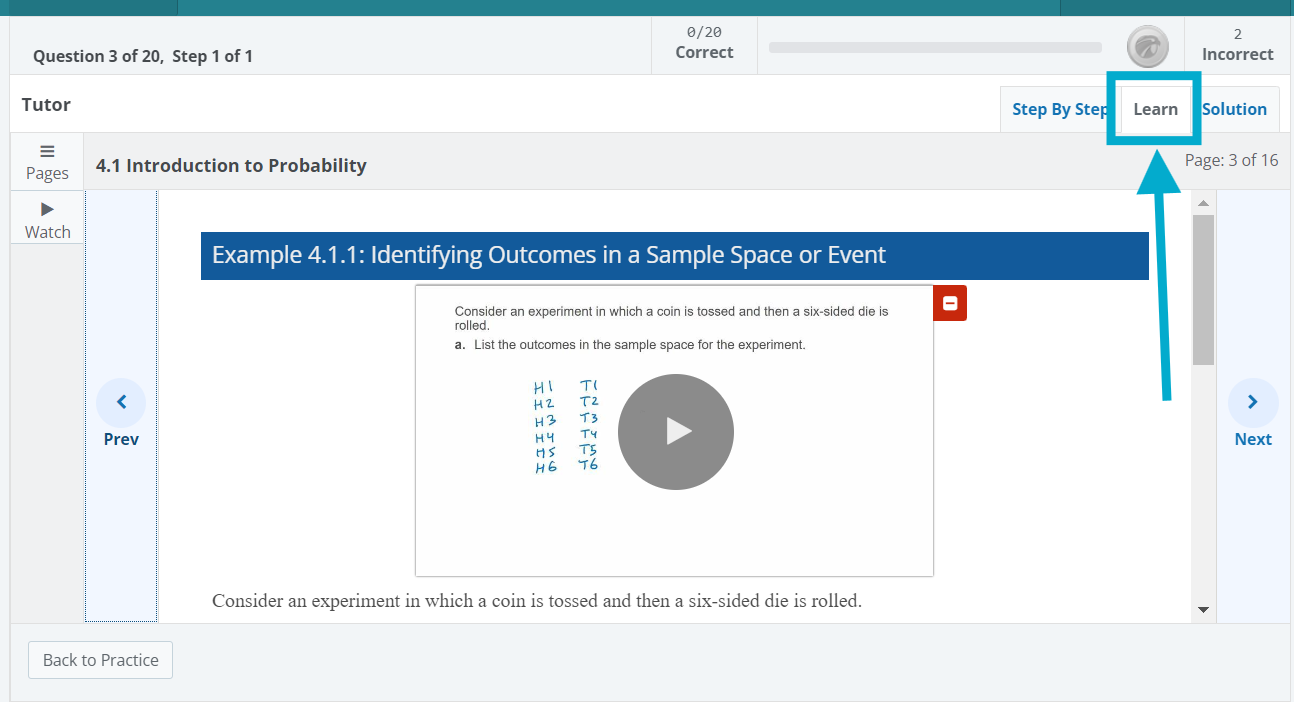
"Life might not always go on a straight path, but you will always make it to your destination." Those words come from Christian Barksdale — a published author, aspiring cardiologist, and recent UNC Chapel Hill medical program alumnus. But before he was any of those things, he was a Hawkes Learning Student Ambassador at Mississippi Valley State University: a young man who took a chance on an internship and, somewhere between the practice problems and professor conversations, started becoming the person who would one day write that line. *Quotes lightly edited from interview for content and clarity The Ambassador Years Christian Barksdale first heard about Hawkes Learning through his college algebra professor, Dr. Stevens. "She told me about the opportunity," he said. "She sent me an email about it after I did really well in her class. And I was okay, yeah, sure — I'll shoot my shot and apply for the internship." A few months later, he got the call. "I couldn't believe it. That was awesome." He served as a Hawkes Student Ambassador in Fall 2023 at Mississippi Valley State. To qualify, ambassadors must have completed at least one Hawkes course — and Christian Barksdale had done that with college algebra. What made him a natural fit for the role wasn't just his grades, though. It was his mindset. Coming into college, Christian Barksdale was already intentional. "My mom always told me, if you have a really great GPA, then you'll be able to choose," he said. "Whenever you want to pivot, you'll set yourself up really nicely. And so I really just came into college really focused. I was just like, if I'm going to do it, I'm going to put my best foot forward and really just try to make the GPA representative of what type of person I am." As an ambassador, Christian Barksdale connected with faculty who were using Hawkes and helped them get the most from the platform — building the kind of relationships he'd later call foundational. "My favorite thing about it was being able to connect with the professors that are actually using Hawkes and build those relationships," he said, "and getting competency on skill sets outside of the classroom — like learning how to help people manage it and help people learn how to utilize it to the best of their ability." He credited Hawkes itself for getting him there in the first place. "I feel like Hawkes is just the top program I've done," he said. "Not only with the awesome feedback, but just the amount of practice questions you could do... Everything just felt so hands on." The step-by-step error feedback, in particular, stood out: "I really just love being able to actually read through, go step by step, compare it to what I've written down, what I thought was right, and just see okay, where I made a mistake and how they explained it. The way Hawkes breaks everything down makes it so simple — and in fact, that's the reason I was so successful, especially in that course." The Bridge Christian Barksdale graduated from Mississippi Valley State in December 2025. What came next was not a straight line. "The summer before I actually wrote the book was really tough for me," he said. "I was trying to navigate the pre-medical journey, and I was kind of just getting overwhelmed. At the time I was really struggling to land an internship. I was really struggling to get a job as well. So it was just kind of a lot of things accumulating at once." He paused on the weight of that season. "I kind of felt like I was disappointing myself and all the other people that poured into me…so it just wasn't really a great space for me at the time." Then came the moment that changed everything. "I was just sitting outside one time, just reading my Bible, just looking for something," he said. His older brother — who, by Christian Barksdale's own description, doesn't really talk much — came home from work and stopped. "He was just like, 'Stay motivated.' He just gave me some really great encouragement. And it made me think about the people who might not have a great brother like I do — the people who might still be fighting these battles but no one else knows it." So he decided to do something about it. The Book Hearts and White Coats was published in March 2026. To write it, Christian Barksdale interviewed more than 45 doctors from more than 20 countries — asking each of them what kept them going, what kept them motivated, why they chose medicine. He found most of them the same way he'd found the internship that started it all: by reaching out. "I used LinkedIn a lot," he said. "I would read about them and then I would add them on LinkedIn and message them. If they didn't reply, I would email them. I would just reach out to a lot of ones that I found interesting and that I felt could really inspire other people. So it was just a lot of messages being sent." Two stories in particular stayed with him. "I'll start first with Doctor Madhere," he said. "He said something really profound that really stuck with me. It was like, 'Once you see what's possible, you can't unsee it.' So it's like, once you know that you can achieve this goal, once you know that it's possible for you to do this and you know how to get there, you won't stop seeing it. You'll be even more determined. You can't just ignore that part of you that wants to achieve that." Then there was Dr. McFadden — a doctor from Mississippi, from a small town, who took the MCAT four times before getting the score she needed. "No matter what, she just kept going," Christian Barksdale said. "If she didn't get the score she wanted this time, right back to studying. Just the perseverance was really inspiring. And just seeing how she was able to be so successful." For Christian Barksdale, the book is ultimately the message he wishes someone had handed him during that hard summer. "I just want people to know that your life might not always go on a straight path, but you will always make it to your destination," he said. "Life has its highs, it has its lows, but you have to be able to take both and really just appreciate life, appreciate the journey — not just the destination. And that you're bigger than your biggest problem. Your failure, or whatever setback you may experience, does not define you. You're worth it. You're awesome how you are. And whatever you're going through, you will get through it." Full Circle When Christian Barksdale looks back at his time as a Hawkes Ambassador, he sees threads connecting it directly to the person he's become. "I feel like Hawkes is what got me a lot more comfortable talking to professors," he said. "Just being able to have a conversation with the people over the course. I feel like that really helped me get out of my shell. It could be kind of intimidating. But once you actually start engaging in those conversations, you can just see that they're humans too." Those conversations mattered more than he realized at the time. "These are some of the professors that ended up writing my letters of recommendation," he said. "So I really feel like Hawkes set me up in that matter." The networking skills he built as an ambassador also translated directly to writing the book, then to reaching out to strangers across the world and asking them to share their most hard-won stories. After graduating, he kept pushing. This past summer, Christian Barksdale completed a medical school simulator internship at UNC Chapel Hill — nine weeks of medical school coursework and practical lab experience. His cohort came from across the country: mostly North Carolina, but Texas and beyond. "I feel like I've gotten fifty-five times richer just being with everybody," he said. "I feel like I've learned at least one thing from every single person I've met there." More than the curriculum, what he took away from UNC was something harder to quantify. "I feel like I proved to myself that I can handle the curriculum," he said. "I was kind of always nervous, like, okay, maybe I can't handle it. Maybe once I get there, I won't be able to keep up. Just being able to prove that to myself that I can get there, pass, and be successful. That was monumental to me." He's leaning toward cardiology. "The heart is really fascinating to me," he said. "And that got reinforced during my internship. We had a short cardiovascular block and just seeing how the heart works and everything — it's really fascinating. So that's what I'm leaning to right now." Back home in Cleveland, Mississippi — about 45 minutes from Mississippi Valley State — Christian Barksdale is preparing for the MCAT, gathering clinical hours, and working to put his book into as many hands as possible. He wants to do more book signings, more mentorship, more presentations. "I really try to touch the youth in my community as well," he said. His advice to students who might be right where he was — uncertain, stretched thin, questioning the path — sounds a lot like the way he described his first instinct about the Hawkes internship: I'll shoot my shot. "I'm just very happy to have done it," he said. "I'm blessed to have the opportunity." Find the Book Hearts and White Coats by Christian Barksdale is available now on Amazon. Read Mississippi Valley State University's feature on Christian Barksdale here.
![]()
August 26, 2026
"Life might not always go on a straight path, but you will always make it to...
Read More
How does the student experience connect to economics course content? Students encounter economics daily through grocery prices, job wages, streaming subscriptions, and financial decisions. Effective courses bridge these lived experiences to foundational concepts like supply, demand, and market equilibrium. The key is helping students recognize they're already living economics—and giving them the tools to analyze it. Why Do Students Struggle to Connect Economics to Real Life? Students consume economic news constantly—headlines about inflation, tariffs, and grocery costs—yet fail to connect these stories to the models in their textbooks. The challenge isn't generating interest; it's building explicit bridges between real-world events and economic principles. The updated Principles of Economics, Microeconomics, and Macroeconomics, 2nd Editions, solve this problem by connecting the news students consume to the economic principles you teach. Student experiences map directly to economics concepts: Grocery shopping price elasticity and inflation Part-time job wages labor markets Student loans interest rates and opportunity cost Streaming subscriptions marginal utility Gas prices supply shocks Rent costs housing market equilibrium Buying concert tickets secondary markets and price discrimination How Does Mastery Learning Strengthen Economics Foundations? Mastery learning requires students to demonstrate competency on foundational concepts before advancing to dependent topics, reducing compounding misunderstandings. Hawkes Learning's 3-step mastery-based approach uses this structured learning path and scaffolded practice to close the quantitative skills gap and help students develop the ability to analyze price changes using supply-demand models. Students don't struggle with inflation because inflation is difficult; they struggle because they never fully mastered supply, demand, incentives, and market equilibrium. Mastery learning strengthens those foundational concepts, making every topic that follows more accessible. For example, students examining how inflation affects wages can apply their understanding of supply, demand, and market equilibrium to analyze why wages may rise over time yet still fail to keep pace with rising prices. What Role Does Immediate Feedback Play? Immediate feedback corrects misconceptions before they become habits. Economics is cumulative. If a student misunderstands supply and demand in week two, they'll likely struggle with market equilibrium, price controls, and international trade later in the semester. Timely feedback helps you as an instructor catch those misunderstandings early, when they're easiest to address. When your students receive foundational feedback during independent practice, you can spend more class time analyzing current events, debating policy, and applying economic frameworks to interpret current policy debates, rather than reviewing basic misconceptions. How Do Real-World Examples Enhance Engagement? We all encounter economics every day, from changing prices at the grocery store to decisions about careers, housing, and technology. The challenge is helping students recognize those connections. Relevant examples and real-world applications transform abstract concepts into meaningful learning experiences that help students apply economic frameworks to everyday decisions. The intuitive platform helps students focus on learning rather than navigating technology, with AI Tutor’s 24/7 support keeping students engaged and empowered to take control of their progress. Flexible Tools for Your Teaching Approach Teach economics your way with flexible tools and customizable learning experiences that allow you to meet students where they are while maintaining the consistency and support needed to help every learner progress and succeed. Curriculum Comparison Hawkes Learning Title Focus Key Differentiators Principles of Economics 2nd Edition Core economic concepts within a global framework Chapter projects, group activities, reflection questions Principles of Microeconomics 2nd Edition Economic theories with critical thinking emphasis Active learning approach, application-focused exercises Principles of Macroeconomics 2nd Edition Comprehensive understanding with real-world application Individual and collaborative projects, reflection questions These titles help instructors connect student experiences to economics content through mastery learning, real-world examples, and immediate feedback. The result is students who can analyze economic events they encounter daily using the foundational models they've truly mastered.
![]()
August 21, 2026
How does the student experience connect to economics course content? Students...
Read More
Below, you’ll see how Hawkes Learning works, how to complete and submit assignments, and where to go when you need support. Bookmark this page, refer back to it throughout the term, and use the FAQ section to quickly troubleshoot common questions on your own. Watch this recording of a live Student Training Webinar with Student Ambassador, Ash Dean. How Hawkes Learning Works Hawkes is built around a three-step mastery learning process. Every assignment follows the same structure, so once you understand it, navigating the platform becomes second nature. Instead of rushing through assignments or relying on guesswork, you'll work through a proven mastery-based learning process that helps you build confidence, strengthen understanding, and demonstrate what you've learned. Step 1: Learn Work through the lesson content before you attempt problems. Learn includes instructional videos, animated concept builders, and interactive skill checks that walk you through the material at your own pace. Step 2: Practice Apply what you learned by working through algorithmically generated problems. Every problem comes with step-by-step tutorials and error-specific feedback, so when you make a mistake, you find out exactly what went wrong and why. This is an ungraded, penalty-free learning environment where you’re rewarded for persistence, not perfection. Step 3: Certify Demonstrate that you have mastered the material. Certify requires you to reach a defined proficiency level without access to tutoring aids. This is the graded portion of the platform where you’re able to showcase what you’ve learned and that you’re ready to move on to what’s next. Pro Tip: This sequence exists because it works! Each term, data shows that students who dedicate time working through Learn and Practice before attempting Certify build a stronger foundation than those who skip ahead. ★ ★ ★ ★ ★ "I really enjoy learning from Hawkes. I really like how you can get a step-by-step explanation on a wrong answer and the videos also help me a lot." Cindy, Genesee Community College ★ ★ ★ ★ ★ "This is such an easy way to do my work and easy to learn and navigate through. I though it would be hard but it's so easy once it was explained." Shatonda, Dallas College ★ ★ ★ ★ ★ "The last time I used any form of online learning it was so complicated..." "This system works so harmoniously and so easy to navigate, it has been a blessing to me!" Amie, Palo Verde College Study Tools Built Into the Platform Your Hawkes account includes several study tools designed to support you as you work through assignments. AI Tutor Provides guided, personalized support while you practice. Unlike a generative AI tool, AI Tutor works solely within Hawkes-approved content, so the guidance it provides is directly tied to your coursework and supports your learning path. Explain Error Shows you exactly where your reasoning broke down when you answer a problem incorrectly. Use it to understand your mistakes, learn from them, and correct them before moving on. Step-by-Step, Hint, and Solution Breaks complex problems into smaller, manageable steps. When you're unsure where to begin, these tools guide you through the logic and reasoning needed to solve the problem without simply giving you the answer. Practice WebTests Allows you to create ungraded, self-directed assessments for additional practice. Choose the lessons and number of questions, set a time limit, and take the test whenever you want. Practice WebTests are one of the most effective ways to prepare for graded exams and quizzes. See the FAQ below for step-by-step instructions on creating one. HawkesTV Provides instructional videos organized by topic for additional review. Use these videos whenever you need a second explanation or want to explore a concept from a different perspective. Companion Sites Offer supplemental learning resources for select disciplines that can be accessed directly in your course. Frequently Asked Questions How do I complete assignments? Assignments are completed through the Learn, Practice, and Certify steps. Your instructor controls which assignments are required, their due dates, and how much each one counts toward your grade. Check your personalized to-do list or ask your instructor if you are unsure what is required. What is mastery learning? Mastery learning is an instructional approach that requires students to demonstrate understanding of a topic before moving to the next one. Rather than advancing based on time spent, you advance based on what you’ve actually learned. What is AI Tutor and is it safe to use? AI Tutor is a built-in learning tool that provides guided support while you work through Practice problems. It is designed to help you think through problems rather than hand you answers. Because it operates within Hawkes-approved content, it supports academic integrity, aligns with your existing course materials, and is safe to use. How do I create a Practice WebTest? Practice WebTests are ungraded, self-directed assessments that allow you to focus on the topics you want to review. They are a great way to prepare for quizzes and exams, identify areas that need additional study, and measure your progress throughout the course. To create one: Sign in and select View Course. Open the WebTests tab and select Practice WebTests. Select Create Practice WebTest. Give your test a name. Use the chapter drop-down to browse content. Select Add for each lesson you want to include. Enter the number of questions and choose a time limit from the Set Time drop-down. Select Start to generate and begin your test.
![]()
August 17, 2026
Below, you’ll see how Hawkes Learning works, how to complete and submit...
Read More
Key Takeaways Student anxiety often stems from pacing pressure, not lack of ability. Mastery learning allows students to build understanding before moving forward. Reassessment and immediate feedback turn mistakes into learning opportunities. A focus on understanding over performance builds confidence and long-term success. For many students, anxiety in the classroom doesn’t come from a lack of ability... It comes from pressure to keep up, perform on a timeline, and move forward before they’re ready. Over time, that pressure creates a cycle. Students fall behind, miss foundational concepts, and feel increasing anxiety about their ability to catch up or succeed in subsequent courses. How Mastery Learning Addresses the Root Cause of Student Anxiety? Traditional learning formats can contribute to student anxiety through rigid pacing, high-stakes grading, and limited opportunities to revisit material. Students are expected to keep moving forward, even when understanding is incomplete, leaving them with lasting gaps in skills and knowledge. Mastery learning takes a different approach. Instead of assuming a common starting point for an entire class, mastery-based learning acknowledges that all students begin with different levels of prerequisite knowledge. From there, it provides a clear, supported path forward based on individual student needs, allowing them to build knowledge step-by-step. These 4 key elements of a mastery-based approach directly reduce anxiety: Learning without penalty for pace: Students can take the time they need to fully understand a concept before moving on; no more accepting a 50% and carrying knowledge gaps along to the next chapter. Reassessment as part of the process: Opportunities to try again reinforce learning instead of punishing early mistakes by docking points. Immediate, guided support: Students receive actionable feedback in the moment, helping them correct misunderstandings before they grow. Focus on understanding, not performance: The goal shifts from “passing” to truly mastering the material in a deep and meaningful way. Together, these elements create a learning environment that inherently adapts and supports each and every student, handing them the keys to unlock their own academic success. Why does this matter? Simple! When students know they have the opportunity to revisit concepts, learn from mistakes, and try again, the experience changes. What once felt high-stakes becomes manageable, and what once caused stress becomes just part of the learning process. When students are rewarded for persistence, they begin to see that effort leads to improvement. Over time, they build trust in their ability to learn, developing something slightly less tangible than a passing grade but just as (if not more) important: a sense of capability. Students aren’t just passing a test and moving on. This doesn’t mean expectations are lower. In fact, they’re clearer and more consistent. Students are still accountable for learning the material, but they are supported in getting there. They’re understanding the material, applying their knowledge, and recognizing that the power to succeed isn't tied to how well they can pass the test on the first try, but to their own efforts and dedication. Mastery Made Simple with Hawkes Learning At Hawkes Learning, we believe in a mastery-based approach because we've seen the difference it can make in student success. Our learning system is designed to give instructors the power to implement mastery at-scale, prioritizing effectiveness, engagement, and efficiency. Want to learn more about our approach? Get free trial access to explore Hawkes Learning from the student perspective. Navigate the 3-mode learning path (Learn, Practice, Certify), try out AI Tutor, and see how the platform can make a difference for your students.
![]()
April 24, 2026
Key Takeaways Student anxiety often stems from pacing pressure, not lack of...
Read More
Hawkes Learning’s homework lessons are broken into a 3-step learning mode: Learn, Practice and Certify. Certify is designed to ensure students truly know the material. Built on the principles of Mastery Learning, Certify challenges students to demonstrate a defined level of proficiency before moving forward. During each Certify attempt, tutoring aids are removed, encouraging independent problem-solving and reinforcing genuine understanding. This intentional structure promotes confidence, accountability, and long-term retention, helping students build a strong foundation they can rely on both inside and outside the classroom. This mastery-based approach mirrors the conditions students face on proctored exams, making Certify a powerful preparation tool. By requiring students to work independently—without access to tutoring aids—Certify helps them practice recalling concepts, applying problem-solving strategies, and managing confidence under pressure. Because students must reach a defined level of proficiency before progressing, gaps in understanding are identified and corrected early, not discovered on exam day. The result is deeper retention, reduced test anxiety, and exam performance that reflects true understanding rather than short-term memorization. Learn more about how Hawkes helps students prepare for exams from our Hawkes Student Ambassadors Ash from University of Charleston Certify has helped me feel more ready for exams by giving me practice, but also by bridging the gap between Practice mode and the exam. Certify offers lower stakes than an exam, allowing for multiple retries and allowing you to miss a few problems and still complete it (due to the mastery approach). This can help improve my confidence before an exam and reduce my test anxiety. Certify also holds you accountable to completing practice questions without learning aids which you won't have on an exam. Ty'Nia from University of Arkansas Certify has helped me feel more ready for exams, because once you Certify, that means you've learned to the point of mastery. Hannah from Prairie View A&M University Going through Certify has helped me know the processes and have the understanding needed to complete the problems on the Exams. In my Calculus 1 course, some of the exam problems were similar to those in Certify and having completed them in Certify allowed me to be successful in completing them on my exam. Calliope from Guilford College It [Certify] allowed me to assess my weak spots even if I had shown mastery, and this was very helpful when reviewing for tests. Certify built confidence in my literacy of a subject and that translated well to my confidence on exams when I saw similar problems. Redoing Certifications later also allowed me to prep in a test-like setting. Rishi from University of North Carolina-Charlotte Certify gives me a way to use my own knowledge to complete problems. When I do Certify, I try to do all the problems without getting one wrong. If I get one wrong, I start over so I can be more motivated to take my time and do the problems. Trenton from Prairie View A&M University It [Certify] has made me feel like I was taking a quiz. Since I had to actually learn it to even get a grade for the assignment, it helped me prepare for the questions I would see in the exam environment. Sabrina from SUNY - Old Westbury Certify has helped me feel more ready for exams because the mastery approach pushes me to fully understand the material rather than just complete assignments. Since I have to consistently demonstrate accuracy, it encourages me to review concepts, fix mistakes, and truly learn the content before moving on. For example, when preparing for exams, I noticed that Certify helped me identify weak areas that I might have overlooked. If I struggled to reach mastery on certain topics, I would go back to Practice, use Explain Error, and repeat problems until I felt confident. This process made my studying more focused and effective instead of reviewing everything equally.
![]()
April 6, 2026
Hawkes Learning’s homework lessons are broken into a 3-step learning mode:...
Read More
Mastery learning is transforming the way students engage with challenging material, and Hawkes Learning is at the forefront of this shift. By emphasizing understanding over memorization, Hawkes empowers students to take control of their learning journey, building confidence through personalized, self-paced practice. In this blog, we're highlighting firsthand experiences from students who have thrived using Hawkes Learning’s mastery-based approach—discovering not only improved grades but also a renewed sense of motivation and achievement in their academic lives. Let’s hear directly from the students who’ve experienced the power of mastery learning. Ella from Guilford College “Hawkes’ mastery approach has made a difference in my educational experience because it makes it feel more personal. I know I can learn at my own pace and always go back to practice to understand the content before being tested on it. This makes me feel more at ease when learning something because I know I don’t have the pressure of a time constraint and I don’t have to get it right the first time.” Trenton from Prairie View A&M University “I love the Hawkes mastery approach because it forces you to learn to do the work (in a good way). It makes you go to the practice first and study as much as you can and work on a bunch of practice problems. Then, you are able to move on to similar questions in the Certify mode (using the mastery approach). It helps you genuinely learn instead of just doing homework.” Ash from University of Charleston “The mastery approach allows me to go through my Certify lessons and complete a majority of the lessons that I am confident in, while still getting a few problems wrong that I might be struggling with a little bit. This creates a more stress-free environment, where I can get one or two questions wrong and then go back and focus on them later, which ultimately reduces the number of errors I make from just being stressed about getting everything right.” Stephanie from Walla Walla University “Before I started using Hawkes, I would just hope for the best, but with Hawkes, it would make me understand before we moved forward… When I made a mistake, it didn’t just mark me wrong; it showed me how I was wrong and what I could do to fix it. The Certify part is my favorite because it makes me make sure that I understand the lesson before moving on and be more patient and consistent with my studying. Overall, the mastery approach has made me feel more confident in my studies.” Jay from San Diego City College “I absolutely loved Hawkes’ mastery approach. I loved how the structure is clear and concise, and the varied problem-solving really serves as a great stepping stone toward mastering just about any subject. I loved how I was always able to have a clear goal in mind, and that really made it feel easier and a lot more accessible while I was learning.”
![]()
October 22, 2025
Mastery learning is transforming the way students engage with challenging...
Read More
The integration of artificial intelligence into education is transforming how students receive support, making learning more personalized and accessible. AI Tutor, an innovative tool from Hawkes Learning, is at the forefront of this change. Designed to cater to individual student needs, the AI Tutor provides instant, tailored assistance that empowers students to learn independently and with greater confidence. Through direct feedback and on-demand guidance, students are experiencing firsthand how AI can enhance their educational journey. This blog curates real student feedback, shedding light on how Hawkes Learning’s AI Tutor tool is reshaping student support and fostering a more engaging learning experience. *Students’ interview questions and responses have been slightly edited for content and clarity. “The most helpful aspect of the AI Tool is its ability to provide instant, step-by-step explanations tailored to each student’s learning needs. By offering real-time feedback and breaking down complex concepts into simpler terms, it makes learning more accessible and efficient. I believe it will help students by presenting different approaches to problem-solving, which may differ from what they’ve been traditionally taught. Additionally, it can handle redundant questions, allowing students to reinforce their understanding without frustration. It helped by breaking down steps further and not assuming I would automatically understand everything right away. This made it easier to follow along and grasp difficult concepts at my own pace.” Terrell B. from Mississippi Valley State University “AI Tutor supports students by providing instant help and explanations. If you do not understand a certain part, you can ask AI Tutor to explain more until you understand. It will allow students to grasp the concepts, making it simpler to understand complex topics.” Lilian S. from Oklahoma City Community College “I believe the best feature of the Hawkes AI is the suggested questions section. When a person is lost in a problem and may not know what or how to ask a question, the suggested questions tab is there to help. I believe that it made learning more engaging because it gave me direct feedback on questions I had on [math] problems. It helped clarify questions by showing me the steps to solve them.” Trenton J. from Prairie View A&M University “Hawkes’ AI Tutor is fairly unique in that it allows students to receive personalized step-by-step help based on specific questions they articulate themselves. I also appreciate that it draws strictly from content found within Hawkes Learning rather than presenting potentially faulty information from the wider internet. It encourages students to engage with the learning process, ensuring that they understand the material. Whereas many supplemental resources take a generalized approach to instruction, the Hawkes AI tool is designed to adjust according to each student’s needs so that they receive the most effective help for their learning style. It also provides an alternative to other AI platforms whose use of the internet often leads to inaccuracies.” Ada B. from Guilford College “Overall, it’s easy to use and very helpful. It makes studying faster and less confusing. It helps students understand tricky topics right away. It makes learning more interesting by giving quick feedback. Fast answers keep students focused and motivated.” Vatsal B. from University of North Carolina – Charlotte “I feel the most helpful aspect of the AI tool is the fact that I can type in any question that I have, or I can use the ‘suggested questions’ options that are available. I would describe my overall experience as beneficial in helping me learn why problems are solved the way they are instead of just mindlessly trying to find the answer. It also helped clarify difficult concepts by putting these problems into simple wording that anyone can understand and apply to their work. I would say it made [learning] more engaging because, with just a click of a button, I can get an in-depth answer to any question I may have.” John S. from University of Mississippi “I was surprised at how clear and helpful the explanations were. Instead of searching online for a long time, I could just ask a question and get a direct, simple answer. It saves time, makes learning easier, and helps when I get stuck on something. It’s like having a tutor available 24/7. It makes learning more interactive. Instead of just reading from a textbook, I can ask questions, get examples, and see different explanations until I fully understand a topic.” Inam O. from University of Virginia’s College at Wise To hear more about students’ experience with AI Tutor, check out our AI Tutor student panel hosted at Hawkes Learning’s Innovative Educators Summit: Learn how Hawkes Learning’s AI Tutor can enhance your students’ learning experience and see a demonstration: AI Tutor
![]()
March 11, 2025
The integration of artificial intelligence into education is transforming how...
Read More
We’re thrilled to once again team up with students from colleges and universities nationwide for our exciting internship program, the Hawkes Learning Student Ambassadors! Each semester, these selected students provide guidance and personalized support to their peers on campus, helping them navigate homework assignments, create practice tests, master best practices for using Hawkes’ courseware, and much more. Continue reading to meet this semester’s exceptional and talented group of Student Ambassadors. Piper from Ball State University Piper Kinder is a freshman at Ball State University in Indiana who is currently studying Radiography. Next year, she will be at the IU Health Methodist Hospital in Indianapolis to complete her clinicals. After her graduation in August of 2026, she plans to work as a medical imaging professional in X-Ray, CT, and MRI. When she is not busy with school, Piper enjoys spending her time with family and friends and working out! Terrell from Mississippi Valley State University Terrell Booker is a sophomore at Mississippi Valley State University pursuing a bachelor’s degree in computer science with a focus on cybersecurity; he currently holds a 3.00+ CGPA on a 4.00 scale. His ultimate goal is to become a cybersecurity professional, and he plans to earn industry certifications such as the CompTIA Security+ to advance his career. Terrell was born and raised in Memphis, TN. He loves collaborating with his peers on technical challenges, and in his free time, he enjoys programming and following the NFL season. Inam from University of Virginia’s College at Wise Inam Osmani is an aspiring data scientist with a passion for coding, statistics, and leveraging data-driven solutions for social issues. He enjoys reading, playing guitar, and working out in his free time. With an analytical mindset, he aims to apply his skills in coding and statistical analysis to create meaningful impact in his field. John from University of Mississippi John Stubbs is from Mobile, Alabama, and is a Freshman at the University of Mississippi. He is in the Patterson School of Accountancy and is a member of the Mississippi Gamma chapter of SAE. John has striven to maintain a high academic standing, as shown by his inclusion in the National Honor Society and continuous appearances on the honor roll in high school and college. John is the oldest of four and a big role model for his younger brother and younger twin sisters. John enjoys spending most of his free time with friends, on the golf course, or in the woods. John was on a two-time state championship-winning golf team in high school, as well as a member of the football team. John loves to spend time with family at their hunting camp in Catherine, Alabama, by hunting the big fields or just sitting by the fire and relaxing. Sonja from SUNY Old Westbury Sonja Jerome is a Biological Science major at SUNY Old Westbury. Her dream is to teach biology and do meaningful research. When she’s not studying for her next exam, she loves to spend time with family and friends. She likes the beach, reading, writing, running, skating, visiting new places, and weight training. Her goal for this year is to learn how to swim. Trenton from Prairie View A&M University Trenton Jeffers is a Junior at Prairie View A&M University. He is studying mathematics and hopes to get his teacher certification so that he can teach future students in various math classes. He loves to play video games and watch football and basketball in his free time. This is his third semester as a Hawkes Learning Student Ambassador. Vatsal from University of North Carolina – Charlotte Vatsal Bhakar is into finance and stock markets, learning more about investments and following economic trends. He is a hardcore Chicago Bears fan, and he enjoys watching the NFL. Having a taste for adventure in and above water, he has gone scuba diving in Florida. Vatsal is also an Eagle Scout, reflecting leadership and commitment to community service. Ada from Guilford College Ada Boroughs is a first-year student at Guilford College in Greensboro, North Carolina. She is double-majoring in Creative Writing and Environmental Studies, and hopes to someday work in conservation in addition to becoming a published author. Outside of school, Ada enjoys reading, writing, drawing, listening to music, and dancing, the latter of which she pursues with Greensboro Ballet. She is a huge fan of J.R.R. Tolkien, The Arcadian Wild, hot chocolate, and petting every dog she meets, and if you visit her Pinterest board, you will find dragons, roses, vintage maps, and a collection of delightfully cheesy Lord of the Rings memes. Are you interested in becoming a Hawkes Student Ambassador? Learn more about this exciting internship opportunity and submit your application here!
![]()
February 21, 2025
We’re thrilled to once again team up with students from colleges and...
Read More
Today’s educators face unprecedented challenges: growing class sizes that limit individual attention, increasingly diverse student needs, and limited office hours that can’t accommodate everyone. Imagine having a dedicated team of teaching assistants and tutors available 24/7 for every student. Not just any tutors, but ones that never tire, never judge, and always offer consistent, accurate assistance aligned with your course materials. This isn’t just a hypothetical scenario, it’s happening now with Hawkes Learning’s cutting-edge learning duo: Explain Error and AI Tutor. Meet Hawkes’ Personal Tutors Explain Error “I’ve used many of these types of online courses. This is the only one I actually like, because it explains WHY your answers are wrong and how to get the right one.” – Tera K., Student at Morehead State University Explain Error goes beyond merely identifying incorrect answers; it intelligently guides students through their mistakes, helping them understand how to reach the correct solutions. This first-of-its-kind feature offers: Immediate, error-specific feedback when students make mistakes. Personalized guidance that mimics the support typically available only during office hours. Insights into not just what went wrong, but why, fostering a deeper understanding. Preventative remediation that addresses misconceptions at their source, helping to correct errors before students commit them to memory and avoid common pitfalls in the future. AI Tutor “My favorite part of the new AI feature is that it never gives the students the answer. Instead, it forces the students to work through their confusion, mistakes, and misconceptions, and helps them to arrive at the right answer on their own. “ – Rebecca Snider, Instructor at Savannah Technical College Working alongside Explain Error and taking personalized learning to the next level, AI Tutor engages students in thoughtful, student-led conversations within a responsible and secure environment. Here, students can freely ask questions related to course material without the fear of judgment or encountering unhelpful information. Unlike other generative AI tools, this proprietary system: Draws exclusively from vetted Hawkes instructional content Delivers real-time, contextualized support Encourages critical thinking through guided conversations Creates a safe, contained learning environment that not only prevents academic dishonesty but also safeguards personal data The Future of Educational Support As education continues to evolve, tools like Explain Error and AI Tutor represent the future of learning support. They don’t replace educators – they enhance their ability to provide quality education at scale. By handling routine explanations and providing personalized support, these tools allow instructors to focus on what they do best: inspiring students and facilitating deeper learning experiences. Want to see these revolutionary tools in action? Hawkes Learning offers free demo accounts for educators to experience firsthand how these tools can transform their teaching. Step into your students’ shoes and discover the power of personalized, AI-enhanced learning support.
![]()
January 28, 2025
Today’s educators face unprecedented challenges: growing class sizes that limit...
Read More
When I first experienced the AI Tutor tool, I was very impressed by its interactive design and ease of use. It felt like having access to my own personal tutor available 24/7 to help guide me through challenging concepts and questions. It gave me confidence to ask questions in order to get clarification on a specific topic. I was curious to see how well it would assist in providing feedback and explanations. It certainly did not fall short of my expectations. I believe the most helpful aspect of the AI Tutor tool is its ability to provide immediate, personalized feedback to complex inquiries. Instead of emailing a professor back and forth or waiting for a response, a student can receive guidance and clarification in real time. This will be especially beneficial when working on assignments or preparing for exams because it enables the student to understand the task at hand and move onto the next topic without remaining stuck. The AI Tutor tool will significantly enhance students’ learning experiences in their Hawkes Learning classes by offering individualized support. It can explain in detail complex material in simpler terms, provide breakdowns of step-by-step solutions, and challenge students to think critically about the course material. "This kind of interaction promotes independent learning, helping students to build their confidence and deepen their understanding of the content of the course." Meet the Author Lauren is a freshman Nursing major at Nassau Community College, where she maintains a 3.9 GPA and a spot on the Dean’s List. She aspires to one day become a Psychiatric Nurse Practitioner specializing in mental health. Her favorite classes are psychology and English. She is proud to serve as Treasurer of the ASAP (Advancing Success in Associate Pathways) program at NCC. While she does occasionally enjoy a good Netflix binge, her true loves are reading, poetry, and audiobooks. Lauren has a three-year-old pitbull, Luna, who loves to play and run, which keeps her active.
![]()
December 18, 2024
When I first experienced the AI Tutor tool, I was very impressed by its...
Read More
Hawkes Student Ambassador Kristin Jellison recently sat down with Associate Professor of Mathematics Paul Patison to learn more about his experience using Hawkes Learning at Navarro College. Professor Patison, a Navy veteran, embarked on a teaching career after completing a program sponsored by Texas A&M University-Commerce. He later earned a Master’s degree and found his passion for teaching at the college level. In this interview, Professor Patison shares insights into his Hawkes journey – from first adopting the platform in his classes to the impacts he’s observed on his students’ learning outcomes. Learn more about Professor Patison’s experiences below. Please describe your academic journey and what made you fond of the academic system. I graduated high school at 18 and I didn’t go straight into a college or a preparatory program. I was in the Navy from 18 to 22, and then when I left the Navy, I already had a family. That said, I had to work to support my family and therefore was only able to attend school part-time. As I approached 30, I found an educator preparation program at Texas A&M University-Commerce that was on the Navarro College campus and started taking the classes. Paul (front row, second from the left) receiving a Navy unit commendation award in 1990. I thought, “You know what? This might be my calling.” After I got my certification, I taught in the ISDs for 15 years from elementary to junior high and even high school with some dual credit classes. I had already worked to achieve my Master’s degree. I started teaching at Navarro for 7 years and have loved every minute. When you teach, do you take inspiration from anywhere or anyone? I had an instructor when I was working on my teaching degree at Texas A&M University-Commerce who inspired me. She challenged me on the very first night of class when I had to take a competency exam. When she was passing out the test, she stopped right in front of me, looked at me, and said, “I bet you $10 that you can’t pass this.” I would say that pushed me to seek and learn. So, I would say that instructor definitely inspired me to always continue to be better. As we reflect on your academic journey, is there a specific moment you recall working with a student where you were reminded of why you love teaching? I’ll just put this in a general sense, wrapping up more than one story or one person into one. Students will come to you for tutoring, but they’re reluctant. They’re like, “I don’t know why I’m not getting it, but if this is going to help me, then I’m going to come to you.” As they build that relationship with you, they start to trust you. Then they’re like, “You know what? I am gaining a little bit of confidence here. Yes, I can do this!” I think that is key, even at the college level. They can show their work to a professor and ask, “Am I doing this right?” and when they get the confirmation that yes, they are getting it, it just boosts that confidence to do it on their own, especially through the Hawkes program. How have you seen the Hawkes program support students? Hawkes supports the students simply because if they are not ready to demonstrate mastery of the lesson, they can get into the practice section and work on it. What I like about Practice is that students can skip lessons they have a firm grasp on already. For example, if there are five objectives in a lesson, and they are confident in two out of the five, they can just work on the three objectives. They don’t have to keep working over and over again on concepts they already mastered; instead they can simply focus on the three objectives that they’re struggling with. Also, the step-by-step solutions – I mean, you couldn’t ask for anything better! Really it’s a guided solution that the students can work through. How do you incorporate Hawkes into your teaching style and how you approach math? Typically, the problems are presented in Hawkes mirror how I teach. I’ve tried other products, but the problems are just not structured the way I teach. I use the Webtest tool to help my students, so students can mimic the testing environment and help ease their test anxiety. What classes do you teach? I teach College Algebra 1314, and NCBM 0314, which is the support class for College Algebra. I teach 1324 which is Elementary Statistics, Business Math I, and Business Math II. Business Math II is sometimes referred to as Business Calculus. You mentioned that you like how Hawkes allows Practice before doing the Mastery; therefore, students can get comfortable with the subject before moving on. Would you say that the Practice feature in Hawkes is your favorite? Yes, Practice is my favorite because of the tools that are built-in to help students. I hear from students that working in Practice is very encouraging, instead of jumping straight into Certify. There are so many students that come to us with math anxiety, and I think Hawkes does help relieve a little bit of anxiety with mathematics. Ultimately, it takes away the pressure of getting a grade. Meet the Writer Kristin Jellison is a Hawkes Student Ambassador for the Fall 2024 semester. Kristin is a sophomore at Navarro College where she is majoring in chemistry and plans to transfer to a 4-year university for forensic chemistry. Her academic interests include math and sciences, but outside her studies she enjoys reading and writing. After graduation, her career goal is to work in a forensic chemistry lab.
![]()
November 11, 2024
Hawkes Student Ambassador Kristin Jellison recently sat down with Associate...
Read More
Each fall and spring semester Hawkes recruits students to participate in the Hawkes Student Ambassador Internship Program. Hawkes Student Ambassadors serve their college or university by hosting weekly office hours, leading Hawkes trainings, and showing students best practices of maximizing Hawkes’ student tools for success. The Student Ambassadors also work with Hawkes in special projects such as writing for the Hawkes Blog, creating social media content, and more. If you’re interested in learning more about this internship opportunity and would like to apply for the spring 2025 semester, please visit this link: https://www.hawkeslearning.com/student-ambassador-internship Emaline from Piedmont University Emaline is a Sophomore at Piedmont University in Demorest, GA, and she majors in Communication Sciences and Disorders. She plays basketball for the university, along with being a SAIL navigator and an English peer tutor. After graduation, Emaline plans on working as Speech and language Pathologist. Outside of school, Emaline enjoys hiking and travel! Trenton from Prairie View A&M University Trenton Jeffers is a Junior at Prairie View A&M University. He is studying mathematics and hopes to get his teacher certification so that he can teach future students in various math classes. He loves to play video games and watch football and basketball in his free time. This is his second semester as a Hawkes Learning Ambassador. Kristin from Navarro College Kristin is a sophomore at Navarro College where she is majoring in chemistry and plans to transfer to a 4-year university for forensic chemistry. Her academic interests include math and sciences, but outside her studies she enjoys reading and writing. After graduation, her career goal is to work in a forensic chemistry lab. Lauren from College of Coastal Georgia Lauren Jones is a junior at the College of Coastal Georgia and plans to graduate in the Spring of 2026 with her bachelor’s degree in Middle Grades Education. With content area concentrations in Language Arts and Math, Lauren’s dream is to ignite students’ passion for reading and writing in the middle school setting. During her free time, Lauren can be found at the beach with her son and a good book. Rachel from College of Coastal Georgia Rachel is a sophomore at the College of Coastal Georgia, where she is majoring in Data Science. She hopes to use this degree to work for the FBI where she can use data to find criminals or at a major tech company like Microsoft. In her free time she likes to listen to music, play video games, and hang out with her youngest sister. Her favorite class is AI and Business Innovation where she learns about Artificial Intelligence and she hopes to use this knowledge to make an impact in society. Raegan from Purdue Global Raegan is the Senior Manager of Volunteers – North Puget Sound for Providence Swedish. As a busy professional she has found the time to go back to school and pursue a degree in Health Care Administration at Purdue University Global. She hopes to use this degree to further her career in the field of health care management. She is enjoying being back in the classroom even if it is a virtual one and currently holds a 4.00 GPA. In her free time Raegan enjoys spending time with her family and attending her kids’ sporting and musical events. She loves going to the local farmers markets and taking long bike rides through the beautiful trails of the Pacific Northwest. Spencer from Piedmont University This student accomplishes everything she puts her mind to. Spencer Davis is from Suwanee, Georgia. Before becoming a Hawkes Ambassador at Piedmont University, she began her studies at Brenau University in Gainesville, Georgia, where she was an honor student and member of the Omicron Chapter of Zeta Tau Alpha. Since transferring to Piedmont, she has done film work for the university’s Women’s Lacrosse Team, became a member or crochet club, and sister circle; a group created for young Black women to help them positively impact their community. Now that she is in her sophomore year at Piedmont and hopes to do more things with her free time and focus on her passions: reading, napping, sweet treats, volunteering at animal shelters, and writing letters to family. Lauren from Nassau County Community College Lauren is a freshman Nursing major at Nassau County Community College, where she maintains a 3.9 CGPA and a spot on the Dean’s List. She aspires to one day become a Psychiatric Nurse Practitioner specializing in mental health. Her favorite classes are psychology and English. She is proud to serve as Treasurer of the ASAP (Advancing Success in Associate Pathways) program at NCC. While she does occasionally enjoy a good Netflix binge, her true loves are reading, poetry, and audiobooks. Lauren has a three-year-old pitbull, Luna, who loves to play and run, which keeps her active. Nick from the University of North Carolina at Charlotte Nick Stevens is a sophomore at the University of North Carolina at Charlotte holding a 3.8 GPA. He is working toward a degree in marketing which he plans on using to get a job in the growing city of uptown Charlotte. He enjoys going to the gym as well as socializing with his friends at fraternity events and learning how to make new foods. Orion from Maine Maritime Academy Orion is the founding president of Maine Maritime Academy’s (MWA) Fencing Club. He is an older student who came back to school to finish a dual major program in Oceanography and Small vessel operations. Orion wants to work as a meteorologist with NOAA or NASA but likes the idea of being a boat captain as a backup plan.
![]()
September 19, 2024
Each fall and spring semester Hawkes recruits students to participate in the...
Read More
In recent years, Artificial Intelligence (AI) has become an invaluable tool for students. But how can you ensure your students are using it to its full potential? And most importantly, using it safely and responsibly? 5 Quick Tips for Students Using AI in Academia Fact-Check for Accuracy – Encourage students not to rely solely on AI. Remind them to verify its output using credible academic sources. Context Matters – AI-generated information should fit their area of study. They can adjust prompts as needed to get the best results. AI is a Tool, Not a Replacement – Help students understand that AI is meant to enhance their work, not replace their own ideas and critical thinking. Craft Better Prompts – Guide students to fine-tune AI prompts for deeper insights and more thoughtful responses. Balance AI with Traditional Learning – Combining AI with classic study methods can give students a more comprehensive understanding of the material. These tips are just the beginning! Share our free, comprehensive “Smart and Responsible AI Use: A Student’s Guide” with your class for best practices, effective use cases, and more insights into leveraging AI for academic success. Encourage your students to explore all 10 best practices in our free guide! Help your students not just survive in an AI-enhanced future, but thrive in it. Share this free guide with them today and empower them to transform their academic journey!
![]()
September 9, 2024
In recent years, Artificial Intelligence (AI) has become an invaluable tool for...
Read More
As a student, I am often enrolled in online curriculum to complete assignments and take tests. I’ve used multiple online services for classes, but out of all of them, I’ve enjoyed Hawkes Learning the best for several reasons. My Four Favorite Features: Three-step process for each lesson Clear and helpful dashboard Easy simple functions Tutor options for incorrect problems Three-Step Process for Each Lesson Before using Hawkes Learning, I would stress over every word our professor said in class, painstakingly read every word of the book, and still get confused on homework. I would get problems wrong, and never learn why. With Hawkes, the three-step process of Learn, Practice, and Certify gave me the tools I needed and confidence I lacked. In each Hawkes lesson, students start by learning the content with options of reading the eBook or watching HawkesTV videos. Next, students can practice the concepts stress-free before working on the graded homework. In the Practice mode, I love using the “Tutor” feature to learn why I was getting problems wrong, to work through them step-by-step, and read an explanation. Finally, students complete Certify, the graded portion of the homework. By the time I reach Certify, I am super confident in the concepts, and I finish it easily. I am proud that I understand everything. With Hawkes Learning, this three-step process – when done as intended – can practically guarantee understanding and confidence in classes. Clear and Helpful Dashboard Knowing what to do, and when, is imperative to a successful semester. Struggling to find due dates was always one of my problems because I could never find which of the colorful tabs would be able to display what I needed to do and by when in an organized fashion. This is probably what I appreciate the most about Hawkes – the simple organization of information. Hawkes knows what students need. When I access an online curriculum, I’m looking for specific information, and with Hawkes, I can find it the moment I’m logged in. Easy Simple Functions When I am working on homework, I get easily distracted by all the excessive buttons, extra headers, extra colors, and all the links meant to be helpful for students. So by the time I read through half of the problem, I’ve already been exploring all the buttons, procrastinating on the work, and wasting my time losing focus. What I love about the functions on Hawkes is that there are not too many buttons. There are simple colors, and I can focus on the problems. The buttons that are available with Hawkes are actually helpful and useful – links to resources that I actually use. Tutor Options for Incorrect Problems Expanding more on the Tutor option in Practice, Hawkes has been the first online curriculum I’ve found that explains to the user why a problem was wrong, shows you how to do it correctly, and allows you to try it step-by-step. This feature has increased my learning confidence tremendously – especially when having to remember the many steps in math problems. Demonstration of the Tutor feature in Practice Thanks to Hawkes Learning, I was able to navigate the semester easily. By seeing clear due dates, I could work on prioritizing tasks properly. This helped me focus on the problems, troubleshoot when I misunderstood the content, and complete assignments confidently. Thank you, Hawkes Learning! Meet the Author: Jamie Stiver is a Hawkes Learning Student Ambassador and senior studying Business at the University of Olivet. She runs on the Cross-Country team and is involved in C3 (Christian Comets Connect) on campus. Her favorite class is currently Financial Management, and she is also part of the President’s Leadership Institute. In her free time, Jamie enjoys playing piano, reading, and spending time with family and friends.
![]()
August 22, 2024
As a student, I am often enrolled in online curriculum to complete assignments...
Read More
Starting the semester with new classes can be overwhelming; however, Hawkes provides students with many features that can make your courses more manageable and less stressful. As a student using Hawkes in my course, I found my personal favorite features. The following helped me succeed in my classes, and I hope they will do the same for you! Practice Mode Although it can feel more time-efficient to go straight to Certify, the Practice mode is a great place to start if you have all your notes ready. Personally, Practice helped me understand sections I was struggling with and simply reinforced what I already knew. Some benefits of the Practice module are: You can practice as many times as you’d like, even if you already finished Certify. The difficulty is customizable. You get immediate error-specific feedback if your answer is wrong. Tutor Feature in Practice Module I highly encourage my peers to work on the Practice module before Certify. It is not just because it helps you become more familiar with the content, but because of the Tutor feature. This option is located at the bottom left of any assignment you are doing in Practice. (Hint: It’s a red button!) What I love about the Tutor is it gives you a step-by-step process to reach the final answer. While in that Tutor, there are explanations on how and why you need each step. It surely is a unique way of studying and is great for note taking! Practice Tests We all experience some anxiety before a midterm or a final, especially if you are not so sure where to begin to study. Luckily, Hawkes has my favorite feature ever: Practice Tests. These are customizable tests that Hawkes creates for you based on the content you choose. For example, maybe you did a great job in Lesson 2.1 but need to reinforce Lesson 2.2, you can create a test just for that section! How to create a practice test: 1. Access your course from your dashboard, then find the “WEBTESTS” tab. Once you click on it, select “Practice WebTests.” 2. This is the part where you can customize your test based on what you need! Make sure to name your test. Then, you can select the sections you want to have on it from the drop-down menu. Don’t forget to type how many questions you want and how much time you will have to finish it. When you have all that information, it’s time to go! Designing a Practice WebTest 3. Once you click, “Start,” you are ready to start answering your test! Remember, don’t stress! This does not count for your grade. It is only for your practice. This layout will be the same one for your real tests, this also helps you to get familiar with the platform. When you finish your test, you can submit your final answers and see how many were correct and incorrect. It is a great way to see where you are standing and what areas might need more support. You can make as many practice tests as you want or retake previous practice tests. Overall, Hawkes has amazing tools that can smooth your journey through a course. Make the most of them! You can gain great studying and learning skills that will positively impact your future classes. Meet the Author Stephanie Mora is a sophomore at San Diego City College majoring in Philosophy. She works as an English Tutor in her college and is part of the supplemental instruction program. After finishing her Philosophy degree, she plans to attend Law school and help immigrants and their families around the country. Stephanie is a passionate music and film lover, she enjoys art, concerts and is an avid reader of fantasy books. She also loves to spend time with her two dogs Benny and Nube.
![]()
August 17, 2024
Starting the semester with new classes can be overwhelming; however, Hawkes...
Read More
A guest blog by Student Ambassador, Lakshmi Nikhitha Tellakula, from the University of North Texas Greetings, fellow students! I’m excited to share with you my recent experience completing a difficult business analytics course as a committed Hawkes Student Ambassador. I firmly believe that the Hawkes’ Mastery Approach played a pivotal role in shaping my academic journey, and I am excited to delve into the details with you. Embracing Complexity with Support I must admit that I was a little intimidated by the subject matter when I first stepped foot into the advanced field of business analytics. Hawkes’ Mastery Approach proved to be a trustworthy mentor, providing organized assistance that enabled me to confidently work through these challenging concepts. In the realm of education, it is all too easy to fall into the trap of superficial learning, focusing solely on achieving high grades without truly grasping the underlying concepts. Hawkes encouraged a more in-depth and significant interaction with the material. The Mastery Approach prioritized comprehension and mastery over memory, fostering a true knowledge of the material. A Transformative Learning Philosophy For me, this change in learning methodology was quite transformative. I started to value education as an ongoing process of exploration and discovery rather than as a race to complete assignments. With a newfound sense of confidence, this viewpoint enabled me to approach my studies with a fresh sense of enthusiasm and dedication, which ultimately helped me excel in the course. The Mastery Approach in Action: Certify Mode One aspect of Hawkes’ Mastery Approach that impressed me greatly was its implementation in the “Certify mode.” Far from being a mundane series of exercises, this mode felt like a meticulously designed learning pathway tailored to facilitate mastery. Each step was thoughtfully crafted to reinforce learning, ensuring a comprehensive understanding of the course material. Expressing Gratitude to Hawkes In conclusion, I would like to extend my sincere gratitude to Hawkes for providing such an enriching and empowering learning experience. The Mastery Approach has equipped me with not only the knowledge and skills required to succeed but also a deeper understanding and appreciation of the learning process itself. Meet the Author: Lakshmi Nikhitha Tellakula, an MBA student at the University of North Texas specializing in Business Analytics, is recognized for her unique blend of analytical prowess and business acumen. With a focus on enhancing student experiences through data-driven insights, she aspires to become a senior business analyst post-graduation. Actively engaged in campus activities such as the Asian Student Association, and Public Relations Club, and serving as a Volunteer Social Media Coordinator, she demonstrates dedication to both academic and extracurricular excellence. In her leisure time, she finds enjoyment in playing chess and badminton, reflecting her varied interests.
![]()
August 2, 2024
A guest blog by Student Ambassador, Lakshmi Nikhitha Tellakula, from the...
Read More
In the world of education, clarity is key. Whether you’re an educator crafting course materials or a student navigating through assignments, clear instructions can make all the difference. One often overlooked aspect of this clarity is specifying the number of correct answers expected for each question. Why is this so important? While these key benefits may seem small, implementing this practice across all your course materials can significantly enhance the learning process and improve outcomes. It’s a simple change that can yield substantial benefits for both educators and students. Providing Clarity: Clear instructions allow students to focus their efforts on addressing the content of the question. By eliminating ambiguity about the format or requirements, students can more confidently engage with the subject matter rather than second-guessing what’s expected of them. Minimizing Frustration: Ambiguous instructions can lead to unnecessary stress and wasted time. When students struggle to decipher expectations, they may become discouraged or disengage from the learning process. By clearly stating the number of correct answers required, educators can eliminate this source of frustration and create a smoother, more engaging learning experience. Optimizing Efficiency: With clear expectations and instructions, students can direct their energy toward understanding and answering the questions effectively, ensuring that they make the most out of their study time and engage meaningfully with the course material. For students, if you encounter a multiple-choice question that doesn’t specify the number of correct answers, or the instructions provided seem unclear, don’t hesitate to seek clarification. Understanding the expectations is the first step towards successfully demonstrating your knowledge. For educators developing course materials, consider reviewing your question banks and ensuring that each question clearly states what is expected in the student’s response including how many correct answers are required. By implementing this practice, we can create a more streamlined, less frustrating, and ultimately more productive educational environment for all. Hawkes has taken the initiative to implement this practice across our own question banks. Watch this quick video to learn more. Interested in implementing the student-friendly courseware in your own courses? Request a software demo to learn more about how Hawkes intelligently adapts to students needs while simultaneously simplifying course management for instructors.
![]()
July 25, 2024
In the world of education, clarity is key. Whether you’re an educator crafting...
Read More
A guest blog by Student Ambassador Molly Linck, University of Mississippi When I started my first college math course, I was a little nervous about how well I would learn in such a big classroom without any one-on-one time with my professor. But when I first started using Hawkes to do my homework, I instantly realized I had more access to learning materials than ever before. As a Hawkes Ambassador at the University of Mississippi, I want to tell you about some ways you can utilize Hawkes to make the most out of your study time. Practice Makes Perfect The Hawkes Practice Mode is a great way to solidify your understanding of the material before moving on to Certify. Practice features a Tutor mode which can either give you an example problem with a hint, or even a full step-by-step answer to the solution if needed. Utilizing the Practice mode can ensure you fully understand the material and how to complete the problems step-by-step before going into Certify mode. Watch the Videos In Learn mode, Hawkes offers lessons on the topic you’re studying along with an instructional video on how to do the problems. These videos can be very helpful for those times where you don’t remember some parts of your professor’s lesson or you just need a little refresher. Sometimes it’s easiest to watch a video explaining the topic, and this is when the instructional videos are perfect. Take a Practice Test The Practice Test feature, found under the WebTest section, can help you test your knowledge before an upcoming test. By creating a Practice Test, choose which topics you would like to practice, and Hawkes will do the rest in creating the test. Taking Practice Tests until you’ve mastered them can help ensure you know all of the materials and are ready to go on test day! About the Writer Molly Linck is a Hawkes Learning Student Ambassador from the University of Mississippi. Learn more about Hawkes’ Student Ambassador Program here.
![]()
July 22, 2024
A guest blog by Student Ambassador Molly Linck, University of Mississippi When...
Read More
Being a mathematics major at Prairie View A&M University, I have had my fair share in the use of Hawkes. I have used the website for five different classes for the past two years. Many of the features in Hawkes are extremely helpful, but some features especially stand out and push me to be successful. Tutor While completing a problem in the Practice tab, there is a section at the bottom left that says “Tutor.” This leads to three different options: Step-by-Step, Learn, and the overall solution. The Step-by-Step guides you through the question as you answer it. Each step has directions that assist you through the question. The next tab refers the student to the interactive eBook format called the Learn mode. This helps students who need to return and be refreshed with the book’s terminology and examples. There are also videos within this section that guide the students through the lessons’ examples. The last tab is labeled “Solution.” This provides students with a big-picture solution view before the students try it themselves. This is also handy when a student gets an answer wrong and needs to compare their work to the work that is shown on Hawkes. Create Your Own Practice Test Another tool that Hawkes provides is the ability to create your own Practice Test. This function allows the students to create quizzes for themselves using specific chapters to cater to their needs. This is an amazing tool to use when preparing for exams. Students can use it while studying to test their ability to solve problems they struggle with. My Personal Experience I typically use the solution tab within the practice section throughout my classes. I learn best when I see the question worked out in front of me. I feel as though Hawkes has helped me understand these different subjects better than any teacher has explained to me. As a tutor myself, this tab also gives me a quick reminder of the steps to help me teach different math subjects to others. Sometimes, I forget how to solve a step in a problem, so Hawkes being one button click away is amazing. Exploring and using some of these features would significantly help your learning experience. Finding these features mixed with everyday learning habits could boost your productivity and learning ability. Don’t miss out on these helpful features available in your Hawkes student dashboard! Meet the Author: Trenton Jeffers is a sophomore at Prairie View A&M University, where he majors in Mathematics. He hopes to graduate with a teacher certification to begin teaching his favorite subject, Algebra. In his spare time, he tutors his peers in different math subjects. He also enjoys playing video games and basketball with his friends.
![]()
July 12, 2024
Being a mathematics major at Prairie View A&M University, I have had my fair...
Read More
As a first-generation college student, I never had someone in my family to equip me with the habits I would need to be successful in college; I had to create my own. Hawkes made learning these habits so much easier for me. I remember sitting in my freshman business calculus class thinking, “How in the world am I going to understand this?” The answer? Hawkes. Studying was something I never really learned to do in high school, so it was a huge learning curve for me once I got to college. Hawkes takes the dread out of my study sessions for me. Here are some features I have grown to love because of my hassle-free study sessions: Practice Mode Practice mode is great because it allows me to skip the questions I already know and practice the ones I am unsure of. In the event I get an answer incorrect, it gives an explanation as to why it was incorrect with the Tutor feature. Because my major in accounting deals with ample amounts of math, I have learned that the only way to truly LEARN math is to practice it. The more repetitive the process, the better. Practice mode is the best place to do that! Tutor Feature As aforementioned, Practice mode offers a Tutor button in the event I answer a question incorrectly. I love this feature because it walks me step-by-step through the problem to pinpoint exactly where I went wrong. Again, lots of math oftentimes means lots of room for error. The Tutor feature is my favorite way to get out of a sticky situation without having to send my professor an email (the response time is also immediate, which is a plus!)! Certify Mode The Certify mode helps me to know when I have mastered a concept. Although Certify does not offer the Tutor feature, it can be paused and resumed. This is particularly great when I come across a question I might have skipped on the Practice mode that I really shouldn’t have. Certify mode truly concretes my knowledge and makes me feel the most prepared for my next test or quiz! The Encouraging Messages Although this might sound like a minute detail of the Hawkes platform, I find it to be one feature that I could not leave out of my post. There have been times when I have spent way longer than I intended on a Certify problem just to get it incorrect; however, I reattempt the problem just to get an encouraging, “Way to go, Madelyn!” or “Nice Work!” message next to my continue button. It might not seem like much, but a little encouragement goes a long way on those long nights spent before a calculus test! Meet the Author Madelyn Harris is a Hawkes Student Ambassador and sophomore at the University of Mississippi. Madelyn is majoring in accounting and minoring in intelligence and security studies. She is a member of the Sally McDonnell Barksdale Honors College and boasts a 4.0 GPA. Her favorite classes are those for her minor; she plans to apply for an internship with the National Security Agency to fulfill her dreams of becoming a forensic accountant after graduation. Outside of school, Madelyn is co-owner of a nutrition business with her mom, and she loves to serve the people of her community every chance she gets. Student Ambassador Program
![Student Ambassador, Madelyn Harris]()
July 8, 2024
As a first-generation college student, I never had someone in my family to...
Read More
Embarking on my educational journey with Hawkes has been a game-changer, and I’m excited to share my observations about the features of this courseware that have been crucial to my success in the classroom. As a committed user of the platform and Hawkes Student Ambassador, I’ve had the honor of delving into several platform features that have improved my educational experience. The Practice Test feature has been a game-changer in my exam preparation. I was able to recreate actual exam settings and identify my areas of weakness by customizing practice exams. This feature helped me feel less nervous about the test and gave me significant guidance about what to focus on during my study sessions. The Learn mode and Practice mode are two more intriguing features that have helped me to solidify my grasp of the course material. Practice mode provided limitless application possibilities, while Learn mode allowed for in-depth topic reviews. I was able to review difficult ideas at my own pace because of the flexible and encouraging learning environment that was created by the inclusion of options like Skip and Tutor in Practice. I believe in staying organized and that is the key to academic success, and the notification feature on Hawkes proved to be a reliable companion. Because it highlighted important tasks according to their due dates, it helped me stay on track. This function helped me organize my time so that I never missed a deadline and continued to be proactive with my academics. Hawkes provides more than study materials. The Practice Tests provide personalized performance overview charts, displaying an all-encompassing assessment of my progress. Additionally, after each Certify session, a Certify Review would provide a visual picture of my performance and opportunity to review my question attempts. By examining these resources, I was able to spot patterns and concentrate on the areas that need more care, which enabled me to make improvements over time. These particular aspects of the platform have been crucial to my academic success, and my experience with Hawkes has been transforming. My overall learning experience has been enhanced by the platform’s dedication to customization and flexibility, while also providing me with the resources I need to succeed. Looking back on my academic journey, I can see that Hawkes has been a dependable teacher who has helped me achieve academic success. I am excited to share my success with fellow students and encourage them to leverage these features for their academic wins. "Hawkes has been a dependable teacher who has helped me achieve academic success." Meet the Author: Lakshmi Nikhitha Tellakula, an MBA student at the University of North Texas specializing in Business Analytics, is recognized for her unique blend of analytical prowess and business acumen. With a focus on enhancing student experiences through data-driven insights, she aspires to become a senior business analyst post-graduation. Actively engaged in campus activities such as the Asian Student Association, and Public Relations Club, and serving as a Volunteer Social Media Coordinator, she demonstrates dedication to both academic and extracurricular excellence. In her leisure time, she finds enjoyment in playing chess and badminton, reflecting her varied interests. Lakshmi served as a Hawkes Student Ambassador throughout the spring 2024 semester. If you’re interested in learning more about Hawkes Learning’s Student Ambassador Internship Program, please click below: Hawkes Student Ambassador Internship
![]()
June 28, 2024
Embarking on my educational journey with Hawkes has been a game-changer, and...
Read More
To begin with, creating a comfortable and supportive learning environment is crucial in helping students feel more at ease with assessments. This involves establishing a classroom culture that emphasizes respect, inclusivity, and the value of every student’s perspective. I believe in fostering a positive classroom culture where students feel safe to express their thoughts and ideas, regardless of whether they are right or wrong. This sense of psychological safety is essential, as it allows students to take risks in their learning and not fear making mistakes. This encourages open communication and reduces the fear of judgment, which can contribute to test anxiety. When students know they can share their ideas freely and receive constructive feedback, it alleviates the pressure to perform perfectly. Among the strategies discussed in the article, the concept of “low stakes assessments” particularly appeals to me. The idea of frequent, low stakes assessments can help students become more familiar with the testing process, reducing the pressure of high-stakes testing. By breaking down the testing experience into smaller, more manageable parts, low stakes assessments demystify the process and make it feel less intimidating. This approach also allows for immediate feedback, which can help students identify and rectify their mistakes in real-time. In turn, this continuous learning cycle promotes mastery and confidence in the subject matter. However, implementing this strategy requires careful consideration. While it may be effective in reducing test anxiety, it also raises questions about the validity and reliability of the assessments. We must balance the benefits of reduced stress with the importance of maintaining the integrity of the educational outcomes. If the stakes are low, students might not be as motivated to prepare thoroughly for the assessments. Therefore, it is essential to strike a balance between maintaining the integrity of the assessments and creating a low-pressure environment for students. This might involve setting clear expectations, providing meaningful feedback, and emphasizing the formative nature of the assessments. In terms of what I am willing to try with my students, I am open to the idea of incorporating more formative assessments into my teaching practice. These assessments, which provide ongoing feedback and allow for continuous learning, can help students overcome test anxiety by breaking down the testing process into manageable parts. By focusing on the learning process rather than just the end result, formative assessments shift the mindset from fear to growth. Moreover, I believe in the power of mindfulness and relaxation techniques in managing test anxiety. Techniques such as deep breathing exercises, progressive muscle relaxation, and guided imagery can help students stay calm and focused during assessments. These practices cultivate a state of mindful awareness, allowing students to engage with the material in a clear and focused way rather than being distracted by anxious thoughts. In conclusion, while test anxiety is a significant issue in education, it is not insurmountable. By adopting a combination of supportive learning environments, low stakes assessments, and mindfulness techniques, we can help our students feel more confident and less anxious about assessments. It’s about creating an educational landscape where growth, resilience, and lifelong learning are the priorities, rather than just focusing on high-stakes outcomes. About the Writer Professor Chambliss received his undergraduate degree from Huntingdon College and obtained his masters degree from Alabama A&M. Neal has taught high school since 2008, and has been teaching as an adjunct since 2015. He began adjunct teaching first at Kennesaw State University’s Paulding campus and then began teaching at Calhoun Community College in 2022.
![]()
May 30, 2024
To begin with, creating a comfortable and supportive learning environment is...
Read More
“Congratulations!” I say, “You’ve decided to attend college. Truly, it might be one of the best decisions you’ll ever make. After all, college can be a ‘gateway’ to a better life.” My fingers make the “air quote” sign at just the right moment. I work at Florida Gateway College, so my pun usually gets a reaction. A few students offer a good-natured groan or roll their eyes with exaggeration, but others smile or chuckle. (According to several former students, my sense of humor leans strongly toward “dad jokes.”) It’s the first day of class and we’ve been going over the syllabus, so everyone seems to appreciate the attempt at humor. But now we’ve reached my favorite section of the syllabus. I call it “My Expectations.” And while they assume I will talk about my class, they don’t yet know that I’m also going to talk about life. You see, college really can be one of the best decisions our students will ever make. We live in a rural area, and a nursing degree (for example) will lead to a much higher salary than the jobs available at one of the local restaurants or retail stores. So, my tone takes a turn to the serious: “But going to college is not a one-time decision,” I say. “It’s a daily decision. You have to choose to come to every class you possibly can. You have to choose to be attentive in class, to take notes, to participate in class discussions and activities, and to submit quality work on time. “Who has heard the phrase, ‘You have to go to college to get a good job’?” Quite a few hands go up. It’s a phrase that has been popular since at least the ‘80s when I was in public school. “In many ways, that’s true,” I say. “Unfortunately, that means a lot of students see a college degree as just a hurdle to getting the job they want. It’s an obstacle, something to be obtained with as little effort as possible.” Here comes my favorite moment: my “shock and awe” tactic. “Well, I might be the only college professor to ever tell you this, but a college degree is basically worthless.” I pause for effect; I also enjoy seeing the looks of surprise and confusion. Then, I continue… “It’s a piece of paper.” I hold up a piece of paper. “Think of it this way. If I had the authority to grant you a Ph.D. in Chinese Language and Literature, could you suddenly speak Chinese? Could you understand it? Could you read or write Chinese?” Students shake their head, and understanding starts to dawn in their eyes. “Now, a college degree might help you get a job, but it won’t help you keep a job. If you don’t have the skills, knowledge, discipline, and sense of personal responsibility that this piece of paper suggests you have, then your new employer will quickly realize that and fire you. They’ll hire someone who does have those things, who can do the things the employer needs done. “The real value of college is the education one receives – the skills, knowledge, discipline, and sense of personal responsibility mentioned earlier – not the degree itself. “So, I want you to consider these questions: Why are you going to college? What do you want to do in life? Where do you want to be in twenty-five years? Or maybe in ten years, if you’re an older student? “And most importantly, what are you doing today that will help you achieve those goals?” I then tell students, “There will be days you’ll wake up and think, ‘It’s a mighty fine day. I think I’ll go on a picnic instead of going to class.’ But will going on a picnic today help you accomplish your long-term goals? Will it get you where you want to be?” (In The Willpower Instinct, Kelly McGonigal describes several studies that indicate getting people to think about the future can strengthen their willpower in the present moment. So, I like to get students to think about their future as often as possible.) After another brief pause, I tell students the departmental pass rate for whatever class they are in, and I point out – statistically speaking – what percentage of them will either withdraw or fail by the end of the semester. “In my experience,” I say, “there are three main reasons students do not succeed in my classes. First, some students just don’t come to class. At least not regularly. Maybe once in a while, but sooner or later they simply disappear. Second, even if they come to class, some students don’t submit the assignments. I’ve had students with perfect attendance who never submitted a single assignment that was to be completed outside of class. “Third, even if they come to class and submit the assignments, some students don’t follow the assignment’s instructions. If I ask for four pages, they give me two pages – that’s only 50% of the assignment. What grade is 50%?” Students reply, “F.” “Or, if I ask them to analyze something, they merely summarize it. That’s a lower cognitive skill. I can’t give them full credit for that. “Now, although I don’t hand out passing grades for minimal effort, it’s not overly difficult to pass my class. In fact, if you come to class, do your work, and follow the instructions, you’ll be well on your way to passing my class – and succeeding in life. “After all, consider this: what happens if you don’t show up for work? If you do what’s referred to as a ‘no call, no show’ several times?” Students reply, “You get fired.” “Well, what if you come to work, but you don’t actually do anything? You’re taking sixty smoke breaks a day, you stand around chatting with people, and stuff like that?” Students reply, “You get fired.” “Okay, what if you come to work and you even do some work, but you always do it wrong? They tell you to do something one way, but you always do it another way?” Students reply, “You get fired.” By now they’ve caught on. Just showing up, doing their job, and doing it the way they’re supposed to do it will go a long way toward helping them succeed – both in college and at work. At some point in the past, the American school system, from kindergarten through higher ed, seems to have lost sight of the fact that the goal isn’t a degree but educated individuals. Degrees became a convenient credential required for many jobs, and so they became the goal. But we need to remind students that their future success is not dependent on their degree, which is merely a piece of paper. That piece of paper won’t help them perform on the job. Their future success relies on what they can do, on what they know, and on how reliable they are. A degree is just a symbol of those things – and it only matters if it is an accurate symbol. About the Writer Dr. Michael M. Baker earned his Ph.D. at The Ohio State University in 2013. Since then, he has taught English (and some Humanities) courses at Florida Gateway College. He co-founded FGC’s Study Abroad program in 2017 and has led programs to the U.K. in 2019, 2023, and 2024 (forthcoming). Since 2020, Dr. Baker has taught courses in FGC’s Second Chance Pell program inside a local prison. One of his Second Chance students won a national writing prize and another had an essay published in a composition textbook.
![]()
May 16, 2024
“Congratulations!” I say, “You’ve decided to attend college. Truly, it might be...
Read More
As part of my journey in securing internships, I had the privilege of completing a virtual internship with Hawkes, an experience that provided invaluable insights and professional growth opportunities. Despite the absence of a traditional office setting, the virtual internship at Hawkes offered a dynamic and enriching environment where I could apply my skills, collaborate with team members, and contribute to meaningful projects. One of the highlights of my virtual internship was the opportunity to work on different projects that covered various departments. From content creation to writing blogs, each project presented unique challenges and learning opportunities. Through these experiences, I gained hands-on experience in areas such as persuasive writing, which further enhanced my skill set and understanding of the platform. One particularly rewarding aspect of my internship at Hawkes was the emphasis on remote collaboration and communication. Despite being geographically far; the Hawkes team adopted a supportive and complete culture that facilitated seamless collaboration. Project check-ins, and communication channels ensured that team members remained connected and engaged. “The skills, knowledge, and connections gained during my internship have absolutely shaped my professional development and prepared me for future careers in the field.” Moreover, the flexibility afforded by the virtual internship format allowed me to balance my internship responsibilities with other commitments, such as coursework and personal projects. This flexibility not only enhanced my productivity and efficiency but also underscored the importance of adaptability and time management in a remote work environment. Reflecting on my virtual internship experience at Hawkes, I am immensely grateful for the opportunity to contribute to a dynamic and advanced organization. The skills, knowledge, and connections gained during my internship have absolutely shaped my professional development and prepared me for future careers in the field. What is a Hawkes Learning Student Ambassador? Each semester, Hawkes offers a paid internship opportunity to students across the country who have passed a course using Hawkes, with over a 90%, maintained at least a 3.0 GPA, and are excited about gaining real-world experience in public speaking and serving as a mentor for fellow students. Student Ambassadors offer guidance and one-on-one assistance with all things Hawkes to fellow students on campus, helping them to find homework assignments, create practice tests, learn best practices for using Hawkes’ courseware, and more. Meet the author: Junior Che, originally from Belize and currently residing in Yakima, Washington, is a dedicated individual pursuing a Bachelor of Science in Information Technology – Software Development using Python at Purdue University Global. With a profound passion for technology, Junior thrives on absorbing knowledge from the ever-evolving tech world. Known for his innovative spirit, Junior loves experimenting in his home lab that he built purely for the enjoyment of the process. Looking ahead, Junior aspires to combine his interests by opening his own business, seamlessly integrating the technology and automotive industries. His journey is a testament to his unwavering commitment to both his academic and personal pursuits.
![]()
May 14, 2024
As part of my journey in securing internships, I had the privilege of...
Read More
As we look forward to the summertime, we must dig deep to finish the semester strong! We asked our Spring 2024 Student Ambassadors for tips on closing the spring term with excellence. Check out what they shared below! Trenton from Prairie View A&M University: It is essential to stay organized, review syllabi, and remain ahead of assignments so that the deadline is always met. To make these suggestions more effective, I recommend using a planner to keep track of everything that needs to be done before the semester ends. Having a clear and accurate overview of your responsibilities will allow you to prioritize your tasks to ensure that nothing falls out of place. Lakshmi from the University of North Texas: Staying motivated is crucial for success. Setting attainable goals, praising progress, and envisioning victory helps me stay motivated and focused while I pursue my academic ambitions. Molly from the University of Mississippi: Throughout all of the business of finals week it can be hard to remember to get an adequate amount of sleep, but it is so important! Quality sleep will help recharge your body and your mind to be ready for studying and exams, so try to make sleep a priority. Lean from College of Southern Maryland – Eastern Shore: Because the weather is getting nicer, I recommend studying or working outdoors. It is a nice change of scenery and environment and often is much more relaxing than studying inside a building. To study for finals, I suggest doing so with friends or classmates, as this allows you to study without sacrificing social time. It also makes the study session more enjoyable. Puja from the University of North Texas: Implement stress management techniques that work for you, whether it’s meditation, yoga, exercise, or listening to music. Recognizing when you are stressed and addressing it can prevent feelings from becoming overwhelming. Stress management not only helps maintain your mental health but can also improve your cognitive function. Madelyn from the University of Mississippi: Although it might sound cliche or cheesy, encouragement is essential to finishing strong! Remind yourself that your best is the best YOU can do, and that’s okay! Keep your inner circle close and encourage each other. It makes a difference when you are reminded that your purpose is greater than the grades you receive; it takes more grades than one to get a degree! Interested in being a Student Ambassador? Click here to learn more and apply for our Fall 2024 Internship!
![]()
May 9, 2024
As we look forward to the summertime, we must dig deep to finish the semester...
Read More
Finals are right around the corner; what a scary thought! Studying for finals does not have to be scary though. Studying with Hawkes is a hassle free experience that will leave you feeling prepared to ace your exams! In four simple steps, you can trade your stress for serenity: B- Be Confident! The first step to achieving your goals is to begin. By utilizing the Hawkes platform, students have access to their courseware textbook, an amazing Practice Mode, and practice tests. Working through the problems in the textbook or practicing them before test day can boost students’ confidence greatly! E- Endless Attempts Hawkes’ Practice Mode is my favorite place to go to build my confidence because it gives me endless attempts at the same problem in different formats. The “Try Similar” button in practice mode gives endless variations of the same type of problem, so I go into my exams feeling confident that I have seen any problem that might be on the test! S- Speak Out I truly owe everything I have learned through Hawkes, including my participation in the Ambassador Program, to my wonderful professors. If you don’t know where to begin studying, reach out to your professor! I have always felt like a priority to my Hawkes professors and Hawkes Ambassadors; they are here to help you succeed! T- Timing is Everything! Only you can know how prepared you are for your exam! Timing your studies is of the utmost importance. Lacking confidence in your ability to study might require a few more hours during the week preparing, but putting everything off until the night before the test is never a good idea! Taking time to do a handful of practice problems on Hawkes each day is better than cramming in a last minute study session before the exam! Madelyn Harris is a Hawkes Student Ambassador and sophomore at the University of Mississippi. Madelyn is majoring in accounting and minoring in intelligence and security studies. She is a member of the Sally McDonnell Barksdale Honors College and boasts a 4.0 GPA. Her favorite classes are those for her minor; she plans to apply for an internship with the National Security Agency to fulfill her dreams of becoming a forensic accountant after graduation. Outside of school, Madelyn is co-owner of a nutrition business with her mom, and she loves to serve the people of her community every chance she gets. Learn more about the Hawkes Student Ambassador Program here!
![]()
May 7, 2024
Finals are right around the corner; what a scary thought! Studying for finals...
Read More
In the ever-evolving world of education, it is crucial for educators to continually seek out innovative and effective tools to enhance the learning experience of their students. As an instructor in a community college setting, I have had the privilege of exploring a variety of educational platforms and resources. Among these, Hawkes Learning has proven to be a game-changer in my business statistics class. Hawkes Learning is a state-of-the-art adaptive learning platform designed to provide personalized learning paths for students. Its user-friendly interface and student-centric approach set it apart from traditional learning methods. The platform is not just a tool; it’s a comprehensive learning ecosystem that caters to the diverse needs of our student population. The user-friendly design of Hawkes Learning is one of its most appealing features. The platform is intuitive and easy to navigate, making it accessible to students of all skill levels. This feature is particularly beneficial in a subject like business statistics, which can be challenging for many students due to its abstract concepts and complex calculations. With Hawkes Learning, students can explore the course materials at their own pace, reducing the anxiety often associated with learning new subjects. One of the standout features of Hawkes Learning is its adaptive learning capability. The platform adjusts to each student’s learning pace and style, providing customized content and resources based on their performance. This feature is particularly beneficial in a subject like business statistics, where understanding concepts often requires practice and repetition. With Hawkes Learning, students can revisit topics until they grasp the material, ensuring a comprehensive understanding of the subject. Absolutely one of the best things about the company is that Hawkes Learning offers exceptional customer service. Their team is always ready to assist with any technical issues or concerns, ensuring that our class can run smoothly. This level of support is invaluable in an educational setting, as it allows us to focus on teaching and learning without unnecessary interruptions. I have dealt with them on multiple occasions when I or a student had a question, and received a response very rapidly. I have not yet had a question come up that could not be answered. Another important aspect of Hawkes Learning is its flexibility. The platform can be accessed from anywhere, at any time, making it an ideal tool for both in-classroom and remote learning scenarios. This flexibility has been particularly beneficial during the recent shift to online learning due to the COVID-19 pandemic. In conclusion, the integration of Hawkes Learning into my business statistics class has been a transformative experience. The platform’s user-friendly interface, adaptive learning features, excellent customer service, and flexibility have greatly enhanced the learning experience for my students. It has not only made my job as an educator easier but has also empowered my students to take control of their own learning journey. As educators, it is our responsibility to continually seek out and implement tools that can enhance our students’ learning experience. With Hawkes Learning, we’ve found a tool that not only meets but exceeds our expectations. It is a testament to the power of adaptive learning and the potential it holds for the future of education. About the Writer I received my undergraduate degree from Huntingdon College, and I obtained my masters degree from Alabama A&M. I have taught high school since 2008, and have been teaching as an adjunct since 2015, first at Kennesaw State University’s Paulding campus, and I started at Calhoun in 2022.
![]()
April 9, 2024
In the ever-evolving world of education, it is crucial for educators to...
Read More
In math education, there’s a paradigm shift happening—one that is centered around understanding and engaging students in a way that makes sense to them rather than assuming a one-size-fits-all approach. Traditional materials can often feel like a foreign language, filled with complex symbols and abstract ideas. But what if course materials were designed to be more than just a manual of theories and formulas? The latest editions of Developmental Mathematics, Preparation for College Mathematics, and Algebra for College Students are designed to enhance the way mathematics is both taught and learned. From practical application-based projects to user-friendly layouts, these titles focus on creating a learning environment where math becomes a subject students can comprehend and, dare we say, even enjoy. Real-World Application-Based Projects: Move beyond theoretical concepts by incorporating real-world application-based projects that ground mathematical ideas in practical scenarios and provide an engaging and enriched learning experience. Click here to access 36 of these math projects, completely free! User-Friendly Layout: Simplify teaching and enhance learning with the eBook’s user-friendly layout integrated seamlessly into the software’s Learn mode. The platform’s intuitive interface is created with WCAG accessibility in mind, ensuring an enriched instructional experience for increased engagement and comprehension for all students. Extensive Exercise Sets and Custom Question Builder: Extensive exercise sets in the book, supplemented by a robust question bank in the software, offer a plethora of practice. Each lesson features diverse exercise types such as Fill-in-the-blank Concept Checks, True/False Question Concept Checks, Practice Questions, Applications, and Writing & Thinking, to enhance your teaching while simultaneously catering practice to individual learning styles. Beyond that, our custom Question Builder tool in the courseware empowers instructors to provide personalized assessments tailored to the unique needs of their class and assess knowledge in a more specific, targeted way. Watch this 15-minute webinar with Professor Nathaniel Raak of Mitchell Technical Institute to hear about his experience with using Hawkes’ content authoring tool in his courses. Approachable Language: Written in an approachable tone and presented in more digestible chunks, the textbooks break down algebraic concepts into easily understandable segments. This student-centric approach promotes a more accessible and enjoyable learning experience, fostering increased comprehension and retention. Updated Content with Real-World Relevance: These new editions (published 2023) include recent content and examples with real-world relevance, ensuring that students not only grasp mathematical concepts but also make meaningful connections to the world around them. Keeping the content current and relatable enhances students’ ability to apply their knowledge beyond the classroom. At the end of the day, the hope is that students leave their developmental-level math courses with a level of mastery to support their further educational goals and essential mathematical skills. We’re not promising a magic solution, but rather a shift in perspective—a move towards making mathematics more accessible, more relatable, and perhaps a little more enjoyable for both educators and students alike. Get A Free Textbook
![]()
February 5, 2024
In math education, there’s a paradigm shift happening—one that is centered...
Read More
Interested in exploring cutting-edge teaching methodologies, technologies, and approaches that can elevate the overall learning experience for your students? The Innovative Educators Summit (IES) was created to provide higher education professionals like you the opportunity to do just that through 50+ sessions, keynotes, and more. IES is more than just a virtual conference; it’s a transformative professional development experience for educators to exchange ideas and learn from each other’s real classroom experiences and research. Click the video above to explore replays of 2023’s sessions. 4 Key Benefits of Attending Professional Development and Networking: Forge valuable connections and grow your professional network while engaging in insightful sessions covering the latest trends in topics like AI, student engagement, technology, and best practices for the higher ed classroom. Innovative Teaching Insights: At Hawkes, we recognize the pivotal role of innovation in effective education. Gain cutting-edge insights into implementable teaching methodologies, state-of-the-art tools, and dynamic approaches to redefine your instruction and enhance the overall learning environment. Discover how your colleagues leverage these innovations in inventive ways to optimize both teaching and learning experiences. Student Engagement Strategies: Addressing a key challenge faced by educators, especially in this age of increased online learning, the summit offers dedicated sessions that spotlight tools and proven methods designed to elevate student engagement. Move beyond traditional approaches and learn new ways to create an interactive and participatory learning environment. Inspiration and Motivation: Reignite your passion for education through inspiring sessions and keynotes led by seasoned professionals and thought leaders. The summit serves as a platform for energizing your teaching journey by fostering a renewed commitment to providing exceptional learning experiences for your students. “Such practical suggestions in many sessions that gave me ideas I can implement right away with little or no cost. Thanks so much for offering this event!” Professor Brenda Bindschatel, Green River College “Great, informative presenters and a wealth of information for me to use pushing forward!” Professor Christine Yaklich, La Roche University “I like that this particular conference was very inclusive of different critical topics in higher education. The presenters were very knowledgeable and up-to-date on topics and how it affects certain sectors of our jobs.” Professor Jorden Melton, University of Louisiana at Lafayette Don’t miss out on this invaluable opportunity to transform your teaching, gain insights, and reignite your passion for education! Register now for the free event and join a community of forward-thinking educators dedicated to enhancing the higher education experience.
![]()
February 2, 2024
Interested in exploring cutting-edge teaching methodologies, technologies, and...
Read More
Teaching an online class can present a whole series of unique challenges different from teaching a class to students in person. Some of these challenges include student engagement with the materials, keeping them motivated remotely, and ensuring that their learning is similar to in-person classes. Both first-time and seasoned professors face these challenges and a few other surprises in the online environment. When you add mastery-based teaching to this, things can get even more complicated without the right textbooks and learning management system (LMS). The Hawkes Learning system’s unique tools for all classes can help improve all of these issues. We’ve all had students postpone their coursework until the last minute. I often hear that I knew the material and just needed to knock out the assignment. Usually, these students fail to do well as they rush to their work and put in too little study time. While in the classroom, we can prompt students to finish their work. This is harder in the online environment, where we’re limited to posting assignments and emailing the students. The Hawkes system helps with this in several ways. First, using the mastery-based learning Hawkes is built around, students must get a passing grade to complete the assignment. I’ll be honest. In the first week or two of classes online, a few students still wait until the last minute and then don’t do well. Something I do is let them fail the first time or two, then have a quick Zoom meeting to discuss how to improve their scores. Almost universally, students respond well to this and find the success-based mastery idea appealing. Sometimes, the natural consequences of failure can be used as a strong motivator. Another feature of the Hawkes system is the assignment reminder system for students. At least at my college, students sometimes tell me they get too many emails from the college and choose only to read some of them. With the email coming from the Hawkes system, students know this is coursework-related, and reading responses are much higher. A word of caution here– change your message from time to time as students start just to ignore the same one over and over again. Some of what I discussed above about the reminder system, from the Hawkes system to assignment-related elements, applies to keeping students motivated. I find engagement drops mid-semester most often. This is a time to change things up a bit to catch students’ attention. Rather than email students their instructions in text form, I record short video segments and send these to students. I also include a meme or other humorous element to catch their attention. When I started this, students often commented that they checked the email to see what humorous element I included. In a two-year review, the number of non-completed assignments dropped from 18% mid-semester to 3% after making these changes. It could be argued to do this all semester, but changing things occasionally promotes better overall engagement. Another element I occasionally use is a point or two of extra credit for finding an error in my emails. This encourages me to check my work and allows students to see their professors as human and fallible. Scared of that last part? Don’t be. Let your students see you’re not perfect. It helps everyone. The last major hurdle I find in online courses is making the learning similar in the online arena to the classroom. There are a few things that can be done to help here. One that I’ve had mixed success with is open Zoom hours for students to get online with me and fellow students. Finding a time to do this can be tricky. At least for me, many of my online students have families and jobs. Finding a time that works for all students is challenging. I find that one-on-one Zoom meetings for students can be a better fit. Where possible, I schedule three or four students at the same time. A second feature I use that I doubt is revolutionary is recorded video lectures that students can watch when and where it fits their schedule. Hawkes provides great PowerPoint slides for the entire book (at least for psychology). I show the slides as I narrate the material for my online students. Student reviews often cite this as a favorite way to learn the material. I also include relevant personal stories or examples to highlight the slides’ points further. There are always other surprises when teaching online students. I practice patience and understanding for all but the most obvious attempts at getting out of work. What I do find works is good early and frequent communication with online students. This sets the tone for the semester. I also encourage students to ask questions as they go through the material. One example is if they have questions while reading their book or reviewing the PowerPoint slides. I give lots of praise for asking questions and often share the responses with the whole class so that even if a different student doesn’t want to ask, they still get the new information. On this last point, ask your students if they like to be named for asking the question that you share with the class. Some are fine with it, others not so much. Another element I use online is having students do corrections for their exams. In a mastery-based system, students get used to not making errors and can sometimes feel bad when they don’t do as well on an exam as they do their weekly chapter reviews. I make the corrections procedure somewhat punitive and time-consuming. I learned this element when I noticed students not putting as much effort into the exams. A common response was, “I miss the extra chances” that the chapter reviews provide. They responded much better by giving students room to make a mistake or two but not risk their grades. Undoubtedly, teaching an online class is different from teaching a live, in-person class. I encourage you to consider as many ways as possible to increase student engagement and persistence in the online world. Hawkes has several features that help you accomplish this. By adding the mastery-based learning Hawkes is known for, students do better in online classes and feel better about the learning they achieve. – Professor Mark Johnston About the Writer Mark is an Associate Professor of Psychology at Neosho County Community College in Chanute, Kansas. Mark has served in this role for five years. His teaching experience extends another six years at Labette Community College Parsons, Kansas. Prior to beginning teaching, Mark held executive leadership positions in several healthcare roles. This included both hospital-based roles and long-term care settings. Mark is married and has two adult children and seven grandchildren. Mark resides in Parsons, Kansas, and commutes to Chanute to teach his classes. Outside of teaching, Mark enjoys cooking, fishing, and playing strategy board games with a group of other professors at other area colleges. Mark has master’s degrees in Psychology from Pittsburg State University and Human Development from the University of Kansas. Mark’s professional affiliations include being a member of the American Psychological Association and the Kansas Psychological Association and a negotiator for NCCC’s Professional Educators Association.
![]()
January 29, 2024
Teaching an online class can present a whole series of unique challenges...
Read More
Transform your biology course from a mere presentation of facts into an engaging journey for students by implementing these 10 resources designed to cater to different learning styles. This adaptive approach ensures that each student can interact with the content in a meaningful way, increasing engagement and knowledge retention. 1. Quizlet Biology has an extensive vocabulary that can be intimidating for students to memorize with traditional study methods. By using Quizlet as a study tool, students engage with vocabulary and key terms through dynamic study sets and interactive games, forging a deeper understanding and greater retention of concepts. As students actively participate in their learning, memorization becomes a more natural and enjoyable endeavor. 2. Chapter Projects Designed to stimulate active learning, Chapter Projects immerse students in biology by linking valuable course content with their everyday experiences. This approach promotes active learning and encourages students to apply their knowledge in creative ways, whether through individual research, collaborative group work, or as a lab supplement. Click here to get 5 free projects to implement in your class! 3. On Your Owns With On Your Own prompts, students are immediately challenged to apply lesson concepts, keeping them constantly involved, turning passive reading into an interactive dialogue with the content, and enhancing their analytical skills as they work. This dynamic approach to learning keeps students on their toes, replacing traditional reading with an ongoing, interactive dialogue with the material at hand. 4. Further Resources Students thrive when they connect classroom learning with the world outside. Further Resources like TedTalks, Youtube videos, and articles cater to diverse learning preferences, making the content easier to digest and more accessible. By incorporating these additional materials into their studies, students are able to gain a deeper understanding of the subject matter and apply it to their everyday lives, leading to a more holistic educational journey. Explore 10 handpicked Further Resources to help students learn the science behind micelles, neutrophils, sickle cell anemia, and more. 5. Science & You Discovering personal relevance in academic content is key to student engagement. Science & You starts with captivating facts and weaves these into substantive biological discussions, fostering connections that make the subject matter resonate on a personal level. Through interactive activities and hands-on experiments, Science & You empowers students to explore and discover the wonders of the world around them, sparking their curiosity and igniting a lifelong love for science. 6. Helpful Hints Keeping engagement high and stress low, Helpful Hints transform daunting material into a digestible format, ensuring students stay connected with the content and build a solid understanding. By breaking down complicated ideas and focusing on foundational knowledge, students are equipped with strategies to master difficult topics building confidence and increasing knowledge retention. 7. Evolution Connections Through Evolution Connections, students encounter stories of adaptation and survival that spark curiosity and propel them to explore the intricacies of the natural world. These narratives enrich the learning landscape and foster a sense of wonder that keeps students invested in the subject. By expanding their knowledge and appreciation of evolution, students will develop a greater appreciation for the complexity and beauty of the world around them. 8. Group Activities Transform your classroom into a hub of collaboration with Group Activities. These interactive activities encourage students to engage on a deeper level with course content through teamwork. By cultivating a space for open dialogue and diverse viewpoints, Group Activities not only support peer learning but also empower students with essential social and critical thinking skills. 9. Reflection Questions By encouraging students to reflect on the repercussions of science in their lives and society, Reflection Questions foster a profound comprehension of biology, while simultaneously nurturing introspection, critical thinking, and awareness. Make learning a dynamic, introspective journey where every lesson. 10. Simulations Simulations are dynamic, immersive tools that allow students to step into the role of a biologist, manipulating biological processes in virtual environments. This direct interaction turns abstract concepts into tangible experiences, greatly enhancing student engagement and comprehension. Take this rabbit simulation for example, that allows students to add mutations and environmental factors to explore the concept of logistic growth in populations and community ecology. With the help of these 10 dynamic resources, biology becomes not only accessible but also more relevant to students’ daily lives. By introducing interactive activities, thought-provoking discussions, and hands-on experiments, this approach fosters active participation among students and ignites their natural curiosity to explore the world around them. As a result, students are not simply passive recipients of information, but instead, they become active learners who take charge of their own education. These 10 resources are seamlessly integrated throughout all 47 chapters of Biology to encourage student engagement and true comprehension of concepts. Want an exam copy? Request one here!
![]()
January 23, 2024
Transform your biology course from a mere presentation of facts into an...
Read More
As a seasoned student or dedicated tutor, you understand the importance of effective study habits. These habits can be the key to academic success and personal growth. Whether you’re a freshman eager to start your college journey or someone looking to enhance their study skills, the following best practices can help you make the most of every study session. Set Clear Goals Before you begin studying, establish clear objectives for the session. Knowing what you want to accomplish will keep you focused and motivated. By incorporating Hawkes’ Learn feature, you can let the goals set themselves by focusing less on what you already know and devoting most of your time to topics and ideas you have yet to master. Create a Dedicated Study Space Find a quiet, well-lit space where you can concentrate without distractions. A consistent study environment helps signal to your brain that it’s time to work. I love to utilize the library at my university! Prioritize and Plan Organize your study time by creating a schedule or to-do list. Prioritize tasks based on deadlines and complexity, tackling the most important subjects first. Active Learning Techniques Engage with and use your Hawkes study material actively. Utilize the Hawkes Quizlet flashcards, create custom practice tests, and message your instructors as needed. These methods reinforce your understanding and are always available for you to use! Minimize Distractions Turn off your phone, limit social media use, and create a study playlist with soothing music if that helps. Minimizing distractions will help you stay on track. Don’t forget to take breaks when needed! Regular Review Avoid cramming by scheduling regular review sessions. Spacing out your studies over time enhances long-term retention. Hawkes’ Learn, Practice & Certify modes are designed to help you space out your mastery. Healthy Lifestyle Maintain a balanced diet, get enough sleep, and exercise regularly. A healthy body and mind are essential for effective studying! Seek Help When Needed Don’t hesitate to ask for assistance when you encounter challenging topics. Professors, tutors, and academic ambassadors are there to support your learning journey, and Hawkes makes it easy to get in touch with them. Stay Positive A positive attitude can go a long way. Believe in your abilities, stay motivated, and remember that learning is a continuous process. By incorporating these best practices into your study routine, you can significantly improve your study sessions. Each session becomes a building block in your academic success. Whether you’re starting college as a freshman or continuing your educational journey, these habits will help you study effectively and achieve your academic goals. Author: Samuel Brumley, Ball State University
![]()
Keys to Success When It Comes to Studying for Exams Studying for an exam can be difficult for students; there’s only a certain amount of time each day, plus other activities, organizations, and classes! I have taken a variety of tests throughout the years as a student, and I have created an effective study plan that helps produce successful results on exams. Time Management A key factor when it comes to studying is proper preparation. I like to begin studying for an exam about a week and a half before the test date. This gives me time to spread out the content and feel most prepared once the test day arrives. It also gives my head time to process the information that I have been reviewing. Trying to cram a whole unit’s worth of information in a day before a test does not work out well for most students. Starting to study early helps students learn in a timely manner without worrying about losing study time because of other activities that arise during testing week. Repetition Another effective study tactic is repetition. Going over a concept multiple times helps embed information into your head, which makes tests run smoothly. Sometimes, lots of repetition and practice are needed to gain a proper understanding of a concept. I like to use the Practice and Learn modes of Hawkes’ software. Hawkes does a great job of taking a concept and explaining it to you, and it corrects your mistakes and takes you step-by-step through them. Repeating these useful steps on Hawkes has helped me exponentially. Relax It is just as important to relax as it is to manage your time and work hard to understand the material for an exam. Take time off in between study sessions. Let your brain have a break. Study hard early on so that the day or two before the exam, you do not need to put so much stress on yourself. Strategies such as time management, repetition, and relaxation are great ways to prepare and be successful on exam day! Author: Dylan Dietz, University of Mississippi
![]()
November 28, 2023
Keys to Success When It Comes to Studying for Exams
Read More
As a student using Hawkes, you have access to a robust set of tools and features designed to improve your educational experience. We’ll examine some helpful hints and techniques in this blog article to maximize your study sessions and get the most out of Hawkes. We’ve got you covered on everything from utilizing Practice mode to coping with test anxiety! Mastering Practice Mode and the Explain Error Feature | Take advantage of Hawkes’ Practice mode to rehearse and solidify your comprehension of the course material. Use the Explain Error function, which offers thorough justifications for incorrect responses. This function facilitates a deeper comprehension of the concepts by assisting you in identifying and addressing areas of weakness. Designing Successful Study Sessions | Consider the following best strategies to have a productive study session. Establish precise objectives. This will help you stay motivated and focused during each study session. Simplify: Separate your reading material into manageable portions. Information is easier to absorb and retain using this method. Practice self-evaluation: Utilize Hawkes’ feature that allows you to design your own practice exams. You can assess your knowledge and find areas that require more study by creating and taking practice exams. Effective Approaches to Note-Taking for Exam Preparation | The act of taking comprehensive notes is of utmost importance in the context of preparing for examinations. Please take into account the following recommendations: Foster Active Engagement: Demonstrate active listening skills during lectures or when engaging with course materials. It is advisable to engage in the practice of note-taking, wherein one records essential elements such as key concepts, illustrative instances, and clarifying explanations. Note Organization: Utilize headings, bullet points, and highlighting techniques to establish a structured and prioritized format for your notes. This arrangement will facilitate subsequent review and study. Review and Integrate: Consistently engage in the process of reviewing your notes and integrating them with other study materials, such as condensed summaries from textbooks or internet resources. Utilizing the Instructional Videos at the Lesson Level in Learn Mode | These videos offer further explanations and insights pertaining to the subject matter of the course, hence augmenting one’s comprehension and ability to retain the information. Integrate them into your study regimen to enhance the consolidation of knowledge. By implementing these tactics and utilizing the functionalities provided by Hawkes, one can enhance their study sessions and get exceptional results in their academic pursuits. Hawkes offers a holistic learning experience using several strategies such as utilizing Practice mode, employing appropriate note-taking techniques, reducing test anxiety, and utilizing 24/7 chat support. Utilizing these strategies will make the most of Hawkes’ resources in order to attain your academic objectives. Wishing you a productive and enjoyable study session! Author: Jay Jain, University of North Carolina Charlotte
![]()
November 17, 2023
As a student using Hawkes, you have access to a robust set of tools and...
Read More
Ace Every Exam: My Top Study Tips for College Success Starting college is an exciting new chapter, but it can also be intimidating if you don’t know how to study effectively for challenging college courses. As a Hawkes Learning Student Ambassador at West Virginia State University, I want to share some of my best tips and tricks for how to use Hawkes’ courseware to master key concepts and ace every exam! ❖ Take Advantage of Practice Mode One of the best features of Hawkes Learning’s software is Practice mode. Instead of just passively reading notes, you can immediately test yourself on concepts through practice problems. Practice mode is a risk-free environment where you can work through as many questions as you need until you feel comfortable with the material. Make sure to use the Explain Error feature whenever you get stuck; this gives you targeted feedback on where you went wrong so you can learn from your mistakes. I also recommend creating custom practice tests on topics you really need to drill. The immediate feedback and explanation of Practice mode is a super effective study technique. ❖ Review, Don’t Just Reread When studying for a big exam, it’s important to actively review the material rather than just rereading your notes. Create study tools like flashcards, diagrams, and summaries that distill key information. Test yourself by trying to answer questions from memory. The more you can engage with the content, the better it will stick. I like to go through my Hawkes lesson videos again and redo the lesson quizzes I struggled with the first time to reinforce tough concepts. Then, I’ll go through the chapter tests and the practice problems using Explain Error. ❖ Make a Study Schedule Don’t leave all the studying until the night before! Cramming increases stress and rarely leads to long-term retention. Make a realistic schedule that splits your study sessions into manageable chunks. Study a little bit each day leading up to the exam. Use the Hawkes personalized Learning Path to focus your study plan on priority topics. I block out at least an hour a day for Hawkes coursework review based on my Learning Path recommendations. Staying on top of the material prevents pre-test panic. With the right preparation powered by Hawkes Learning’s tools, you can master challenging material and succeed on any exam. Author: Esther Diarmo, West Virginia State University
![]()
November 9, 2023
Ace Every Exam: My Top Study Tips for College Success
Read More
In the vibrant field of biology education, providing resources that engage students, make the subject matter relevant, and help them build meaningful connections is essential. Embedded directly into the instructional content of Biology are 1,013 “Further Resources” with links to outside sources including events, research, TED Talks, instructional videos, studies, and more that help bridge the gap between course content and students’ daily experiences. We’ve handpicked a collection of these Further Resources from the text that serve as powerful educational tools, enhancing student engagement and cultivating an increased comprehension of biological concepts along with a quick guide incorporating them into your classroom. Understanding Soap’s Magic (Micelles) In the Classroom: Use this animation to explain how soap cleans hands through micelles. It’s a tangible example that connects chemistry and everyday life, making the concept of micelles more relatable to students. Resource : YouTube—ScienceWorld (2021) Pyruvate Dehydrogenase Demystified In the Classroom: Introduce the concept of pyruvate dehydrogenase with this video. It’s a great way to illustrate complex metabolic processes, making it easier for students to grasp. Resource: HHMI BioInteractive (2021) Neutrophils in Action In the Classroom: Show students the incredible process of neutrophils in action. It’s a visual demonstration of immune system function, making immunology more accessible. Resource : YouTube—Ninja Nerd (2021) River Otter Adaptations In the Classroom: Explore the adaptations of river otters, connecting ecological principles to the real world. Resource : YouTube—Texas Parks and Wildlife Education (2021) COVID-19 Vaccine Insights In the Classroom: Explore the science behind the COVID-19 vaccine, helping students understand the importance of vaccination in a global context. Resource: YouTube—Vaccine Makers Project (2021) Watch the Video Sickle Cell Anemia Exploration In the Classroom: Discuss sickle cell anemia as a case study. It’s an opportunity to explore the genetics and health disparities related to this condition, fostering discussions about diversity in biology. Resource: American Society of Hematology (2022) Learn More Algae’s Brain Connection In the Classroom: Delve into the cutting-edge research on algae and brain health. It’s an excellent example of how biology is at the forefront of scientific innovation, engaging students with real-world applications. Resource: ScienceDaily (2021) Learn More Arthropods Unveiled In the Classroom: Use the interactive lesson on arthropods to encourage hands-on exploration. It’s a valuable resource for understanding biodiversity and ecological interactions. Resource: Berkeley University of California (2021) Learn More Elephant Development Unveiled In the Classroom: Dive into the unique biology of elephants, sparking curiosity about evolutionary adaptations and reproduction. Resource: BBC Earth (2021) Learn More Breastmilk’s Antibody Power In the Classroom: Discuss the role of breastmilk in transmitting antibodies. This study can be a starting point for exploring immunology and maternal-infant health. Resource: eClinicalMedicine (2022) Learn More These resources offer additional opportunities to make the subject matter come alive in your classroom. They help students see the relevance of biology in their daily lives, building meaningful connections and sparking a deeper appreciation for the natural world. Explore an application-driven approach to introductory-level biology with our NEW Biology textbook, e-book & student software! Click here to explore the Table of Contents.
![]()
November 8, 2023
In the vibrant field of biology education, providing resources that engage...
Read More
Have you found yourself sitting in your office during office hours wondering why students are not there for help? If so, you are not alone. Before the pandemic, I spent most of my office hours feeling frustrated because I wanted to help my students who needed help but were reluctant to seek the help they needed. Determined to mitigate this help-seeking dilemma, I enrolled in professional development courses on fostering belonging and effective teaching strategies, with a focus on remote learning. I also read a 2019 study from Dr. Ervin J. China on Academic Help-Seeking Behaviors. One of the most important things I learned is that students are more likely to seek help when their professors display what Dr. China described as “professorial concern” in his study. We as instructors can achieve this by expressing genuine concern for our students and creating a learning environment where students feel safe, supported, and valued. Other results from the study along with the tools I learned in the courses lead me to the strategies I share in this piece Here are five practical strategies that I use to create a sense of belonging and connection in my classes: Use The Syllabus To Set The Tone For Your Classroom Culture Our syllabus is more than just a list of rules and objectives. It is an opportunity to communicate our values and expectations to students. When crafting the syllabus, use personal and inclusive language. Be clear about our commitment to creating a supportive learning environment. I developed an equity-minded syllabus based on the Center for Urban Education’s Syllabus Review Guide. This syllabus includes information about both academic and non-academic support services, such as counseling, the food pantry, and finances. It also helps students to navigate the course and learn where and how to seek help when needed. Promote Help-Seeking Let our students know that we are there to help them succeed. Remind them that it is okay to ask for help in whatever way they are most comfortable, and that we will not judge them for not knowing something. To promote help-seeking, I first rebranded my office hours as “student support hours.” I then changed drop-in student support hours to appointments through a Calendly link. Having students schedule their support sessions encouraged them to be thoughtful and intentional about time management. This new, post-pandemic option for a virtual conference provides greater flexibility for those who are working, caring for children, or otherwise may have difficulty coming to the main campus I also created an online discussion forum where students were able to ask questions and get help from each other. Embrace Diversity and Inclusion Create a learning environment where all students feel welcome and respected. This means being mindful of our language and teaching practices and being open to hearing different perspectives. One way I achieve this is through the images I display in my instructional presentations. I intentionally highlight unique perspectives and experiences—from military veterans to members of the LGBTQ community, along with those of different races, ethnicities, and those with both visible and invisible disabilities. This is important because these perspectives are representative of the students that I teach. Representation is an essential component for creating a sense of belonging. Additionally, I begin each lesson with a different motivational quote from a wide range of voices, including humanitarians, scholars, civil rights leaders, poets, hip-hop artists, pop-culture icons, and sports figures. Communicate Regularly and Provide Timely Feedback Keep students informed and motivated by reaching out to them regularly. Regular contact and timely feedback for students, particularly in online courses, signifies our presence and concern for their success. I frequently share information with my students through email, announcements, and news posts in the course learning management system. I make a point of responding to student questions and concerns promptly and also provide detailed feedback on each student’s tests. To ensure the line of communication flows in both directions, I incorporated a weekly “check-in” requirement. On Sundays, students submit a check-in form where they share their progress for the week along with any questions or issues. On Mondays, I read those check-ins and respond appropriately, many times extending a direct invitation for students to meet with me for assistance. Specific and timely feedback is essential for student success. When students know where they are going wrong, they can make the necessary corrections and improve their performance. Give Students Voice and Agency Partnering with students and allowing them to have input into what happens in our classroom is another way to promote engagement and a sense of community. One way to give students voice and agency is to use a Start-Stop-Continue survey. This type of survey asks students to share what they like, do not like, and would like to see changed about our classes. I administer this survey after the first test and incorporate immediate changes based on the feedback. As a way to provide agency, students in my introductory statistics course were permitted to choose their own teammates for the group project along with their research topic. This autonomy led to group cohesiveness and genuine interest in the content they studied. Letting students have a say in what happens in the classroom helps them feel more invested in their learning. I have had an 800% increase in the number of students who met with me for assistance this academic year. Results: Improved Student Help-Seeking, Success Rates The results of these changes have been overwhelmingly positive. I have had an 800% increase in the number of students who met with me for assistance this academic year (54 appointments this year compared to 6 last year). Additionally, overall success rates in my online courses have also improved. These small but effective practices positively impacted student help-seeking and success rates, underscoring the importance of creating a supportive learning environment for students. By creating a sense of belonging and connection, we can encourage students to seek help when they need it, fostering greater academic success. About the Writer April Crenshaw is an Associate Professor of Mathematics entering her 17th year at Chattanooga State Community College. Professor Crenshaw serves as lead teacher for precalculus and is a Co-PI for the Tennessee Board of Regents OER grant for Introductory statistics. Additionally, she is a second-year doctoral student in Peabody College of Education and Human Development’s three-year Learning and Leadership in Organizations (LLO) program at Vanderbilt University. At home, April is a devoted wife and loving mother to her two intelligent, beautiful daughters.
![]()
June 7, 2023
Have you found yourself sitting in your office during office hours wondering...
Read More
After a semester full of learning it’s time to finish your courses strong by acing the final exams! Having healthy study habits is key to being able to retain and apply all the knowledge of the term not only to the test but to the next semester’s courses and beyond. So, we asked our helpful Hawkes Learning Student Ambassadors to share their best study practices– here are 3 of their top tips for academic success: 1. Practice, Practice, Practice! “When doing work, such as math, tools, and software are very useful for the student when it comes to practicing, which practice makes perfect.” Hawkes allows you to “review the lesson you are practicing and can even help you work through the equation step-by-step. In addition to that, you can use the practice feature as many times as you would like before moving on to certify. When I use the program, I complete the practice feature at least twice before certifying.” Logan, College of Coastal Georgia & Maggie, Belmont University “I have always been a big fan of both the practice tests and practice sections on Hawkes Learning.“ – Ben, Seminole State College 2. Set Goals & Reward Yourself Whether your goals are overarching or targeted per class, “setting goals is a key element to improving performance and developing good study habits.” Once you’ve determined what your goals are for a study session you can better strategize and “Rewarding yourself is a way of taking care of yourself after a long week or many exams. It refreshes you as a student and helps you recharge your energy to keep going. Rewards could be donuts, a drink from your favorite coffee shop, an episode from a TV Show, or getting your favorite meal. Other ways of taking care of yourself are getting enough sleep, eating well, exercising, going for a walk, and going out with friends.” Ashley, Butler Community College 3. Learn from Your Mistakes Rather than continuing to study the topics you’ve already mastered, you can create practice tests on only the sections that need more work. Error-specific feedback helps explain common mistakes and why your answer is incorrect while the step-by-step tutor walks students through the problem-solving process. With a program like Hawkes, when you get a problem wrong, it will show you a step-by-step on how to do the problem, which helps me understand what I did wrong and how to go back and fix it.” – Kerrigan, Seminole State College
![]()
April 5, 2023
After a semester full of learning it’s time to finish your courses strong by...
Read More
Victoria Kelly has worked at Hawkes Learning since 2018 and is the company’s go-to for all things customer experience. From working with student ambassadors to interviewing clients and developing creative customer relations initiatives, she has hands and expertise in a variety of areas of the company. As the Customer Experience Coordinator, it’s no surprise that she is well-versed in all things customer care but she is also an awesome ambassador and resource for potential customers and job-seekers interested in joining the Hawkes Learning team. As an ambassador, Victoria was recently invited to participate in a Business Ninjas podcast to chat more about Hawkes and the company’s direction in the near future! So, according to Victoria, what’s it like to work at Hawkes Learning? We’ve asked her a few questions to get her behind-the-scenes perspective and here’s what she had to say: What is the Company’s Industry and Niche: At the heart of everything we do, our mission is to support student success. We do this by serving instructors and students in the higher education community. Our mission is “Driving Student Success Through Service and Innovation” and we do so by implementing our values of unity, service and adaptability. What Problems Does Hawkes Solve? Student success is our passion and what drives everything we do. Dr. Hawkes is a statistician and taught at the College of Charleston for over 20 years. When Dr. Hawkes founded the company, he saw a need for students to have more interactive opportunities with their learning materials as well as a need to help them truly master their concepts not just simply check off their homework assignments for the day. He implemented the Mastery approach with our materials, and no matter which discipline a Hawkes instructor is teaching with, the materials will be presented in a way that is designed to help the student truly master the learning objectives. Another passion here is efficiency, whether it’s reviewing assignments or grading quizzes and tests, the instructor side of Hawkes strives to take a lot of load off the instructor’s shoulders in comparison to traditional pencil/paper graded homework. Lastly, we know that learning to use a new software can feel intimidating. We provide incredible support so that both students and instructors feel that they are supported every step of the way of their Hawkes journey. What Makes Hawkes Stand Out From the Competition: There are two major areas we stand out and shine in the ed-tech industry and those are our concierge-level customer service and our mastery approach! In my opinion, Hawkes is truly unmatched in this area! How Has Hawkes Learning Grown as a Company? We’ve actually been around for over 40 years specializing in the development and distribution of an online learning platform and published textbooks, but Hawkes has seen a lot of growth over the last several years as a result of the shift to a new market and because of the shift to online learning during the pandemic. While our roots are in mathematics with about 30 different courses specific to the math discipline, about ten years ago we branched into the humanities and social sciences realm, and we have our sights set on a number of new disciplines. In addition to our products, Hawkes is always expanding in professional development opportunities. Some of these opportunities include our annual Innovative Educators Virtual Summit and the Learning & Growing webinar series. Both are free for anyone to attend! What Does Hawkes’ Onboarding Process Look Like? It has been quite a while since I’ve been in that onboarding process myself as a new employee, but I must say that I was really impressed by the onboarding process because I felt consistently supported and encouraged; anytime I made a mistake it was met with complete support, encouragement, and made into a teachable moment. Something that really stood out to me as a new employee was that the company truly wanted to lean into a community-style atmosphere. When I started at Hawkes, it was my first job post-grad, and though I was this young 20-something new graduate, upon my arrival I was encouraged to meet with the VP’s and all the managers at Hawkes just to get to know them and hear their stories. This was incredible as a new employee, because not only did that make me feel welcomed and valued but it also allowed me to hear the stories of employees who’ve been with Hawkes for quite a while! Many of our employees are very invested within the company and that shows with their years of working with Hawkes. For example, our VP of Research and Development has been with us for 24 years and our VP of Sales and Marketing has been with us 15 years! We have some incredible people who work with the company– they’re just stellar and you can just see their passion come through their work. What is the Office Dynamic and Community Like? I love the teamwork and collaborative atmosphere that I’ve experienced at Hawkes. Something that has changed during my employment is that we’re hiring remote positions now. Once the pandemic started, we all started working remotely and since then our company has been able to evolve into regional territory sales representatives. This means that our sales reps service the region they live in, which certainly makes it easier for them to initiate new instructor relationships. Before we were pretty much all in Charleston but now, we’re all across the country! Being remote has been an adjustment because I really loved my team’s office environment and face-to-face collaboration. I’m an extrovert, so I love being around people, but thankfully, being remote I get to work with my dog Waffles in my home office! I love the trust that has been established and upheld with our team and our remote work. We utilize slack and zoom, so I feel connected with my teammates this way. As a company, we also plan fun virtual events like bingo, yoga classes, trivia, and holiday events. On a team level, we also have quarterly team builder fun activities that our management organizes-it’s always a fun time that I look forward to and is always very thoughtfully planned. While it is virtual, it’s still so great to connect with my team members in this way – it really reflects the company’s culture. Another thing I love is that Hawkes is that not only are we passionate people about what we do but almost everybody has some type of connection to education whether it’s a spouse who works in education or the employee themselves are former educators. I think that this insight just brings so much more to the table for what we do because at that point it becomes so much deeper than just a job because you personally know the impact that we are making. Another thing I would like to mention is that while our customers work one-on-one with the sales and training and support team members, of course, we couldn’t do what we do without all of the other teams at Hawkes. We are just presenting the product that’s coming to fruition from so many other teams within the company. Everything we produce truly is such a team effort and I love that we can connect with one another and collaborate across departments. Building Powerful EdTech Tools For Students’ Success | Business Ninjas: WriteForMe & Hawkes Learning Check out this awesome podcast with Victoria and the team at Business Ninjas to hear more about her career and role at Hawkes, more about the company, and where she sees the company headed in the coming years!
![]()
March 30, 2023
Victoria Kelly has worked at Hawkes Learning since 2018 and is the company’s...
Read More
The REACH program at the University of Louisville was recently selected for the International College Learning Center Association (ICLCA) 2022 President’s Outstanding Learning Center Award for Specialized Populations. Led by Associate Director Carrye Wilkins, the math center at UofL’s Learning Center has accomplished a truly meaningful mission: to close the opportunity/performance gap in undergraduate math students for four consecutive years, proven by no association between GEN 103/104 pass rates and ethnicity. University of Louisville, REACH 2021-2022 Annual Report Additionally, data shows that both minority and non-minority students enrolled in GEN 103/104 are passing at not only similar rates but also higher rates than before the implementation of Hawkes. Using the Certify Learning Path of Hawkes, students are given the flexibility and greater opportunity to succeed. With this flexibility, UofL saw overall pass rates for fall/spring semesters of ’20-21 increase by 38.7% in comparison to the previous academic year. This concerted effort to level the playing field in undergraduate math is possible through a culmination of dedication and fine-tuned efforts between instructors, tutors, and a mastery-based methodology bolstered by Hawkes Learning’s unique, adaptive platform. Carrye and her right-hand, Assistant Director Kelly Coultas, currently oversee over 1,900 students annually (including 1,000 students in FA2022) in the University’s GEN 103/104 foundational math course, which has utilized Hawkes Learning’s Introductory and Intermediate Algebra textbook, software and Guided Notebook with customized content for since 2016. While the team at the University of Louisville’s REACH program is honored to have received this award and proud of the success they’ve seen with their own students, they want other learning centers to know that they can see similar successes! “This is the fourth consecutive year we have demonstrated that our classes help close the opportunity/performance gap.” – 2021-2022 REACH Annual Report, University of Louisville Here are a few ways that UofL uses Hawkes in its award-winning Learning Center: Learn, Practice, Certify Learning Path The software is self-paced in nature and allows students to move through course content at their own speed, creating a more individualized experience versus a traditional “one size fits all” lecture. Additionally, Hawkes Learning’s mastery-based homework is inherently equitable for students regardless of their prerequisite knowledge. Unlimited, penalty-free attempts on homework assignments paired with remediation and tutoring built into Practice mode, allows students as much time and help to learn content as they need without being penalized. Advanced Learning Aids Rather than simply telling students when their answer is wrong, Hawkes’ error-specific feedback pinpoints where students went wrong and walk them through the steps to get the right solution. Similarly, REACH students find the “try similar” option helpful in Practice mode to ensure understanding of the problem-solving process. Attendance Features Students in GEN 103/104 are allowed 10 absences over the course of the semester. The built-in attendance features in Hawkes helps holds students accountable and lets instructors identify at-risk students who may be struggling with outside factors. Course coordinators utilize this information to schedule Plan of Action meetings with students who are “off-track” with their course progress. Diagnostic Testing As an intervention course, GEN 103/104 students enter the course at all points on the spectrum. Hawkes’ diagnostic testing with automatic grading allows students to demonstrate proficiency in prerequisite material. For the learning center, this feature saved them from grading over 1,000 pen and paper assessments each term, saving valuable time for instruction. “The diagnostic abilities of Hawkes are a game changer.” Proctoring Solutions Carrye Wilkins has online students take Hawkes Exams in conjunction with her school’s proctoring service. She credits this with aiding the transition to virtual learning during the pandemic and keeping students honest. Easy-to-Use Interface Both the student and instructor interface make organization simple with clearly-defined requirements, “copy and paste” grade books for each learning center instructor, and the self-accelerated nature of the 3-mode learning path. It’s no coincidence that over 75% of students who passed University of Louisville’s GEN 103/104 in the summer or fall term of 2021 went on to earn a passing grade in their next credit-level math course! With the Hawkes mastery mindset, students can access the resources they need to achieve the same level of success as their peers who may have entered the course with stronger foundational knowledge, thus leveling the playing field and supporting equal-opportunity education.
![]()
Final exams can be daunting; it’s time to put all the knowledge you’ve gained throughout the semester to the test…literally. Healthy study habits are essential for success in the final stretch of the semester. We asked our helpful Hawkes Learning Student Ambassadors to share their tried and true study practices– here are a few of their top tips for academic success: Don’t Wait Until the Last Minute Studying for a test is most effective when you have absorbed the material over the course of several days with at least 8 hours of rest in between days. Give yourself time to learn the material, understand it, and apply it! Cramming the material the night before/day of will not only overwhelm your brain, you’re less likely to retain much (if any) of the information you studied once the test is over. Alyssa, Radford University Use Campus Resources A lot of students do not take full advantage of the resources provided by their university. Many universities offer general tutors for certain subjects. Along with this go to office hours hosted by your teacher, this is a great opportunity to get to know them and ask questions that you may not feel comfortable asking in class. Harder subjects even offer supplemental instruction which is a great way to learn material that you need a deeper explanation on. Isabelle, University of Mississippi Teach Someone Else I found being able to teach someone else the content you are learning in class helps you understand the information better. It also makes your comprehension of the material longer-lasting; you become more of an expert on the information instead of just a recipient of it. Teaching someone else the content also allows you to see what you still need to work on and see what information you have already mastered. Sophia, University of North Carolina Charlotte Utilize Hawkes’ Practice Tests One of the most popular features of the student software among our Student Ambassadors is the ability to create their own Practice Tests! In the software, students can generate as many practice tests as they need to master content and can customize them with their desired number of questions, a time limit, and which topics they want to be included. Upon submitting the practice test, Hawkes’ intelligent software provides meaningful feedback and the ability to review missed questions, complete with the Tutor tool, solutions, and links to the Learn screens for immediate remediation. From Our Ambassadors “Hawkes Learning also has many resources that really help solidify material, such as the ability to make practice tests with unique problems to make sure you really know it!” “When you are unsure of a topic or get some answers wrong, the program provides different explanations to help you work through what you are struggling with. This was one of my favorite studying habits because it felt more dynamic and hands-on, giving you better practice with answering questions based on the course material.” The “learn” button within Practice mode explains step-by-step how to work through problems. And when I found I still did not understand how to work through it, it offers a solution that I can use to work backward from and see how the answer is found. Hawkes also allows you to create your own practice tests!” Watch this short video to learn more about creating and using Practice Tests in Hawkes Learning’s student software. Learn More About the Student Ambassador Internship
![]()
December 5, 2022
Final exams can be daunting; it’s time to put all the knowledge you’ve gained...
Read More
Is this the first time you’re using Hawkes for one of your courses? Congratulations! We’re happy you’re here with us! Check out the quick directions below for setting up your Hawkes account. If you have any questions, you can access our tech support at 1-800-426-9538 Monday through Friday, 8:00 a.m. to 9:00 p.m. ET, as well as 24/7 chat at chat.hawkeslearning.com. Getting Started Go to learn.hawkeslearning.com. Select Create an Account. Enter your name and an email address that you have access to, set your password, and answer security questions. Select ‘Submit.’ Check your email to activate your Hawkes account. Log in to your account. Select ‘Add Course’. Select your school, product, instructor, and section, then select ‘Continue’ Choose one of the following: Congratulations! You’ve just created your Hawkes Learning Account. Remember to log in with the same email and password to access any of the Hawkes Learning courseware. If you forget your password, select Forgot password? We’ll ask you the security question you set up or help you reset the password. Navigate your course Watch the Video Tour located under the profile menu to learn more. Dashboard provides course information and your To-Do List. To-Do List shows when homework and tests are due. Navigation Toolbar contains links to important tools such as your grades, eBooks, the notifications center, and messages. Complete your homework Each lesson involves three phases: Learn, Practice, and Certify. Use Learn and Practice to learn the concepts and work out practice problems. When you feel confident in the material, move to Certify to complete your homework. For additional help, go to https://www.hawkestv.com to watch videos on every lesson.
![]()
June 2, 2022
Is this the first time you’re using Hawkes for one of your courses?...
Read More
The All Student Scores Report, located on the Reports Tab, is one of the most comprehensive locations in the instructor platform to monitor your students’ progress through your course. Think of this as your grade book where you can not only view grade information for your assignments, but also use it as your hub to edit grades, review assignments, and check in on your students’ last login date. Check out 6 things you can do from the All Student Scores Report below. 1. Review Your Students’ Grades You have access to view your students’ overall grade, grade per assignment group, and grade per specific assignment. You can filter the report to pull just the information you’re looking for for specific assignments and students. Optionally filter the report by either Assignment Type, Students, or both and select Display Student Scores. Assignment Group columns are expandable to view individual assignment completion information. 2. Edit Student Grades or Assignment Due Dates All individual assignment due dates and grades are editable from this report with the click of a single button. When an assignment group is expanded, select either the icon or grade to open a drop-down menu for individual student updates. 3. Review Assignment Attempts From the same assignment-specific drop-down, you can launch our Assignment Reviewer tool, which allows you to view details of the specific questions a student is getting right and wrong on an assignment. You can also load the Assignment Builder tool from this page to see commonly missed question information. When an assignment group is expanded, select either the icon or grade to open a drop-down menu for individual student updates. 4. View Last Login Information If you’re interested in checking to ensure your students are regularly logging into the student platform, last login information can be made visible. Select Show View Settings then check the box next to Last Login to view. 5. View a Single Student’s Detailed Grade Report If after reviewing your section data you’re interested in taking a detailed look at a single student, you can launch our Detailed Student Grade report to access all of the same data and options for a single student. Click an individual student’s name to view their detailed grade profile. 6. View Final Grade Graphs & Statistics As you are reviewing your students’ final grades in your course, you have access to view Grade Statistics that display final grade data in graphical format. This option will give you both a visual and statistical overview of grade distribution within your course. Click on the graph icon next to Final Grade to view Grade Statistics. If you’re interested in taking a closer look at this report or any others, reach out to us at training@hawkeslearning.com .
![]()
November 17, 2021
The All Student Scores Report, located on the Reports Tab, is one of the most...
Read More
To summarize, mastery-based (or competency-based) courses measure progression based on a set of explicit learning outcomes, placing emphasis on knowledge demonstration rather than spending a set amount of time on each lesson. This approach lends itself to deeper understanding of course content since students are encouraged to actively participate in the learning process, leading to knowledge retention that lasts far beyond test time. Here are 7 ways your students can benefit from a mastery-based approach to learning, especially in light of the rise in online & hybrid course formats: Advancement Based on Demonstrated Proficiency When course advancement is based more heavily on a demonstrated proficiency level, students are held accountable for studying and taking the time to ensure that they truly understand lesson content. With Hawkes’ software, mastery is set at 80% and can be customized to your desired percentage. Upon demonstrating satisfactory understanding, students receive full credit. This approach incentivizes students to take the time to practice each concept since they are held to a higher standard of achievement. Learning is More Personalized Hawkes’ software utilizes adaptive features aimed at personalizing each student’s learning experience based on their areas of weakness. If they do not successfully reach mastery as defined in an assessment, the student is placed in Practice mode with problems tailored to concepts with which they demonstrated a lack of understanding. Intelligent tutoring & error-specific feedback help students understand where they are falling off and why, enabling them to correct any misunderstandings they may have about course content. Emphasis on Demonstrated Learning Rather Than Seat Time While not the same as a truly self-paced model, Hawkes’ mastery-based approach gives students unlimited opportunities to learn content & achieve the same level of understanding as their peers, even if it takes a bit more time for them to get there. After all, learning is not a one-size-fits-all process, and students cannot be expected to be on the same page solely based on how much time they spend sitting in class taking notes. Due dates in our software can be fixed, but this approach gives students more opportunities to prove understanding before these dates. Transparency Empowers and Motivates Learners With unlimited practice opportunities in Hawkes’ software, students can appreciate knowing that they can achieve without penalties if they struggle at first. Taking penalties off the table in a practice environment reduces anxiety and, alongside Tutor features like Explain Error, empowers students to persist. Additionally, they can see their progress towards mastery as they successfully complete assignments, providing a motivating visual of how far they have come. Assessment is a Continual Part of the Learning Cycle If a student takes an assessment only to discover, in this high-stakes environment, that they weren’t as prepared as they thought they were, it can feel too late to bother learning the material. That’s why our software includes unlimited Practice Tests to help students discover where they stand, alongside Tutor features aimed at helping them understand and correct their mistakes before test time. Instructors Can Offer More Timely Support An ongoing review of where students stand in relation to their learning goals and the class as a whole provides an invaluable picture for instructors. Hawkes’ Reports help you see where your students are struggling on an individual and class level to more quickly address at-risk students and intervene on larger-scale areas of weakness. Students Develop Lifelong Learning Habits A mastery-based approach to learning requires persistence on the student’s part, which naturally lends itself to an orientation towards long-term achievement. When a student learns how to persevere, demonstrate knowledge in new & varying contexts, and build on skills in subsequent courses, their potential is limitless. Learn More Explore Hawkes’ mastery-based text & software materials today. Request a free textbook copy for review. Request free software access. Questions? Contact us any time at info@hawkeslearning.com.
![]()
November 5, 2021
To summarize, mastery-based (or competency-based) courses measure progression...
Read More
Navigating the new term can be a bit challenging—but fear not! We’ve compiled some of our best tips to help you get the most out of Hawkes and breeze through the semester ahead. Regularly Check Due Dates Pencil those due dates into your planner and hold yourself to them. After all, staying on-track is key! If you fall behind, put in the necessary time to catch up. 2. Follow the Learning Path: Learn-Practice-Certify Practice, practice, practice! Practicing before attempting Certify will significantly reduce the time you spend in Certify. Practice has the most influence on your success. Read the Explain Error feedback when you incorrectly answer a question. When possible, this feedback is specific to your mistake to help you get it right the next time! Stuck on a question? Use the Tutor feature for step-by-step help, or check your work with the Solution. Remember, you will see the same question types later in Certify, so take advantage of Tutor in Practice to prepare yourself. And remember: the Mastery approach in Certify is your friend! Answering about 80% of the questions in Certify correctly will result in a MASTERED lesson. You will receive a 100%! You are allowed to miss a certain number of questions and still receive full-credit for the assignment. There is no limit on the number of attempts on any assignment, meaning that you will NEVER be penalized for starting over. A perfect score is still within reach! And if you do not reach Mastery, we’ve got your back. The courseware will create a customized Practice session to help you work through the problem types you missed. You can learn from your mistakes and try Certify again when you’re ready. 3. Use Certify Reviewer to Efficiently Prepare for Exams You can easily review past attempted and completed Certify assignments. This is especially helpful when you’re preparing for a test, as these old assignments can help you identify questions you need to study in preparation. 4. Create Your Own Practice WebTests Practice tests allow you to create your own custom study plans for upcoming exams! You can create practice tests with the same parameters as the actual exam (ex: included lessons and test time limit) to ensure you’re studying the right content. Use the Click to Practice feature to practice all missed questions from the lessons you included on your test. This will help you to prioritize your study time more efficiently. Happy studying!
![]()
August 19, 2021
Navigating the new term can be a bit challenging—but fear not! We’ve compiled...
Read More
Guided notebooks provide additional structure and practice opportunities for co-requisite & credit-level classes alike. These materials ask students to follow along with instructional content, apply key concepts & terms in exercises complementing those found within the software, and provide useful study tips to help learners better retain knowledge. This supplemental resource, available for a range of disciplines including statistics, mathematics, economics, English language & composition, and psychology, encourages: Application of content via interactive activities & exercises Accountability for reading material & active participation Building connections between lesson content & real-world scenarios to contextualize key topics Development of soft skills (note-taking, time management, study tips, etc.) Request a digital sample chapter In the English Language & Composition Classroom Activities on concepts including purpose, tone & rhetoric Supplemental grammar & mechanics practice to complement lessons Critical reading exercises Note-taking & annotating skill development Breakdown of the writing process Self-test comprehension checkpoints Graphic organizers In the Credit-Level & Co-Requisite Mathematics/Statistics Classroom Critical thinking prompts Connections to key mathematical concepts Watch and work exercises Self-test comprehension checkpoints Graphing templates Soft skill development including note-taking Explain in your own words Scenario-based application questions In the Economics Classroom Graphing practice – Start from scratch with axes labels and graphing Say It in a Sentence – Summarize key concepts in a single sentence Economics and You – Directly relate topics to personal experiences On Your Own – Test knowledge with application-based questions, fill-in-the-blanks, and more Test Yourself – Ensure key concepts are understood in a lesson review In the Psychology Classroom Say It in a Sentence – Summarize key concepts in a single sentence Psychology and You – Directly relate topics to personal experiences On Your Own – Test knowledge with application-based questions, fill-in-the-blanks, and more Test Yourself – Ensure key concepts are understood in a lesson review Make Connections & Build Confidence Co-requisite students can especially benefit from using guided notebooks alongside course content. The scaffolded learning approach present in these materials helps learners more readily connect concepts, building on knowledge gained in prior lessons & creating greater confidence in facing new concepts as the course progresses. The guided notebooks also present several study practices that students can integrate into their routine, setting them up for success throughout their academic careers. Request a Digital Sample Chapter | Request a Free Review Copy | Request demo access Questions? Contact us any time at info@hawkeslearning.com.
![]()
June 16, 2021
Guided notebooks provide additional structure and practice opportunities for...
Read More
Hawkes Learning teams up with students across the country to help those who are new to using Hawkes. Through this internship, ambassadors meet with their peers to provide one-on-one guidance to answer many Hawkes questions, such as how to register a license number, where to go to complete homework, how to create a practice test, and what tools are the most helpful to get a good grade. Below are a few of the bright and talented students we work with! Hank—Belmont University: Hank is a freshman biology major at Belmont University. His favorite class is biology, and he currently holds a 3.97 GPA. Hank’s main goal after graduation is to attend medical school and become an orthopedic surgeon. Outside of class, he is a member of St. Jude Up ‘Til Dawn, as well as Best Buddies and UCAT. Some of Hank’s hobbies include road trips with friends, fishing, working out, and spending time with family. Rasha—Butler Community College: Rasha is a sophomore pre-nursing major at Butler Community College. Her favorite classes are anatomy and math. She currently holds a 4.0 GPA. After finishing her nursing program, she would like to complete a midwifery program. She ultimately seeks to one day help women in need get through pregnancy and childbirth without any complications. Outside of class, Rasha works with her father in his alteration shop. Some of her hobbies include reading, crochet, and sewing. Caitlyn—University of Mississippi: Caitlyn is a sophomore at the University of Mississippi, where she currently holds a 4.0 GPA. She is a double major in accounting & banking and finance, and her favorite class so far is Business Calculus 2. Caitlyn’s main goal after graduating is to start a full-time job at the Deloitte Accounting Firm. Outside of class, Caitlyn is a member of several clubs on campus like NABA and Black Student Union. Some of her hobbies include singing, painting, working out, and reading books. Alyssa—Delta State University: Alyssa is a junior mathematics major at Delta State University in Cleveland, Mississippi. Her favorite classes are college algebra and trigonometry. She currently holds a 3.7 GPA while balancing work and being a student athlete. Her main goal after college is to find a job that will help her travel more and connect with different cultures. Outside of the classroom, Alyssa enjoys traveling and spending time on the beach with family and friends. Some of her hobbies include reading, making/ learning TikToks, and swimming. Catherine—Nassau Community College: Catherine is in her final semester at Nassau Community College completing her liberal arts degree and has been able to maintain a 4.0 GPA up to this point. She is hoping to pursue an English major when she transfers to Colorado Christian University in the Fall of 2021 and is excited to be near the mountains! When she graduates, she will seek a job in editing and also work or volunteer part-time as an emergency medical technician, for which she is currently finishing her training; however, her ultimate goal is to leave the work force in order to be a full-time homemaker and pour her energy and talent into raising a family and homeschooling her future kids. In her free time (which is often few and far between!), Catherine loves to write, make pottery, rock-climb, and swing dance. Toi—Piedmont College: Toi is a mass communications major at Piedmont College. She most enjoys classes that inspire constructive conversation and creativity. Some of her hobbies include writing, teaching kids’ workshops, acting, traveling, and language. *Some of our Ambassador team members have a different role where they do not work directly with students, but rather contribute to the team by focusing on social media projects.
![]()
March 2, 2021
Hawkes Learning teams up with students across the country to help those who are...
Read More
Spread the love (of knowledge!) with these Valentine’s Day resources, from an article on how love affects the brain to statistics on projected spending for the holiday in 2021. Love in the Brain Amee Baird Ph.D., Psychology Today Learn about love’s effect on the brain, as well as how the brain can impact feelings of love. Read the article. Valentine’s Day Spending to Total $21.8 Billion Danielle Inman, National Retail Federation See how people plan to spend their share of the estimated $21.8 billion going toward this year’s Valentine’s Day celebrations. View the stats. Love Poems Poetry Foundation A mix of classic and contemporary poems to share with your English and composition students. Read the poems.
![]()
February 12, 2021
Spread the love (of knowledge!) with these Valentine’s Day resources, from an...
Read More
As many courses continue operating in virtual and hybrid settings, online testing security has become a major concern for educators. How do you ensure that students are held to the same standards of integrity, showing that they have truly mastered the content? Below, we outline a few key security measures to consider when creating online tests: Password Protection Consider setting different passwords for each student that they must enter to access the exam. In a lab setting, proctors may choose to even enter the password for the student, creating an additional layer of protection. Lockdown Browser Lockdown browsers prevent students from printing, copying, or accessing other websites and applications while taking the assessment. Hawkes recommends utilizing Respondus LockDown Browser. Proctoring Service Especially when used in conjunction with a lockdown browser, proctoring services can drastically increase security. These services allow instructors to monitor students’ screens, ensuring that they remain on-task and don’t access forbidden resources during the test. Several proctoring solutions can be utilized in conjunction with Hawkes WebTests. Learn more about them, and how to set them up, here. Test Time Limit Hawkes offers the ability to limit the time frame in which online assessments may be accessed, which prevents early exposure to test material. This setting can be changed on a per-student basis. Question Variety By default, questions in Hawkes WebTests are presented in a unique order, with unique values, to each student. Further, each question type has up to 50 iterations, minimizing the chance that multiple students receive the same question. Mastery-based learning requires certain security standards to ensure individual achievement. Try implementing some of these measures in your online exams to help students demonstrate their personal understanding of course content.
![]()
October 22, 2020
As many courses continue operating in virtual and hybrid settings, online...
Read More
We are inspired by our Hawkes instructors and are eager to showcase their talent and compassion for their students. Today, we are excited to share our interview with Professor Cindy Bond of Butler Community College. Professor Bond has been teaching for over 25 years, and her compassion towards her students is evident! Customer Support Specialist Victoria Kelly spoke with Hawkes Learning Certified Instructor, Professor Bond to learn about her classroom structure, her experience with Hawkes, and her overall journey as a teacher. *This interview has been lightly edited for content and clarity. What courses do you teach with Hawkes? I teach Fundamentals of Algebra, Intermediate Algebra, and College Algebra. What would you say your secret to teaching is? I would say patience and listening to students’ questions. I always want the students to feel that there is no such thing as a dumb question, and that I welcome their questions. What would you say is the most valuable lesson you’ve learned during your teaching career? Maybe realizing that although I have a subject and information to convey, my students are people with real lives, and they have a lot going on! My school has many non-traditional college students, so they have a variety of responsibilities such as jobs and families to take care of in addition to their schoolwork. While I still like to set high expectations in my classroom, I try to be aware that they have a lot on their plates and show compassion towards my students. Regarding your classroom structure, what styles and setups have you tried? What would you say has worked best and maybe not so well? I have used Hawkes Learning for a very long time in different ways. I usually tend to stick with a lecture format. I’ll start out with lecture, review questions from the book, and then go into Hawkes to review the Practice area so that they’re familiar with the process of inputting their answers. I usually only give hands-on computer time in the classroom if there is enough extra time. There are pros and cons to hand- on computer time. I think it’s more important for the students to review questions and examples with me before I let them use the computers in class. What would you say is the biggest challenge students are facing today? During the pandemic, everyone has struggled with fear of the unknown. We haven’t been sure what our fall enrollment will be like. We have some students who are more comfortable with online learning than others. The sudden shift to online learning has been challenging for everyone. Outside of the pandemic, students struggle with time management. I think in history, we’ve had periods of time where the students were simply college students and didn’t have as many other responsibilities to focus on and juggle. What would you say is the biggest challenge facing instructors? I think instructors have been exhausted during the pandemic. Once we transitioned online in the spring, I personally made about 40 videos to post online for instruction. I also had separate virtual office hours for questions. Staring at the computer that long was very challenging! How do you engage and motivate students who are underperforming? As a department, we made many policies where students must complete all their Hawkes Certifications before opening their exam. That has really helped! Outside of that, I usually reach out to individuals who are underperforming personally. Some of my students have thanked me for that personal interaction. Prior to a test, I’ll text a student who is behind to remind them about their upcoming exam. Would you say you have a unique style in the classroom? I wouldn’t say I have a unique style, but students have commented that they appreciate my teaching approach. I’d say the biggest difference in my approach is that I try to go very slowly through the steps of an example, and students really appreciate this attention to detail. I also try to pause frequently to make sure there aren’t any questions. I don’t think it’s anything revolutionary; however, my students have complimented this approach! Do you have a favorite breakthrough moment that you’ve experienced with a student? I always love to see when a student has a “lightbulb” moment! This happens occasionally, while I have other students who are dedicated to passing the class and invest a great deal of their free time in my office hours. Another situation that comes to mind is when I had a student who had some major health problems. She was even in the hospital at one point. When I went to visit her at the hospital, she was sitting in her hospital bed doing Chemistry homework. It really showed me that some students have dedication and determination to make it happen, no matter what! Having grit really makes a big difference in the student’s success. How would you say your thoughts about technology in the classroom evolved over time? Whenever I first started teaching, technology wasn’t much of an option. A few years ago, I was pretty skeptical since I couldn’t imagine giving a test online. For a while, I did try a few different online platforms for the homework. My students would share that they felt a disconnection between the homework online and the paper-pencil test. After a little while, I went back to my original methods of teaching. Over the years, there were more online programs and the existing programs became better too. When I was introduced to Hawkes, I fell in love with the mastery concept! Other platforms think they have a mastery concept, but it’s not the same. I think the mastery approach makes a world of difference. Students are not happy with making a zero. Since Hawkes rewards students with a full 100% upon reaching the mastery level, they were motivated. Our department began to administer our tests online through Hawkes. When I had initially thought about online tests, I didn’t consider how I can still encourage the student to work out their problems on scratch paper and turn it in for partial credit opportunities. Now we require students to work out their problems on paper and show each step in achieving their solutions. I have tried to explain that “back in the day” teachers would assign certain problems in the textbook for students to go home and work. Students would then hope they were on the right track then wait a day or two for their assignments to be graded and possibly find out that they were on the wrong track for the multiple problems they worked for homework. At that point, the students often had the wrong method of solving their problems embedded in their minds. Now that students use Hawkes, they are receiving immediate feedback in their homework. It’s a new paradigm shift, but it’s a good one! Hawkes tailors the learning experience to each student’s needs in a way paper and pencil assignments do not. What has led you back to using Hawkes each year? One major thing is Tech Support! That is huge. I’d also say mastery learning. For a while, I was teaching with a few different platforms, and you could see the difference in tech support across each of them. You guys answer the phone immediately, and it doesn’t go to voicemail. With other companies, I’ve been on hold for 45 minutes and still never really got an answer. What part of the Hawkes platform is making the biggest difference for your students? We didn’t always require Practice as a department, and now we do. Investing in Practice really helps the student in the Certify portion of the homework. If a student is familiar with the concepts, but not as much the input, Practice gives them the opportunity to try it out before moving to the graded component, Certify. I love the fact that it’s tailored to each student in a way that isn’t possible with traditional paper-pencil assignments. What would you say is your favorite thing about teaching? I would say the student interaction. I don’t have as much personal interaction with them these days. In previous schedules, I had more opportunities to interact with the students between classes. Frequently, at the beginning of the semester, as I stand in the front of the classroom, I have a special feeling where I know this is where I’m meant to be and what I’m supposed to do. What are some of your proudest professional accomplishments? I was on our redesign committee. We had used Hawkes before, so that piece didn’t change, but we redesigned our whole math offerings from 16-week 3 credit hour courses to 1 credit hour modules that are 5 weeks. It took several years for it to happen, and I was one of the leads on that project. I would say this is a major accomplishment I’m proud of! There was a lot of work and meetings invested into this project, and it’s really made a difference. Overall, what do you hope your students to take away from their learning experience? The importance of both sides of the equation. What I mean by this is that both sides of the learning experience are important. The instructor has to do their job by teaching and guiding the student, while the student must invest time and attention as they study the materials. Learning takes time, effort and grit on both sides of the learning experience! What would you say are the most important attributes of an instructor, and what do you think students are looking for in their instructor? An instructor needs to have knowledge of the concept, and that’s a given. Instructors who truly care are typically better teachers. When an instructor doesn’t just consider teaching a job, but rather shows care and interest in the student, it really makes a difference. What is your educational background? I went to MidAmerica Nazarene University in Olathe, Kansas-it’s a small church college. I loved my experience there! I got my degree at Wichita State University after that. What is one thing your students don’t know about you? I don’t really talk about this in my classroom, but I am a strong Christian. I believe in the power of prayer and that we have an awesome God to serve. What are some recent professional development opportunities you’ve invested in? Do you have any favorite conferences you like to attend or any favorite speakers/blogs you like to follow? I’ve been to a few NADE conferences and have enjoyed those. I have been to a few Hawkes conferences too! I have spoken at a few conferences regarding the results of our redesign. I enjoy going to conferences to learn more about what other instructors and schools are doing. What are some of your interests outside of the classroom? I love to do things with my family! I enjoy reading and am involved in my church. My husband and I enjoy having friends over to play cards and board games. We have a 9-pound mini-poodle named Baxter. What is your favorite thing about your campus? I would say we’re pretty innovative! Many local community colleges are looking to our school to see what we’re doing in light of the pandemic. I also think our department is really fun to work with!
![]()
September 28, 2020
We are inspired by our Hawkes instructors and are eager to showcase their...
Read More
Online whiteboards can be an excellent tool to utilize as you navigate virtual and hybrid classrooms. They are interactive learning spaces that can be accessed from almost anywhere, whether on the computer, tablet, or even smart phone. Instructors need only share the board with their students, and everyone instantly has a real time display of notes, concepts, and other materials as they are shared. What’s more, many online whiteboard options allow you to save and/or download boards, providing additional study materials for your students to access during the course. However, no two online whiteboard programs are totally alike, whether in functionality or price. Since there are so many options to sort through, we’ve stepped in and done some research on our own! Below are 5 free online whiteboard options that you can try with your classes. Canvas Canvas is a great free option for those with a Google account. This Chrome application give you many customization options to expertly illustrate course concepts, even allowing you to upload images that you can then mark up during class time. Additionally, you can download boards (“drawings”) as images to pass along to students for use as study aids. If you’re looking for a basic online whiteboard option, give it a try! Jamboard* Jamboard is another Google application with a ton of features, including the ability to share boards with other Google accounts for real time collaboration! It’s completely free, and within the application, you can add sticky notes, text, images, doodles, and even utilize a laser pointer feature. This application is highly interactive, allowing you to add students to boards for more hands-on learning activities. Alternatively, you could choose to keep the board private and mark it up via a Zoom screenshare during class time, emailing PDF versions of that board to students for their reference. It is a truly customizable, versatile option to explore. *While Google does offer a physical, cloud-powered Jamboard hardware, you do not need to purchase it to use the application. The only features you lose with the application alone are handwriting and shape recognition. WhiteboardFox WhiteboardFox is a free online whiteboard tool that enables you to collaborate with others on the same board by simply sharing that whiteboard’s link via email. No account setup is needed; once you have the link, you may add to the board in real time. You can add text and images to the board, draw on it, and take screenshots of it, making it another good option for hands-on learning. While not as in-depth as some of the other options listed, its features certainly add to the virtual learning environment! Try it out. OpenBoard OpenBoard is a free, downloadable whiteboard software available for Windows, Mac and Linux. It works well on computers and smart phones, but it really shines on tablets. When writing in the software using your stylus, it is sensitive to the pressure applied to the screen, producing thinner and thicker lines depending on the force behind your writing. The program, when opened, does not need to be used exclusively within the bounds of your specific whiteboard—you can annotate other windows, too, using the tools at your disposal. If you want to share whiteboards with students, simply export it as a PNG file. These abilities and more make the software a standout worth exploring! Note.ly Note.ly is a free virtual note platform, meaning that is it not a full-on whiteboard, but it certainly deserves a place on this list! This collaborative tool can be used to take polls, outline ideas, and provide a brainstorm space. Instructors can make their wall public and provide students with a link that gives them access to it. A solid supplemental tool that can make online learning more organized with to-do lists and outlines. Check it out! Do you have another preferred tool? Let us know in the comments! Happy teaching!
![]()
September 21, 2020
Online whiteboards can be an excellent tool to utilize as you navigate virtual...
Read More
In addition to software and textbooks, Hawkes Learning offers supplemental resources for integrated reading & writing, English composition, and corequisite composition. Support students in achieving content mastery with these handy learning aids: The Reading & Writing Handbook for the College Student, Second Edition This pocket-sized resource covers grammar, mechanics, reading, writing, and research. It also offers sample writings with annotations; exercises with relatable content for today’s diverse college students; and comprehensive, concise information that students can easily navigate without feeling overwhelmed. Request a Free Copy Foundations of English Grammar Workbook This pencil-and-paper resource offers students a convenient tool for hands-on interaction with topics ranging from basic parts of speech to inclusive language. Students build upon reading and writing skills while sharpening their grammar knowledge through varied activities, editing applications, and sentence-analysis questions. Request a Free Copy Guided Notebooks These print resources promote active learning through activities covering study skills, reading, writing, critical thinking, research, and grammar. Students synthesize course content and make connections to their personal lives. View samples: Foundations of English and English Composition with Integrated Review. Request a Free Copy Questions? Our live chat support is available 24/7 to assist you whenever you need.
![]()
September 10, 2020
In addition to software and textbooks, Hawkes Learning offers supplemental...
Read More
Mistakes are part of the learning process; however, many software systems lack the necessary detail to pinpoint specific errors, take corrective action, and foster content mastery. Understanding the WHY behind the mistake is crucial to student success. Hawkes’ Explain Error feature uses artificial intelligence to anticipate and diagnose common student errors and provide targeted feedback that corrects mistakes as soon as they occur. This just-in-time adaptive intervention prevents erroneous practices from becoming habit, showing students exactly where they went wrong and how to proceed correctly in the future. The iteration-specific feedback, available across all Hawkes’ courseware, leads to deeper content understanding that translates to higher scores on quizzes and tests. Watch Explain Error in action below!
![]()
June 22, 2020
Mistakes are part of the learning process; however, many software systems lack...
Read More
The wait is over! Hawkes’ Reading & Writing Handbook for the College Student, now with updated APA and MLA guidelines, is here. The 2nd Edition takes a clean, easy-to-use approach toward developing students’ skills. Colorful icons, clear organization, and large fonts guide students through complex reading and writing topics in a user-friendly manner. This portable resource is comprehensive in nature, strengthening students’ knowledge and skills in any reading, writing, or research task. Sample essays help to contextualize challenging concepts while consistent exercises promote interactive learning. The content is broken down into 5 parts: Reading and Writing Effective Sentences Grammar Basics Punctuation & Mechanics Research Feel good knowing that your students are investing in a resource that can be used throughout their academic careers, no matter what their paths may be. Request an Exam Copy Learn More
![]()
June 18, 2020
The wait is over!
Read More
If you’re a psychology instructor, one of the coolest resources around is the PsychSessions podcast. This podcast was created by instructors Garth Neufeld and Eric Landrum and focuses on the teaching of psychology. They connect with top psychology educators as well as up-and-coming superstars to have deep conversations about what it means to be a teacher of psychology. We had the chance to interview Garth and Eric to learn more about their podcast and advice they have for fellow psychology instructors. The following interview has been lightly edited for content and clarity. What led you to create PsychSessions? We discovered that we were both individually interested in starting a podcast—something to do with the teaching of psychology. And we both had the good fortune to share that interest (independently) with our mutual friend Sue Frantz at Highline College. Sue provided the matchmaking service. Additionally, we both saw the opportunity to get great ideas about teaching psychology, which were primarily being distributed in journals and at conferences, to the general public and to teachers who either didn’t have access or didn’t have time to invest in professional development in traditional ways. Can you share an example of a story or teaching advice from a guest that has made an impact on you? Eric: It really is difficult to limit myself to just one story or one example of impact. But when pressed, I would have to say the interview with Bethany Fleck Dillon (Episode #28) from Metropolitan State University-Denver. It was such an honest and open interview. She talked about her ‘mommy guilt’ as a faculty member and I talked about my divorce. Those types of conversations remind us not only of the complexity of others’ lives, but also that the impressions we see on social media are not representative of our real selves. We tend to post our best moments, and not our real moments. I love this podcast episode because I feel like we truly captured real moments. Garth: I have found the podcast to be a tremendous source of professional development. I can barely believe that I had the opportunity to sit down with both Charles Brewer and Bill McKeachie before they left us. When I met Brewer, he was a force; his intensity was remarkable, even in his final months. And McKeachie was pure kindness. I learned from Bill that this is the best way to move through the world, and he did it with such grace, both privately and publicly. Surely Bill’s legacy is more about who he was than what he accomplished (which was incredible). Do you have an episode you’d recommend for a first-time listener who teaches Intro to Psych? Eric: It’s really bad form to play favorites with one’s children, because we are supposed to love them all equally, right? I’m afraid I can’t name names here. But we have plenty of textbook authors, leaders of national organizations, teachers at all levels (graduate school, community college, college, university), a mini-series devoted to the introductory psychology course, short sidebars that focus on one topic, and we are about to launch a new feature called AskPsychSessions. Folks sent us their questions about the teaching of psychology (or just teaching in general), and we wrangled experts in the field to provide answers. We’ll release the question and answer together is short micro-episodes so that listeners can binge-listen as much as they want. Garth: I’ll play it safe here, too. I think that most people begin with “Episode 2: Origin Stories” to get a feel for what the podcast will be like. Eric can correct me, but I think that is our most listened to episode. Now, that’s just Eric and me talking, so I don’t think it’s the best content we have on the podcast, but it probably is the best place to start. Many of our colleagues look for episodes with their favorite psychologists and educators. I find Eric’s “liner notes” to be really helpful in determining which episodes will be of most interest. We also have a brief overview (five minutes) before the episode begins. Your website describes your podcast as “Convos about teaching n’ stuff.” Can you elaborate a little about the “stuff”? We rarely talk for an hour about teaching only. The backstory / origin story of our guests is fascinating. Even when you meet up with your best friends at conferences, it’s rare that you would ask them if their parents went to college, or if they played a musical instrument in high school, or if they were a psychology major when they started their undergraduate course of study. These types of questions have led down fascinating conversational pathways that we never would have imagined. So, the podcast/interview platform is really so much more than about teaching. How do you choose your interviewees? The first part of the formula is about who we know in the teaching of psychology world, and fortunately, collectively we know a lot of teachers of psychology. So, we can ask for the favor of an hour of a person’s time, and almost everyone will say yes…eventually. The second part of the formula is who will be at a particular conference when Garth and/or Eric will be there. We really are committed to recording our podcast interviews in person. Not only does that help with sound quality, but the face to face nature of the interview is meaningful; laughing together in person is different than laughing together over a phone line. The third part of the formula is thinking about guests who we think our listeners would enjoy—but here’s a secret: we have discovered that every teacher of psychology has an interesting story to tell, no matter where they are in their career or what school they are at. What are one or two lessons you’ve taken away so far hosting your own podcast? Eric: One lesson is that this little idea that I once shared with Sue Frantz has turned into this important collaboration with a person who has become one of my best friends on the planet, Garth Neufeld. We had no idea that people would listen, and we really didn’t set out to become oral historians for the teaching of psychology. I wanted to do something different and stretch my skill set and see if I could make an impact in a way other than conference presentations, book chapters, and peer-reviewed journal articles. The other lesson that I have learned is that the podcast can be a vehicle to promote others and their work. It is a way to help our colleagues gain attention. I have discovered that the imposter syndrome continues to exist among faculty members coupled with high levels of humility; the podcast platform allows me to showcase their work in such a way so that they are not bragging about their work, but I get to brag about their work. And the podcast has led to other entrepreneurial opportunities that are just plain fun! Garth: Well, how do I top all of that? The most important lesson I’ve learned, apart from what Eric mentioned above, is that it is exciting to follow our creative instincts, and that the first step is the first step. As it has been said, you eat an elephant a bite at a time. It’s overwhelming to think about how to create 100 episodes, which we will hit in the new year. But it isn’t overwhelming to think about having a conversation with a friend about a crazy idea you have for an innovative way to serve your profession. Check out the podcast here: https://psychsessionspodcast.libsyn.com/. About the PsychSessions co-hosts: R. Eric Landrum is a Professor and Chair in the Department of Psychological Science at Boise State University, receiving his PhD in cognitive psychology from Southern Illinois University-Carbondale. He is a research generalist, broadly addressing the improvement of teaching and learning, including the long-term retention of introductory psychology content; skills assessment; improving help-seeking behavior; advising innovations; understanding student career paths; the psychology workforce; successful graduate school applications; and more. He is a member of the American Psychological Association, a fellow in APA’s Division Two (Society for the Teaching of Psychology or STP), and served as STP President (2014). In August 2019, he received the American Psychological Foundation’s Charles L. Brewer Distinguished Teaching of Psychology Award, arguably the highest award given to teachers of psychology in the United States. Garth Neufeld teaches at Cascadia College in Washington State. He is the founder of Teaching Introductory Psychology Northwest and the co-founder of the PsychSessions: Conversations About Teaching N’ Stuff podcast. Garth is the Director of Regional Conference Programming for the Society for the Teaching of Psychology and the co-chair of APA’s Introductory Psychology Initiative. He has served the national teaching of psychology community through the AP psychology exam reading, APA’s Summit on the National Assessment of Psychology, and APA’s Summit on High School Psychology Education. In 2018 Garth was awarded a presidential citation from the American Psychological Association (APA) as a Citizen Psychologist for his co-founding and ongoing participation as president of Shared Space For All, a non-profit organization that educates and mentors at-risk Thai children toward the prevention of prostitution. Garth is also the recipient of the 2019 STP Wayne Weiten Teaching Excellence Award.
![]()
April 30, 2020
If you’re a psychology instructor, one of the coolest resources around is the...
Read More
By: Claire Grulick The unexpected spread of COVID-19 has left behind a wake of uncertainty and panic, leaving no one unaffected. While businesses, families, and schools are trying to cope with the day-to-day changes, at every moment, lives are being impacted globally. There’s no routine; millions of Americans have lost their jobs. There’s also no regular home life; parents have become full-time caretakers, educators, and employees. With this severe lack of structure comes an abundance of stress—a unique strain of which is felt by the Class of 2020. Graduation—this huge turning point in our lives—has seemingly disappeared and left high school and college seniors, including myself, with the feeling of nowhere to go. In an interview with NPR’s Patti Neighmond, Dr. Lynn Bufka notes that as unprecedented as this experience is for everyone, “it’s completely new for teens and young adults — and [we] don’t have the wealth of experiences that older individuals have with transitions” to help us cope. I’ve worked my entire life to get to this one point, this apex, that determines the rest of my life and career, only to have it taken away as I neared the finish line. Feeling robbed of this defining moment, I’ve found my frustration manifesting itself in a lack of motivation, and I’ve discovered similar feelings among friends and peers. But while this situation is difficult, giving up isn’t the answer. Here are seven reasons why I have to keep going: My education has become a pillar of my identity. My passion for English literature and language has only grown at the College of Charleston, greatly shaping my future career aspirations. I’ve taken classes catered to my interests that also satisfied my degree’s requirements, allowing me to complete my four-year tour of the humanities and social sciences at the College as a more informed, well-rounded person. These are certainly signs of success that many of us have felt, and despite there being no official ceremony to signify their achievements, every 2020 graduate, regardless of age or major, should be proud of everything that they’ve accomplished thus far. I invested too much time. Depending on where one chooses to start their college experience, the average student spends 4 years broken into 8 semesters at 17 weeks per semester and 15-18 hours per week plus the [recommended] 2-3 hours of studying for each hour spent in class. Together, this comes to a grand total of 45 hours per week, 6,120 hours in all, invested into my degree. And effort. Those 6,120+ hours included all-nighters, countless flashcards, color-coding notes, office hours, study groups, YouTube crash courses, Quizlets, and pages and pages of anthologies. . .just to coast aimlessly the last two months? I don’t think so. I owe it to my instructors. All of them. Every instructor I’ve had has influenced my life in some way. My kindergarten teacher taught me how to write my name. My eighth-grade social studies teacher taught me how to write about current events. My AP statistics teacher helped reinforce that math is not for me. They all took their time in school, turned around, and dedicated it to mine. I owe it to myself. Even though right now this feels like the biggest event in my life, this will eventually be a very, very small part. I’ve laid so much groundwork to give myself opportunities in the future, and even though the ending of my college experience will never be how I expected it, I still have the rest of my life to make it what I want. My degree’s importance now will mean more later. Earning my degree and ending my college career strongly is vital to my future success. In this time of constant change, it’s important to source motivation from envisioning the future. Regardless of how life is unfolding currently, what really matter are the endless opportunities ahead that wouldn’t have otherwise been available. I simply have to finish. Everything that’s happening right now is unpredictable and unprecedented. I’ve come to peace with knowing that everything from here on out doesn’t have to be “The Best.” Uncertainty hangs thickly in the air, and every day brings a new modification to the plan. That being said, I’m going to perform at a level that I know I can look back on confidently, understanding that I gave everything I had until the very end. My hope is that all seniors, and all students, can find solidarity in our uncertainty. Dr. Bufka reminds us that “changes in everyday life to limit the spread of disease may be hard, but ‘we’re in it together and we’re in it to benefit the larger community’”—we should remember this as we near our would-be graduation dates. Our back-breaking efforts towards our degrees still matter; our high school and college experiences, although cut short, still matter; and what matters above all else is how we choose to respond to this unfortunate turn of events. We should choose to carry ourselves with pride and dignity, knowing that in our sacrifices we are contributing to the greater good. Even in the midst of a pandemic, we won’t let anything, especially ourselves, get in the way of achieving our goals.
![]()
April 28, 2020
By: Claire Grulick
Read More
As many schools are adjusting to distance learning in response to COVID-19, students have encountered new challenges as they adapt to new surroundings and learning environments. We recently asked our Student Ambassadors if they had any tips for online learning, and they shared many helpful pieces of advice. Here’s what they had to share: Keep Yourself Motivated – Even though classes have switched to online, you should still push yourself as if you were physically in the classroom. Motivation comes in all shapes and sizes. Whether you feel driven by dressing up or rewarding yourself with quality break time, you should have some type of encouraging mechanism to keep you going in online classes. It’s important to remember that even though you’re not under the same circumstances as you would be at your physical college campus, your best is still expected. Find some good music to listen to while you work on assignments. Consider playing classical music to create a calming environment. Manage your Time – Balancing projects, studying for tests, and class meetings…it can get overwhelming. Set aside a specific amount of time each day so that you can feel productive on all of your schoolwork! Try to do the work for your classes during the time you would normally have gone to class. “I find it best to listen to my lectures at their normal meeting time and then do some homework immediately after.” Realize that working from home is not a vacation! You are still a student and working toward your degree. Don’t let the illusion of “more free time” cause you stumble and forget important obligations. Avoid distractions and stay focused. Work ahead if you are able. If your instructor has posted all the class materials and opened the assignments for you to turn in. Take advantage of the time you have and try working ahead of schedule, so you will have extra time if something comes up later Use a Planner – “I do not know what I would do if I did not have my planner to write down all of my assignments and meeting times for my classes!” Write down ALL due dates in a planner! It can become difficult to keep due dates straight when everything is due online and you aren’t going to class to hear reminders. “Personally, I like to use a planner to lay out things that I need to get done every day. I sit down each Sunday and set my planner for each day of the upcoming week so that I know when I need to work on things and on which day my assignments are due.” Keep a Schedule. One of the most important things for taking online classes is to make sure you show up to those classes! Get a head start by having your schedule planned out and ready beforehand so that once your classes start, you don’t find yourself distracted by other things. Keep a positive study space – Set up your desk space with the things that will keep you productive. This includes on your computer as well! Don’t leave tempting tabs like videos or instant messaging open while you’re doing work. Turn your phone on “Do Not Disturb” mode so that notifications don’t interrupt you. Minimize distractions and create a space that is most rewarding to you. Backup everything you can on your computer. The last thing you want is to lose hours of work, such as typed essays, because of unforeseen computer problems. Keep a Consistent Routine – Before you were taking classes online, did you have a certain time of day that you usually woke up or went to bed? Did you always have breakfast at a certain time? Think of the routine you had in place before and do your best to keep it. Your brain likes routines and breaking the ones you already naturally had could be detrimental to your performance in classes. You may think it’s a good idea to sleep in until 1pm and still get everything done, but it’s not going to produce your best work! Stay in Touch with Your Instructors – Stay connected! Just because you are studying at home online doesn’t mean you are alone. You can always try to find remote tutoring or email your instructor. Take advantage of resources that your school has in place when you need help. Honest effort communicates to your professors that circumstances do not define you as a student. Do not let anything block your goals or vision for the semester. Finish strong! Check your school email and school platform where all of your instructors post assignments. You do not want to miss something! Explore new study outlets – One positive aspect of online courses is the new opportunity to utilize programs like Hawkes Learning to assist you in your classes. The Hawkes Learning online program has a learning module to help you become comfortable in subjects you might be covering in your classes. This section is present to teach you at your own pace. Additionally, there is a “practice” module to refresh your memory on what you have learned. Implementing the knowledge you have gained will assure that you are prepared for what is to come in the final module titled “Certify.” In this section, you will put your studies to the ultimate test. After all three steps of the Recommended Learning Path, class subjects should feel more familiar. Being confident in what you are learning is just as important as intaking the information. Choosing to learn efficiently is the most important step to excelling in your online courses.
![]()
April 14, 2020
As many schools are adjusting to distance learning in response to COVID-19,...
Read More
by Caitlin Coleman We’ve come a long way from classrooms with a desk for each student and a teacher standing at a chalkboard. Some of us have only experienced this. Some of us have experience this with a little bit of technology mixed in. Now we are in an era where everyone must take that leap from the classroom to online learning platforms. Here’s some tips for students transitioning to online learning and studying at home. Pick a designated workspace. Make sure this space has plenty of light and is quiet, comfortable, and clean. You want to minimize distractions as much as you can, so try to make sure you have everything put away that is not relevant to what you are immediately working on. You’ve probably heard it before, but it bears repeating, don’t work in your bed. Not only can this make you sleepy while you’re working, but it can mess with your sleep cycle (sleepy while working, awake while trying to sleep). Try to keep it quiet. While you are at home, it will be tempting to have the TV on or have music playing, especially if you feel that you don’t work well in complete silence. Instead of binging your favorite Netflix show, try a noise machine like RainyMood or a music playlist playing quietly in the background. If you find yourself getting distracted, try something different. The goal is to keep focused. Use interactive study methods. There are thousands of study games online that you can use to help you remember everything you’ve learned. For vocabulary, try Quizlet.com. You can make your own flashcards and games or use some other students have already made. Take a break! Believe it or not, marathon study sessions will not help you remember the material any better. It’s also not great for your eyes to be staring at a computer screen for hours on end. Set a timer and make sure you are getting up and moving around at least once every half hour or so. Make sure these are short breaks though, about five minutes each. Any longer and you risk getting distracted. Plan out your time. When learning from home, it’s easy to get distracted or for all the assignments to get muddled together. Even though you won’t be physically going to class, pull out that planner, and plan out the time you will spend on each class. Plan out your breaks, mealtimes, everything. Keep yourself on a schedule as much as you can. Avoid procrastination. This is probably the hardest one for most people, even me. Remember you are still a student, and you still have work to do. You are still being graded, and your instructors will still expect you at your best. This change of scenery is difficult and can be extremely hard to adjust to, but you are not done with the semester yet! Plan out your time, and try your best to stick to it! This will help so much with procrastination. Remember that your peers are all in the same boat, find out what’s working for them. You can do this! Information taken from the following lessons from Foundations of English: 1.4 Keeping Yourself Organized 1.5 Managing Your Time Effectively 1.7 Using Effective Study Strategies
![]()
April 13, 2020
by Caitlin Coleman
Read More
Anthony at Butler Community College: In my several years of schooling, I have picked up some good study habits and have learned a few things along the way that have contributed towards my success in getting good grades. I used to perform poorly in math in High School. I felt like I just couldn’t quite understand the concepts taught and that the subject just wasn’t for me and would avoid it at all costs. I used to feel like “I wasn’t a math person.” Fortunately for me, my current school offers math module classes in a 3-course breakdown of 5-week modules, utilizing Hawkes Learning software. I feel like the class structure and some best study practices, as well as Hawkes courseware has helped me to be a successful student and earn A’s in all my math classes since. I will share some of my best study habits that have helped to get me where I am today. Start your studying early – This has been a big adjustment for me, but I have grown to see how it can help make you better prepared for class, and allowing yourself more time for studies and assignments greatly increases your retention of the information and manages your time more effectively to complete assignments on time. In my math module courses, there is a rule that you cannot start the module exam on the last day of class until all your course certifies in Hawkes are completed. This sets the expectation of turning everything in on time, so you need to manage your time wisely. I find that the Hawkes practice test and study guide help to prepare me for my module exam if I am conducting it ahead of time and preparing early. Find a quiet area away from distractions – For me, finding a place I can concentrate and is free of distractions is a major method of allowing me to dedicate my time specifically to my goal in mind. I would recommend putting your phone out of reach and avoiding distracting websites or social media. This way, you can fully concentrate on the task at hand. While I am focusing on my work, I like to go back and double check my missed question to see what I did wrong. I like that Hawkes allows the opportunity to see what you missed in your certification. Allow yourself adequate work time – Give yourself a reasonable amount of time to complete what you are wanting to achieve. Sometimes I will just try to focus on spending a short time (30 minutes to 1 hour) on something that could require a lot more of my time, and then take a short break to reward myself. This way, even if you only have a short amount of time, you still accomplish part of your work and can split it up over periods of time and come back to it if needed. I like to complete my practices for a math module in Hawkes as soon as possible and then try to finish the certifications the next day. This way, you are not overloaded with work and having to complete it all at once. Hopefully, my tips and best practices can help you achieve success in finding what works best for you. Lauren of Christian Brothers University: Stay on task – When studying, it can be so tempting to get off track. From the television to your cellphone, it may seem very challenging to stay focused on the task at hand. Often times when prepping for tests or quizzes, people do not realize how much time they waste. The best route I have found to avoiding wasted study time is to turn off all electronics and set timers for myself. This allows me to put part of my day aside for studying while creating a productive study environment. Take breaks – Learning new information can be tiring. Depending on the amount of information you must learn for your test or quiz, it can feel overwhelming if you do not incorporate break times into your study routine. Your overall performance is best when you are at your best. Therefore, you have to study in a way that will benefit both your mental state and physical state. When setting my study timers, I leave room for a break after my alarm rings. During this time, I stretch, listen to music, or do something else to relax my mind. After my break of a few minutes, I go back to focusing on my studies. Utilize all the resources you have – The great thing about school is that there is always a helping hand to assist you in class. Whether that is your teacher, a tutor, or classmate, you should always feel like you have an outlet to go to when studying. Sometimes students are embarrassed about needing help on a particular subject. It is important to remember that your question might be someone else’s and that school is a learning experience. If you knew everything, you would not need any schooling! Going for help is part of being a good student. Extra study sessions with other people along with individual study time can increase your chances of getting the grade you want. Devote real effort – You should always try to study actively. It is easy to make flashcards and Quizlet’s but the real challenge is honestly knowing the information. Getting an A requires effort and dedication. As a Biology major, a lot of my homework is to simply study. Because of this, I have to understand information and build on it with each class. Finding ways to effectively learn is individual to your learning style. A tip I use is to speak my newly learned information aloud so that it can become ingrained into my head. In result of this, knowing the information like the back of my hand allows taking quizzes/tests to feel effortless. You got this – Negativity has no place in your head when studying. There is no information too complicated that you cannot learn and master. Your mindset controls the efficiency of your study sessions. It is imperative that you tell yourself positive things so that studying will not seem impossible. Although it may be a lot, you are more than capable of achieving excellent grades. Believe in yourself! Alyssa at University of Mississippi: When it comes to studying, it can be really easy to get intimidated and not know where to start. I totally understand this, so to try and help I’ve compiled a list of five tips that I have used throughout my time in school that have definitely worked for me to make studying a bit less daunting. Set up a good space – Throughout my time in college, I’ve done a lot of online courses. One of the biggest things that I quickly noticed when I started trying to work at home was that my typical space wasn’t going to work for me. I kept trying to do my work on my laptop with too many distractions around me. Find some way to change up your environment. For me, I have to clear my desk every time I try to do my schoolwork. If you set up the space around you for success, you already have a great start! Make a list – I have a habit of making a checklist for nearly everything! Before I do anything in the morning, I try to make a list of all of the things I have to get done that day. I also make sure that as I complete these tasks, I cross them off. Visually seeing the list being completed helps me feel more accomplished and motivated to finish the list. This is definitely a strategy that I cling to throughout the semester and especially when it comes time to study for exams. Have some music, but no lyrics! – This one is definitely up to your own preference. Personally, I have never been able to be productive in complete silence. I always have to have some kind of background noise. The key here is to find some kind of music that you can enjoy while still focusing. Whatever you listen to, make sure that it doesn’t have lyrics as it can take your mind away from the things that you are working on, especially if you’re reading! Test yourself (Hawkes can help!) – I always like to have a concrete way to know if I am actually studying properly and retaining the material. For me, this is best learned by using different ways to test myself. This includes flashcards, but Hawkes also has a great tool that can help you to test yourself. You can decide what you are struggling the most with and create your own personalized practice test to help you see what you need to work on and how much more you might need to study prior to an exam. It’s always good to know where you are, and I definitely think that testing yourself is a great way to gauge that. Find what works for you and stick to it – Throughout life, you’re going to be given a million different ways to study. My ultimate best advice to you would be to take in as many tips as you can, try them out, and stick with what has worked best for you. Don’t give up on a new strategy too soon, but know when to give it up if it’s not working for you. I really hope that these tips have been helpful to you and I wish you luck in all of your classes! Chris from Greenville Technical College: To say I had terrible study habits when I was in high school would be inaccurate. I didn’t have any study habits, and as you can imagine, my grades weren’t the best as a result. When I made the decision to go back to school, I knew I needed to buckle down and come up with some good study habits that would get me through school. After a few weeks, I settled into a routine which would lead me to a straight A-record for my first semester of school. The first part of my routine is to have something to eat before beginning on my homework. It might seem like an odd thing to consider as part of studying, but getting hungry while in the middle of working on your homework can be rather distracting. You don’t necessarily need to eat a full course meal before you work, a light snack will also suffice. When deciding on what homework I want to do for the day, I relate the assignments to the classes I have done that same day. By doing the homework once the content has been covered in class, it became easier for me to retain what I had learned that day. Plus getting it done quickly means that I don’t have to worry about forgetting to do the assignments until the very last minute. I don’t rely on just the homework to help me with my learning. I also used flashcards to supplement the homework. I would write out questions, definitions, etc. on one side of a small notecard, and on the other side I would put the answer. Once I had done that, I would shuffle my cards around, and then begin trying to answer as many of them as I could. For each one I got correct, I would put it in one stack. The ones I got wrong were placed in another stack. Once I went through the entire deck, I would go back and go through the stack of wrong cards until they all ended up in the correct pile. Then I would shuffle the deck again, and repeat the process all over again until I ended up with no cards in the ‘Wrong’ deck. The repetition involved with this process helped a lot with memorizing what I needed to know. Finally, Hawkes Learning also features a handy way to prepare for an upcoming test. You can create your own pretest which covers the material you’re expecting to see on your upcoming test. Or if you’re having struggles with certain parts of the lessons, you can also craft a pretest to help you better understand the material in question. Using this system gave me a good way to refresh myself on what I needed to do before I went in to take my math tests. School can seem like a wild beast when it comes to studying. In addition to the amount of homework that must be done for several different classes, students are also expected to spend even more time studying on their own. Combine that with real life responsibilities, and it can be overwhelming. But it is not an untamable beast. With good study habits, getting through school will be as easy as pie. Jacob of Goodwin University: Hello everyone! I believe there are a lot of ways to keep up with your studies and here are some tips that I, myself, use on a day to day basis. When I am feeling stressed, it is always good to take a break! Also, you should utilize that free time you have and think of ideas for what you want in your work when you are not working. Take a day in between long study sessions to go for a walk or a run or do exercise. When you are working you should try leaving your environment. Go to a café or a library to get some quiet studying done. Listening to music can be helpful, but make sure it is at a low enough volume that it is not distracting. Utilize your notes, or else you took them for no reason. Make sure to rewrite your notes after class so you can read them more efficiently! I like to drink tea when I work on long assignments to put my mind at ease. Turning my phone off when I work is another great way to focus. Struggling with procrastination? The best way to beat procrastination is to just do it. If you get stuck on one problem, work on another problem or another project entirely. Do not rush yourself! Start projects early and get easy ones out of the way so you aren’t overwhelmed! Take breaks! After an hour of work, do a bit of exercise or make a snack. Don’t eat a full meal or you may fall asleep when you come back! Only make your breaks five to fifteen minutes or you may get tired and not want to do the project anymore. Do not study late at night! If you study too late your vision may start to get blurry or you may doze off. Instead set a good start time and stick to it when the time comes. Make a schedule for your days and you will not find yourself sleeping so much with nothing to do. If you do make a schedule, make sure to follow it! Highlight important notes! Mark which sections are useful for what questions so you can reference them later! Use different colors for different thoughts! When you go back afterwards you will notice it is much easier to find what you are looking for and will not be as overwhelming. These are all good ways to keep up your grades and focus on your studies! Having a routine is very good for school, because school in and of itself is a routine! The more you practice these routines, the easier it becomes to do them and you will find yourself doing them more frequently and more naturally. I hope everyone makes use of these study tips and starts getting better grades in school! People like others who are intelligent! Kaela at Piedmont College: As a newbie to the college scene, I have learned lots of new things that I think could be very beneficial to new college students like me! My time management has probably improved most over the course of this year and that is directly related to learning how to study! At first, I felt incredibly overwhelmed with sports, work, and classes with homework. A few things I learned to help reduce some of the stress I was feeling were: Keeping up with a Planner School email notifications on my iPhone A mentor My planner has been a major life saver. I take it with me to all my classes so that as my professors assign dates for tests and assignments, I can write them down in my planner right away. I then use different colored pens (writing with a pencil to make different shapes works too!) to label each assignment with their significance according to how time consuming and how soon the due date is. Software that help keep upcoming assignments and test dates organized are incredibly helpful as well. For example, Hawkes Learning would email me in advance to the final due date of when I had assignments due. I never missed an assignment because of my planner and the informational emails that Hawkes Learning would send. It is also super helpful to have the notifications from my school email pop up on my phone. This way, I do not always have to have immediate access to my laptop in order to see necessary emails. Additionally, I highly recommend a mentor. This can vary from a coach, a professor, or a spiritual life leader. I was able seek guidance and advice from them on different scenarios that I encountered. I was very fortunate to have a dedicated coach that strived to help her athletes succeed. I also got involved in campus ministry and the spiritual leaders were consistently there for not only me, but all the students at my college. Candace at University of North Carolina at Charlotte: Practice, practice, practice – Especially in math courses! When I was in high school, and even community college, I was one of the people who did not study very much, but would still get by with As and Bs. I quickly learned that I could not do this in a university though. I did not really know how I studied best because I never had to do it much other than just vocabulary words or something. The first course that I used Hawkes for was last semester and it was College Algebra. Before each test I would log onto Hawkes and practice all of the problems provided at least twice and the type of problems that I struggled with I would do more. I really do think that Hawkes is what helped me be successful in that course because I was able to practice a large amount of problems over and over. I could also learn how to do problems through Hawkes. I am currently using Hawkes for my Business Calculus class and it has helped me to succeed in there so far as well. I pull out my whiteboard and practice problems until I know how to do them. I have also found that I enjoy studying more with a whiteboard also, I just find it more fun than practicing on paper. Find the environment that works best for you. I have found that I cannot work in a completely silent environment. I think the silence is actually a distraction to me, oddly enough. I met my friend in the silent study hall in the library one time and I could not focus. She thought it was funny because she is the complete opposite of me and struggles to focus when there is background noise. Background noise? For some people, background noise is needed to focus. I would rather sit in the library surrounded by people talking. As long as I do not try to listen to the conversations, I am usually focused. I just don’t like to sit in complete silence anytime. Music? I think I study most effectively when I am listening to music with lyrics. Honestly if I am in the library alone studying, I put on headphones and listen to music. It seems to be what keeps me the most focused and I have found that I get more work done that way. Everyone is different though, one of my friends and I always joke with each other because she listens to classical music while studying because lyrics distract her, but I get too relaxed when listening to classical music and don’t work as well. Eventually it makes me want to go to sleep. Sometimes you have to miss out on things with your friends. Your grades with thank you though. In college there is always something that you can be doing with your friends, but grades should come first because that is the main reason you went to college, right? I have had to miss out on things with my friends or showed up late because of homework and studying. It is just important to look at the big picture in the end. Everyone that I know has had to miss something at some point for school.
![]()
April 6, 2020
Anthony at Butler Community College: In my several years of schooling, I have...
Read More
In online testing, asking students to support their answers can give insight into their thought processes. Not only can you provide partial credit should you choose based on their supportive comments, but it might also help ensure that students are completing assessments without outside help. In a math course, ask students to input the steps of their solution. If you choose to review student work, you might identify common mistakes or conceptual misunderstandings. “I think this would be a great way to see if my students truly understand a concept. If they are able to type out how they arrived at an answer, explain their process to me, and it makes sense, then I know they understand the concept. However, if they can not do so, it can either help me see where they become confused, or, it indicates that they may be cheating with PhotoMath or another way.” – Instructor at Methodist University In a humanities course, asking students to explain their thought processes or provide additional explanations to support their answers can help ensure comprehension of key concepts. You might even ask students to provide an alternate example or explain why an answer is correct for bonus credit. There are many opportunities to ask for deeper level learning and explanation from your students using the “Show Work” feature of Hawkes’ online tests. On the Instructor’s Side In WebTest’s Assignment Builder, there is a button for each question to Enable Show Work. Answers are evaluated completely independently of Show Work, however, as you review each question in the student’s WebTest attempt you’ll be able to see whether or not they submitted via the Show Work feature. Reviewing Questions with Work Attached Navigate to the Tools tab > Assignment Reviewer You can also get to our Test Reviewer tool from All Student Scores and Detailed Student Grades reports Select the WebTest you’d like to review Choose the student whose test you’d like to review Select ‘Review Attempt‘ in the bottom, right corner As you review each question in the student’s attempt, you’ll be able to see whether or not they submitted via the Show Work feature. On the Student Side A Show Work textbox appears for any question that has the feature enabled, giving students the option to upload an image file of their work, type supporting evidence, or justify their answer. All images uploaded must be png, jpg, gif, or tif file format. The maximum file size allowed for upload is 10MB per question. Students receive full credit for correct answers and no credit for incorrect answers regardless of whether they entered anything into the Show Work box. We hope this feature will be helpful to you and your students, especially in the online testing environment! As always, please don’t hesitate to reach out if you have any questions about this feature or any of our other Hawkes Grade Book features.
![]()
April 2, 2020
In online testing, asking students to support their answers can give insight...
Read More
Dr. Paul Nolting, author of Winning at Math, is an expert in math learning strategies and diagnosing learning deficiencies. His lifelong passion has been helping mathematics students become stronger learners and working with faculty to incorporate the teaching of study skills in the math classroom. As the shift to complete online delivery of courses occurs, students that struggle with mathematics will need resources now more than ever on how to succeed in a math course. Dr. Nolting has shared some resources for free that you can use to help your math learners! FREE MATH STUDY SKILLS EVALUATION In this transition to taking courses fully online, math students are facing new challenges. Understanding their own areas of weakness with regards to study skills will help students become stronger learners. Check out the Math Study Skills Evaluation that you can provide to your students for FREE. The report generated upon completion will provide learning suggestions based on your each individual’s evaluation. Website: https://www.academicsuccess.com/academ/MSSEval_7thed/index.php Username: msse Password: seventh FREE CONTENT: Online Note-Taking Check out this free download that you can share with your students for tips on taking notes in an online math course. These pages from Winning at Math cover the 7 Step Process to Taking Computer-Based Instruction Notes and highlight the importance of emailing and communicating with you in an online course!
![]()
March 24, 2020
Dr. Paul Nolting, author of Winning at Math, is an expert in math learning...
Read More
How do you get and keep students engaged in an online course? This is a critically important question. Personal connection – that’s our answer. Promoting social interaction, staying in constant communication, and building collaboration into the online learning environment is vital to student engagement. We are by nature very social creatures. Interaction and the feeling of connection to others is an incredibly motivating force. In fact, when someone feels part of a team or connected to others, they are far more likely to do what’s asked of them or persevere when things get tough. How is it that so many employees can successfully telecommute or work remotely? Because there’s so much technology at our fingertips that allows us to stay connected, even over great distances. You’re an expert at teaching your course content, so let’s talk about ways to intentionally build personal interaction into the online classroom. Use Video Webcams should be on whenever possible! Students feel more connected when they can see you. Using your webcam humanizes you and makes the course more interactive. Otherwise, they’ll go through readings and assignments without ever seeing a real person. Students stay more engaged when they know you can see them too! If you hold live sessions, make video sharing a requirement. Worried about test proctoring? Have no fear! Just ask students to log in to an online meeting and turn on their videos during testing time (or check out our Hawkes-compatible proctoring solutions). Schedule At Least One Class Meeting Even if meetings are infrequent, have at least one early touch point so students see they’re not alone. Seeing peers’ faces early on increases participation in discussions and forums. Tools like Zoom, WebEx, and Google Hangouts make virtual meetings simple to host. Usually, it’s as easy as creating an account and sharing a link. Personalized Email Email is your go-to form of communication for individual outreach. A quick call can work too, but regular personal emails build connection. In addition to class-wide announcements, reach out directly. Personal attention increases engagement. If someone is falling behind, email them! Show them that someone cares and is paying attention. Consider automated messages triggered by activity, such as reminders or late notices. You can even personalize them with names using tags. Host Virtual Office Hours Office hours can easily be hosted online through video conferencing. Students can join whenever you’re available. Student satisfaction often depends on instructor availability. Virtual office hours make you accessible and supportive. For those who need extra help but won’t ask, personally invite them to attend office hours. Use technology and data to spot struggling students. Use features like whiteboards and screen sharing to make office hours collaborative. Post Discussion Boards Encourage collaboration through discussion boards. Most LMS platforms offer this feature and allow graded participation. Post open-ended questions, reflections, or prompts for students to share relevant experiences. Allow students to reply to each other’s posts and start new topics. It builds a sense of community and engagement. Include Group Activities Even when physically apart, group work fosters engagement and accountability. Include group discussion time in class meetings or require participation in study groups. Students can submit screenshots for proof. Tools like Zoom let you create breakout rooms for small group work. Check out this video tutorial to learn more. Hawkes’ companion sites also offer group-friendly projects, like this statistics activity. Keeping students engaged through social connection in a digital environment is one of the biggest challenges—and one of the best investments for successful online learning!
![]()
March 20, 2020
How do you get and keep students engaged in an online course? This is a...
Read More
Hawkes Learning teams up with students across the country to help those who are new to using Hawkes. Through this internship, ambassadors meet with their peers to provide one-on-one guidance to answer many Hawkes questions, such as how to register a license number, where to go to complete homework, how to create a practice test, and what tools are the most helpful to get a good grade. Below are a few of the bright and talented students we work with! Kaela is a freshman at LaGrange College and is an Early Childhood Education major. Her favorite class is Human Growth & Development, and she currently holds a 3.75 GPA. Kaela’s main goal after graduating is to obtain her master’s degree. Outside of class, Kaela is a member of the women’s indoor and beach volleyball team. Some of Kaela’s hobbies include reading, volleyball, listening to music, and hanging out with friends. Imani is a freshman at Piedmont College and is a forensics science major. Her favorite class is psychology, and she currently holds a 3.714 GPA. Imani’s main goal after graduating is to work in a lab locally in Georgia studying diseases and analyzing data. Outside of class, Imani plays on the Piedmont College Tennis Team. Some of her hobbies include reading, writing, running, and listening to music. Candace is a sophomore at UNC Charlotte. She likes to spend her free time staying active by hiking, doing Zumba, and cardio exercise. Candace plans to get her Bachelor’s Degree in Accounting with a minor in Exercise Science. She currently works at Coach Outlet and enjoys helping people. Some of Candace’s free time is also spent tutoring others in math, since that is her favorite subject. Anthony is a sophomore at Butler Community College and is majoring in Cyber Security. He will be graduating with an Associate of Applied Sciences in May and currently has a 3.63 GPA. He spends his time between classes working at the Butler Service desk, assisting faculty and staff, as well as students with a wide range of issues. Anthony’s main goal after graduation is to find work in his career field and furthering his education. Outside of school and work, he enjoys spending time with his family and two children at home. Some of Anthony’s hobbies include catching up with friends, reading, gaming, listening to music, and enjoying the outdoors. Miguel is a freshman at South Louisiana Community College, majoring in Information Technology. His favorite class is Introduction to Networking, and he currently holds a 3.80 GPA. Miguel’s primary goal is to continue his education after his Associate’s degree and pursue his Bachelor’s in Computer Science Degree. Outside of class, Miguel serves as the Secretary for the IT Club and is a member of both Phi Theta Kappa and Sigma Alpha Pi. Some of Miguel’s hobbies include hosting weekly board game events, building computers, and painting. Lauren is a freshman Biology major at Christian Brothers University. Her favorite class happens to be her Biology Lab. She currently holds a 3.8 GPA. Lauren’s plans after graduating include attending the Southern College of Optometry, and then starting her own Optometry practice. Aside from being a student, Lauren is a praise dancer, a praise team choir member and an artist at heart. Her hobbies include actively participating in ministries at her church as well as artistically illustrating anything space related! Alyssa is a junior Psychology major at the University of Mississippi. She has a 3.94 resident GPA and her favorite class she’s taken so far is Learning. Aside from class, Alyssa is also involved in the campus organization UM Pride, which works to provide support and raise awareness for LGBTQ+ individuals on campus. In her free time, she likes to write, cook, and play video games with friends. After graduation, she plans to attend graduate school for either clinical psychology or mental health counseling. Ayah is freshman at National Louis University, and she is a Criminal Justice major. She favors her English class the most and the debates that occur in the course. Ayah currently holds a 4.0 GPA. Her primary goal is to pursue a career in law after graduating by attending law school. She wishes to become a prosecutor one day. While she’s not on campus, her hobbies include writing poems, discovering new music and drawing. Christopher* is currently in his second semester at Greenville Tech, where he is working towards a Computer Programming degree. He had an impressive 4.0 GPA for his first semester. During his free time, he enjoys playing video games, and he hopes to build a career in the video game industry after finishing school. He also enjoys cooking and trying out new recipes. Jacob* is a freshman at Goodwin University, and he is a Human Services major. His favorite class is English, and he currently holds a 3.0 GPA. Jacob’s main goal after finishing college is to find a job as a state mental health worker, then continue his education. Outside of class, Jacob is a writer and hopes to become a published author one day. Some of Jacob’s hobbies include playing guitar, singing, drawing, listening to music, and reading. *Some of our Ambassador team members have a different role where they do not work directly with students, but rather contribute to the team by focusing on social media projects.
![]()
March 4, 2020
Hawkes Learning teams up with students across the country to help those who are...
Read More
Hi, everyone! My name is Elizabeth, and I am currently an intern on the Marketing Team at Hawkes. I know that searching for internships while in college can be overwhelming. By planning ahead and using the tips below, I hope the process will become a little smoother. Start your search early! This will ensure that you have enough time to decide what kind of internship you would like so you can begin to make a list of the ones you’re going to apply to. Starting early and submitting your application in a timely manner will help you to stand out. In addition, planning ahead and breaking up the work over time will help you to have a strong search experience. Identify your ideal internship and make a list of internships you want to apply to. Make sure you include a few internships that will be a reach for you and a few you know you could get. Work on your resume. This can be tricky if you have never created a resume before but is an important part of the internship search process. Make sure you have highlighted your past experiences that will stand out to employers. Even if you don’t have relevant work experiences for the specific role, employers will appreciate the experience you do have from extracurricular activities and classes related to the industry. Use online career opportunity databases. Databases are helpful for looking for job openings in your area. The posting will include helpful information and directions on how to apply and when to apply by. For some, you may even be able to apply directly on the database. Attend career fairs. Career fairs are a great place to gather information on the companies that will be looking for interns in your area. Bring your printed resume with you in the event you come across companies you are interested in. Utilize your school’s Career Center. The Career Center may host job-searching workshops, networking events, and on-campus interviews. They may offer help with your resume and practicing interviews, and have help guides on their website. This free resource is great to take advantage of to help get on the right track with career-related topics you have may be unsure about. Select references. Ask possible references if they would be able to provide a positive reference for you in the future. Always be on the lookout for internship opportunities. This could include reading the emails from your school that list internship openings in your city or town, networking, or searching for openings on company websites. If your school offers a course where you can get credit for your internship, you could reach out to the professor to see if they have any helpful tips for you. In addition, marketing yourself to companies you are interested in, even if there are no current opportunities available yet, could possibly turn into a job in the future. Lastly, remember to be flexible if your dream internship doesn’t work out. There are plenty of opportunities out there that would be great learning experiences for you! About the Author: Elizabeth is completing her fall internship on Hawkes Learning’s Marketing Team. She will graduate from College of Charleston this December with a degree in communication.
![]()
November 22, 2019
Hi, everyone! My name is Elizabeth, and I am currently an intern on the...
Read More
Hawkes Learning teams up with students across the country to help those who are new to using Hawkes. Through this internship, ambassadors meet with their peers to provide one-on-one guidance to answer many Hawkes questions, such as how to register a license number, where to go to complete homework, how to create a practice test, and what tools are the most helpful to get a good grade. Below are a few of the bright and talented students we work with! Austin is a sophomore at Virginia Tech and he is a Business Information Technology major. His favorite class is Business Modeling and he currently holds a 3.79 GPA. Austin’s main goal after graduating is to commission into the United States Army as a logistics officer. Outside of class, Austin is a member of the Corps of Cadets and Army ROTC; he also is a class officer. Some of Austin’s hobbies include hiking, Hokie football, listening to country music and reading. Brooke is a junior at the College of Charleston studying French and Biology. Outside of class, Brooke works as an EMT on campus and is the vice president of her sorority, Zeta Tau Alpha. Following graduation, Brooke plans to attend Physician Assistant school. In 5 years, Brooke hopes to be involved in a program like Doctors without Borders, serving those with limited healthcare access. Chloe is a freshman at Northeastern Junior College, majoring in Emergency Medical Services. She has a 4.0 GPA and her favorite class is her EMT class. Chloe’s goal is to finish her Associates in Applied Science and get her paramedic license. In her free time, she is involved in the tutoring program at her school, the book club and is a barista at a local coffee shop. She is passionate about EMS and is excited about what’s to come. Delaney is a sophomore at Sandhills Community College. She currently holds a 3.8 GPA. In her free time, she loves working as a CNA at the local hospital. A goal of hers after she graduates is to go to graduate school to become a midwife. Elizabeth is a sophomore at Blue Ridge Community College in Virginia. She will be transferring to James Madison University for the Fall 2020 semester majoring in Psychology with a minor in Communication. She currently holds a 3.34 GPA. Elizabeth currently serves as a mathematics teacher’s assistant and tutor at her school. After graduation, she plans to attend graduate school to attain a Masters of Science in Counseling Psychology and her goal is to help students and young adults with mental health concerns that inhibit their daily lives. Niasia is a senior at Mississippi Valley State University majoring in Chemistry. She currently holds a 3.2 GPA and her favorite class is Plant Physiology. Outside of class, Niasia is a member of Alpha Kappa Alpha Sorority where she has served as both Secretary and Vice President. In addition, she has served as the Vice President and Chief of Staff of the Student Government Association at her school. After graduation, Niasia plans on attending Chiropractic school. Pal is a sophomore finance major at the University of Mississippi. Her favorite class is Accounting Principles I. Despite being busy with classes while holding a 3.86 GPA, Pal is involved in many organizations throughout campus. Some of her favorites are Chief Emissary Officer, Alpha Lambda Delta Honor Society, and Women in Business. After graduation, Pal plans to attend graduate school and become a Financial Analyst.
![]()
October 21, 2019
Hawkes Learning teams up with students across the country to help those who are...
Read More
Photo by Tirachard Kumtanom on Pexels.com Need advice on how to study well? Here are some tips from our Student Ambassadors based on what they’ve found helpful: 1. Start early. Time management is one of the biggest obstacles college students face. Many students are juggling classwork, extracurricular activities, and part-time jobs, leaving little time to focus on studying. The best way to combat this is to start studying early, preferably at least a week before. Studying ahead of time gives you more time to absorb the material and saves you from cramming the night before. 2. Keep a planner. It’s easy to become overwhelmed when you’re swamped with homework, quizzes, essays, exams, and more. Using a planner to write down assignments and due dates is essential to guarantee that you don’t miss any deadlines. Planning out your schedule also allows you to block off time to study in order to hold yourself accountable when the time comes. 3. Practice. Doing practice problems is very effective for studying since you have to apply what you’ve learned to different situations. Practicing can be helpful for any subject, especially in math or science-based classes. Within Hawkes courses, there are plenty of practice questions and the option to create your own practice tests to ensure you know the material. 4. Use flashcards. Flashcards can be a handy tool for studying key terms, concepts, or events. The process of physically making the flashcards and then quizzing yourself with them helps to solidify the information. Colorful flashcards can be helpful for categorizing by subject, topic, or even time period to keep you organized. 5. Find a study group. Study groups can be a great resource, especially for a class you might struggle in. When you have other students to study with, you can share information and fill in any potential gaps in your notes. Study groups are great for collaborating on difficult assignments and to discuss confusing concepts when studying for an exam. 6. Mix it up. It’s good to find a default study space you can always go to for getting work done, but sometimes it can feel like you’re trapped if you stay in the same place for long periods of time. In situations like these, finding a new location to study can be a refreshing change. A park, a coffee shop, or even a different spot in the library can make for an energizing change of scenery to get you back in the right mindset. 7. Reward yourself. Studying for long periods of time often tires students out. One way to prevent this is to take a quick break and walk around or get a snack every now and then. On the other hand, it’s easy to get carried away with a break and quit altogether, so try to set a time limit or maximum number of breaks at the beginning of your study session to stay on track. 8. Ask for help. Never be afraid to ask for help! Your professors want to help you. Take advantage of their office hours so you can learn the material better and improve your relationships with them. Try to ask questions in class as well —chances are, someone else has the same question as you, so you’ll be helping them out too. Have another tip that you didn’t see on the list? Share it in the comments below!
![]()
July 9, 2019
Photo by Tirachard Kumtanom on Pexels.com
Read More
Are your students motivated to learn the lesson content? Consider ways to encourage intrinsic motivation to ensure deeper learning. An important factor in the learning process is possessing the motivation to learn. A 2016 Gallup Student Poll of 5th– through 12th– grade students from almost 3,000 schools in the U.S. and Canada discovered that the proportion of students engaged at school drops from 74% at 5th grade to 34% at 12th grade. Without being invested in learning, students have trouble finding value in what they are taught. Data from the 2016 Gallup Student Poll shows level of student engagement decreases from 5th- to 12th-grade. Intrinsic vs. Extrinsic Motivation So, what is the best way to motivate students to be more enthusiastic about their schoolwork? Research shows that intrinsic motivation is key for student success and satisfaction. Intrinsic motivation is defined by an internal drive to complete a task where there are “no apparent rewards except the activity itself” (Deci 105). For students, this is demonstrated by a sense of relevance or deeper interest to the subject. For example, a student with intrinsic motivation for reading will read books in their free time simply because they enjoy reading. When students are interested in their work, they are more likely to challenge themselves, leading to a deeper understanding of the information (Mathewson). In comparison, extrinsic motivation is driven by rewards or punishments. For example, a student may be driven to succeed in their classes so that they’ll have a better chance at being accepted by a top law school. Another student may want to keep their grades up so they won’t be suspended from a sports team. Often, students are motivated by outside expectations or consequences of failure (Mathewson). Strong extrinsic motivators can create two types of learners: Strategic learners – students who learn as much as they need to do well on exams and then forget the information afterwards. Surface learners – students who do the minimum to pass an exam or class but refuse to try harder in fear of failure. Are your students frustrated and burned out? Intrinsic motivators can help. Extrinsic motivation can be useful, especially if you teach large lecture courses in which you don’t have the resources to learn what motivates all your students on an individual basis. However, intrinsic academic motivation often leads to deeper, long-term learning. How You Can Help As an educator, you might want to consider emphasizing intrinsic motivation in your classroom. Wondering where to start? Here are some strategies according to the Vanderbilt University Center for Teaching: Set realistic goals. Use examples to relate the material to the real world. Use student-active teaching activities often. Praise students often and always use constructive criticism. Allow students a degree of control in their own education. Get to know your students. (“Motivating Students”) How Hawkes Encourages Intrinsic Motivation Hawkes Learning’s courses use real-world scenarios and examples to connect lesson content to students’ everyday lives and future professions. For example, Developmental Mathematics and Preparation for College Mathematics include Math@Work projects, which directly apply foundational math concepts to diverse career options—from architects and bookkeepers to forensic scientists and pediatric nurses. In our English courses, written examples and visuals connect to students’ academic, professional, and everyday lives. Sections focusing on rhetorical appeals and ways to recognize logical fallacies ask students to use the critical thinking skills that are imperative to being informed citizens. Lessons that relate to these real-world skills and knowledge help make student engagement and motivation more accessible. Within every Hawkes course, students access a three-mode Learning Path, which is set up to help students achieve their goals. We give students the content they need to complete any section through this path: the Learn mode, which is an interactive eBook; the Practice mode, which provides algorithmically generated practice questions and intelligent tutoring; and the Certify mode, which asks students to demonstrate mastery of the material at a defined proficiency level without relying on tutoring aids. Independent learning takes place here because students can take as long as they need to within each mode in order to complete their assignment. Students can try Certify as many times as they need to succeed and pass the assignment, which provides a low-stakes environment built on realistic goals for students. Rather than emphasizing how well they are doing in comparison to their peers, the courseware encourages students to prove to themselves that they know the course material and have mastered this lesson content, instilling greater confidence in their abilities before test time. Furthermore, our customized practice sessions tailor the learning path to individual needs, providing students a personalized experience to give them more control over their education. We realize the importance of motivating students at Hawkes and try to encourage growth, especially through our Explain Error feature and Step-by-Step tutorials in the Practice mode. Explain Error uses artificial intelligence to provide specific feedback for incorrect answers, showing students where they made a mistake and how to fix it. This constructive criticism encourages the student to try again instead of getting frustrated and losing confidence after a mistake. Our Step-by-Step tutorials also provide students stuck on a question with guided assistance to ensure they understand by breaking the question up into smaller, more manageable pieces. This method helps students feel more comfortable with the material by demonstrating a correct method they can follow next time. Help students become and stay motivated to learn, even long after graduation. The intuitive user interface allows students to log right in and get to work immediately. If students do have questions, our technical support is available 24/7 via live chat. During business hours any student or instructor can call us and get a representative on the line without dealing with automated phone menus. You as an instructor don’t have to worry about spending class time fielding students’ technical questions so you can focus on what you do best: teaching and motivating students to learn! Sources Want to learn more about intrinsic motivation? Check out the helpful sources we refer to within this post below! https://www.researchgate.net/publication/232452540_The_Effects_of_Externally_Mediated_Rewards_on_Intrinsic_Motivation https://hechingerreport.org/intrinsic-motivation-is-key-to-student-achievement-but-schools-kill-it/ https://cft.vanderbilt.edu/guides-sub-pages/motivating-students/ https://news.gallup.com/opinion/gallup/211631/student-enthusiasm-falls-high-school-graduation-nears.aspx Works Cited Deci, Edward L. “Effects of Externally Mediated Rewards on Intrinsic Motivation.” Journal of Personality and Social Psychology, vol. 18, no. 1, 1971, pp. 105-115. Mathewson, Tara García. “How to Unlock Students’ Internal Drive for Learning.” The Hechinger Report, 27 March 2019, hechingerreport.org/intrinsic-motivation-is-key-to-student-achievement-but-schools-kill-it/. Accessed 7 May 2019. “Motivating Students.” Vanderbilt University Center for Teaching, cft.vanderbilt.edu/guides-sub-pages/motivating-students/. Accessed 7 May 2019. “2016 Gallup Student Poll: A Snapshot of Results and Findings.” Gallup, 2017.
![]()
May 10, 2019
Are your students motivated to learn the lesson content? Consider ways to...
Read More
When students make a common mistake in answering a question in our Principles of Microeconomics software, the program’s artificial intelligence pinpoints their exact error and provides detailed feedback to correct the mistake. The software not only tells students what they got wrong, but why they’re wrong—letting students immediately fix their errors before committing them to memory. This feedback is provided through the tool Explain Error. View examples of it below! Example from Chapter 3: Demand and Supply In the following question, we ask students to calculate the change in quantity demanded of apples. To solve for this, students will need to know the formula for cross price elasticity of demand. Explain Error will provide this formula, and in this scenario we also identify that the student made a simple math error when solving for the quantity demanded of apples by dividing the cross-price elasticity (given) by the % change in price of oranges (given), rather than multiplying those two values. Question: Explain Error: Examples from Chapter 5: Elasticity We provide specific feedback to help students who are struggling to apply the concept of elasticity to labor supply by explaining how a change in wages will or will not impact the job mentioned in the question. Question 1: Explain Error: Question 2: Explain Error: Examples from Chapter 9: Monopoly Question 1: Explain Error: Question 2: Explain Error: Explain Error: Question 3: Explain Error: Hawkes Learning’s new Principles of Microeconomics course helps teach students to think as economists and apply basic micro principles to the situations around them through multimodal instruction, interactive practice, and real-world examples. Contact us at 1-800-426-9538 or sales@hawkeslearning.com to request free demo access to the software.
![]()
April 9, 2019
When students make a common mistake in answering a question in our Principles...
Read More
Hawkes Learning teams up with students across the country to help those who are new to using Hawkes. Through this internship, ambassadors meet with their peers to provide one-on-one guidance to answer many Hawkes questions, such as how to register a license number, where to go to complete homework, how to create a practice test, and what tools are the most helpful to get a good grade. Below are a few of the bright and talented students we work with! Kayla is a nursing major who studies at Bowie State University. She currently secured a 4.0 GPA for the first semester of her freshman year. She also enjoys music, mathematics, and intellectual conversations on current political issues. This devoted and ambitious individual hopes to gain an abundance of knowledge in the medical field so she can help others. Adam is a sophomore at Virginia Tech and he is a double major in Accounting and Business Information Technology. His favorite class is Intermediate Accounting and he currently holds a 3.96 GPA. Adam’s main goal after graduating is to earn his CPA certification and work at a CPA firm in Norfolk, VA. Outside of class, Adam is a brother of the international business fraternity Sigma Omega Upsilon; he also enjoys volunteering with his friends over in Circle K International. Some of Adam’s hobbies include PC gaming, Hokie football, listening to classic rock and collecting antiques. Lacy is a freshman at Potomac State College who is majoring in Elementary Education. She is planning on attending West Virginia University in the fall of 2019 and planning to graduate in the Spring of 2022. Her favorite class is Education Colloquium and she currently holds a 3.81 GPA. Outside of school, she is very involved in her hometown’s 4-H club where she enjoys helping the younger members, showing and caring for animals, and interacting with anyone who may have a question. After graduation, she hopes to find a job in an elementary school in her hometown as a kindergarten or first-grade teacher. Kaitlin is a sophomore finance major at the University of Mississippi. Although she is very busy with her studies, demonstrated by her 3.8 GPA, Kaitlin is involved in many organizations throughout campus. Some of her favorites include Alpha Omicron Pi, Associated Student Body, Students Activities Association, and Reformed University Fellowship, and Ole Miss Diamond Girls. This semester she is really enjoying her Business Calculus class. Upon graduating, Kaitlin plans to attend graduate school and become an external business consultant.
![]()
February 19, 2019
Hawkes Learning teams up with students across the country to help those who are...
Read More
Students fear failure and, too often, math. What are two things that can help? 1. A mastery-based approach to learning The word “mastery” gets thrown around a lot, but it’s not just a word to us at Hawkes Learning; it’s the core of what we do. This type of learning ensures students with different skill sets understand the same material by adapting to their needs and providing additional support for those who require more time. A mastery-based program should set clear goals for students, hold them accountable for achievement, and reward them fully for success. Discover why Hawkes’ approach works: 2. Detailed, error-specific feedback Most students don’t see that mistakes are learning opportunities rather than evidence of not being a “math person.” The Explain Error tutorial diagnoses exactly where students went wrong on a problem. It explains specific errors and allows students to learn from their own mistakes in real time, answering the most important question: Why am I wrong? Watch Explain Error in action: Interested in seeing more? Sign Up For Free Demo
![]()
November 14, 2018
Students fear failure and, too often, math. What are two things that can help?
Read More
What’s your reasoning? After critically thinking about their choices, Americans cast their votes today. (We hope!) There’s a lot of misinformation out there. If students better understand sound arguments and reasoning, they can dissect the logic—or lack thereof—behind the daily barrage of candidates’ speeches, social media posts, videos, and commercials. Such abilities are important today more than ever. With the right tools supporting your instruction, these skills are learned and refined in the composition classroom. Hawkes Learning’s English Composition courseware and textbook include lessons on how to be a discerning reader and writer (and voter). Read a free sample from Chapter 5: Reading Critically. Chapter 5: Reading Critically covers: 5.1 Taking Notes and Annotating Texts 5.2 Identifying the Main Idea and Supporting Details 5.3 Identifying Organizational Patterns 5.4 Purpose, Audience, and Tone 5.5 Recognizing Rhetorical Appeals 5.6 Analyzing Word Choice 5.7 Understanding the Basics of Logic 5.8 Recognizing Logical Fallacies 5.9 Evaluating Evidence 5.10 Analyzing Visuals Like the sample? Get a free examination copy of English Composition (or English Composition with Integrated Review for accelerated learning and corequisite programs). YES, I WANT A FREE EXAM COPY!
![]()
November 6, 2018
What’s your reasoning?
Read More
As a reminder, Hawkes Learning has partnered with Wyzant’s tutoring service to give students another option for help. Students who use Hawkes materials receive a FREE $40 voucher on their first lesson for one-to-one instruction with coupon code HAWKES40. Students can compare qualifications, hourly rates, and reviews to find the right expert for them. Collaborate with tutors in Wyzant’s free, browser-based online learning tool. Students only pay for the time they need. No subscriptions, no upfront payments. Just affordable results. 1. Log in to your Hawkes student account at learn.hawkeslearning.com . 2. Select your name in the top right corner to access the drop-down menu and select Live Tutoring. 3. Follow the steps to create your free Wyzant account. 4. When prompted, enter the code HAWKES40 to receive $40 off your first lesson.
![]()
November 5, 2018
As a reminder, Hawkes Learning has partnered with Wyzant’s tutoring service to...
Read More
The new Discovering Statistics and Data text offers 36 (and counting!) real data sets for free download. The companion website to the new Discovering Statistics and Data textbook, stat.hawkeslearning.com , supplies updated and relevant data sets, instructions on computational technologies, and access to data visualization tools and websites. These large data sets expose students to the kind of real-world data they will encounter in their future careers. With so many variables and data points included, students must learn to work the data and make meaning from all the information provided. This free online resource from trusted sources shows how interesting exploring data can be. Students will learn to work with raw data and draw meaningful conclusions. Exercises in the new Discovering Statistics and Data textbook refer to the data sets provided on this curated website. Teaching a corequisite statistics course? The new Discovering Statistics and Data + Integrated Review emphasizes the importance of data in today’s world and is designed to provide all developmental math content needed to support statistics learners.
![]()
November 5, 2018
The new Discovering Statistics and Data text offers 36 (and counting!) real...
Read More
Haunted by Homework? While October has been a month of spooky, scary Halloween fun, students won’t appreciate homework they’re afraid to attempt. To make sure homework doesn’t scare your students, consider these three factors: Practice that doesn’t spook students Why punish students for making mistakes on homework? If students fear failure, they may not even try. However, when provided with unlimited opportunities to succeed, they’ll feel less pressure and attempt the lesson work. After all, learning is a process that must be practiced over and over again. Scare up detailed feedback A textbook that just stares blankly back at students doesn’t always help students to truly comprehend the lesson content. Detailed, step-by-step tutorials that walk students through problems and break the content down into manageable pieces allows students to interact with the lesson in a greater depth that will translate to better homework grades. Fear of failure No one likes to fail, but it’s crucial to learning! And as students go through a trial and error process, they need feedback that really counts during those errors. With error-specific feedback, students learn from their mistakes, rather than feel discouraged by them. Hawkes Learning provides a penalty-free homework space for students that gives detailed feedback for incorrect answers. Students take advantage of key learning tools such as Explain Error, which anticipates and diagnoses specific errors. See the tool in action by watching this 3-minute video.
![]()
October 29, 2018
Haunted by Homework?
Read More
How do you ensure your students don’t get spooked by grammar? For many students, the rigidity of grammar instruction feels like a nightmare. Here are a few ways to make it less scary: Keep It Relevant. Many viral memes focus on hilarious grammatical errors. Compile a simple slideshow of them and discuss why grammar is important and how the comical errors can be fixed. Draw connections with everyday experiences to make grammar concepts meaningful. Team Up. Prompt collaborative activities among students. Display an erroneous paragraph and give each team three minutes to find as many errors as possible. Have the groups share their discoveries and correct all the mistakes as a class. Examples, Examples, Examples. If tough grammar concepts are a foreign language, contextualized examples are the translator. Offer as many as possible when giving feedback and require students to do the same during peer review. Give Tech a Chance. Use technology as an ally. Proofreading features like Microsoft Editor can give detailed explanations of grammatical mistakes. Many submission platforms offer customizable comments, tags, and peer review options for a collaborative writing environment. Hawkes Learning provides grammar resources: Grammar Workbook helps students develop their understanding of grammar by asking them to annotate reading passages, identify parts of speech, and define key terms. Reading & Writing Handbook contains reading, writing, grammar, and research tips that students can use across multiple disciplines. Grammar Diagnostic Test identifies individual skill gaps and provides custom lesson plans. REQUEST COMPLIMENTARY EXAM COPIES
![]()
October 25, 2018
How do you ensure your students don’t get spooked by grammar?
Read More
The National Center for Education Statistics says today’s 17 million undergraduate students look a lot different than they have in the past. Almost 74% of undergrads are now considered “nontraditional,” meaning that they are financially independent from their parents, have a child or other dependent, are a single caregiver, lack a traditional high school diploma, delayed postsecondary enrollment, attend school part-time, or are employed full-time according to NPR¹. In fact, over 50% of students have at least two of these characteristics. So, what does that mean in real terms? It means that about 50% of students are financially independent from their parents, 25% are caring for a child, 20% are least 30 years old, 25% take a year off before starting school, 47% go to school part-time at some point, 38% attend a two-year community college, and 44% have parents who never completed a bachelor’s degree. Understanding and adapting education to fit students is crucial for their success. Alexandria Walton Radford, who heads up postsecondary education research at RTI International, says offering services like financial aid, advising or tutoring after-hours (instead of the typical 9 to 5), child care for student-parents, or extra parking for commuters are all things that can help address student concerns. At Hawkes, our goal is to make learning more accessible to these busy, nontraditional students. We offer around-the-clock support so that students can easily contact us, even with their demanding schedules. The tools within our courseware—such as step-by-step tutorials, videos, and error-specific feedback—help students learn on their own terms. Students can log into their accounts on any desktop or tablet, and with a 99.96% uptime, our system can be accessed anywhere, anytime. Plus, we work hard to keep prices affordable and offer lifetime access to the courseware, meaning students can always log into their accounts, and software updates are free. Learn more about the Hawkes student experience here. Do these demographics fit with what you see in your classroom? How are you adapting to the new “typical” college students to help them succeed? Leave us a comment below to let us know! [1] Nadworny, Elissa. “Today’s College Students Aren’t Who You Think They Are.” National Public Radio, National Public Radio, 4 September 2018, https://www.npr.org/sections/ed/2018/09/04/638561407/todays-college-students-arent-who-you-think-they-are. Accessed 5 September 2018.
![]()
October 4, 2018
The National Center for Education Statistics says today’s 17 million...
Read More
Hawkes Learning teams up with students across the country to help those who are new to using Hawkes. Through this internship, ambassadors meet with their peers to provide one-on-one guidance to answer many Hawkes questions, such as how to register a license number, where to go to complete homework, how to create a practice test, and what tools are the most helpful to get a good grade. Below are a few of the bright and talented students we work with! Loredana attends Bowie State University and is part of the class of 2021. She is a nursing major with a current GPA of 3.34. Her favorite class so far is College Algebra. Loredana likes to participate in many on-campus activities such as sporting events and DJ Battle. She plans to be a travel nurse. Lyza is a nursing major at Potomac State University who will graduate in spring 2022. Her favorite class is Nutrition, and she currently holds a 3.0 GPA. Outside of school, Lyza enjoys hanging out with friends and working at a nursing home. This caring, loving, and hardworking individual wants to earn her BSN in nursing and become a flight nurse after graduation. Likhita is an Economics and Management double major at Clemson University, planning to graduate in the Fall of 2020. Her favorite class is Accounting, and she holds a 4.0 GPA. When she is not in class, she loves to dance and attend Clemson football games. She also holds leadership positions in several organizations across campus, including Indian Cultural Exchange, National Society of Collegiate Scholars, and Management Student Advisory Board. After graduation, she wants to work in either finance or business analytics. Likhita would like to go to graduate school and get an MBA. Ryan is a Business Information Technology and Accounting Double Major at the Virginia Tech who will graduate in the spring of 2021. His favorite class is Principles of Accounting and he has a 3.94 GPA. Outside of the classroom, Ryan enjoys running, playing intramural sports, and attending Hokie Football and Basketball Games. After graduation, Ryan hopes to begin a career as an FBI Forensic Accountant. Amanda attends Morehead State University, where she is a chemistry major. Amanda has a 3.9 GPA. Outside of working as a Hawkes Ambassador, she plans to join the school’s chemistry club this semester. Her favorite class is Human Anatomy. After she graduates, she plans to get a graduate degree and become a pharmacist. Kaitlin is a sophomore finance major at the University of Mississippi. Although she is very busy with her studies, demonstrated by her 3.7 GPA, Kaitlin is involved in many organizations throughout campus. Some of her favorites include Alpha Omicron Pi, Associated Student Body, Students Activities Association, and Reformed University Fellowship. This semester she is really enjoying her Business Calculus class. Upon graduating, Kaitlin plans to attend graduate school and become an external business consultant.
![]()
September 20, 2018
Hawkes Learning teams up with students across the country to help those who are...
Read More
Time and time again, we hear from calculus professors across the country that one of the biggest issues in their classes is students remembering the building blocks of algebra. Here are a few suggestions to help ensure students have the basics mastered: Consider diagnostic testing. Identify students who have skill gaps, then provide them with supplemental assignments in the first weeks of class for additional support. Ask students who excel on the diagnostic test if they are willing to be course mentors, which will build classroom camaraderie. If possible, host a 1-day algebra refresher workshop before the first day of class. Begin the term explaining how algebra is foundational to calculus. Let students know they are not alone in struggling with algebraic concepts. Hosting an algebra refresher will help students feel more comfortable asking questions. Remind students that you’re grading for accuracy. Feedback is critical for students to realize they are struggling. If time permits, set aside a few minutes after passing back assignments so students can look over the feedback you gave them and ask questions. Provide every student with technology resources as further help. List out a few tech resources that are easy to access, such as YouTube videos or online interactive games, on your syllabus. Additionally, look for calculus materials that provide a brief algebra refresher as part of the text. Hawkes Learning’s Calculus with Early Transcendentals textbook and NEW courseware offer exercises and diagnostic testing that target the key algebraic topics calculus students need to master. Request a complimentary exam copy.
![]()
September 18, 2018
Time and time again, we hear from calculus professors across the country that...
Read More
While many learners identify as predominately visual, auditory, or tactile, nearly all can benefit from tactile learning. This kind of learning includes hands-on activities and movement for students to gain a deep understanding of lesson content. Since tactile learning techniques aren’t always included in a traditional curriculum, here are three tips to incorporate some in class: 1. Make learning flashy. Ask students to create their own flashcards for formulas, vocabulary words, and concepts. Writing the information down and flipping through the flashcards will help students retain the lesson content. Bonus points if you divide your class into different stations and have students move from one to the next. That way, they’re incorporating more physical activity while learning, which will help them remember the lesson content. 2. Variety is the spice of life…and teaching. Tactile learners tend to get bored quickly if they have to do the same thing repeatedly. When you’re teaching a lesson, consider breaking lectures up into mini lessons and incorporating group activities, demonstrations, or games for students to practice the skills they’ve learned. Remember to include short breaks so students can stretch or move around before going on to the next part of the lesson! 3. Bring back the lost art of note-taking. Are students still having trouble connecting to lesson content and remembering key concepts? Teach them how to write it out! When they write down their notes, students are staying active in their learning. Plus, visual learners will appreciate outlining the lessons, mind-mapping, and seeing definitions in their own words when they review for quizzes and tests. Hawkes Learning offers pencil-and-paper resources that guide students step-by-step through instructional content and provide a direct path to effective note-taking. NEW Developmental Mathematics and Preparation for College Mathematics include Guided Notebooks. View a Developmental Mathematics Guided Notebook Sample or a Preparation For College Mathematics Guided Notebook Sample. View a sample of Hawkes Learning’s Foundations of English Guided Notebook and NEW English Composition with Integrated Review Guided Notebook.
![]()
September 18, 2018
While many learners identify as predominately visual, auditory, or tactile,...
Read More
In education, little is more important than advocating for students. The demands of gateway, curriculum-level courses—coupled with the newness of college—can often enlarge barriers for underprepared students. There has been a lot a buzz about corequisite and accelerated learning programs as a way to help the incoming student population. Here are five reasons we’ve heard why this kind of course is worth consideration: 1. Decrease Debt College is expensive. Coreq and accelerated learning courses reduce tuition and other costs associated with prerequisite classes. 2. Lose the Stigma Anyone can get buried under the weight of negative associations. Boost morale and raise expectations by helping students get rid of the mentality that they are not college material. 3. Encourage Progress As an educator, you value the time and energy students put into your courses. Giving students the opportunity to earn college credit within their first year helps them see how their effort progresses them toward their end goal. 4. Limit Pressure Students know that passing first-year courses is key to their college success. Decrease the pressure of gateway courses by ensuring students know that if support is needed, it will be there and aligned with curriculum-level content. 5. Increase Retention Ideally, all students who begin college get to end it with a degree. Corequisite and accelerated learning models help reduce time to the finish line as well as attrition between terms.
![]()
September 18, 2018
In education, little is more important than advocating for students. The...
Read More
The newness of a first-year classroom is often intimidating for students. As a first-year instructor, you’re tasked with setting the tone for their college experience. Let’s deconstruct four ways to eliminate the pressures of a first-year environment: 1. Provide Frequent Feedback All students can benefit from hearing it often and immediately, especially upon entering new territory. Offering plenty of early guidance will not only set students on the right track academically, but it can reinforce their self-assurance. 2. Cultivate Critical Thinking Nontraditional students may have a head start in this arena. However, in the high school classroom, critical thinking skills are, too often, only skimmed. Give your students bountiful opportunities to interact with open-ended, thought-provoking, real-world problems that bolster this skill. 3. Encourage Communication Emphasize the open lines of support available to your students. Invite them to freely communicate with you, their peers, and various campus organizations. It may be the first and only time they’re invited to do so. 4. Clarify Expectations Many will transition into your classroom unsure of the role they play in their own academic success. Don’t leave any room for misconceptions about what you expect in your course. Spell it out granularly to set a tone of transparency and autonomous learning. Hawkes Learning provides courses for integrated reading & writing, first-year composition, and corequisite composition. Request a complimentary copy of materials today. Foundations of English English Composition English Composition with Integrated Review
![]()
September 18, 2018
The newness of a first-year classroom is often intimidating for students. As a...
Read More
Having trouble motivating your students to stay active and engaged in class? We understand that some days, it can be a struggle. Current and former instructors here at Hawkes Learning have provided advice on how to keep students motivated. Check it out below, then let us know what advice YOU have! In-class Consider announcing a 3-point bonus question before your first test, and make it a scavenger hunt. Ask for three things (one point each): 1. What is written on your office door? (This encourages students to find your office.) 2. What is one name of a tutor in the tutoring lab? (This encourages them to find the tutoring lab.) 3. What are the hours for the tutoring lab? (This knowledge helps them if they need to schedule an appointment.) Take attendance. Even if attendance isn’t part of the grade, it shows students that you’re aware whether or not they come to class and participate. Get students to speak. A few will always take the lead and constantly ask questions, while some will never open their mouths. Directly ask those students a question. Hearing their voice and knowing it’s being heard has a positive effect and can lead them to speak up without being prompted later on. Online Post discussions and message boards. Since you can’t talk face-to-face, the next best thing is to utilize these communications threads. Remind students that they never stop learning because technology changes so often. Use the online environment to your advantage by showing students new communications tools and apps that they can adapt to and learn from. Hold virtual office hours for students who have questions or need a little extra help. Math Have a large class? Consider the “shared birthday” problem. A class of 30 students has over a 70% chance of having at least one shared birthday among them. A class of 40 students has almost 90%. If you happen to have one or more shared birthdays in the class, they never forget it and it gets them interested from the start. Collect noninvasive data from your class to use throughout the semester. Asking at the beginning of the term for information like students’ majors, favorite sport, and number of siblings gives you data to incorporate in your lessons that will keep students interested. Math courses have historically had a stigma for math anxiety for some students. Be reassuring and encouraging to your students, and provide opportunities for success that will help supply confidence and a positive momentum through the course. English Give students options! Anytime students can decide on an element of their learning, they get more invested in the outcome. Let them choose a project partner, reading selection, or project option. Allow students to revise and resubmit assignments based on your feedback to improve their grades and strengthen their learning. Put students in the role of instructor. Assign them a reading passage that they are responsible for teaching to part or all of the class. Teaching is the best way to learn a new concept! Have more tips? We’d love to hear them! Comment below with your tried and true tips on keeping students motivated and engaged.
![]()
September 28, 2017
Having trouble motivating your students to stay active and engaged in class? We...
Read More
You asked, and we delivered! Now, WebTests that you assign to your classes have a different color at the top of the page than the practice tests that students themselves create. This update is especially helpful for instructors who teach in a computer lab. It’s now easier to know when students are taking a test that counts toward their grade, which is when they shouldn’t be working with other students or getting help from instructors or TAs. Now, assigned WebTests are purple: Student-created practice tests are in blue: What makes this update even better? These colors are WCAG 2.1 Level AA compliant!
![]()
August 2, 2017
You asked, and we delivered! Now, WebTests that you assign to your classes have...
Read More
Have you had students who just didn’t seem to care about class? They may have shown up physically, but they were somewhere else mentally. They barely participated in class discussions, and their writing lacked the effort you tried so hard to encourage them to put forth. How do you combat this apathy? According to Stanford psychologist Carol Dweck, bringing a growth-mindset approach, rather than that of a fixed mindset, to your classroom helps reduce apathy in your students. Growth vs. fixed mindsets People with a fixed mindset think their traits are static. They “have a certain amount of brains and talent and nothing can change that…[P]eople in this mindset worry about their traits and how adequate they are. They have something to prove to themselves and others” (Dweck). So, students who have fixed mindsets believe they cannot get more intelligent than they already are. If they’ve been a bad student with low grades before, then they assume they’ll continue performing poorly in academic settings because that is how they are. Likewise, if they succeed in school, that success confirms their inherent intelligence and creativity. They strive for success and try to avoid failure at all costs. People with a growth mindset, however, believe they can learn and practice diligently in order to improve at the task at hand. This type of mindset “thrives on challenge and sees failure not as evidence of unintelligence but as a heartening springboard for growth and for stretching our existing abilities” (Popova). Students are less preoccupied with failing and looking unintelligent and more focused on actively learning so they can become stronger in their character, creativity, and intelligence. Changing the meaning of failure Implementing a growth-mindset approach in class helps students understand that failure isn’t a terrible mistake that shines a light on their inadequacies. Instead, failure leads to opportunities to learn and get creative. Risks often scare students with fixed mindsets because risks contain a chance of failing. Encouraging students to break outside of their comfort zones to take academic risks (within reason, of course!) gets them to try their hand at something different and put extra effort into their lessons. Putting forth effort is nearly half the battle. When they apply their effort to learning something new and challenging themselves, students truly gain insight from the lesson instead of simply gaining a grade. How Hawkes promotes growth Hawkes gives students a penalty-free environment for learning. In the Practice mode, students can practice as much as they want to. Certify, the homework mode in the courseware, holds students accountable for learning the material on their own time. They can keep trying Certify as often as they need. If they don’t pass the first time, they don’t get a bad grade. Instead, they get the chance to try again—to get back on the proverbial horse and push themselves to keep learning and understanding the lesson. If they don’t pass Certify, students receive a customized Practice session with the question types they missed. By applying a growth mindset, students can learn from these Practice sessions, get more comfortable with the material and confident in their learning, then take on Certify again. When they pass Certify, they receive 100% full credit for the lesson, another reward for believing they can do it and applying themselves to the goal of truly learning the content. Before taking an assigned test, students can create their own practice tests. Only they can see these practice tests. Not even instructors have access to this space, so students don’t feel judged by others. Instead of worrying about their performance on this practice assessment, students can ease into the material and allow themselves to explore what they know and what they still need to learn. Students have the option of setting a time limit, and they can also choose to not put a limit on how long they need to complete the questions. By rewarding students for taking the time to learn the material through unlimited practice questions and customized practice tests, Hawkes’s system encourages students that they can learn and succeed when applying a growth mindset to their lessons. Works Cited Dweck, Carol. Mindset. Mindset Online, 2010, https://www.mindsetonline.com/index.html. Accessed 25 April 2017. Popova, Maria. “Fixed vs. Growth: The Two Basic Mindsets that Shape Our Lives.” Brain Pickings, 29 Jan. 2014. https://www.brainpickings.org/2014/01/29/carol-dweck-mindset/. Accessed 25 April 2017.
![]()
May 19, 2017
Have you had students who just didn’t seem to care about class? They may have...
Read More
Finals are here! (That statement is exclaimed more in sheer panic than happy excitement.) Around this time of year, finding a good spot to review your materials before heading into that final exam or finishing that paper looming over your head is as difficult as imagining finally being done for the term. Remember to ask yourself a few questions when choosing a study spot: Can I easily get help if I get stuck on a problem or concept I’m studying? Is it quiet and easy for me to concentrate on my work? Am I comfortable here? How far away is this space from where I live? From my next class? From snacks? (That last one is especially important.) What resources are available to me here? Do I have access to whiteboards, computers, books, etc.? We asked two of our Student Ambassadors what their favorite study spots are on their campuses. Take notice of where they choose! We hope you have a similar place to which you can retreat for some last-minute studying. From Kayla at Navarro College: This is the QEP Teams Center, where I work at on Navarro Campus. It’s a place where you can get help with a specific class and use your time to study here. While working here, I’ve had students tell me that their one-on-one time with me has helped them tremendously because I can easily break down each problem with them individually. I also find it useful studying here as well. I am here three to five times a week studying. From Austin at Edinboro University of Pennsylvania: Sometimes finding the right spot on campus to study is a challenge. The perfect spot that I have found for myself, though, is our project room. Located in the same building as the professors’ offices makes it a perfect place for being able to step out of the room and ask your professor a quick question. The project room is also for upperclassmen, so normally it is a quiet place to study away from distractions. With white boards all around the room, it makes it easy to write up ideas or even write out some long problems. Perhaps these favorite study spots from peers have inspired you to find a great place!
![]()
December 8, 2016
Finals are here! (That statement is exclaimed more in sheer panic than happy...
Read More
AMATYC is just around the corner, and we can’t wait for that educational, fun-filled conference! Before we head out for the special event, we wanted to let you know that our friend and national expert in assessing math learning problems and developing solutions, Dr. Paul Nolting, interviewed AMATYC President Jane Tanner on his blog, https://www.academicsuccessblog.com/. Dr. Nolting assesses math learning problems, develops effective student-learning strategies, and assesses institutional variables that affect math success and math study skills. Over the last 25 years, he has consulted with over 100 colleges, universities, and high schools campuses to improve success in the math classroom. He is the author of Winning at Math, which is the only math-specific study skills book to offer statistical evidence demonstrating an improvement in students’ ability to learn math and make better grades. In his interview, Dr. Nolting asks the AMATYC president questions that strike a chord with all developmental math instructors today. He touches on key topics and starts out by asking Professor Tanner how she sees the current state of developmental mathematics at the national level. Professor Tanner replied: My opinion is that it is in a state of flux. That is my opinion, not necessarily that of AMATYC or anyone else. A lot of colleges out there know we need to change what is currently being done, because the current success rate in developmental mathematics is not very great for students. These schools know something needs to be done—these are the forward thinkers that are willing to try new things and take risks. There are others out there who want to continue to do the same old things, because that is what they are used to, and they are not as willing to take risks. My opinion is that you need to be willing to try something different. You need to keep in mind what is best for your school and students, not what is easiest for you… Later in the interview, Dr. Nolting asked, “How do you think institutions should go about choosing a new design, or, for that matter, what should institutions do if they are torn between different designs? How do we avoid chaos as pride and conviction inevitably seep into this process?” Below is an excerpt of Professor Tanner’s response: You need to research what is out there. You can visit other schools that are using a certain method that might work for you, or attend the AMATYC and NADE conferences where there are other people going through things that you may be going through. There are a lot of different models out there, all in addition to the pathways focus. What needs to be done is that you spend enough time investigating so that you choose the best thing for your college—but you can’t necessarily take forever to do it, because then you aren’t accomplishing anything either. Read part one of the interview here! Interested in learning more about math study skills? Check out the webinar from Dr. Nolting and Hawkes’s own Emily Judy for tips and resources. Nolting, Paul. “Dr. Nolting Interviews Jane Tanner, president of AMATYC: Part One.” Academic Success Blog, www.academicsuccessblog.com/blog/interview-with-jane-tanner-president-of-amatyc-part-one. Accessed 10 Nov. 2016.
![]()
November 11, 2016
AMATYC is just around the corner, and we can’t wait for that educational,...
Read More
Did you request Temporary Access at the start of class? If so, you’ll need to purchase your Hawkes materials soon before that access expires. Don’t worry; the process is only 3 steps! Take a look below. Step 1: Log in to your account at https://learn.hawkeslearning.com.* *NOTE: If you log in from BlackBoard, Moodle, Brightspace, or Canvas, skip this first step. You can just access your Hawkes course directly from BlackBoard, Moodle, Brightspace, or Canvas. Step 2: Select the Activate button. (You are able to select this button, even if your Temporary Access has expired.) Step 3: Using the pop-up window, complete one of the following steps: *Reminder: To ensure that your temporary and permanent access merge correctly, use the same name and email address that you used for your temporary code.* a. If you purchased a license number in the bookstore: Type in the 15-digit License Number and select Activate Now. b. If you need to purchase your materials: Select Purchase Online to purchase access directly from Hawkes Learning using your school name and a credit card. Congratulations! Your Temporary Access has been made permanent. You can now log in to your Hawkes course the same way you’ve done since the start of the term. Have questions? Check out the support article here: http://support.hawkeslearning.com/supportcenter/index.php?/article/AA-00552/0/.
![]()
September 4, 2016
Did you request Temporary Access at the start of class? If so, you’ll need to...
Read More
Remember when we told you about some of the simulations in our statistics courseware? Well, simulations are so cool that we needed a blog post about two more! Check out these simulations available in our Beginning Statistics, Discovering Statistics, and Discovering Business Statistics courseware below. These simulations engage students with hands-on applications to make difficult concepts easier to grasp. Type II Error Found in the following courses’ Learn screens: Beginning Statistics A.4 Discovering Business Statistics A.11 Discovering Statistics A.10 This simulation on Type II Errors shows students the interrelationship between alpha, sample size, and population variance. Students can develop an understanding of the concept of Type II errors and the calculation of beta, and they can play around with the simulation in order to explore the relationship between alpha and beta errors. Central Limit Theorem with Proportions Found in the following courses’ Learn screens: Beginning Statistics 7.3 Discovering Business Statistics 8.4 Discovering Statistics 9.8 We know that a sample is a subset of the population. When we need to learn more about a population, we collect data from a sample. After all, the sample proportion is a pretty good estimate of the population proportion. To illustrate how the sample proportion varies depending on the selected sample, we have a simulation that draws three different samples. All you have to do is select the “Draw Sample” button for each box, and the simulation calculates the sample proportions for each sample taken: After this simulation, students learn how to find the probability that a sample proportion will be at least a given value, will be more than a given value, and will differ from the population proportion. Want to see more? Contact us at 1-800-426-9538 or sign up for an online demonstration today.
![]()
June 13, 2016
Remember when we told you about some of the simulations in our statistics...
Read More
Not being on campus can make some things extra difficult for students. If you’re an online student who’s not sure how to get the answers to questions about admissions, future courses, and other necessary items, take a look at Bradley Fuster’s tips on using your support services! In his U.S. News article, Fuster points out 4 things online students can do as soon as they have questions: Gather the information all in one place. Most departments and offices have their own email addresses and phone numbers, so take the time to write down this information and the hours of operation. Record specific information of the people you’ve contacted or need to contact. Get the names and contact information of the people you’ve called to help you. When you find out whom you need to contact for further information, take down their information and best times to call. Fuster also recommends you “document your service need by sending an email from your university email account following your phone conversation” (U.S. News). Leave voicemails. If you call during an office’s busy hours and they can’t pick up, don’t hang up! Leave a voicemail with your name, contact information, and question so they can get back to you. Keep asking for help, and of course do it nicely! You sometimes might not get answers right away, so keep pushing until you do. Check out the fully explained tips from U.S. News here! Fuster, Bradley. “4 Tips for Using Support Services as an Online Student.” U.S. News. U.S. News, 6 June 2016. Web. 7 June 2016.
![]()
June 7, 2016
Not being on campus can make some things extra difficult for students. If...
Read More
Do you need a college degree in order to buy a house? That’s not always the case; however, data shows that more college graduates own homes than those without bachelor’s degrees. According to Kriston Capps’s article, “To Buy a House, Go to College,” the difference in homeownership rates between people without a high-school diploma and those with at least a bachelor’s degree has increased from 15 percentage points in 1990 to 28 percentage points in 2015 (Capps). Capps also mentions that Millennials in general aren’t purchasing homes as quickly as earlier generations, and many college graduates delay homeowning because of the fact that they are in school for longer periods of time. These trends may be part of the housing market’s slow growth. Take a look at The Atlantic article here and let us know your thoughts in the comments below! Capps, Kriston. “To Buy a House, Go to College.” The Atlantic. The Atlantic, 18 May 2016. Web. 20 May 2016.
![]()
May 20, 2016
Do you need a college degree in order to buy a house? That’s not always the...
Read More
What’s that? Today—May 19th, 2016—is Global Accessibility Awareness Day (GAAD)! Started in 2012, this day is dedicated to communicating and learning more about digital accessibility. Bringing awareness to accessibility is a critical first step in making the web an inclusive space for all. How is Hawkes involved in the conversation of accessibility? Hawkes Learning is committed to improving our student web platform for all students by working toward our goal of achieving Web Content Accessibility Guidelines (WCAG) 2.1 Level AA. We’re making our student web platform more… Perceivable by ensuring that all text content contrasts enough with the background for easy reading as well as providing alternative text for images. Operable through vastly improving the ability for students to use a keyboard to interact with the questions, including more exhaustive and intuitive keyboard shortcuts. Understandable by ensuring that the ways students interact with the product are consistent through standardization. Robust by using best practices for creating accessible materials to help ensure that all users in all contexts are able to focus on learning. How do I learn more? We want to keep you updated on our progress! Check out Hawkes Learning’s Accessibility page on our website for more information. Want to learn more about GAAD? Visit this website today and join the conversation. What interests you the most about making the web more accessible? Share in the comments below!
![]()
May 19, 2016
What’s that? Today—May 19th, 2016—is Global Accessibility Awareness Day (GAAD)!...
Read More
Many concepts in statistics can be hard to grasp for students, especially if they get stuck on their homework after class with no one around to guide them. Sometimes they need a little more than just text to really understand the material. Now they can access key simulations in the instructional Learn mode of the Hawkes courseware for that extra help! The Central Limit Theorem Found in our Beginning Statistics Chapter 7.1, Discovering Statistics Chapter 9.1, and Discovering Business Statistics Chapter 8.3, the introduction to the Central Limit Theorem is essential to statistics students. There’s a lot to it, so we break down the setup and distribution in the simulation: Students can choose how many observations to simulate. They can also choose what kind of distribution: Uniform Exponential Chi-square Normal Poisson Bi-modal Students can then run another simulation or select “Auto” for the simulation to continuously run. Estimating Population Proportions Want students to learn more about population proportions? We’ve got you covered in Beginning Statistics Chapter 8.4, Discovering Statistics Chapter 10.7-10.9, and Discovering Business Statistics Chapter 9.6-9.7. Included is a game in which students can draw sample sizes of 20, 50, or 100 and guess the population proportion. After students try the game, we keep track of the chosen sample size, population proportion, and their guesses. This simulation makes understanding how to estimate population proportions easier by making it more of a hands-on activity! Want to see more? Call us at 1-800-426-9538 to request access.
![]()
March 30, 2016
Many concepts in statistics can be hard to grasp for students, especially if...
Read More
“We need technology in every classroom and in every student and teacher’s hand, because it is the pen and paper of our time, and it is the lens through which we experience much of our world.” – David Warlick Technology in the classroom can daunt even the most seasoned instructor, but most have used PowerPoint or have shown videos to drive the lesson home to students. Here are 5 reasons why you should test the waters with technology! Five Benefits of Adding Technology to Your Class Spend less time grading and more time teaching. Having the right system in place to keep track of student progress and assignment completion frees you up to devote more time to lesson planning, answering students’ questions, or even grabbing that extra cup of coffee before the next class. Prepare students for jobs. Students will need to know how to format emails and perform effective internet research by the time they graduate. Jobs in all disciplines—from architecture to geology to mechanical engineering—require a high level of comfort with technology that only comes with exposure and experience. Diversify learning opportunities. Some may think that introducing more technology into the classroom takes away from your role as an instructor, but it actually gives you more options to customize your course! It’s now easier than ever to share readings and videos from your lesson plans by making them available online. And with discussion boards and live chats, students can keep learning from you and their peers before and after class. Further engage your students. Incorporating technology in your class, such as by asking students to use their smartphones for projects, encouraging them to write blog posts, or assigning a Photoshop project to expand their ideas of composition, makes learning more interactive and meaningful. Additionally, these different projects cater to different learning styles. You may see previously quiet students perk up at the chance to try something new. Improve classroom organization. Are scattered sticky notes and coffee-stained planners plaguing you instead of helping you? Help yourself and your students by taking advantage of email calendars and reminders; then show your class how these tools help with time management skills. Your students (and the planet) will thank you. Bonebrake, Jon for UB Academic Advising. “Using Google Calendar for College Students.” Online video. YouTube. YouTube, 11 June 2014. Web. 22 Feb. 2016. What are other reasons you use technology in your classroom? Let us know in the comments below!
![]()
February 22, 2016
“We need technology in every classroom and in every student and teacher’s hand,...
Read More
Everything—from the initial login to the final assessment—is designed with the student in mind. Students receive lifetime access to the tools they need to achieve academic excellence. Hawkes Learning’s user-friendly interface allows students to focus less on navigating the program and more on mastering the course content. A Virginia Tech student said, “The interface is really user-friendly and easy to use. I have used plenty of other online learning systems for other classes and I can honestly say I prefer Hawkes by a landslide.” Student Dashboard The courseware encourages students’ time-management skills right after they log in with a to-do list. This list displays assignments that are due or overdue. Students just need to select the assignment name directly from the list to start their work. Additionally, a red notification pops up in the top right corner alerting students to looming assignment deadlines. The Learning Path Once students select an assignment, they are greeted with the Learning Path. This path has three modes: Learn offers a multimedia-rich presentation of the lesson content. It includes concept builders, animations, instructional videos, and interactive skill checks. Practice engages students with algorithmically generated problems and intelligent tutoring in an ungraded, penalty-free environment. Certify requires students to demonstrate mastery of the material at a defined proficiency level without access to tutoring aids. This learning path operates on Hawkes Learning’s mastery-based approach. Our method to mastery promotes positive, active learning and adapts to each student’s needs through algorithmically generated questions and tutorials. Students gain a holistic understanding of the course content, meaning that if students do well on their homework, they’re going to see positive results come test time. The courseware’s unique tools also include: Explain Error – Get precise feedback from the system’s artificial intelligence, which anticipates and diagnoses specific errors. Interactive Tutor – Break down questions with guided, step-by-step tutorials and detailed explanations. A student from Riverland Community College – Austin Campus claimed that Hawkes Learning “is helping me learn better by having that tutor option and showing a step-by-step option as well. I will be using this for as long as I can.” Take a look at the English courseware: Take a look at the math courseware: Practice Tests Students can create practice tests to better prepare for their assigned tests. With these practice tests, students select which topics to cover, how many questions to answer, and an optional time frame to complete the test. After students finish, they receive a breakdown of demonstrated competency to identify their individual strengths and weaknesses on a per-topic basis. Students can jump into the specific lessons that need more review directly from this personalized feedback. Are you an instructor who wants to check out a quick virtual demonstration of the student courseware? Sign up today to get a personalized online demonstration!
![]()
February 15, 2016
Everything—from the initial login to the final assessment—is designed with the...
Read More
Studying may not be the easiest (or most fun) thing in the world, but you have to do it if you want to do well in school. This infographic with information researched by Stop Procrastinating details some easy-to-implement study tips. Try a few of these out, and your next quiz won’t stand a chance! How to Study Successfully. 17 Jan. 2016. Stop Procrastinating. e-Learning Infographics. 21 Jan. 2016.
![]()
January 21, 2016
Studying may not be the easiest (or most fun) thing in the world, but you have...
Read More
You stare at your blank Word document, the blinking cursor mocking you as you struggle to come up with your first sentence. Maybe you’ve already written a few paragraphs, but the well of inspiration has run dry before you’ve gotten to your conclusion. It’s happened to us all: writer’s block has imprisoned the best of writers at one point or another. So, how do you rise above writer’s block? Kathleen Wong’s Mic article, “6 Ways to Overcome Writer’s Block,” has a few tips! (Side note: While the original article says it provides six ways to overcome writer’s block, it gives a bonus tip.) Get rid of writer’s block: Make up deadlines to keep yourself on track. Relax your body so you can relax your mind. Do away with distractions. Speak out the parts of the paper that give you trouble. Read a book unrelated to your assignment. Just start writing, even if it’s bad. Write anything other than the assignment. Check out more here in the original Mic article! Wong, Kathleen. “6 Ways to Overcome Writer’s Block.” Mic News. Mic, 22 Dec. 2015. Web. 5 Jan. 2015.
![]()
January 5, 2016
You stare at your blank Word document, the blinking cursor mocking you as you...
Read More
We usually try our best to avoid mistakes. When we make them, we feel like we have failed. However, mistakes can create wonderful learning opportunities and teachable moments. The article “Why Understanding These Four Types of Mistakes Can Help Us Learn” by Eduardo Briceño breaks down a few different types of mistakes and how we can learn from each. He expands on four types: Stretch A-ha moment Sloppy High-stakes Whether you’re an instructor or student, you are constantly learning, and—more often than not—you’re learning from mistakes. Enjoy the original article here! Briceño, Eduardo.”Why Understanding These Four Types of Mistakes Can Help Us Learn.” MindShift. Mindset Works, 23 Nov. 2015. Web. 3 Dec. 2015.
![]()
December 3, 2015
We usually try our best to avoid mistakes. When we make them, we feel like we...
Read More
Educational consultant and online educator Andrew Miller has learned a few key “what not to do” motivations for students over the years. His include not giving students zeros not penalizing late work not grading practice assignments not spending more time grading than teaching (“When Grading Harms Student Learning”) He reminds us that educators should instill hope in students, not fear and anxiety to just try to pass a class. What do you think? Do you agree with his policies, or do you find other ways of motivating students to learn? Read the original Edutopia post here. Miller, Andrew. “When Grading Harms Student Learning.” Assessment. Edutopia, 27 Nov. 2015. Web. 27 Nov. 2015.
![]()
November 27, 2015
Educational consultant and online educator Andrew Miller has learned a few key...
Read More
I don’t think I could have survived grad school without the local cafes I frequented to work on projects, put together lesson plans, and pretend I was working on projects and lesson plans while I was busy drinking caffeinated beverages and adding songs to my Spotify playlists. However, sometimes these cafes were too busy and noisy to get work done, and I was at a loss for where to go. (Sit in my office outside of office hours? Venture to the library and circle the claimed study desks in the hopes that a student would leave for a final so I could swoop in and set up my laptop and books? No way.) Needless to say, I wish I had the WHA (Work Hard Anywhere) app to help me find nearby areas that are perfect for studying and getting work done. The app is free and gives you important information like WiFi access and parking. Check out more from the article here. Brit + Co. “This App Helps You Find a Workspace Anywhere You Go.” Career Advice. Levo, 9 Nov. 2015. Web. 9 Nov. 2015.
![]()
November 9, 2015
I don’t think I could have survived grad school without the local cafes I...
Read More
We can weigh pros and cons of online education all day, but Darwin Green shows us some advantages of online learning—specifically for adults “3 Challenges Online Education Helps Adult Learners Overcome.” What are the top three advantages he lists? Online learning… provides more flexibility in your schedule removes the stigma of adult learners being older allows students to learn from home Check out the original article here. Green, Darwin. “3 Challenges Online Education Helps Adult Learners Overcome.” US News Education. US News and World Report, 6 Nov. 2015. Web. 6 Nov. 2015.
![]()
November 6, 2015
We can weigh pros and cons of online education all day, but Darwin Green shows...
Read More
High school juniors and seniors, are you looking into which colleges interest you to further your education? In his article “Weigh Passion, Practicality to Narrow Your College Search,” Brian Witte gives some practical advice on making this difficult decision. The common thread of his words of wisdom is don’t get sucked into the idea that you must decide between what’s practical and what your passion is. Consider schools that appeal to both sides, makes lists of the pros and cons that also consider your budget and personal circumstances, and apply to a wide variety of schools. Read more from the US News article here. Witte, Brian. “Weigh Passion, Practicality to Narrow Your College Search.” U.S. News Education. U.S. News and World Report, 3 Nov. 2015. Web. 6 Nov. 2015.
![]()
November 6, 2015
High school juniors and seniors, are you looking into which colleges interest...
Read More
College can stress out even the best of students, so make sure to take care of your health and find some time to relax! Megan Reed, author of the USA Today article below, reports on common stressors in school—such as economic uncertainty, separation from old friends, and family issues—and a few ways to deal with them. Reed suggests the following in “Stress in college: Experts provide tips to cope”: Make sure to get enough sleep. Take advantage of your school’s counseling services. Be patient when it comes to making new friends. If you’re new to your school, it may take some time to find a group you enjoy hanging out with. Prepare a few days in advance for tests instead of waiting until the last minute. Remember that some stress is good. If you have a more positive outlook on stress, it may harm you less! Read the USA Today article here. Reed, Megan. “Stress in college: Experts provide tips to cope.” USA Today. USA Today, 29 Oct. 2015. Web. 30 Oct. 2015.
![]()
October 30, 2015
College can stress out even the best of students, so make sure to take care of...
Read More
Here’s a guest post from UNC Charlotte’s Student Ambassador, Valeria! She provides some study tips during stressful midterms. Take it away, Valeria! Study Tips for College Students from a College Student Valeria Suárez Hey, guys! Here are some study tips that will help you do better in school. Sometimes, it’s good to try new things if you aren’t getting the results you wanted regarding your grades. So, what’s better than trying a few tips below that have worked for others? Probably nothing. Just try them out and see the results: 1. Have study groups! For me, studying with my friends is one of the most helpful things for all my classes because you can help them, and they can help you. It’s a win-win situation, and it’s also fun! 2. BE ORGANIZED. This should be your mantra if you are a college student. Have calendars, a planner, and schedules. Do your best to keep them updated and accurate. 3. Create a study plan. When you feel that your week is too full and you are overwhelmed, write down everything you have to do and all the places you have to be in and make some kind of special schedule for that (or those) week(s). This will help you feel less stressed and will also give you the chance of making sure that you didn’t miss anything! 4. Find your study place. It is hard to study if you are in an environment that doesn’t suit you. Some people study in their rooms, while some people study in the library or in public places. It all depends on where you feel more comfortable/ Once you have found that spot, you will see the difference. 5. Feel confident when you start an exam. Some people say that if you get into that classroom thinking that you will get a score of 100, the probability of actually getting a good grade is higher. 6. Don’t study 10 minutes before the test. It won’t help you because you know what you already know and you won’t learn it 10 minutes before staring the test if you didn’t learned it before. So, prepare yourself to start studying with enough time before your test.
![]()
October 19, 2015
Here’s a guest post from UNC Charlotte’s Student Ambassador, Valeria! She...
Read More
Need some help for midterms? Follow the advice from UNLV’s Student Ambassador, Melanie! She lists some quick tips out below. Study Tips Melanie Arslanian 1. Find a peaceful and quiet place outdoors where you can study and look up on your breaks to enjoy the nature and de-stress. 2. Get healthy bite-sized snacks such as berries, nuts, and/or granola to keep your mind energized during long hours of studying. 3. Turn your cell phone off so you do not get distracted by unnecessary notifications. 4. Take breaks when you are studying and reward yourself. For example, after studying for thirty minutes, take a five-minute break. Do this throughout the day. 5. Try to make mnemonics to help you remember information when you’re studying. For example, a mnemonic device for the colors of the rainbow is Roy G. BIV.
![]()
October 19, 2015
Need some help for midterms? Follow the advice from UNLV’s Student Ambassador,...
Read More
Shana Lebowitz highlights a few key ways you can increase your attention span, which will help with retaining the information you learn in class and studying for those midterms that will be here soon enough! According to her research, “the average human attention span was 12 seconds in the year 2000 — but it decreased to eight seconds by 2013. That’s one second shorter than a goldfish’s” (Lebowitz). That’s pretty nuts. We list out our favorite five tips below, but click here to view the full article and read about those other six tips! Increase your attention span by… Listening carefully to music – Don’t just listen to music in the background while you’re doing other things. Commit to listening to a few songs and really concentrating on just that task. Using the buddy system – Try studying with a friend! Seeing another person being productive will help influence you to stay productive too. Just make sure you save your thoughts about the latest GoT episode to share after your study session; otherwise, your study to-do list will grow longer than Khaleesi’s title. Working out – Grab those study buddies and turn them into your workout buddies too! Standing up – Taking a break from sitting can help you concentrate harder. Meditating – Lower your stress levels and boost your cognitive abilities by focusing on your breathing and reining your wandering thoughts in ever so gently. Lebowitz, Shana. “11 easy ways to boost your concentration.” Business Insider. Business Insider, 29 Sept. 2015. Web. 5 Oct. 2015.
![]()
October 5, 2015
Shana Lebowitz highlights a few key ways you can increase your attention span,...
Read More
The University of Washington conducted a recent study that demonstrates a correlation between students’ math “self-concept” (how strongly they think math “is” or “isn’t” for them) and their standardized math test scores. Students who identified with math outperformed those who did not. Furthermore, the study tested out some of the psychological effects of the stereotype that boys are better at math than girls. When girls believed that, they did not do as well on their math test because they didn’t consider themselves to be “math people.” The researchers want to use these findings to help learn how we can best promote children’s math self-concepts. Read more from the UW article here. McElroy, Molly. “Math and me: Children who identify with math get higher scores.” Institute for Learning and Brain Sciences. UW Today, 30 Sept. 2015. Web. 1 Oct. 2015.
![]()
October 1, 2015
The University of Washington conducted a recent study that demonstrates a...
Read More
Originally published in 2015. Substantially updated in January 2026 with expanded guidance, current research-informed study strategies, and updated resources. A Few Quick Tips to Reduce Stress and Prepare for Tests Helping students study smarter, manage anxiety, and show up confident on test day Preparing for a test doesn’t have to be overwhelming. With the right strategies, students can reduce stress, improve retention, and approach assessments with confidence. Below are practical, research-backed tips that help with both pre-test preparation and stress management. (Harvard Summer School) Why Test Stress Happens When students face a big exam, it’s common to feel nervous or overwhelmed. Stress is a natural response to challenge — but unmanaged stress can impair concentration, memory, and performance. Targeted habits and preparation can turn stress into productive focus rather than panic. (Cornell Health) Smart Study Habits to Reduce Stress Good preparation is one of the strongest buffers against test anxiety. Here’s how to study more effectively: 1. Plan Early and Avoid Last-Minute Cramming Starting your review early spreads the workload and reduces pressure. Research shows that distributing study sessions over time improves memory and confidence more than trying to cram the night before. (Harvard Summer School) 2. Study Before Sleep (But not in bed) Reviewing material before sleep can help consolidation. Moving information from short-term to long-term memory. Just avoid studying from bed itself, which can make sleep harder. (Hawkes Learning) 3. Read Aloud and Write Out Key Concepts Reading out loud and writing information by hand activates different parts of the brain, helping retention and easing retrieval under stress. (Hawkes Learning) 4. Tell a Story With What You Learn Turning facts into narratives or linking concepts with images and examples makes them easier to recall during the test. (Hawkes Learning) 5. Take Practice Tests Simulating test conditions with practice questions helps you become familiar with format and timing — reducing anxiety and boosting confidence. It also identifies areas where more review is needed. (American Public University) Lifestyle Habits That Improve Focus and Reduce Anxiety Healthy habits outside of study sessions can dramatically affect stress levels and test performance. 6. Prioritize Sleep Aim for 7–9 hours of sleep before big tests. Lack of sleep increases anxiety and impairs memory and decision-making. (VANA) 7. Eat Brain-Friendly Foods Nutritious meals — especially ones rich in healthy fats like omega-3s — fuel cognitive function and stabilize energy levels. (Hawkes Learning) 8. Stay Hydrated and Limit Caffeine Hydration affects focus and energy, and too much caffeine can heighten anxiety. Choose water and balanced meals on test days. (Harvard Summer School) Stress-Management Techniques Before and During Tests 9. Practice Deep Breathing and Relaxation Simple breathing exercises calm the nervous system, slowing heartbeat and reducing stress-related symptoms. Practices like meditation or guided imagery also build resilience to pressure. (Wikipedia) 10. Use Positive Self-Talk Replace negative thoughts with encouraging statements (like “I am prepared” or “I’ll do my best”) to lower anxiety and improve focus. (VANA) 11. Arrive Early and Be Organized Getting to the test location early with materials prepared removes avoidable stress and gives you a calm moment before the exam begins. (Harvard Summer School) 12. Bounce Back from Tough Questions If you hit a difficult question, skip it and return later — this keeps stress from building and supports better time management. (School Mental Health Ontario) When Stress Becomes More Than Anxiety Feeling test nerves is normal, but if stress starts affecting daily life, sleep, or mood persistently, students may benefit from extra support — talking to a counselor, instructor, or mental health professional can help. (Cornell Health) Final Thoughts With intentional preparation, good habits, and stress-management strategies, test season becomes less about fear and more about performance. Encourage students to pace their study, prioritize self-care, and approach tests as opportunities to demonstrate what they’ve learned.
![Confident college student studying on a laptop]()
September 30, 2015
" Originally published in 2015. Substantially updated in January 2026 with...
Read More
Finding quality research materials for your college paper feels daunting. Sifting through articles, blogs, and essays to find credible electronic sources can take up more time than you first plan for when you try to figure out how many hours you really need to spend in the library. Thankfully, this U.S. News & World Report article breaks down the advice from Cheryl LaGuardia, research librarian at Harvard University‘s Widener Library. What are some of the tips? We’ve included a few below! It’s OK to start with sites like Google and Wikipedia when you’re trying to find out some preliminary information. You can get some background information there before getting to the credible sources you need to include in your paper. Take advantage of your school’s library! Go to its website, check out its databases, and see if its interlibrary loan (ILL) can get you the sources you need. Remember to check out those books. Libraries are full of them! And librarians are there to help you, so don’t be shy. Ask them questions and let them work their magic. Check out Google Scholar. Many library databases allow you to read full scholarly articles from Google Scholar for free. Even if you can’t read the whole article, accessing certain chapters and sections can really enhance your research (Jacobs and Hyman). Read more from the article. Jacobs, Lynn and Hyman, Jeremy. “Top 10 Tips for Doing E-Research at College.” U.S. News & World Report LP. U.S. News & World Report. 4 Aug. 2010. Web. 29 Sept. 2015.
![]()
September 29, 2015
Finding quality research materials for your college paper feels daunting....
Read More
[This article was posted on The Muse and was written by Justin Bariso.] We loved these suggestions on how to develop mental toughness from former FBI agent LaRae Quy in “How to Develop Mental Toughness, According to an FBI Agent.” While preparing for a test or finishing homework on time isn’t as anxiety-inducing and risky as what the FBI comes up against, students still need to develop grit and become mentally strong for the tasks at hand. The author of the article, Justin Bariso, highlights Quy’s tips on becoming mentally tough: Become aware of your emotions and how to handle them, which will also help you grow more aware of others’ emotions. Welcome change and get used to being uncomfortable in order to grow and learn. Rein in your thoughts. Focus your energy on your task by breaking it down into smaller parts, getting feedback from others, setting goals, and allowing yourself to be humbled. Be open to growth and understand that mistakes can be positive moments because they allow you to learn (Bariso). Read the full article here. Bariso, Justin. “How to Develop Mental Toughness, According to an FBI Agent.” The Muse. Inc., n.d. Web. 28 Sept. 2015.
![]()
September 28, 2015
[This article was posted on The Muse and was written by Justin Bariso.]
Read More
While students can try their hand at solving questions in Practice as many times as they’d like, they can prepare for quizzes and tests even further by creating their own practice tests. When students log into the web platform, they’ll just need to select their course and choose the Tests tab. They’ll select Practice Tests and Create Practice Test. They’ll name it, choose how many questions, assign a time limit (or select “Not Timed”), add the sections they want, and choose Start. The practice test looks like an assigned WebTest, so students can quickly get comfortable with the format and presentation of the test or quiz in a low-anxiety environment. Students can select the question drop-down menu in the top left corner to skip around problems. When they’re done, they’ll select Turn in Test at the top. If they forgot to answer a few questions, they’ll receive a message confirming if they’ll want to turn the test in or resume. Once they submit the test, they’ll receive instant feedback: The feedback breaks down student performance by each lesson. It would be nice for the screen to be awash with the lovely olive green denoting correct answers; however, if there is some pink, we’ve got students covered. They can select the bar graph to directly enter the lesson’s Practice mode. They can also select Review to see each practice test question, complete with the Tutor tool, solutions, and links to the Learn screens.
![]()
September 25, 2015
While students can try their hand at solving questions in Practice as many...
Read More
According to a new Harris Poll, while 52 percent of college students own tablets, only 8 percent of students ages 18-19 years old use one every day for school. Sixty-six percent of these students use laptops for school on a daily basis. In the case of older students (ages 25 and up), 27 percent use tablets every day, and 40 percent use laptops (Hart). More and more students are gaining access to tablets, and more believe that these devices will be used in their classrooms at an increasing rate. A majority of polled students expressed that they believe tablets will replace textbooks within five years. Read more from the Campus Technology article here. Hart, Michael. “Poll: Most College Students Prefer Laptops Over Tablets for School.” Campus Technology. Campus Technology, 23 Sept. 2015. Web. 23 Sept. 2015.
![]()
September 23, 2015
According to a new Harris Poll, while 52 percent of college students own...
Read More
Sesh Tutoring has a new app that lets students get help from a live tutor right when they need it. The app was recently launched at Vanderbilt and Stanford and has expanded to a few other schools this year. Students can request tutoring help right from their phones, and it can be on-demand or scheduled. They’ll set the location to meet the tutor and add the course and assignment information. The app will then match students with tutors. Students can even apply to become Sesh tutors themselves. They need to upload their transcripts and get approved by the team in order to start tutoring. While it has only started at a few schools, this app has the potential to expand to several other locations! Check out more at their website: https://seshtutoring.com/.
![]()
September 18, 2015
Sesh Tutoring has a new app that lets students get help from a live tutor right...
Read More
This information was originally featured in Grammarly. College writing is different from the typical five-paragraph essays assigned in high school. Starting the first college paper (or the fiftieth!) can feel a bit daunting. Grammarly suggests a few tips on successful college writing: Don’t stick with the five-paragraph formula every time. In college, writing is going to get more complex, so it can’t always be constrained to those parameters. Demonstrate your critical thinking in your papers. Don’t just summarize and offer a brief analysis. Show your thoughts and opinions on the subject! Don’t just use sources; use good sources. Evaluate the works you’ve chosen to back up your argument to ensure credibility. Get help! If you have questions, check out online resources, schedule time to meet with your instructor, and visit a local tutor or nearby writing center. Get a quick refresher on grammar (“How to Prepare for the Demands of College Writing”). Read more from the article here. Joki, Kimberly. “How to Prepare for the Demands of College Writing.” Grammarly. Grammarly, 30 Aug. 2015. Web. 31 Aug 2015.
![]()
August 31, 2015
This information was originally featured in Grammarly.
Read More
This article was originally posted in KQED News. While this article focuses on younger students, the message still applies to all learners: Failure can be productive. Research on growth mindset suggests instructors should encourage the process of problem solving (especially if it’s challenging), so students aren’t completely dissuaded by failing at the task and, instead, are excited to learn. Maricela Montoy-Wilson, the second-grade instructor in the article “Growth Mindset: How to Normalize Mistake Making and Struggle in Class,” focuses time and energy on normalizing struggle in the classroom so her students don’t just give up if they don’t understand right away. We may all be able to take a lesson from second graders! Read the complete article here. Schwartz, Katrina. “Growth Mindset: How to Normalize Mistake Making and Struggle in Class.” KQED News. KQED, 24 Aug. 2015. Web. 31 Aug. 2015.
![]()
August 31, 2015
This article was originally posted in KQED News.
Read More
Follow these quick and easy steps below to customize the to-do lists students see on their dashboard. Customize headers in your Grade Book to reflect specific groups or modules of assignments in the order you want your students to work in the web platform! Step 1: Log in to your instructor Grade Book. Step 2: Select the Assignments tab > Student To-Do List. Step 3: Filter by section, then select “Add Header” if you want to add new headers to the list. Step 4: Enter the new header name. Complete steps 3 and 4 until you have all headers you need. Step 5: Check the box(es) of the assignments you would like to rearrange. Choose which header you’d like to move the selected assignments to from the drop-down menu. Select Go. Step 6: Drag and drop to rearrange assignments from within the category. Step 7: Your changes are automatically saved. You can copy to other sections or print the To-Do list for yourself or your students. You can copy the to-do list to other sections. (Note that when copying a to-do list to another section, any assignment not assigned to the new section will not be assigned to the student.) Editing these headers is a great idea for modular courses or increased organization in any course structure!
![]()
July 14, 2015
Follow these quick and easy steps below to customize the to-do lists students...
Read More