
Beyond the Syllabus: Modernizing Communication in Higher Education | A Guest Blog by Paul Patison of Navarro College

Modern communication tools in higher education enhance student success by bridging gaps, involving support systems, and aiding personal organization. Learn how these tools transform educational dialogue.

Beyond the Syllabus: Modernizing Communication in Higher Education | A Guest Blog by Paul Patison of Navarro College
5:30

 Paul PatisonIn the landscape of Higher Education, the days of relying solely on a syllabus and office hours are behind us. Today’s student body is diverse, digital-first, and often overwhelmed by information overload. Whether it’s a Dual Credit student navigating their first college course, an international student facing language barriers, or a senior managing a capstone project, effective communication is the linchpin of student retention and success.

To bridge the gap between faculty, administration, students, and their support systems, institutions are turning to a blend of community platforms and personal productivity tools. Here is how modern tools are reshaping educational dialogue.


Instructor’s Top Pick: Direct Course Connection

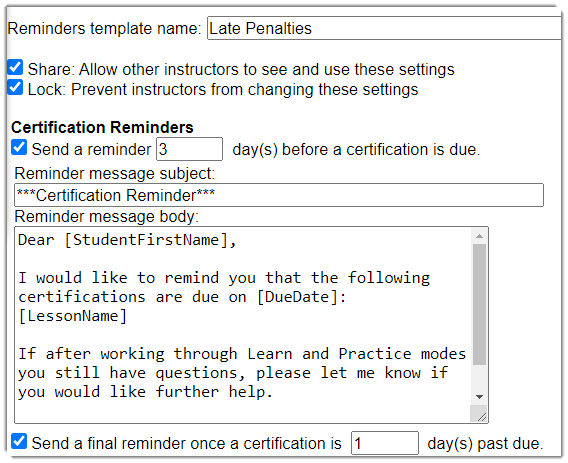
If there is one tool that belongs in every professor’s toolkit, it is Hawkes Learning's Reminders feature. While many platforms try to do everything, "Reminders" excels at the one thing that matters most: getting the message read.

assignment-reminders-Sep-19-2025-10-52-02-3115-PM

The Reminders feature is my personal favorite for every course I teach. It bridges the gap between the formal LMS and the student’s daily life. Unlike email, which students may check sporadically, "Reminders" sends texts or push notifications that get immediate attention. It allows for two-way messaging without ever sharing your personal phone number, protecting your privacy while remaining accessible. It’s perfect for those "don't forget" nudges about papers, last-minute room changes, or sending a quick morale boost before finals.

Building the Village: Engagement & Support Platforms

While many communication apps trace their roots to K-12, Higher Education is increasingly adopting them for specific niches: Dual Enrollment programs, ESL/International departments, and Family Engagement offices. Keeping the student’s support system involved is a proven strategy for persistence.

  • ClassDojo: (Free for teachers) While famous in primary education, ClassDojo is finding a unique home in developmental education and community building. It serves as a robust alternative for classroom communication, offering a friendly interface for messaging that feels less formal—and less intimidating—than official university email.

  • TalkingPoints: (Free for individual teachers) As universities seek to globalize, language barriers become a major hurdle for international students and their families. As noted by BookWidgets and Rooted Linguistics, TalkingPoints focuses specifically on breaking down these barriers by translating messages between instructors and families. This is a game-changer for keeping international parents informed about their student's transition to university life.

  • Bloomz: (Free for teachers & parents) For collegiate coaches and student activity directors, Bloomz is an excellent resource. It allows faculty and staff to communicate updates about activities and reports to students and, where appropriate (such as under-18 dual credit students), their parents. Ashland Source highlights its utility in keeping everyone on the same page regarding extracurricular logistics.


The Executive Function Gap: Task Management & Reminders

A major reason students fall behind isn't a lack of intelligence; it's a lack of organization. Implementing and encouraging the use of digital task managers is a form of communication that helps students communicate with themselves.


  • Microsoft To Do: (Free) For institutions already in the Microsoft ecosystem, this is a powerhouse. As noted by Saner.AI, this cloud-based app syncs tasks across multiple devices and operating systems. It allows students to move seamlessly from a library desktop to their smartphone without losing track of assignment deadlines.

  • Google Keep: (Free) Visual learners thrive here. YouTube reviews frequently highlight its seamless integration with Google Calendar. It is perfect for creating quick reminders, checklists, and collaborative notes that sync across all devices—ideal for student study groups.

  • Any.do: (Free basic version; Premium subscription available) For the busy student balancing work and school, Fruitask notes that Any.do offers high-level features like voice entry, smart date parsing, and location-based reminders (e.g., reminding a student to turn in a paper the moment they step onto campus).

Organizing Student Life

Finally, the student experience happens largely outside the classroom in clubs, Greek life, and student government.


  • BAND: (Free) When student organizations outgrow the chaos of a massive group text, they turn to BAND. The BAND Blog notes that it is a popular alternative for groups that have exceeded the free limits of other services. It organizes group communication, calendars, and file sharing, ensuring that student leadership can communicate effectively without administrative oversight.

The Takeaway

Effective communication in Higher Education isn't just about sending an email; it's about meeting students where they are. By leveraging tools that bridge language gaps, involve support systems, and aid in personal organization, institutions can create a safety net that encourages student success from orientation to graduation.


Interested in becoming a Hawkes Nest guest blogger? Check out our "Get Involved" opportunities HERE