In the landscape of Higher Education, the days of relying solely on a syllabus and office hours are behind us. Today’s student body is diverse, digital-first, and often overwhelmed by information overload. Whether it’s a Dual Credit student navigating their first college course, an international student facing language barriers, or a senior managing a capstone project, effective communication is the linchpin of student retention and success. To bridge the gap between faculty, administration, students, and their support systems, institutions are turning to a blend of community platforms and personal productivity tools. Here is how modern tools are reshaping educational dialogue. Instructor’s Top Pick: Direct Course Connection If there is one tool that belongs in every professor’s toolkit, it is Hawkes Learning's Reminders feature. While many platforms try to do everything, "Reminders" excels at the one thing that matters most: getting the message read. The Reminders feature is my personal favorite for every course I teach. It bridges the gap between the formal LMS and the student’s daily life. Unlike email, which students may check sporadically, "Reminders" sends texts or push notifications that get immediate attention. It allows for two-way messaging without ever sharing your personal phone number, protecting your privacy while remaining accessible. It’s perfect for those "don't forget" nudges about papers, last-minute room changes, or sending a quick morale boost before finals. Building the Village: Engagement & Support Platforms While many communication apps trace their roots to K-12, Higher Education is increasingly adopting them for specific niches: Dual Enrollment programs, ESL/International departments, and Family Engagement offices. Keeping the student’s support system involved is a proven strategy for persistence. ClassDojo: (Free for teachers) While famous in primary education, ClassDojo is finding a unique home in developmental education and community building. It serves as a robust alternative for classroom communication, offering a friendly interface for messaging that feels less formal—and less intimidating—than official university email. TalkingPoints: (Free for individual teachers) As universities seek to globalize, language barriers become a major hurdle for international students and their families. As noted by BookWidgets and Rooted Linguistics, TalkingPoints focuses specifically on breaking down these barriers by translating messages between instructors and families. This is a game-changer for keeping international parents informed about their student's transition to university life. Bloomz: (Free for teachers & parents) For collegiate coaches and student activity directors, Bloomz is an excellent resource. It allows faculty and staff to communicate updates about activities and reports to students and, where appropriate (such as under-18 dual credit students), their parents. Ashland Source highlights its utility in keeping everyone on the same page regarding extracurricular logistics. The Executive Function Gap: Task Management & Reminders A major reason students fall behind isn't a lack of intelligence; it's a lack of organization. Implementing and encouraging the use of digital task managers is a form of communication that helps students communicate with themselves. Microsoft To Do: (Free) For institutions already in the Microsoft ecosystem, this is a powerhouse. As noted by Saner.AI, this cloud-based app syncs tasks across multiple devices and operating systems. It allows students to move seamlessly from a library desktop to their smartphone without losing track of assignment deadlines. Google Keep: (Free) Visual learners thrive here. YouTube reviews frequently highlight its seamless integration with Google Calendar. It is perfect for creating quick reminders, checklists, and collaborative notes that sync across all devices—ideal for student study groups. Any.do: (Free basic version; Premium subscription available) For the busy student balancing work and school, Fruitask notes that Any.do offers high-level features like voice entry, smart date parsing, and location-based reminders (e.g., reminding a student to turn in a paper the moment they step onto campus). Organizing Student Life Finally, the student experience happens largely outside the classroom in clubs, Greek life, and student government. BAND: (Free) When student organizations outgrow the chaos of a massive group text, they turn to BAND. The BAND Blog notes that it is a popular alternative for groups that have exceeded the free limits of other services. It organizes group communication, calendars, and file sharing, ensuring that student leadership can communicate effectively without administrative oversight. The Takeaway Effective communication in Higher Education isn't just about sending an email; it's about meeting students where they are. By leveraging tools that bridge language gaps, involve support systems, and aid in personal organization, institutions can create a safety net that encourages student success from orientation to graduation. Interested in becoming a Hawkes Nest guest blogger? Check out our "Get Involved" opportunities HERE. © 2026 Hawkes Learning
![]()
March 11, 2026
In the landscape of Higher Education, the days of relying solely on a syllabus...
Read More
Hello, my name is Hillary VanSpronsen and I am a faculty member at Maine Maritime Academy in Castine, Maine. I have been using Hawkes software for almost 10 years in various math classes, including Precalculus and Calculus. If you are like me, you may be onboarding several new instructors or you yourself may be new to using Hawkes software. Here are some tips for supporting student success with Hawkes. Support Starts on Day 1 At the beginning of each term, I spend about 5 minutes having students log in to the Hawkes platform; I’ve found that students who log onto Hawkes early are far more likely to complete their first homework on time because they have the chance to familiarize themselves with the platform before any work is due. During this time I highlight features students will see and follow up on any questions they have, and any pointers from faculty for a successful start. Tip from Hawkes: Have students watch Dashboard and Beyond for a quick intro to the platform! Before the first assignment, remind students often of the best ways to use Hawkes. Let them know that they should start in Practice mode, preferably doing the entire assignment, and move to Certify only after they feel confident with the material. Even after they have certified, they should complete the remainder of the questions to make sure they’ve seen everything. When issues arise and students have questions, remind them that Practice mode is a good place to revisit. Responding to Student Concerns "In the past 20 years, I have used most major competitors for online mathematics software. I have found Hawkes to be the most intuitive, the most user friendly from both student and faculty perspective, and overall, the best value. This message is one we reinforce consistently to students throughout the term, making it clear that we, as faculty, value what Hawkes brings to them." In my experience, most student complaints about the software actually stem from real problem-solving mistakes or misconceptions that would also have also given them trouble on a paper assignment—with Hawkes however, they have the opportunity to correct those mistakes and learn from them in real time. If we are gentle but consistent about having students correct their own mistakes, while also having a positive attitude about the platform, students will have a more positive outlook on the value Hawkes offers as well. Learning at Their Own Pace Hawkes makes it seamless for students to work at their own pace because they can start an assignment, pause, and resume later. You can choose to allow unlimited pauses to the Certify attempts as well. It can be beneficial for students to be able to walk away, think, tend to personal business, attend another class, or anything they might have going in their world. Save Yourself Time & Effort From the instructor’s standpoint, one tool I recommend to help students stay on track is setting auto reminders from Hawkes. I prefer to set a reminder to send to students if they have not completed the assignment by 24 hours prior to their due date, and again if they are more than five days late. The best feature of these reminders is that I can push those notifications to myself as well, helping me see at a glance who has not completed an assignment. This saves a lot of time and effort. Most importantly, as an instructor using Hawkes, it’s helpful if we complete the homework ourselves in student mode. It provides insight for tips that we can pass to students! I hope that you find these tips helpful and I wish you a successful semester using Hawkes!
![]()
As a Hawkes Learning Student Ambassador, these are my top three favorite features within the Hawkes platform: 1. Explain Error Encourages the use of critical thinking skills Tells you what to do instead of just telling you it is incorrect Provides hints needed to solve a problem Sometimes we just need a quick reminder of what we need to do to be able to work through a problem. That is exactly what the Explain Error feature is there for! I used Hawkes for a math class, which is obviously a subject that needs specific steps in order to complete problems correctly. The small hints provided by the Explain Error feature gave me the small push I needed to get to the final answer without completely giving away the solution. This feature helps students use their critical thinking skills to figure out where they are going wrong and what they need to correct in the future! 2. Step by Step Gives you the confidence you need to do problems by yourself in the future Makes you provide the correct answer before moving on Will act as an instructor if you cannot reach yours When the hints provided in the Explain Error feature are not enough, Hawkes provides the opportunity to walk through the problem in a step-by-step manner. To move on to the next step, the “Step By Step” feature requires you to provide the correct answer for the step that is currently being displayed. By using this feature, it allows the students to see exactly how to find the correct answer without skipping any steps. In the long run, this helps the students when it comes to tests and real-life application because they have the exact knowledge they need to do it by themselves! 3. AI Tutor Offers immediate assistance within the courseware Provides a safe way to use modern technology Will answer any questions you have about the problem AI has become a huge part of the world we live in, but it can be hard to trust it because we do not know where the information is coming from. With the new AI Tutor feature in Hawkes, you can trust the fact that the information you are getting is accurate and pulled directly from Hawkes itself. This feature gives students a unique, safe way of being able to ask questions that will help lead them in the correct direction. The students are able to ask this tutor anything they need that is even remotely related to the problem and get an instantaneous answer. Meet the Author Piper Kinder is a freshman at Ball State University in Indiana who is currently studying Radiography. Next year, she will be at the IU Health Methodist Hospital in Indianapolis to complete her clinicals. After her graduation in August of 2026, she plans to work as a medical imaging professional in X-ray, CT, and MRI. When she is not busy with school, Piper enjoys spending her time with family and friends and working out! Student Ambassador Internship
![]()
March 28, 2025
As a Hawkes Learning Student Ambassador, these are my top three favorite...
Read More
We live in an age of instant, accessible information. I won’t deny it, nor will I pretend it is without its benefits. With a quick dance across the keyboard, we have the ability to glean knowledge like never before, from history and current events to science and art. That said, the corresponding convenience is tantalizing and has its pitfalls. Access can quickly sour and become abuse, and we find ourselves not so much learning as avoiding. I don’t have to join the legions of broken records enumerating the moral objections to cheating. I don’t have to add to the volumes of cautionary tales warning against dishonest academics. We know that cheating is wrong. But it’s also tempting. I understand it—I really do. Life happens. Things pile up. You get flustered, frustrated, and sometimes it’s easier to feed a few commands to a generator and receive a solution than to toil away for hours at something you just can’t seem to understand. But that’s why we have Hawkes Learning. The software is specially designed so that you don’t have to resort to cheating in order to pass. It’s likely you’ll encounter professors who take pride in their low pass rate—who enjoy being designated as “the difficult class”—but, fortunately for all of us, Hawkes isn’t like that. They want to see you succeed, and every aspect of the software works towards that goal. I say this having taken a Hawkes Statistics course in my first semester of college. If it tells you anything about my relationship with math, I am a Creative Writing major. Suffice it to say that I struggle (sorry to all my language arts folks for perpetuating the stereotype, but it’s true in my case). With Hawkes, I easily secured an “A.” I was able to do so because everything is right there: Explain Error, Step-By-Step, lessons, 24/7 tutors. I never wanted for assistance, and was thus able to secure a passing grade, not without some difficulty, but without giving up. And even more than that, I came through with an understanding of—and even an interest in—the course. With Hawkes, you can rest assured that the help you receive comes directly from the software itself rather than some sketchy website deep within the bowels of the internet, and it is tailored to your individual needs. Learning isn’t a “one size fits all” endeavor. It, like any other art, requires a degree of personalization and adjustment. Hawkes recognizes this and sees it as an advantage rather than an obstacle. You’ve heard it before, and you’ll hear it again, but cheating won’t help you in the long run. Even if you don’t care about a subject in and of itself, if you want a decent grade, you’ll have to learn the material sometime or other. Artificial intelligence is useless on an exam, but a firm grasp of the coursework isn’t. Take advantage of the resources at your fingertips, and if you’re unsure about anything, get in touch with your school’s Hawkes Student Ambassador. We’re happy to help. It’s what we’re here for. Meet the Author Ada Boroughs is a first-year student at Guilford College in Greensboro, North Carolina. She is double-majoring in Creative Writing and Environmental Studies, and hopes to someday work in conservation in addition to becoming a published author. Outside of school, Ada enjoys reading, writing, drawing, listening to music, and dancing, the latter of which she pursues with Greensboro Ballet. She is a huge fan of J.R.R. Tolkien, The Arcadian Wild, hot chocolate, and petting every dog she meets, and if you visit her Pinterest board, you will find dragons, roses, vintage maps, and a collection of delightfully cheesy Lord of the Rings memes. Learn More: Student Ambassador Internship
![]()
March 18, 2025
We live in an age of instant, accessible information. I won’t deny it, nor will...
Read More
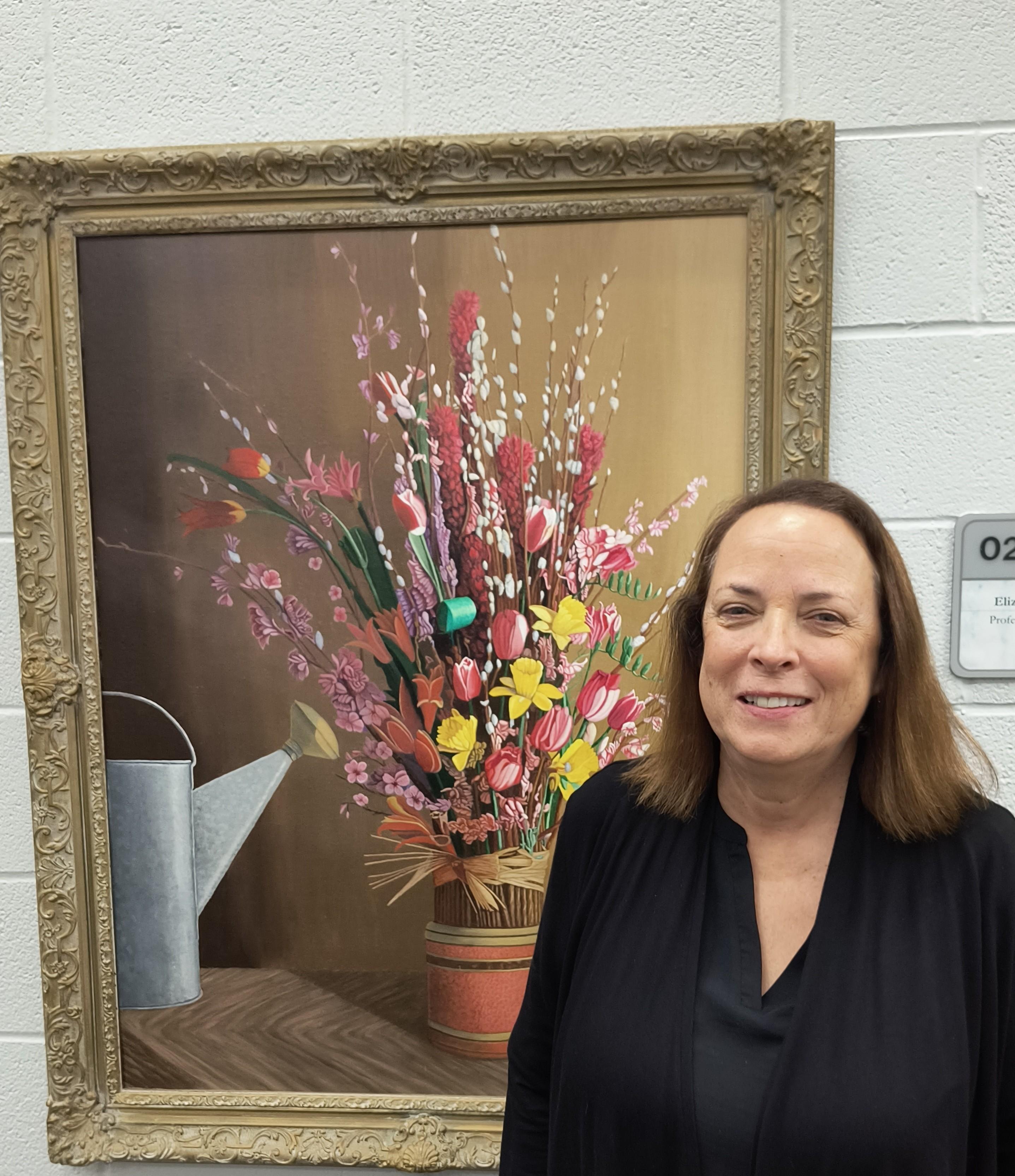
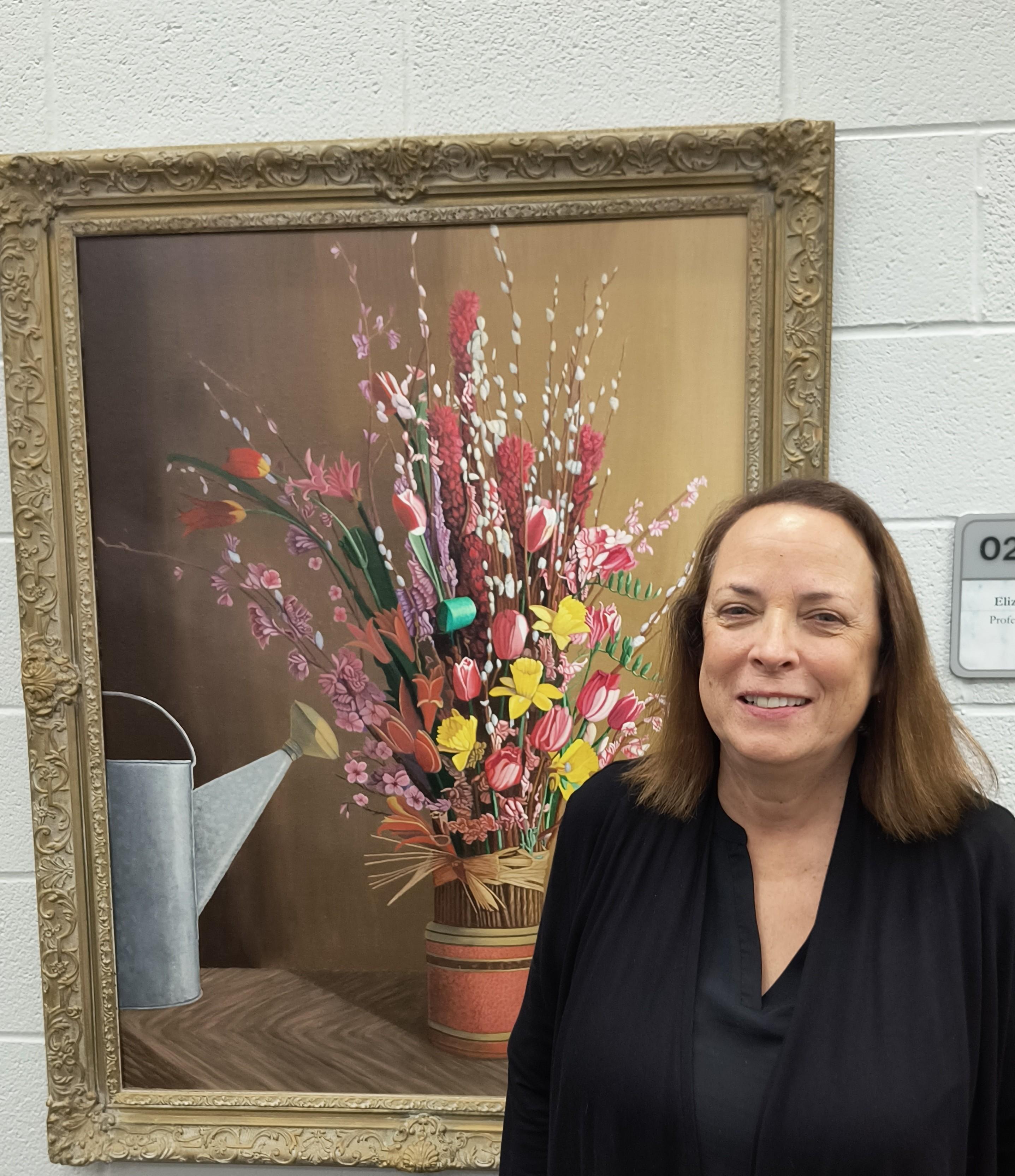
“Combining the narrative mode with a purposeful assignment and incorporating some AI might be an answer to writers who lack confidence, instructors who are suspicious of the value of narrative writing, and educators who distrust the use of AI for writing essays.” Professor Elizabeth Cobb If we want our teaching to take hold, to matter to our students, we all know our lessons must point to the real world. To accomplish this from the starting line, I have relied on beginning each semester with narrative writing. Over the years, I have listened to colleagues’ criticisms of this mode of writing. Many of them argue that it is not academic enough. With the advent of AI usage in our composition classes, though, I have observed this attitude come full circle. Whenever a big change in education occurs, we find ourselves reassessing our objectives, our goals, and our assignments, and this is why I think more writing teachers are willing to take a second look at narrative writing as a bona fide and worthwhile endeavor. Indeed, partly to discourage the heavy AI copy-and-paste strategy of many reluctant writers, I decided to reimagine my narrative essay assignment in my developmental reading and writing course. But I also wanted my students’ stories to contain a real-world application, so I put a new spin on their first essay which spawned my “narrative business letter” assignment. The prompt for the assignment is: “You will be writing about yourself but for the specific purpose of introducing yourself and ‘selling yourself’ for admission into an academic program OR for applying for a specific job. Essay writing can take different forms, but that isn’t always obvious to students. I wanted you to have a real-world experience with writing on this essay with a specific audience in mind and a specific purpose for telling your story.” I jumpstart the assignment with some pre-writing activities as taught in Hawkes’ Foundations of English, Chapter 7.3 “Choosing Topic and Scope for a Longer Text.” I jumpstart the assignment with some pre-writing activities as taught in Hawkes’ Foundations of English, Chapter 7.3 “Choosing Topic and Scope for a Longer Text. In particular, students can use “free-writing,” writing non-stop on their essay ideas for a set length of time (I suggest five minutes) to generate initial thoughts. Then, they can use “grouping” as taught in the chapter to begin organizing what they wrote. This strategy could even take a graphic form such as a mind map or cluster wherein the writer groups ideas from their free-write into categories for their narrative business letter. Their groups might consist of “personal anecdote,” “experience,” “practical skills,” and “soft skills.” After the idea-generation phase, students can begin to form a working “purpose statement” as taught in Chapter 7.4: “Writing a Thesis or Purpose Statement.” For the narrative business letter piece, they will need to express what they are applying for and how they are qualified for the endeavor. Completing this step will allow students to move on to organize their main ideas into an outline form which is covered in Chapter 7.5, “Organizing and Outlining a Longer Paper.” The “Working Outlines” section of this chapter does a particularly good job of explaining how the pre-writing activities of free-writing, grouping, and thesis development can naturally lead to outlining their essay. On my assignment sheet I offer guidance on what should be included in each paragraph as can be seen below: Introductory Paragraph “In a friendly, professional manner, introduce briefly who you are and why you are writing. Try to do this in a creative, attention-getting way.” What a student wrote: “Understanding. Time consuming. Perspective changing. Motivating. Leadership. Relationship building. Change. Flexibility … I know that if I were accepted into the Elementary Education program at FGC, I would be an example of what patience looks like and how to use it in everyday classrooms. With multiple experiences, I feel I am qualified to be a part of this program not just to learn more, but to be an example.” Body Paragraph #1 “Lead into a condensed biography of yourself to give your reader an idea of who you are and a bit about your background. Choose your details wisely to fit the purpose of your letter.” What a student wrote: I grew up in Iloilo, a small city in the Philippines, and I was surrounded by people with gentle hands, people who love and care for each other all the time. As a child, I was a dreamer… when I was in third grade, my teacher asked us what we wanted to be when we grew up. I confidently raised my right hand and answered, ‘I want to be a nurse when I grow up.’ I heard, “ohhhs” from my classmates and it made me feel like a celebrity, which then inspired me further to pursue that dream.” The student goes on to trace the development of her interest in the nursing field. Body Paragraph #2 “Transition from your more general biography to sharing one anecdote [brief story] of something important that happened in your life that would somehow be related to your chosen academic program or job. If, for example, you plan to apply to the EMT program at FGC, you might choose to share the time you witnessed your neighbor’s fire and assisted the EMS team in ensuring all the people got out of their house. Obviously, this experience could influence a person’s decision to become a firefighter or a paramedic.” What a student wrote: “Interestingly, I noticed that I have a unique bond with children as I can make them stop crying, or I can make them laugh easily. One time, my one-year-old cousin was throwing tantrums and wouldn’t stop crying. It was around ten minutes of non-stop wailing to the point that she was turning blue. I saw how her mother panicked…” [The writer finished the story and explained how she has developed some nursing skills naturally.] Body Paragraph #3 “From the story you shared in the previous paragraph, segue into an explanation of the knowledge and skills you can bring to the program or job in which you are interested.” What a student wrote: “Although I am only in the beginning of my teaching career and still have so much to learn, I believe I would be a great attribute to the Elementary Education program at FGC.” [the student goes on to discuss several soft skills she has developed.] Conclusion “Without sounding too repetitious, wrap up your letter by reminding your readers of what it is about you that sets you apart, and that will show them what you can and desire to contribute to their program/organization. You can refer to something in your bio or your anecdote as well. This is your last chance to make your mark.” What a student wrote: “Being dedicated, hardworking, flexible, willing, and patient will only help me succeed in the Elementary Education program and future. I will always have a desire to learn more and improve myself in any way possible. I hope you have felt my passion and love for teaching and will accept me to be a part of this program.” To support my teaching of this specific organization pattern, I find that Chapter 7.8 “Using Paragraphs Effectively” closely matches the composition skills I am trying to foster in my students: hooking the readers’ interest in the introduction followed by a clearly articulated thesis; using anecdotes, descriptions, examples, and reflections in the body paragraphs; and sharing the writer’s overall takeaway on the subject in the conclusion with a call for the reader [the employer or college administrator] to take action in considering their application. A couple of other important aspects of the project’s process are the peer review element and the review of a business letter format. Students submit their rough drafts to a peer review assignment in Canvas. This feature in Canvas allows me to set up anonymous peer reviews, which are assigned by Canvas. This gives them a chance to see how another student handled the assignment, and when they provide feedback, I think the assignment encourages critical thinking about the task at hand. Additionally, I provide a simple lesson on how to set up a business letter, and there are plenty of resources available from a quick Google search as well. Making assignments meaningful is a step in the right direction in demonstrating to students that writing can be useful and purposeful. An assignment such as this could provide them with a positive experience and help them gain confidence in writing, which might discourage copying and pasting from AI. However, there are places in the process where I could introduce responsible use of AI technologies, such as the idea generation phase, perhaps in researching what kinds of soft skills a person can possess or soliciting some ideas on what employers look for in an application letter. It would also be helpful to look up letter formats using AI. I will move toward integrating some of these strategies in the future. Combining the narrative mode with a purposeful assignment and incorporating some AI might be an answer to writers who lack confidence, instructors who are suspicious of the value of narrative writing, and educators who distrust the use of AI for writing essays. References: Foundations of English. Hawkes Learning, 2023. To learn more about Hawkes’ Foundations of English textbook and request a preview, please click here. Meet the Author Professor Cobb holds a master’s degree in English and boasts an impressive 25-year career in teaching across various educational settings, including high schools, universities, and community colleges. Currently, she dedicates her expertise to a small, rural community college in Northeast Florida, where she has been an integral part of the academic community for 15 years. In her current role, Professor Cobb passionately teaches developmental reading and writing, freshman composition, and a survey course in literature. The diversity of her student population in this beautiful, wooded part of the country brings her immense joy and fulfillment.
![]()
February 11, 2025
“Combining the narrative mode with a purposeful assignment and incorporating...
Read More
Starting the semester with new classes can be overwhelming; however, Hawkes provides students with many features that can make your courses more manageable and less stressful. As a student using Hawkes in my course, I found my personal favorite features. The following helped me succeed in my classes, and I hope they will do the same for you! Practice Mode Although it can feel more time-efficient to go straight to Certify, the Practice mode is a great place to start if you have all your notes ready. Personally, Practice helped me understand sections I was struggling with and simply reinforced what I already knew. Some benefits of the Practice module are: You can practice as many times as you’d like, even if you already finished Certify. The difficulty is customizable. You get immediate error-specific feedback if your answer is wrong. Tutor Feature in Practice Module I highly encourage my peers to work on the Practice module before Certify. It is not just because it helps you become more familiar with the content, but because of the Tutor feature. This option is located at the bottom left of any assignment you are doing in Practice. (Hint: It’s a red button!) What I love about the Tutor is it gives you a step-by-step process to reach the final answer. While in that Tutor, there are explanations on how and why you need each step. It surely is a unique way of studying and is great for note taking! Practice Tests We all experience some anxiety before a midterm or a final, especially if you are not so sure where to begin to study. Luckily, Hawkes has my favorite feature ever: Practice Tests. These are customizable tests that Hawkes creates for you based on the content you choose. For example, maybe you did a great job in Lesson 2.1 but need to reinforce Lesson 2.2, you can create a test just for that section! How to create a practice test: 1. Access your course from your dashboard, then find the “WEBTESTS” tab. Once you click on it, select “Practice WebTests.” 2. This is the part where you can customize your test based on what you need! Make sure to name your test. Then, you can select the sections you want to have on it from the drop-down menu. Don’t forget to type how many questions you want and how much time you will have to finish it. When you have all that information, it’s time to go! Designing a Practice WebTest 3. Once you click, “Start,” you are ready to start answering your test! Remember, don’t stress! This does not count for your grade. It is only for your practice. This layout will be the same one for your real tests, this also helps you to get familiar with the platform. When you finish your test, you can submit your final answers and see how many were correct and incorrect. It is a great way to see where you are standing and what areas might need more support. You can make as many practice tests as you want or retake previous practice tests. Overall, Hawkes has amazing tools that can smooth your journey through a course. Make the most of them! You can gain great studying and learning skills that will positively impact your future classes. Meet the Author Stephanie Mora is a sophomore at San Diego City College majoring in Philosophy. She works as an English Tutor in her college and is part of the supplemental instruction program. After finishing her Philosophy degree, she plans to attend Law school and help immigrants and their families around the country. Stephanie is a passionate music and film lover, she enjoys art, concerts and is an avid reader of fantasy books. She also loves to spend time with her two dogs Benny and Nube.
![]()
August 17, 2024
Starting the semester with new classes can be overwhelming; however, Hawkes...
Read More
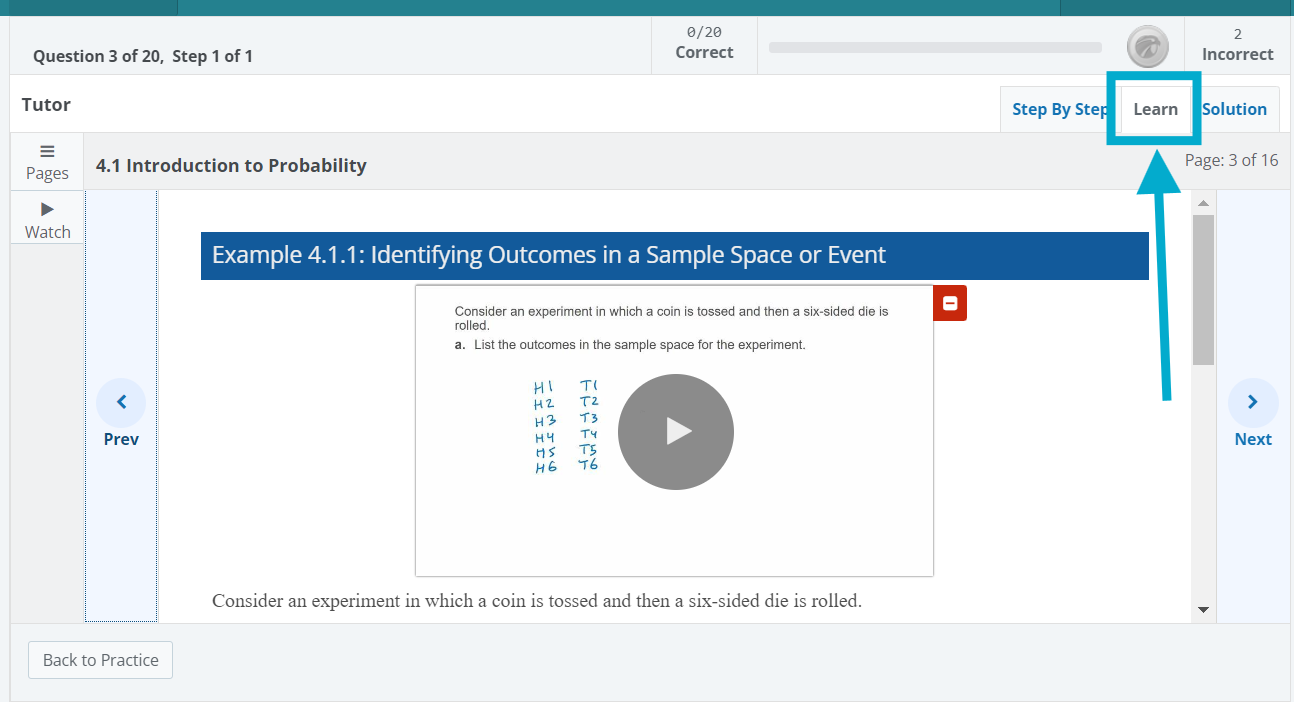
Being a mathematics major at Prairie View A&M University, I have had my fair share in the use of Hawkes. I have used the website for five different classes for the past two years. Many of the features in Hawkes are extremely helpful, but some features especially stand out and push me to be successful. Tutor While completing a problem in the Practice tab, there is a section at the bottom left that says “Tutor.” This leads to three different options: Step-by-Step, Learn, and the overall solution. The Step-by-Step guides you through the question as you answer it. Each step has directions that assist you through the question. The next tab refers the student to the interactive eBook format called the Learn mode. This helps students who need to return and be refreshed with the book’s terminology and examples. There are also videos within this section that guide the students through the lessons’ examples. The last tab is labeled “Solution.” This provides students with a big-picture solution view before the students try it themselves. This is also handy when a student gets an answer wrong and needs to compare their work to the work that is shown on Hawkes. Create Your Own Practice Test Another tool that Hawkes provides is the ability to create your own Practice Test. This function allows the students to create quizzes for themselves using specific chapters to cater to their needs. This is an amazing tool to use when preparing for exams. Students can use it while studying to test their ability to solve problems they struggle with. My Personal Experience I typically use the solution tab within the practice section throughout my classes. I learn best when I see the question worked out in front of me. I feel as though Hawkes has helped me understand these different subjects better than any teacher has explained to me. As a tutor myself, this tab also gives me a quick reminder of the steps to help me teach different math subjects to others. Sometimes, I forget how to solve a step in a problem, so Hawkes being one button click away is amazing. Exploring and using some of these features would significantly help your learning experience. Finding these features mixed with everyday learning habits could boost your productivity and learning ability. Don’t miss out on these helpful features available in your Hawkes student dashboard! Meet the Author: Trenton Jeffers is a sophomore at Prairie View A&M University, where he majors in Mathematics. He hopes to graduate with a teacher certification to begin teaching his favorite subject, Algebra. In his spare time, he tutors his peers in different math subjects. He also enjoys playing video games and basketball with his friends.
![]()
July 12, 2024
Being a mathematics major at Prairie View A&M University, I have had my fair...
Read More
As a first-generation college student, I never had someone in my family to equip me with the habits I would need to be successful in college; I had to create my own. Hawkes made learning these habits so much easier for me. I remember sitting in my freshman business calculus class thinking, “How in the world am I going to understand this?” The answer? Hawkes. Studying was something I never really learned to do in high school, so it was a huge learning curve for me once I got to college. Hawkes takes the dread out of my study sessions for me. Here are some features I have grown to love because of my hassle-free study sessions: Practice Mode Practice mode is great because it allows me to skip the questions I already know and practice the ones I am unsure of. In the event I get an answer incorrect, it gives an explanation as to why it was incorrect with the Tutor feature. Because my major in accounting deals with ample amounts of math, I have learned that the only way to truly LEARN math is to practice it. The more repetitive the process, the better. Practice mode is the best place to do that! Tutor Feature As aforementioned, Practice mode offers a Tutor button in the event I answer a question incorrectly. I love this feature because it walks me step-by-step through the problem to pinpoint exactly where I went wrong. Again, lots of math oftentimes means lots of room for error. The Tutor feature is my favorite way to get out of a sticky situation without having to send my professor an email (the response time is also immediate, which is a plus!)! Certify Mode The Certify mode helps me to know when I have mastered a concept. Although Certify does not offer the Tutor feature, it can be paused and resumed. This is particularly great when I come across a question I might have skipped on the Practice mode that I really shouldn’t have. Certify mode truly concretes my knowledge and makes me feel the most prepared for my next test or quiz! The Encouraging Messages Although this might sound like a minute detail of the Hawkes platform, I find it to be one feature that I could not leave out of my post. There have been times when I have spent way longer than I intended on a Certify problem just to get it incorrect; however, I reattempt the problem just to get an encouraging, “Way to go, Madelyn!” or “Nice Work!” message next to my continue button. It might not seem like much, but a little encouragement goes a long way on those long nights spent before a calculus test! Meet the Author Madelyn Harris is a Hawkes Student Ambassador and sophomore at the University of Mississippi. Madelyn is majoring in accounting and minoring in intelligence and security studies. She is a member of the Sally McDonnell Barksdale Honors College and boasts a 4.0 GPA. Her favorite classes are those for her minor; she plans to apply for an internship with the National Security Agency to fulfill her dreams of becoming a forensic accountant after graduation. Outside of school, Madelyn is co-owner of a nutrition business with her mom, and she loves to serve the people of her community every chance she gets. Student Ambassador Program
![Student Ambassador, Madelyn Harris]()
July 8, 2024
As a first-generation college student, I never had someone in my family to...
Read More
“Congratulations!” I say, “You’ve decided to attend college. Truly, it might be one of the best decisions you’ll ever make. After all, college can be a ‘gateway’ to a better life.” My fingers make the “air quote” sign at just the right moment. I work at Florida Gateway College, so my pun usually gets a reaction. A few students offer a good-natured groan or roll their eyes with exaggeration, but others smile or chuckle. (According to several former students, my sense of humor leans strongly toward “dad jokes.”) It’s the first day of class and we’ve been going over the syllabus, so everyone seems to appreciate the attempt at humor. But now we’ve reached my favorite section of the syllabus. I call it “My Expectations.” And while they assume I will talk about my class, they don’t yet know that I’m also going to talk about life. You see, college really can be one of the best decisions our students will ever make. We live in a rural area, and a nursing degree (for example) will lead to a much higher salary than the jobs available at one of the local restaurants or retail stores. So, my tone takes a turn to the serious: “But going to college is not a one-time decision,” I say. “It’s a daily decision. You have to choose to come to every class you possibly can. You have to choose to be attentive in class, to take notes, to participate in class discussions and activities, and to submit quality work on time. “Who has heard the phrase, ‘You have to go to college to get a good job’?” Quite a few hands go up. It’s a phrase that has been popular since at least the ‘80s when I was in public school. “In many ways, that’s true,” I say. “Unfortunately, that means a lot of students see a college degree as just a hurdle to getting the job they want. It’s an obstacle, something to be obtained with as little effort as possible.” Here comes my favorite moment: my “shock and awe” tactic. “Well, I might be the only college professor to ever tell you this, but a college degree is basically worthless.” I pause for effect; I also enjoy seeing the looks of surprise and confusion. Then, I continue… “It’s a piece of paper.” I hold up a piece of paper. “Think of it this way. If I had the authority to grant you a Ph.D. in Chinese Language and Literature, could you suddenly speak Chinese? Could you understand it? Could you read or write Chinese?” Students shake their head, and understanding starts to dawn in their eyes. “Now, a college degree might help you get a job, but it won’t help you keep a job. If you don’t have the skills, knowledge, discipline, and sense of personal responsibility that this piece of paper suggests you have, then your new employer will quickly realize that and fire you. They’ll hire someone who does have those things, who can do the things the employer needs done. “The real value of college is the education one receives – the skills, knowledge, discipline, and sense of personal responsibility mentioned earlier – not the degree itself. “So, I want you to consider these questions: Why are you going to college? What do you want to do in life? Where do you want to be in twenty-five years? Or maybe in ten years, if you’re an older student? “And most importantly, what are you doing today that will help you achieve those goals?” I then tell students, “There will be days you’ll wake up and think, ‘It’s a mighty fine day. I think I’ll go on a picnic instead of going to class.’ But will going on a picnic today help you accomplish your long-term goals? Will it get you where you want to be?” (In The Willpower Instinct, Kelly McGonigal describes several studies that indicate getting people to think about the future can strengthen their willpower in the present moment. So, I like to get students to think about their future as often as possible.) After another brief pause, I tell students the departmental pass rate for whatever class they are in, and I point out – statistically speaking – what percentage of them will either withdraw or fail by the end of the semester. “In my experience,” I say, “there are three main reasons students do not succeed in my classes. First, some students just don’t come to class. At least not regularly. Maybe once in a while, but sooner or later they simply disappear. Second, even if they come to class, some students don’t submit the assignments. I’ve had students with perfect attendance who never submitted a single assignment that was to be completed outside of class. “Third, even if they come to class and submit the assignments, some students don’t follow the assignment’s instructions. If I ask for four pages, they give me two pages – that’s only 50% of the assignment. What grade is 50%?” Students reply, “F.” “Or, if I ask them to analyze something, they merely summarize it. That’s a lower cognitive skill. I can’t give them full credit for that. “Now, although I don’t hand out passing grades for minimal effort, it’s not overly difficult to pass my class. In fact, if you come to class, do your work, and follow the instructions, you’ll be well on your way to passing my class – and succeeding in life. “After all, consider this: what happens if you don’t show up for work? If you do what’s referred to as a ‘no call, no show’ several times?” Students reply, “You get fired.” “Well, what if you come to work, but you don’t actually do anything? You’re taking sixty smoke breaks a day, you stand around chatting with people, and stuff like that?” Students reply, “You get fired.” “Okay, what if you come to work and you even do some work, but you always do it wrong? They tell you to do something one way, but you always do it another way?” Students reply, “You get fired.” By now they’ve caught on. Just showing up, doing their job, and doing it the way they’re supposed to do it will go a long way toward helping them succeed – both in college and at work. At some point in the past, the American school system, from kindergarten through higher ed, seems to have lost sight of the fact that the goal isn’t a degree but educated individuals. Degrees became a convenient credential required for many jobs, and so they became the goal. But we need to remind students that their future success is not dependent on their degree, which is merely a piece of paper. That piece of paper won’t help them perform on the job. Their future success relies on what they can do, on what they know, and on how reliable they are. A degree is just a symbol of those things – and it only matters if it is an accurate symbol. About the Writer Dr. Michael M. Baker earned his Ph.D. at The Ohio State University in 2013. Since then, he has taught English (and some Humanities) courses at Florida Gateway College. He co-founded FGC’s Study Abroad program in 2017 and has led programs to the U.K. in 2019, 2023, and 2024 (forthcoming). Since 2020, Dr. Baker has taught courses in FGC’s Second Chance Pell program inside a local prison. One of his Second Chance students won a national writing prize and another had an essay published in a composition textbook.
![]()
May 16, 2024
“Congratulations!” I say, “You’ve decided to attend college. Truly, it might be...
Read More
Finals are right around the corner; what a scary thought! Studying for finals does not have to be scary though. Studying with Hawkes is a hassle free experience that will leave you feeling prepared to ace your exams! In four simple steps, you can trade your stress for serenity: B- Be Confident! The first step to achieving your goals is to begin. By utilizing the Hawkes platform, students have access to their courseware textbook, an amazing Practice Mode, and practice tests. Working through the problems in the textbook or practicing them before test day can boost students’ confidence greatly! E- Endless Attempts Hawkes’ Practice Mode is my favorite place to go to build my confidence because it gives me endless attempts at the same problem in different formats. The “Try Similar” button in practice mode gives endless variations of the same type of problem, so I go into my exams feeling confident that I have seen any problem that might be on the test! S- Speak Out I truly owe everything I have learned through Hawkes, including my participation in the Ambassador Program, to my wonderful professors. If you don’t know where to begin studying, reach out to your professor! I have always felt like a priority to my Hawkes professors and Hawkes Ambassadors; they are here to help you succeed! T- Timing is Everything! Only you can know how prepared you are for your exam! Timing your studies is of the utmost importance. Lacking confidence in your ability to study might require a few more hours during the week preparing, but putting everything off until the night before the test is never a good idea! Taking time to do a handful of practice problems on Hawkes each day is better than cramming in a last minute study session before the exam! Madelyn Harris is a Hawkes Student Ambassador and sophomore at the University of Mississippi. Madelyn is majoring in accounting and minoring in intelligence and security studies. She is a member of the Sally McDonnell Barksdale Honors College and boasts a 4.0 GPA. Her favorite classes are those for her minor; she plans to apply for an internship with the National Security Agency to fulfill her dreams of becoming a forensic accountant after graduation. Outside of school, Madelyn is co-owner of a nutrition business with her mom, and she loves to serve the people of her community every chance she gets. Learn more about the Hawkes Student Ambassador Program here!
![]()
May 7, 2024
Finals are right around the corner; what a scary thought! Studying for finals...
Read More
Faculty often have many roles at their university. We serve on committees, maintain office hours, perform volunteer work, attend graduations, conduct research, do a hundred other unnamed things, and sometimes we teach. Given the plethora of roles that we have at our universities, many of us doggedly seek out anything that can remove some of the administrivia from our calling. As a full-time professor and part-time course coordinator for Introduction to Psychology at my university, I am responsible for setting up and overseeing multiple sections of a course that is taught by a legion of invaluable instructors. Hawkes Learning makes the tasks related to coordinating these course sections simple, straightforward, and swift. Getting a course up and running in Hawkes is simple. You set up the class on the Hawkes Learning website and then link it to your learning management system via a few straightforward steps. First, you choose your eTextbook. Second, you create your Master Shell for the course. Third, you add the specific details for that term such as due dates, assignments, and values. Once your Master Shell is the way you like it, you can add instructors with a few clicks and assign them to duplicate sections of your Master Shell; this is especially convenient when you are asked to set up a new section 48 hours before the term starts. Finally, if you are using Blackboard like me, you can go into each instructor’s Blackboard page and connect their section to their Hawkes Learning course for them. This is exceptionally useful if you want to ensure all the instructors have their Hawkes Learning materials linked with their Blackboard course pages on day one. Whereas the first-time setup can be done swiftly, my favorite part about the Hawkes Learning platform is how easy it is to clone a course. The simplicity of the cloning process keeps you from having to reinvent the wheel (or in this case, Master Shell) each term. It is as simple as making a copy of the Master Shell from a previous term and shifting the dates. Bellevue University is on a trimester system, which means I am making duplicates of my Master Shell multiple times each year. Having used many other platforms for managing Introduction to Psychology classes, I have stuck with Hawkes Learning in part because this platform is by far the most straightforward and simplest to use. Case and point, it takes me less than half an hour to set up seven or eight sections each term. “My favorite part about the Hawkes Learning platform is how easy it is to clone a course.” I believe using the Hawkes Learning platform to coordinate multiple sections of a course is simple, straightforward, and swift. However, I would be remiss if I did not emphatically state that Hawkes Learning has an exceptional support team that is readily available, should you run into technical difficulties. With regular workshops, first-time setup camps, and lightning-fast support, troubleshooting assistance is a simple phone call or email away. The Introduction to Psychology textbook landscape is an embarrassment of riches. Nevertheless, Hawkes Learning is peerless in terms of technical and student support. Both in my personal experience and in the feedback I receive from my instructors and students, Hawkes Learning’s support team consistently comes through. So, if you are like many other faculty and course coordinators who are trying to find a way to make just one of your roles more manageable, consider Hawkes Learning for your next eTextbook. Hawkes Learning has the platform and the support you have been looking for. Having used many other platforms for managing Introduction to Psychology classes, I have stuck with Hawkes Learning in part because this platform is by far the most straightforward and simplest to use. Case and point, it takes me less than half an hour to set up seven or eight sections each term. Dr. Jerome Lewis About the Writer Dr. Jerome Lewis is an Associate Professor in Psychology at Bellevue University. His research focuses on the victim role and the psychology of morality. Dr. Lewis has a keen interest in service and the teaching of psychology. In 2022, he received BU’s Excellence in Service Award.
![]()
April 12, 2024
Faculty often have many roles at their university. We serve on committees,...
Read More
In the ever-evolving world of education, it is crucial for educators to continually seek out innovative and effective tools to enhance the learning experience of their students. As an instructor in a community college setting, I have had the privilege of exploring a variety of educational platforms and resources. Among these, Hawkes Learning has proven to be a game-changer in my business statistics class. Hawkes Learning is a state-of-the-art adaptive learning platform designed to provide personalized learning paths for students. Its user-friendly interface and student-centric approach set it apart from traditional learning methods. The platform is not just a tool; it’s a comprehensive learning ecosystem that caters to the diverse needs of our student population. The user-friendly design of Hawkes Learning is one of its most appealing features. The platform is intuitive and easy to navigate, making it accessible to students of all skill levels. This feature is particularly beneficial in a subject like business statistics, which can be challenging for many students due to its abstract concepts and complex calculations. With Hawkes Learning, students can explore the course materials at their own pace, reducing the anxiety often associated with learning new subjects. One of the standout features of Hawkes Learning is its adaptive learning capability. The platform adjusts to each student’s learning pace and style, providing customized content and resources based on their performance. This feature is particularly beneficial in a subject like business statistics, where understanding concepts often requires practice and repetition. With Hawkes Learning, students can revisit topics until they grasp the material, ensuring a comprehensive understanding of the subject. Absolutely one of the best things about the company is that Hawkes Learning offers exceptional customer service. Their team is always ready to assist with any technical issues or concerns, ensuring that our class can run smoothly. This level of support is invaluable in an educational setting, as it allows us to focus on teaching and learning without unnecessary interruptions. I have dealt with them on multiple occasions when I or a student had a question, and received a response very rapidly. I have not yet had a question come up that could not be answered. Another important aspect of Hawkes Learning is its flexibility. The platform can be accessed from anywhere, at any time, making it an ideal tool for both in-classroom and remote learning scenarios. This flexibility has been particularly beneficial during the recent shift to online learning due to the COVID-19 pandemic. In conclusion, the integration of Hawkes Learning into my business statistics class has been a transformative experience. The platform’s user-friendly interface, adaptive learning features, excellent customer service, and flexibility have greatly enhanced the learning experience for my students. It has not only made my job as an educator easier but has also empowered my students to take control of their own learning journey. As educators, it is our responsibility to continually seek out and implement tools that can enhance our students’ learning experience. With Hawkes Learning, we’ve found a tool that not only meets but exceeds our expectations. It is a testament to the power of adaptive learning and the potential it holds for the future of education. About the Writer I received my undergraduate degree from Huntingdon College, and I obtained my masters degree from Alabama A&M. I have taught high school since 2008, and have been teaching as an adjunct since 2015, first at Kennesaw State University’s Paulding campus, and I started at Calhoun in 2022.
![]()
April 9, 2024
In the ever-evolving world of education, it is crucial for educators to...
Read More
For many years in my 1101-1102 first-year writing courses, I have assigned the Hawkes Learning courseware to remediate grammar and mechanics and to complement manuscript and research content. In 2015, I met with a group of unusually weak writers; although nice people with a sketchy familiarity with the essay format, none brought basic editing skills to the class, not to mention any general awareness of grammar or mechanics. They wrote on autopilot; well, everything they did seemed conducted in a haphazard, inattentive manner. Their failure to meet deadlines or work independently also suggested a lack of personal responsibility and an inability to listen to or follow instructions. And yet they showed up regularly for class. After a panicky review of all the support available through the publishers, I chose Hawkes to supplement my course at first because I liked The Reading and Writing Handbook, a well-selected collection of focused information presented in a simple, direct, well-designed format. As I reviewed the Hawkes courseware and the accompanying books, I particularly liked the editors’ recognition that proficient writing reflects reading skills, and reading skills inform the quality of skillful writing. It seemed to me that the approach in both Foundations of English and English Composition would be accessible at every skill level, but also to at-risk students. Best of all, I could quickly integrate the materials with no changes to my existing syllabus. From my first attempts to implement the materials, I enjoyed excellent support from Hawkes representatives, making the set up and the first attempt in a class painless. To my surprise, these first-year students were amenable to the lessons and quizzes probably because Hawkes’ homework formatting was more familiar than with the more speculative kinds of writing prompts that they were preparing for class. From the first weeks, the format worked very well, and positive results were at once evident in their work. I have made very few changes since that first attempt. Along with a reader, I require 1101-1102 students to buy the Hawkes software bundled with the Handbook. For a more in-depth look at the materials the students have access to, the eBook for English Composition that goes with the “Compositions” lessons is included in the software. To motivate the students and encourage self-motivation, I set the Hawkes average as 25% of the final course grade. The general format is simple: each week I assign 5-6 lessons from a selection of chapters and topics and a quiz, about 45 minutes or less to completion. I have never needed to set late penalties for the lessons. With an email request, I make all quizzes available until the student is satisfied with the grade. I realized assigning a little at a time and spreading out the topics, I could keep their attention on general and specific editing details without much comment in class. For example, a week’s lessons from English Composition involve only five questions for each of the six topics doled out week by week as the paper process develops. While getting the paper started, the week’s six lessons could be drawn from Chapter 3.1, 2 “Writing Process” [pre-writing, drafting, etc.], Chapter 4.2, 3 “Parts of the Essay” [introduction, thesis], Chapter 5.4 “Reading & Rhetoric” [understanding purpose], and Chapter 9.2 “Basics of Grammar & Mechanics” [characteristics of a sentence]. For me, planning involves only a weekly setup. I usually post on Fridays for the following week’s Monday to Sunday night due dates. The entire process of setting up the curriculum, the due dates, and the weekly quiz takes me about 20 minutes. For me, there has been no downside. Each semester I have seen positive results and enjoyed collaborating with my colleagues at Hawkes! Dr. Stephen Whited Assignments vary according to my syllabus for content expectations and class discussions, developing in complexity as we move through the semester. By the conclusion of the course, they have moved through all chapters and nearly all topics. Hawkes’ excellent range of diagnostic reporting and analytics makes monitoring for “Outcomes” amazingly easy. I usually assign a low-stakes diagnostic quiz in the first week of class, and I add a post-course quiz to the final exam as a warm-up for the final writing sample, which I compare with the in-class midterm. In every class, I can point to data that suggests improvement for most students. About the Writer Dr. Stephen Whited has taught at Piedmont University in Demorest, Georgia, for 30 years. He studied at Georgia State University, where he earned his bachelor’s and master’s degrees, and he earned his doctorate at the University of Kentucky. Stephen’s dedication to teaching leaves a lasting impact on his students, reflecting his ultimate goal of nurturing young minds and creating lasting impressions. Stephen also serves as a resource to other instructors as a Hawkes Faculty Consultant. Outside of the classroom, Stephen enjoys poetry, art, music, theology, philosophy, and history. Stephen and his wife, Jo, have two children. Learn more about Stephen in his Hawkes Instructor Spotlight here.
![]()
March 27, 2024
For many years in my 1101-1102 first-year writing courses, I have assigned the...
Read More
Hawkes Learning has almost 40 years of experience in educational courseware; in fact, Hawkes Learning forged the first educational courseware that used precursor models of artificial intelligence joined with research-based pedagogical approaches in mastery-based learning. In Hawkes Learning, you get trustworthiness from years of experience, unparalleled care from customer support, and exceptional courseware that considers the student before the dollar. My time with Hawkes spans only 10 years of their student-centered history, but my experience is unique with them. I experienced Hawkes Learning as a tutor, adjunct faculty, and full-time tenure track faculty. For many years, I was a part of the Hawkes family, but I had to leave in 2021 when I joined a new college. For the last 3 years, I used other educational platforms, and I want to tell you why I have finally returned to the Hawkes Nest... I’ll never forget my first experience with Hawkes Learning. I was a freshman at Morehead State University in Morehead, KY studying mathematics, and I began tutoring students who used Hawkes in College Algebra and Precalculus. I was amazed at the modernized look of the system even back in 2014. As a tutor, I was able to assist students through Learn and Practice. With Practice, there were so many questions that I could work with a student on before they went to Certify. I also worked with faculty who used an emporium-style classroom with Hawkes; the instructor helped students, I helped students, and students helped students! The flexibility of Hawkes Learning provides autonomy to an instructor’s dream of their perfect classroom. The courseware never held you back on the possibilities of elevating the student success in your courses. When I transitioned from tutor to adjunct faculty, I was certainly worried that there were a lot of complicated processes behind the scenes that my instructors weren’t showing. Well… I was wrong. As an adjunct, I found the Hawkes Learning Teach accounts to be easily navigable and also offered insightful reports on student progress. These reports were essential to reporting student progress in our Early Alert System. Coordinator/Administrator templates made for an easy start where I was able to focus on course design, activities, and more! Each semester, Hawkes Learning hosted a Getting Starting Session for all faculty using Hawkes on campus. Additionally, if I had a question while working late into the night (which was/is common), Hawkes Learning was there. The 24/7 chat was available for both students and me. My last time using Hawkes was Spring 2020, and I believe we can all remember what happened in March. Since Hawkes already has dedicated Learn and Practice modules, the quick transition to online did not seem as abrupt as some of my other colleagues who did not use Hawkes. Now, I hope we never experience another pandemic, but there are other personal challenges that can cause us to shift our classrooms. Consistency is important during these times, and Hawkes provides exactly that with Learn, Practice, and Certify. When interviewing for my current role, one of my first questions was, “Do you all use Hawkes Learning as your educational courseware?” The answer was an unfortunate “no,” and I started in January 2021 with brand new, never-seen-before, courseware which was a huge challenge to get acclimated to platforms very different from Hawkes in my first year. I have been with my current college for three years, and I have now been promoted to Assistant Professor from Instructor. After talking several times with the Educational Courseware Representative for my region at conferences over the years, it was finally time to return to Hawkes Learning! Also, shoutout to Debra for being the most supportive and energetic rep out there; a great part about Hawkes Learning is that every person who works there believes in the company’s mission and puts student success first. For Spring 2024, my college is piloting Hawkes Learning, and a colleague and I are the pilot instructors for College Algebra. Although I am “piloting,” it is clear I have a long history with Hawkes Learning, and I plan to use Hawkes Learning for my mathematics courses from now on. So, why did I return? I certainly got comfortable with the other platforms; my students were doing fine; my division continued to use them; Why return to Hawkes? My teaching philosophy considers failures and mistakes a part of the learning process, but I felt that I was not creating an environment where students could recover and learn from failure without Hawkes. With the mastery-based learning approach, students may not pass their first or second attempt at Certify, and that is okay because the system will adapt to them. When students do not pass Certify, they are redirected to Practice where problems are adapted to their most immediate needs from the Certify. Students are spending more time on topics they have not mastered and gaining confidence in preparation for their next Certify attempt, Quiz, or WebTest. Parenthetically, there are curricular advantages that really impact student learning and understanding of more rigorous mathematical concepts. I have noticed that the chapters in College Algebra by Paul Sisson appropriately develop a student’s mathematical maturity. Recently, I have been covering Functions and Relations which includes the difference quotient. In the past, the difference quotient was a common challenge for my College Algebra students because the algebraic manipulation and skillset was not well defined early enough for them to attempt some of these problems. With Hawkes this semester, my students seem to take on challenging mathematics with a higher level of confidence. This is a great development in student learning because I can create projects, problems, or activities that require deeper critical thinking and algebraic skills that would have previously taken up too much cognitive load for the students. These curricular advantages are continuously unfolding as the semester progresses. Without a doubt, Hawkes Learning has the best customer support in the EdTech community. The time, dedication, and commitment to instructor and student success are huge factors of why I returned. I was tired of getting the chatbots, the hour-on-hold phone calls, or the email exchanges that don’t help immediate issues. With the 24/7 chat feature, 3 rings or fewer phone calls, and the customer support team, you are in the best hands to get your semester started. I cannot wait to work with the Customer Love team which will help me design my course to better fit the needs of my classes. For Spring 2024, my pilot colleague and I were guided every step of the way to set-up. The ease of setting up your courses is excellent for any faculty member, whether part-time or full-time. Since the last time I used Hawkes, there have been many changes that highlight Hawkes’ ability to adapt to evolving student and instructor needs. Finally, with my return to Hawkes Learning this Spring 2024 semester, how’s it going? My students are engaged in the content, working productively through the Certifys, and developing mathematical skills faster than anticipated. I can change the format of my class from mini-lectures and worksheets to projects to an emporium-style workday in Hawkes. Sure, students still get frustrated when they don’t pass a Certify, but they aren’t getting stuck as much. Features like Tutor, Explain Error, and Solution assist students in a variety of ways that meet them where they are. Misconceptions in mathematics lead to common errors, and Hawkes Learning can guide a student out of those misconceptions and into mastery of the content. I am so happy I have returned to the Hawkes Nest, and I look forward to exploring the variety of ways my teaching will evolve while using Hawkes Learning. About the Writer Hunter Chandler is an Assistant Professor of Mathematics at Bluegrass Community & Technical College. Chandler is a Ph.D. student at the University of Kentucky in STEM Education, and he holds master’s degrees in Mathematics from Central Methodist University and Adult & Higher Education from Morehead State University. He has been teaching mathematics since 2017 and has many years of experience using Hawkes Learning. His research interests include undergraduate and technical mathematics education using project-based learning and other active learning techniques for college and adult learners.
![]()
February 8, 2024
Hawkes Learning has almost 40 years of experience in educational courseware; in...
Read More
Teaching an online class can present a whole series of unique challenges different from teaching a class to students in person. Some of these challenges include student engagement with the materials, keeping them motivated remotely, and ensuring that their learning is similar to in-person classes. Both first-time and seasoned professors face these challenges and a few other surprises in the online environment. When you add mastery-based teaching to this, things can get even more complicated without the right textbooks and learning management system (LMS). The Hawkes Learning system’s unique tools for all classes can help improve all of these issues. We’ve all had students postpone their coursework until the last minute. I often hear that I knew the material and just needed to knock out the assignment. Usually, these students fail to do well as they rush to their work and put in too little study time. While in the classroom, we can prompt students to finish their work. This is harder in the online environment, where we’re limited to posting assignments and emailing the students. The Hawkes system helps with this in several ways. First, using the mastery-based learning Hawkes is built around, students must get a passing grade to complete the assignment. I’ll be honest. In the first week or two of classes online, a few students still wait until the last minute and then don’t do well. Something I do is let them fail the first time or two, then have a quick Zoom meeting to discuss how to improve their scores. Almost universally, students respond well to this and find the success-based mastery idea appealing. Sometimes, the natural consequences of failure can be used as a strong motivator. Another feature of the Hawkes system is the assignment reminder system for students. At least at my college, students sometimes tell me they get too many emails from the college and choose only to read some of them. With the email coming from the Hawkes system, students know this is coursework-related, and reading responses are much higher. A word of caution here– change your message from time to time as students start just to ignore the same one over and over again. Some of what I discussed above about the reminder system, from the Hawkes system to assignment-related elements, applies to keeping students motivated. I find engagement drops mid-semester most often. This is a time to change things up a bit to catch students’ attention. Rather than email students their instructions in text form, I record short video segments and send these to students. I also include a meme or other humorous element to catch their attention. When I started this, students often commented that they checked the email to see what humorous element I included. In a two-year review, the number of non-completed assignments dropped from 18% mid-semester to 3% after making these changes. It could be argued to do this all semester, but changing things occasionally promotes better overall engagement. Another element I occasionally use is a point or two of extra credit for finding an error in my emails. This encourages me to check my work and allows students to see their professors as human and fallible. Scared of that last part? Don’t be. Let your students see you’re not perfect. It helps everyone. The last major hurdle I find in online courses is making the learning similar in the online arena to the classroom. There are a few things that can be done to help here. One that I’ve had mixed success with is open Zoom hours for students to get online with me and fellow students. Finding a time to do this can be tricky. At least for me, many of my online students have families and jobs. Finding a time that works for all students is challenging. I find that one-on-one Zoom meetings for students can be a better fit. Where possible, I schedule three or four students at the same time. A second feature I use that I doubt is revolutionary is recorded video lectures that students can watch when and where it fits their schedule. Hawkes provides great PowerPoint slides for the entire book (at least for psychology). I show the slides as I narrate the material for my online students. Student reviews often cite this as a favorite way to learn the material. I also include relevant personal stories or examples to highlight the slides’ points further. There are always other surprises when teaching online students. I practice patience and understanding for all but the most obvious attempts at getting out of work. What I do find works is good early and frequent communication with online students. This sets the tone for the semester. I also encourage students to ask questions as they go through the material. One example is if they have questions while reading their book or reviewing the PowerPoint slides. I give lots of praise for asking questions and often share the responses with the whole class so that even if a different student doesn’t want to ask, they still get the new information. On this last point, ask your students if they like to be named for asking the question that you share with the class. Some are fine with it, others not so much. Another element I use online is having students do corrections for their exams. In a mastery-based system, students get used to not making errors and can sometimes feel bad when they don’t do as well on an exam as they do their weekly chapter reviews. I make the corrections procedure somewhat punitive and time-consuming. I learned this element when I noticed students not putting as much effort into the exams. A common response was, “I miss the extra chances” that the chapter reviews provide. They responded much better by giving students room to make a mistake or two but not risk their grades. Undoubtedly, teaching an online class is different from teaching a live, in-person class. I encourage you to consider as many ways as possible to increase student engagement and persistence in the online world. Hawkes has several features that help you accomplish this. By adding the mastery-based learning Hawkes is known for, students do better in online classes and feel better about the learning they achieve. – Professor Mark Johnston About the Writer Mark is an Associate Professor of Psychology at Neosho County Community College in Chanute, Kansas. Mark has served in this role for five years. His teaching experience extends another six years at Labette Community College Parsons, Kansas. Prior to beginning teaching, Mark held executive leadership positions in several healthcare roles. This included both hospital-based roles and long-term care settings. Mark is married and has two adult children and seven grandchildren. Mark resides in Parsons, Kansas, and commutes to Chanute to teach his classes. Outside of teaching, Mark enjoys cooking, fishing, and playing strategy board games with a group of other professors at other area colleges. Mark has master’s degrees in Psychology from Pittsburg State University and Human Development from the University of Kansas. Mark’s professional affiliations include being a member of the American Psychological Association and the Kansas Psychological Association and a negotiator for NCCC’s Professional Educators Association.
![]()
January 29, 2024
Teaching an online class can present a whole series of unique challenges...
Read More
Where do we go from here? It’s a question that pops up in the car as I travel west 30 miles to work every day. It surfaces after recent grading sessions of my students’ argument papers. And in the hallways of the building where I work, it comes up when my colleagues and I ask it of each other almost daily. As writing instructors, where can we go now that AI has landed in our field? Along about October 2023 I started to notice this phrase in several of my online students’ essays—"In this paper we will discuss the three ways”…- phrasing that I had decidedly taught them not to use! My first thought was that this was a line they were taught to use in the recipe writing they had adopted for standardized writing tests. However, I had not seen it crop up regularly at all until now, and I was reading it in maybe five out of 20 essays. It didn’t take me long to realize the connection: AI had made its landing in our very rural service area in North Florida. Other red flags included a very well-written introduction and conclusion but underdeveloped body paragraphs. I caught on, and tested out my theory by plugging in a topic to ChatGPT. For example, a popular argument essay topic my students use is “high schools should prepare their students better for living on their own.” I would type in the “prompt” to ChatGPT and read a decent opener followed by points listed in outline format but not developed [suggestions for the body of the essay], and a fairly well-written closing. The students using AI, more often than not, did very little to develop the reasons for their argument, and despite the personal experience requirement for all essays I assign, in these AI-generated essays, I would see no trace of an anecdote or specific example. It should also be noted that the instances of copied AI-generated essays occurred exclusively in my online classes and not in my in-person classes. At first, I felt personally affronted by the incidences of AI use. Students were not following my teaching. They were not writing in a meaningful manner, and I didn’t feel they were really learning how to write. I never directly accused my students of “cheating” or “plagiarizing” though I was not happy with the copied submissions. Instead, I recorded a “0” on these papers, and I required that they contact me via phone or office visit to explain their process for writing the essay. Unfortunately, more often than not, these students did not contact me, and they accepted the “0” on a key assignment. If a student submitted another plagiarized essay, I would contact them and request a meeting with me and my department head. At that point, we have a process in place at my institution wherein we record the incident and keep a file on the student. I did not have repeated instances of plagiarism by any one student. Meanwhile, in the course of the semester, I attended several webinars on AI which seemed to concentrate on how we could potentially use it as a tool. I was at first resistant to this because I didn’t see how it would promote critical thinking and learning. Slowly, though, I have had to acknowledge that ChatGPT has a lot of potential for providing information, and it is here to stay. I’m not at the point where I am going to teach students how to use it per se. For instance, I don’t plan to locate an essay from ChatGPT for them and show them why/how the essay would not fit my assignment though I know this could be a valuable lesson. I also recognize that in the future I could do a lesson wherein I compare and AI-generated essay to a well-written, original student essay. However, I will, in lectures, discuss how it should not be used as a crutch to write partial or complete responses to written assignments but more as a way to generate initial ideas. For the essays I assign, for example, students can use it as they would a Google or Wikipedia search. Looking around “out in the world” can help them understand how others are talking about and approaching a topic. They can glean general ideas and get assistance with their brainstorming process on any one topic. However, in the end, they need to understand when to draw the line in using AI-generated material just as they would learn how to use the words of an academic in a peer-reviewed article. In the era of high technology, this has always been the most difficult aspect of teaching research writing. If a piece of writing is easily accessible and read, then why should ideas from it be cited? Once something is read, many students take ownership of the information and see no reason to cite it. This is an area of my teaching I can devote more time to and incorporate more examples of common knowledge and how to cite ideas and direct quotations. Back to my question: where do I go from here? I have decided to focus on creating meaningful assignments that would ideally discourage writers from copying from outside sources. For example, currently, I am working on a revision of my argument essay assignment in my developmental and in my freshman composition classes. I have ditched the standard list of argument topics and have introduced the focus of arguing for a change in students’ specific communities. They will be asked to describe their community to give their essay context, define the problem, and argue for a solution. A community could be the rural North Florida city in which they live, our college campus, dual-enrolled students’ high school campuses, or even a group to which they belong. The assignment requires a personal interview with an adult who is involved in some way in their chosen community issue and two citations from that primary source in the paper. I will also require that they submit a photo that somehow represents the problem/issue they are discussing. The personal experience element will naturally encourage more investment on their part. This type of writing requires more critical thinking, and it makes it very difficult for students to rely on outside sources. Most importantly, writing on topics that matter to the students will produce higher quality work. I am in a sobered, but hopeful mood about teaching composition. Like my students, I have to learn about AI and I have to remain open about what it can offer. As educators, it would behoove us to take hold of the challenge and be the leaders in this new phase of our profession. Meet the Author Professor Cobb holds a master’s degree in English and boasts an impressive 25-year career in teaching across various educational settings, including high schools, universities, and community colleges. Currently, she dedicates her expertise to a small, rural community college in Northeast Florida, where she has been an integral part of the academic community for 15 years. In her current role, Professor Cobb passionately teaches developmental reading and writing, freshman composition, and a survey course in literature. The diversity of her student population in this beautiful, wooded part of the country brings her immense joy and fulfillment.
![]()
January 9, 2024
Where do we go from here? It’s a question that pops up in the car as I travel...
Read More
Have you found yourself sitting in your office during office hours wondering why students are not there for help? If so, you are not alone. Before the pandemic, I spent most of my office hours feeling frustrated because I wanted to help my students who needed help but were reluctant to seek the help they needed. Determined to mitigate this help-seeking dilemma, I enrolled in professional development courses on fostering belonging and effective teaching strategies, with a focus on remote learning. I also read a 2019 study from Dr. Ervin J. China on Academic Help-Seeking Behaviors. One of the most important things I learned is that students are more likely to seek help when their professors display what Dr. China described as “professorial concern” in his study. We as instructors can achieve this by expressing genuine concern for our students and creating a learning environment where students feel safe, supported, and valued. Other results from the study along with the tools I learned in the courses lead me to the strategies I share in this piece Here are five practical strategies that I use to create a sense of belonging and connection in my classes: Use The Syllabus To Set The Tone For Your Classroom Culture Our syllabus is more than just a list of rules and objectives. It is an opportunity to communicate our values and expectations to students. When crafting the syllabus, use personal and inclusive language. Be clear about our commitment to creating a supportive learning environment. I developed an equity-minded syllabus based on the Center for Urban Education’s Syllabus Review Guide. This syllabus includes information about both academic and non-academic support services, such as counseling, the food pantry, and finances. It also helps students to navigate the course and learn where and how to seek help when needed. Promote Help-Seeking Let our students know that we are there to help them succeed. Remind them that it is okay to ask for help in whatever way they are most comfortable, and that we will not judge them for not knowing something. To promote help-seeking, I first rebranded my office hours as “student support hours.” I then changed drop-in student support hours to appointments through a Calendly link. Having students schedule their support sessions encouraged them to be thoughtful and intentional about time management. This new, post-pandemic option for a virtual conference provides greater flexibility for those who are working, caring for children, or otherwise may have difficulty coming to the main campus I also created an online discussion forum where students were able to ask questions and get help from each other. Embrace Diversity and Inclusion Create a learning environment where all students feel welcome and respected. This means being mindful of our language and teaching practices and being open to hearing different perspectives. One way I achieve this is through the images I display in my instructional presentations. I intentionally highlight unique perspectives and experiences—from military veterans to members of the LGBTQ community, along with those of different races, ethnicities, and those with both visible and invisible disabilities. This is important because these perspectives are representative of the students that I teach. Representation is an essential component for creating a sense of belonging. Additionally, I begin each lesson with a different motivational quote from a wide range of voices, including humanitarians, scholars, civil rights leaders, poets, hip-hop artists, pop-culture icons, and sports figures. Communicate Regularly and Provide Timely Feedback Keep students informed and motivated by reaching out to them regularly. Regular contact and timely feedback for students, particularly in online courses, signifies our presence and concern for their success. I frequently share information with my students through email, announcements, and news posts in the course learning management system. I make a point of responding to student questions and concerns promptly and also provide detailed feedback on each student’s tests. To ensure the line of communication flows in both directions, I incorporated a weekly “check-in” requirement. On Sundays, students submit a check-in form where they share their progress for the week along with any questions or issues. On Mondays, I read those check-ins and respond appropriately, many times extending a direct invitation for students to meet with me for assistance. Specific and timely feedback is essential for student success. When students know where they are going wrong, they can make the necessary corrections and improve their performance. Give Students Voice and Agency Partnering with students and allowing them to have input into what happens in our classroom is another way to promote engagement and a sense of community. One way to give students voice and agency is to use a Start-Stop-Continue survey. This type of survey asks students to share what they like, do not like, and would like to see changed about our classes. I administer this survey after the first test and incorporate immediate changes based on the feedback. As a way to provide agency, students in my introductory statistics course were permitted to choose their own teammates for the group project along with their research topic. This autonomy led to group cohesiveness and genuine interest in the content they studied. Letting students have a say in what happens in the classroom helps them feel more invested in their learning. I have had an 800% increase in the number of students who met with me for assistance this academic year. Results: Improved Student Help-Seeking, Success Rates The results of these changes have been overwhelmingly positive. I have had an 800% increase in the number of students who met with me for assistance this academic year (54 appointments this year compared to 6 last year). Additionally, overall success rates in my online courses have also improved. These small but effective practices positively impacted student help-seeking and success rates, underscoring the importance of creating a supportive learning environment for students. By creating a sense of belonging and connection, we can encourage students to seek help when they need it, fostering greater academic success. About the Writer April Crenshaw is an Associate Professor of Mathematics entering her 17th year at Chattanooga State Community College. Professor Crenshaw serves as lead teacher for precalculus and is a Co-PI for the Tennessee Board of Regents OER grant for Introductory statistics. Additionally, she is a second-year doctoral student in Peabody College of Education and Human Development’s three-year Learning and Leadership in Organizations (LLO) program at Vanderbilt University. At home, April is a devoted wife and loving mother to her two intelligent, beautiful daughters.
![]()
June 7, 2023
Have you found yourself sitting in your office during office hours wondering...
Read More
Accessibility is the practice of ensuring that information, activities, and/or environments can be efficiently used by anyone, regardless of their visual, auditory, motor, or cognitive abilities. Visit our accessibility site to learn more about how Hawkes is dedicated to providing all students with an engaging online learning environment, access resources and explore best practices. In this guest blog, co-authors Chrystal Trapani and Kristin White explore what it means to create accessible content, why it’s important, and a few key elements that you can implement to accommodate your students’ needs. When most people hear the word disability, they think of an elderly individual in a wheelchair. However, the term encompasses far more than that. Over 25% of the world is disabled, and nearly everyone will experience some form of disability in their lives. When you start thinking about accessibility, it is not about disability at all. Accessibility is about ability and making things easier for everyone. The odds are you rely on things that are related to accessibility in your daily life. When you go to the grocery store, you walk through the automatic doors, and when you go to leave, you take your cart to the curb cut to go to your car. If you are watching a movie, and you do not want to wake someone in the next room, you might watch it with the subtitles on. If you are looking at an image on your phone that is too small, you probably zoom in to make the image clearer without giving it a second thought. You might dictate a text message to your phone. These items make the world more accessible for individuals who are disabled. Accessibility is the design and creation of products, devices, services, or environments that are usable by people with disabilities. Nearly everyone interacts with others in a digital environment, so any documents or files that you create must meet web accessibility guidelines. The internet helps break down barriers because it provides everyone access to materials; however, since it is designed to work for all people, it has to be accessible to people with a diverse range of abilities. The internet, effectively, has removed barriers to communication and interaction that many face in their daily lives. However, if a website, recording, or digital document is poorly designed, it can create a barrier that excludes people from digital materials. It is important to change your mindset from “I have to make these documents accessible” to “Making an accessible document is part of the process of making content.” This side-by-side comparison of our homepage as seen by someone with typical vision versus protanopia-type vision is one example of what someone with a visual disability (colorblindness) experiences. Note that while shades of blue aren’t greatly impacted, red and green buttons appear grey, which would be virtually impossible to distinguish against a light grey background. Unfortunately, some instructors incorrectly assume that if they do not have students with documented disabilities, they do not have to generate accessible course material. While this might be the case presently, they may easily have a student later who has accommodation paperwork. Additionally, there are many reasons why a student who needs accommodations does not have them. Getting accommodations is expensive, so odds are there are students who will benefit from accommodations, but access to them is impossible. A student or someone in their family might think that they do not “need” accommodations. A student who is color blind may think that they do not need or cannot get accommodations, but they are at a disadvantage if course content does not meet color contrast standards. While the student themselves may not need accommodations, someone in their family unit may benefit from accommodations. Often digital accessibility is presented in a way that is not always approachable, but that does not have to be the case. There are two easy adjustments that everyone can make that will positively impact their students: contrast and font selection. Contrast (Color Contrast) Have you ever struggled to match a pair of black and navy blue socks and needed better light to tell the difference? Imagine not being able to get “better light” to decide what color something is. Someone who experiences a form of color blindness may see the world differently from you. Additionally, a student who has low vision may override your document colors to view them in a color combination that works best for them. Background and foreground colors may be perceived differently by users with visual impairments, and those with cognitive differences may have difficulty reading text at certain contrast levels. When considering contrast, navigating the course content gets a lot more difficult if contrast standards are not met. While many colors may look fine to a typically-abled user, they may be impossible for someone who has color blindness. If you ask a student to identify a red bar on a chart, they may not be able to complete the task if they are colorblind. This is why color should never be the only indicator to identify something. Color contrast is the difference between the background color and foreground color. Your background color is the color that is on the page (e.g., a Google Doc or MS Word document starts with a white background). The foreground color is the color of the text or images that are being put on top of the background (e.g., Google Docs and MS Word start with black text in the foreground). Color contrast is often expressed as a contrast ratio that ranges from 1 to 21 and is written as 1:1 (white text on white background) and 21:1 (black text on white background). The first number in the ratio refers to the relative luminance of light colors the second number refers to the relative luminance of dark colors. There are two great tools that take the guesswork out of making accessible documents. WebAIM’s Contrast Checker allows users to put the color information from their documents into the fields and use the slider bars to locate a color that meets contrast. Inversely, if someone is just beginning a document, they can use Color Safe to generate an accessible color palette. Font Selection Many do not consider the font that they are using when accessibility is mentioned, but the fonts used in a document can have a big impact on your students. Unfortunately, there is debate in the disability community about what font is best. There is no clear consensus. Some believe that sans serifs are better for screen reading while others feel that serifs are better for print reading. Serifs are the decorative tails and strokes that stem from letters, if something is sans serif, it does not have the tails. You should aim for simplicity in your font for the most readability. Because there is no consensus, there are several things to consider: Ensure that documents use simple, familiar, parsed fonts that do not have complex characters (e.g., cursive script fonts) Use limited numbers of fonts; every time you swap fonts, the reader has to adjust their reading pattern (no more than three fonts is ideal) Avoid small-size fonts Avoid ambiguous characters such as a font where a letter o and zero are similar or a c that is nearly closed and looks similar to a letter o Consider spacing and weight; fonts that have little spacing between letters are hard to read (e.g., cool may look like cod if the letters are too close). Additionally, fonts that are very light are difficult to read. Conclusion Accessibility shouldn’t feel daunting; it is important to remember that it is a process, and we all need to start somewhere. Contrast and font selection are great first steps to begin your accessibility journey to positively impact your content’s digital accessibility! Changes take time and will not happen overnight, so give yourself grace and accept it is okay to make mistakes along the way — we all do. But learn from your mistakes and commit to continuing to make progress on your accessibility journey. Creating digitally accessible content is important, but it is also important to change your mindset from, “I have to make these documents accessible” to “Making an accessible document is part of the process of making content.” The more you put these concepts into practice, the easier it gets! Instead of taking additional time to remediate your content after it has been created, you can make your life easier and save time by building with accessibility in mind from the get-go. Now that you have learned a little more about accessible contrast and font selection, it is your time to shine and spread your Tiny Hawk wings! Meet the Authors Chrystal Trapani is an Instructional Technologist with the Center for Learning and Teaching, an adjunct instructor in the Department of English at Old Dominion University, a Google Certified Trainer, and Instructure’s Educator of the Year (2022). She is a doctoral graduate student at Old Dominion University in the Darden College of Education and Professional Studies in the Instructional Design and Technology program. Her research focuses on instructor attitudes towards digitally accessible course materials in basic writing courses. Chrystal blends her experience working with first-generation and non-traditional students, curriculum development, creating interactive and accessible online course content, digital accessibility, and training faculty in order to help them achieve positive student outcomes and success. In working with faculty, she helps her colleagues gain strong, working knowledge of how to make course content successful for students of all learning abilities. Kristin White is an Instructional Technologist with the Center for Learning and Teaching at Old Dominion University; she has been an integral part of ODU’s transition to remote teaching during COVID-19 and continues to develop and facilitate faculty support on topics including Zoom, Canvas, VoiceThread, Kaltura, and other instructional technologies via workshops, consultations, videos, and support documentation. While building online interactive activities for faculty, she has noticed the absence of basic accessibility knowledge and does her best to inform and educate others on how to make content accessible to all learners.
![]()
August 10, 2022
Accessibility is the practice of ensuring that information, activities, and/or...
Read More