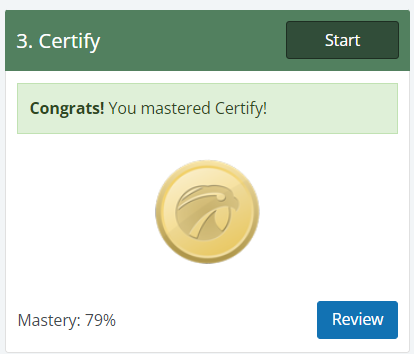
Below, you’ll see how Hawkes Learning works, how to complete and submit assignments, and where to go when you need support. Bookmark this page, refer back to it throughout the term, and use the FAQ section to quickly troubleshoot common questions on your own. Watch this recording of a live Student Training Webinar with Student Ambassador, Ash Dean. How Hawkes Learning Works Hawkes is built around a three-step mastery learning process. Every assignment follows the same structure, so once you understand it, navigating the platform becomes second nature. Instead of rushing through assignments or relying on guesswork, you'll work through a proven mastery-based learning process that helps you build confidence, strengthen understanding, and demonstrate what you've learned. Step 1: Learn Work through the lesson content before you attempt problems. Learn includes instructional videos, animated concept builders, and interactive skill checks that walk you through the material at your own pace. Step 2: Practice Apply what you learned by working through algorithmically generated problems. Every problem comes with step-by-step tutorials and error-specific feedback, so when you make a mistake, you find out exactly what went wrong and why. This is an ungraded, penalty-free learning environment where you’re rewarded for persistence, not perfection. Step 3: Certify Demonstrate that you have mastered the material. Certify requires you to reach a defined proficiency level without access to tutoring aids. This is the graded portion of the platform where you’re able to showcase what you’ve learned and that you’re ready to move on to what’s next. Pro Tip: This sequence exists because it works! Each term, data shows that students who dedicate time working through Learn and Practice before attempting Certify build a stronger foundation than those who skip ahead. ★ ★ ★ ★ ★ "I really enjoy learning from Hawkes. I really like how you can get a step-by-step explanation on a wrong answer and the videos also help me a lot." Cindy, Genesee Community College ★ ★ ★ ★ ★ "This is such an easy way to do my work and easy to learn and navigate through. I though it would be hard but it's so easy once it was explained." Shatonda, Dallas College ★ ★ ★ ★ ★ "The last time I used any form of online learning it was so complicated..." "This system works so harmoniously and so easy to navigate, it has been a blessing to me!" Amie, Palo Verde College Study Tools Built Into the Platform Your Hawkes account includes several study tools designed to support you as you work through assignments. AI Tutor Provides guided, personalized support while you practice. Unlike a generative AI tool, AI Tutor works solely within Hawkes-approved content, so the guidance it provides is directly tied to your coursework and supports your learning path. Explain Error Shows you exactly where your reasoning broke down when you answer a problem incorrectly. Use it to understand your mistakes, learn from them, and correct them before moving on. Step-by-Step, Hint, and Solution Breaks complex problems into smaller, manageable steps. When you're unsure where to begin, these tools guide you through the logic and reasoning needed to solve the problem without simply giving you the answer. Practice WebTests Allows you to create ungraded, self-directed assessments for additional practice. Choose the lessons and number of questions, set a time limit, and take the test whenever you want. Practice WebTests are one of the most effective ways to prepare for graded exams and quizzes. See the FAQ below for step-by-step instructions on creating one. HawkesTV Provides instructional videos organized by topic for additional review. Use these videos whenever you need a second explanation or want to explore a concept from a different perspective. Companion Sites Offer supplemental learning resources for select disciplines that can be accessed directly in your course. Frequently Asked Questions How do I complete assignments? Assignments are completed through the Learn, Practice, and Certify steps. Your instructor controls which assignments are required, their due dates, and how much each one counts toward your grade. Check your personalized to-do list or ask your instructor if you are unsure what is required. What is mastery learning? Mastery learning is an instructional approach that requires students to demonstrate understanding of a topic before moving to the next one. Rather than advancing based on time spent, you advance based on what you’ve actually learned. What is AI Tutor and is it safe to use? AI Tutor is a built-in learning tool that provides guided support while you work through Practice problems. It is designed to help you think through problems rather than hand you answers. Because it operates within Hawkes-approved content, it supports academic integrity, aligns with your existing course materials, and is safe to use. How do I create a Practice WebTest? Practice WebTests are ungraded, self-directed assessments that allow you to focus on the topics you want to review. They are a great way to prepare for quizzes and exams, identify areas that need additional study, and measure your progress throughout the course. To create one: Sign in and select View Course. Open the WebTests tab and select Practice WebTests. Select Create Practice WebTest. Give your test a name. Use the chapter drop-down to browse content. Select Add for each lesson you want to include. Enter the number of questions and choose a time limit from the Set Time drop-down. Select Start to generate and begin your test.
![]()
August 17, 2026
Below, you’ll see how Hawkes Learning works, how to complete and submit...
Read More
Hawkes Learning’s homework lessons are broken into a 3-step learning mode: Learn, Practice and Certify. Certify is designed to ensure students truly know the material. Built on the principles of Mastery Learning, Certify challenges students to demonstrate a defined level of proficiency before moving forward. During each Certify attempt, tutoring aids are removed, encouraging independent problem-solving and reinforcing genuine understanding. This intentional structure promotes confidence, accountability, and long-term retention, helping students build a strong foundation they can rely on both inside and outside the classroom. This mastery-based approach mirrors the conditions students face on proctored exams, making Certify a powerful preparation tool. By requiring students to work independently—without access to tutoring aids—Certify helps them practice recalling concepts, applying problem-solving strategies, and managing confidence under pressure. Because students must reach a defined level of proficiency before progressing, gaps in understanding are identified and corrected early, not discovered on exam day. The result is deeper retention, reduced test anxiety, and exam performance that reflects true understanding rather than short-term memorization. Learn more about how Hawkes helps students prepare for exams from our Hawkes Student Ambassadors Ash from University of Charleston Certify has helped me feel more ready for exams by giving me practice, but also by bridging the gap between Practice mode and the exam. Certify offers lower stakes than an exam, allowing for multiple retries and allowing you to miss a few problems and still complete it (due to the mastery approach). This can help improve my confidence before an exam and reduce my test anxiety. Certify also holds you accountable to completing practice questions without learning aids which you won't have on an exam. Ty'Nia from University of Arkansas Certify has helped me feel more ready for exams, because once you Certify, that means you've learned to the point of mastery. Hannah from Prairie View A&M University Going through Certify has helped me know the processes and have the understanding needed to complete the problems on the Exams. In my Calculus 1 course, some of the exam problems were similar to those in Certify and having completed them in Certify allowed me to be successful in completing them on my exam. Calliope from Guilford College It [Certify] allowed me to assess my weak spots even if I had shown mastery, and this was very helpful when reviewing for tests. Certify built confidence in my literacy of a subject and that translated well to my confidence on exams when I saw similar problems. Redoing Certifications later also allowed me to prep in a test-like setting. Rishi from University of North Carolina-Charlotte Certify gives me a way to use my own knowledge to complete problems. When I do Certify, I try to do all the problems without getting one wrong. If I get one wrong, I start over so I can be more motivated to take my time and do the problems. Trenton from Prairie View A&M University It [Certify] has made me feel like I was taking a quiz. Since I had to actually learn it to even get a grade for the assignment, it helped me prepare for the questions I would see in the exam environment. Sabrina from SUNY - Old Westbury Certify has helped me feel more ready for exams because the mastery approach pushes me to fully understand the material rather than just complete assignments. Since I have to consistently demonstrate accuracy, it encourages me to review concepts, fix mistakes, and truly learn the content before moving on. For example, when preparing for exams, I noticed that Certify helped me identify weak areas that I might have overlooked. If I struggled to reach mastery on certain topics, I would go back to Practice, use Explain Error, and repeat problems until I felt confident. This process made my studying more focused and effective instead of reviewing everything equally.
![]()
April 6, 2026
Hawkes Learning’s homework lessons are broken into a 3-step learning mode:...
Read More
Can courseware really make a difference? For one determined student and mom, the answer is yes. Meet Jessica Skinner, a full-time mom, full-time student, and aspiring mechanical engineer at the University of Arkansas – Fort Smith. While juggling parenting and college life, Jessica found that Hawkes Learning didn’t just help her stay on track, it transformed how she learned. With built-in instructional videos, step-by-step problem guidance, and a mastery-based approach, Hawkes gave Jessica the structure and flexibility she needed to succeed. But the impact went beyond the classroom. Her children often watched her work, celebrating every mastery check and learning the value of persistence by example—especially her seven-year-old, who began putting more effort into his own schoolwork. Read the full story to see how Hawkes is helping students like Jessica achieve their goals—while inspiring the next generation along the way. *Interview responses have been slightly edited for content and clarity. Hawkes has played a significant role in my strategies for success, both academically and personally. My children often watch me work on my assignments, and they celebrate with me whenever I achieve mastery. This visible demonstration of progress and perseverance has had a positive impact, especially on my seven-year-old, who has started to put more effort into his own schoolwork. I believe this is directly influenced by seeing me actively engage in my studies and strive for success. Unlike other courses I attend on campus, Hawkes provides a clear, visual representation of progress, which not only motivates me but also serves as a source of inspiration for my children to value hard work and determination. Hawkes Learning offers several features that support my engagement and promote a positive attitude toward learning. One of the most helpful aspects is the inclusion of instructional videos, which visually explain the lessons and make complex topics easier to understand. Additionally, the platform’s step-by-step guidance allows students to work through problems without simply giving away the answers. This approach encourages independent problem-solving and helps reinforce the learning process in a way that supports long-term understanding and success. I am a visual learner, and when I have somebody working out the problems and showing me how to work them out, it is a game changer. The biggest way that Hawkes Learning’s platform has assisted me in overcoming my challenges would be the Step-By-Step part of the Practice section. It helps me understand and work out the problems myself while teaching me how to solve them. I appreciate Hawkes’ mastery-based approach to learning. It functions like a quiz at the end of each lesson, ensuring that I fully understand the material before moving on. This method promotes deeper learning and helps reinforce key concepts. I also find the unlimited practice opportunities especially helpful, as they allow me to learn from my mistakes without added pressure. Overall, this approach reduces frustration and supports long-term academic success by focusing on comprehension rather than speed. In my experience, I would utilize all of the tools they offer you. Be sure to watch all of the videos along with doing the reading. While the professor is working out the problems and explaining them to you, I suggest working them out as well. If you don’t understand how to work a problem, the Step-By-Step option in Practice will help you work the problem out while letting you answer it yourself. Hawkes Learning has so many tools to help you succeed; all you have to do is utilize them. "Hawkes Learning has so many tools to help you succeed; all you have to do is utilize them."
![]()
As you gear up for final exams, you may wonder what tools are available to set you up for success. Hawkes Learning offers students innovative, engaging learning tools to assist them with their homework and test prep. Take it from the pros – our Hawkes Student Ambassadors are shining a spotlight on their favorite Hawkes features for studying for finals. Step-By-Step “Step-By-Step is designed for people like me, allowing students to view the problem in a broken-down format and solve it in increments. In this way, it clearly lays out the path towards a solution, guiding you along so that you can not only review the process but also pinpoint where exactly you may have gone wrong as well.” – Ada from Guilford College → Dive deeper with Hawkes’ Step-By-Step feature HERE. AI Tutor “If there was one feature I used the most, it was the AI Learning Tutor. It was like having a 24/7 tutor who knew exactly where I was struggling and could guide me back on track. Instead of drowning in complicated terminology, it broke things down in a way that felt approachable.” – Inam from University of Virginia’s College at Wise “The AI Tutor helps students understand confusing concepts. It simplifies complicated information into step-by-step instructions, which allows learners to understand challenging concepts. It develops confidence by allowing a better understanding of confusing subject problems… resulting in students having greater academic success.” – Vatsal from University of North Carolina – Charlotte “Whenever I struggle to get through a problem, I ask the AI tutor questions about it. I can get specific answers and feedback from the tutor who can guide me through the questions.” – Trenton from Prairie View A&M University “With the new AI Tutor feature in Hawkes, you can trust the fact that the information you are getting is accurate and pulled directly from Hawkes itself. This feature gives students a unique, safe way of being able to ask questions that will help lead them in the correct direction.” – Piper from Ball State University Explain Error “The instant feedback on assignments has helped me personally. Instead of waiting for my teacher to give me my grades back, I can easily get feedback quicker along with explanations of what I did wrong. Hawkes Learning is an accessible platform and easy to navigate.” – Lillian from Oklahoma City Community College “This feature helps students use their critical thinking skills to figure out where they are going wrong and what they need to correct in the future!” – Piper from Ball State University Solution “Keep in mind that, while other programs may simply give you the answer, Hawkes provides the process as well so that you can compare your own method and figure out where you got stuck. I found this particularly helpful when dealing with highly nuanced problems that required close attention to detail.” – Ada from Guilford College Practice Tests “Being able to create my own test or quiz is another helpful tool. It is helpful because it allows me to put myself in a testing environment before my actual test. It allows you to put whatever questions you want to test yourself over. There is even a timing function to limit yourself to a certain time while testing to simulate a real testing environment.” – Trenton from Prairie View A&M University “I am a huge fan of the Hawkes Practice Test feature, which allows you to take mock exams customized to your individual needs. You can select the desired units, lessons, time limit, and number of questions, then save the test and take it whenever you want. This allows you to study under exam conditions with no learning aids so that you get a feel for your preparedness, and Hawkes generates a breakdown upon completion. From there, you have the option to review areas of difficulty and try some additional practice questions before attempting a retake. Practice tests are a wonderful way to build knowledge and boost confidence, and I highly recommend utilizing them.” – Ada from Guilford College → Learn more about how to create your own Hawkes Practice Test HERE.
![]()
April 24, 2025
As you gear up for final exams, you may wonder what tools are available to set...
Read More
With rising academic pressure and student stress at an all-time high, many students are tempted to seek shortcuts for completing assignments, with apps like Mathway and Photomath offering quick solutions. However, as many students have discovered, these tools may help solve their homework problems, but don’t foster long-term understanding. In contrast, Hawkes Learning has garnered praise for its mastery-based approach, which not only helps students solve problems but also encourages a deeper understanding of the underlying concepts. Through step-by-step guidance and personalized learning features, Hawkes helps students build real confidence and skills, preparing them for exams and future success. It’s this emphasis on genuine learning, rather than quick fixes, that truly sets Hawkes apart. Hear directly from our Student Ambassadors on how Hawkes has enhanced their own learning experiences leading to lasting success. Terrell B. from Mississippi Valley State University: “Hawkes Learning has truly helped me build a strong understanding of math by guiding me through each concept step by step rather than just giving me the answer. Unlike instant-solve apps like Photo Math, which only provide quick solutions, Hawkes ensures I learn the material through its mastery-based approach. One of the biggest advantages is that it identifies the areas where I struggle and gives me personalized questions to strengthen my understanding, making it feel like I have a tutor built into the program. This has greatly impacted my confidence and performance because I no longer memorize answers; I understand how to solve problems on my own. Thanks to Hawkes’ interactive tools and customized learning features, I’ve seen real improvements in my test scores and overall comprehension, and I know these skills will help me succeed far beyond the classroom.” Ada B. from Guilford College: “They [Hawkes Learning] want to see you succeed, and every aspect of the software works towards that goal. I say this having taken a Hawkes Statistics course in my first semester of college. With Hawkes, I easily secured an “A.” I was able to do so because everything is right there: Explain Error, Step-By-Step, lessons, 24/7 tutors. I never wanted for assistance, and was thus able to secure a passing grade, not without some difficulty, but without giving up. And even more than that, I came through with an understanding of—and even an interest in—the course. With Hawkes, you can rest assured that the help you receive comes directly from the software itself rather than some sketchy website deep within the bowels of the internet, and it is tailored to your individual needs. Learning isn’t a “one size fits all” endeavor. It, like any other art, requires a degree of personalization and adjustment. Hawkes recognizes this and sees it as an advantage rather than an obstacle.“ John S. from the University of Mississippi: “I would personally like to say how much Hawkes has helped me master my math lessons. I feel confident going into the lab to take my exam because I know that I can solve anything that is going to be asked on that test. Instant solving websites only give you an answer, that is not even always correct, instead of helping you work through the problem and explain why you got it wrong. This is where Hawkes differs because it provides the step by step solution and an AI tutor to help you understand the concept that the question is based around. In all, the instant solution websites are only momentarily helpful, while Hawkes sets students up for long-term success.“ Vatsal B. from the University of North Carolina—Charlotte: “Relying on cheating apps might save you time in the short term, but it will hurt in more challenging classes in the future. Hawkes leads to long-term success by teaching you to actually learn the concepts and formulas.” Inam O. from the University of Virginia’s College at Wise: “Hawkes actually helps you learn instead of just giving you the answer like apps such as MathWay, Studocu, or GauthMath. Those apps might seem like a quick fix, but they don’t really teach you anything. They just spit out solutions. That might get you through homework, but when it’s time for a test, you’re stuck… With Hawkes, you have to actually work through problems step-by-step, so you understand why the answer is what it is. The way it is set up forces you to practice until you really get it, which makes a huge difference when it comes to exams or using math later. Even if you’re not in a math class right now, the same idea applies to other subjects. Real learning takes effort, and shortcuts don’t lead to long-term success.“ Are you interested in becoming a Hawkes Student Ambassador? Learn more about this exciting internship opportunity and submit your application here!
![]()
March 26, 2025
With rising academic pressure and student stress at an all-time high, many...
Read More
We live in an age of instant, accessible information. I won’t deny it, nor will I pretend it is without its benefits. With a quick dance across the keyboard, we have the ability to glean knowledge like never before, from history and current events to science and art. That said, the corresponding convenience is tantalizing and has its pitfalls. Access can quickly sour and become abuse, and we find ourselves not so much learning as avoiding. I don’t have to join the legions of broken records enumerating the moral objections to cheating. I don’t have to add to the volumes of cautionary tales warning against dishonest academics. We know that cheating is wrong. But it’s also tempting. I understand it—I really do. Life happens. Things pile up. You get flustered, frustrated, and sometimes it’s easier to feed a few commands to a generator and receive a solution than to toil away for hours at something you just can’t seem to understand. But that’s why we have Hawkes Learning. The software is specially designed so that you don’t have to resort to cheating in order to pass. It’s likely you’ll encounter professors who take pride in their low pass rate—who enjoy being designated as “the difficult class”—but, fortunately for all of us, Hawkes isn’t like that. They want to see you succeed, and every aspect of the software works towards that goal. I say this having taken a Hawkes Statistics course in my first semester of college. If it tells you anything about my relationship with math, I am a Creative Writing major. Suffice it to say that I struggle (sorry to all my language arts folks for perpetuating the stereotype, but it’s true in my case). With Hawkes, I easily secured an “A.” I was able to do so because everything is right there: Explain Error, Step-By-Step, lessons, 24/7 tutors. I never wanted for assistance, and was thus able to secure a passing grade, not without some difficulty, but without giving up. And even more than that, I came through with an understanding of—and even an interest in—the course. With Hawkes, you can rest assured that the help you receive comes directly from the software itself rather than some sketchy website deep within the bowels of the internet, and it is tailored to your individual needs. Learning isn’t a “one size fits all” endeavor. It, like any other art, requires a degree of personalization and adjustment. Hawkes recognizes this and sees it as an advantage rather than an obstacle. You’ve heard it before, and you’ll hear it again, but cheating won’t help you in the long run. Even if you don’t care about a subject in and of itself, if you want a decent grade, you’ll have to learn the material sometime or other. Artificial intelligence is useless on an exam, but a firm grasp of the coursework isn’t. Take advantage of the resources at your fingertips, and if you’re unsure about anything, get in touch with your school’s Hawkes Student Ambassador. We’re happy to help. It’s what we’re here for. Meet the Author Ada Boroughs is a first-year student at Guilford College in Greensboro, North Carolina. She is double-majoring in Creative Writing and Environmental Studies, and hopes to someday work in conservation in addition to becoming a published author. Outside of school, Ada enjoys reading, writing, drawing, listening to music, and dancing, the latter of which she pursues with Greensboro Ballet. She is a huge fan of J.R.R. Tolkien, The Arcadian Wild, hot chocolate, and petting every dog she meets, and if you visit her Pinterest board, you will find dragons, roses, vintage maps, and a collection of delightfully cheesy Lord of the Rings memes. Learn More: Student Ambassador Internship
![]()
March 18, 2025
We live in an age of instant, accessible information. I won’t deny it, nor will...
Read More
As a student, I am often enrolled in online curriculum to complete assignments and take tests. I’ve used multiple online services for classes, but out of all of them, I’ve enjoyed Hawkes Learning the best for several reasons. My Four Favorite Features: Three-step process for each lesson Clear and helpful dashboard Easy simple functions Tutor options for incorrect problems Three-Step Process for Each Lesson Before using Hawkes Learning, I would stress over every word our professor said in class, painstakingly read every word of the book, and still get confused on homework. I would get problems wrong, and never learn why. With Hawkes, the three-step process of Learn, Practice, and Certify gave me the tools I needed and confidence I lacked. In each Hawkes lesson, students start by learning the content with options of reading the eBook or watching HawkesTV videos. Next, students can practice the concepts stress-free before working on the graded homework. In the Practice mode, I love using the “Tutor” feature to learn why I was getting problems wrong, to work through them step-by-step, and read an explanation. Finally, students complete Certify, the graded portion of the homework. By the time I reach Certify, I am super confident in the concepts, and I finish it easily. I am proud that I understand everything. With Hawkes Learning, this three-step process – when done as intended – can practically guarantee understanding and confidence in classes. Clear and Helpful Dashboard Knowing what to do, and when, is imperative to a successful semester. Struggling to find due dates was always one of my problems because I could never find which of the colorful tabs would be able to display what I needed to do and by when in an organized fashion. This is probably what I appreciate the most about Hawkes – the simple organization of information. Hawkes knows what students need. When I access an online curriculum, I’m looking for specific information, and with Hawkes, I can find it the moment I’m logged in. Easy Simple Functions When I am working on homework, I get easily distracted by all the excessive buttons, extra headers, extra colors, and all the links meant to be helpful for students. So by the time I read through half of the problem, I’ve already been exploring all the buttons, procrastinating on the work, and wasting my time losing focus. What I love about the functions on Hawkes is that there are not too many buttons. There are simple colors, and I can focus on the problems. The buttons that are available with Hawkes are actually helpful and useful – links to resources that I actually use. Tutor Options for Incorrect Problems Expanding more on the Tutor option in Practice, Hawkes has been the first online curriculum I’ve found that explains to the user why a problem was wrong, shows you how to do it correctly, and allows you to try it step-by-step. This feature has increased my learning confidence tremendously – especially when having to remember the many steps in math problems. Demonstration of the Tutor feature in Practice Thanks to Hawkes Learning, I was able to navigate the semester easily. By seeing clear due dates, I could work on prioritizing tasks properly. This helped me focus on the problems, troubleshoot when I misunderstood the content, and complete assignments confidently. Thank you, Hawkes Learning! Meet the Author: Jamie Stiver is a Hawkes Learning Student Ambassador and senior studying Business at the University of Olivet. She runs on the Cross-Country team and is involved in C3 (Christian Comets Connect) on campus. Her favorite class is currently Financial Management, and she is also part of the President’s Leadership Institute. In her free time, Jamie enjoys playing piano, reading, and spending time with family and friends.
![]()
August 22, 2024
As a student, I am often enrolled in online curriculum to complete assignments...
Read More
Starting the semester with new classes can be overwhelming; however, Hawkes provides students with many features that can make your courses more manageable and less stressful. As a student using Hawkes in my course, I found my personal favorite features. The following helped me succeed in my classes, and I hope they will do the same for you! Practice Mode Although it can feel more time-efficient to go straight to Certify, the Practice mode is a great place to start if you have all your notes ready. Personally, Practice helped me understand sections I was struggling with and simply reinforced what I already knew. Some benefits of the Practice module are: You can practice as many times as you’d like, even if you already finished Certify. The difficulty is customizable. You get immediate error-specific feedback if your answer is wrong. Tutor Feature in Practice Module I highly encourage my peers to work on the Practice module before Certify. It is not just because it helps you become more familiar with the content, but because of the Tutor feature. This option is located at the bottom left of any assignment you are doing in Practice. (Hint: It’s a red button!) What I love about the Tutor is it gives you a step-by-step process to reach the final answer. While in that Tutor, there are explanations on how and why you need each step. It surely is a unique way of studying and is great for note taking! Practice Tests We all experience some anxiety before a midterm or a final, especially if you are not so sure where to begin to study. Luckily, Hawkes has my favorite feature ever: Practice Tests. These are customizable tests that Hawkes creates for you based on the content you choose. For example, maybe you did a great job in Lesson 2.1 but need to reinforce Lesson 2.2, you can create a test just for that section! How to create a practice test: 1. Access your course from your dashboard, then find the “WEBTESTS” tab. Once you click on it, select “Practice WebTests.” 2. This is the part where you can customize your test based on what you need! Make sure to name your test. Then, you can select the sections you want to have on it from the drop-down menu. Don’t forget to type how many questions you want and how much time you will have to finish it. When you have all that information, it’s time to go! Designing a Practice WebTest 3. Once you click, “Start,” you are ready to start answering your test! Remember, don’t stress! This does not count for your grade. It is only for your practice. This layout will be the same one for your real tests, this also helps you to get familiar with the platform. When you finish your test, you can submit your final answers and see how many were correct and incorrect. It is a great way to see where you are standing and what areas might need more support. You can make as many practice tests as you want or retake previous practice tests. Overall, Hawkes has amazing tools that can smooth your journey through a course. Make the most of them! You can gain great studying and learning skills that will positively impact your future classes. Meet the Author Stephanie Mora is a sophomore at San Diego City College majoring in Philosophy. She works as an English Tutor in her college and is part of the supplemental instruction program. After finishing her Philosophy degree, she plans to attend Law school and help immigrants and their families around the country. Stephanie is a passionate music and film lover, she enjoys art, concerts and is an avid reader of fantasy books. She also loves to spend time with her two dogs Benny and Nube.
![]()
August 17, 2024
Starting the semester with new classes can be overwhelming; however, Hawkes...
Read More
A guest blog by Student Ambassador Molly Linck, University of Mississippi When I started my first college math course, I was a little nervous about how well I would learn in such a big classroom without any one-on-one time with my professor. But when I first started using Hawkes to do my homework, I instantly realized I had more access to learning materials than ever before. As a Hawkes Ambassador at the University of Mississippi, I want to tell you about some ways you can utilize Hawkes to make the most out of your study time. Practice Makes Perfect The Hawkes Practice Mode is a great way to solidify your understanding of the material before moving on to Certify. Practice features a Tutor mode which can either give you an example problem with a hint, or even a full step-by-step answer to the solution if needed. Utilizing the Practice mode can ensure you fully understand the material and how to complete the problems step-by-step before going into Certify mode. Watch the Videos In Learn mode, Hawkes offers lessons on the topic you’re studying along with an instructional video on how to do the problems. These videos can be very helpful for those times where you don’t remember some parts of your professor’s lesson or you just need a little refresher. Sometimes it’s easiest to watch a video explaining the topic, and this is when the instructional videos are perfect. Take a Practice Test The Practice Test feature, found under the WebTest section, can help you test your knowledge before an upcoming test. By creating a Practice Test, choose which topics you would like to practice, and Hawkes will do the rest in creating the test. Taking Practice Tests until you’ve mastered them can help ensure you know all of the materials and are ready to go on test day! About the Writer Molly Linck is a Hawkes Learning Student Ambassador from the University of Mississippi. Learn more about Hawkes’ Student Ambassador Program here.
![]()
July 22, 2024
A guest blog by Student Ambassador Molly Linck, University of Mississippi When...
Read More
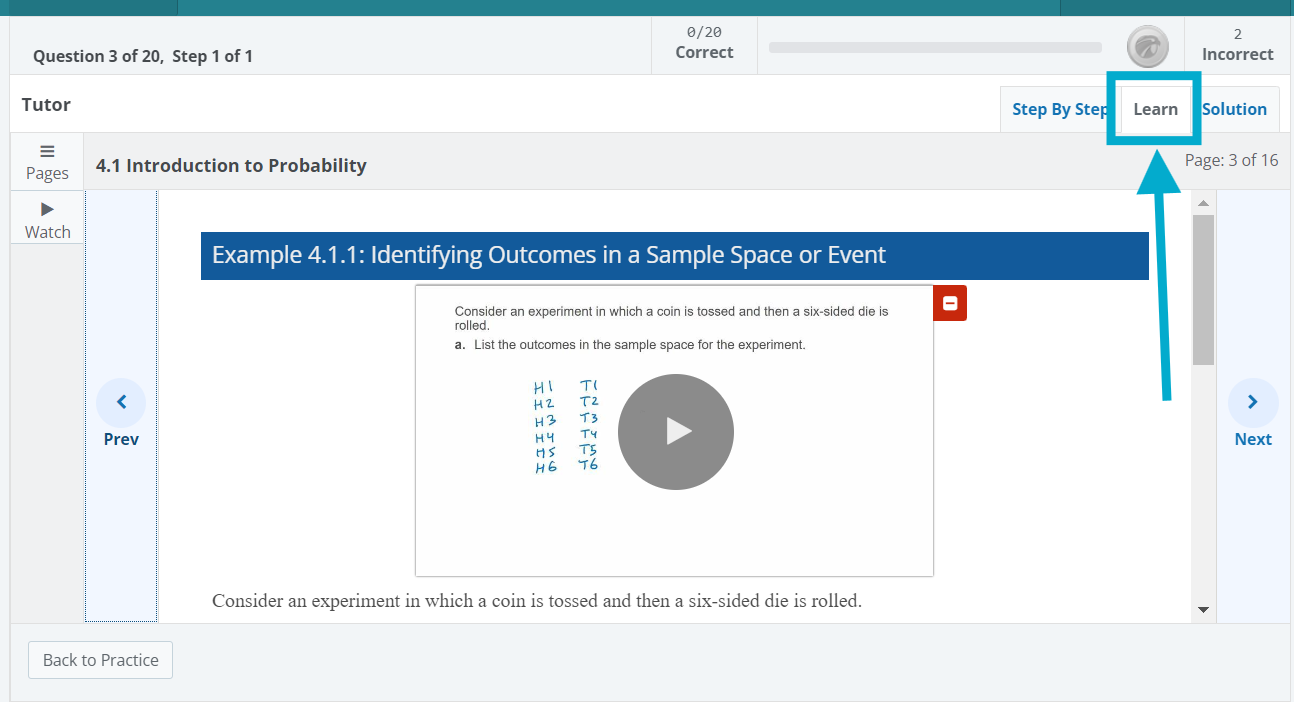
Being a mathematics major at Prairie View A&M University, I have had my fair share in the use of Hawkes. I have used the website for five different classes for the past two years. Many of the features in Hawkes are extremely helpful, but some features especially stand out and push me to be successful. Tutor While completing a problem in the Practice tab, there is a section at the bottom left that says “Tutor.” This leads to three different options: Step-by-Step, Learn, and the overall solution. The Step-by-Step guides you through the question as you answer it. Each step has directions that assist you through the question. The next tab refers the student to the interactive eBook format called the Learn mode. This helps students who need to return and be refreshed with the book’s terminology and examples. There are also videos within this section that guide the students through the lessons’ examples. The last tab is labeled “Solution.” This provides students with a big-picture solution view before the students try it themselves. This is also handy when a student gets an answer wrong and needs to compare their work to the work that is shown on Hawkes. Create Your Own Practice Test Another tool that Hawkes provides is the ability to create your own Practice Test. This function allows the students to create quizzes for themselves using specific chapters to cater to their needs. This is an amazing tool to use when preparing for exams. Students can use it while studying to test their ability to solve problems they struggle with. My Personal Experience I typically use the solution tab within the practice section throughout my classes. I learn best when I see the question worked out in front of me. I feel as though Hawkes has helped me understand these different subjects better than any teacher has explained to me. As a tutor myself, this tab also gives me a quick reminder of the steps to help me teach different math subjects to others. Sometimes, I forget how to solve a step in a problem, so Hawkes being one button click away is amazing. Exploring and using some of these features would significantly help your learning experience. Finding these features mixed with everyday learning habits could boost your productivity and learning ability. Don’t miss out on these helpful features available in your Hawkes student dashboard! Meet the Author: Trenton Jeffers is a sophomore at Prairie View A&M University, where he majors in Mathematics. He hopes to graduate with a teacher certification to begin teaching his favorite subject, Algebra. In his spare time, he tutors his peers in different math subjects. He also enjoys playing video games and basketball with his friends.
![]()
July 12, 2024
Being a mathematics major at Prairie View A&M University, I have had my fair...
Read More
As a first-generation college student, I never had someone in my family to equip me with the habits I would need to be successful in college; I had to create my own. Hawkes made learning these habits so much easier for me. I remember sitting in my freshman business calculus class thinking, “How in the world am I going to understand this?” The answer? Hawkes. Studying was something I never really learned to do in high school, so it was a huge learning curve for me once I got to college. Hawkes takes the dread out of my study sessions for me. Here are some features I have grown to love because of my hassle-free study sessions: Practice Mode Practice mode is great because it allows me to skip the questions I already know and practice the ones I am unsure of. In the event I get an answer incorrect, it gives an explanation as to why it was incorrect with the Tutor feature. Because my major in accounting deals with ample amounts of math, I have learned that the only way to truly LEARN math is to practice it. The more repetitive the process, the better. Practice mode is the best place to do that! Tutor Feature As aforementioned, Practice mode offers a Tutor button in the event I answer a question incorrectly. I love this feature because it walks me step-by-step through the problem to pinpoint exactly where I went wrong. Again, lots of math oftentimes means lots of room for error. The Tutor feature is my favorite way to get out of a sticky situation without having to send my professor an email (the response time is also immediate, which is a plus!)! Certify Mode The Certify mode helps me to know when I have mastered a concept. Although Certify does not offer the Tutor feature, it can be paused and resumed. This is particularly great when I come across a question I might have skipped on the Practice mode that I really shouldn’t have. Certify mode truly concretes my knowledge and makes me feel the most prepared for my next test or quiz! The Encouraging Messages Although this might sound like a minute detail of the Hawkes platform, I find it to be one feature that I could not leave out of my post. There have been times when I have spent way longer than I intended on a Certify problem just to get it incorrect; however, I reattempt the problem just to get an encouraging, “Way to go, Madelyn!” or “Nice Work!” message next to my continue button. It might not seem like much, but a little encouragement goes a long way on those long nights spent before a calculus test! Meet the Author Madelyn Harris is a Hawkes Student Ambassador and sophomore at the University of Mississippi. Madelyn is majoring in accounting and minoring in intelligence and security studies. She is a member of the Sally McDonnell Barksdale Honors College and boasts a 4.0 GPA. Her favorite classes are those for her minor; she plans to apply for an internship with the National Security Agency to fulfill her dreams of becoming a forensic accountant after graduation. Outside of school, Madelyn is co-owner of a nutrition business with her mom, and she loves to serve the people of her community every chance she gets. Student Ambassador Program
![Student Ambassador, Madelyn Harris]()
July 8, 2024
As a first-generation college student, I never had someone in my family to...
Read More
Embarking on my educational journey with Hawkes has been a game-changer, and I’m excited to share my observations about the features of this courseware that have been crucial to my success in the classroom. As a committed user of the platform and Hawkes Student Ambassador, I’ve had the honor of delving into several platform features that have improved my educational experience. The Practice Test feature has been a game-changer in my exam preparation. I was able to recreate actual exam settings and identify my areas of weakness by customizing practice exams. This feature helped me feel less nervous about the test and gave me significant guidance about what to focus on during my study sessions. The Learn mode and Practice mode are two more intriguing features that have helped me to solidify my grasp of the course material. Practice mode provided limitless application possibilities, while Learn mode allowed for in-depth topic reviews. I was able to review difficult ideas at my own pace because of the flexible and encouraging learning environment that was created by the inclusion of options like Skip and Tutor in Practice. I believe in staying organized and that is the key to academic success, and the notification feature on Hawkes proved to be a reliable companion. Because it highlighted important tasks according to their due dates, it helped me stay on track. This function helped me organize my time so that I never missed a deadline and continued to be proactive with my academics. Hawkes provides more than study materials. The Practice Tests provide personalized performance overview charts, displaying an all-encompassing assessment of my progress. Additionally, after each Certify session, a Certify Review would provide a visual picture of my performance and opportunity to review my question attempts. By examining these resources, I was able to spot patterns and concentrate on the areas that need more care, which enabled me to make improvements over time. These particular aspects of the platform have been crucial to my academic success, and my experience with Hawkes has been transforming. My overall learning experience has been enhanced by the platform’s dedication to customization and flexibility, while also providing me with the resources I need to succeed. Looking back on my academic journey, I can see that Hawkes has been a dependable teacher who has helped me achieve academic success. I am excited to share my success with fellow students and encourage them to leverage these features for their academic wins. "Hawkes has been a dependable teacher who has helped me achieve academic success." Meet the Author: Lakshmi Nikhitha Tellakula, an MBA student at the University of North Texas specializing in Business Analytics, is recognized for her unique blend of analytical prowess and business acumen. With a focus on enhancing student experiences through data-driven insights, she aspires to become a senior business analyst post-graduation. Actively engaged in campus activities such as the Asian Student Association, and Public Relations Club, and serving as a Volunteer Social Media Coordinator, she demonstrates dedication to both academic and extracurricular excellence. In her leisure time, she finds enjoyment in playing chess and badminton, reflecting her varied interests. Lakshmi served as a Hawkes Student Ambassador throughout the spring 2024 semester. If you’re interested in learning more about Hawkes Learning’s Student Ambassador Internship Program, please click below: Hawkes Student Ambassador Internship
![]()
June 28, 2024
Embarking on my educational journey with Hawkes has been a game-changer, and...
Read More
Finals are right around the corner; what a scary thought! Studying for finals does not have to be scary though. Studying with Hawkes is a hassle free experience that will leave you feeling prepared to ace your exams! In four simple steps, you can trade your stress for serenity: B- Be Confident! The first step to achieving your goals is to begin. By utilizing the Hawkes platform, students have access to their courseware textbook, an amazing Practice Mode, and practice tests. Working through the problems in the textbook or practicing them before test day can boost students’ confidence greatly! E- Endless Attempts Hawkes’ Practice Mode is my favorite place to go to build my confidence because it gives me endless attempts at the same problem in different formats. The “Try Similar” button in practice mode gives endless variations of the same type of problem, so I go into my exams feeling confident that I have seen any problem that might be on the test! S- Speak Out I truly owe everything I have learned through Hawkes, including my participation in the Ambassador Program, to my wonderful professors. If you don’t know where to begin studying, reach out to your professor! I have always felt like a priority to my Hawkes professors and Hawkes Ambassadors; they are here to help you succeed! T- Timing is Everything! Only you can know how prepared you are for your exam! Timing your studies is of the utmost importance. Lacking confidence in your ability to study might require a few more hours during the week preparing, but putting everything off until the night before the test is never a good idea! Taking time to do a handful of practice problems on Hawkes each day is better than cramming in a last minute study session before the exam! Madelyn Harris is a Hawkes Student Ambassador and sophomore at the University of Mississippi. Madelyn is majoring in accounting and minoring in intelligence and security studies. She is a member of the Sally McDonnell Barksdale Honors College and boasts a 4.0 GPA. Her favorite classes are those for her minor; she plans to apply for an internship with the National Security Agency to fulfill her dreams of becoming a forensic accountant after graduation. Outside of school, Madelyn is co-owner of a nutrition business with her mom, and she loves to serve the people of her community every chance she gets. Learn more about the Hawkes Student Ambassador Program here!
![]()
May 7, 2024
Finals are right around the corner; what a scary thought! Studying for finals...
Read More
As a seasoned student or dedicated tutor, you understand the importance of effective study habits. These habits can be the key to academic success and personal growth. Whether you’re a freshman eager to start your college journey or someone looking to enhance their study skills, the following best practices can help you make the most of every study session. Set Clear Goals Before you begin studying, establish clear objectives for the session. Knowing what you want to accomplish will keep you focused and motivated. By incorporating Hawkes’ Learn feature, you can let the goals set themselves by focusing less on what you already know and devoting most of your time to topics and ideas you have yet to master. Create a Dedicated Study Space Find a quiet, well-lit space where you can concentrate without distractions. A consistent study environment helps signal to your brain that it’s time to work. I love to utilize the library at my university! Prioritize and Plan Organize your study time by creating a schedule or to-do list. Prioritize tasks based on deadlines and complexity, tackling the most important subjects first. Active Learning Techniques Engage with and use your Hawkes study material actively. Utilize the Hawkes Quizlet flashcards, create custom practice tests, and message your instructors as needed. These methods reinforce your understanding and are always available for you to use! Minimize Distractions Turn off your phone, limit social media use, and create a study playlist with soothing music if that helps. Minimizing distractions will help you stay on track. Don’t forget to take breaks when needed! Regular Review Avoid cramming by scheduling regular review sessions. Spacing out your studies over time enhances long-term retention. Hawkes’ Learn, Practice & Certify modes are designed to help you space out your mastery. Healthy Lifestyle Maintain a balanced diet, get enough sleep, and exercise regularly. A healthy body and mind are essential for effective studying! Seek Help When Needed Don’t hesitate to ask for assistance when you encounter challenging topics. Professors, tutors, and academic ambassadors are there to support your learning journey, and Hawkes makes it easy to get in touch with them. Stay Positive A positive attitude can go a long way. Believe in your abilities, stay motivated, and remember that learning is a continuous process. By incorporating these best practices into your study routine, you can significantly improve your study sessions. Each session becomes a building block in your academic success. Whether you’re starting college as a freshman or continuing your educational journey, these habits will help you study effectively and achieve your academic goals. Author: Samuel Brumley, Ball State University
![]()
Keys to Success When It Comes to Studying for Exams Studying for an exam can be difficult for students; there’s only a certain amount of time each day, plus other activities, organizations, and classes! I have taken a variety of tests throughout the years as a student, and I have created an effective study plan that helps produce successful results on exams. Time Management A key factor when it comes to studying is proper preparation. I like to begin studying for an exam about a week and a half before the test date. This gives me time to spread out the content and feel most prepared once the test day arrives. It also gives my head time to process the information that I have been reviewing. Trying to cram a whole unit’s worth of information in a day before a test does not work out well for most students. Starting to study early helps students learn in a timely manner without worrying about losing study time because of other activities that arise during testing week. Repetition Another effective study tactic is repetition. Going over a concept multiple times helps embed information into your head, which makes tests run smoothly. Sometimes, lots of repetition and practice are needed to gain a proper understanding of a concept. I like to use the Practice and Learn modes of Hawkes’ software. Hawkes does a great job of taking a concept and explaining it to you, and it corrects your mistakes and takes you step-by-step through them. Repeating these useful steps on Hawkes has helped me exponentially. Relax It is just as important to relax as it is to manage your time and work hard to understand the material for an exam. Take time off in between study sessions. Let your brain have a break. Study hard early on so that the day or two before the exam, you do not need to put so much stress on yourself. Strategies such as time management, repetition, and relaxation are great ways to prepare and be successful on exam day! Author: Dylan Dietz, University of Mississippi
![]()
November 28, 2023
Keys to Success When It Comes to Studying for Exams
Read More
As a student using Hawkes, you have access to a robust set of tools and features designed to improve your educational experience. We’ll examine some helpful hints and techniques in this blog article to maximize your study sessions and get the most out of Hawkes. We’ve got you covered on everything from utilizing Practice mode to coping with test anxiety! Mastering Practice Mode and the Explain Error Feature | Take advantage of Hawkes’ Practice mode to rehearse and solidify your comprehension of the course material. Use the Explain Error function, which offers thorough justifications for incorrect responses. This function facilitates a deeper comprehension of the concepts by assisting you in identifying and addressing areas of weakness. Designing Successful Study Sessions | Consider the following best strategies to have a productive study session. Establish precise objectives. This will help you stay motivated and focused during each study session. Simplify: Separate your reading material into manageable portions. Information is easier to absorb and retain using this method. Practice self-evaluation: Utilize Hawkes’ feature that allows you to design your own practice exams. You can assess your knowledge and find areas that require more study by creating and taking practice exams. Effective Approaches to Note-Taking for Exam Preparation | The act of taking comprehensive notes is of utmost importance in the context of preparing for examinations. Please take into account the following recommendations: Foster Active Engagement: Demonstrate active listening skills during lectures or when engaging with course materials. It is advisable to engage in the practice of note-taking, wherein one records essential elements such as key concepts, illustrative instances, and clarifying explanations. Note Organization: Utilize headings, bullet points, and highlighting techniques to establish a structured and prioritized format for your notes. This arrangement will facilitate subsequent review and study. Review and Integrate: Consistently engage in the process of reviewing your notes and integrating them with other study materials, such as condensed summaries from textbooks or internet resources. Utilizing the Instructional Videos at the Lesson Level in Learn Mode | These videos offer further explanations and insights pertaining to the subject matter of the course, hence augmenting one’s comprehension and ability to retain the information. Integrate them into your study regimen to enhance the consolidation of knowledge. By implementing these tactics and utilizing the functionalities provided by Hawkes, one can enhance their study sessions and get exceptional results in their academic pursuits. Hawkes offers a holistic learning experience using several strategies such as utilizing Practice mode, employing appropriate note-taking techniques, reducing test anxiety, and utilizing 24/7 chat support. Utilizing these strategies will make the most of Hawkes’ resources in order to attain your academic objectives. Wishing you a productive and enjoyable study session! Author: Jay Jain, University of North Carolina Charlotte
![]()
November 17, 2023
As a student using Hawkes, you have access to a robust set of tools and...
Read More
Ace Every Exam: My Top Study Tips for College Success Starting college is an exciting new chapter, but it can also be intimidating if you don’t know how to study effectively for challenging college courses. As a Hawkes Learning Student Ambassador at West Virginia State University, I want to share some of my best tips and tricks for how to use Hawkes’ courseware to master key concepts and ace every exam! ❖ Take Advantage of Practice Mode One of the best features of Hawkes Learning’s software is Practice mode. Instead of just passively reading notes, you can immediately test yourself on concepts through practice problems. Practice mode is a risk-free environment where you can work through as many questions as you need until you feel comfortable with the material. Make sure to use the Explain Error feature whenever you get stuck; this gives you targeted feedback on where you went wrong so you can learn from your mistakes. I also recommend creating custom practice tests on topics you really need to drill. The immediate feedback and explanation of Practice mode is a super effective study technique. ❖ Review, Don’t Just Reread When studying for a big exam, it’s important to actively review the material rather than just rereading your notes. Create study tools like flashcards, diagrams, and summaries that distill key information. Test yourself by trying to answer questions from memory. The more you can engage with the content, the better it will stick. I like to go through my Hawkes lesson videos again and redo the lesson quizzes I struggled with the first time to reinforce tough concepts. Then, I’ll go through the chapter tests and the practice problems using Explain Error. ❖ Make a Study Schedule Don’t leave all the studying until the night before! Cramming increases stress and rarely leads to long-term retention. Make a realistic schedule that splits your study sessions into manageable chunks. Study a little bit each day leading up to the exam. Use the Hawkes personalized Learning Path to focus your study plan on priority topics. I block out at least an hour a day for Hawkes coursework review based on my Learning Path recommendations. Staying on top of the material prevents pre-test panic. With the right preparation powered by Hawkes Learning’s tools, you can master challenging material and succeed on any exam. Author: Esther Diarmo, West Virginia State University
![]()
November 9, 2023
Ace Every Exam: My Top Study Tips for College Success
Read More
As we approach midterms, I often take this time to reflect on my study habits and create a plan as to how I can best prepare for my exams. Frequently I implement the same study tactics, but it can differ from class to class. As a general rule, I suggest focusing on three concepts: Practice with study questions. Review your mistakes and focus on the areas that feel less comfortable. If there is vocabulary, become as familiar as possible. Practice! First, practice using study questions. If there are practice tests made available by your professors, be sure to make use of them! Practicing with study questions can be productive as they simulate the test experience and can help you focus your studying. Professors may also create study guides that can contain questions that apply to the concepts learned in class. Professors craft both practice tests and/or study guides with the concepts that are expected to be understood for the test. After all, professors want to see you succeed! Luckily, classes using Hawkes Learning have access to Practice mode. This is a great tool to use when studying, in part due to the Explain Error feature. When questions are presented, Practice provides the Tutor button at the bottom left. If you are confused, Tutor can provide step-by-step instructions on how to complete that question or a hint. The Learn button can also refer you to the textbook to review the concept before answering. If you still aren’t sure, you can click on ‘Solution’ to see the answer and get an explanation; this can be a great feature for reviewing topics and relearning skills or concepts that you may have forgotten. Review Your Mistakes After completing a study guide or Practice mode, you may realize you are confident in one topic and struggling in another. In my experience, focusing on the areas where you struggle may be a better use of your time – especially as a busy college student. By going over your answers, you can see which lessons should be reviewed and revisited. Whether you review notes from lectures or watch videos to better understand the material, try to focus on these areas and then retry the questions once you feel more confident. With this in mind, another valuable tool offered by Hawkes Learning is the Practice Test feature. This can be found under the WebTest section. By pressing ‘Create Practice WebTest’, students can choose topics by the lesson that they want to include in their own practice test. These provide a number of practice questions to complete that are only based on the chosen topics. Once the test is done, Hawkes Learning presents a bar graph with the number of correct and incorrect answers per topic. This instant feedback can be valuable in helping to further focus your studying. Learn more in the video below. Learn the Vocabulary Sometimes, it can feel overwhelming trying to find a place to start studying. One way to begin is by finding key terms or concepts from lectures and creating a Quizlet. Quizlet is an online resource that hosts virtual flashcards/study sets and allows for reviewing terms in engaging ways. After creating a set, I usually use the “Learn” or “Test” feature to match terms with their definition. For every lesson within a chapter, Hawkes Learning has its own study set. Since these sets are verified, students can feel confident that they provide accurate definitions. It also saves time that would be used creating your own Quizlet and allows for studying right away. Overall, Hawkes Learning provides a number of resources to help me achieve my study goals. This saves time and effort in looking for or creating valid resources and provides instant feedback. By using Hawkes Learning to assist with studying, students can apply their knowledge and be prepared for potential concepts or questions that may appear on tests. Author: Matthew Albert, Long Island University – Post
![]()
November 1, 2023
As we approach midterms, I often take this time to reflect on my study habits...
Read More
After a semester full of learning it’s time to finish your courses strong by acing the final exams! Having healthy study habits is key to being able to retain and apply all the knowledge of the term not only to the test but to the next semester’s courses and beyond. So, we asked our helpful Hawkes Learning Student Ambassadors to share their best study practices– here are 3 of their top tips for academic success: 1. Practice, Practice, Practice! “When doing work, such as math, tools, and software are very useful for the student when it comes to practicing, which practice makes perfect.” Hawkes allows you to “review the lesson you are practicing and can even help you work through the equation step-by-step. In addition to that, you can use the practice feature as many times as you would like before moving on to certify. When I use the program, I complete the practice feature at least twice before certifying.” Logan, College of Coastal Georgia & Maggie, Belmont University “I have always been a big fan of both the practice tests and practice sections on Hawkes Learning.“ – Ben, Seminole State College 2. Set Goals & Reward Yourself Whether your goals are overarching or targeted per class, “setting goals is a key element to improving performance and developing good study habits.” Once you’ve determined what your goals are for a study session you can better strategize and “Rewarding yourself is a way of taking care of yourself after a long week or many exams. It refreshes you as a student and helps you recharge your energy to keep going. Rewards could be donuts, a drink from your favorite coffee shop, an episode from a TV Show, or getting your favorite meal. Other ways of taking care of yourself are getting enough sleep, eating well, exercising, going for a walk, and going out with friends.” Ashley, Butler Community College 3. Learn from Your Mistakes Rather than continuing to study the topics you’ve already mastered, you can create practice tests on only the sections that need more work. Error-specific feedback helps explain common mistakes and why your answer is incorrect while the step-by-step tutor walks students through the problem-solving process. With a program like Hawkes, when you get a problem wrong, it will show you a step-by-step on how to do the problem, which helps me understand what I did wrong and how to go back and fix it.” – Kerrigan, Seminole State College
![]()
April 5, 2023
After a semester full of learning it’s time to finish your courses strong by...
Read More
As a Certified Instructor, Professor Brandon Ford of Navarro College has used Hawkes Learning for years and is a big proponent of our Mastery-based learning pedagogy. All homework and testing platforms are not built the same– Hawkes’ mastery approach can be challenging for students to adopt when they’re accustomed to being able to “turn in an incomplete assignment, make a 50 and move on” says Professor Ford. He explains Mastery-based learning like this, “You cannot learn without doing. You do not become the Quarterback for the Cowboys by simply stepping onto the field for the first time with a football. You must practice the skill to learn it. Math is no different. When I was in school, I would get a limited number of problems to practice and would be expected to learn the material (much like running a play 10 times and expected to have learned the play). Mastery-based ensures that you can practice an infinite number of problems with NO PENALTY! You can make mistakes, learn from them, and not lose points. You are offered unlimited attempts – something I wish I had when I was in school. As long as you complete the assignment by the deadline, it is a 100. Further, if you do well on the first part of the Certification, you don’t even have to complete every homework problem assigned.” Wondering how to explain Hawkes’ 3-mode “Learn, Practice, Certify” learning path to your students who are new to our Mastery-based approach? Professor Ford explains it like this: 1. Learn This is for if you do not understand my lecture or miss class. This offers a different way of presenting the information. If you struggle to understand my teaching style (or even just a particular lesson), Learn is for you! You can see examples, read the book (if reading is your learning style), or watch videos to help you understand the topics. These videos are closed-captioned for students with auditory disabilities. 2. Practice “The only way to learn mathematics is to do mathematics.” -Paul Halmos Practice is a way to “practice” problems with absolutely no penalty. Unlimited attempts, unlimited strikes, unlimited help. Practice allows you to send your instructor a copy of the problem for personalized videos, offer hints (to guide you to the answer without giving you the answer), or even give you a step-by-step walk-through. Practice is the perfect way to feel comfortable with the material. It is designed to build your confidence before “flying solo” in Certification. 3. Certify Certify is your homework. It’s a little like “Super Mario Brothers” – unlimited continues, but you only have a certain number of “lives”. Make sure you know what you are doing before jumping into Certify to reduce frustration. Can you go into Certify without Practice and Learn? Sure – but you are risking getting frustrated quickly. How many “Continues” do you use before stopping in “Super Mario Brothers”? While you can always replay the level, you will find more enjoyment if you aren’t frustrated. Once you hit Mastery, you can continue to work (with Navarro’s settings), or you can stop. By practicing (see above), you can shorten your actual homework (which gives you something to strive for).
![]()
February 3, 2023
As a Certified Instructor, Professor Brandon Ford of Navarro College has used...
Read More
Final exams can be daunting; it’s time to put all the knowledge you’ve gained throughout the semester to the test…literally. Healthy study habits are essential for success in the final stretch of the semester. We asked our helpful Hawkes Learning Student Ambassadors to share their tried and true study practices– here are a few of their top tips for academic success: Don’t Wait Until the Last Minute Studying for a test is most effective when you have absorbed the material over the course of several days with at least 8 hours of rest in between days. Give yourself time to learn the material, understand it, and apply it! Cramming the material the night before/day of will not only overwhelm your brain, you’re less likely to retain much (if any) of the information you studied once the test is over. Alyssa, Radford University Use Campus Resources A lot of students do not take full advantage of the resources provided by their university. Many universities offer general tutors for certain subjects. Along with this go to office hours hosted by your teacher, this is a great opportunity to get to know them and ask questions that you may not feel comfortable asking in class. Harder subjects even offer supplemental instruction which is a great way to learn material that you need a deeper explanation on. Isabelle, University of Mississippi Teach Someone Else I found being able to teach someone else the content you are learning in class helps you understand the information better. It also makes your comprehension of the material longer-lasting; you become more of an expert on the information instead of just a recipient of it. Teaching someone else the content also allows you to see what you still need to work on and see what information you have already mastered. Sophia, University of North Carolina Charlotte Utilize Hawkes’ Practice Tests One of the most popular features of the student software among our Student Ambassadors is the ability to create their own Practice Tests! In the software, students can generate as many practice tests as they need to master content and can customize them with their desired number of questions, a time limit, and which topics they want to be included. Upon submitting the practice test, Hawkes’ intelligent software provides meaningful feedback and the ability to review missed questions, complete with the Tutor tool, solutions, and links to the Learn screens for immediate remediation. From Our Ambassadors “Hawkes Learning also has many resources that really help solidify material, such as the ability to make practice tests with unique problems to make sure you really know it!” “When you are unsure of a topic or get some answers wrong, the program provides different explanations to help you work through what you are struggling with. This was one of my favorite studying habits because it felt more dynamic and hands-on, giving you better practice with answering questions based on the course material.” The “learn” button within Practice mode explains step-by-step how to work through problems. And when I found I still did not understand how to work through it, it offers a solution that I can use to work backward from and see how the answer is found. Hawkes also allows you to create your own practice tests!” Watch this short video to learn more about creating and using Practice Tests in Hawkes Learning’s student software. Learn More About the Student Ambassador Internship
![]()
December 5, 2022
Final exams can be daunting; it’s time to put all the knowledge you’ve gained...
Read More
Submitted by: Brenna at Ball State University After being on the other side of the teacher’s desk for almost twenty years, I experienced a little bit of “study shock” when I re-entered the world of being a student in 2020. I had to quickly re-learn how to navigate my studying endeavors in a very different learning environment. Thankfully, having Hawkes courseware for my statistics class made the journey through these uncharted waters much easier. Normally, I recommend getting ready to study by collecting your textbook, course notes, handouts, and old homework, but I love how Hawkes collects everything you need in one place for you already! I highly recommend getting started by using the Practice WebTest feature in Hawkes to make a practice exam from all the sections you are studying. This puts all the content you need in one place. After you have the practice exam set up, I recommend using a study method that I call Cycle Studying. Cycle Studying Method It is easy to make the mistake of thinking you can study effectively just by looking over all the exam material once and calling it good. Or you can make the mistake of going through all the material over and over again even though you already have some of it down. I think the best method is to plan to study in progressive cycles. What do I mean by this? I break it down below. Step 1 – Take a Sounding First, you need to know where you stand. I recommend taking a Hawkes practice test that covers all the exam material. Then, look over the results of the practice test in the Practice Test Breakdown. Use the results of that breakdown to plan your second study cycle. You can click the Review button to see exactly how you did on each question. Set aside the topics you scored well on if these topics are ones you feel confident you can retain without further practice. Make a list of the topics that you scored poorly on or lack confidence in. Step 2 – Shore Things Up From the Practice Test Breakdown, you can click on the bar for each section where you missed problems and it will take you to the practice for that section. From here, I recommend clicking on the Tutor button to get a full explanation of how to do the problems. If one area is particularly tricky, go back to the Learn section to watch video examples and take notes. After reviewing the Tutor screens, try the practice questions yourself using your notes. Then put your notes aside and try to do them independently. Consider breaking down long problems into parts and doing one part independently, and then two, and so on until you can do the entire problem without aids. Repeat this process for every weak section of the practice test. Step 3 – Test the Waters Now that you have shored up the weak areas, I recommend retaking the practice test to see what you retain from your studying. If you do well on the practice test, great! If you still test below your desired level, go back to step 2, and begin another cycle of studying. Hopefully, you’ve at least been able to cross off a few items on your list of weak points and this cycle can be faster. Keep repeating these steps until your retesting meets your goals. Step 4 – Set Sail! Once you have tested, practiced, and confirmed your progress by retesting, you can venture out with confidence!
![]()
May 4, 2022
Submitted by: Brenna at Ball State University After being on the other side of...
Read More
Submitted by: Kayla at Butler Community College Between balancing school, a social life, work, family, clubs, and all our other daily activities, it can be easy for students to become overwhelmed. However, a great way to ease some of that stress is to focus on creating better study habits for yourself, that way you’re using up less of your energy worrying and more of it on your other responsibilities. Here I have listed some of the most useful study habits/tips that I use to get through the semester: Create a study space! This may or may not seem obvious, but creating a space specifically dedicated to studying is super important! You want to be sure that you make yourself an area solely dedicated to your studies and away from distractions. Preferably somewhere quiet with all your schoolwork in one place, that way you can compartmentalize it into its own nook in your life, and you don’t feel as if it may clutter other areas. When you walk into this area, you know it’s time to get to work, and when you leave, you can relax knowing you’re done! Take coherent notes! Too often when studying, I find myself in quite a pickle. I sit down, crack out my notebook, turn to the chapter I need and… I have no idea what I wrote down means. Sometimes they’re floating sentences, a phrase or two out of place, or maybe something my teacher said that was important that I have written on the sheet, all completely lacking context. To be able to study you must make sure you’re going to understand your notes, so if you can, take the few extra minutes in class to give your future self some context. Although you may remember it in class, you may thank yourself later by adding a few extra words! Take breaks! I don’t think I can say this one loud enough. Too often do I see fellow peers cramming last minute without any breaks because they’re trying to soak up as much information as they possibly can. Little do they realize how quickly that kind of studying can drain and exhaust you. Before you realize it, you’ll be staring at your notes reading, but not processing anything. Your brain needs to take a break every now and then – it can’t run at full capacity forever without drawbacks. I always try taking a break every 30 to 60 minutes of studying, each break lasting 5 to 10 minutes. These little breaks allow your brain to reset and bring you back ready to learn again! Utilize all your available resources! This tip speaks for itself. When you find yourself needing help, don’t be afraid to reach out to your instructors for guidance. Take advantage of tutoring opportunities available at your college/university and reach out to fellow classmates when you’re confused. Not to mention the thousands of opportunities for help available online for your use! Use the Hawkes Practice Mode! Branching off the last tip, the Hawkes Practice mode is a great way to test yourself into being sure you understand your course material. This mode is very user-friendly and if you ever have questions navigating it or need help you can always reach out to your school’s local Hawkes Ambassador or get ahold of the Hawkes support team to walk you through it! This study tool allows students to test themselves on their course material, so if you have an exam coming up, or you just want to feel more comfortable with the material, the Hawkes Practice tool is a great study tool to use!
![]()
April 27, 2022
Submitted by: Kayla at Butler Community College Between balancing school, a...
Read More
Navigating the new term can be a bit challenging—but fear not! We’ve compiled some of our best tips to help you get the most out of Hawkes and breeze through the semester ahead. Regularly Check Due Dates Pencil those due dates into your planner and hold yourself to them. After all, staying on-track is key! If you fall behind, put in the necessary time to catch up. 2. Follow the Learning Path: Learn-Practice-Certify Practice, practice, practice! Practicing before attempting Certify will significantly reduce the time you spend in Certify. Practice has the most influence on your success. Read the Explain Error feedback when you incorrectly answer a question. When possible, this feedback is specific to your mistake to help you get it right the next time! Stuck on a question? Use the Tutor feature for step-by-step help, or check your work with the Solution. Remember, you will see the same question types later in Certify, so take advantage of Tutor in Practice to prepare yourself. And remember: the Mastery approach in Certify is your friend! Answering about 80% of the questions in Certify correctly will result in a MASTERED lesson. You will receive a 100%! You are allowed to miss a certain number of questions and still receive full-credit for the assignment. There is no limit on the number of attempts on any assignment, meaning that you will NEVER be penalized for starting over. A perfect score is still within reach! And if you do not reach Mastery, we’ve got your back. The courseware will create a customized Practice session to help you work through the problem types you missed. You can learn from your mistakes and try Certify again when you’re ready. 3. Use Certify Reviewer to Efficiently Prepare for Exams You can easily review past attempted and completed Certify assignments. This is especially helpful when you’re preparing for a test, as these old assignments can help you identify questions you need to study in preparation. 4. Create Your Own Practice WebTests Practice tests allow you to create your own custom study plans for upcoming exams! You can create practice tests with the same parameters as the actual exam (ex: included lessons and test time limit) to ensure you’re studying the right content. Use the Click to Practice feature to practice all missed questions from the lessons you included on your test. This will help you to prioritize your study time more efficiently. Happy studying!
![]()
August 19, 2021
Navigating the new term can be a bit challenging—but fear not! We’ve compiled...
Read More
As many schools are adjusting to distance learning in response to COVID-19, students have encountered new challenges as they adapt to new surroundings and learning environments. We recently asked our Student Ambassadors if they had any tips for online learning, and they shared many helpful pieces of advice. Here’s what they had to share: Keep Yourself Motivated – Even though classes have switched to online, you should still push yourself as if you were physically in the classroom. Motivation comes in all shapes and sizes. Whether you feel driven by dressing up or rewarding yourself with quality break time, you should have some type of encouraging mechanism to keep you going in online classes. It’s important to remember that even though you’re not under the same circumstances as you would be at your physical college campus, your best is still expected. Find some good music to listen to while you work on assignments. Consider playing classical music to create a calming environment. Manage your Time – Balancing projects, studying for tests, and class meetings…it can get overwhelming. Set aside a specific amount of time each day so that you can feel productive on all of your schoolwork! Try to do the work for your classes during the time you would normally have gone to class. “I find it best to listen to my lectures at their normal meeting time and then do some homework immediately after.” Realize that working from home is not a vacation! You are still a student and working toward your degree. Don’t let the illusion of “more free time” cause you stumble and forget important obligations. Avoid distractions and stay focused. Work ahead if you are able. If your instructor has posted all the class materials and opened the assignments for you to turn in. Take advantage of the time you have and try working ahead of schedule, so you will have extra time if something comes up later Use a Planner – “I do not know what I would do if I did not have my planner to write down all of my assignments and meeting times for my classes!” Write down ALL due dates in a planner! It can become difficult to keep due dates straight when everything is due online and you aren’t going to class to hear reminders. “Personally, I like to use a planner to lay out things that I need to get done every day. I sit down each Sunday and set my planner for each day of the upcoming week so that I know when I need to work on things and on which day my assignments are due.” Keep a Schedule. One of the most important things for taking online classes is to make sure you show up to those classes! Get a head start by having your schedule planned out and ready beforehand so that once your classes start, you don’t find yourself distracted by other things. Keep a positive study space – Set up your desk space with the things that will keep you productive. This includes on your computer as well! Don’t leave tempting tabs like videos or instant messaging open while you’re doing work. Turn your phone on “Do Not Disturb” mode so that notifications don’t interrupt you. Minimize distractions and create a space that is most rewarding to you. Backup everything you can on your computer. The last thing you want is to lose hours of work, such as typed essays, because of unforeseen computer problems. Keep a Consistent Routine – Before you were taking classes online, did you have a certain time of day that you usually woke up or went to bed? Did you always have breakfast at a certain time? Think of the routine you had in place before and do your best to keep it. Your brain likes routines and breaking the ones you already naturally had could be detrimental to your performance in classes. You may think it’s a good idea to sleep in until 1pm and still get everything done, but it’s not going to produce your best work! Stay in Touch with Your Instructors – Stay connected! Just because you are studying at home online doesn’t mean you are alone. You can always try to find remote tutoring or email your instructor. Take advantage of resources that your school has in place when you need help. Honest effort communicates to your professors that circumstances do not define you as a student. Do not let anything block your goals or vision for the semester. Finish strong! Check your school email and school platform where all of your instructors post assignments. You do not want to miss something! Explore new study outlets – One positive aspect of online courses is the new opportunity to utilize programs like Hawkes Learning to assist you in your classes. The Hawkes Learning online program has a learning module to help you become comfortable in subjects you might be covering in your classes. This section is present to teach you at your own pace. Additionally, there is a “practice” module to refresh your memory on what you have learned. Implementing the knowledge you have gained will assure that you are prepared for what is to come in the final module titled “Certify.” In this section, you will put your studies to the ultimate test. After all three steps of the Recommended Learning Path, class subjects should feel more familiar. Being confident in what you are learning is just as important as intaking the information. Choosing to learn efficiently is the most important step to excelling in your online courses.
![]()
April 14, 2020
As many schools are adjusting to distance learning in response to COVID-19,...
Read More
Anthony at Butler Community College: In my several years of schooling, I have picked up some good study habits and have learned a few things along the way that have contributed towards my success in getting good grades. I used to perform poorly in math in High School. I felt like I just couldn’t quite understand the concepts taught and that the subject just wasn’t for me and would avoid it at all costs. I used to feel like “I wasn’t a math person.” Fortunately for me, my current school offers math module classes in a 3-course breakdown of 5-week modules, utilizing Hawkes Learning software. I feel like the class structure and some best study practices, as well as Hawkes courseware has helped me to be a successful student and earn A’s in all my math classes since. I will share some of my best study habits that have helped to get me where I am today. Start your studying early – This has been a big adjustment for me, but I have grown to see how it can help make you better prepared for class, and allowing yourself more time for studies and assignments greatly increases your retention of the information and manages your time more effectively to complete assignments on time. In my math module courses, there is a rule that you cannot start the module exam on the last day of class until all your course certifies in Hawkes are completed. This sets the expectation of turning everything in on time, so you need to manage your time wisely. I find that the Hawkes practice test and study guide help to prepare me for my module exam if I am conducting it ahead of time and preparing early. Find a quiet area away from distractions – For me, finding a place I can concentrate and is free of distractions is a major method of allowing me to dedicate my time specifically to my goal in mind. I would recommend putting your phone out of reach and avoiding distracting websites or social media. This way, you can fully concentrate on the task at hand. While I am focusing on my work, I like to go back and double check my missed question to see what I did wrong. I like that Hawkes allows the opportunity to see what you missed in your certification. Allow yourself adequate work time – Give yourself a reasonable amount of time to complete what you are wanting to achieve. Sometimes I will just try to focus on spending a short time (30 minutes to 1 hour) on something that could require a lot more of my time, and then take a short break to reward myself. This way, even if you only have a short amount of time, you still accomplish part of your work and can split it up over periods of time and come back to it if needed. I like to complete my practices for a math module in Hawkes as soon as possible and then try to finish the certifications the next day. This way, you are not overloaded with work and having to complete it all at once. Hopefully, my tips and best practices can help you achieve success in finding what works best for you. Lauren of Christian Brothers University: Stay on task – When studying, it can be so tempting to get off track. From the television to your cellphone, it may seem very challenging to stay focused on the task at hand. Often times when prepping for tests or quizzes, people do not realize how much time they waste. The best route I have found to avoiding wasted study time is to turn off all electronics and set timers for myself. This allows me to put part of my day aside for studying while creating a productive study environment. Take breaks – Learning new information can be tiring. Depending on the amount of information you must learn for your test or quiz, it can feel overwhelming if you do not incorporate break times into your study routine. Your overall performance is best when you are at your best. Therefore, you have to study in a way that will benefit both your mental state and physical state. When setting my study timers, I leave room for a break after my alarm rings. During this time, I stretch, listen to music, or do something else to relax my mind. After my break of a few minutes, I go back to focusing on my studies. Utilize all the resources you have – The great thing about school is that there is always a helping hand to assist you in class. Whether that is your teacher, a tutor, or classmate, you should always feel like you have an outlet to go to when studying. Sometimes students are embarrassed about needing help on a particular subject. It is important to remember that your question might be someone else’s and that school is a learning experience. If you knew everything, you would not need any schooling! Going for help is part of being a good student. Extra study sessions with other people along with individual study time can increase your chances of getting the grade you want. Devote real effort – You should always try to study actively. It is easy to make flashcards and Quizlet’s but the real challenge is honestly knowing the information. Getting an A requires effort and dedication. As a Biology major, a lot of my homework is to simply study. Because of this, I have to understand information and build on it with each class. Finding ways to effectively learn is individual to your learning style. A tip I use is to speak my newly learned information aloud so that it can become ingrained into my head. In result of this, knowing the information like the back of my hand allows taking quizzes/tests to feel effortless. You got this – Negativity has no place in your head when studying. There is no information too complicated that you cannot learn and master. Your mindset controls the efficiency of your study sessions. It is imperative that you tell yourself positive things so that studying will not seem impossible. Although it may be a lot, you are more than capable of achieving excellent grades. Believe in yourself! Alyssa at University of Mississippi: When it comes to studying, it can be really easy to get intimidated and not know where to start. I totally understand this, so to try and help I’ve compiled a list of five tips that I have used throughout my time in school that have definitely worked for me to make studying a bit less daunting. Set up a good space – Throughout my time in college, I’ve done a lot of online courses. One of the biggest things that I quickly noticed when I started trying to work at home was that my typical space wasn’t going to work for me. I kept trying to do my work on my laptop with too many distractions around me. Find some way to change up your environment. For me, I have to clear my desk every time I try to do my schoolwork. If you set up the space around you for success, you already have a great start! Make a list – I have a habit of making a checklist for nearly everything! Before I do anything in the morning, I try to make a list of all of the things I have to get done that day. I also make sure that as I complete these tasks, I cross them off. Visually seeing the list being completed helps me feel more accomplished and motivated to finish the list. This is definitely a strategy that I cling to throughout the semester and especially when it comes time to study for exams. Have some music, but no lyrics! – This one is definitely up to your own preference. Personally, I have never been able to be productive in complete silence. I always have to have some kind of background noise. The key here is to find some kind of music that you can enjoy while still focusing. Whatever you listen to, make sure that it doesn’t have lyrics as it can take your mind away from the things that you are working on, especially if you’re reading! Test yourself (Hawkes can help!) – I always like to have a concrete way to know if I am actually studying properly and retaining the material. For me, this is best learned by using different ways to test myself. This includes flashcards, but Hawkes also has a great tool that can help you to test yourself. You can decide what you are struggling the most with and create your own personalized practice test to help you see what you need to work on and how much more you might need to study prior to an exam. It’s always good to know where you are, and I definitely think that testing yourself is a great way to gauge that. Find what works for you and stick to it – Throughout life, you’re going to be given a million different ways to study. My ultimate best advice to you would be to take in as many tips as you can, try them out, and stick with what has worked best for you. Don’t give up on a new strategy too soon, but know when to give it up if it’s not working for you. I really hope that these tips have been helpful to you and I wish you luck in all of your classes! Chris from Greenville Technical College: To say I had terrible study habits when I was in high school would be inaccurate. I didn’t have any study habits, and as you can imagine, my grades weren’t the best as a result. When I made the decision to go back to school, I knew I needed to buckle down and come up with some good study habits that would get me through school. After a few weeks, I settled into a routine which would lead me to a straight A-record for my first semester of school. The first part of my routine is to have something to eat before beginning on my homework. It might seem like an odd thing to consider as part of studying, but getting hungry while in the middle of working on your homework can be rather distracting. You don’t necessarily need to eat a full course meal before you work, a light snack will also suffice. When deciding on what homework I want to do for the day, I relate the assignments to the classes I have done that same day. By doing the homework once the content has been covered in class, it became easier for me to retain what I had learned that day. Plus getting it done quickly means that I don’t have to worry about forgetting to do the assignments until the very last minute. I don’t rely on just the homework to help me with my learning. I also used flashcards to supplement the homework. I would write out questions, definitions, etc. on one side of a small notecard, and on the other side I would put the answer. Once I had done that, I would shuffle my cards around, and then begin trying to answer as many of them as I could. For each one I got correct, I would put it in one stack. The ones I got wrong were placed in another stack. Once I went through the entire deck, I would go back and go through the stack of wrong cards until they all ended up in the correct pile. Then I would shuffle the deck again, and repeat the process all over again until I ended up with no cards in the ‘Wrong’ deck. The repetition involved with this process helped a lot with memorizing what I needed to know. Finally, Hawkes Learning also features a handy way to prepare for an upcoming test. You can create your own pretest which covers the material you’re expecting to see on your upcoming test. Or if you’re having struggles with certain parts of the lessons, you can also craft a pretest to help you better understand the material in question. Using this system gave me a good way to refresh myself on what I needed to do before I went in to take my math tests. School can seem like a wild beast when it comes to studying. In addition to the amount of homework that must be done for several different classes, students are also expected to spend even more time studying on their own. Combine that with real life responsibilities, and it can be overwhelming. But it is not an untamable beast. With good study habits, getting through school will be as easy as pie. Jacob of Goodwin University: Hello everyone! I believe there are a lot of ways to keep up with your studies and here are some tips that I, myself, use on a day to day basis. When I am feeling stressed, it is always good to take a break! Also, you should utilize that free time you have and think of ideas for what you want in your work when you are not working. Take a day in between long study sessions to go for a walk or a run or do exercise. When you are working you should try leaving your environment. Go to a café or a library to get some quiet studying done. Listening to music can be helpful, but make sure it is at a low enough volume that it is not distracting. Utilize your notes, or else you took them for no reason. Make sure to rewrite your notes after class so you can read them more efficiently! I like to drink tea when I work on long assignments to put my mind at ease. Turning my phone off when I work is another great way to focus. Struggling with procrastination? The best way to beat procrastination is to just do it. If you get stuck on one problem, work on another problem or another project entirely. Do not rush yourself! Start projects early and get easy ones out of the way so you aren’t overwhelmed! Take breaks! After an hour of work, do a bit of exercise or make a snack. Don’t eat a full meal or you may fall asleep when you come back! Only make your breaks five to fifteen minutes or you may get tired and not want to do the project anymore. Do not study late at night! If you study too late your vision may start to get blurry or you may doze off. Instead set a good start time and stick to it when the time comes. Make a schedule for your days and you will not find yourself sleeping so much with nothing to do. If you do make a schedule, make sure to follow it! Highlight important notes! Mark which sections are useful for what questions so you can reference them later! Use different colors for different thoughts! When you go back afterwards you will notice it is much easier to find what you are looking for and will not be as overwhelming. These are all good ways to keep up your grades and focus on your studies! Having a routine is very good for school, because school in and of itself is a routine! The more you practice these routines, the easier it becomes to do them and you will find yourself doing them more frequently and more naturally. I hope everyone makes use of these study tips and starts getting better grades in school! People like others who are intelligent! Kaela at Piedmont College: As a newbie to the college scene, I have learned lots of new things that I think could be very beneficial to new college students like me! My time management has probably improved most over the course of this year and that is directly related to learning how to study! At first, I felt incredibly overwhelmed with sports, work, and classes with homework. A few things I learned to help reduce some of the stress I was feeling were: Keeping up with a Planner School email notifications on my iPhone A mentor My planner has been a major life saver. I take it with me to all my classes so that as my professors assign dates for tests and assignments, I can write them down in my planner right away. I then use different colored pens (writing with a pencil to make different shapes works too!) to label each assignment with their significance according to how time consuming and how soon the due date is. Software that help keep upcoming assignments and test dates organized are incredibly helpful as well. For example, Hawkes Learning would email me in advance to the final due date of when I had assignments due. I never missed an assignment because of my planner and the informational emails that Hawkes Learning would send. It is also super helpful to have the notifications from my school email pop up on my phone. This way, I do not always have to have immediate access to my laptop in order to see necessary emails. Additionally, I highly recommend a mentor. This can vary from a coach, a professor, or a spiritual life leader. I was able seek guidance and advice from them on different scenarios that I encountered. I was very fortunate to have a dedicated coach that strived to help her athletes succeed. I also got involved in campus ministry and the spiritual leaders were consistently there for not only me, but all the students at my college. Candace at University of North Carolina at Charlotte: Practice, practice, practice – Especially in math courses! When I was in high school, and even community college, I was one of the people who did not study very much, but would still get by with As and Bs. I quickly learned that I could not do this in a university though. I did not really know how I studied best because I never had to do it much other than just vocabulary words or something. The first course that I used Hawkes for was last semester and it was College Algebra. Before each test I would log onto Hawkes and practice all of the problems provided at least twice and the type of problems that I struggled with I would do more. I really do think that Hawkes is what helped me be successful in that course because I was able to practice a large amount of problems over and over. I could also learn how to do problems through Hawkes. I am currently using Hawkes for my Business Calculus class and it has helped me to succeed in there so far as well. I pull out my whiteboard and practice problems until I know how to do them. I have also found that I enjoy studying more with a whiteboard also, I just find it more fun than practicing on paper. Find the environment that works best for you. I have found that I cannot work in a completely silent environment. I think the silence is actually a distraction to me, oddly enough. I met my friend in the silent study hall in the library one time and I could not focus. She thought it was funny because she is the complete opposite of me and struggles to focus when there is background noise. Background noise? For some people, background noise is needed to focus. I would rather sit in the library surrounded by people talking. As long as I do not try to listen to the conversations, I am usually focused. I just don’t like to sit in complete silence anytime. Music? I think I study most effectively when I am listening to music with lyrics. Honestly if I am in the library alone studying, I put on headphones and listen to music. It seems to be what keeps me the most focused and I have found that I get more work done that way. Everyone is different though, one of my friends and I always joke with each other because she listens to classical music while studying because lyrics distract her, but I get too relaxed when listening to classical music and don’t work as well. Eventually it makes me want to go to sleep. Sometimes you have to miss out on things with your friends. Your grades with thank you though. In college there is always something that you can be doing with your friends, but grades should come first because that is the main reason you went to college, right? I have had to miss out on things with my friends or showed up late because of homework and studying. It is just important to look at the big picture in the end. Everyone that I know has had to miss something at some point for school.
![]()
April 6, 2020
Anthony at Butler Community College: In my several years of schooling, I have...
Read More
Photo by Tirachard Kumtanom on Pexels.com Need advice on how to study well? Here are some tips from our Student Ambassadors based on what they’ve found helpful: 1. Start early. Time management is one of the biggest obstacles college students face. Many students are juggling classwork, extracurricular activities, and part-time jobs, leaving little time to focus on studying. The best way to combat this is to start studying early, preferably at least a week before. Studying ahead of time gives you more time to absorb the material and saves you from cramming the night before. 2. Keep a planner. It’s easy to become overwhelmed when you’re swamped with homework, quizzes, essays, exams, and more. Using a planner to write down assignments and due dates is essential to guarantee that you don’t miss any deadlines. Planning out your schedule also allows you to block off time to study in order to hold yourself accountable when the time comes. 3. Practice. Doing practice problems is very effective for studying since you have to apply what you’ve learned to different situations. Practicing can be helpful for any subject, especially in math or science-based classes. Within Hawkes courses, there are plenty of practice questions and the option to create your own practice tests to ensure you know the material. 4. Use flashcards. Flashcards can be a handy tool for studying key terms, concepts, or events. The process of physically making the flashcards and then quizzing yourself with them helps to solidify the information. Colorful flashcards can be helpful for categorizing by subject, topic, or even time period to keep you organized. 5. Find a study group. Study groups can be a great resource, especially for a class you might struggle in. When you have other students to study with, you can share information and fill in any potential gaps in your notes. Study groups are great for collaborating on difficult assignments and to discuss confusing concepts when studying for an exam. 6. Mix it up. It’s good to find a default study space you can always go to for getting work done, but sometimes it can feel like you’re trapped if you stay in the same place for long periods of time. In situations like these, finding a new location to study can be a refreshing change. A park, a coffee shop, or even a different spot in the library can make for an energizing change of scenery to get you back in the right mindset. 7. Reward yourself. Studying for long periods of time often tires students out. One way to prevent this is to take a quick break and walk around or get a snack every now and then. On the other hand, it’s easy to get carried away with a break and quit altogether, so try to set a time limit or maximum number of breaks at the beginning of your study session to stay on track. 8. Ask for help. Never be afraid to ask for help! Your professors want to help you. Take advantage of their office hours so you can learn the material better and improve your relationships with them. Try to ask questions in class as well —chances are, someone else has the same question as you, so you’ll be helping them out too. Have another tip that you didn’t see on the list? Share it in the comments below!
![]()
July 9, 2019
Photo by Tirachard Kumtanom on Pexels.com
Read More
Dr. Paul Nolting is a national expert in assessing math learning problems, developing effective student-learning strategies, and assessing institutional variables that affect math success and math study skills. Over the last 25 years he has consulted with over 100 colleges, universities, and high schools to improve success in the math classroom. Dr. Nolting is the author of Winning at Math, which is the only math-specific study skills book to offer statistical evidence demonstrating an improvement in students’ ability to learn math and make better grades. Below, Dr. Nolting provides his insight regarding how to incorporate the study skills that are crucial to student success into co-requisite course structures. Introduction The math redesign movement has put more demand on institutions to have students complete developmental and first-credit math courses more quickly and with higher pass rates. Research and experts at the National Math Summits—conducted at AMATYC and NADE conferences—have indicated that this higher demand on students requires them to become improved learners. National research indicates that student affective characteristics make up 25% to 41% of students’ math grades. Institutions can improve student success by teaching math study skills, math test-anxiety reduction, math test-taking skills, and math self-efficacy. Research conducted in dissertations, master’s theses, Title III projects, QEPs, and the classroom has shown that students who learn these skills from the Winning at Math text improve their grades. The purpose of this document is to help instructors implement corequisite designs and integrate math study skills into the corequisite lab by teaching math study skills topics and then assigning Winning at Math homework to improve math learning and grades by having students practice these skills in the lab and classroom. The corequisite model, which is becoming one of the most popular course designs, blends the content of two courses, usually one that is a developmental course and the other a credit course like College Algebra. The corequisite course has a support lab course, which is usually two hours. These courses have two sets of students, developmental students and non-developmental students. Depending on the state, possible corequisite courses could be Elementary and Intermediate Algebra, Intermediate and College Algebra, College Algebra and Pre-Calculus, or developmental courses with Quantitative Reasoning, Statistics, or Liberal Arts courses. The developmental students are required to take the lab course while the non-developmental students can opt to enroll in the lab course. Students in the lab course learn the pre-requisite math skills and become more effective learners through math study skills while mastering the lab course content. Developmental students can lack both pre-requisite math skills and math learning strategies, which are essential abilities when taking two math courses at the same time—one of which is college-level. Assessing developmental math students is a must, measuring their pre-requisite math skills and math study skills to provide appropriate training. The lab course is a combination of math study skills instruction, remediation, just-in-time math learning, and tutoring. The credit course mainly has instruction and supports the math study skills. The lab and course instructors also need to coordinate with the Learning Resource Center/Math Lab to provide additional support for the students. In fact, the lab instructors, course instructors, and Learning Resource Center staff need to develop a plan for all students. If possible, both the course and the lab are taught by the same instructor. When properly designed the corequisite model can improve the success of developmental and non-developmental students. Course Curriculum and Strategies The curriculum of any mathematics course can be enhanced with math study skills. The first course strategy is to assess the students on their pre–requisite math skills and math study skills. The students would be assigned to take both the Math Skills Assessment and the Math Study Skills Evaluation, both of which are provided in the Hawkes Learning courseware. In the case of a corequisite College Algebra, students can take the math skills assessment for Intermediate Algebra at no extra cost. Students should take these assessments during the first week of class. The math skills assessment results should be divided into two groups consisting of the developmental students (required to take the lab) and the non-developmental students. The individual results should be given to the students all at once so they know how many pre-requisite math skills they need to improve. The non-developmental group also needs their results given to them based on their assessment so, if necessary, they can be encouraged to take the lab course. Then, the two data groups can be separately aggregated to determine which pre-requisite math skills are the most needed to be taught in the lab course and the credit-bearing course. A comparison of the needed math skills may also bring additional insight. The class should then receive an overall view of the results, which will help the students understand the reasons for teaching the pre-requisite and new math skills. All students should also take the free Math Study Skills Evaluation in the Hawkes Learning courseware to determine their math study skills needs. The results and a printout of the evaluation are sent to the students and the instructor or lab. The evaluation can be reviewed in the course and/or lab to help students understand their math study skills needs. A class average score can be given to the group and, if needed, broken down by developmental and non-developmental students. Reviewing the correct answers will help all students understand how to further develop their math study skills, and non-developmental students will be encouraged to take the lab course, which will teach them further math study skills. Note that on student surveys, the correctly answered questions are not listed. Remember, a low score on this evaluation should be framed as good news because this lack of math study skills may be the reason for previous poor math success that makes students a high risk for a corequisite course. Learning math study skills improves math learning and grades. Pre-requisite Lab Curriculum and Strategies The corequisite lab provides support for the credit course. This support is in the form of remediation, just-in-time instruction, math study skills, tutoring, and coordination with the Learning Resource Center. Based on the math skills assessment results, students are informed that lesson plans were developed to remediate the most commonly missed math pre-requisite skills. Instructors then teach these lessons along with math study skills. Since students’ entire needed pre-requisite math skills cannot be addressed in the lab, especially the low-level skills, students will individually need to learn these skills and be referred to specific Hawkes lessons for pre-requisite math skills development and/or to the Learning Resource Center for additional prescribed help. The lab instructors can work with the Learning Resource Center staff to develop these resources and understand how to help students use the courseware. Every effort should be made for the students to complete their basic skill learning at the Learning Resource Center during the first three weeks of the semester or before the first major test. Students need to have these skills learned before the first major test, and this is when the center has time to help them. Students would also be informed that, based on the Math Study Skills Evaluation, they need to improve their math study skills. The instructor would go over the Math Study Skills Evaluation and indicate that poor scores are a good sign that students can improve their math success, and that also it is not their fault that they have not been taught how to learn math. Improving math study skills and reducing math/test anxiety have shown to improve self-efficacy and math grades. Instructors would lecture on math study skills using the Winning at Math text, and students would complete the assignments in the Winning at Math text. However, students would be encouraged to use the results from the Math Study Skills Evaluation and start learning math study skills on their own by reading the recommended chapters and pages and practicing these skills. The math study skills lectures would be followed by students demonstrating these skills in the lab and applying these skills in the course and on tests. The math study skills lectures could be one per week, ending in week seven. The math study skills need to be learned as quickly as possible in order to apply all of the skills by midterm. If possible, the lab needs a letter grade to make the work more creditable. Part of students’ lab grades would be tests on math study skills through short answer questions, multiple choice (provided in the courseware) activities, attendance, and/or projects. After about the seventh week, the remediation, math study skill lectures, and most of the just-in-time lectures would be completed. Then, the lab would be more of a resource for re-teaching course content, tutoring, applying math study skills, and continuing test anxiety reduction. Syllabus/Class Schedule Instructors can use the same syllabus/class schedule from the course by integrating the lab course requirements, or a separate syllabus/class schedule can be developed just for the lab. The Winning at Math chapters to be read are listed for every week. It is important to complete Chapters 1-3 before the first major test. Chapter 7 or 8 in Winning at Math-Concise (on test-taking) should be completed before the second major test. Instructors should switch around chapter orders to best fit students’ needs. Students will not take a study skills text seriously unless they are required to turn in work or are tested on its material. Asking students to read chapters to prepare for a short discussion as part of the lecture will help them learn the skills. Instructors can divide Winning at Math homework into chapter activities and end-of-the-chapter assignments. Students can complete section and Chapter Reviews in the text. This involves emailing completed assignments directly to an instructor or turning in the assignments on lab test day. It is also easy to check off activities and end-of-the-chapter assignments while students are taking lab tests or working on group projects. Record the assignments as Complete or Non-Complete instead of grading them. Determine the amount of points for completing the assignments just like you may do for completing math homework. Lab instructors should count study skills homework separately or alongside participation points. Testing and Assessment Lab instructors can test math study skills as part of their regular lab grade or as part of the course grade. For at least the first two tests, lab instructors can use open-ended math study skills questions (Appendix A) or the already developed multiple-choice questions with feedback for incorrect answers in the Hawkes courseware. It is very important to answer “yes” when students inevitably ask, “Is this going to be on the test?” In lab class, consider having students form groups and create ten open-ended questions they might want to answer on the test. Then, discuss the questions and tell your students that you will select five of these to be on the test. Do not worry about students creating “easy” questions. Almost every time, they come up with questions so difficult that they cannot be used on a test. Most students will learn the answers to the questions they came up with because this assures them that they can obtain a good grade or points. This encourages them to learn about math study skills, and thereby improves their grades. In addition to these five questions, instructors could also include a bonus question. In other cases, student take the multiple-choice questions in the lab on the computer. In any of these scenarios, indicate on the syllabus/class schedule that there will be math study skills questions on the tests. Another way to test students is to assign readings and then reserve five to ten minutes during lab time for quizzes. This also encourages students to read about and remember math study skills. Lab instructors can issue these quizzes more frequently early in the semester, so students can then apply learning strategies throughout the remainder of the semester. Decide which testing methods you want or combine these methods. Assessing the bulk of math study skills learning early enough in the semester makes an immediate difference. Students will learn the material that will be on the test. When some students first see Winning at Math listed as part of the course, they may have questions. Explain that every student must take math; these skills are applicable to STEM courses and lead to improved grades in other courses. You should also explain that math study skills are important because students must become improved learners when they are taking two courses at the same time. Also, becoming successful in math allows students to choose from a broader range of majors that tend to be more financially successful. This is true for students who have struggled with math, those who suffer from anxiety, and those taking math for the very first time. Other students, especially those repeating math for the second, third, or fourth time, can use the math study skills to finally pass a troublesome course. It is worth devoting time to helping all students develop into effective learners. Summary The corequisite model is a new adventure in math learning. It was developed to have students complete their math courses in a shorter amount of time. When designed correctly this model can help both the developmental and non-developmental student become more successful. This effort involves the delivery of assessments, remediation, just-in-time learning, math study skills, and coordination with the Learning Resource Center. Research on the success rates of different types of students is also needed to determine which students are most successful and which are not. The last strategy is developing math success plans for students repeating the course. Part of the math success plan assesses the reasons for the non-completing students and then develops individual success plans for them. The success of the corequisite model depends on the teamwork of the course instructors, lab instructors, Learning Resource Center staff, and the students to blend in remediation, instruction, and math study skills. Appendix A Co-requisite Lab Math Study Skills Questions Test One Name: ________________________________ Number and answer the questions on the attached sheets of paper. Read all the questions first. List and define three ways how learning math is different than other subjects. Provide an example for each of the three ways. Why is math considered a sequential learning pattern? How does previous/mass math knowledge affect your grade? Draw and explain the Bloom chart on page 37 in Winning at Math. How does each component of the chart apply to your learning? Use specific personal examples to illustrate. List and describe four of the anxious/stress behaviors. Provide an example for each of the four behaviors you select. Name and describe the two different types of test anxiety. Describe three relaxation techniques. Select one you use and describe the situation during which you use it. List and describe the components of the Math Learning System Overview. Select three of these components and explain how can you use each one to improve grades? 9 . List and explain the four basic college management concepts (EH). List three strategies to set up a positive study environment. How can you use these strategies? Bonus Questions (5 points each) List the results from your surveys. Explain what these results mean as far as improving how you study math. List your most positive strength and describe three areas you need to improve. If you use complete sentences correctly to answer the questions, you will earn five points. Co-requisite Lab Study Skills Questions Test Two Name: ________________________________ Date: ____________________ Number and answer the questions on separate sheets of paper. List and describe each stage of the memory process. Which stage causes you the most difficulty in learning? How can you improve that stage? Provide an example for each improvement suggestion. Give four examples how memory and learning relate to each other. List and describe three ways to become an effective and active listener. List and describe the Seven Steps to Taking Math Notes. Draw and explain the note-taking system. List and describe the SQ3R. What is the extra R that I put in as an extra step? List and describe five general memory techniques. List and describe the Ten Steps to Doing Your Math Homework. List and describe five resources you could use to get through homework problems that you can’t solve on your own or when you are stuck. List and explain the Ten Steps to Taking a Test. Now, list your personalized test-taking steps. List and give examples of the Six Types of Test-taking Errors. What is the error you commit the most often and how can you correct it? Bonus Questions (5 points each) Describe metacognitive learning. List two ways you could use metacognitive and group learning to improve grades, including the final exam.
![]()
July 24, 2018
Dr. Paul Nolting is a national expert in assessing math learning problems,...
Read More
Course: COMM 90: Integrated Communication Arts and Study Skills Course Type: Self-paced, lab setting Quick Stats: 77% of students who completed COMM 90 in one academic year are on track to graduate. Successful COMM 90 students had a 90% retention rate from fall ’15 to fall ’16. Background & Overview Crowder College needed a new approach to helping first-semester freshmen who are not college-ready to succeed. After reviewing state and national recommendations, the college created COMM 90, an integrated communications and study skills course for at-risk students to develop their reading, writing, and critical thinking skills while also building general study skills and accessing campus resources. The course consists of eight-week sessions in a self-paced, modularized format. The instructor uses Hawkes Learning’s Foundations of English courseware, writing prompts, PowerPoints, and vocabulary lessons. Each of the 17 modules includes several online lessons in Hawkes. Results The department has observed higher pass and retention rates. The at-risk students who completed COMM 90 had nearly identical passing rates in English 101 compared to students who were directly placed into the credit-bearing course. Furthermore, the majority of students surveyed felt more confident in their reading and writing abilities. They felt more prepared for college because of the skills they’ve gained from the course.
![]()
August 17, 2017
Course: COMM 90: Integrated Communication Arts and Study Skills Course Type:...
Read More
Many students struggle with math. Most don’t realize that developing their soft skills as learners contributes to success with the subject. How can you make time to teach both curricular content along with critical study habits to your students in just one course? The NEW study skills question bank is now available! We’ve partnered with learning assessment expert Dr. Paul Nolting to incorporate exercises from Winning at Math directly into the Hawkes online courseware. Build more independent learners by integrating instruction and assessment on proper study practices into your homework, assignments, and tests. The online questions are automatically graded in Hawkes so you have time to do what you do best: teach! These questions promote students’ positive academic mindsets by encouraging better academic behaviors. Students will learn how to: rework class notes on their own control test anxiety understand and improve their memory process use positive self-talk coordinate a Supplemental Instruction study group get the most out of online text, tests, and homework and more! FREE Study Skills Assessment When you adopt Winning at Math, your students will also receive the Math Study Skills Evaluation—an ungraded, penalty-free assessment that asks students to reflect on their test-taking, study, and homework habits before providing feedback on how to improve these skills. Get in touch with us today at 1-800-426-9538 to learn more!
![]()
May 30, 2017
Many students struggle with math. Most don’t realize that developing their soft...
Read More
Finals are here! (That statement is exclaimed more in sheer panic than happy excitement.) Around this time of year, finding a good spot to review your materials before heading into that final exam or finishing that paper looming over your head is as difficult as imagining finally being done for the term. Remember to ask yourself a few questions when choosing a study spot: Can I easily get help if I get stuck on a problem or concept I’m studying? Is it quiet and easy for me to concentrate on my work? Am I comfortable here? How far away is this space from where I live? From my next class? From snacks? (That last one is especially important.) What resources are available to me here? Do I have access to whiteboards, computers, books, etc.? We asked two of our Student Ambassadors what their favorite study spots are on their campuses. Take notice of where they choose! We hope you have a similar place to which you can retreat for some last-minute studying. From Kayla at Navarro College: This is the QEP Teams Center, where I work at on Navarro Campus. It’s a place where you can get help with a specific class and use your time to study here. While working here, I’ve had students tell me that their one-on-one time with me has helped them tremendously because I can easily break down each problem with them individually. I also find it useful studying here as well. I am here three to five times a week studying. From Austin at Edinboro University of Pennsylvania: Sometimes finding the right spot on campus to study is a challenge. The perfect spot that I have found for myself, though, is our project room. Located in the same building as the professors’ offices makes it a perfect place for being able to step out of the room and ask your professor a quick question. The project room is also for upperclassmen, so normally it is a quiet place to study away from distractions. With white boards all around the room, it makes it easy to write up ideas or even write out some long problems. Perhaps these favorite study spots from peers have inspired you to find a great place!
![]()
December 8, 2016
Finals are here! (That statement is exclaimed more in sheer panic than happy...
Read More
In “Text Anxiety: Causes and Remedies,” Dr. Maryellen Weimer addresses the issue of test anxiety and how it affects students from kindergarten to graduate school. She presents a study that confirms the general idea that those with test anxiety have lower cumulative GPAs at the college level, but reminds us that although this is the case, tests are not going to disappear from the college landscape. Thus, she focuses on the causes of test anxiety, summarized below: Students who don’t have good study skills resort to memorization, but in turn cannot apply that to the “big picture.” Students who engage in negative self-talk can answer the questions after the test; however, the testing experience provokes such a high level of anxiety that it clouds their judgment. Students who think they know how to study—but actually do not—spend a great deal of time going through the motions such as highlighting and recopying notes, but they end up retaining practically nothing. Weimer suggests that teachers combat test anxiety by providing examples of how to study and discussion about test-taking amongst peers. She also presents findings of teacher behavior that increases test anxiety for their students—namely walking around, peering over shoulders, or talking during the exam. Read the original Faculty Focus article here or below, and let us know what you think is the main cause (and best remedy!) of test anxiety. Weimer, Maryellen. “Test Anxiety: Causes and Remedies.” Teaching Professor Blog. Faculty Focus, 27 April 2016. Web. 3 May 2016.
![]()
May 3, 2016
In “Text Anxiety: Causes and Remedies,” Dr. Maryellen Weimer addresses the...
Read More
Studying may not be the easiest (or most fun) thing in the world, but you have to do it if you want to do well in school. This infographic with information researched by Stop Procrastinating details some easy-to-implement study tips. Try a few of these out, and your next quiz won’t stand a chance! How to Study Successfully. 17 Jan. 2016. Stop Procrastinating. e-Learning Infographics. 21 Jan. 2016.
![]()
January 21, 2016
Studying may not be the easiest (or most fun) thing in the world, but you have...
Read More
I don’t think I could have survived grad school without the local cafes I frequented to work on projects, put together lesson plans, and pretend I was working on projects and lesson plans while I was busy drinking caffeinated beverages and adding songs to my Spotify playlists. However, sometimes these cafes were too busy and noisy to get work done, and I was at a loss for where to go. (Sit in my office outside of office hours? Venture to the library and circle the claimed study desks in the hopes that a student would leave for a final so I could swoop in and set up my laptop and books? No way.) Needless to say, I wish I had the WHA (Work Hard Anywhere) app to help me find nearby areas that are perfect for studying and getting work done. The app is free and gives you important information like WiFi access and parking. Check out more from the article here. Brit + Co. “This App Helps You Find a Workspace Anywhere You Go.” Career Advice. Levo, 9 Nov. 2015. Web. 9 Nov. 2015.
![]()
November 9, 2015
I don’t think I could have survived grad school without the local cafes I...
Read More
Here’s a guest post from UNC Charlotte’s Student Ambassador, Valeria! She provides some study tips during stressful midterms. Take it away, Valeria! Study Tips for College Students from a College Student Valeria Suárez Hey, guys! Here are some study tips that will help you do better in school. Sometimes, it’s good to try new things if you aren’t getting the results you wanted regarding your grades. So, what’s better than trying a few tips below that have worked for others? Probably nothing. Just try them out and see the results: 1. Have study groups! For me, studying with my friends is one of the most helpful things for all my classes because you can help them, and they can help you. It’s a win-win situation, and it’s also fun! 2. BE ORGANIZED. This should be your mantra if you are a college student. Have calendars, a planner, and schedules. Do your best to keep them updated and accurate. 3. Create a study plan. When you feel that your week is too full and you are overwhelmed, write down everything you have to do and all the places you have to be in and make some kind of special schedule for that (or those) week(s). This will help you feel less stressed and will also give you the chance of making sure that you didn’t miss anything! 4. Find your study place. It is hard to study if you are in an environment that doesn’t suit you. Some people study in their rooms, while some people study in the library or in public places. It all depends on where you feel more comfortable/ Once you have found that spot, you will see the difference. 5. Feel confident when you start an exam. Some people say that if you get into that classroom thinking that you will get a score of 100, the probability of actually getting a good grade is higher. 6. Don’t study 10 minutes before the test. It won’t help you because you know what you already know and you won’t learn it 10 minutes before staring the test if you didn’t learned it before. So, prepare yourself to start studying with enough time before your test.
![]()
October 19, 2015
Here’s a guest post from UNC Charlotte’s Student Ambassador, Valeria! She...
Read More
Need some help for midterms? Follow the advice from UNLV’s Student Ambassador, Melanie! She lists some quick tips out below. Study Tips Melanie Arslanian 1. Find a peaceful and quiet place outdoors where you can study and look up on your breaks to enjoy the nature and de-stress. 2. Get healthy bite-sized snacks such as berries, nuts, and/or granola to keep your mind energized during long hours of studying. 3. Turn your cell phone off so you do not get distracted by unnecessary notifications. 4. Take breaks when you are studying and reward yourself. For example, after studying for thirty minutes, take a five-minute break. Do this throughout the day. 5. Try to make mnemonics to help you remember information when you’re studying. For example, a mnemonic device for the colors of the rainbow is Roy G. BIV.
![]()
October 19, 2015
Need some help for midterms? Follow the advice from UNLV’s Student Ambassador,...
Read More
In this post, Vyoma Nupur gives us five habits to develop to avoid procrastination. We may get to them…tomorrow. Act instead of over-thinking certain tasks. Ditch the paper to-do lists in favor of calendar events scheduled through your phone or computer. Use incentives to get yourself to complete a task on time (and then get a reward, too!). Avoid social media throughout the day. Prioritize the top five tasks you need to complete that day, rather than thinking about the hundreds of things you need to get done. Read more from the original LinkedIn post here. Nupur, Vyoma. “5 Anti-Procrastination Habits that Work.” Pulse. LinkedIn, 13 Oct. 2015. Web. 13 Oct. 2015.
![]()
October 13, 2015
In this post, Vyoma Nupur gives us five habits to develop to avoid...
Read More
Shana Lebowitz highlights a few key ways you can increase your attention span, which will help with retaining the information you learn in class and studying for those midterms that will be here soon enough! According to her research, “the average human attention span was 12 seconds in the year 2000 — but it decreased to eight seconds by 2013. That’s one second shorter than a goldfish’s” (Lebowitz). That’s pretty nuts. We list out our favorite five tips below, but click here to view the full article and read about those other six tips! Increase your attention span by… Listening carefully to music – Don’t just listen to music in the background while you’re doing other things. Commit to listening to a few songs and really concentrating on just that task. Using the buddy system – Try studying with a friend! Seeing another person being productive will help influence you to stay productive too. Just make sure you save your thoughts about the latest GoT episode to share after your study session; otherwise, your study to-do list will grow longer than Khaleesi’s title. Working out – Grab those study buddies and turn them into your workout buddies too! Standing up – Taking a break from sitting can help you concentrate harder. Meditating – Lower your stress levels and boost your cognitive abilities by focusing on your breathing and reining your wandering thoughts in ever so gently. Lebowitz, Shana. “11 easy ways to boost your concentration.” Business Insider. Business Insider, 29 Sept. 2015. Web. 5 Oct. 2015.
![]()
October 5, 2015
Shana Lebowitz highlights a few key ways you can increase your attention span,...
Read More
The University of Washington conducted a recent study that demonstrates a correlation between students’ math “self-concept” (how strongly they think math “is” or “isn’t” for them) and their standardized math test scores. Students who identified with math outperformed those who did not. Furthermore, the study tested out some of the psychological effects of the stereotype that boys are better at math than girls. When girls believed that, they did not do as well on their math test because they didn’t consider themselves to be “math people.” The researchers want to use these findings to help learn how we can best promote children’s math self-concepts. Read more from the UW article here. McElroy, Molly. “Math and me: Children who identify with math get higher scores.” Institute for Learning and Brain Sciences. UW Today, 30 Sept. 2015. Web. 1 Oct. 2015.
![]()
October 1, 2015
The University of Washington conducted a recent study that demonstrates a...
Read More
Originally published in 2015. Substantially updated in January 2026 with expanded guidance, current research-informed study strategies, and updated resources. A Few Quick Tips to Reduce Stress and Prepare for Tests Helping students study smarter, manage anxiety, and show up confident on test day Preparing for a test doesn’t have to be overwhelming. With the right strategies, students can reduce stress, improve retention, and approach assessments with confidence. Below are practical, research-backed tips that help with both pre-test preparation and stress management. (Harvard Summer School) Why Test Stress Happens When students face a big exam, it’s common to feel nervous or overwhelmed. Stress is a natural response to challenge — but unmanaged stress can impair concentration, memory, and performance. Targeted habits and preparation can turn stress into productive focus rather than panic. (Cornell Health) Smart Study Habits to Reduce Stress Good preparation is one of the strongest buffers against test anxiety. Here’s how to study more effectively: 1. Plan Early and Avoid Last-Minute Cramming Starting your review early spreads the workload and reduces pressure. Research shows that distributing study sessions over time improves memory and confidence more than trying to cram the night before. (Harvard Summer School) 2. Study Before Sleep (But not in bed) Reviewing material before sleep can help consolidation. Moving information from short-term to long-term memory. Just avoid studying from bed itself, which can make sleep harder. (Hawkes Learning) 3. Read Aloud and Write Out Key Concepts Reading out loud and writing information by hand activates different parts of the brain, helping retention and easing retrieval under stress. (Hawkes Learning) 4. Tell a Story With What You Learn Turning facts into narratives or linking concepts with images and examples makes them easier to recall during the test. (Hawkes Learning) 5. Take Practice Tests Simulating test conditions with practice questions helps you become familiar with format and timing — reducing anxiety and boosting confidence. It also identifies areas where more review is needed. (American Public University) Lifestyle Habits That Improve Focus and Reduce Anxiety Healthy habits outside of study sessions can dramatically affect stress levels and test performance. 6. Prioritize Sleep Aim for 7–9 hours of sleep before big tests. Lack of sleep increases anxiety and impairs memory and decision-making. (VANA) 7. Eat Brain-Friendly Foods Nutritious meals — especially ones rich in healthy fats like omega-3s — fuel cognitive function and stabilize energy levels. (Hawkes Learning) 8. Stay Hydrated and Limit Caffeine Hydration affects focus and energy, and too much caffeine can heighten anxiety. Choose water and balanced meals on test days. (Harvard Summer School) Stress-Management Techniques Before and During Tests 9. Practice Deep Breathing and Relaxation Simple breathing exercises calm the nervous system, slowing heartbeat and reducing stress-related symptoms. Practices like meditation or guided imagery also build resilience to pressure. (Wikipedia) 10. Use Positive Self-Talk Replace negative thoughts with encouraging statements (like “I am prepared” or “I’ll do my best”) to lower anxiety and improve focus. (VANA) 11. Arrive Early and Be Organized Getting to the test location early with materials prepared removes avoidable stress and gives you a calm moment before the exam begins. (Harvard Summer School) 12. Bounce Back from Tough Questions If you hit a difficult question, skip it and return later — this keeps stress from building and supports better time management. (School Mental Health Ontario) When Stress Becomes More Than Anxiety Feeling test nerves is normal, but if stress starts affecting daily life, sleep, or mood persistently, students may benefit from extra support — talking to a counselor, instructor, or mental health professional can help. (Cornell Health) Final Thoughts With intentional preparation, good habits, and stress-management strategies, test season becomes less about fear and more about performance. Encourage students to pace their study, prioritize self-care, and approach tests as opportunities to demonstrate what they’ve learned.
![Confident college student studying on a laptop]()
September 30, 2015
" Originally published in 2015. Substantially updated in January 2026 with...
Read More
What role do study skills play in the ability of students to succeed in mathematics courses? In 1956, psychologist Benjamin Bloom first published his “Taxonomy of Educational Objectives,” which has since become a widely referenced document in the field of developmental education. One of Bloom’s many achievements within this text is the establishment of a hierarchy for the various factors involved in the learning process, accomplished by deconstructing the importance of learning variables and assigning them value-based percentages. According to Bloom, the three major variables that contribute to academic success are: IQ and cognitive entry skills (50%), quality of instruction (25%), and student affective characteristics (25%). Variables contributing to academic achievement (Bloom, 1976) More recent research suggests, however, that Bloom may have vastly underestimated the role of one of these variables as it pertains to developmental math courses. In a study conducted in 2013, Zientek, Ozel, Fong, and Griffin (2013) found that affective variables contribute to 41% of grade variance in developmental math courses. This study illustrates what many developmental mathematics instructors already know through first-hand experiences with students: study skills, self-efficacy, and persistence are what ultimately tip the scales for students teetering on the edge of success. This is especially true for students in online courses or non-traditional course structures such as modular or accelerated formats, which require students to become better independent learners with more efficient time management and study habits in order to succeed. So, how are the skills needed to succeed in math unique as compared to other disciplines? Math, chemistry, physics, and other linear subjects are unique from a learning standpoint in that the curriculum tends to progress very quickly, with concepts building on each other in a sequential manner. Students must demonstrate understanding of these concepts, not just simply memorize dates and facts. Because of the sequential nature of the course content, it is much harder to “pull up” one’s grade in a math course after falling behind. Math requires a great deal of independent learning and practice outside of class – and in order for this to happen, students need to be motivated and persistent. Teaching students how to become more independent learners is one of the main goals of integrating study skills into mathematics education. A central focus of the current national math redesign movement is on reducing the amount of time spent in the developmental sequence. This has led to an increased emphasis on streamlining student access to credit-bearing math courses. Math redesign strategies such as modular, emporium, and accelerated learning courses are being used to help students complete two or more math courses in one semester. During the 2003 AMATYC and 2004 national conferences, panel presenters agreed that students must become better independent learners to succeed in redesigned courses. Now, more than ever, researchers are putting emphasis on how students’ affective characteristics affect learning and grades so that we can better understand how to increase student success. Hawkes is thrilled about our partnership with industry expert Dr. Paul Nolting and his text Winning at Math, which we now proudly offer as part of our array of course solution options. Winning at Math is the only math-specific study skills book to offer statistical evidence demonstrating an improvement in students’ ability to learn math and make better grades. Learn More about Winning at Math and how it can help your students succeed! Are you interested in learning more about how you can incorporate study skills into your course? We recently hosted a live Q&A Webinar with Dr. Paul Nolting – check it out here and watch the recording On-Demand! How do you address study skills in your curriculum? Do you find that study skills are affecting your students’ success in math? Let us know in the comments!
![]()
September 24, 2015
What role do study skills play in the ability of students to succeed in...
Read More