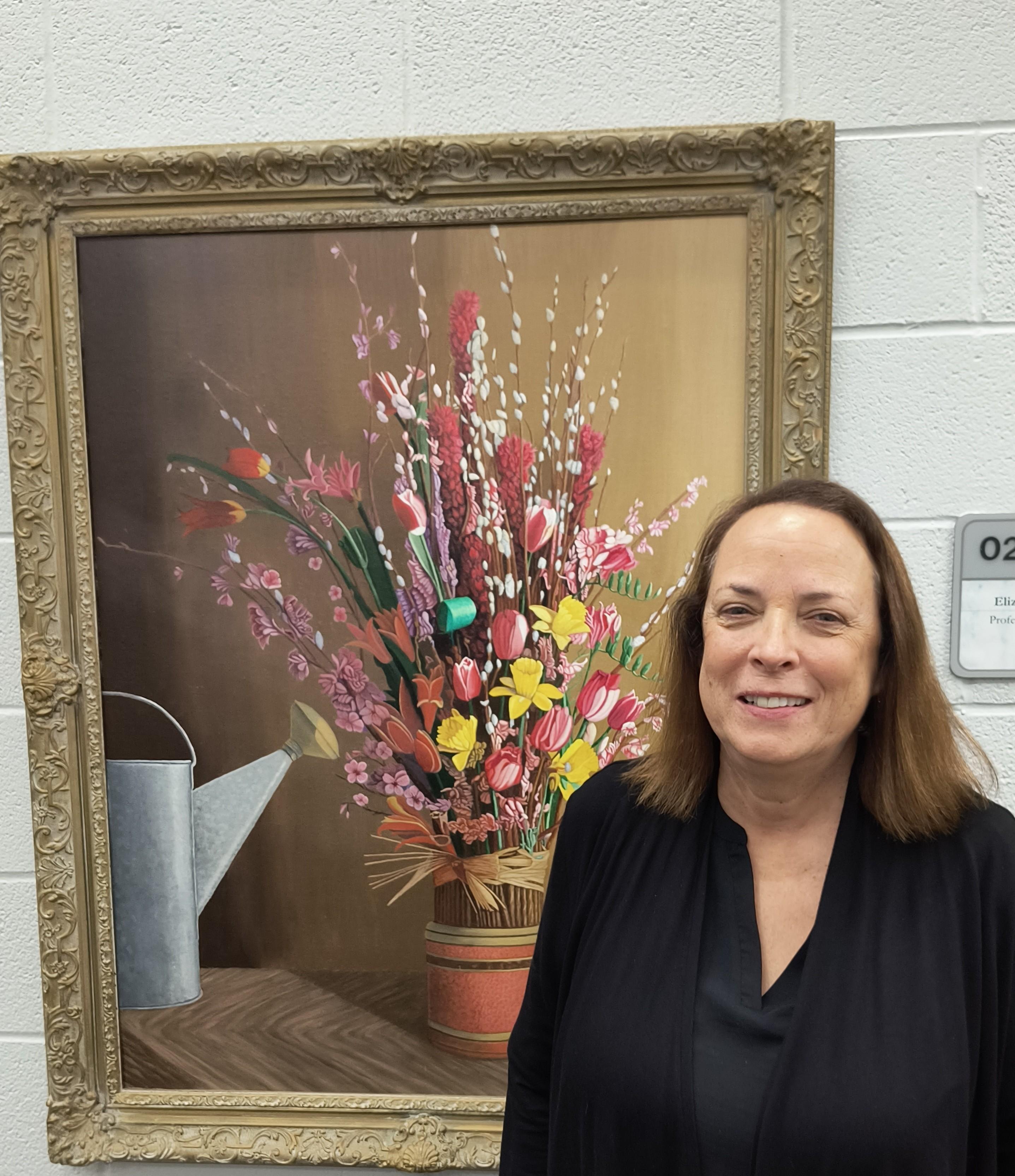
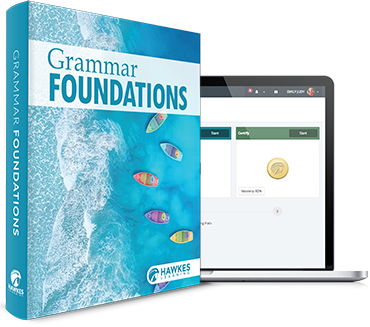
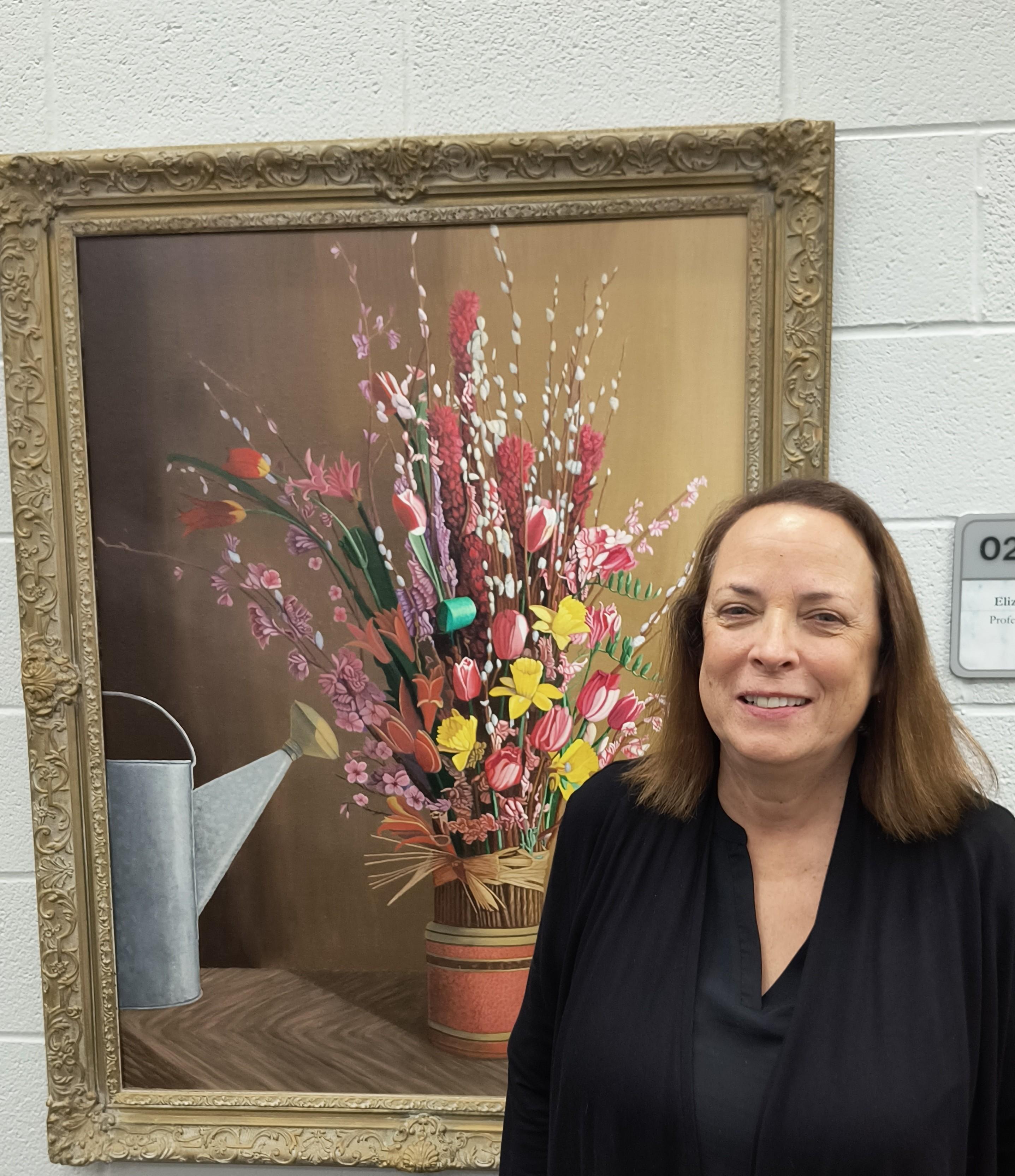
When it comes to strengthening student confidence in Grammar Foundations, nothing speaks louder than the perspective of an instructor who has lived the challenges and found a solution that genuinely works. In this testimonial, we spotlight Professor Lisa Arter's firsthand journey implementing Hawkes Learning’s Grammar Foundations courseware in her ENGL 1410 course at Southern Utah University. Professor Arter's story offers an honest, practical look at how Hawkes transforms the way grammar is taught and learned. "The curriculum is beautifully scaffolded and supported with excellent examples. The online platform is amazing!" Explore the Curriculum Students enter college with little or no grammar knowledge - even as English majors. Creating a grammar class that was at a beginning level but didn't "teach down" to tertiary students was vital. Additionally, I didn't want to spend the class just lecturing and having them think they understood and then do poorly once they left. Using a modified flipped classroom for Grammar Foundations has worked very well. The curriculum is beautifully scaffolded and supported with excellent examples. The online platform is amazing! I love that I can set a proficiency level and the software analyzes a student's trouble spots and gives them more questions to work through in those areas. I also like that the certification quizzes quit once a student can't reach the proficiency score and automatically takes the student to needed review areas. This lessens frustration from students "failing" repeatedly. What Does Implementation Look Like? First, I have my students do the paper textbook, utilizing it as a workbook. They bring the book to class each day and my "lectures" are based on a brief review of the homework and answering the questions students have. This way, the Q&A is targeted. I then have them work on more examples while I move through the class and mark off their work from the homework. I don't grade it - just participation for percentage completed mixed with their Q&A participation. They then know what areas to practice more through the software and take the certification quiz at home. Chapter tests are done in class. Starting with section 2, I introduce sentence diagramming. We work problems in class as this serves as a constant reminder of the parts of speech in section 1 and supports the learned syntax in section 2. Sections 3 and 4 are organized the same way: homework before class, Q&A to work through any questions from that, check it off, diagram some days and then proofread short texts to review and support. Finally, I add an etymology TED Talk and paper. Students research the etymology of their name and a chosen word. They submit a paper, utilizing all they've learned in the class (this is heavily graded on mechanics, style, organization) and give a 5-minute TED Talk on what they've found out about themselves and their chosen word. Students truly enjoy this and end the course with an engaging project. "Scores are up! Students are engaged with the material and feel the success because of this scaffolding. They don't forget early material as they see it repeatedly and in increasingly real-world contexts. I love teaching this class!"
![Image of Professor Lisa Arter]()
February 26, 2026
When it comes to strengthening student confidence in Grammar Foundations,...
Read More
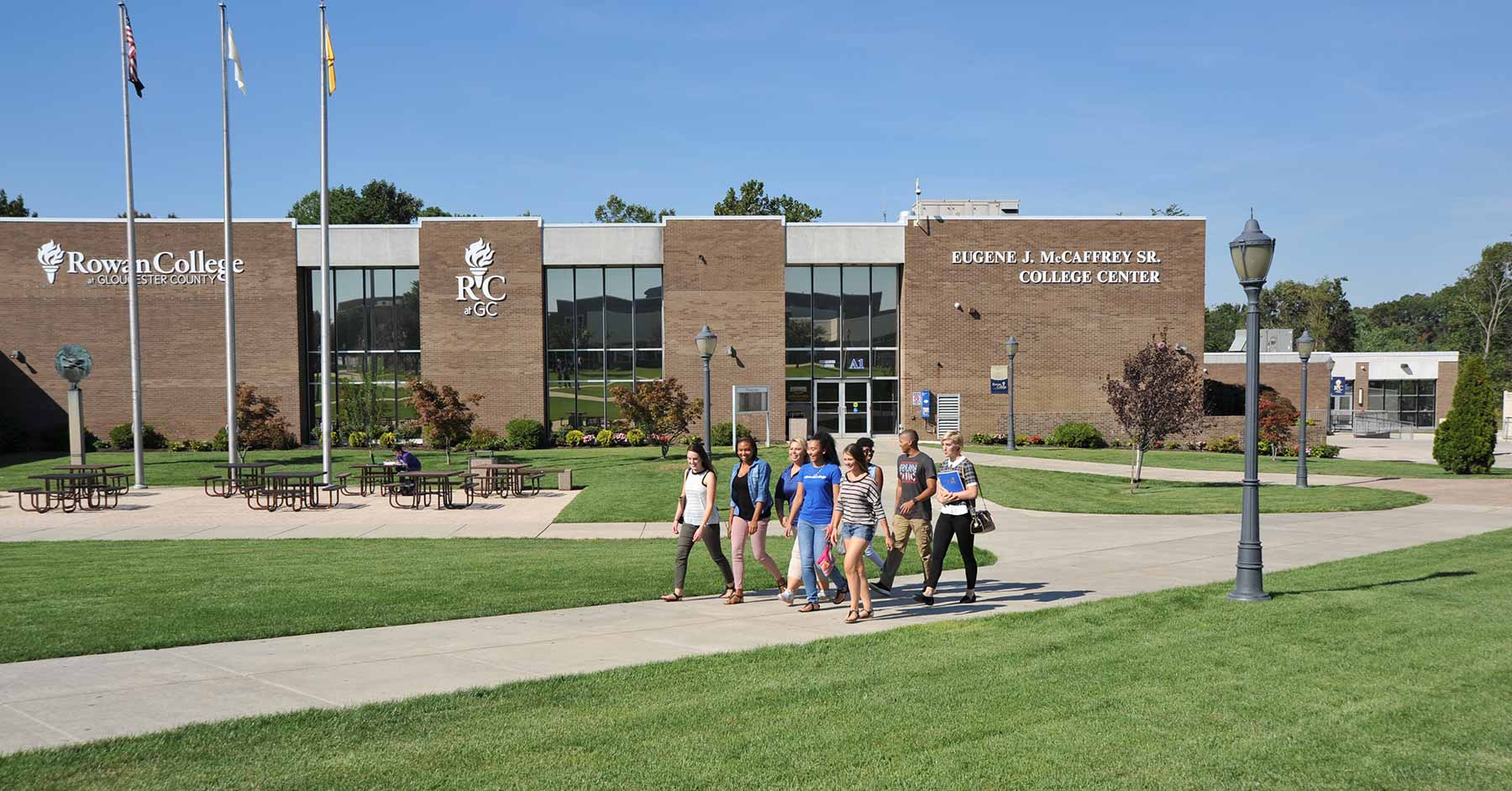
Andrea Vinci, Ed.D. Andrea Vinci, Ed.D. is an Associate Professor and Division Coordinator at Rowan College of South Jersey. She teaches multiple courses at the college, including ENG 101, in which she uses Hawkes Learning’s English Composition, 2nd Edition courseware. I first started using Hawkes for my online courses in 2019. I thought it was useful and engaging for students in distance-learning courses to master the materials that I usually taught in my in-person lectures. Fast-forward to 2020…the pandemic hit and EVERY class went online. I was uploading lectures, but without the hands-on, in-class activities to gauge student mastery of the different topics, I knew I needed to make a change. That’s when I made the switch to using Hawkes in all of my courses. I still taught each topic through a video to students and used my own essay assignments, but I was able to use the Hawkes Learn/Practice/Certify tools to make sure they truly understood the different modes of writing, how to find, implement, and cite sources, and proper grammar. It gave my students the ability to master these topics and then apply them to their writing. Even after returning to the classroom, I decided to still use Hawkes in this way. We focus on hands-on learning in class, and then they complete the Hawkes assignments at home, at their own pace, to truly master the material. The results have been really great. Not only does Hawkes allow for extra time and materials to master the core content of ENG 101, it also serves as a great resource for when a student is absent or misses a class for any reason (which we all know is very common post-Covid!). Students can still learn all the materials we covered while they were out. I also like that it allows each student to learn at their own pace for each topic. If they understand something well, students can easily certify their mastery. If they need a little more help with a certain topic, they can practice, learn, and attempt mastery as many times as needed to fully learn and master the topic. “Overall, Hawkes has been a truly useful learning resource in both my online, hybrid, and traditional in-person courses. Students find it to be a helpful learning tool, and I think it’s a great teaching tool. The technical support is also readily available and helpful at all times.”
![]()
April 24, 2025
That’s when I made the switch to using Hawkes in all of my courses. I still...
Read More
Dr. Lisa Brewer is an associate professor of English at New River Community and Technical College, where she teaches composition, research, and literature. She uses Hawkes Learning’s Foundations of English, Second Edition courseware for her Developmental English course. We first adopted Hawkes in our Developmental English course because many of our students were not able to score high enough on our placement tests to enroll in English 101. The major issues started at the basic sentence level. The areas of weakness ranged from needing to learn the parts of speech to what sentence boundaries are. Before we could work on thesis statements and paragraphs, I found that we needed to share a vocabulary for talking about sentences, and our wide variety of students in age and experience meant they had different skill levels and competencies. Some needed a refresher in certain areas, while others needed much more instruction and practice. The first thing Hawkes helped with was their diagnostic tests in reading and grammar that are tied to lesson mastery. The diagnostic tests give the student and me a look into what areas need attention and what the student has already learned. I can see how many students need to work on comma splices or apostrophes and how many students performed well with subject and verb agreement and do not need to repeat that lesson. A student’s mastery of a skill will show up in the lessons assigned so that one does not have to do lessons already mastered. This helps a great deal in preventing boredom from the traditional method of covering a particular skill with the entire class and then moving on, knowing some have already mastered it, but others are still struggling. The lessons and mastery of skills are then individualized to each student’s strengths and weakness. The initial scores also indicate which students are almost ready for English 101 and which ones have a larger gap in skills to make up. This insight helps me plan and know where to spend my time and attention. Because students are more conscious of what they are doing well and what they need to work on, they can articulate their accomplishments and become more confident about their writing skills. The Lesson, Practice, Certify method gives them concrete evidence, which I can reinforce when I see the improvement in their essay writing assignments. At mid-term and at the end of the semester, I give them a survey/writing reflection to find out how they are feeling about their writing at this point as compared to when the class started, and I receive specific feedback about what they are happy to have improved, how they had no confidence in the beginning but now they are more comfortable writing, and at mid-term, they let me know what they want to work on in upcoming classes, such as figuring out a good hook, revising introductions, and addressing their audience. They start asking the kinds of questions that I love to hear because they are not as anxious about the mechanics of writing, and their attitudes may have changed from a former negative high school experience. I was skeptical about using Hawkes at first because I thought that this would be another program in which students do grammar exercises in isolation of their own writing and that effort would not translate into improvements in essay writing. I have been pleasantly surprised because a student can not move on from a lesson until he or she has demonstrated competency and learns why an answer is correct or incorrect, so grammar isn’t just busywork. I am also getting detailed feedback, so I know when to offer additional one-on-one help or practice something as a group, and I can let them know when they are succeeding in applying a particular skill in their essays. Confidence about small victories like the elimination of comma splices is something we celebrate. Students often enter their first college English class with dread and anxiety, especially if they have not done well in it in the past. For many, the fundamentals of grammar and reading can be very dry and boring, so it’s not something they want to hear a lecture about or practice on their own. The Hawkes interactive lessons are more engaging because students know they are working on individual areas that need improvement, and they can see tangible evidence of their achievements in both the mastery of a skill and the positive feedback I can give them on their essays. Some students even work ahead and do lessons I have marked as bonus lessons because they see themselves getting better and want to cover additional topics for extra points.
![]()
April 11, 2025
Dr. Lisa Brewer is an associate professor of English at New River Community and...
Read More
“Combining the narrative mode with a purposeful assignment and incorporating some AI might be an answer to writers who lack confidence, instructors who are suspicious of the value of narrative writing, and educators who distrust the use of AI for writing essays.” Professor Elizabeth Cobb If we want our teaching to take hold, to matter to our students, we all know our lessons must point to the real world. To accomplish this from the starting line, I have relied on beginning each semester with narrative writing. Over the years, I have listened to colleagues’ criticisms of this mode of writing. Many of them argue that it is not academic enough. With the advent of AI usage in our composition classes, though, I have observed this attitude come full circle. Whenever a big change in education occurs, we find ourselves reassessing our objectives, our goals, and our assignments, and this is why I think more writing teachers are willing to take a second look at narrative writing as a bona fide and worthwhile endeavor. Indeed, partly to discourage the heavy AI copy-and-paste strategy of many reluctant writers, I decided to reimagine my narrative essay assignment in my developmental reading and writing course. But I also wanted my students’ stories to contain a real-world application, so I put a new spin on their first essay which spawned my “narrative business letter” assignment. The prompt for the assignment is: “You will be writing about yourself but for the specific purpose of introducing yourself and ‘selling yourself’ for admission into an academic program OR for applying for a specific job. Essay writing can take different forms, but that isn’t always obvious to students. I wanted you to have a real-world experience with writing on this essay with a specific audience in mind and a specific purpose for telling your story.” I jumpstart the assignment with some pre-writing activities as taught in Hawkes’ Foundations of English, Chapter 7.3 “Choosing Topic and Scope for a Longer Text.” I jumpstart the assignment with some pre-writing activities as taught in Hawkes’ Foundations of English, Chapter 7.3 “Choosing Topic and Scope for a Longer Text. In particular, students can use “free-writing,” writing non-stop on their essay ideas for a set length of time (I suggest five minutes) to generate initial thoughts. Then, they can use “grouping” as taught in the chapter to begin organizing what they wrote. This strategy could even take a graphic form such as a mind map or cluster wherein the writer groups ideas from their free-write into categories for their narrative business letter. Their groups might consist of “personal anecdote,” “experience,” “practical skills,” and “soft skills.” After the idea-generation phase, students can begin to form a working “purpose statement” as taught in Chapter 7.4: “Writing a Thesis or Purpose Statement.” For the narrative business letter piece, they will need to express what they are applying for and how they are qualified for the endeavor. Completing this step will allow students to move on to organize their main ideas into an outline form which is covered in Chapter 7.5, “Organizing and Outlining a Longer Paper.” The “Working Outlines” section of this chapter does a particularly good job of explaining how the pre-writing activities of free-writing, grouping, and thesis development can naturally lead to outlining their essay. On my assignment sheet I offer guidance on what should be included in each paragraph as can be seen below: Introductory Paragraph “In a friendly, professional manner, introduce briefly who you are and why you are writing. Try to do this in a creative, attention-getting way.” What a student wrote: “Understanding. Time consuming. Perspective changing. Motivating. Leadership. Relationship building. Change. Flexibility … I know that if I were accepted into the Elementary Education program at FGC, I would be an example of what patience looks like and how to use it in everyday classrooms. With multiple experiences, I feel I am qualified to be a part of this program not just to learn more, but to be an example.” Body Paragraph #1 “Lead into a condensed biography of yourself to give your reader an idea of who you are and a bit about your background. Choose your details wisely to fit the purpose of your letter.” What a student wrote: I grew up in Iloilo, a small city in the Philippines, and I was surrounded by people with gentle hands, people who love and care for each other all the time. As a child, I was a dreamer… when I was in third grade, my teacher asked us what we wanted to be when we grew up. I confidently raised my right hand and answered, ‘I want to be a nurse when I grow up.’ I heard, “ohhhs” from my classmates and it made me feel like a celebrity, which then inspired me further to pursue that dream.” The student goes on to trace the development of her interest in the nursing field. Body Paragraph #2 “Transition from your more general biography to sharing one anecdote [brief story] of something important that happened in your life that would somehow be related to your chosen academic program or job. If, for example, you plan to apply to the EMT program at FGC, you might choose to share the time you witnessed your neighbor’s fire and assisted the EMS team in ensuring all the people got out of their house. Obviously, this experience could influence a person’s decision to become a firefighter or a paramedic.” What a student wrote: “Interestingly, I noticed that I have a unique bond with children as I can make them stop crying, or I can make them laugh easily. One time, my one-year-old cousin was throwing tantrums and wouldn’t stop crying. It was around ten minutes of non-stop wailing to the point that she was turning blue. I saw how her mother panicked…” [The writer finished the story and explained how she has developed some nursing skills naturally.] Body Paragraph #3 “From the story you shared in the previous paragraph, segue into an explanation of the knowledge and skills you can bring to the program or job in which you are interested.” What a student wrote: “Although I am only in the beginning of my teaching career and still have so much to learn, I believe I would be a great attribute to the Elementary Education program at FGC.” [the student goes on to discuss several soft skills she has developed.] Conclusion “Without sounding too repetitious, wrap up your letter by reminding your readers of what it is about you that sets you apart, and that will show them what you can and desire to contribute to their program/organization. You can refer to something in your bio or your anecdote as well. This is your last chance to make your mark.” What a student wrote: “Being dedicated, hardworking, flexible, willing, and patient will only help me succeed in the Elementary Education program and future. I will always have a desire to learn more and improve myself in any way possible. I hope you have felt my passion and love for teaching and will accept me to be a part of this program.” To support my teaching of this specific organization pattern, I find that Chapter 7.8 “Using Paragraphs Effectively” closely matches the composition skills I am trying to foster in my students: hooking the readers’ interest in the introduction followed by a clearly articulated thesis; using anecdotes, descriptions, examples, and reflections in the body paragraphs; and sharing the writer’s overall takeaway on the subject in the conclusion with a call for the reader [the employer or college administrator] to take action in considering their application. A couple of other important aspects of the project’s process are the peer review element and the review of a business letter format. Students submit their rough drafts to a peer review assignment in Canvas. This feature in Canvas allows me to set up anonymous peer reviews, which are assigned by Canvas. This gives them a chance to see how another student handled the assignment, and when they provide feedback, I think the assignment encourages critical thinking about the task at hand. Additionally, I provide a simple lesson on how to set up a business letter, and there are plenty of resources available from a quick Google search as well. Making assignments meaningful is a step in the right direction in demonstrating to students that writing can be useful and purposeful. An assignment such as this could provide them with a positive experience and help them gain confidence in writing, which might discourage copying and pasting from AI. However, there are places in the process where I could introduce responsible use of AI technologies, such as the idea generation phase, perhaps in researching what kinds of soft skills a person can possess or soliciting some ideas on what employers look for in an application letter. It would also be helpful to look up letter formats using AI. I will move toward integrating some of these strategies in the future. Combining the narrative mode with a purposeful assignment and incorporating some AI might be an answer to writers who lack confidence, instructors who are suspicious of the value of narrative writing, and educators who distrust the use of AI for writing essays. References: Foundations of English. Hawkes Learning, 2023. To learn more about Hawkes’ Foundations of English textbook and request a preview, please click here. Meet the Author Professor Cobb holds a master’s degree in English and boasts an impressive 25-year career in teaching across various educational settings, including high schools, universities, and community colleges. Currently, she dedicates her expertise to a small, rural community college in Northeast Florida, where she has been an integral part of the academic community for 15 years. In her current role, Professor Cobb passionately teaches developmental reading and writing, freshman composition, and a survey course in literature. The diversity of her student population in this beautiful, wooded part of the country brings her immense joy and fulfillment.
![]()
February 11, 2025
“Combining the narrative mode with a purposeful assignment and incorporating...
Read More
Our Hawkes Student Ambassador Raegan Fisher interviewed Professor Jacob Kaltenbach, PhD, a multidisciplinary and professional studies professor at Purdue University Global. Professor Kaltenbach currently teaches composition courses in the English and Rhetoric Department at Purdue Global. He has also previously taught in the Humanities Department, including various critical thinking, literature, and philosophy courses. In the future, he hopes to teach the new doctoral-level writing course for Purdue Global graduate students. Professor Kaltenbach has been teaching for more than 30 years at universities across the country and around the world, including more than 20 years in the online format for Purdue Global. In this interview, Professor Kaltenbach shares his experiences using Hawkes and how it has supported student learning outcomes in their courses. *Interview questions and responses have been slightly edited for content and clarity. What do you find is your favorite thing about teaching? I really take pleasure in helping our students better represent themselves using the written word to better express themselves and to integrate their critical thinking skills into their professional communication. At the same time, I learn so much from our students myself. I get the chance to teach students from all different disciplines. Our assignments encourage students to cover recent trends and changes in their fields, as well as their hobbies, communities, and careers. For example, our students write on community proposals for change in CM220. I get exposed to all these different, exciting ideas from these types of assignments—from human services, from the health fields, from industrial psychology, from entrepreneurship—which is almost like having a subscription to a wonderful magazine. I get exposed to so many new trends in different fields, and that keeps me interested in my work, in figuring out the best ways to help students leverage their existing professional communication skills for their career advancement. I have the opportunity to hear perspectives from all different regions of the country, as well as many people overseas. How long have you been using Hawkes in your classroom? I’ve been teaching with Hawkes in our English courses for about five years at this point. I participated in the early trials of Hawkes being integrated into our classes. We’ve seen some real benefits for our students and had the chance to really customize support for our students. Hawkes is one of our most essential tools to help target those different skill levels and different learning needs. What would you say is your favorite thing about Hawkes and using it? I defer to the students, and students tell me it challenges them. The same students will tell me they enjoy the content, the mode of delivery, the chance to build skills, and seeing their efforts validated through the Certification mode. That’s the kind of review we want to see from our students, right? I mean, you don’t want to hear, “This was easy, and I liked it,” and you don’t want to hear, “This was too hard, and I hated it.” They are saying, “This is really tough, but I enjoyed it.” I think that’s the sweet spot we want to see as educators. Did you find that the students appreciated the opportunity to use the Practice mode as much as they personally needed to? As a learner of other languages, if I’m learning Spanish or French, Russian or Chinese, and I am in a region or country where the language is spoken, I can go out on the street the next day and use a new skill I learned in the classroom. The moment I use it, it activates it, and it becomes real. There’s a real disconnect if you were just learning it theoretically and not applying it. I think Hawkes’ model does that in a way because you’re relearning these skills that you touched on or learned by osmosis in grade school, but you’re putting them to work in your papers right away. Hawkes helps students reflect on what they’ll need to go back and redo. Students can connect areas they did not 100% internalize, and I think Hawkes helps them actually internalize the material. Do you believe Hawkes stands out as a helpful resource among other resources that might be available to students? Yeah, absolutely—our students are very busy. Many of our students are full-time working adults and often parents as well. I think, on the one hand, they don’t have time to look for many other tools. It’s really nice that Hawkes is integrated into our courses. Hawkes is also where the students get the sense that they’re receiving some extra help, and they’re getting it from an outside voice. What goes alongside that is our own Writing Center, and I think they work together quite nicely. Because our faculty has been involved in customizing our application of Hawkes, we’ve ensured continuity and correspondence between our resources and the Writing Center resources. The Writing Center resources stand out too, so I think that they’re a perfect complement. I wouldn’t want to see one without the other. Have you found Hawkes to be helpful in building the students’ self-checking skills? That’s what makes a good editor. I tell students who already have these really advanced professional writing skills, there’s always a place to learn from. I think you learn from what you do, and what many of our students can also learn to do is to become a better editor of their own work, which requires self-checking. I think Hawkes models that a little bit in its Certification method. Have you noticed a difference with your students’ learning and grades since using Hawkes? Absolutely—just the ability to refer our students to both Hawkes and the Writing Center—that helps diminish the frustration. We can cut down on the kind of deferred questions and issues that are going to affect student retention and success. Additionally, many students defer their questions. This is like deferred maintenance on your house; it’s going to catch up with you eventually. That’s often why a paper fails. This can be a simple question such as, “Do I need another source here?” or “Do I need a better transition here?” I think students are sometimes afraid to ask those questions of the instructor, who will also be involved in their assessment and grading process. I try to encourage students that there are no stupid questions. I’m not going to review your whole paper and give you a grade in advance of grading, but if you ask me, “Is my tone and voice consistent?” I’m going to look at it and give you an answer. I think Hawkes helps students build that self-check skill, and I think it helps cover some of the questions that they might have and may not ask me. They get the answers for themselves through Hawkes, and if it doesn’t answer their question, it spurs them to communicate with me because it gives them a vocabulary. Students are afraid to ask a question because they don’t have the terminology. Hawkes gives you that terminology. The student can then realize, “OK, I’m having a problem with passive voice, so I’ll ask Professor Kaltenbach.” The students are empowered and given that terminology to come back with some measure of expertise to the classroom space. I think that builds confidence. I’m pretty sure we’ve seen an increase in our retention and success rates in CM107 over the last five years, and I don’t think we can ignore Hawkes as a contributor to that increase. Do you have anything else you want to add or any information you would like to share for other students using Hawkes? I think that Hawkes’ approach definitely improves our students’ basic skills, and it improves their eventual writing assignment grades. We don’t offer test scores, so I can’t say it boosts our students’ test scores in this way, but it boosts your final assignment grades. These skills need continuous revisiting. They need continuous improvement, and the approach that Hawkes offers to adult learning is very effective, as is its platform design. I can’t imagine our current course without Hawkes as part of its learning environment. I really appreciate the opportunities that Hawkes has offered many of our students to succeed in the CM107 class and outside the courses. Meet the Author Raegan Fisher is a student at Purdue University Global pursuing an advanced degree in Health Care Administration. She is a health care professional with over 25 years of experience in the industry and plans to use her degree to further her goals of becoming a health care administrator. In her personal life, she is a wife and mother of two teenage daughters. She enjoys spending time with family, pets, cooking, reading, and attending her girls sporting and other extracurricular activities.
![]()
Leaders in educational technology, VitalSource® and Hawkes Learning, are excited to announce a strategic partnership to deliver high-quality, cost-effective learning materials to all students, everywhere, via StudyText. Utilizing VitalSource’s leading ereader, Bookshelf®, Hawkes Learning is offering its content to students with greater flexibility and on-the-go learning capabilities. These low-cost, interactive etexts are available through both the VitalSource and Hawkes Learning eCommerce stores reinforcing their shared commitment to widely accessible and high-quality materials in higher education. VitalSource has been at the forefront of accessibility efforts for over three decades, consistently working to break down barriers and ensure that educational content is available to everyone, regardless of their circumstances; this partnership is a testament to that dedication. "Our mission at VitalSource is to power the learning delivery network that transforms education. This partnership with Hawkes Learning exemplifies our commitment to ensuring every student has access to the tools they need to succeed." — Irene McGuinness, Chief Commercial Officer at VitalSource Hawkes Learning is launching five StudyText titles this fall, marking an exciting milestone toward creating a more affordable and inclusive future in education. By combining advanced technology, student-driven innovation, and expertise in accessible learning materials, these two educational leaders are taking a significant step toward creating educational materials that empower all learners to succeed. “This strategic partnership with VitalSource combines their world-class digital reader with our market-leading content, creating an unparalleled, active learning experience for students. StudyText syncs across devices offering students access whenever and however it is most convenient,” said Scott Virkler, CEO of Hawkes Learning. “We’re thrilled to launch this innovative offering, which not only enhances our value to customers but is also fueling our growth in the rapidly evolving education technology landscape.” For more information about StudyText and to request a sample copy, visit hawkeslearning.com/StudyText.
![]()
October 8, 2024
Leaders in educational technology, VitalSource® and Hawkes Learning, are...
Read More
In the world of education, clarity is key. Whether you’re an educator crafting course materials or a student navigating through assignments, clear instructions can make all the difference. One often overlooked aspect of this clarity is specifying the number of correct answers expected for each question. Why is this so important? While these key benefits may seem small, implementing this practice across all your course materials can significantly enhance the learning process and improve outcomes. It’s a simple change that can yield substantial benefits for both educators and students. Providing Clarity: Clear instructions allow students to focus their efforts on addressing the content of the question. By eliminating ambiguity about the format or requirements, students can more confidently engage with the subject matter rather than second-guessing what’s expected of them. Minimizing Frustration: Ambiguous instructions can lead to unnecessary stress and wasted time. When students struggle to decipher expectations, they may become discouraged or disengage from the learning process. By clearly stating the number of correct answers required, educators can eliminate this source of frustration and create a smoother, more engaging learning experience. Optimizing Efficiency: With clear expectations and instructions, students can direct their energy toward understanding and answering the questions effectively, ensuring that they make the most out of their study time and engage meaningfully with the course material. For students, if you encounter a multiple-choice question that doesn’t specify the number of correct answers, or the instructions provided seem unclear, don’t hesitate to seek clarification. Understanding the expectations is the first step towards successfully demonstrating your knowledge. For educators developing course materials, consider reviewing your question banks and ensuring that each question clearly states what is expected in the student’s response including how many correct answers are required. By implementing this practice, we can create a more streamlined, less frustrating, and ultimately more productive educational environment for all. Hawkes has taken the initiative to implement this practice across our own question banks. Watch this quick video to learn more. Interested in implementing the student-friendly courseware in your own courses? Request a software demo to learn more about how Hawkes intelligently adapts to students needs while simultaneously simplifying course management for instructors.
![]()
July 25, 2024
In the world of education, clarity is key. Whether you’re an educator crafting...
Read More
“Congratulations!” I say, “You’ve decided to attend college. Truly, it might be one of the best decisions you’ll ever make. After all, college can be a ‘gateway’ to a better life.” My fingers make the “air quote” sign at just the right moment. I work at Florida Gateway College, so my pun usually gets a reaction. A few students offer a good-natured groan or roll their eyes with exaggeration, but others smile or chuckle. (According to several former students, my sense of humor leans strongly toward “dad jokes.”) It’s the first day of class and we’ve been going over the syllabus, so everyone seems to appreciate the attempt at humor. But now we’ve reached my favorite section of the syllabus. I call it “My Expectations.” And while they assume I will talk about my class, they don’t yet know that I’m also going to talk about life. You see, college really can be one of the best decisions our students will ever make. We live in a rural area, and a nursing degree (for example) will lead to a much higher salary than the jobs available at one of the local restaurants or retail stores. So, my tone takes a turn to the serious: “But going to college is not a one-time decision,” I say. “It’s a daily decision. You have to choose to come to every class you possibly can. You have to choose to be attentive in class, to take notes, to participate in class discussions and activities, and to submit quality work on time. “Who has heard the phrase, ‘You have to go to college to get a good job’?” Quite a few hands go up. It’s a phrase that has been popular since at least the ‘80s when I was in public school. “In many ways, that’s true,” I say. “Unfortunately, that means a lot of students see a college degree as just a hurdle to getting the job they want. It’s an obstacle, something to be obtained with as little effort as possible.” Here comes my favorite moment: my “shock and awe” tactic. “Well, I might be the only college professor to ever tell you this, but a college degree is basically worthless.” I pause for effect; I also enjoy seeing the looks of surprise and confusion. Then, I continue… “It’s a piece of paper.” I hold up a piece of paper. “Think of it this way. If I had the authority to grant you a Ph.D. in Chinese Language and Literature, could you suddenly speak Chinese? Could you understand it? Could you read or write Chinese?” Students shake their head, and understanding starts to dawn in their eyes. “Now, a college degree might help you get a job, but it won’t help you keep a job. If you don’t have the skills, knowledge, discipline, and sense of personal responsibility that this piece of paper suggests you have, then your new employer will quickly realize that and fire you. They’ll hire someone who does have those things, who can do the things the employer needs done. “The real value of college is the education one receives – the skills, knowledge, discipline, and sense of personal responsibility mentioned earlier – not the degree itself. “So, I want you to consider these questions: Why are you going to college? What do you want to do in life? Where do you want to be in twenty-five years? Or maybe in ten years, if you’re an older student? “And most importantly, what are you doing today that will help you achieve those goals?” I then tell students, “There will be days you’ll wake up and think, ‘It’s a mighty fine day. I think I’ll go on a picnic instead of going to class.’ But will going on a picnic today help you accomplish your long-term goals? Will it get you where you want to be?” (In The Willpower Instinct, Kelly McGonigal describes several studies that indicate getting people to think about the future can strengthen their willpower in the present moment. So, I like to get students to think about their future as often as possible.) After another brief pause, I tell students the departmental pass rate for whatever class they are in, and I point out – statistically speaking – what percentage of them will either withdraw or fail by the end of the semester. “In my experience,” I say, “there are three main reasons students do not succeed in my classes. First, some students just don’t come to class. At least not regularly. Maybe once in a while, but sooner or later they simply disappear. Second, even if they come to class, some students don’t submit the assignments. I’ve had students with perfect attendance who never submitted a single assignment that was to be completed outside of class. “Third, even if they come to class and submit the assignments, some students don’t follow the assignment’s instructions. If I ask for four pages, they give me two pages – that’s only 50% of the assignment. What grade is 50%?” Students reply, “F.” “Or, if I ask them to analyze something, they merely summarize it. That’s a lower cognitive skill. I can’t give them full credit for that. “Now, although I don’t hand out passing grades for minimal effort, it’s not overly difficult to pass my class. In fact, if you come to class, do your work, and follow the instructions, you’ll be well on your way to passing my class – and succeeding in life. “After all, consider this: what happens if you don’t show up for work? If you do what’s referred to as a ‘no call, no show’ several times?” Students reply, “You get fired.” “Well, what if you come to work, but you don’t actually do anything? You’re taking sixty smoke breaks a day, you stand around chatting with people, and stuff like that?” Students reply, “You get fired.” “Okay, what if you come to work and you even do some work, but you always do it wrong? They tell you to do something one way, but you always do it another way?” Students reply, “You get fired.” By now they’ve caught on. Just showing up, doing their job, and doing it the way they’re supposed to do it will go a long way toward helping them succeed – both in college and at work. At some point in the past, the American school system, from kindergarten through higher ed, seems to have lost sight of the fact that the goal isn’t a degree but educated individuals. Degrees became a convenient credential required for many jobs, and so they became the goal. But we need to remind students that their future success is not dependent on their degree, which is merely a piece of paper. That piece of paper won’t help them perform on the job. Their future success relies on what they can do, on what they know, and on how reliable they are. A degree is just a symbol of those things – and it only matters if it is an accurate symbol. About the Writer Dr. Michael M. Baker earned his Ph.D. at The Ohio State University in 2013. Since then, he has taught English (and some Humanities) courses at Florida Gateway College. He co-founded FGC’s Study Abroad program in 2017 and has led programs to the U.K. in 2019, 2023, and 2024 (forthcoming). Since 2020, Dr. Baker has taught courses in FGC’s Second Chance Pell program inside a local prison. One of his Second Chance students won a national writing prize and another had an essay published in a composition textbook.
![]()
May 16, 2024
“Congratulations!” I say, “You’ve decided to attend college. Truly, it might be...
Read More
For many years in my 1101-1102 first-year writing courses, I have assigned the Hawkes Learning courseware to remediate grammar and mechanics and to complement manuscript and research content. In 2015, I met with a group of unusually weak writers; although nice people with a sketchy familiarity with the essay format, none brought basic editing skills to the class, not to mention any general awareness of grammar or mechanics. They wrote on autopilot; well, everything they did seemed conducted in a haphazard, inattentive manner. Their failure to meet deadlines or work independently also suggested a lack of personal responsibility and an inability to listen to or follow instructions. And yet they showed up regularly for class. After a panicky review of all the support available through the publishers, I chose Hawkes to supplement my course at first because I liked The Reading and Writing Handbook, a well-selected collection of focused information presented in a simple, direct, well-designed format. As I reviewed the Hawkes courseware and the accompanying books, I particularly liked the editors’ recognition that proficient writing reflects reading skills, and reading skills inform the quality of skillful writing. It seemed to me that the approach in both Foundations of English and English Composition would be accessible at every skill level, but also to at-risk students. Best of all, I could quickly integrate the materials with no changes to my existing syllabus. From my first attempts to implement the materials, I enjoyed excellent support from Hawkes representatives, making the set up and the first attempt in a class painless. To my surprise, these first-year students were amenable to the lessons and quizzes probably because Hawkes’ homework formatting was more familiar than with the more speculative kinds of writing prompts that they were preparing for class. From the first weeks, the format worked very well, and positive results were at once evident in their work. I have made very few changes since that first attempt. Along with a reader, I require 1101-1102 students to buy the Hawkes software bundled with the Handbook. For a more in-depth look at the materials the students have access to, the eBook for English Composition that goes with the “Compositions” lessons is included in the software. To motivate the students and encourage self-motivation, I set the Hawkes average as 25% of the final course grade. The general format is simple: each week I assign 5-6 lessons from a selection of chapters and topics and a quiz, about 45 minutes or less to completion. I have never needed to set late penalties for the lessons. With an email request, I make all quizzes available until the student is satisfied with the grade. I realized assigning a little at a time and spreading out the topics, I could keep their attention on general and specific editing details without much comment in class. For example, a week’s lessons from English Composition involve only five questions for each of the six topics doled out week by week as the paper process develops. While getting the paper started, the week’s six lessons could be drawn from Chapter 3.1, 2 “Writing Process” [pre-writing, drafting, etc.], Chapter 4.2, 3 “Parts of the Essay” [introduction, thesis], Chapter 5.4 “Reading & Rhetoric” [understanding purpose], and Chapter 9.2 “Basics of Grammar & Mechanics” [characteristics of a sentence]. For me, planning involves only a weekly setup. I usually post on Fridays for the following week’s Monday to Sunday night due dates. The entire process of setting up the curriculum, the due dates, and the weekly quiz takes me about 20 minutes. For me, there has been no downside. Each semester I have seen positive results and enjoyed collaborating with my colleagues at Hawkes! Dr. Stephen Whited Assignments vary according to my syllabus for content expectations and class discussions, developing in complexity as we move through the semester. By the conclusion of the course, they have moved through all chapters and nearly all topics. Hawkes’ excellent range of diagnostic reporting and analytics makes monitoring for “Outcomes” amazingly easy. I usually assign a low-stakes diagnostic quiz in the first week of class, and I add a post-course quiz to the final exam as a warm-up for the final writing sample, which I compare with the in-class midterm. In every class, I can point to data that suggests improvement for most students. About the Writer Dr. Stephen Whited has taught at Piedmont University in Demorest, Georgia, for 30 years. He studied at Georgia State University, where he earned his bachelor’s and master’s degrees, and he earned his doctorate at the University of Kentucky. Stephen’s dedication to teaching leaves a lasting impact on his students, reflecting his ultimate goal of nurturing young minds and creating lasting impressions. Stephen also serves as a resource to other instructors as a Hawkes Faculty Consultant. Outside of the classroom, Stephen enjoys poetry, art, music, theology, philosophy, and history. Stephen and his wife, Jo, have two children. Learn more about Stephen in his Hawkes Instructor Spotlight here.
![]()
March 27, 2024
For many years in my 1101-1102 first-year writing courses, I have assigned the...
Read More
Written by Student Ambassador, Junior Che of Purdue Global University As a former user of Hawkes Learning’s English Composition, I can attest to the significant impact it had on my writing journey. Hawkes provided a structured and interactive platform that not only enhanced my writing skills but also introduced confidence in expressing my thoughts effectively. One of the most beneficial aspects of Hawkes was its integration into lab sequences, a feature utilized by Purdue Global. This method of learning allowed me to engage with the material at my own pace while receiving timely feedback and guidance. The structured nature of the lab sequences provided a roadmap for improving my writing, starting from fundamental concepts, and slowly advancing to more complex skills. Each lesson was carefully designed to build upon the previous one, ensuring a comprehensive understanding of various writing elements such as grammar, syntax, and organization. This approach not only facilitated learning but also boosted my confidence as I witnessed real progress in my writing abilities. One of the standout features of Hawkes was its selection of tools and content to address specific writing challenges. From interactive exercises that reinforced grammar rules to comprehensive writing assignments that encouraged critical thinking, Hawkes offered a wide range of resources to cater to different learning styles. In conclusion, my experience with Hawkes’ English Composition helped shape me into a proficient writer. Through its integrated lab sequences, diverse tools, and personalized feedback mechanism, Hawkes equipped me with the necessary skills and confidence to excel in academic writing and beyond. The journey with Hawkes was not just about mastering the mechanics of writing but also about fostering a deeper appreciation for the art of effective communication. As I continue to apply the lessons learned from Hawkes in my academic and professional pursuits, I am grateful for the invaluable role it has played in my writing journey. What is a Hawkes Learning Student Ambassador? Each semester, Hawkes offers a paid internship opportunity to students across the country who have passed a course using Hawkes, with over a 90%, maintained at least a 3.0 GPA, and are excited about gaining real-world experience in public speaking and serving as a mentor for fellow students. Student Ambassadors offer guidance and one-on-one assistance with all things Hawkes to fellow students on campus, helping them to find homework assignments, create practice tests, learn best practices for using Hawkes’ courseware, and more. Meet Student Ambassador, Junior Che Junior Che, originally from Belize and currently residing in Yakima, Washington, is a dedicated individual pursuing a Bachelor of Science in Information Technology – Software Development using Python at Purdue University Global. With a profound passion for technology, Junior thrives on absorbing knowledge from the ever-evolving tech world. Known for his innovative spirit, Junior loves experimenting in his home lab that he built purely for the enjoyment of the process. Looking ahead, Junior aspires to combine his interests by opening his own business, seamlessly integrating the technology and automotive industries. His journey is a testament to his unwavering commitment to both his academic and personal pursuits.
![]()
March 11, 2024
Written by Student Ambassador, Junior Che of Purdue Global University As a...
Read More
Grammar Foundations brings an accessible approach to language learning, emphasizing practical instruction and real-world examples to navigate the nuances of grammar, punctuation, spelling, and style. Presented in a contemporary format with clear, modern language, Grammar Foundations introduces foundational concepts while embracing the evolving nature of language and the importance of linguistic inclusivity with adaptive courseware and comprehensive yet concise instruction. Get a Free Review Copy Practice and Application Opportunities Clear, straightforward lessons include abundant examples and opportunities for students to engage with the content and test their comprehension. Then, they can put what they’ve learned into practice in the online homework and have confidence that they’ve truly mastered key grammatical concepts. Every lesson provides multiple opportunities for students to practice and apply what they’re learning in real time. These “On Your Own” activities prompt students to complete sentences and phrases, identify keywords, practice their proofreading, and more. Additionally, the Chapter Exercises help students test their knowledge on a cumulative scale, and Chapter Projects encourage creative thinking while reinforcing important concepts. Relevant and Up-to-Date Grammar instruction is brought into the current landscape, acknowledging the evolving nature of language and the importance of linguistic inclusivity with up-to-date guidelines, modern examples, and connections to students’ real lives, from inclusive pronouns to social media posts to artificial intelligence. Reflection Questions and Further Resources encourage students to think critically and dive more deeply. Approachable Language The text teaches foundational concepts in simple and conversational language while avoiding unnecessary and confusing jargon. Helpful Hints and To Learn More prompts provide useful insights and point students to additional information. A Full Mastery-Based Courseware Going beyond traditional learning methods, this product offers a complete mastery-based courseware experience with immediate, error-specific feedback, fostering a supportive, penalty-free learning environment to create an inclusive space for learners to engage with language learning authentically. This adaptive title is comprehensive enough to be used as a standalone curriculum or supplemental resource for any English or composition course!
![]()
March 6, 2024
Grammar Foundations brings an accessible approach to language learning,...
Read More
Where do we go from here? It’s a question that pops up in the car as I travel west 30 miles to work every day. It surfaces after recent grading sessions of my students’ argument papers. And in the hallways of the building where I work, it comes up when my colleagues and I ask it of each other almost daily. As writing instructors, where can we go now that AI has landed in our field? Along about October 2023 I started to notice this phrase in several of my online students’ essays—"In this paper we will discuss the three ways”…- phrasing that I had decidedly taught them not to use! My first thought was that this was a line they were taught to use in the recipe writing they had adopted for standardized writing tests. However, I had not seen it crop up regularly at all until now, and I was reading it in maybe five out of 20 essays. It didn’t take me long to realize the connection: AI had made its landing in our very rural service area in North Florida. Other red flags included a very well-written introduction and conclusion but underdeveloped body paragraphs. I caught on, and tested out my theory by plugging in a topic to ChatGPT. For example, a popular argument essay topic my students use is “high schools should prepare their students better for living on their own.” I would type in the “prompt” to ChatGPT and read a decent opener followed by points listed in outline format but not developed [suggestions for the body of the essay], and a fairly well-written closing. The students using AI, more often than not, did very little to develop the reasons for their argument, and despite the personal experience requirement for all essays I assign, in these AI-generated essays, I would see no trace of an anecdote or specific example. It should also be noted that the instances of copied AI-generated essays occurred exclusively in my online classes and not in my in-person classes. At first, I felt personally affronted by the incidences of AI use. Students were not following my teaching. They were not writing in a meaningful manner, and I didn’t feel they were really learning how to write. I never directly accused my students of “cheating” or “plagiarizing” though I was not happy with the copied submissions. Instead, I recorded a “0” on these papers, and I required that they contact me via phone or office visit to explain their process for writing the essay. Unfortunately, more often than not, these students did not contact me, and they accepted the “0” on a key assignment. If a student submitted another plagiarized essay, I would contact them and request a meeting with me and my department head. At that point, we have a process in place at my institution wherein we record the incident and keep a file on the student. I did not have repeated instances of plagiarism by any one student. Meanwhile, in the course of the semester, I attended several webinars on AI which seemed to concentrate on how we could potentially use it as a tool. I was at first resistant to this because I didn’t see how it would promote critical thinking and learning. Slowly, though, I have had to acknowledge that ChatGPT has a lot of potential for providing information, and it is here to stay. I’m not at the point where I am going to teach students how to use it per se. For instance, I don’t plan to locate an essay from ChatGPT for them and show them why/how the essay would not fit my assignment though I know this could be a valuable lesson. I also recognize that in the future I could do a lesson wherein I compare and AI-generated essay to a well-written, original student essay. However, I will, in lectures, discuss how it should not be used as a crutch to write partial or complete responses to written assignments but more as a way to generate initial ideas. For the essays I assign, for example, students can use it as they would a Google or Wikipedia search. Looking around “out in the world” can help them understand how others are talking about and approaching a topic. They can glean general ideas and get assistance with their brainstorming process on any one topic. However, in the end, they need to understand when to draw the line in using AI-generated material just as they would learn how to use the words of an academic in a peer-reviewed article. In the era of high technology, this has always been the most difficult aspect of teaching research writing. If a piece of writing is easily accessible and read, then why should ideas from it be cited? Once something is read, many students take ownership of the information and see no reason to cite it. This is an area of my teaching I can devote more time to and incorporate more examples of common knowledge and how to cite ideas and direct quotations. Back to my question: where do I go from here? I have decided to focus on creating meaningful assignments that would ideally discourage writers from copying from outside sources. For example, currently, I am working on a revision of my argument essay assignment in my developmental and in my freshman composition classes. I have ditched the standard list of argument topics and have introduced the focus of arguing for a change in students’ specific communities. They will be asked to describe their community to give their essay context, define the problem, and argue for a solution. A community could be the rural North Florida city in which they live, our college campus, dual-enrolled students’ high school campuses, or even a group to which they belong. The assignment requires a personal interview with an adult who is involved in some way in their chosen community issue and two citations from that primary source in the paper. I will also require that they submit a photo that somehow represents the problem/issue they are discussing. The personal experience element will naturally encourage more investment on their part. This type of writing requires more critical thinking, and it makes it very difficult for students to rely on outside sources. Most importantly, writing on topics that matter to the students will produce higher quality work. I am in a sobered, but hopeful mood about teaching composition. Like my students, I have to learn about AI and I have to remain open about what it can offer. As educators, it would behoove us to take hold of the challenge and be the leaders in this new phase of our profession. Meet the Author Professor Cobb holds a master’s degree in English and boasts an impressive 25-year career in teaching across various educational settings, including high schools, universities, and community colleges. Currently, she dedicates her expertise to a small, rural community college in Northeast Florida, where she has been an integral part of the academic community for 15 years. In her current role, Professor Cobb passionately teaches developmental reading and writing, freshman composition, and a survey course in literature. The diversity of her student population in this beautiful, wooded part of the country brings her immense joy and fulfillment.
![]()
January 9, 2024
Where do we go from here? It’s a question that pops up in the car as I travel...
Read More
From his suburban upbringing and first job stacking hay bales to his current position at Piedmont University, Dr. Stephen Whited’s journey to academia has been inspired by influential mentors and educators at Georgia State University [Drs. Victor Kramer, Thomas McHaney, William Sessions] and the University of Kentucky [Wendell Berry, James Baker Hall, and Guy Davenport], where he found his true calling in teaching. Dr. Whited’s commitment to his students is evident in his love for fostering a passion for reading through engaging discussions and the use of Hawkes Learning’s English and composition materials, providing students with a unique and effective learning experience. We sat down for an exclusive interview with Dr. Whited as he shared insights on successful teaching, classroom structures, and the challenges faced by instructors today. Keep reading to hear more about his journey from a book-loving, guitar-playing kid to a passionate English professor, dedicated to inspiring young minds. Unveiling the Art of Successful Teaching Throughout his esteemed career, Dr. Whited has embraced a profound love for literature, art, and critical inquiry. From Georgia State University to the University of Kentucky, his journey has been a tapestry of diverse experiences, shaping the inspiring educator he is today. What lies at the heart of being a successful teacher? According to Dr. Whited, “You have to love what you teach and have a passion for sharing ideas with people. Part of the fun is finding that little point of contact, even if they think they don’t like to read – but maybe whatever the topic they are still interested in it, or troubled by it, or irritated by it, or something? It’s a lot of fun when you see that moment of realization in their eyes.” When it comes to classroom structures and teaching styles, Dr. Whited is no stranger to experimentation. “I think I’ve tried everything at one time or another, and everything works at different times. The problem isn’t so much having the correct method as it is applying the right method at the right time and trying to read the room. It’s a fascinating challenge.” Through engaging lectures with copious whiteboard notes to interactive role-playing games and thought-provoking questions, he tailors his approach to meet the needs of each unique class. “I’m trying to encourage personal responsibility and to promote self-motivation; sometimes it works!” Similarly, regarding challenges faced by instructors in our “new normal” educational landscape, Dr. Whited emphasizes the importance of empowering students to think critically and independently as a means of breaking free from a memorization-driven, “teacher dependency” that does little to challenge the mind, and even less to create lasting knowledge. A key takeaway in all of Dr. Whited’s methods goes beyond teaching the literary content itself; it lies in nurturing the skill of attention, in encouraging students to slow down, connect contextual clues, and reach for valid conclusions. Reflecting on innovative teaching approaches, Dr. Whited shares a memory of his first semester using Hawkes Learning. “Scheduled to teach an ENGL 1101 first-year writing class that I hadn’t taught in years, I met a terrified first-semester freshman group with a lot of writing issues, and I thought, ‘What am I going to do, I don’t have time to teach all this grammar’? Well, Hawkes provided all the material they needed to work outside class time. Immediately, I saw significant improvement in their writing. I’ve required the Hawkes LMS in all my first-year courses ever since.” With a user-friendly interface and effective mastery-based approach, Dr. Whited continues to utilize Hawkes Learning to enhance his students’ writing skills and provide them with the valuable resources they need to succeed in his course and beyond. Dr. Stephen Whited displays an unmistakable passion, dedication, and true love for teaching that he hopes can be felt by all of his students. His academic journey and unwavering commitment to fostering young minds stand as irrefutable evidence of his ultimate goal– to create profound and lasting impacts that reach far beyond the confines of the classroom, leaving a lasting imprint on the hearts and minds of his students.
![]()
August 1, 2023
From his suburban upbringing and first job stacking hay bales to his current...
Read More
To summarize, mastery-based (or competency-based) courses measure progression based on a set of explicit learning outcomes, placing emphasis on knowledge demonstration rather than spending a set amount of time on each lesson. This approach lends itself to deeper understanding of course content since students are encouraged to actively participate in the learning process, leading to knowledge retention that lasts far beyond test time. Here are 7 ways your students can benefit from a mastery-based approach to learning, especially in light of the rise in online & hybrid course formats: Advancement Based on Demonstrated Proficiency When course advancement is based more heavily on a demonstrated proficiency level, students are held accountable for studying and taking the time to ensure that they truly understand lesson content. With Hawkes’ software, mastery is set at 80% and can be customized to your desired percentage. Upon demonstrating satisfactory understanding, students receive full credit. This approach incentivizes students to take the time to practice each concept since they are held to a higher standard of achievement. Learning is More Personalized Hawkes’ software utilizes adaptive features aimed at personalizing each student’s learning experience based on their areas of weakness. If they do not successfully reach mastery as defined in an assessment, the student is placed in Practice mode with problems tailored to concepts with which they demonstrated a lack of understanding. Intelligent tutoring & error-specific feedback help students understand where they are falling off and why, enabling them to correct any misunderstandings they may have about course content. Emphasis on Demonstrated Learning Rather Than Seat Time While not the same as a truly self-paced model, Hawkes’ mastery-based approach gives students unlimited opportunities to learn content & achieve the same level of understanding as their peers, even if it takes a bit more time for them to get there. After all, learning is not a one-size-fits-all process, and students cannot be expected to be on the same page solely based on how much time they spend sitting in class taking notes. Due dates in our software can be fixed, but this approach gives students more opportunities to prove understanding before these dates. Transparency Empowers and Motivates Learners With unlimited practice opportunities in Hawkes’ software, students can appreciate knowing that they can achieve without penalties if they struggle at first. Taking penalties off the table in a practice environment reduces anxiety and, alongside Tutor features like Explain Error, empowers students to persist. Additionally, they can see their progress towards mastery as they successfully complete assignments, providing a motivating visual of how far they have come. Assessment is a Continual Part of the Learning Cycle If a student takes an assessment only to discover, in this high-stakes environment, that they weren’t as prepared as they thought they were, it can feel too late to bother learning the material. That’s why our software includes unlimited Practice Tests to help students discover where they stand, alongside Tutor features aimed at helping them understand and correct their mistakes before test time. Instructors Can Offer More Timely Support An ongoing review of where students stand in relation to their learning goals and the class as a whole provides an invaluable picture for instructors. Hawkes’ Reports help you see where your students are struggling on an individual and class level to more quickly address at-risk students and intervene on larger-scale areas of weakness. Students Develop Lifelong Learning Habits A mastery-based approach to learning requires persistence on the student’s part, which naturally lends itself to an orientation towards long-term achievement. When a student learns how to persevere, demonstrate knowledge in new & varying contexts, and build on skills in subsequent courses, their potential is limitless. Learn More Explore Hawkes’ mastery-based text & software materials today. Request a free textbook copy for review. Request free software access. Questions? Contact us any time at info@hawkeslearning.com.
![]()
November 5, 2021
To summarize, mastery-based (or competency-based) courses measure progression...
Read More
Guided notebooks provide additional structure and practice opportunities for co-requisite & credit-level classes alike. These materials ask students to follow along with instructional content, apply key concepts & terms in exercises complementing those found within the software, and provide useful study tips to help learners better retain knowledge. This supplemental resource, available for a range of disciplines including statistics, mathematics, economics, English language & composition, and psychology, encourages: Application of content via interactive activities & exercises Accountability for reading material & active participation Building connections between lesson content & real-world scenarios to contextualize key topics Development of soft skills (note-taking, time management, study tips, etc.) Request a digital sample chapter In the English Language & Composition Classroom Activities on concepts including purpose, tone & rhetoric Supplemental grammar & mechanics practice to complement lessons Critical reading exercises Note-taking & annotating skill development Breakdown of the writing process Self-test comprehension checkpoints Graphic organizers In the Credit-Level & Co-Requisite Mathematics/Statistics Classroom Critical thinking prompts Connections to key mathematical concepts Watch and work exercises Self-test comprehension checkpoints Graphing templates Soft skill development including note-taking Explain in your own words Scenario-based application questions In the Economics Classroom Graphing practice – Start from scratch with axes labels and graphing Say It in a Sentence – Summarize key concepts in a single sentence Economics and You – Directly relate topics to personal experiences On Your Own – Test knowledge with application-based questions, fill-in-the-blanks, and more Test Yourself – Ensure key concepts are understood in a lesson review In the Psychology Classroom Say It in a Sentence – Summarize key concepts in a single sentence Psychology and You – Directly relate topics to personal experiences On Your Own – Test knowledge with application-based questions, fill-in-the-blanks, and more Test Yourself – Ensure key concepts are understood in a lesson review Make Connections & Build Confidence Co-requisite students can especially benefit from using guided notebooks alongside course content. The scaffolded learning approach present in these materials helps learners more readily connect concepts, building on knowledge gained in prior lessons & creating greater confidence in facing new concepts as the course progresses. The guided notebooks also present several study practices that students can integrate into their routine, setting them up for success throughout their academic careers. Request a Digital Sample Chapter | Request a Free Review Copy | Request demo access Questions? Contact us any time at info@hawkeslearning.com.
![]()
June 16, 2021
Guided notebooks provide additional structure and practice opportunities for...
Read More
In addition to software and textbooks, Hawkes Learning offers supplemental resources for integrated reading & writing, English composition, and corequisite composition. Support students in achieving content mastery with these handy learning aids: The Reading & Writing Handbook for the College Student, Second Edition This pocket-sized resource covers grammar, mechanics, reading, writing, and research. It also offers sample writings with annotations; exercises with relatable content for today’s diverse college students; and comprehensive, concise information that students can easily navigate without feeling overwhelmed. Request a Free Copy Foundations of English Grammar Workbook This pencil-and-paper resource offers students a convenient tool for hands-on interaction with topics ranging from basic parts of speech to inclusive language. Students build upon reading and writing skills while sharpening their grammar knowledge through varied activities, editing applications, and sentence-analysis questions. Request a Free Copy Guided Notebooks These print resources promote active learning through activities covering study skills, reading, writing, critical thinking, research, and grammar. Students synthesize course content and make connections to their personal lives. View samples: Foundations of English and English Composition with Integrated Review. Request a Free Copy Questions? Our live chat support is available 24/7 to assist you whenever you need.
![]()
September 10, 2020
In addition to software and textbooks, Hawkes Learning offers supplemental...
Read More
The wait is over! Hawkes’ Reading & Writing Handbook for the College Student, now with updated APA and MLA guidelines, is here. The 2nd Edition takes a clean, easy-to-use approach toward developing students’ skills. Colorful icons, clear organization, and large fonts guide students through complex reading and writing topics in a user-friendly manner. This portable resource is comprehensive in nature, strengthening students’ knowledge and skills in any reading, writing, or research task. Sample essays help to contextualize challenging concepts while consistent exercises promote interactive learning. The content is broken down into 5 parts: Reading and Writing Effective Sentences Grammar Basics Punctuation & Mechanics Research Feel good knowing that your students are investing in a resource that can be used throughout their academic careers, no matter what their paths may be. Request an Exam Copy Learn More
![]()
June 18, 2020
The wait is over!
Read More
by Caitlin Coleman We’ve come a long way from classrooms with a desk for each student and a teacher standing at a chalkboard. Some of us have only experienced this. Some of us have experience this with a little bit of technology mixed in. Now we are in an era where everyone must take that leap from the classroom to online learning platforms. Here’s some tips for students transitioning to online learning and studying at home. Pick a designated workspace. Make sure this space has plenty of light and is quiet, comfortable, and clean. You want to minimize distractions as much as you can, so try to make sure you have everything put away that is not relevant to what you are immediately working on. You’ve probably heard it before, but it bears repeating, don’t work in your bed. Not only can this make you sleepy while you’re working, but it can mess with your sleep cycle (sleepy while working, awake while trying to sleep). Try to keep it quiet. While you are at home, it will be tempting to have the TV on or have music playing, especially if you feel that you don’t work well in complete silence. Instead of binging your favorite Netflix show, try a noise machine like RainyMood or a music playlist playing quietly in the background. If you find yourself getting distracted, try something different. The goal is to keep focused. Use interactive study methods. There are thousands of study games online that you can use to help you remember everything you’ve learned. For vocabulary, try Quizlet.com. You can make your own flashcards and games or use some other students have already made. Take a break! Believe it or not, marathon study sessions will not help you remember the material any better. It’s also not great for your eyes to be staring at a computer screen for hours on end. Set a timer and make sure you are getting up and moving around at least once every half hour or so. Make sure these are short breaks though, about five minutes each. Any longer and you risk getting distracted. Plan out your time. When learning from home, it’s easy to get distracted or for all the assignments to get muddled together. Even though you won’t be physically going to class, pull out that planner, and plan out the time you will spend on each class. Plan out your breaks, mealtimes, everything. Keep yourself on a schedule as much as you can. Avoid procrastination. This is probably the hardest one for most people, even me. Remember you are still a student, and you still have work to do. You are still being graded, and your instructors will still expect you at your best. This change of scenery is difficult and can be extremely hard to adjust to, but you are not done with the semester yet! Plan out your time, and try your best to stick to it! This will help so much with procrastination. Remember that your peers are all in the same boat, find out what’s working for them. You can do this! Information taken from the following lessons from Foundations of English: 1.4 Keeping Yourself Organized 1.5 Managing Your Time Effectively 1.7 Using Effective Study Strategies
![]()
April 13, 2020
by Caitlin Coleman
Read More
Course: English Composition Course Type: Supplement to Lecture and Hybrid Sections “I was immediately drawn to the customer service. Whenever there is an issue, and there aren’t many, the Hawkes support teams can resolve it within minutes. As for the product, I think it makes sense to students, and it’s comfortable yet challenging for them to use.” “I really enjoy using Hawkes; both the product and service are phenomenal. I think my students get a lot out of it.” Professor Nick Brittin at Lake Michigan College has been using Hawkes Learning’s English Composition since 2016 in both his face-to-face and hybrid sections. Brittin chose to incorporate this software in his courses because he wanted to spend more time with students developing their ideas and their writing. By assigning homework through Hawkes, he uses less class time lecturing and more time on collaboration, essay development, revision, and in-depth class discussions. Brittin believes the mastery-based approach of Hawkes benefits students, who are able to learn at a “personalized pace, so they aren’t held back by the rigidity of a traditional content structure.” He has observed how some students move through the material quickly, while others need to spend more time with the lesson content before mastering it. Each student has access to interactive eBook content in the software’s Learn mode, which includes videos and relates lessons to students’ personal, professional, and academic lives. The Practice mode contains questions with detailed tutorials and step-by-step, error-specific feedback for common mistakes. The Certify mode acts as the homework that students must master at an 80% proficiency level to receive full credit for each assignment. With this system and their valuable class time, students master the foundational content of a composition course while deepening the writing skills that they can apply to any college course.
![nick brittin]()
February 28, 2020
Course: English Composition Course Type: Supplement to Lecture and Hybrid...
Read More
1. Free Download: Study Skills for Corequisite Students English Composition with Integrated Review offers an entire chapter on study skills to help students adapt to a rigorous college workload. Download these free sections: Stress Management Keeping Yourself Organized Time Management Study Strategies Test-Taking Strategies DOWNLOAD THE STUDY SKILLS 2. Free Webinar: Accelerating Underprepared Students through English Composition Courseware geared toward accelerated learning programs can be an effective advocate for underprepared students. Key focus: Adaptive technology as an ally for the multilevel classroom “Just-in-time” skill-building for a targeted approach to remediation Multimodal resources as a tool for inclusive learning VIEW THE ON-DEMAND WEBINAR 3. FreeDigital Guide: The Art of Building a Successful Corequisite Course Learn about primary considerations and 4 popular implementation models: Just-in-Time Linked Courses Fast-Track Courses Independent Corequisite Courses Accelerated Learning Program Courses DOWNLOAD THE GUIDE Hawkes Learning offers English Composition with Integrated Review for corequisite and accelerated learning programs. Student learning of core composition topics is supported by a contextualized review of study skills, grammar, reading, writing, and research. Request your FREE review copy.
![]()
January 23, 2020
1. Free Download: Study Skills for Corequisite Students English Composition...
Read More
Course: Rhetoric and Composition (ENGL 1101) Course Type: Supplement to Lecture Quick Stats: The average final grade for the class was 89.35%. Student performance on the grammar diagnostic test (taken at both the start and end of the semester) improved by an average of 24.7%. In fall 2018, students in Dr. Stephen Whited’s Rhetoric and Composition course began using Hawkes Learning’s Foundations of English software. The instructor chose this title for its clean format and ease of use. He wanted to ensure students received an organized review of grammar and mechanics to become more prepared for class. At the beginning of the semester, students were assigned Hawkes’ pre-created grammar diagnostic to identify specific areas of weakness and receive a customized set of homework lessons based on individual results. During the 16-week course, students completed two to three Hawkes assignments per week. Assignments ranged from five to 15 questions, depending on the complexity of each section. This self-directed homework accounted for 30% of students’ overall grades. Students then completed the grammar diagnostic at the end of the semester to assess how much their grammar skills improved. After Hawkes was implemented, students had more time to discuss concepts and ideas in class, as well as participate in more group writing experiences, rather than asking the instructor for help on remedial topics. Additionally, the instructor observed fewer basic errors on student papers. The writing practice and topics learned throughout the course had a lasting positive effect on students outside of the English classroom. Bar graph of Average Grade on Grammar Diagnostic. The pre-test average was 55.97%, while the post-test was 80.67%. Bar graph of Course Letter Grade Distribution. 60% of students received an A; 33.33% received a B; 0% a C; 6.67% a D; and 0% an F.
![]()
September 30, 2019
Course: Rhetoric and Composition (ENGL 1101) Course Type: Supplement to Lecture...
Read More
Courses: English Composition I and II Course Type: Corequisite, Online The English Department at Big Sandy Community and Technical College – Pikeville Campus found that many students entering English Composition needed additional support and remediation to target reading and writing skill gaps. So, in addition to offering ENG 101, the department offers a section of this course with supplemental instruction. Testimonial: Professor Rebecca Mullins teaches online and in-person sections of ENG 101, ENG 101S, and ENG 102. She chose to incorporate Hawkes Learning’s English Composition with Integrated Review courseware in each course because of the publisher’s quality support, the platform’s user-friendly interface, its ability to offer single sign-on and sync grades with Blackboard, and its flexible nature in accommodating the needs of her different course structures. The supplemental section is offered to students with lower placement scores. At the beginning of the semester, students complete a pre-created grammar diagnostic test within the courseware. This 50-question assessment identifies areas of proficiency and specific knowledge gaps and creates a customized curriculum for each student. Students can place out of certain learning modules in the Hawkes’ courseware based on their performance. Students are also required to meet with the instructor at least twice a semester. They can gain bonus points by completing four additional lesson modules to help remedy skill gaps and prepare them for success in ENG 102. Quick Quotes: “Students who worked on the lessons (supplemental and not supplemental) remarked how beneficial they felt the lessons were and how well they tied to my curriculum…They also stated that they felt this freed us up to focus more on actual writing and writing strategies during our face-to-face time; therefore, they were able to become more aware and confident of who they were as writers and how effective writing would benefit their futures.” —Professor Rebecca Mullins “This system allowed me to get ideas and review my own story for any errors before turning in a full draft. With the full draft system, I certainly appreciated the rewrite option. I always took this opportunity. Even if my score was fine, I would still go back and revise to know what I did incorrectly.” —Student
![]()
June 25, 2019
Courses: English Composition I and II Course Type: Corequisite, Online The...
Read More
Easy to use and incredibly powerful, Question Builder allows instructors to create custom homework and test questions. Join Hawkes’ Sarah Quinn as she walks through a detailed overview of this feature. As part of this webinar, Sarah demonstrates the straightforward step-by-step question creation process. With Question Builder you can: Create multiple choice and click-to-select questions. Quickly make several different versions of each question. Add tutoring assistance with hints and solutions. Provide feedback and explanations for incorrect answers. Assign custom questions to your curriculum and tests. About the Presenter: As Hawkes Learning’s English Product Specialist, Sarah Quinn develops and maintains the English product line. Sarah joined the Hawkes family in 2017; since then, the English team has launched the NEW English Composition with Integrated Review course and two new print resources: Foundations of English Guided Notebook and Foundations of English Grammar Workbook.
![]()
June 13, 2019
Easy to use and incredibly powerful, Question Builder allows instructors to...
Read More
Course: Enhanced English Composition Course Type: Supplement to lecture Quick Stat: During the first semester using Hawkes, a pilot section at Rowan College at Gloucester County boosted the number of students passing Corequisite English Composition by 28 percent. Background In fall 2018, the faculty at Rowan College at Gloucester County were looking to offer something more expansive than the McGraw-Hill textbook (Clouse) that was being used for corequisite English Composition. Hawkes’ course, English Composition, “felt like a welcome change.” Professor Emily Maddox piloted Hawkes in her classroom with great success, helping a dramatically larger percentage of students pass the course and move towards graduation. Results Enhanced English Composition I at Rowan College is a course that accelerates developmental writing by “catching students up” in a 4-credit version of English Composition I. The goal is for students to move into English Composition II the following semester and work seamlessly alongside peers who had been enrolled in the regular 3-credit English Composition I. Using the Hawkes platform, students have at their disposal a textbook, online courseware, and a supplemental Reading & Writing Handbook that contains writing, research, grammar, and style tips. By requiring online homework throughout the semester, students were held accountable for mastering the material and using the textbook effectively. It also made class discussions more lively and allowed for interactive classroom elements using the Hawkes courseware. “I’m thrilled to have so many students want to talk to me about the course. I’ve never had so many students stay after class or visit me in my office.” —Emily Maddox
![]()
February 26, 2019
Course: Enhanced English Composition Course Type: Supplement to lecture Quick...
Read More
How do you keep students motivated to learn? Here are 5 tips you can implement immediately in your class. 1. Allow the first 5–10 minutes of class for discussion. Creating a shared space to talk about non-cognitive issues, such as struggles with financial aid or added stress from jobs, shows students that you understand they are busy, unique individuals and that you’re here to help them succeed. 2. Take on-campus field trips. Oftentimes, students don’t know how many learning resources their institution offers them. Bringing students to the tutoring and writing centers, as well as the library, will make them aware of what’s available and more comfortable with getting help. If you teach online-only classes, consider holding a discussion forum with links to these resources’ websites so students can easily access them. 3. Promote growth mindsets over fixed mindsets. Encourage multiple drafts of writing assignments and consider allowing students the ability to retake assessments if they apply themselves and learn the material. Research shows that growth mindsets help fight students’ apathy toward their learning. 4. Provide detailed feedback on assignments. When students hand in papers or problem sets, remember to write the kinds of comments that focus less on the letter grade and more on the growth aspect of learning. If you get the feeling some students aren’t reading your feedback, ask them to meet before or after class to go over it with them. 5. Pair struggling students with successful students in group work. If students are finding your course—or perhaps college life in general—a little challenging, have them work with those who are doing well. Many times, students feel more comfortable learning from their peers, and they’ll be positively influenced through collaborating with students who show them that they, too, can succeed. Plus, the role of mentor will increase successful students’ confidence and leadership skills. Hawkes Learning offers corequisite options that place student success first. Target specific remediation needs for just-in-time supplementation of foundational concepts and enhance curriculum-level content with applicable review skills, shortening the prerequisite sequence without compromising competency. Contact us today at 1-800-426-9538 or sales@hawkeslearning.com to get your examination copy!
![]()
November 19, 2018
How do you keep students motivated to learn? Here are 5 tips you can implement...
Read More
What’s your reasoning? After critically thinking about their choices, Americans cast their votes today. (We hope!) There’s a lot of misinformation out there. If students better understand sound arguments and reasoning, they can dissect the logic—or lack thereof—behind the daily barrage of candidates’ speeches, social media posts, videos, and commercials. Such abilities are important today more than ever. With the right tools supporting your instruction, these skills are learned and refined in the composition classroom. Hawkes Learning’s English Composition courseware and textbook include lessons on how to be a discerning reader and writer (and voter). Read a free sample from Chapter 5: Reading Critically. Chapter 5: Reading Critically covers: 5.1 Taking Notes and Annotating Texts 5.2 Identifying the Main Idea and Supporting Details 5.3 Identifying Organizational Patterns 5.4 Purpose, Audience, and Tone 5.5 Recognizing Rhetorical Appeals 5.6 Analyzing Word Choice 5.7 Understanding the Basics of Logic 5.8 Recognizing Logical Fallacies 5.9 Evaluating Evidence 5.10 Analyzing Visuals Like the sample? Get a free examination copy of English Composition (or English Composition with Integrated Review for accelerated learning and corequisite programs). YES, I WANT A FREE EXAM COPY!
![]()
November 6, 2018
What’s your reasoning?
Read More
How do you ensure your students don’t get spooked by grammar? For many students, the rigidity of grammar instruction feels like a nightmare. Here are a few ways to make it less scary: Keep It Relevant. Many viral memes focus on hilarious grammatical errors. Compile a simple slideshow of them and discuss why grammar is important and how the comical errors can be fixed. Draw connections with everyday experiences to make grammar concepts meaningful. Team Up. Prompt collaborative activities among students. Display an erroneous paragraph and give each team three minutes to find as many errors as possible. Have the groups share their discoveries and correct all the mistakes as a class. Examples, Examples, Examples. If tough grammar concepts are a foreign language, contextualized examples are the translator. Offer as many as possible when giving feedback and require students to do the same during peer review. Give Tech a Chance. Use technology as an ally. Proofreading features like Microsoft Editor can give detailed explanations of grammatical mistakes. Many submission platforms offer customizable comments, tags, and peer review options for a collaborative writing environment. Hawkes Learning provides grammar resources: Grammar Workbook helps students develop their understanding of grammar by asking them to annotate reading passages, identify parts of speech, and define key terms. Reading & Writing Handbook contains reading, writing, grammar, and research tips that students can use across multiple disciplines. Grammar Diagnostic Test identifies individual skill gaps and provides custom lesson plans. REQUEST COMPLIMENTARY EXAM COPIES
![]()
October 25, 2018
How do you ensure your students don’t get spooked by grammar?
Read More
[Originally published on Brookings] Judith Scott-Clayton, an Associate Professor of Economics and Education at Teachers College, Columbia University, writes about the lack of evidence surrounding the effectiveness of traditional remedial placement and delivery practices in “Evidence-based reforms in college remediation are gaining steam – and so far living up to the hype.” She describes the calls for less collegiate remediation, the reforms that have occurred, and how those reforms are working. Scott-Clayton has conducted research showing that “misplacement into remediation was far more common than misplacement into college-level courses.” She documents questions surrounding the quality and validity of entrance exams to determine placement. Additionally, her research indicates that an estimated “one-quarter to one-third of students assigned to remediation could have earned a B or better in college-level coursework, had they been given the chance.” Scott-Clayton goes on to detail specific, state-level reforms that have been instituted because of research on remedial placement. She ends by describing ongoing research that, so far, has largely indicated the benefits of co-requisite support as opposed to the traditional pre-requisite model of remediation. Read this article on Brookings Scott-Clayton, Judith. “Evidence-based reforms in college remediation are gaining steam – and so far living up to the hype.” Brookings, Brookings, 29 March 2018, https://www.brookings.edu/research/evidence-based-reforms-in-college-remediation-are-gaining-steam-and-so-far-living-up-to-the-hype/. Accessed 29 August 2018.
![]()
August 30, 2018
[Originally published on Brookings]
Read More
[Originally published on Inside Higher Ed] Alexandra Logue, a research professor at the Center for Advanced Study in Education at the City University of New York Graduate Center, describes an effective implementation of the corequisite model at City University of New York. This study adds to the growing body of research on the benefits of corequisite remediation. According to Logue, “Currently, around 68 percent of new college freshmen in public community colleges and 40 percent in public four-year colleges take at least one remedial course in reading, writing or mathematics (somewhat more often in math), but most students assigned to remediation either never take a course or don’t complete it.” She cites several other studies that have shown higher course pass rates in corequisite remedial courses than in traditional remedial courses and argues that the educational community has a responsibility to look seriously at corequisite classes. At City University of New York in a randomized controlled trial, students benefited from corequisite remediation over traditional remediation. Logue suggests some possible explanations, “including the incorrect assignment of some students to remediation, the demotivating effect of being assigned to traditional remediation, the extra time and cost to students if they must take traditional remedial courses, the greater number of potential exit points from traditional remediation course sequences, and so on.” Read this article on Inside Higher Ed. Logue, Alexandra W. “The Extensive Evidence of Co-Requisite Remediation’s Effectiveness.” Inside Higher Ed, Inside Higher Ed, 17 July 2018, www.insidehighered.com/views/2018/07/17/data-already-tell-us-how-effective-co-requisite-education-opinion. Accessed 20 August 2018.
![]()
August 21, 2018
[Originally published on Inside Higher Ed]
Read More
Give your students more opportunities for meaningful, hands-on learning with the new Foundations of English Guided Notebook. View the table of contents and a free sample here. Aligned with the lesson objectives in Foundations of English textbook and courseware, this print resource promotes active learning through activities covering study skills, reading, writing, critical thinking, research, and grammar. The guided notebook can be used in conjunction with the Foundations of English course materials or as a standalone resource. Encourage students to be active participants in their own learning by asking them to synthesize course content and make connections to their personal lives. Additional examples, practice, prompts, and exercises in the guided notebook provide an interactive experience to complement classroom learning. As they work through the text, students interact with lesson content through: Extensive grammar practice Note-taking prompts Definitions Fill-in-the-blank statements True/false questions Reading applications Graphic organizers Self-test check-ins If you’re an English instructor interested in seeing more, request a complimentary examination copy today or call us at 1-800-426-9538.
![]()
March 1, 2018
Give your students more opportunities for meaningful, hands-on learning with...
Read More
Do your students think good grammar is important? They might after reading these stats: Passed over for promotions: A study found that employees who didn’t get promoted to director-level positions within 10 years made 2.5 times as many grammatical mistakes as the individuals who did achieve such positions. (Learn more.) Love lost: The online dating site Zoosk polled 9,000 users, and 48% consider bad grammar to be a deal breaker. (Learn more.) Develop critical grammar skills of your English students with the new Foundations of English Grammar Workbook. Activities, reading passages, and sentence-analysis questions build a strong understanding of topics that range from correcting run-on sentences to spelling commonly confused words. (Affect vs. effect, anyone?) Written by instructors, the workbook is an excellent resource to complement in-class activities and online lessons available in Foundations of English. It can also be used as a standalone resource. View a sample of the Foundations of English Grammar Workbook. Key Features Editing applications ask students to annotate short passages and apply editing skills to writing samples. Comprehensive source of practice and application gives students additional help with grammar, punctuation, and mechanics. Topics include grammar, punctuation, mechanics, spelling, syntax, and diction. Exercises include multiple choice, matching lists, true/false, fill-in-the-blank prompts, and more. Pssst! Looking for a grammar handbook? Check out the Reading & Writing Handbook for the College Student , a resource that covers not only grammar but writing, research, critical thinking, and style as well. This pocket-sized guide helps students in all disciplines achieve stronger English skills. If you’re an English instructor interested in seeing more, request a complimentary examination copy today or call us at 1-800-426-9538.
![]()
March 1, 2018
Do your students think good grammar is important? They might after reading...
Read More
Hawkes Learning’s Practice mode gives students ample feedback when they answer questions incorrectly. Several different tutorial options are available to students, including Explain Error, which provides error-specific feedback immediately when the mistake is made; Hint, which gives students a clue as to how they can answer the question correctly if they’re still struggling; and Solution, which states the correct answer. Students can then try a similar question in order to test their knowledge. Once they feel comfortable with the material in Practice, students move on to the Certify mode, which does not provide learning aids in order to hold students accountable for their learning. Check out two examples of the robust feedback provided in Practice below: In Foundations of English‘s Chapter 4: Grammar and Mechanics, the courseware asks the following: Does the following sentence use pronoun-antecedent agreement? Select the best answer. Damien is running for class president, and his sister is helping them with the campaign. The two choices are the following: Yes, this sentence uses pronoun-antecedent agreement. No, this sentence does not use pronoun-antecedent agreement. If students select the first answer, the courseware provides this feedback: Explain Error Your Answer: Yes, this sentence uses pronoun-antecedent agreement. You were asked to determine if the following sentence uses pronoun-antecedent agreement: Damien is running for class president, and his sister is helping them with the campaign. Your answer is incorrect because the pronoun is plural and neutral, but the antecedent is singular and male. For a hint to solve this problem, select Hint. Hint You were asked to determine if the following sentence uses pronoun-antecedent agreement: Damien is running for class president, and his sister is helping them with the campaign. Remember, for a pronoun and its antecedent to agree, they must have the same gender and number. The gender of words can be female, male, or neutral. The number is either singular or plural. If an antecedent is neutral and refers to a person or animal, it can be used with a male or female pronoun based on the other information in the sentence. However, inanimate objects do not have gender, so they are always renamed with neutral pronouns. Take a look at the following sentence that includes both a pronoun and its antecedent: Jennifer always makes the dessert because she is the best baker. The pronoun she agrees with its antecedent Jennifer (the noun it renames). Both words are singular in number and female in gender. This is what you look for when checking for pronoun-antecedent agreement. Solution You were asked to determine if the following sentence uses pronoun-antecedent agreement: Damien is running for class president, and his sister is helping them with the campaign. The following answer is correct: No, this sentence does not use pronoun-antecedent agreement. The pronoun them is plural and neutral, but the antecedent Damien is singular and male. In Foundations of English‘s Chapter 5: Style, the courseware asks the following: Read the following passage. People from all across the country enter the contest, and they all want their own shot at fame. Fame is fleeting, but these people do not care. They all believe they will be “the next big thing.” Even when disappointment comes crashing down on them, they still struggle and claw their way back up. Being content is not something humans are good at. Which sentences do not use coordination to join clauses? Select all that apply. Click on a word or word group to make a selection. To undo, click on the selection again. Alternatively use the Tab and spacebar to select or deselect the word or word group. Students receive error-specific feedback when they select the following sentence from the passage: Even when disappointment comes crashing down on them, they still struggle and claw their way back up. Explain Error Your Answer: People from all across the country enter the contest, and they all want their own shot at fame. Fame is fleeting, but these people do not care. They all believe they will be “the next big thing.” Even when disappointment comes crashing down on them, they still struggle and claw their way back up. Being content is not something humans are good at. You were asked to identify sentences in the following passage that do not use coordination. You did not select every correct sentence, and/or you chose a sentence that does use coordination. For a hint to solve this problem, select Hint. Hint You were asked to identify sentences in the following passage that do not use coordination. People from all across the country enter the contest, and they all want their own shot at fame. Fame is fleeting, but these people do not care. They all believe they will be “the next big thing.” Even when disappointment comes crashing down on them, they still struggle and claw their way back up. Being content is not something humans are good at. Remember, clauses can be either independent or dependent, but both types always contain a subject and a verb. Take a look at these examples: Phrase: an incredible guitar solo Dependent Clause: While the audience cheered Independent Clause: The musician improvised an incredible guitar solo. Coordination joins two independent clauses using a coordinating conjunction: The musician improvised an incredible guitar solo, and the audience cheered. Solution You were asked to identify sentences in the following passage that do not use coordination. People from all across the country enter the contest, and they all want their own shot at fame. Fame is fleeting, but these people do not care. They all believe they will be “the next big thing.” Even when disappointment comes crashing down on them, they still struggle and claw their way back up. Being content is not something humans are good at. The following answers are correct: They all believe they will be “the next big thing.” Even when disappointment comes crashing down on them, they still struggle and claw their way back up. Being content is not something humans are good at. This is correct because these are a simple sentence, a complex sentence that uses subordination, and another simple sentence, respectively.
![]()
January 16, 2018
Hawkes Learning’s Practice mode gives students ample feedback when they answer...
Read More
Save class time and identify individual areas of weakness for remediation with Hawkes Learning’s free grammar diagnostic test! Click through a demonstration of the test at your own pace. This 50-question assessment identifies areas of proficiency and specific knowledge gaps for individual students. A customized curriculum is developed for each student to strengthen their grammar skills and eliminate those errors from their writing. The tailored learning path through the grammar curriculum provides students the opportunity to learn, practice, and then master each topic. Let Hawkes assist you in ensuring these skills become second nature for your students, helping them become more effective communicators of their ideas. While diagnostic tests are pre-created to save you time for both Hawkes Learning’s Foundations of English and English Composition courses, you can also customize either by removing or adding questions based on your own lesson objectives. As you click through the demonstration here, you’ll see how students access their assessment, answer questions, and receive a performance breakdown of each topic covered in the test. Want to see more? Contact your Hawkes courseware specialist at 1-800-426-9538 or sales@hawkeslearning.com today!
![]()
November 16, 2017
Save class time and identify individual areas of weakness for remediation with...
Read More
Having trouble motivating your students to stay active and engaged in class? We understand that some days, it can be a struggle. Current and former instructors here at Hawkes Learning have provided advice on how to keep students motivated. Check it out below, then let us know what advice YOU have! In-class Consider announcing a 3-point bonus question before your first test, and make it a scavenger hunt. Ask for three things (one point each): 1. What is written on your office door? (This encourages students to find your office.) 2. What is one name of a tutor in the tutoring lab? (This encourages them to find the tutoring lab.) 3. What are the hours for the tutoring lab? (This knowledge helps them if they need to schedule an appointment.) Take attendance. Even if attendance isn’t part of the grade, it shows students that you’re aware whether or not they come to class and participate. Get students to speak. A few will always take the lead and constantly ask questions, while some will never open their mouths. Directly ask those students a question. Hearing their voice and knowing it’s being heard has a positive effect and can lead them to speak up without being prompted later on. Online Post discussions and message boards. Since you can’t talk face-to-face, the next best thing is to utilize these communications threads. Remind students that they never stop learning because technology changes so often. Use the online environment to your advantage by showing students new communications tools and apps that they can adapt to and learn from. Hold virtual office hours for students who have questions or need a little extra help. Math Have a large class? Consider the “shared birthday” problem. A class of 30 students has over a 70% chance of having at least one shared birthday among them. A class of 40 students has almost 90%. If you happen to have one or more shared birthdays in the class, they never forget it and it gets them interested from the start. Collect noninvasive data from your class to use throughout the semester. Asking at the beginning of the term for information like students’ majors, favorite sport, and number of siblings gives you data to incorporate in your lessons that will keep students interested. Math courses have historically had a stigma for math anxiety for some students. Be reassuring and encouraging to your students, and provide opportunities for success that will help supply confidence and a positive momentum through the course. English Give students options! Anytime students can decide on an element of their learning, they get more invested in the outcome. Let them choose a project partner, reading selection, or project option. Allow students to revise and resubmit assignments based on your feedback to improve their grades and strengthen their learning. Put students in the role of instructor. Assign them a reading passage that they are responsible for teaching to part or all of the class. Teaching is the best way to learn a new concept! Have more tips? We’d love to hear them! Comment below with your tried and true tips on keeping students motivated and engaged.
![]()
September 28, 2017
Having trouble motivating your students to stay active and engaged in class? We...
Read More
New questions are available in the curriculum for English Composition. We’ve expanded the question bank so that you can assign more material related to different parts of the essay, critical reading & writing skills, and more. Check out which questions are new below, then assign them using the Assignment Builder in your Hawkes Grade Book! Lesson Question Serial No. 1.1 12 13 14 15 1.2 11 12 13 14 15 1.3 11 12 13 14 15 1.4 11 12 13 14 15 1.5 11 12 13 1.6 11 12 13 14 15 1.7 11 12 13 14 15 1.8 11 12 13 14 15 1.9 14 15 2.1 11 12 13 14 15 2.2 11 12 13 14 15 2.3 11 12 13 14 15 2.4 11 12 13 14 15 3.1 11 12 13 14 15 3.2 11 12 13 14 15 3.3 13 14 15 3.4 11 12 13 14 15 3.5 11 12 13 14 15 3.6 11 12 13 14 15 4.1 11 12 13 14 15 4.2 11 12 13 14 15 4.3 11 12 13 14 15 4.4 11 12 13 14 15 4.5 11 12 13 14 15 4.6 11 12 13 14 15 5.1 11 12 13 14 15 5.2 13 14 15 5.3 11 12 13 14 15 5.4 6 7 8 9 10 11 12 13 14 15 5.5 11 12 13 14 15 5.6 11 12 13 14 15 5.7 11 12 13 14 15 5.8 11 12 13 14 15 5.9 11 12 13 14 15 5.10 11 12 13 14 15 6.1 6 7 8 9 10 6.2 6 7 8 9 10 11 12 13 6.3 11 12 13 14 15 6.4 11 12 13 14 15 6.5 6 7 8 9 10 6.6 11 12 13 14 15 6.7 11 12 13 14 15 6.8 6 7 8 9 10 7.1 9 10
![]()
August 28, 2017
New questions are available in the curriculum for English Composition. We’ve...
Read More
Course: COMM 90: Integrated Communication Arts and Study Skills Course Type: Self-paced, lab setting Quick Stats: 77% of students who completed COMM 90 in one academic year are on track to graduate. Successful COMM 90 students had a 90% retention rate from fall ’15 to fall ’16. Background & Overview Crowder College needed a new approach to helping first-semester freshmen who are not college-ready to succeed. After reviewing state and national recommendations, the college created COMM 90, an integrated communications and study skills course for at-risk students to develop their reading, writing, and critical thinking skills while also building general study skills and accessing campus resources. The course consists of eight-week sessions in a self-paced, modularized format. The instructor uses Hawkes Learning’s Foundations of English courseware, writing prompts, PowerPoints, and vocabulary lessons. Each of the 17 modules includes several online lessons in Hawkes. Results The department has observed higher pass and retention rates. The at-risk students who completed COMM 90 had nearly identical passing rates in English 101 compared to students who were directly placed into the credit-bearing course. Furthermore, the majority of students surveyed felt more confident in their reading and writing abilities. They felt more prepared for college because of the skills they’ve gained from the course.
![]()
August 17, 2017
Course: COMM 90: Integrated Communication Arts and Study Skills Course Type:...
Read More
Psychologist Benjamin Bloom published his now widely spread document in education, “Taxonomy of Educational Objectives,” in 1956. In it, he and his team specify three domains of learning: affective, psychomotor, and cognitive. While the affective domain refers to the emotions, motivations, and attitudes of students, the psychomotor domain focuses on their motor skills. The cognitive domain—arguably the most influential in a student’s success—covers six categories (according to the revised version of Bloom’s Taxonomy by Anderson & Krathwohl, et al (2001)): Remembering Understanding Applying Analyzing Evaluating Creating These categories start with memorizing and defining what’s learned in class, build toward drawing connections among different ideas and applying them outside of class, then lead to creating your own work by using what you’ve learned (Armstrong). Building upon these processes develops students’ critical thinking and reasoning skills, which are more important today than ever before. (Pssst! Check out key definitions and verbs to describe each category here from Vanderbilt University’s Center for Teaching.) So, how can you help students strengthen their critical thinking and reasoning? Below are three ways to incorporate these skills into any curriculum. 1. Allow time within class to brainstorm after asking an open-ended question. Students need time on their own to think about how to solve a problem, as well as time to talk out their strategies with other students. Problem solving is a key component to critical thinking, and brainstorming gives students the opportunity to explore different perspectives and possible solutions in a low-pressure environment. According to Lee Crockett Watanabe from Global Digital Citizen Foundation, asking a question that can’t simply be answered with a yes or no encourages students to seek out the necessary knowledge on their own (“12 Strong Strategies for Effectively Teaching Critical Thinking Skills.”). Students must use the skills associated with the cognitive domain, such as recalling what they already know about the problem, analyzing different strategies to solve it, and evaluating the quality of each solution. 2. Compare and contrast different ideas. Once students learn and understand different approaches to solving a problem, they can evaluate the qualities of each approach. Which one is easier? Which is the most thorough? Which makes the most sense to use in this context? Students need to judge the strengths and weaknesses of varying solutions in order to decide their next steps in solving the problem. Creating a pro/con chart can help, as well as a pro/pro chart, according to instructor Jason Watt. In a pro/pro chart, students see the positives of different perspectives by listing out only the good traits of each, bringing a fresh take to an old decision-making strategy. Watt explains that a pro/pro chart can help students try to find the positives in what they originally thought of as a weakness, allowing them to get creative with their thinking and less intimated to do so (Schwartz). 3. Get them thinking about thinking. In the revised version of Bloom’s Taxonomy, metacognitive knowledge includes strategy, self-knowledge, and contextual and conditional knowledge (Armstrong). To increase their critical thinking skills, students need to think about how they think. If they pause to reflect upon how they’re studying and learning the class content, they may just improve their grades. Dr. Patricia Chen, a postdoctoral researcher at Stanford, conducted a study in which she asked a group of her students several prompts asking them to think about how they’re studying for an upcoming test and how they could improve their studying. She only reminded a second student group that the test was coming up. The first group outperformed the students who did not reflect on their studying by 1/3 of a letter grade on average (Anderson). Check out more information on the study. When students analyze their own thinking techniques and visualize how they want to perform on assessments, they develop critical strategies to set goals and determine which resources work best for their unique learning processes. These skills can help students improve their grades, and they’ll transfer over when students are learning in other classes, navigating the workplace, and facing the challenges of daily life. Have other ways to help improve students’ cognitive domains and critical thinking skills? Please share them in the comments below! Anderson, Jenny. “A Stanford researcher’s 15-minute study hack lifts B+ students into the As.” Quartz, 9 May 2017, https://qz.com/978273/a-stanford-professors-15-minute-study-hack-improves-test-grades-by-a-third-of-a-grade/. Accessed 5 June 2017. Armstrong, Patricia. “Bloom’s Taxonomy.” Vanderbilt University Center for Teaching, https://cft.vanderbilt.edu/guides-sub-pages/blooms-taxonomy/. Accessed 12 June 2017. Schwartz, Katrina. “Three Tools for Teaching Critical Thinking and Problem Solving Skills.” KQED News, 6 Nov. 2016, https://ww2.kqed.org/mindshift/2016/11/06/three-tools-for-teaching-critical-thinking-and-problem-solving-skills/. Accessed 13 June 2017. Watanabe Crockett, Lee. “12 Strong Strategies for Effectively Teaching Critical Thinking Skills.” Global Digital Citizen Foundation, 13 March 2017, https://globaldigitalcitizen.org/12-strategies-teaching-critical-thinking-skills. Accessed 12 June 2017.
![]()
June 13, 2017
Psychologist Benjamin Bloom published his now widely spread document in...
Read More
Engaging students in your English class can get tricky, especially if reading and writing intimidate or overwhelm them. Some students may think they’re just not good writers, and they feel there’s little they can do to improve. Others may assume that they don’t need the skills they learn in English because their field of study is STEM-based. Still others may be so focused on getting a job after graduation that they feel disengaged from the academic life. How do you break out of the box when it comes to teaching your English course in order to motivate all students to learn? Below are a few ideas to incorporate into your curriculum. Please let us know in the comments other fun projects that have achieved success in your class! 1. Get students engaged with their community. One project that gets students more involved with their writing than a traditional research paper or persuasive argument is one that connects students with a local nonprofit organization or charity. Before the term starts, reach out to local community-serving organizations to see if they’d allow students to visit and get involved by researching grants, interviewing employees and volunteers, and helping to apply to grants. You can also provide a list of local institutions and let students choose one to research and create several reports. For example, instructor Jim Wilcox did just that and had students visit the organizations and do their research before they wrote an objective report, an interview, an evaluation essay, an investigative report, and a letter to the editor of a local newspaper. These kinds of projects get students thinking about how writing can help others and give students a sense of purpose through their work. Plus, these reports and evaluations are something that they’ll continue to create later on in life for other topics and organizations. 2. Have your class explore composition through media other than writing. (Then get them to write about it.) Multimodal projects help students get a little more creative with their composition processes, especially those who aren’t comfortable with writing traditional academic papers. Giving them the freedom to explore a topic through a different medium—anything from creating a photo essay to shooting a short film to building a website—might just open up their imaginations and spark more creativity than they expected a school project could do. Once students create their musical composition, video, dance piece, or project in a medium of their choosing, they can exercise their writing skills by writing a reflection of the process, why they decided on the kind of project they created, and the lessons learned along the way. Don’t be surprised if the written reflections mention how much students prefer this kind of project over others! 3. Test students’ abilities to distinguish fake websites from real ones. “Fake news” seems to be a ubiquitous term these days. Do students understand how to distinguish true news articles and trustworthy sources from those that are false and misleading? Center activities around analyzing arguments for their truth and effectiveness, as well as understanding what makes a source credible. On EasyBib’s blog, their in-house librarian Michele Kirschenbaum posted seven fake websites to share with students in order to test how well they evaluate a website’s credentials. You might want to give students these websites to look up, along with a few real sites, for a fun in-class activity that asks them to analyze the wording, design, links, and other elements of the websites to determine their authenticity. They can use these analytical skills next time their friend or family member shares a web article from a less-than-credible source. 4. Ask them to create a soundtrack to what they’re reading. Engage students with the reading material by having them create a music playlist that matches the tone and emotions of the book or passage. Free music streaming services like Spotify allow easy access to millions of songs, and students can take advantage of these to build their own soundtracks to their readings. Doing so helps them pay more attention to the tone of the piece and become more aware of rising tension, foreshadowing, and more. They’ll begin to empathize more with the characters and identify with what they’re reading on a deeper level. 5. Hold a good old-fashioned debate on a current topic. Anyone who reads the comments on any online post might feel like reasoning and critical thinking are in short supply these days. People seem to be arguing at each other and not making progress instead of discussing something and learning from one another. While the latter can’t happen all the time because we don’t live in a perfect world, we can still make it happen more frequently than it does! On Inside Higher Ed’s website, John Duffy, an associate professor of English and the O’Malley Director of the University Writing Program at the University of Notre Dame, asserts that first-year writing programs offer a defense against our current post-truth culture by encouraging students to engage in fact-based discourse. Holding a debate in class gets students to think more critically about their opinions and gives them experience in expressing them through persuasive tactics and research. Maybe even award extra credit to students who take the time to research the opposing side of the argument and those who bring in quality news sources to back up their claims. You’ll be sure that they’ll use these skills throughout the rest of their lives. What are some other projects that bring a unique spin to English and connect the subject to life post-graduation? We’d love to hear your ideas in the comments below!
![]()
June 9, 2017
Engaging students in your English class can get tricky, especially if reading...
Read More
Last year, we were thrilled to announce the beta release of our first English course, Foundations of English. Now, we’re even more excited to announce that it’s no longer in its beta version! Ready for the fall term, this courseware has even more questions, images, diverse examples, and interactive exercises to help students engage with your learning goals. What have we added? We now have over 100 interactive examples so students have a more hands-on approach to their learning — check out one below! We have a wider range of question types as well, such as click-to-select questions. Instead of only having multiple choice questions to assign, you can mix things up in your curriculum by adding more of what you see below in this example: Plus, we have a whole new lesson! That’s right—we’ve created Lesson 2.4: “Deconstructing Topics, Ideas, and Details” based on contributors’ feedback this past year. This lesson breaks down the components of a paragraph to provide students with direction as they practice reading on their own. Speaking of contributors’ feedback, we compiled it all and let it guide our restructuring of the table of contents. We reordered a few lessons and changed the wording of some from the beta version. Check out the full release’s table of contents for Foundations of English below: Chapter 1: Study Skills 1.1 Understanding Different Learning Styles 1.2 Determining Your Personal Learning Styles 1.3 Understanding and Reducing Stress 1.4 Keeping Yourself Organized 1.5 Managing Your Time Effectively 1.6 Taking Notes and Annotating Texts 1.7 Using Effective Study Strategies 1.8 Reducing Test Anxiety 1.9 Taking Advantage of Campus Resources Chapter 2: Reading Skills 2.1 Preparing Yourself to Read 2.2 Using Visual Clues 2.3 Reading Actively and Purposefully 2.4 Deconstructing Topics, Ideas, and Details 2.5 Identifying Organizational Patterns 2.6 Using Context for Unfamiliar Words or Phrases 2.7 Using Word Parts for Unfamiliar Words 2.8 Making Inferences About a Text 2.9 Recognizing Types of Main Ideas and Evidence Chapter 3: Critical Thinking 3.1 Identifying Purpose and Tone 3.2 Analyzing Argumentation Strategies 3.3 Identifying Bias 3.4 Evaluating Evidence 3.5 Understanding the Basics of Logic 3.6 Recognizing Logical Fallacies 3.7 Analyzing and Evaluating Visuals Chapter 4: Grammar and Mechanics 4.1 Understanding Nouns 4.2 Understanding Pronouns 4.3 Understanding Verbs 4.4 Understanding Adjectives and Adverbs 4.5 Understanding Prepositions 4.6 Understanding Conjunctions and Interjections 4.7 Identifying the Characteristics of Sentences 4.8 Identifying Common Sentence Errors 4.9 Using Consistent Subjects and Verbs 4.10 Using Consistent Pronouns and Antecedents 4.11 Using Correct Pronoun Reference and Case 4.12 Using Commas 4.13 Using Semicolons and Colons 4.14 Using Apostrophes 4.15 Using Quotation Marks, Parentheses, and Brackets 4.16 Using Ellipses, Hyphens, and Dashes 4.17 Using Capitalization and Italics 4.18 Using Abbreviations and Numbers 4.19 Using Basic Spelling Rules 4.20 Spelling Commonly Confused Words 4.21 Proofreading Sentences for Grammar Chapter 5: Style 5.1 Determining a Writing Style 5.2 Using an Appropriate Tone 5.3 Maintaining Consistency in Tense and Person 5.4 Correcting Misplaced and Dangling Modifiers 5.5 Using Word and Sentence Variety 5.6 Using Parallelism, Coordination, and Subordination 5.7 Using Active and Passive Voice 5.8 Emphasizing Words or Phrases 5.9 Choosing Clear, Concise, and Vivid Words 5.10 Using Inclusive Language 5.11 Proofreading Sentences for Style Chapter 6: Writing Paragraphs 6.1 The Writing Process for Paragraphs 6.2 Choosing a Topic and Scope for a Paragraph 6.3 Writing a Topic Sentence 6.4 Choosing an Organizational Pattern 6.5 Drafting a Paragraph 6.6 Revising and Editing a Paragraph 6.7 Submitting a Paragraph Chapter 7: Writing Longer Texts 7.1 Preparing to Write a Longer Text 7.2 Understanding Genre and Purpose 7.3 Choosing a Topic and Scope for a Longer Text 7.4 Writing a Thesis or Purpose Statement 7.5 Organizing and Outlining a Longer Paper 7.6 Writing with Technology 7.7 Writing a First Draft 7.8 Using Paragraphs Effectively 7.9 Revising a Longer Text 7.10 Participating in Peer Review 7.11 Submitting a Longer Text Chapter 8: Research 8.1 Researching and Writing Responsibly 8.2 Making a Research Plan 8.3 Organizing the Research Process 8.4 Identifying Types of Sources 8.5 Evaluating the Credibility of Sources 8.6 Applying MLA Styles and Formatting
![]()
August 4, 2016
Last year, we were thrilled to announce the beta release of our first English...
Read More
This quick TED-Ed Talk taught us about language using fun animation and easy-to-follow explanations. It breaks down the following: Prescriptivism – the linguistic approach that says language should follow consistent rules and informs others of common, established patterns in language Descriptivism – the linguistic approach that strives to learn and map the differences in languages without pushing for a set, “correct” standard The video is just over four minutes and will teach your students a bit of the history and thinking behind language! Ted-Ed. “Does Grammar Matter?” Online video. YouTube. YouTube, 12 Apr. 2016. Web. 29 April 2016.
![]()
April 29, 2016
This quick TED-Ed Talk taught us about language using fun animation and...
Read More
Cassandra O’Sullivan Sachar provides excellent tips for reestablishing a student’s youthful enthusiasm for writing in“Establishing a Writing Community in the College Classroom” in this week’s Faculty Focus. She reminds the reader that when students were in grade school, they used to be proud and excited about writing, especially when sharing it out loud. She credits this to the safe space and support students received and hypothesizes that that environment fades as students get older. This phenomenon occurs most likely because writing becomes more difficult and involves less individual choice. She recommends four steps for writing teachers to try and recreate that environment and thus procure a better attitude and improved ability in regards to writing. Provide choice Giving students several variations of the same prompt is one small way to give back students some control, as well as provide them a greater chance of writing on something that interests them. Teachers can keep the purpose of the assignment the same and still provide ample options to pique students’ interest. Writing about something a student likes is more likely to cause them to do a better job. “Make yourself part of the community” Letting students see you attempt the drafting process shows them that you are not a perfect writer and lets them see that the writing process can be a struggle for everyone. Showing the steps it takes to get seemingly perfect writing rather than solely the end project detracts from the impossibility of the task. Acknowledge effort and achievement You know the age-old adage of “if you can dream it, then you can do it.” Students base their ability to write upon perception of achievement, so recognizing any effort might make them put in more. Sachar also recommends that students not be measured by grades alone—find other ways to measure progress for a student to keep them motivated and, in turn, improving. Build trust and teamwork skills through collaborative writing Assigning group writing projects lets students see what the writing process is like for others rather than only themselves. Not only does this mimic the type of communication they will have to do post-education, but it could also lead to more open and honest peer review processes. Take a look at the original article here! Work Cited O’Sullivan Sacher, Cassandra. “Establishing a Writing Community in the College Classroom.” Faculty Focus | Higher Ed Teaching & Learning, Higher Ed Teaching & Learning, 28 March 2016, http://www.facultyfocus.com/articles/teaching-and-learning/establishing-a-writing-community-in-the-college-classroom/.
![]()
March 29, 2016
Cassandra O’Sullivan Sachar provides excellent tips for reestablishing a...
Read More
The Chronicle of Higher Education‘s Peter Schmidt reported this week that Rosemary Feal will step down as executive director of the Modern Language Association of America. Feal has held the position for 15 years. While some MLA members feel she made great strides to create a more inclusive group that has adapted to the demands of the workforce, others are looking forward to a new executive director who can do more on those fronts. What are your thoughts? Let us know who you think should be the next executive director in the comments! Check out the Chronicle of Higher Education‘s article here. Schmidt, Peter. “Rosemary Feal to Step Down as Executive Director of Modern Language Association.” Faculty. The Chronicle of Higher Education, 24 Feb. 2016. Web. 25 Feb. 2016.
![]()
February 25, 2016
The Chronicle of Higher Education‘s Peter Schmidt reported this week that...
Read More
“We need technology in every classroom and in every student and teacher’s hand, because it is the pen and paper of our time, and it is the lens through which we experience much of our world.” – David Warlick Technology in the classroom can daunt even the most seasoned instructor, but most have used PowerPoint or have shown videos to drive the lesson home to students. Here are 5 reasons why you should test the waters with technology! Five Benefits of Adding Technology to Your Class Spend less time grading and more time teaching. Having the right system in place to keep track of student progress and assignment completion frees you up to devote more time to lesson planning, answering students’ questions, or even grabbing that extra cup of coffee before the next class. Prepare students for jobs. Students will need to know how to format emails and perform effective internet research by the time they graduate. Jobs in all disciplines—from architecture to geology to mechanical engineering—require a high level of comfort with technology that only comes with exposure and experience. Diversify learning opportunities. Some may think that introducing more technology into the classroom takes away from your role as an instructor, but it actually gives you more options to customize your course! It’s now easier than ever to share readings and videos from your lesson plans by making them available online. And with discussion boards and live chats, students can keep learning from you and their peers before and after class. Further engage your students. Incorporating technology in your class, such as by asking students to use their smartphones for projects, encouraging them to write blog posts, or assigning a Photoshop project to expand their ideas of composition, makes learning more interactive and meaningful. Additionally, these different projects cater to different learning styles. You may see previously quiet students perk up at the chance to try something new. Improve classroom organization. Are scattered sticky notes and coffee-stained planners plaguing you instead of helping you? Help yourself and your students by taking advantage of email calendars and reminders; then show your class how these tools help with time management skills. Your students (and the planet) will thank you. Bonebrake, Jon for UB Academic Advising. “Using Google Calendar for College Students.” Online video. YouTube. YouTube, 11 June 2014. Web. 22 Feb. 2016. What are other reasons you use technology in your classroom? Let us know in the comments below!
![]()
February 22, 2016
“We need technology in every classroom and in every student and teacher’s hand,...
Read More
Teaching an English course is no easy task, especially if students feel like they can’t connect with what they’re writing. If they hear they need to write a 1,000-word essay on a social issue by Thursday, students may feel overwhelmed with a blank Word document staring them in the face instead of feeling excited about relating to the topic. Writing can be fun and interesting, and sometimes it’s the format that keeps students from understanding that. Perhaps thinking outside of the traditional academic paper will make writing less intimidating and more enjoyable for students. Here are three easy ways to make writing assignments more relatable to your students: Blogs Many students are probably already familiar with blogs, if they don’t have their own personal blog already. More and more businesses, institutions, and individuals have turned to this online source of communication to inform audiences of current events and maintain transparency. Why not let students try blogging their assignments? Students can start their own blogs for free and post mini “essays” each week based on your class discussion. They can comment on other students’ posts and continue exploring the conversation outside of class. Plenty of blogging platforms exist and are easy to learn. WordPress, Blogger, and others provide a free space for writers to share their thoughts with the online community. Plus, you can share blog posts that tackle writing issues and grammar. The blog Hyperbole and a Half, for example, mixes grammar and fun in the post “The Alot is Better Than You at Everything.” You’re guaranteed to have a memorable lesson thanks to Allie Brosh’s humorous writing style and equally hysterical illustrations. Never see “alot” in a paper again! Ifaketext.com This website places writing in a smartphone texting interface so it looks like you’re texting anyone—from a parent to a friend to a colleague. Students can practice different tones of voice by pretending they’re texting a friend vs. texting an older family member. Students analyze their audiences and the situations surrounding their writing every day they text—they might just not be aware of it. They know which abbreviations and acronyms will be understood by friends and which need to be spelled out for parents. They understand they need to make their writing clear in a small space to get their point across. A quick exercise asking them to think critically about how they address certain people via text messages, when they text, and the timing or frequency of their responses will encourage interesting discussion points about writing! Social media Twitter being used in class? That’s right! Students need tight control of their language when composing a quick and pithy tweet. They can also analyze trends to judge which tweets are persuasive in their arguments, which miss the mark, and why. Encouraging students to tweet will get those creative juices flowing. Another option of involving social media in your English class is a Facebook group. You can keep this group closed for stricter privacy so that only members can see the posts. Students can join and post articles that are relevant to class discussion, share their own thoughts, and enhance the community of the class outside of the classroom. We hope these ideas will kick-start some creativity for your next writing assignment! Feel free to share your own ideas in the comments below!
![]()
February 9, 2016
Teaching an English course is no easy task, especially if students feel like...
Read More
You stare at your blank Word document, the blinking cursor mocking you as you struggle to come up with your first sentence. Maybe you’ve already written a few paragraphs, but the well of inspiration has run dry before you’ve gotten to your conclusion. It’s happened to us all: writer’s block has imprisoned the best of writers at one point or another. So, how do you rise above writer’s block? Kathleen Wong’s Mic article, “6 Ways to Overcome Writer’s Block,” has a few tips! (Side note: While the original article says it provides six ways to overcome writer’s block, it gives a bonus tip.) Get rid of writer’s block: Make up deadlines to keep yourself on track. Relax your body so you can relax your mind. Do away with distractions. Speak out the parts of the paper that give you trouble. Read a book unrelated to your assignment. Just start writing, even if it’s bad. Write anything other than the assignment. Check out more here in the original Mic article! Wong, Kathleen. “6 Ways to Overcome Writer’s Block.” Mic News. Mic, 22 Dec. 2015. Web. 5 Jan. 2015.
![]()
January 5, 2016
You stare at your blank Word document, the blinking cursor mocking you as you...
Read More
Educational Consultant Ali Parrish gives advice on how to improve your students’ writing: get them talking! She suggests telling a student that you’ll write as he/she speaks to get the paper started. You can also ask students to audio record them speaking their essays rather than writing them. Lastly, Parrish suggests students use an app or speech-to-text tool on a smartphone that allows students to speak their essays, then email themselves that first draft. Students may just be more inclined to finish those papers! Check out more from the article here. Parrish, Ali. “3 Strategies to Improve Student Writing Instantly.” Technology Integration. Edutopia, 5 Nov. 2013. Web. 16 Nov. 2015.
![]()
November 16, 2015
Educational Consultant Ali Parrish gives advice on how to improve your...
Read More
Want to spice up the lesson plans in your classroom? Consider incorporating augmented reality! Augmented reality (AR) allows for students to use technology to view something in a real-world environment with the supplementation of computer-generated actions, such as video, graphics, or sounds. AR creates a whole new experience—and it can be created with just the help of a smartphone! Various apps, such as Aurasma and Dagri Studios, give you and your students access to AR to make learning experiences more entertaining, engaging, and accessible to different learning styles. Learn more from the original EdSurge article here! Brown, Patricia. “How to Transform Your Classroom With Augmented Reality.” Technology Tips. EdSurge, 2 Nov. 2015. Web. 9 Nov. 2015.
![]()
November 9, 2015
Want to spice up the lesson plans in your classroom? Consider incorporating...
Read More
What are your thoughts on techspeak? Do you think it hurts students’ understanding of grammar and the ability to write strong sentences, or do you feel it engages them positively with writing more frequently than other styles? Check out the infographic from onlinecollege.org, and let us know what you think! Does Texting Hurt Your Grammar?. N.d. Online College. Indulgy. Web. 2 Oct. 2015.
![]()
October 2, 2015
What are your thoughts on techspeak? Do you think it hurts students’...
Read More
Many students don’t realize there’s a whole writing process out there. When faced with writing a paper, most students jump right into the writing portion and then run head-first into the publish/submit step. This handy image explains each step of the process to encourage students to brainstorm, write, revise, write again, proofread, and possibly rewrite once more before submitting their work. The Writing Process. N.d. Educatorstechnology.com. Indulgy. Web. 25 Sept. 2015.
![]()
September 25, 2015
Many students don’t realize there’s a whole writing process out there. When...
Read More
Students learn in different ways, and while some students learn by reading from a textbook, others need a different approach. At Hawkes, we make learning fun and interactive with our Learn screens. The Learn mode is the first step on our learning path. We encourage students to check out these Learn slides before delving into Practice and Certify. Learn starts off with the objectives of the lesson. The screens include properties, definitions, concept explanations, examples, and interactive material for students to grasp the material easily. Included in many of our multimedia-rich screens are videos! The videos in our math materials show instructors working out example problems at the white board. After all, how many times have you heard students say they “got” it while you were showing them how to solve the problems in class, but they had trouble once they left? Videos in our Foundations of English materials were made by our contributors, instructors who have applied their teaching methods to these videos to provide engaging visual and auditory elements to the lessons. These supplemental tools provide an overview of the content found in Foundations of English. Below, one of our contributor’s videos to Foundations of English discusses how students can proofread sentences for style. Our English videos cover study strategies, writing approaches, reading tips, and more. To learn more, visit our website at hawkeslearning.com.
![]()
September 7, 2015
Students learn in different ways, and while some students learn by reading from...
Read More
This information was originally featured in Grammarly. College writing is different from the typical five-paragraph essays assigned in high school. Starting the first college paper (or the fiftieth!) can feel a bit daunting. Grammarly suggests a few tips on successful college writing: Don’t stick with the five-paragraph formula every time. In college, writing is going to get more complex, so it can’t always be constrained to those parameters. Demonstrate your critical thinking in your papers. Don’t just summarize and offer a brief analysis. Show your thoughts and opinions on the subject! Don’t just use sources; use good sources. Evaluate the works you’ve chosen to back up your argument to ensure credibility. Get help! If you have questions, check out online resources, schedule time to meet with your instructor, and visit a local tutor or nearby writing center. Get a quick refresher on grammar (“How to Prepare for the Demands of College Writing”). Read more from the article here. Joki, Kimberly. “How to Prepare for the Demands of College Writing.” Grammarly. Grammarly, 30 Aug. 2015. Web. 31 Aug 2015.
![]()
August 31, 2015
This information was originally featured in Grammarly.
Read More
(Originally posted on NPR) Jordan Peterson, a psychology professor at the University of Toronto, has created a course for undergrads called Maps of Meaning, which focuses on writing assignments that combine both goal-setting with creative writing. In the class, students write out specific goals and ways they can overcome potential hurdles to their success, as well as reflect on past triumphs and tribulations (Kamenetz). These writing exercises help motivate students in their academic careers. Peterson’s paper analyzing his writing project claims that the goal-writing exercise has helped make the gender and ethnic minority achievement gap all but disappear. He and many others believe formal goal-setting helps students overcome stereotype threat and perform better in classes. Read more from this NPR article. Kamenetz, Anya. “The Writing Assignment That Changes Lives.” NPR. NPR, 10 July 2015. Web. 14 July 2015.
![]()
July 14, 2015
(Originally posted on NPR)
Read More