
Key Takeaways
- Student anxiety often stems from pacing pressure, not lack of ability.
- Mastery learning allows students to build understanding before moving forward.
- Reassessment and immediate feedback turn mistakes into learning opportunities.
- A focus on understanding over performance builds confidence and long-term success.
For many students, anxiety in the classroom doesn’t come from a lack of ability...
It comes from pressure to keep up, perform on a timeline, and move forward before they’re ready.
Over time, that pressure creates a cycle. Students fall behind, miss foundational concepts, and feel increasing anxiety about their ability to catch up or succeed in subsequent courses.
How Mastery Learning Addresses the Root Cause of Student Anxiety?
Traditional learning formats can contribute to student anxiety through rigid pacing, high-stakes grading, and limited opportunities to revisit material. Students are expected to keep moving forward, even when understanding is incomplete, leaving them with lasting gaps in skills and knowledge.
Mastery learning takes a different approach.

Instead of assuming a common starting point for an entire class, mastery-based learning acknowledges that all students begin with different levels of prerequisite knowledge.
From there, it provides a clear, supported path forward based on individual student needs, allowing them to build knowledge step-by-step.
These 4 key elements of a mastery-based approach directly reduce anxiety:
- Learning without penalty for pace: Students can take the time they need to fully understand a concept before moving on; no more accepting a 50% and carrying knowledge gaps along to the next chapter.
- Reassessment as part of the process: Opportunities to try again reinforce learning instead of punishing early mistakes by docking points.
- Immediate, guided support: Students receive actionable feedback in the moment, helping them correct misunderstandings before they grow.
- Focus on understanding, not performance: The goal shifts from “passing” to truly mastering the material in a deep and meaningful way.
Together, these elements create a learning environment that inherently adapts and supports each and every student, handing them the keys to unlock their own academic success.
Why does this matter?
Simple! When students know they have the opportunity to revisit concepts, learn from mistakes, and try again, the experience changes. What once felt high-stakes becomes manageable, and what once caused stress becomes just part of the learning process.
When students are rewarded for persistence, they begin to see that effort leads to improvement. Over time, they build trust in their ability to learn, developing something slightly less tangible than a passing grade but just as (if not more) important: a sense of capability.
Students aren’t just passing a test and moving on.
This doesn’t mean expectations are lower. In fact, they’re clearer and more consistent. Students are still accountable for learning the material, but they are supported in getting there. They’re understanding the material, applying their knowledge, and recognizing that the power to succeed isn't tied to how well they can pass the test on the first try, but to their own efforts and dedication.
Mastery Made Simple with Hawkes Learning
At Hawkes Learning, we believe in a mastery-based approach because we've seen the difference it can make in student success. Our learning system is designed to give instructors the power to implement mastery at-scale, prioritizing effectiveness, engagement, and efficiency.
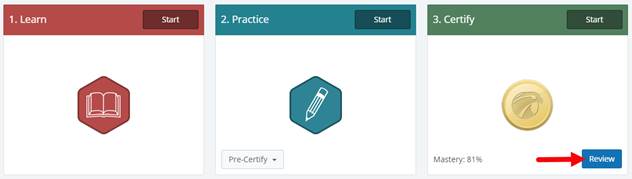
Want to learn more about our approach?
Get free trial access to explore Hawkes Learning from the student perspective. Navigate the 3-mode learning path (Learn, Practice, Certify), try out AI Tutor, and see how the platform can make a difference for your students.
Recent posts