
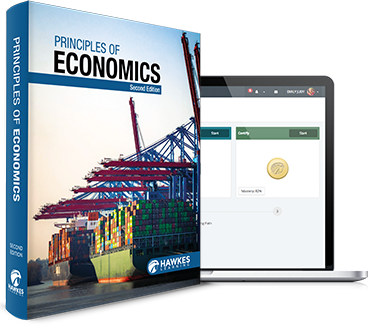
Principles of Economics, 2nd Edition
Overview
This comprehensive second edition of Principles of Economics introduces students to fundamental economic concepts with a focus on current examples, real-world applications, and updated data. Students are encouraged to start thinking like economists with engaging exercises including Chapter Projects, Group Activities, Reflection Questions, and more.
Second edition enhancements include a new chapter on indifference curves, current information on how the Fed conducts monetary policy post-Great Recession, and updated content about the impacts of the COVID-19 pandemic on the global economy. The appendix includes a mathematics review section to target skill gaps in topics such as graphing, equation solving, and area calculations.
Principles of Economics is designed to provide students with a thorough understanding of core economic concepts, equipping them to think critically about the implications of these theories and principles both within a global framework and in their own lives.
Pair with Hawkes Learning’s 3-step, mastery-based platform to engage and encourage genuine competency through interactive step-by-step problem-solving, adaptive remediation, assessment, and more.
Student Platform
Hawkes Learning’s interactive digital platform empowers every student to succeed through unique mastery-based learning, intuitive design, and quality content—delivered with equity and unmatched support.
Course Management System
The instructor platform provides a comprehensive course management and dynamic reporting system that is flexible for use in any course structure and can be utilized either as a stand-alone system or integrated with other learning management systems.
Test Generator
A simple and straightforward test generator provides a robust question bank and authoring tool to create tests and quizzes to be printed or administered securely online.

Products
Formats: Software + eBook, Textbook
| Product | ISBN |
|---|---|
| Software + eBook | 978-1-64277-669-0 |
| Textbook | 978-1-64277-666-9 |
| Software + eBook + Textbook | 978-1-64277-668-3 |
Table of Contents
-
Chapter 1: Welcome to Economics!
-
1.1 What Is Economics, and Why Is It Important?
-
1.2 Economic Theories, Models, and Systems
-
Chapter 1 Review
-
-
Chapter 2: Choice in a World of Scarcity
-
2.1 How Individuals Make Choices Based on Their Budget Constraint
-
2.2 The Production Possibilities Frontier and Social Choices
-
2.3 Confronting Objections to the Economic Approach
-
Chapter 2 Review
-
-
Chapter 3: Demand and Supply
-
3.1 Demand, Supply, and Equilibrium in Markets for Goods and Services
-
3.2 Shifts in Demand and Supply for Goods and Services
-
3.3 Changes in Equilibrium Price and Quantity: The Four-Step Process
-
3.4 Price Ceilings and Price Floors
-
3.5 Demand, Supply, and Efficiency
-
Chapter 3 Review
-
-
Chapter 4: Labor and Financial Markets
-
4.1 Demand and Supply at Work in Labor Markets
-
4.2 Demand and Supply in Financial Markets
-
4.3 The Market System as an Efficient Mechanism for Information
-
Chapter 4 Review
-
-
Chapter 5: Elasticity
-
5.1 Price Elasticity of Demand and Price Elasticity of Supply
-
5.2 Polar Cases of Elasticity and Constant Elasticity
-
5.3 Elasticity and Pricing
-
5.4 Elasticity in Areas Other Than Price
-
Chapter 5 Review
-
-
Chapter 6: Consumer Choices
-
6.1 Consumption Choices
-
6.2 How Changes in Income and Prices Affect Consumption Choices
-
6.3 Behavioral Economics: An Alternative Framework for Consumer Choice
-
Chapter 6 Review
-
-
Chapter 7: Indifference Curves
-
7.1 Utility-Maximizing with Indifference Curves
-
7.2 Responses to Changes in Income and Prices
-
7.3 Indifference Curves with Labor-Leisure and Intertemporal Choices
-
Chapter 7 Review
-
-
Chapter 8: Production, Costs, and Industry Structure
-
8.1 Explicit and Implicit Costs, and Accounting and Economic Profit
-
8.2 Production in the Short Run
-
8.3 Costs in the Short Run
-
8.4 Production in the Long Run
-
8.5 Costs in the Long Run
-
Chapter 8 Review
-
-
Chapter 9: Perfect Competition
-
9.1 Perfect Competition and Why It Matters
-
9.2 How Perfectly Competitive Firms Make Output Decisions
-
9.3 Entry and Exit Decisions in the Long Run
-
9.4 Efficiency in Perfectly Competitive Markets
-
Chapter 9 Review
-
-
Chapter 10: Monopoly
-
10.1 How Monopolies Form: Barriers to Entry
-
10.2 How a Profit-Maximizing Monopoly Chooses Output and Price
-
Chapter 10 Review
-
-
Chapter 11: Monopolistic Competition and Oligopoly
-
11.1 Monopolistic Competition
-
11.2 Oligopoly
-
Chapter 11 Review
-
-
Chapter 12: Monopoly and Antitrust Policy
-
12.1 Corporate Mergers
-
12.2 Regulating Anticompetitive Behavior
-
12.3 Regulating Natural Monopolies
-
12.4 The Great Deregulation Experiment
-
Chapter 12 Review
-
-
Chapter 13: Environmental Protection and Negative Externalities
-
13.1 The Economics of Pollution
-
13.2 Policies to Reduce Pollution
-
13.3 The Benefits and Costs of U.S. Environmental Laws
-
13.4 International Environmental Issues
-
13.5 The Tradeoff between Economic Output and Environmental Protection
-
Chapter 13 Review
-
-
Chapter 14: Positive Externalities and Public Goods
-
14.1 Why the Private Sector Underinvests in Innovation
-
14.2 How Governments Can Encourage Innovation
-
14.3 Public Goods
-
Chapter 14 Review
-
-
Chapter 15: Labor Markets and Income
-
15.1 The Theory of Labor Markets
-
15.2 Wages and Employment in an Imperfectly Competitive Labor Market
-
15.3 Market Power on the Supply Side of Labor Markets
-
15.4 Employment Discrimination
-
15.5 Immigration
-
Chapter 15 Review
-
-
Chapter 16: Poverty and Economic Inequality
-
16.1 Drawing the Poverty Line
-
16.2 The Poverty Trap
-
16.3 The Safety Net
-
16.4 Income Inequality: Measurement and Causes
-
16.5 Government Policies to Reduce Income Inequality
-
Chapter 16 Review
-
-
Chapter 17: Information, Risk, and Insurance
-
17.1 The Problem of Imperfect Information and Asymmetric Information
-
17.2 Insurance and Imperfect Information
-
Chapter 17 Review
-
-
Chapter 18: Financial Markets
-
18.1 How Businesses Raise Financial Capital
-
18.2 How Households Supply Financial Capital
-
18.3 How to Accumulate Personal Wealth
-
Chapter 18 Review
-
-
Chapter 19: Public Economy
-
19.1 Voter Participation and Costs of Elections
-
19.2 Special Interest Politics
-
19.3 Flaws in the Democratic System of Government
-
Chapter 19 Review
-
-
Chapter 20: The Macroeconomic Perspective
-
20.1 Measuring the Size of the Economy: Gross Domestic Product
-
20.2 Adjusting Nominal Values to Real Values
-
20.3 Comparing GDP among Countries
-
20.4 How Well GDP Measures the Well-Being of Society
-
Chapter 20 Review
-
-
Chapter 21: Economic Growth
-
21.1 The Relatively Recent Arrival of Economic Growth
-
21.2 Labor Productivity and Economic Growth
-
21.3 Components of Economic Growth
-
21.4 Economic Convergence
-
Chapter 21 Review
-
-
Chapter 22: Unemployment
-
22.1 How Economists Define and Compute Unemployment Rate
-
22.2 Patterns of Unemployment
-
22.3 What Causes Changes in Unemployment over the Short Run
-
22.4 What Causes Changes in Unemployment over the Long Run
-
Chapter 22 Review
-
-
Chapter 23: Inflation
-
23.1 Tracking Inflation
-
23.2 How to Measure Changes in the Cost of Living
-
23.3 How the U.S. and Other Countries Experience Inflation
-
23.4 The Confusion over Inflation
-
23.5 Indexing and Its Limitations
-
Chapter 23 Review
-
-
Chapter 24: The International Trade and Capital Flows
-
24.1 Measuring Trade Balances
-
24.2 Trade Balances and Flows of Financial Capital
-
24.3 The National Saving and Investment Identity
-
24.4 The Pros and Cons of Trade Deficits and Surpluses
-
24.5 The Difference between Level of Trade and the Trade Balance
-
Chapter 24 Review
-
-
Chapter 25: The Aggregate Demand/Aggregate Supply Model
-
25.1 Building a Model of Aggregate Demand and Aggregate Supply
-
25.2 Shifts in Aggregate Supply
-
25.3 Shifts in Aggregate Demand
-
25.4 How the AD/AS Model Incorporates Growth, Unemployment, and Inflation
-
25.5 Keynes' Law and Say's Law in the AD/AS Model
-
Chapter 25 Review
-
-
Chapter 26: The Keynesian Perspective
-
26.1 Aggregate Demand in Keynesian Analysis
-
26.2 The Building Blocks of Keynesian Analysis
-
26.3 The Phillips Curve
-
26.4 Keynesian Policy and the Keynesian Perspective on Market Forces
-
Chapter 26 Review
-
-
Chapter 27: The Neoclassical Perspective
-
27.1 The Building Blocks of Neoclassical Analysis
-
27.2 The Policy Implications of the Neoclassical Perspective
-
27.3 Balancing Keynesian and Neoclassical Models
-
Chapter 27 Review
-
-
Chapter 28: Money and Banking
-
28.1 Defining Money by Its Functions
-
28.2 Measuring Money: Currency, M1, and M2
-
28.3 The Role of Banks
-
28.4 How Banks Create Money
-
Chapter 28 Review
-
-
Chapter 29: Monetary Policy and Bank Regulation
-
29.1 The Federal Reserve Banking System and Central Banks
-
29.2 Bank Regulation
-
29.3 How a Central Bank Executes Monetary Policy
-
29.4 Monetary Policy and Economic Outcomes
-
29.5 Pitfalls for Monetary Policy
-
Chapter 29 Review
-
-
Chapter 30: Exchange Rates and International Capital Flows
-
30.1 How the Foreign Exchange Market Works
-
30.2 Demand and Supply Shifts in Foreign Exchange Markets
-
30.3 Macroeconomic Effects of Exchange Rates
-
30.4 Exchange Rate Policies
-
Chapter 30 Review
-
-
Chapter 31: Government Budgets and Fiscal Policy
-
31.1 Government Spending
-
31.2 Taxation 31.3 Federal Deficits and the National Debt
-
31.4 Using Fiscal Policy to Fight Recession, Unemployment, and Inflation
-
31.5 Automatic Stabilizers
-
31.6 Practical Problems with Discretionary Fiscal Policy
-
31.7 The Question of a Balanced Budget
-
Chapter 31 Review
-
-
Chapter 32: The Impacts of Government Borrowing
-
32.1 How Government Borrowing Affects Investment and the Trade Balance
-
32.2 Fiscal Policy and the Trade Balance
-
32.3 How Government Borrowing Affects Private Saving
-
32.4 Fiscal Policy, Investment, and Economic Growth
-
Chapter 32 Review
-
-
Chapter 33: Macroeconomic Policy around the World
-
33.1 The Diversity of Countries and Economies across the World
-
33.2 Improving Countries' Standards of Living
-
33.3 Causes of Unemployment and Inflation around the World
-
33.4 Balance of Trade Concerns
-
Chapter 33 Review
-
-
Chapter 34: International Trade
-
34.1 Absolute and Comparative Advantage
-
34.2 What Happens When a Country Has an Absolute Advantage in All Goods
-
34.3 Intra-industry Trade between Similar Economies
-
34.4 The Benefits of Reducing Barriers to International Trade
-
Chapter 34 Review
-
-
Chapter 35: Globalization and Protectionism
-
35.1 Protectionism: An Indirect Subsidy from Consumers to Producers
-
35.2 International Trade and Its Effects on Jobs, Wages, and Working Conditions
-
35.3 Arguments in Support of Restricting Imports
-
35.4 Trade Policy
-
Chapter 35 Review
-
-
Appendix: Math Review
-
A.1 Addition and Subtraction
-
A.2 Multiplication and Division
-
A.3 Order of Operations
-
A.4 Algebraic Expressions
-
A.5 Basics of Percent
-
A.6 Linear Equations
-
A.7 Graphing
-
A.8 Calculating Area
-
Appendix Review
-